Featured Posts

Social Notes (see all)

There is virtue in remaining silent when you have insufficient evidence to be certain of your facts.

“Economics is haunted by more fallacies than any other study known to man.” — Henry Hazlitt, Economics in One Lesson (https://bookshop.org/a/100660/9780517548233)

Just because someone announces calmly that a story or image has been refuted does not mean it actually has been, any more than the assertion it is true means it’s actually true.

All Posts

Exhortation Does Not Interrupt Exposition

[ncs_ad pid=’0664239013′ float=’left’ adtype=’aer.io’]On page 238 of his NTL commentary on Hebrews Luke Timothy Johnson uses the word “interrupt” to describe the transition between exposition and exhortation starting in Hebrews 5:11. In a way I’m nitpicking here, and because I am, I must also note that overall I find Johnson’s commentary nearly the most useful…

Deuteronomy and Introductions Redux

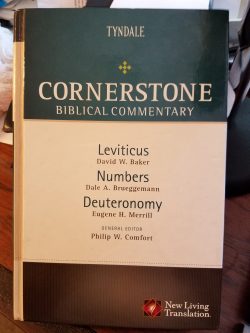
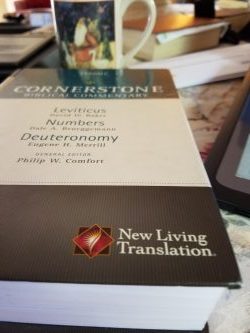
A second law and a second note on introductions to biblical books. Goes together, no? I completed my reading of Numbers along with the Cornerstone Biblical Commentary yesterday and today read the introduction from the section on Deuteronomy. In it the author, Eugene H. Merrill (professor at Dallas Theological Seminary) argues forcefully for Mosaic authorship…

Numbers 31 – An Unsatisfactory Response

Since I have been reading the Cornerstone Biblical Commentary on Leviticus, Numbers, and Deuteronomy along with the text, I wanted to place a short note about the response to this passage in that commentary. (The author of the Leviticus portion is Dale A Brueggemann.) He notes the command to slaughter all the males, including the…

Taint None of Us Perfect, Never, Nohow

(Leave Christology out of it!) Reading the post A Similarity Between Reasoned Eclecticism & Byzantine Priority over on the Evangelical Textual Criticism blog (HT: Dave Black Online, Monday, June 6, 12:35), set me to thinking. Fair warning: This will be a bit rambling. These are thoughts triggered by the post, not largely in response to…

Numbers 30-31, Biblical Cultural Shock, and the Process of Hermeneutics

Since I wrote recently about biblical culture shock, and have also commented from time to time on our impatience with the process in politics, it was interesting for me to come to Numbers 30 and 31 in my evening reading. [ncs_ad pid=’9780842334280′ adtype=’aer.io’ float=’left’]Numbers 30 is a sort of kinder, gentler sort of culture shock….

A Note on Revelation, Christology, and the Prologue to Hebrews

Yeah, this will be a short one. Really! [ncs_ad pid=’0664239013′ float=’right’ adtype=’aer.io’]As I’m reading through another commentary on Hebrews (Luke Timothy Johnson, Hebrews, New Testament Library), I can’t help but write a few notes. One might get the idea from a couple of my recent posts that I find a great deal to argue with…

Biblical Culture Shock?

Before I went overseas with my parents at 14 years of age we were all required to be briefed about culture shock. Sometimes people have very negative reactions to encountering cultures different than their own. We saw this happen with people who went to Guyana (where I was for three years and my parents for…

The Bible Was Not Written to You

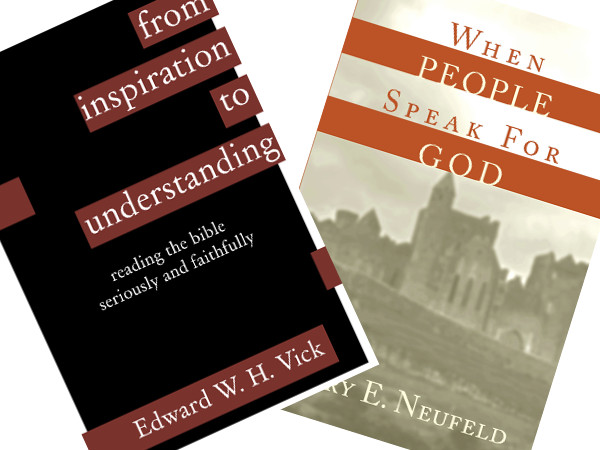
[ncs_ad pid=’1893729389′ adtype=’aer.io’] I’ve discussed this before, and discussed it both in my books When People Speak for God and Not Ashamed of the Gospel: Confessions of a Liberal Charismatic. I was asked after my Sunday School lesson last Sunday whether Zephaniah’s prophecy in 3:1-8 applied to America. Let me annoy everyone: No and Yes….

Hebrews and the Problem of Writing Introductions

[ncs_ad pid=’0664239013′ adtype=’aer.io’] I’m reading through Luke Timothy Johnson’s commentary in the New Testament Library and have just completed the introduction. I have a couple of thoughts today, not least of which is to note the problem with writing introductions. For a reader to truly follow an introduction, it would best come after the commentary…

In Defense of the Ordinary

In preparing for my Sunday School lesson tomorrow I read some very high sounding words about settling for less: pleasure rather than joy, vengeance rather than justice, sentiment rather than beauty, and so forth. The source was N. T. Wright, quoted in the introduction to the  Cokesbury Adult Bible Studies Uniform Series for the Summer…

Quote of the Day

Messages are only as useful as the audience they reach … — Joshua Darr, FiveThirtyEight.com Just so! And even though that comes from a post about politics, I’m not thinking politics here.