Threads from Henry's Web

Category: Bible Study

  • Bound – Lamentations 1:14

    Bound – Lamentations 1:14

    14 ‘My sins were bound like a yoke
    tied fast by his own hand;
    set upon my neck,
    it caused my strength to fail.
    The LORD abandoned me to my sins,
    and in their grip I could not stand.

    Lamentations 1:14 (REB)

    I’ve actually been meditating on this verse over the last few weeks while I haven’t been posting. I think it’s rather important. I first thought about sin/sins in the way I’m going to speak of them here when I read Ezekiel 23:49 and several other passages that suggest that what the people suffer is simply their own sins brought back on them.

    Now this is a more graphic passage, in that we have the imagery of a animal, such as an ox, pulling a load that is secured by a yoke. This is a lamentation, so it’s important to “hear” the poet telling us about living under the yoke.

    Frequently we think of sins in the plural, and see them as a sort of list of infractions against ritual or formal rules. We could imagine a workplace where a series of annoying or even stupid rules occur. Since we’re thinking about God, we imagine that we have to check off the boxes because that’s how you get to heaven.

    This is not just a mistaken, but an inadequate view in so many ways. When there are suboptimal rules in a workplace, freedom is to be found in finding a better job, thus working in a better environment. You can compare workplaces according to how rewarding they are as a work environment. So you can compare “better” and “worse” workers on a checklist, and “better” and “worse” workplaces in a similar way. Freedom comes by escape to a better place.

    But when we talk about “sin” in the biblical place, this is the wrong view. Note here that the sins are bound to the person. The penalty is, in one sense, a complete lack of freedom. The ox cannot escape the yoke, and the lament is that the Israelites were unable to escape the yoke made by their own transgressions. Finally, we have the observation that the punishment here is God abandoning the people to their sins. This is what is causing their strength to fail. It is not some invented judgment or punishment. It is rather the result of their actions.

    But this takes us back further to the specific nature of sin, again as displayed in the Bible story. We think generally of making a list of our faults and failings and trying to overcome them. I once had a terrible temper. In fact, I still do. If I overcome that temper, I’ll be that much closer to God, right?

    Not so. It’s a good thing to tame one’s temper, but the problem is that that’s just an item checked off the list. It all goes back to the basic rebellion, the desire to be independent of God and of God’s commands. And the gap made by that is great.

    We’re not in the workplace, deciding whether we like it, or perhaps that we should move on to a better employer. We’re in God’s universe. The rules are the rules of life. As it says in Deuteronomy 30:15, we’re offered a choice of a way of life and good or death and evil. We don’t have the option of choosing a whole other plan.

    This is a great lamentation. We’re abandoned, not to some externally planned torment, but to the results of our own rebellion against the way of life, the way that is life.

    The starting point to recovery is simple. It’s coming to the point of sincerely making this lamentation.

  • Translating Puns

    Translating Puns

    Dave Black’s intermediate Greek grammar, It’s Still Greek to Me, is scheduled to be translated into Arabic. One of the features of that grammar is some of the humorous headers that are English puns. Dave wonders how those will be handled in translation.

    Anyone have suggestions? (Only humorous suggestions need apply!)

    While I publish many of Dave’s books, this is not one of them. The booklet with a very similar name, It’s All Greek to Me, is Dave’s brief biography/testimony, and I do publish that one.

    (Note: The featured image was generated by Jetpack AI, and one should not consider it to represent any puns, or likely anything else!)

  • Geoffrey Lentz on Wesleyan Bible Study

    Geoffrey Lentz on Wesleyan Bible Study

    On Thursday I had the privilege of interviewing Rev. Geoffrey Lentz, pastor of First United Methodist Church of Pensacola, regarding characteristics Bible study in the Wesleyan tradition.

    Geoffrey and I have known one another for many years, and authored a book, Learning and Living Scripture, which was published, well, a long time ago. As Geoffrey pointed out in the interview, “Back then, Henry, even you were young.”

    In this video we reference the new imprint, New Fire Press, and two new authored or co-authored by Geoffrey, Bold to Say: Learning and Living the Lord’s Prayer and Project Nebo: Empowering the Generations. Energion Publications (my company) produces this artistically and editorially independent imprint.

    Here’s the video:

    (Featured image combines book covers with an image generated by Adobe’s Firefly Image 3.)

  • Wisdom – You’ve Got to Want It!

    Wisdom – You’ve Got to Want It!

    Wisdom cries out in the street.
    In open spaces she raises her voice. …

    My son, if you take my word,
    and store my commands within you,
    Bringing your ears close to wisdom,
    and stretching your heart to understanding.
    If you call for understanding,
    and use your voice for discernment,
    If you seek her as silver,
    And dig for her as buried treasure,
    Then you will understand the fear of the LORD,
    and find the knowledge of God.

    Proverbs 1:20 & 2:1-5, my translation

    In James 1:5, readers are told that if anyone lacks wisdom (and if you don’t think you lack wisdom, you probably do!) that person should ask God, and they will receive wisdom.

    It’s as simple as that.

    Well, maybe not quite that simple.

    There’s a military aphorism that states: “In war, everything is simple, but nothing is easy.” The two halves of that saying illustrate the change from chapter 1 to chapter 2 of Proverbs. We have wisdom calling out, seeking people, being as obvious as possible. Then suddenly we turn around, and we are being told to listen carefully, seek diligently, even dig for it.

    What’s going on?

    Wisdom is, in fact, simple. Yes, simple. It’s out there everywhere you look. Right and wrong actions have consequences. Success or failure can be found in recognizing and acting on these things.

    And wisdom is, in fact, available. You can discover wise ways of doing things. There are many places where wisdom is calling out, calling to you.

    It might be

    • An older person in your family who has a wealth of experience
    • An expert in their field who can pass on good information and outline courses of action and results
    • The physical world, where you can quickly learn about falling, living, starving, and even dying, and if you are observant, living!
    • Somebody from another culture who may have a different perspective than you do.
    • Somebody whose mind works differently than yours does.
    • The Holy Spirit, the Spirit of Truth, working in and through people and creation.
    • A younger person, viewing a situation with more innocent eyes.
    • A good book, written by someone with experience and knowledge you lack.

    Wisdom is everywhere.

    Wise people are much rarer. Why is that?

    You have to want it. Like the military aphorism, wisdom is simple. It’s out there. It’s available.

    But wisdom isn’t easy. It calls out to you, but it doesn’t force you to listen or to act on what it says. You have to be willing to make changes, to act in ways that may be unfamiliar to you. You have to be able to recognize where you’re wrong. Or more importantly where you may be wrong, so that you can correct your actions–or not.

    The problem is that wisdom is often uncomfortable. The wise thing to do is not what you perceive to be the fun thing to do. Following wisdom may hurt your pride. None of that is easy.

    Over the years I have frequently been called on to pray with people about decisions they are trying to make. I’ve found that most of the time, the person I’m praying with actually knows what they ought to do, but they really don’t want to do it. What they’re praying for is an excuse to take a different road, one that is easier, or more satisfying to their pride.

    When I reflect on those prayer times, I’m immediately reminded that I spend much time in prayer hoping that God will provide me with a different path, an easier path.

    Proverbs 2 gives us the unpalatable answer. Yes, you can have wisdom. No doubt about it.

    But you have to really want it.

    (Featured image generated by Jetpack AI.)

  • Wisdom Has Questions

    Wisdom Has Questions

    Wisdom cries aloud in the open air,
    and raises her voice in public places.
    21 She calls at the top of the bustling streets;
    at the approaches to the city gates she says:
    22 ‘How long will you simple fools be content with your simplicity?

    The Revised English Bible (Cambridge; New York; Melbourne; Madrid; Cape Town; Singapore; São Paulo; Delhi; Dubai; Tokyo: Cambridge University Press, 1996), Pr 1:20–22.

    Last week I discussed starting a study of Proverbs and noted a different way of receiving the text. This does not result from a prophetic vision, or from a prophet hearing a voice, but rather from collective (and collected) wisdom from a culture. This is life-time learning, rather than special, instant revelation.

    We like instant revelation. We like answers. We especially like answers that come quickly and fit in with our existing lifestyle and our prejudices.

    The “wisdom” we can gain in this way has another advantage. It can be formed into “ammunition sentences,” sentences that we can fling at other people to shut them up. Often such sentences begin with “the Bible clearly teaches.” We fill in with things we clearly see, largely because we failed to see the whole of scripture.

    I saw a sign in front of a church the other day. The first line read: “God has the answers!” And the second read “Are you listening?”

    That’s good. God does have answers. But sometimes God’s answers don’t match our questions, and the reason is that we’re not asking the right questions, or more specifically, we’re asking questions that limit the range of God’s answers. Sometimes we’re even asking questions in order to avoid God’s answers.

    Over the years I’ve prayed with many people who were seeking God’s guidance. Many of these people were genuinely uncertain, and were trying to seek God’s will. But more of them already knew what God wanted them to do, often because it was clear in terms of ethics, simple right and wrong, but who were hoping they could get a word from the Lord that would set them on a different path, one they preferred to what they already knew. Maybe God’s voice will allow me to take a different turn.

    When you approach things that way, it’s easy to end up believing you’re following God’s path, or the path of wisdom, just because you want so vigorously for that to be the right answer.

    I remember once having a conversation with a couple of friends about a business decision. Business decisions are hard for me. In this case I was discussing two options and trying to decide which was the next step. I had struggled with the decision for days. I don’t even recall now what the issue was, but suddenly in the midst of the conversation I held up my hand and said, “I’ve just realized I’m doing this wrong. Option A would result in behaving unethically.” My advisors hadn’t seen that, because they didn’t understand all the processes involved. As soon as I explained what would happen, they recognized what would likely happen, and so the decision was made.

    What slowed me down? I knew the process and should have recognized the problem immediately. But I didn’t. I wasn’t responding to the right questions. I was missing them because I wanted something to be true, but it wasn’t. No amount of wanting would make it true.

    “Wisdom is calling out in the street.”

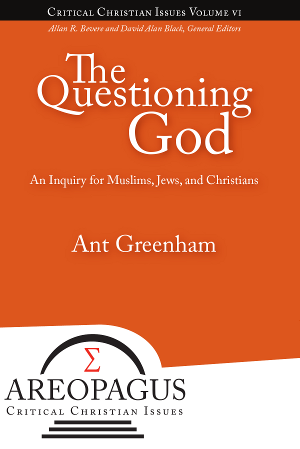
    Cover image of The Questioning God book

    And wisdom is often providing questions. Ant Greenham, in his book The Questioning God, says:

    Our foundational identity as human beings, female and male, is inextricably linked to questioning, to inquiry. The fall of humanity notwithstanding, people are repeatedly called to respond to God in the context of mental and spiritual engagement. And the centrality of a questioning approach is reflected throughout the Bible.

    Ant Greenham, The Questioning God, (Pensacola, Florida: Energion Publications, 2012), 4.

    Greenham goes on to point out the numerous ways in which God’s interactions with us consist of God questioning us. We may have questions of God, but God has even more questions to ask us. I’d suggest as a quick example that you check Job 38. After much discussion and complaint, God becomes active and what does God start with? Lots of questions!

    This approach suggests that God wants us to use our mental capacity. Here’s a famous verse, but let’s think about it again:

    The fear of the LORD is the foundation* of knowledge; it is fools who scorn wisdom and instruction

    The Revised English Bible (Cambridge; New York; Melbourne; Madrid; Cape Town; Singapore; São Paulo; Delhi; Dubai; Tokyo: Cambridge University Press, 1996), Pr 1:7.

    Too often this verse is used to contrast the supposed wisdom of the speaker, which the speaker supposes came from God, verses the use of human intellect. “Don’t trust in your education, your degrees, or your own experience. Do what God says instead!” That’s the common advice.

    I’ve received this advice from some as an admonition not to trust my study of Greek and Hebrew in interpreting the Bible, but just to let the Holy Spirit tell me what the text means. But the second half of the verse challenges that. “It is fools who scorn wisdom and instruction.” I can be listening for God’s voice in so many ways, while ignoring what I have already learned. Often when I’m searching for an answer, I’m directed (in various ways) to look at the scriptures and the wisdom of the community of faith over the centuries for an answer. I’m directed to, not away from, the sources involving intellect.

    I’ve written a few times before on the Wesleyan Quadrilateral. There’s lots of history and debate around that. But I like it a great deal. Today, I’m focused on one element: Reason. We like to put reason down in favor of more spiritual sounding approaches. But in the end, it is with your reason that you will comprehend the messages sent to you by God. That’s why God so frequently asks questions. God wants to awaken your reason.

    I want to note one final thing. Intellectual activity and engagement is not exclusively the product of academic instruction. In fact, a great deal of foolishness takes place in academic settings. Any group of people can become so inward looking that they lose site of the whole of creation. They can no longer hear wisdom calling in the street because they are in a room with the windows closed and their select set of sources.

    Intellectual activity is also the farmer learning to manage crops, run farm equipment, and take care of animals. God can and will speak wisdom in that setting. The Greek classroom is not more about wisdom and instruction than is the farm, or the corner grocery store. Wisdom is calling out in all these places and through all these processes.

    God is asking you questions about everything. Are you listening?

  • God as Father

    God as Father

    I intended to schedule this post for Sunday morning, but life intervened. Jody suggested that as my final post for Father’s Day Week, I should look at divine fatherhood overall through scripture.

    She had some difficulty with the concept of God as father, because while she and her father were able to reconcile before his death, she had difficulty thinking of her relationship to Father-God in a positive way. Many people have that very problem due to the way they related to their own fathers in this life.

    And we can expect that any human representative is going to present an imperfect and challenging representation of God. This is an inevitable result of the human condition. When Jesus told people that they knew how to give good gifts to their children, he doubtless knew that there were people in the crowd who truly did not know how to give good gifts. There were likely people who didn’t know how to give at all because they were so self centered.

    But that parental relationship is still a valuable analogy. This works two ways. First, parental love and commitment to children provides one of our better examples of a loving, self-sacrificing commitment. When I talk about good and bad parents, readers have no problem thinking of examples. We may differ on were the boundaries lie, but we do have an image of good parents.

    Second, this works in reverse. We are told in this way that as parents, we are to be the sort of parents who can point the way to God. Being “godly” as a parent doesn’t mean adhering to a set of doctrinal standards. It means having a particular attitude.

    My own observation over the years is that children do well with quite a variety of parents. One critical common characteristics of parents I believe would be called “good” by their children later in life is simply that those parents cared. They were committed to doing right. They may have failed. No, they almost certainly did from time to time. They weren’t perfect, but they tried.

    And so Jesus could point to the idea of a good father as a way to point to God, and people can get an idea of what God’s love means.

    The best way to discover some depth in this view of God is to look at the experience of people with God. I frequently refer to the Bible not as a compendium of doctrine, but as a book of experience. That experience is primarily the experience of people with God.

    Jody spent a year looking at texts about God the Father. I’d suggest just such a project if you want to build your relationship with God. Here are a few key points.

    • God as creator is God as Father. At creation God not only produces human beings, God then goes on to care for them by providing a garden, animals, and companionship.
    • God is not eternally indulgent. God is patient, but there comes a time for trouble. Witness repeated failures of the people, and events such as the flood, slavery in Egypt, the exile, and so forth.
    • God’s parental love is not determined by our being the cutest or best behaved children. Hosea, particularly the first few verses of Hosea 11 or all of Ezekiel 16 (which is some rather rough reading!) emphasize.
    • God’s love is not limited, as seen in John 16 & 17 and many other passages. God keeps loving right up through death on the cross.
    • God’s love is relentless. See Romans 8:31-39.
    • God’s love will win in the end. See Revelation 21 & 22.

    We spend our time worrying about the little things. God’s love is the big thing.

    God is Love!

    (Featured image generated by Jetpack AI.)

  • Joseph Husband of Mary

    Joseph Husband of Mary

    I’ve been using texts or subjects that Jody suggests to me this week, all dealing in some way with fathers. Today, again, I’m not going to provide the text here, as it’s a bit long. My suggested reading is Matthew 1:16-24 & Luke 3:21-23.

    “[T]he son, as people thought, of Joseph.” That’s the relationship note in Luke for Joseph as the earthly father of Jesus. We’re not told a great deal about Joseph, and we might take something negative from this lack of mention. But I think the clearest thing we hear is quite critical. “When he woke Joseph did as the angel of the Lord had directed him” (Matthew 1:24a). There’s your testimony about Joseph.

    Some years ago there was a big flurry of publications and teaching about a simple prayer, just one verse, in 1 Chronicles 4:10. It’s called the prayer of Jabez. It deals with widening our territory, and having God’s hand with us. It has been extremely popular.

    Now other than being promoted well out of context and out of proportion, I have nothing against the prayer of Jabez. It’s a good one for certain occasions. I don’t think this particular prayer is the solution to nearly as many things as people claimed, but it’s good. On the other hand, for many people it became the prayer of prosperity, the request for God to make the one praying important and successful. As such, one can get out of balance with it.

    But here’s another line. Joseph receives instructions in a dream, and when he wakes up, he does what he was told to do. It might be nice for that to become true of all of us. When God speaks, we listen.

    You see, this is the opposite of what we usually do. “Oh Lord,” we say, “hear our prayer.” That’s good. We want the Lord to hear our prayers, but it’s much more important for us to hear God’s message, God’s call, to us. That’s when things can really happen.

    I don’t mean that we’ll suddenly get God to love us more. God loves us. But when we can take any steps in God’s will, the results will be good. We’re regularly asking God to be with us. It would be better for us to ask God to help us be with Him! That’s the good place.

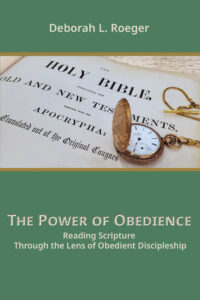
    The Power of Obedience cover image
    Want to learn more?

    After Jesus is born, Joseph has another dream telling him to go to Egypt. And what is the response? “So Joseph got up, took mother and child by night, and sought refuge with them in Egypt” (Matthew 2:14). Again, here goes Joseph, following God’s directions.

    There’s a power in this approach to life. It’s not about demanding that God make us successful, but rather about listening and doing what God tells us to do. Not so that God will accept us or love us, but because God has accepted us and already loves us. And because of that acceptance and love, God has the best plans for us.

    I wonder what would happen if we took that one line about Joseph to heart as much as, or even more than, the prayer of Jabez. Joseph did as the angel of the Lord had directed him.

    Will you?

  • Luke 15:11-32 – The Prodigal

    Luke 15:11-32 – The Prodigal

    I’m not going to provide my own translation or paste the text from another one here today, as the passage is long, but I’d strongly suggest re-reading the story before you continue. Read it carefully.

    This parable is often called the parable of the prodigal son. Many commentators, however, have considered it much more about the prodigal father, in the sense of a father who was lavish and extravagant about his love and generosity. This latter view is not bad as the meaning of the parable.

    I’d like to suggest, however, that we can look at this parable in more than one way, and the meaning shifts as we do so.

    The first view is one that I heard many times before. The prodigal son has done many horrible things in his life, and finds himself at rock bottom. From that final landing place he manages to grasp just a little bit of hope. Maybe, he thinks, I can persuade my father to take me back as an employee. The lesson of the story seen from this point of view is that you should be willing to repent and come home, and the Lord will accept you.

    Not bad. Even true.

    But the next view is that this is the story of the father, a father who always loved his son, who gave him early access to his inheritance, and waited for his return as long as he was away from home. We can gather that he lived with this hope because he sees that son returning from a long way off and comes to welcome him. From this point of view, this is the story of the father’s grace, love, and willingness to accept the returning wanderer.

    Even better. Also true.

    But the third point of view is the other brother, the good brother, the one who stayed home and worked hard and thought he was pleasing his father. He’s satisfied with is goodness and believes his father owes him respect for his diligence in keeping the family business going and providing support for his father in his old age.

    Not very nice. But very true.

    Contrary to the way many read this story, I actually think the older son is the target. You see, I am the older son. Yes, I’ve done some wandering, but not as much as other people I know. In fact, I lived a quite respectable and productive life while I was out of the church. When I came back, I was ready to start teaching the Bible and diligently doing God’s work.

    I had to return, but not from a far country. Just from a little ways down the road. And yes, the father was there waiting for me. I was a respectable wanderer who returned in good time and was able to put what I learned in the meantime into God’s work. Many said it was part of God’s plan, that God had been preparing me to work.

    So now I can look at people who have wandered far from God. They’ve gone off and become addicts, criminals, God-haters. They’ve really hurt my heavenly Father. They’re the bad people who need real redemption and not just a little adjustment to their lives.

    But you know what happens? When they show up, the angel choirs break into hallelujahs. God welcomes them into his arms. There is great rejoicing over this one sinner who repents. Even, no, especially, the ones who fell the farthest, who behaved most despicably, who were the least respectable in human terms.

    And yet … there’s the father waiting, watching, jumping up joyfully, welcoming, feasting.

    And I’m left to keep on trying to do everything the father wants me to do. Why don’t I get the reward that I think I ought to get?

    It’s actually very simple. Even when I make the story about me, the older brother, it’s still God’s story. It’s still about the Father whose grace reaches everyone and who’s holiness is so far above that if I were to concentrate on it, I wouldn’t be so incredibly foolish as to try to compare my accomplishments to those of my wandering brethren. We all need to come into the Father’s care and receive the Father’s grace. None of us have anything of our own to bring.

    The story becomes also an invitation to let God take us to the place where we don’t feel superior to the returning prodigal, no matter how long he has wallowed with the pigs, or how much money and life he has squandered.

    In fact, the pig sty is closer to the Father than the management office on the Father’s farm.

    If you are living in that place of service, and waiting for your reward, and wondering why others you think are less worthy than you seem to cause all the rejoicing, consider saying this: “Father, I have sinned against heaven and against you, and am no longer worthy to be called your son.” He’ll interrupt you. You won’t get any further. Because he has been calling you his son all along.

    He’ll rejoice that you finally realized it.

  • Luke 11:9-13 – Giving

    Luke 11:9-13 – Giving

    9 And I say to you, “Ask, and it will be given to you, seek and you will find, knock, and the door will be opened to you. 10 For everyone who asks receives, and the one who seeks finds, and the the door is opened to the one who knocks. 11 Which father among you would give a snake to his son when asked for a fish? 12 Or if he asks for an egg, would give him a scorpion? 13 So if you, being evil, know how to give good gifts to your children, how much more will your heavenly father give the Holy Spirit to those who ask him?

    Luke 11:9-13 (my translation)

    One question that regularly arises out of this story is simply this: Will God just give us anything we ask for? We should find an answer to this by simply reversing the question. Which father, if his son asked for a serpent, would actually give that son a serpent? There is an assumption behind the story that the son is seeking good things and the father is giving those good things. The question arises more with the passage in Matthew 7:7-11, where, instead of the Holy Spirit, our Father in Heaven is said to give “good things” to those who ask.

    Luke’s focus is specifically on the Spirit and spiritual things, but the principles remains the same. A good father would not only provide good and appropriate gifts, he would also avoid dangerous gifts. A good father cares for the child who is asking and is not just a slot machine in the sky, prepared to rain whatever is asked on those asking.

    Now this might be seen as narrowing or tightening the passage. I would say rather that it’s putting passage into it’s own logical context, or rather recognizing what type of a story it is. It’s a story about desire on the one hand and care on the other. And within that care is also a story of respect, of seeing the person.

    This passage could say, “Don’t bother asking, because God already knows what you need and will surely take care of you.” But it doesn’t. It says ask, seek, knock.

    If God is on the other side of the door, why do I have to knock. Why doesn’t God show me the door and encourage me to go through it?

    God treats us as persons. God made us as persons. God recognizes our own being.

    “Behold I stand at the door and knock. If anyone hears my voice and opens te door, I will go in to him and will eat with him and he with me” (Revelation 3:20). Wow! Courteous God! But it’s not courtesy. It’s actual caring. I’d like to be your friend, companion. I’d like you to be part of my community, represented by sharing a meal. But I’m going to wait until you open the door.

    Think of the power on either side of that door. God the creator on the outside. Created being, totally dependent on that power on the other, and the one with all the power is waiting on the one without for permission. It’s our Luke 11 story turned inside out. But it tells the same story about the nature of our heavenly parent who is raising us up as his children.

    Many fathers hope for their children to be what they, the parents, planned those children to be. They have a plan for their children’s lives and they’ll manipulate them with all their power to become just what their parents would like them to be.

    Then there are those fathers–it is the week leading to Fathers’ Day!–who simply want their children to be whatever they choose to be and do that well.

    There are those who think that free choice diminishes God’s sovereignty. I don’t agree. I see the ultimate real power in a God who could force everything, but instead says, “If you want it ask.” “If you want in, knock.” I’m powerful enough to be unthreatened by treating you as a real person, one with desires, joys and sorrows, strengths and weaknesses.

    “I’m not threatened because I also choose to be the person who responds. You can’t make me, but I will.” So speaks the creator of everything from subatomic particles to galaxies.

    “I’m your good Father.”

  • Matthew 6:9b – Father

    Matthew 6:9b – Father

    Our Father in heaven.

    Matthew 6:9b

    Jody provided me with texts about fatherhood this week and quoted just this line specifically. It amused me when I read The Five Gospels, a product of the Jesus Seminar (Robert Funk, specifically), that the word “Father” was the one thing the seminar agreed was definitely something Jesus said.

    But what exactly does this mean? Why does Jesus invoke the image of fatherhood in telling us how to speak to the Father in heaven?

    I’m going to quote four authors that I publish and then make my own comments.

    First is Bruce Epperly, in his book One World:

    At the heart of the Lord’s Prayer is Jesus’ invocation of God as Abba, a term used to describe the intimacy between father and child. The God Jesus prayed to is not distant and demanding,
    preoccupied with rules and regulations, and ready to pounce on our slightest mistake. The God Jesus prayed to is like the best of parents – loving, patient, listening, and guiding, willing even to die for the well-being of the child.
    In calling God “Abba,” Jesus raised the bar for our images of God and our images of parenting. A good parent aspires to be godlike in her or his loving and protective care for vulnerable and impressionable children because this is the way the God of the Universe behaves. The Infinite is the intimate, and loves us more than we love ourselves.

    Bruce Epperly, One World: The Lord’s Prayer from a Process Perspective, p. 8

    There has been some controversy on just what the connotation of “Abba” is, but I think that Jesus’ own relationship to the Father gives us plenty of ground to hold that there is intimacy involved.

    The second book is Ultimate Allegiance: The Subversive Nature of the Lord’s Prayer. I like the title of this book, because we so often take passages like Romans 13 in such a way as to put temporal authority above divine authority. The Lord’s prayer subverts human authorities in any way in which they push us away from God. Our duty as Christians is to follow Christ’s example, not to glorify the temporal authorities, no matter how much they demand it.

    We see this sense of adoption present in Paul’s letter to the Romans, where he suggests that having been freed from the spirit of slavery we can now cry out ”Abba Father,” because the Spirit is speaking through us giving witness to our adoption as children of God. Yes, it would appear that Paul emphasizes this relationship by combining the Aramaic abba with the Greek pater, to emphasize this change in status. Therefore, when we address God as our Father – recognizing the gender related problems inherent in that confession – we give thanks that God has adopted us into the family, making us “heirs of God and joint heirs with Christ” (Rom. 8:15-18). Whatever promises are made to Jesus, our elder brother, are made to us, and we can receive them in trust, knowing that God’s love for us is infinite in character and breadth. Therefore, we need not be anxious about anything (Phil. 4:6).

    Robert D. Cornwall, Ultimate Allegiance, p. 12

    The third source is the forthcoming book Bold to Say, from New Fire Press, an independent imprint produced by Energion Publications the author is Rev. Geoffrey Lentz, a long-time friend.

    Praying to “our” father means that we are a part of a family.  This concept is a helpful corrective to a modern world that focuses so heavily on the individual and his or her rights.  The rabid individualism of the enlightenment often finds its way into church, but there is no place for it in God’s family. When we cannot pray, our sisters and brothers pray for us. When we do not have the words, those gifted with words use them on our behalf. When we lack faith, our friends lend us theirs, much like the paralyzed man’s friends did when they lowered him through the ceiling to Jesus. It was because of their faith that Jesus healed him (Luke 5:20). Our community—not only the church here on earth but all the company of heaven, the community of saints—carries us when we cannot manage on our own. When we pray, the saints are praying with us; the great cloud of witnesses cheer us on as we run our race (Hebrews 12).  To pray as a Christian means to never pray alone. And the most exciting thing about this blessed community called church is that the primary member is Jesus, our older brother. To say, “Our Father,” is to be a part of Jesus’ family, to call his father ours, and know that when we pray, he prays with us and for us (Hebrews 7:25, Romans 8:34, 1 John 2:1).

    Geoffrey Lentz, Bold to Say, forthcoming

    And finally, again emphasizing intimacy and community, we have Dr. David Moffett-Moore, in The Jesus Manifesto:

    “Our Father.” “Father.” All religions understand a transcendent God, a God who is the Holy Other, above and beyond. The mystics of all religions experience a God who is immanent, a God with whom we may be intimate, though most would hesitate to be too familiar with the holy. The Hebrew Scriptures do speak of God as the Father of Israel. But this is not what Jesus describes; he would not call God “father” as I call my dad “father” or as my children might refer to me. Jesus spoke of “Abba,” like an infant’s babbling sound for this big, strong, awesome, gentle, loving presence. “Dada” or “Papa.”
    It is one month old Declan or four month old Evan or 2 ½ year old Ryker. Even Alex at 6 has outgrown the magical mystical intimate wonder of the unconditional trust and abiding confidence of this relationship. Our God is our Abba, our Amma, our strong, gentle, abiding Presence.

    David Moffett-Moore, The Jesus Manifesto, p. 36

    One of the problems people have with this prayer is that our concepts of “Father” may significantly impact the way we read the verse. How did our fathers treat us? Did we have a relationship that could be called “intimate”? Were our fathers trustworthy?

    As with many short, succinct statements in scripture, this one draws a great deal of other material in. We cannot really understand God properly as father, without some idea of how God has acted. How does God function as father?

    I believe this is one of the most important reasons that the Bible is largely presented as story or in the context of story. We don’t have a generic theological treatise telling us in bullet points what God’s character is like. Rather, we have a story of God interacting with humans with all the ambiguities that introduces. This is a tremendous blessing because our lives are filled with various kinds of experiences and we learn to understand others by means of experience–by living a story with them, if you please.

    I recall a friend who had several children telling me how it was truly impossible to treat all children equally. Different levels of consequences and different boundaries are necessary simply because children are different. I think that’s an important point about fatherhood and childraising. Fathers recognize the different experiences of their children. God, in presenting scripture, recognized those different experiences and thus presented the rules and theology in the form of stories or embedded in the context of stories.

    This is a crucial element of recognizing God as Father. God sees you as a unique child. God values you as a unique person. This connection, as multiple authors I quoted point out, is emphasized by the word “our” in the prayer. We pray together with Jesus. We, like him, are God’s children. We are siblings, and he’s not ashamed to admit it (Hebrews 2:11).

    At the same time, we recognize in addressing our heavenly parent that we are also siblings of all humanity. We do not stand on higher ground, addressing the poor masses who don’t have our wonderful father in their inferiority. Rather, in praying this prayer, we are taking our example from the one who was indeed not ashamed to call us brethren. And face it, if Jesus can call us brethren/siblings, we can surely do so to others.

    One of the greatest misunderstandings of being Christians is the idea that it makes us better than or more important than other people. In the light of eternity, in the light of eternal wisdom and eternal righteousness, all of our good character isn’t even a dot on the paper. In recognizing our heavenly parent, we give up the right to look down on others.

    We’ll look at some characteristics in further posts this week, but we’re going to end up looking at a range of verses about fatherhood that go from creation to new creation.

    In the meantime, how can you better imitate your heavenly parent?