Anything having to do with books, book reviews, current reading suggestions and so forth. This is a catchall for those elements that don’t fit precisely into other categories, but do have to do with books.
A friend mentioned this book on Facebook, and since I have greatly appreciated it over a number of years, I thought I’d post about it here.
Frankl has a powerful story of surviving the holocaust and speaks of what sustained him in that experience.
Key quote:
Man is that being who invented the gas chambers of Auschwitz; however, he is also that being who entered those chambers upright, with the Lord’s Prayer or the Shema Yisrael on his lips.
I should have posted something earlier, but stuff happens.
Let me recommend some books for continued meditations, these from Energion Publications (and several other publishers!) Bruce Epperly. Links are to Amazon.com.
I recommend Bruce as an author and teacher because he challenges me with unexpected views on so many subjects, always presented in a positive fashion. He teaches theology and living as an adventure.
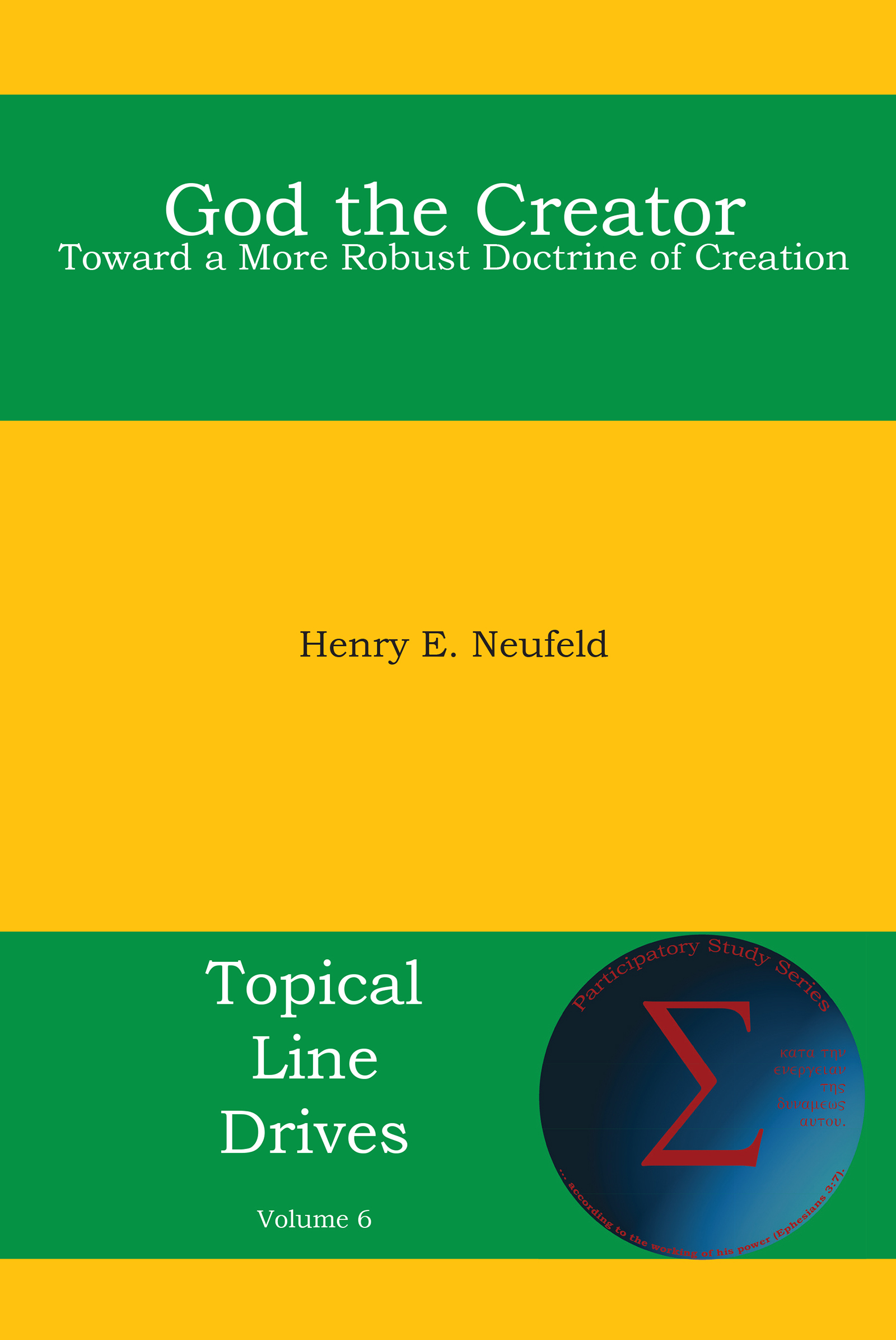
I was recently interviewed by fellow Energion author Steve Kindle regarding my newly released book God the Creator: Toward a More Robust Doctrine of Creation. The video is below.
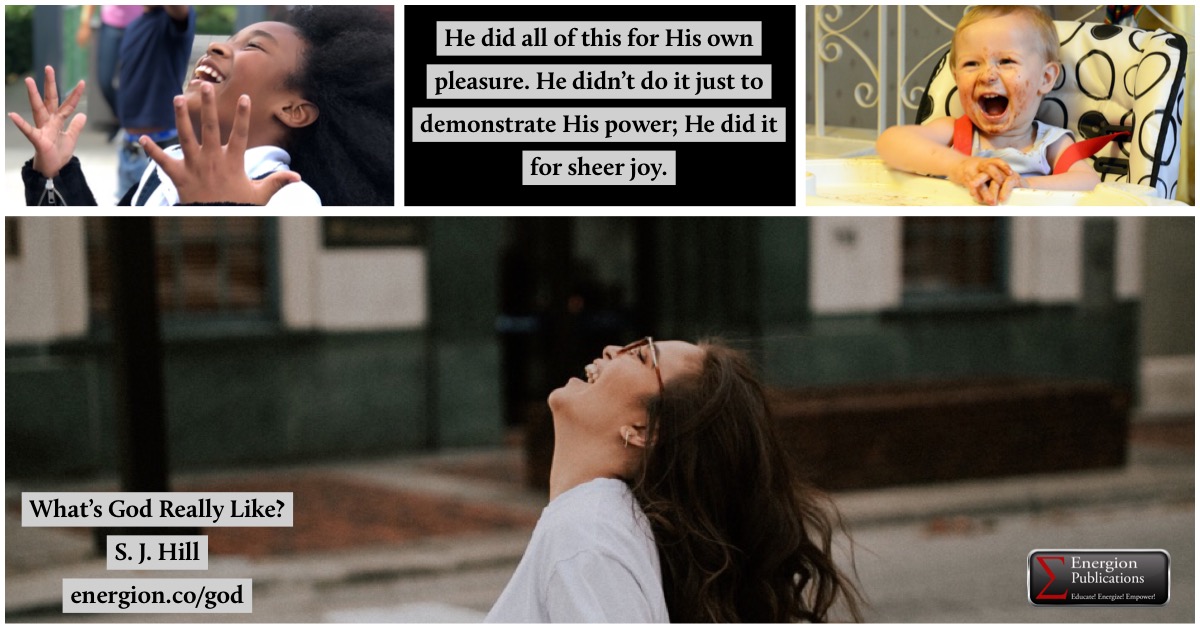
The quote above comes from chapter 1 of S. J. Hill’s book, What’s God Really Like?, and I’d like to spend some time with this, looking at it from different angles. The first angle is one of worship.
I was in a church committee meeting some years back where a room full of people were discussing young people and the worship service of the church. The question under consideration was why young people weren’t attending our worship services.
After about 45 minutes of (fruitless, in my opinion) discussion, I asked the question: Might we instead discuss whether we can think of any reasons why the young people would attend our worship service?
I, and every other person in that meeting, attend church out of ingrained habit. We have done it for years, it’s what we do, and come Sunday morning, come hell, high water, or several feet of snow, we’re going to find a church service and attend it.
I don’t mean that that’s the only reason I go to church, but it is something I tend to do. If I don’t like one worship service, I’m going to attend another.
But many people, oddly enough (!), require a reason to get up on Sunday morning and go to church. They want to accomplish something.
At this point some of my friends start talking about “dumbing down” the worship service, or want something “relevant.” The tone indicates that “relevant” is some sort of weak effort to replace “real worship” which will involve actual pain and require grit and determination.
“I barely stayed awake through that service,” says the parishioner, looking and sounding holy. Going through a boring worship service is a test of our commitment to God.
Well, perhaps not.
As I read passages like 1 Corinthians 14, I see the word “edify,” which is just a churchy sounding word for “build up” or something similar. The worship services at Corinth sound a bit chaotic, and, well, interesting. Paul encouraged them toward order, but in the end, if you apply all his rules, you still have something very different from what we do today.
Our problem with 1 Corinthians 14 is that we try to apply the solution without having the same problem. We put a straight-jacket on a corpse. The corpse, in case you missed it, is our time of worship.
Now a morbid, boring, and unattractive Christianity is not just about the worship service, but I think we might start there. You see, I think all those complaints about young people wanting relevant service are just whining. Whining because the young people don’t like what we did all our lives.
But if you look at the state of Christianity in America today, I think you’ll see evidence that was we did all our lives—and I’m talking to my generation (I’m 61)—hasn’t worked all that well. Perhaps we need worship that is actually relevant.
Relevant in several ways:
In expressing our relationship with God. (Subtext here — we might need to have a relationship with God and not just a set of theological reflections.)
In preparing us for actual service. (We tend to use the word “ministry” a lot. I think that allows us to separate ourselves from the word. How about “every member serving others” instead of “every member in ministry”?
In help us to build our relationship to God.
In helping us learn to relate to one another. (Hint: sitting in pews listening to a preacher, then heading out to beat the Baptists [or whoever] to lunch doesn’t build your relationships with other people.)
In encouraging us in our lives as they are in this world.
In helping us realize that “worship” doesn’t occur in a “service,” nor does it follow an “order of service,” but is a lifestyle. In fact, it is our lives (Romans 12:1-2).
In helping us learn new and useful things.
Is that what happens when you go to church?
This just barely touches on this question. I’d like to discuss it some more. S. J. Hill is definitely right about one thing: The way we think about God is going to impact everything. If we think of God as interesting, involved, and yes, cool, we will thing that interesting and exciting things are part of worshiping God. If we think God is vindictive, we’re going to look for the right set of rituals to appease him.
If we’ve really forgotten, as I think many of us have, to think about God seriously (serious and joyful are not contradictory!) at all, that’s also going to impact the way we worship.
If God showed up on Sunday morning, would God enjoy what was going on?
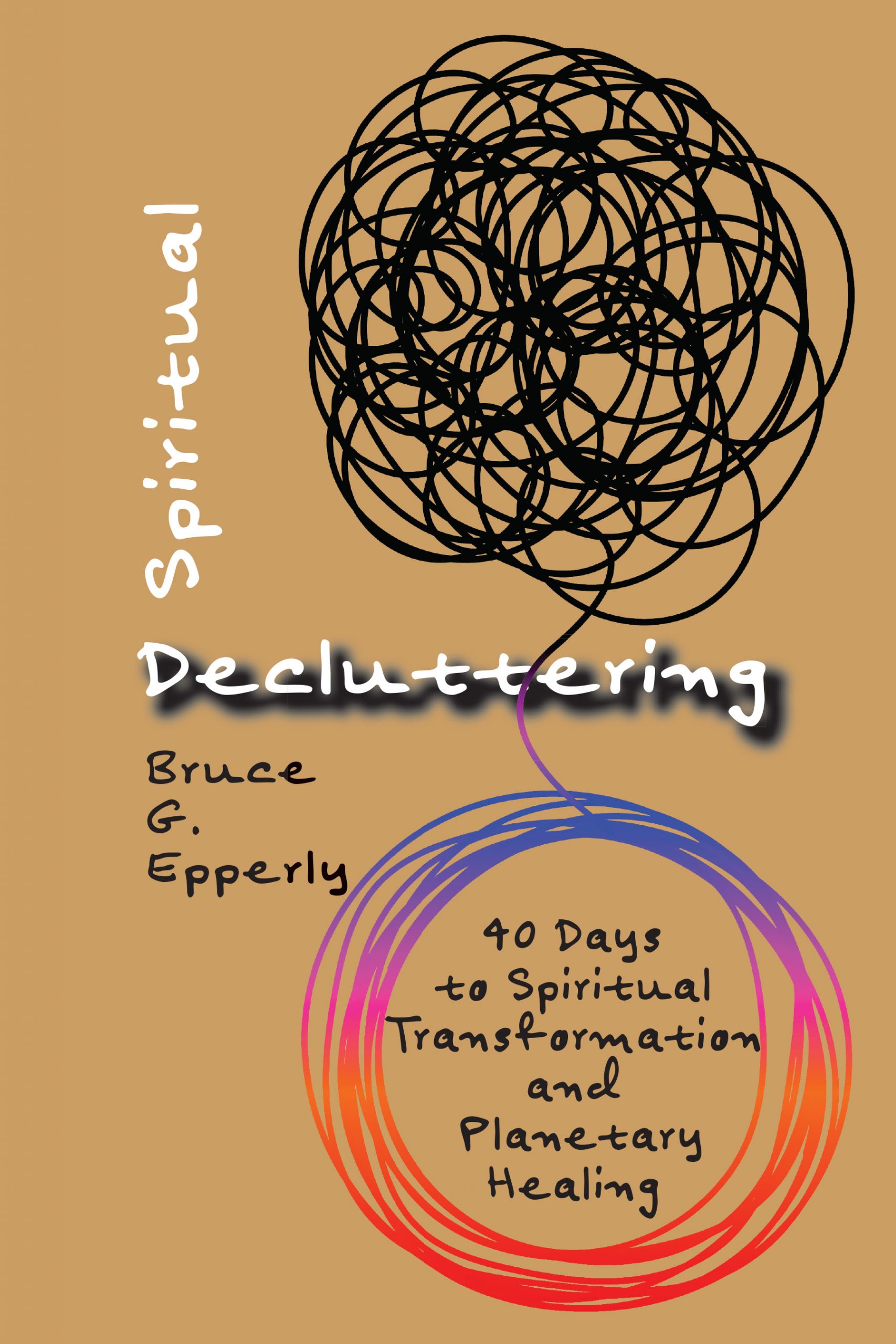
I wonder if there’s something ironic, or perhaps just odd, about working on the interior layout of a book on Spiritual Decluttering while this is behind me?
Clutter!
Actually, there’s less clutter than there used to be. I’m turning storage space into usable office space, and I’m about half done.
Early in my college days I encountered a man who would have a substantial influence on my life. It started as he explained textual variants and alternate possible translations in Genesis 1 for 2nd year Hebrew. I’d taught myself that far, and hadn’t done badly figuring out the rules, but my knowledge was less than practical. That man was Dr. Alden Thompson, now professor emeritus at Walla Walla University, and author of several books, two of which I publish.
While showing me things that I had never seen before, and wasn’t sure I wanted to see, Alden displayed a gentleness and spiritual depth that had a profound impact on the way in which my theological understanding would develop. It is an approach he has modeled for decades and truly grown into even more as he moves forward.
Looking at the divisions in his beloved Seventh-day Adventist Church, Alden doesn’t want victory for liberals or conservatives or any of the many other variations one might find. What he wants is conversation and an appreciation of the gifts that all bring to the table.
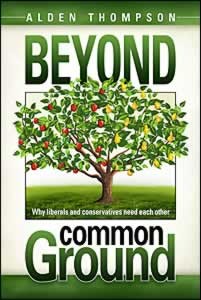
Even though I don’t publish it, as we approach celebration of Consider Christianity Week, I wanted to call attention to Alden’s book, Beyond Common Ground: Why Liberals and Conservatives Need Each Other. Alden is talking about faith and a church organization, but the principles he discusses apply broadly, most importantly, learning to listen to and value the diversity. He matches that with a willingness I often don’t find in either liberal or conservative circles: A willingness to recognize the fear that new ideas and change may bring and to honor the need of solid ground for some people.
While Beyond Common Ground is written very personally and is anchored therefore in its author’s community, it discusses issues I have seen trouble, divide, and sometimes destroy communities of various types. Consider reading this engaging and challenging book as you think about Christianity during Lent, and of course during Consider Christianity Week.
Bruce Epperly makes a number of important comments. I’m going to do a bit of quoting from his chapter 3, pp. 15-21.
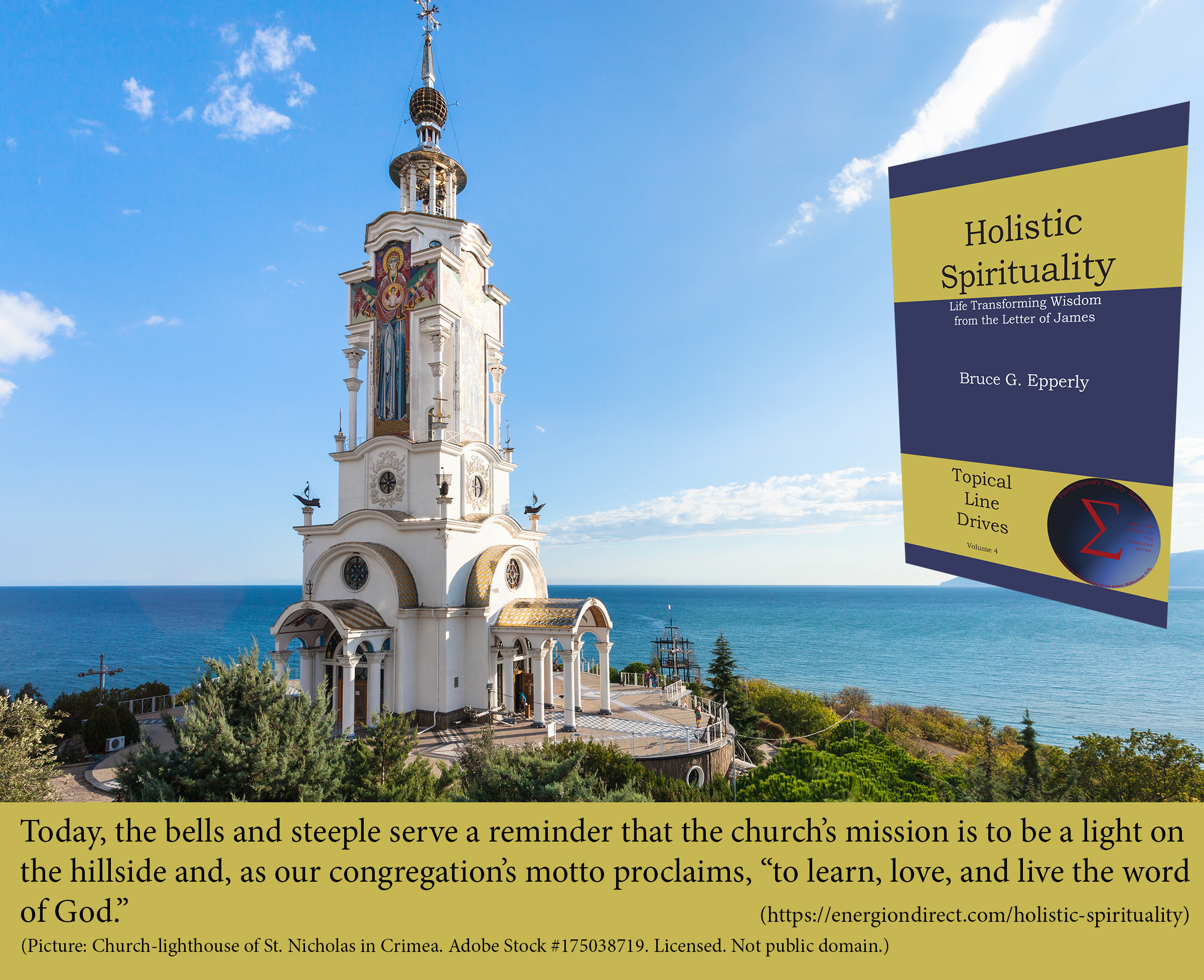
One of my great joys is my first glimpse of the steeple of South Congregational Church, when I round the bend toward home. In earlier times, the church’s steeple guided mariners safely to shore. Today, the bells andsteeple serve a reminder that the church’s mission is to be a light on the hillside and, as our congregation’s motto proclaims, “to learn, love, and live the word of God.” (p. 15)
I like that motto, “learn, love, and live.” I think it may go the other way as well, we learn from what we live, especially when we’re trying to live the word of God.
Faith means nothing unless it lights the way of pilgrims and seekers, providing guidance, comfort, and nurture. (p. 16)
Here Bruce combines faith in action and faith in witness (and our action is, I think, our best witness) in a way of which I think James would approve. We are not Christians, or Jesus people, for our own benefit alone. We receive grace to share grace. That’s why grace cannot be a passive thing. It erupts in action.
… The Apostle asserts that because God loves us, our vocation is to love one another, even if this means crossing the barriers of race and ethnicity. Grace makes us all first-class Christians, worthy of respect regardless of ethnicity or economics. This is the essence of James’ message as well.
James believes that a holistic faith brings together belief and action. In the spirit of the Quakers, what is important to James is to “Let your life speak.” … (p. 17)
I think that the tendency of many interpreters to see James and Paul as opponents is misguided. They do have a different emphasis, but it is not because Paul hated or devalued action or that James thought beliefs were unimportant. Each had an emphasis, but these emphases are compatible or complementary.
Loving Jesus means loving your neighbor. And if James is right, it means standing aloof and becoming counter-cultural in
relation to socially-acceptable, but life-destroying, values – “being unstained by the world” – that put profits ahead of people, neglect the needy, and blame the poor for their poverty. We are all created in the image of God and we all deserve to be loved, to have a place to call home, and an opportunity to live out our gifts and talents as God’s beloved daughters and sons. (p. 19)
That’s were it will start to get with us. Sanctified wallets are the hardest of possessions to acquire. Or, looked at the other way, the wallet is the hardest thing to give up. How much stuff must we have? What is first in our life? Putting God first will result in also putting our neighbor first.
But what can you do? Maybe all you have to spare is coins in your pocket.
In the realm of God, no deed is too small, for with one action at a time we can become God’s companions in healing the world. Let your life speak. (p. 20)
This is a great little book, just 40 pages of text from Energion’s Topical Line Drives series, for accompanying a study of James. It might just be, as the subtitle suggests, life transforming!