The Sunday School class I co-teach is beginning a study of Proverbs. I’m not leading this one. I’m relaxing a bit, I hope. But I have indicated I’ll do a bit of blogging on the material.
The assignment before the beginning of the study tomorrow was to read introductions to the book, both from the resource text we’re using (The Daily Study Bible volume on Proverbs) and from various Bible editions. I’m not going to try to provide my own introduction, except to note that I read multiple introductions that seemed to me to provide an excellent launching point for a new reader.
My interest is the place of Proverbs in the biblical canon. Why is it that we have a collection of proverbs in the canon of scripture?
While we work with the canon of scripture all the time, we don’t often think about it as much. The “canon” refers to those books which are canonical, which means they’ve been accepted by church law as authoritative in the church. This is a fairly strict legal definition in the Roman Catholic and Eastern Orthodox traditions. In Protestantism, it’s a bit less fixed. The general concept remains.
People often start talking about scripture with the concepts of inspiration and truth, and if a book is determined to be “inspired,” it is then scripture. That’s not precisely how this happened. There was a long process of history, tradition, discussion, and finally definitive determination. The determination can be better termed a determination that a particular set of books was and is authoritative rather than that these books were inspired.
Now that may catch you a bit off-guard. Surely these books are inspired! In fact, I believe just that. But being inspired is not sufficient to make them scripture. I personally hold that God has inspired other writings which are not scripture, but I do not advocate that such writings become part of scripture. The key difference is that the selected writings were seen as authoritative.
“Authoritative” involves the value of the material over time and space. For example, an ancient prophet might have sent a message to a particular individual that was specific to that individual. That message might have been from God, inspired by God, and sent by God’s authority, but if we discovered it today, as interesting as it might be, it would not be authoritative.
In my view, accepting the value and authority of scripture today involves accepting the validity of the choices made over time, and the belief that we have the inspired scriptures that God intended as authoritative scripture. God can and does act through the events of history and the actions of groups in order to bring the message.
So in Scripture we have the central authority. The question then becomes why does this particular passage, or in this case this particular book belong in the canon, and as part of the canon what is it supposed to accomplish.
It’s almost cliché to talk about different types of literature and how we interpret those. But it is almost equally cliché that we expect the end point of this interpretation to be some specific doctrinal conclusion. In other words, we expect all of scripture to end up providing us with data.
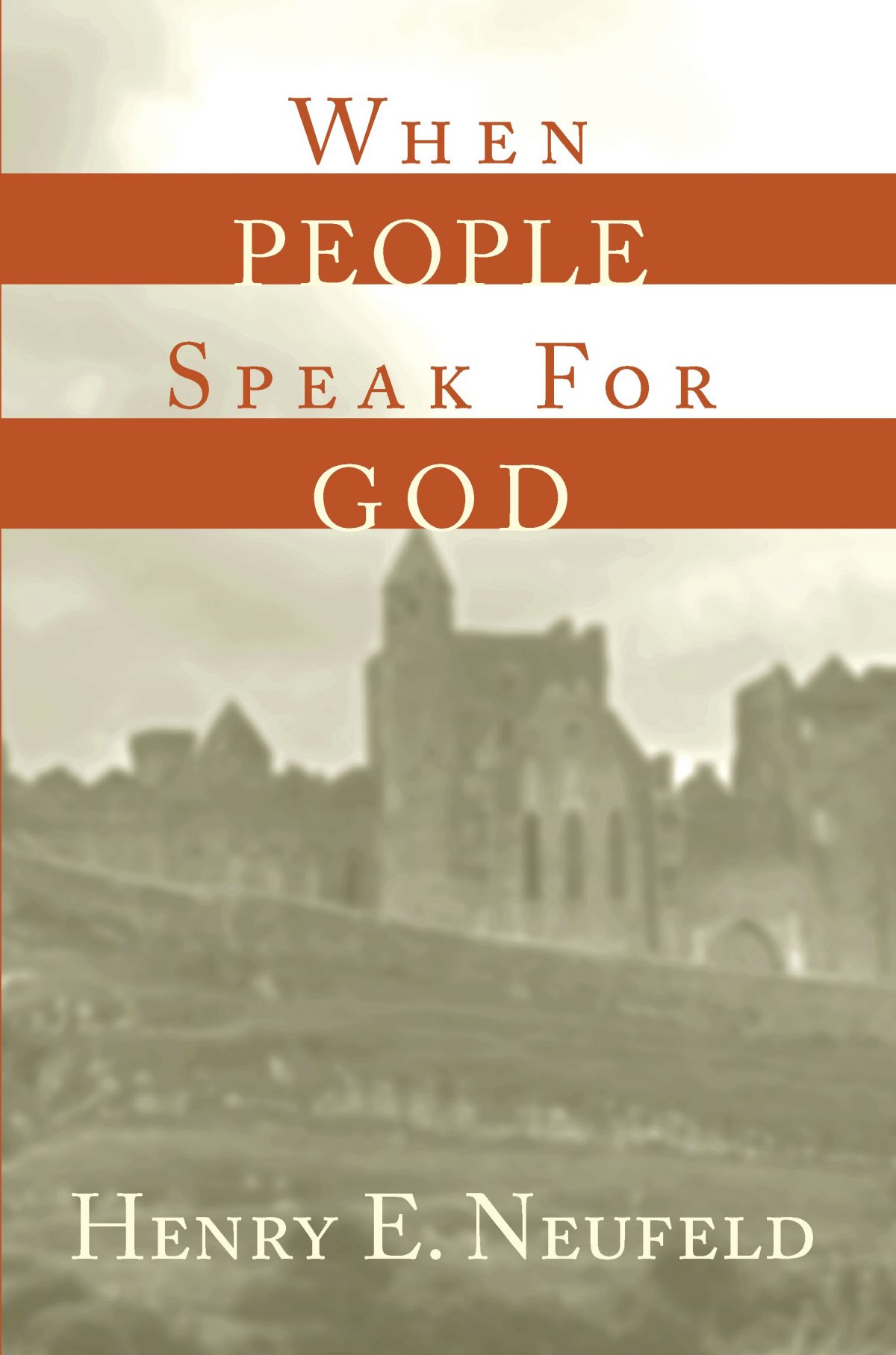
I would suggest (and have suggested) that while scripture is valuable for forming doctrine and guiding practice, this isn’t the main thing. In my book When People Speak for God, I suggest that we come to the Bible for information, but God comes to us in scripture for conversation. And eventually this conversation is to result in transformation.
Wisdom literature as a whole, and Proverbs in particular challenges a couple of assumptions often held about how we get scripture, and I think in turn about what scripture is to do for us. Wisdom literature comes from living. It’s collected wisdom of a culture. It leads us to ways of thinking, rather than to provide set conclusions. It’s not just about the wisdom it passes on, but it’s about how that wisdom is collected. It doesn’t come in visions, dreams, or direct divine speech. It comes through the process of living.
As an example, take Proverbs 26:4 & 5.
Don’t answer a fool according to his folly, lest you become like him. Answer a fool according to his folly, or he’ll become wise in his own eyes.
Yes, I’ve heard the complaints, and those who say it isn’t actually Wesleyan or has deteriorated through the years, but I met it in the United Methodist Discipline before I first joined a Methodist church (though without the name) and I still like it.
For those who may not be aware of the quadrilateral, it states simply that doctrine is formed not from scripture alone, but from scripture, tradition, experience, and reason. (I discussed the importance of experience in a 2015 blog post.)
On this blog, I have discussed this severaltimesbefore. Today I want to add a metaphor and expand a bit on the hermeneutic that I use as a result. As I have noted before, many intractable arguments result from discussing conclusions from scripture without discussing hermeneutics, the way in which we come to those conclusions. The other person may seem obtuse to you, but if you understood how they are coming to their interpretation, you might understand their point of view. You also might still abhor it, but you’d understand it!
The metaphor I want to introduce here is the confluence of four streams. This metaphor uses “confluence” to suggest the way sources interact to help form doctrine.
To help clarify this and its purpose, let’s start with its opposite. For many, scripture is a fixed source of data. You go to it, mine the data, and then directly apply it to your life or the life of your community here and now. We should have learned from the experience of the Christian community that it doesn’t work that way. Thousands of denominations and various church splits, carried out by people who thought they were (and generally think they are) faithfully following the Bible should have given us a clue.
The nature of scripture itself should give us a clue. It is not organized as a compendium of knowledge. It is not organized like an encyclopedia, or like the Boy Scouts Handbook (a metaphor I’ve heard frequently), nor like the more modern FAQ page. It’s a collection of a variety of material produced in a variety of ways, organized and presented differently, and then collected and placed in one volume. Out around the edges, various of those denominations disagree on the details of what should be considered part of the Bible.
I have this feeling that God accomplishes what God sets out to do, thus when I see a Bible that looks almost entirely unlike what so many people want it to be, I come to suspect that God didn’t want what they want. If God had wanted that, it would be what we have. We don’t, so God didn’t.
I recognized the problem back in 1993 when I was considering a return to church after about a dozen years, but I didn’t have the vocabulary to express it. For a number of reasons that seem to me providential, I visited what was then Pine Forest United Methodist Church (now Wilde Lake Church), and generally liked what I heard, but I’m an idea-driven person and I wanted to know what these Methodists believed. On being asked, the pastor thought and finally handed me a copy of the United Methodist Discipline.
As I read that document (the first 100 pages or so, not the organizational stuff in the back!) I encountered the description of what is often called the Wesleyan Quadrilateral. I loved it. Not because I thought it was a good prescription for how to do Bible study, but because I thought it described how people study the Bible.
We bring to our study what is in ourselves, such as our observation of the world, our thinking about various things, our experiences with others, our knowledge of past events, things we know work for us, things we know do not work, and our relationships or community, in whatever shape that community bears.
The simple explanation for why our interpretations differ is that we differ. Those differences are not just in us, but in the way in which we are connected to others both in space and in time. These are not things we can escape; they are part of us.
The Bible looks a great deal like it was produced by people much like us.
Do I mean by this that there is nothing special about the Bible or that there is no divine inspiration involved? Not even a little bit! What I mean is that I see Divine action in a community of people that stretches not only through space around the world but also that stretches through time. It is a diverse book delivered through diverse people who lived in diverse communities to a wide diversity of other people and communities across the span of time.
Does this mean that I can learn nothing from the Bible? Not at all! What it does mean is that I can’t reach into the Bible and grab a rock to throw at you or at anyone else, and truthfully call the rock “divine.” And I think that’s a good thing. Possibly even a Divine thing.
As I was thinking about all of this, I was also looking at some pictures of river confluences (if anyone cares, along the Essequibo River in Guyana and its tributaries), and I thought, “A confluence of four streams comes closer than anything else I’ve thought of to the way the quadrilateral actually works!”
Of course, there’s nothing quadrilateral about this metaphor. Well, except the “4” part.
Let me note what I see as the problems of the previous metaphors, especially my own. The whole “quadrilateral” metaphor tended to make four elements equally authoritative in forming authoritative doctrine. In many ways, we’re still looking for that rock to throw, but we want its authority to be derived in a different way.
My own response with the four-layer filter, in which I suggested that a doctrine should be tested by all four elements, suffers a similar problem. I don’t find it entirely unuseful, but as with many metaphors, it needs a “don’t stretch” warning label. My metaphor of the four-lane highway, a critique metaphor, similarly starts with our hoped-for conclusion and then tests it against the four, in this case looking for a lane that will work.
The four streams metaphor suggests several things, including that the streams keep flowing. They are not actually static. The water in the stream that results is a mixture of all four, which may vary by season, situation, and geography.
Is any of this safe? No, but nothing is safe. Doctrine is not a static object that exists outside our community. It is formed in community, practiced and taught in community, and it belongs to the universal church, not to you or me personally.
This does not make me take the Bible lightly. In fact, it suggests to me that I need to immerse myself in scripture and also in my community of faith in order to be guided by the God who guided the community over time and continues to guide it and me. No superficial glance intended to prove myself right and someone else wrong will do for this.
We embrace a diversity of interpretations that fit within the streams that meet at the confluence to produce doctrine. It is a continuing journey, along with that “great cloud of witnesses” led by Jesus, the “author and finisher.” (See Hebrews 12:1-3 with reference to Hebrews 11.)
I am the interviewer for this video, and am talking with two very good friends, Alden Thompson, who was my undergraduate advisor, and Elgin Hushbeck, Jr., a friend since the mid-1990s when we met on the old CompuServer Religion Forum. Both have since spoken at conferences which I’ve organized.
The purpose of this video was not to settle the issue of inerrancy, which is unlikely to occur, but instead to discuss how each of these scholars use their view of inspiration as they interpret scripture. One interesting result is that while the emphasis is different, much of what they’d say about scripture is very similar.
Neither would be accurately described as either liberal or progressive. This is a discussion between two conservatives, both of whom have a high view of scripture (they discuss what this means), regarding one potential dividing point.
While I disagree with a number of minor points, the one major one being that I would not use the word “verbal” in describing inspiration, this is an excellent outline of how Bible translators think and the reasons behind that thinking. The author, William D. Mounce, responds in some cases to Grudem, but the article can be read on its own.
For full disclosure, I have used Mounce’s introductory Greek grammar for a number of years before I switched to Dave Black’s. Dave is one of my authors. Links to the two books are below for those interested. (Two different stores as I don’t yet have the February 5 edition available for my Aer.io store.) The third book is about Bible translation by some unknown author.
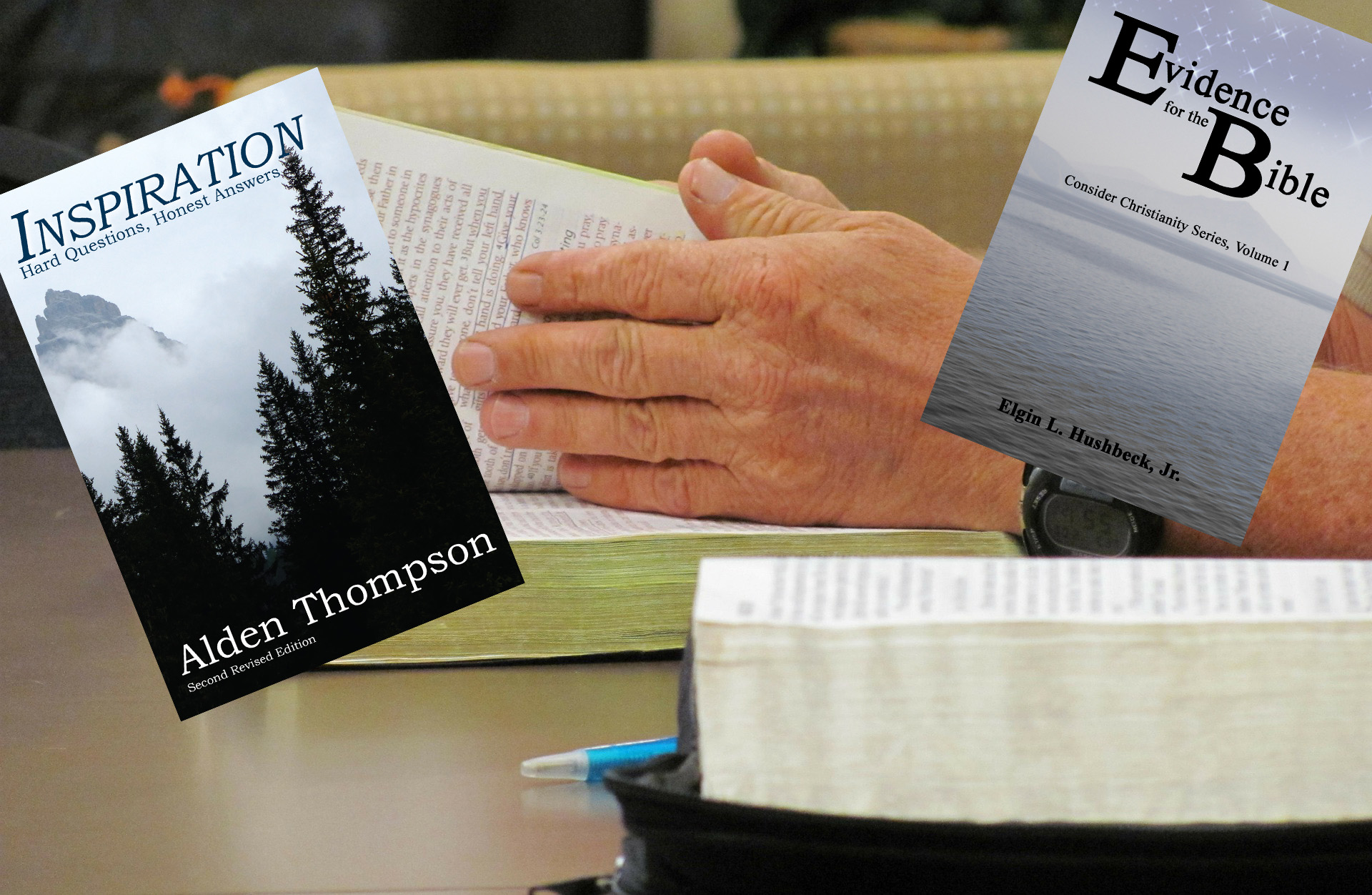
Alden was my undergraduate advisor at Walla Walla University (then college), I publish two of his books (Inspiration: Hard Questions, Honest Answers and Who’s Afraid of the Old Testament God?), and he is a friend. Many of my friends have heard him speak in person. Here he is presenting a paper at a conference, so is somewhat less free-wheeling than he is normally, but he’s making some important points.
I tend to harp on hermeneutics. Sometimes that’s precisely what people want me to do. Groups that have me back to speak twice, at least, are generally happy with that topic. But others find it annoying, pedantic, and perhaps intellectually snobbish! “Why can’t we just read our Bibles and get on with it?” they ask. Or “Quit making it so complicated!”
I understand their frustration, but without a great deal of sympathy. Christians have been “just getting on with it” for centuries, and the result is that we’re scattered all over the map in terms of how we understand scripture. I don’t consider having a variety of interpretations to be a problem in itself. To those who yearn for the magisterium, I would say that this simply means choosing one probably wrong option and then sticking with it.
To a certain extent, just getting on and reading the Bible is a workable devotional approach. But even so, such a devotional approach requires a filter. Just try reading Numbers 31 devotionally and you may see the problem. Now there are many approaches to handling Numbers 31, though the most common one seems to be to pretend it’s not there as long as possible. Pretending that less enlightening (or apparently so) passages aren’t there is an approach to interpretation and application.
This approach can even be made explicit. I’m embedding a clip from The West Wing, in which Toby Ziegler discusses the death penalty with his Rabbi. In this discussion the fictional rabbi expresses explicitly an approach many take implicitly. (To those annoying people who like to point out that various quotes/clips/etc come from fiction, I’m aware of it. I find fiction an excellent source for launching thinking.)
Relatively few people (though there are some) would state this quite as explicitly as the rabbi does at the end, “wrong by any modern standard.” But it’s a common hermeneutic in practice.
And as long as you’re prepared to argue modern standards or what seems, to you, to be spiritually enlightening, and to do so with other people who share your view of “enlightening,” that approach will work. It works quite well on the more conservative side as well, just with different definitions applied to what to keep and what not to.
The Bible is susceptible to this sort of thing because it does reflect a long time period and lets us see a variety of experiences in different times and places. It doesn’t codify that much, and where it does, it is often under circumstances that don’t apply. In a post yesterday I used Leviticus 18:22 and 19:34. Those each evoke extremely controversial topics. Here’s another text I used in the same Sunday School class:
The Lord spoke to Moses, saying: 2 When any of you sin and commit a trespass against the Lord by deceiving a neighbor in a matter of a deposit or a pledge, or by robbery, or if you have defrauded a neighbor, 3 or have found something lost and lied about it—if you swear falsely regarding any of the various things that one may do and sin thereby— 4 when you have sinned and realize your guilt, and would restore what you took by robbery or by fraud or the deposit that was committed to you, or the lost thing that you found, 5 or anything else about which you have sworn falsely, you shall repay the principal amount and shall add one-fifth to it. You shall pay it to its owner when you realize your guilt. 6 And you shall bring to the priest, as your guilt offering to the Lord, a ram without blemish from the flock, or its equivalent, for a guilt offering. 7 The priest shall make atonement on your behalf before the Lord, and you shall be forgiven for any of the things that one may do and incur guilt thereby. (Leviticus 6:1-7, NRSV, from Biblegateway.com.)
In this passage the class largely came to the same conclusion about what applied and what didn’t with some variation. Feeling guilt, accepting responsibility, making restitution—these all seemed very applicable. Not so much bringing a ram without blemish.
That doesn’t reflect a bad hermeneutic. In this case, most people were distinguishing lasting principles from temporary requirements. Both Judaism and Christianity have theology that removes the need for animal sacrifices in the present.
The problem comes in when we try to discuss, and more particularly when we try to enforce our view of scripture on someone else. I’m fond of a quote from one of the books I publish, Philosophy for Believers. On page 119 of that book he says:
Philosophers sometimes appear to talk in obscure ways. They do so because they take into consideration what people often overlook.
In this case, I’m not simply looking for considerations that are overlooked, though they are, but for the underlying approach that results in a particular view. Quite frequently the way someone understands a scripture is simply locked into the tradition so thoroughly that an individual doesn’t even think about why. A single tradition might function well that way, but when you then discuss the text with someone else, the argument gets immediately heated.
The reason these arguments get heated quickly is both that we often have a great deal of emotion (way too much, I believe) invested in our religious views and spiritual practices, and also that the other person seems obtuse and perhaps bullheaded not to see the obviously correct and plainly clear meaning of the passage presented. But you may have grown up and studied in a tradition that sees that passage completely differently. The difference may be in what applies and doesn’t, but it can also be in just what it means and how it applies. (I discuss this more in my essay Facing the Proof-Text Method.)
Let me give an example. In the sermon on the mount, Jesus says a number of things, but I had a debate that dealt with two of them. It started with this one:
33 “Again, you have heard that it was said to those of ancient times, ‘You shall not swear falsely, but carry out the vows you have made to the Lord.’ 34 But I say to you, Do not swear at all, either by heaven, for it is the throne of God, 35 or by the earth, for it is his footstool, or by Jerusalem, for it is the city of the great King. 36 And do not swear by your head, for you cannot make one hair white or black. 37 Let your word be ‘Yes, Yes’ or ‘No, No’; anything more than this comes from the evil one. (Matthew 5:33-37, NRSV, from Biblegateway.com.)
Now it happens that I believe that this is an intensified command that we should conduct all of our dealings with others truthfully and with integrity, and thus it would negate the need for an oath. I would go so far as to consider “I swear to you” in conversations or business dealings to be at least unnecessary, and probably more so, it reflects the idea that some of my conversation can be a lie. I don’t think it forbids me from taking an oath to tell the truth, the whole truth, and nothing but the truth in court, though I consider “so help me God” to be questionable for the same reason as “I swear to you.” I speak always with God’s help, not being able to take my next breath without it. The words I would utter in court should be no more and can be no less with the help of God than any others.
Now you can disagree with me on my interpretation. That’s part of my point. I’m not even fully explaining my approach, though many will see how I’m reading the passage. I’m certainly, in this case, allowing Jesus some hyperbole. For example, I would identify “anything more than this comes from the evil one” as hyperbole. Am I right? That would be an excellent point for discussion.
Which, in this exchange, my correspondent and I did. I asked him how he interpreted it. He told me that it should be taken in the plain sense. I asked him to define that further. He said it should be taken as it would be understood by any high school student in the U. S. Having dealt with not a few high school students, I wasn’t quite sure what to make of that, but I then brought my counter-example.
27 “You have heard that it was said, ‘You shall not commit adultery.’ 28 But I say to you that everyone who looks at a woman with lust has already committed adultery with her in his heart. 29 If your right eye causes you to sin, tear it out and throw it away; it is better for you to lose one of your members than for your whole body to be thrown into hell. 30 And if your right hand causes you to sin, cut it off and throw it away; it is better for you to lose one of your members than for your whole body to go into hell. (Matthew 5:27-30, NRSV, from Biblegateway.com.)
My question here was (and is) just how an American high school student would undersand “tear it out and throw it away” or “cut it off and throw it away.” I see these as hyperbole, emphasizing the need to avoid lust, to get in ahead of the cause of adultery and not just stop before one crosses the threshold.
My correspondent said that this passage should be understood as one’s willingness to stand up for one’s principles even to physical assault or martyrdom. I have great doubts that this is the way the average high school student would read the passage.
Now for me, further discussion of the applicability of the passages would require that we first address our points of interpretation. Is it possible that Jesus used hyperbole? If not, just what does the second passage mean? If he does use it, is the first passage actually using hyperbole or is that just my literary excuse to get out of obeying the command of Jesus?
All of those are great questions to discuss, but to discuss them profitably, we need to ask the questions under the question. In this case my correspondent was willing to do that. Some think I tell this story to denigrate my correspondent. In fact, the discussion was quite profitable and enjoyable. Yes, we disagreed profoundly in the end, but I certainly learned.
There is one further layer worth mentioning and that’s to ask why a particular hermeneutic is chosen. We’re not actually stuck with our hermeneutic. We had to delay my discussion with Dr. Alden Thompson (Who’s Afraid of the Old Testament God? andInspiration: Hard Questions, Honest Answers), but it will be rescheduled. That’s where we discuss the inspiration of the Bible, and how one understands that will impact what hermeneutic one will use. Back when I was an extremely arrogant undergraduate, Alden is the one who set me to thinking about this more seriously.
I was given the title “liberal charismatic” (not as a compliment) because I believe that all the gifts of the Holy Spirit are potentially in operation today and that God speaks to people now as much as he has at any time in history. On occasion, this makes for trouble, as people expect me to accept a variety of professed prophets as somehow authoritative due to the office they claim or that is claimed for them. In other word I believe in prophets and prophecy, but I do not consider any particular prophet authoritative as such.
Going further, I very much doubt that I would have considered any ancient prophet authoritative solely on the basis that the individual made such a claim or that the claim was made about them. I doubt that the prophets themselves would expect such obedience to them apart from discernment. Moses is regarded as the greatest of the prophets in Hebrew scripture, and the record shows him making errors and being aware that he had done so. As a Christian believer in the incarnation, I would have to make a partial exception for Jesus, bearing the divine imprint (Hebrews 1:1-4), yet even here, I would suggest that one with discernment would note the message and the life and then be convinced.
It is important here to distinguish inspiration from authority. Isaiah, for example, was an inspired person. This is my belief and the conclusion of the Jewish and Christian traditions. Further, both of those traditions have declared the book that bears his name authoritative. If we had lived in Isaiah’s time, however, while many of us would consider him inspired, we would find that his authority was much less accepted. I’m guessing, in fact, that Isaiah may have said many uninspired things in the course of his life, and many things that should not have been considered authoritative. He may well have said many things that were of divine origins that never made it into his book. If we found a fragment of a scroll the purported to contain sayings of Isaiah, and if these seemed, by the best scholarship available, to date back to Isaiah and to share literary characteristics with things we consider to come from Isaiah, would this fragment automatically have authority in the church? Absolutely not. We have canonized a book, not the theoretical potential output of a person, however inspired it may be. The homilies of St. John Chrysostom are quite inspiring, and perhaps inspired, yet they do not have the authority of scripture.
Many are uncomfortable with the canonization process because however one interprets the process, it is a process in the church that results in the canon. In other words, church authorities are responsible for the collection of materials we regard as authoritative. I think it is necessary that we consider this a Holy Spirit guided process (or even more that the church is a movement guided by the Spirit, to the extent we’ll follow!) or we do not have a good basis for faith. There are those who believe the books have certain identifiable characteristics, and there are certainly some similarities, yet debates about canonicity have resulted from the fact that it’s not quite that smooth and well-defined. (I recommend chapters II [Canon] and III [Authority: Influence and Acceptance] in Edward Vick, From Inspiration to Understanding: Reading the Bible Seriously and Faithfully [Energion Publications, 2011], pp. 17-72, for a detailed exposition of these ideas.)
In my own book When People Speak for God, I make the statement: “The last person, and the decisive person, to hear from God is you” (p. 4). I mean that very seriously, whether we’re dealing with the interpretation of scripture or hearing a word from one who claims to be a prophet, you need to hear, discern, distinguish, and act. I believe that anyone can hear from God. I consider this very scriptural, perhaps as scriptural as anything can be. It is demonstrated repeatedly in the text. We make the people who heard, such as Abraham, Samson’s mother, or Mary, very holy and so separate them. But when they heard from God, they were ordinary people carrying on rather ordinary lives. Anyone may be inspired. Authority results from discernment.
Let me refer you to a couple of tests for prophets in Deuteronomy. The one we hear most is from Deuteronomy 18:22, which is that if their word is not fulfilled, they are false. (Jonah would have fallen on this test, but that is for further discussion. See Jonah: When God Changes.) But there is another passage, Deuteronomy 13:1-3, which provides another test. There it says that if someone makes this claim, and even provides a sign which comes through, if they then tell you to worship other gods, they must not be obeyed.
As a final point on theory, there are those who consider that if a modern word contradicts the Bible it must be rejected, while if it is in accord with the Bible it is redundant. I would suggest that this presents a false (and possibly dangerous) dichotomy. Throughout the stories in scripture, God worked with and guided people, without ever giving an indication that this would change. In fact, I think the best reading suggests that God speaks a great deal and the limitation is more in the fact that we decide not to listen. When a spiritual movement is young and lively, people listen and generate ideas. Then comes structure. Structure is designed to limit and control this spirit. So the authorities tend to want to shut it down at the source. God is done speaking and he ended with the last book we want to see as authoritative. There is room for freedom, and there is some need for structure, but death follows allowing either of those needs to become absolute. Let there be authority, but let authority by challenged.
I wrote all of that to form the basis for the following. I listen to and apply discernment to any claim, whether the person claims to be a prophet or not. I have generally found in my experience that those who make no claim to speak for God, but just speak what they have learned in their own communion with God speak with much more authority and wisdom than those who make the claim. I think there is a great deal of indiscipline, lack of wisdom, and general confusion in much of the current prophetic movement in Christianity. I will only make specific charges if a person is part of a community of which I am a member, but for myself I work to discern what God is saying. Part of that process is listening myself.
The one way not to be manipulated is to be a student, a learner, a thinker, and to let the Spirit of Truth work. When that is said, don’t be arrogant. I could be wrong. You could be wrong. Being wrong isn’t the end of the world as long as you keep your mind, your hearing, and your discernment active.
I’m resuming/continuing my study this evening, looking at Lesson Two from Galatians: A Participatory Study Guide by Dr. Bruce Epperly. I’ll be sticking closely with the lesson itself tonight, discussing how Paul was chosen and learned. I will doubtless discuss a number of these topics from related materials in other epistles.
One of the joys of being a publisher, as I’m sure I’ve mentioned a couple (hundred) times before, is the authors I get to work with. I have long considered our understanding of biblical inspiration and authority to be critical to discussions of Christian theology, polity, and ultimately our day to day life. Often we can at least get our bearings in serious debates by at least identifying the differences in how we are using the sources.
Because of my interest in this I wrote the book When People Speak for God, which is generally at a popular level. After I wrote that book, I encountered Dr. Vick through one of my other authors and received his manuscript for From Inspiration to Understanding. If his book had been written before, rather than after mine, it would have contained numerous footnotes referencing Dr. Vick’s work.
When we laid out From Inspiration to Understanding at Energion, we were using Scribus, which is actually an excellent page layout product, but is not quite the thing for an extended, thoroughly referenced book. The footnotes had to be laid out by hand, and were done as chapter end notes. This doesn’t convert well to electronic format, so there has been a considerable delay in getting the ebook editions out. But now they are complete.
Since I have been reading the Cornerstone Biblical Commentary on Leviticus, Numbers, and Deuteronomy along with the text, I wanted to place a short note about the response to this passage in that commentary. (The author of the Leviticus portion is Dale A Brueggemann.)
He notes the command to slaughter all the males, including the children, and all the women who were not virgins, then on page 403 he says:
This slaughter was not the result of “collateral damage” in the heat of battle, or even an outrage committed in the heat of war’s bloodlust. It was purposeful judicial slaughter after the battle was already over. In fact, this action fits the modern definition of ethnic cleansing or possibly even genocide. The conquest was a holy war aimed at driving out an entire human population from Canaan (33:50-53), annihilating everyone there to purge idolatry and remove its temptations (Deut 20:16-18). …
He continues (p. 404) to note that Israel was promised similar judgment if they did not follow God and stay clear of idolatry. It’s interesting to note that at this point the chapter turns to the issue of ritual purity, specifying purification rituals for the spoils as well as for the warriors who, at God’s command, have come in contact with dead bodies. Dale Brueggemann notes (404):
… Even glorious battles fought and won with God’s blessing cause death, which doesn’t belong in the presence of the God of the living.
[ncs_ad pid=’9780842334280′ float=’right’ adtype=’aer.io’]Alright then …
It is here that I must note that this passage presents an interesting problem for those who want to quote the Qur’an and use texts, apart from their interpretation by representatives of any branch of Islam, to demonstrate that Islam is not a religion of peace. The Bible has similar passages which can be interpreted, and indeed have been interpreted by some, as justifying violence. Our commentator in this case calls this action a “holy war” and then a “glorious battle.” Apart from your particular means of reading this passage, could you blame someone not involved in your particular hermeneutic for concluding that Judaism or Christianity are not religions of peace either?
There are a number of ways of looking at this passage, some of which I enumerated in my article in Sharing the Practice, Preaching an Unpreachable Passage. Very few Christians would use this passage today as a justification for this sort of act of war. Reasons range from “that’s the Old Testament,” though it should be noted that few Jews would use it to justify slaughter either, to such violence is only at God’s specific and rare command, to noting that it was a violent time, and God worked with people as they were.
[ncs_ad pid=’1893729907′ float=’right’ adtype=’aer.io’]I must confess that I find the explanation give in the CBC on Numbers to be extremely unsatisfactory. The Canaanites were so wicked that the Israelites were justified in slaughtering everyone including the baby boys? Note as well that the women were not spared due to mercy. They were spared as spoils of war. I discuss my own responses in the article linked above, but I think that there is a requirement that we see a process of learning going on in scripture, that this was a way in which people behaved in the past in a world in which that behavior was standard, but that we have been told better (by the Prince of Peace, among others), and we have (I hope) learned better by now.
Most importantly, in our relations with other faiths, I would suggest that we need to “do unto others as we would have them do unto us.” We would object to the statement that Christianity supports genocide based upon this passage. We would reject interpretations by others that say this is so. We’d present our hermeneutic in support of our position. Just as we would like others to allow us to use our scriptures in our way, we should allow them the same privilege.