Threads from Henry's Web

Tag: bible

  • Psalm 119:130 – Light

    Psalm 119:130 – Light

    When your Word is revealed, light shines,
    giving understanding to the naive.

    This is a very important verse to me, and I think it is often misunderstood.

    I was raised on Bible-based materials. I studied that way in school. I spent a good deal of time with it in school. I had a disagreement with my mother about when I first read the Bible through. She said it was when I was around 9 or 10 years old. I recall reading it all the way through in my early teens. As an elementary student at a school with a Bible-based curriculum I memorized Bible passages in large quantities, including the chapter I’m writing about, all 176 verses of it.

    When I went to college and determined to study the Bible I majored in Biblical Languages, thinking this was the way to get back to the sources. With the weight I put on the value of scripture, I wanted to be as accurate in my knowledge as I possibly could because knowing the words contained in scripture was, I thought, of great value.

    It took me a very long time to get past the collection of words and data from and about scripture. I used the word “naive” in my translation of this verse, and I was naive in my approach to scripture. It was not only not possible for me to get to a 100% bedrock understanding, based only on my study, it was also not particularly desirable.

    That question drove me away from the church and from fellowship. I still enjoyed the study of and the text of scripture, but it was no longer a driving force as it had been. It was, instead, a bit of a hobby.

    Then I came back to it again. Marcus Borg wrote a book titled Reading the Bible Again for the FIrst Time. While I don’t agree with everything Borg teaches, I enjoyed the book. I empathized with the experience, because by the time I read his book, I had had a similar experience. The reading of the Bible became something very different to me.

    One very important change was that instead of looking for a simple, totally coherent system of beliefs about God, I began to seek to know God. When I began to seek to know God rather than about God I also began to see that the Bible points outside of itself to manifestations of God’s Word. By God’s Word were the heavens made (Psalm 33:6-9). This told me that God’s Word extended everywhere.

    I also saw in the Bible a great deal of diversity. Instead of seeing repetition of “sameness,” I saw God working in multiple ways in the stories of the Bible. I saw even more diversity in the way the stories of the Bible came to be presented as they were. I saw the way in which the Bible pointed to people who heard from God and who spoke for God. I saw a church in the New Testament where hearing from God and sharing were part of worship (1 Corinthians 14, for example).

    “Bible-based” no longer filled the requirement for me. “Based in the Word of God” came much closer, but only when we allow ourselves to understand that for those who are willing to listen, for those who are willing to see, for those who are willing to hear, and for those who are willing to imagine, God’s Word is everywhere.

    God’s word is just waiting for an opportunity to enter, an opportunity to make the naive wise.

    “I can never get away from your presence!” (Psalm 139:7b, NLT). No, for a God who is everywhere, that’s true. The problem is that we’re extremely capable of getting away from an awareness of God’s presence. The entrance of the data does not give light. The entrance of God’s Word creates knowledge and wisdom. It’s waiting for us to perceive the God’s presence.

    I’m amused by our common expression regarding an especially powerful meeting: “God was sure present in our worship service today!” That’s not how it works. God is definitely present. The question is whether the worship service is conducive to helping us perceive that presence.

    Similarly, a daily question, whether I’m in my home or my office, or traveling somewhere in my car, or taking a walk, or whatever I may be doing the question is whether I’m perceiving God’s Word in what I see. If I’m writing prose, poetry, or fantasy fiction, I can be perceiving God.

    Because God’s Word is absolutely everywhere.

    Are you going to perceive it today?

  • Psalm 119:103 – Tasty & Sweet!

    Psalm 119:103 – Tasty & Sweet!

    How tasty are your words to my lips,
    sweet in my mouth.

    This verse calls to mind Psalm 19:11. You might consider reading all of Psalm 19 at this point.

    I don’t know how you respond to reading, hearing, or discussing scripture. I’ve discovered a wide variety of attitudes toward it over the years. For some, it’s largely boring reading. They’re not quite sure why they should bother. For others it’s a source of a few nice verses that are encouraging, sometimes taken out of context. For many, it’s read as a duty. I’ve met quite a number of people who say they read scripture as a duty, and find that they get very little out of it.

    I don’t want to make scripture reading another “work,” something you have to do because God requires it and you might be lost if you don’t read or hear enough. God created a variety of people and knows there are a variety of reactions to reading anything, much less something as varied and complex as the Bible.

    There are those who claim that it’s all very simple. These people usually only read the parts that fit into whatever simple scheme they’ve created in their mind.

    For me, the Bible is a critical part of life. I don’t have a scheduled daily time for reading it. I turn to it frequently. I use it’s words as part of my thinking about other subjects. I can’t stay away from it. Even while I spent 12 years away from church entirely, I still read it from time to time, and when I did so more on my return, I still had the language skills needed to read in the original languages.

    I studied biblical languages because I thought that the Bible was the one place to learn the truth, to come to understand God. I thought that to do that I had to pick my way to an understanding of every detail. Even though I was passionate about the Bible, it also often was tiring, because I found very often that I couldn’t make things are clear as I wanted them to be.

    Still I continued to study. I’m a addict. I need my time with the Bible, which is also, for me, time with God. Jody has told me that she recognizes a particular look I get when reading, and that it indicates to hear that I’m spending time with God and enjoying it.

    For me, God’s Word is alive and active. God’s word extends well beyond the Bible, because it is by the Word that God created everything. But God’s word provides the structure by which I understand that, a structure presented in the form of words. This literary form is the way in which I understand the Word. There are those whose language is math, or music, or even the mysteries of quantum physics, something I don’t comprehend at all.

    My suggestion here is to find the way God can speak to you and spend time in that communication. You may not be a word addict, one who can’t find enough words to satisfy. God will find ways to communicate with you.

    I wrote a poem about this, titled What Was It Like?. I can’t get away from words, but I can celebrate those who do. But the message will be there in one form or another.

    Where will you feel God today?

    (Featured image generated by Jetpack AI.)

  • Psalm 119:92 – Delight

    Psalm 119:92 – Delight

    If your instruction had not been my delight,
    I would have perished in my affliction.

    There was a time when my pursuit of Bible study was a matter of duty, or perhaps even more a “good work” by which I would find the inside track with God. Besides hearing God’s voice in the registration line (another story), my reason for getting to know more and more about the Bible was to get to know the real truth, not filtered through any other people.

    Surrounding an actual desire to know God was the desire to know God better than other people did, and to do so without relying on those other people. I wanted to find the truth for myself. I was out of graduate school before I began to realize that I knew many things about God, but that I did not actually know God.

    More importantly, however, I resisted the God that I could potentially have known, had I been willing to go there. I didn’t like that God, who did do things according to my will, and demanded a full commitment. I fled from that knowledge.

    When, in God’s own time, I was drawn back, it was not a change of technicalities in my mind. I didn’t suddenly find God easier to believe in. I found no new proofs of God’s existence. What I found first was that I did, in fact believe. Then I surrendered to the God I had found years before and found that there was a new freedom on the other side.

    God’s word, which I passionately pursued in order to make divine favor points, became a delight. This was not something I accomplished. It happened to me. Nothing that I did got me to that point.

    But in extremely difficult times since then I began to realize that I was making it through because of the delight brought to me by God’s word. Time in scripture has become an activity that energizes me and helps me do all the other things I need to do. it is the foundation.

    Now unlike what many recommend, I don’t have a specific time of the day set aside to study scripture. There have been periods of time when I take that approach. For example, I aim to check the next verse of Psalm 119 before I go to bed, and then review it multiple times over the next 24 hours in order to write these meditations. But most of the time, my Bible study is scattered through my day.

    You could take this verse as a call to a certain effort you should take, a formula for survival. “If I just read enough scripture, and I put on a convincing happy face while I do so, I’ll make it through whatever I’m facing.” That’s not it.

    It’s the realization that you have an anchor, that you have an identity, and that you have a mission. All of that is based on a relationship with the creator of everything who can take care of you in all cases.

    Can you take hold of that today?

    Featured image credit: Patricio Nahuelhual, Licensed from iStockphoto.com.

  • With All the Faults and Failings

    With All the Faults and Failings

    One of the things I find most interesting about the Bible is the way that its stories openly–one might even say brutally–cover the faults and failings of the main characters. Nobody manages to come off all that well in the story. Even Moses, author of the Torah, or perhaps receiver of it, is not presented as a perfect man, though his failings seem rather minor. I’m reasonably certain that I would have done massively worse in his situation!

    I was reminded of this aspect of Bible stories when I listened to the story of Jephthah while walking on my treadmill, and then listening to my pastor’s sermon on Sunday, which was taken from Matthew 1. The sermon was focused on the righteous actions of Joseph, but I couldn’t help looking over the genealogy as he spoke.

    We’re introduced to Jephthah as “a mighty warrior” but he was the son of a prostitute. Yet he’s presented as one of the people who saved Israel. In Judges 11:15-28 he gives quite a recitation of the history of Israel, and in verse 29, the spirit of the LORD comes up him. What struck me in reading the story, besides the always disturbing story of his daughter, is that he is otherwise presented as a solid leader in Israel.

    My mind links things in sometimes odd ways, and what struck me in this story was the mention that Jephthah’s mother was a prostitute. It’s sparse and bold, neither covered up nor overemphasized. It was not, as one can gather from the story itself, something that endeared Jephthah to the good and normal citizens of Israel.

    That, in turn, led me to the genealogy of Jesus in Matthew 1. It’s odd, considering the times, that there are four women mentioned here. Tamar, who seduced her father-in-law while acting as a prostitute (Genesis 38), Rahab, the prostitute from Jericho who saved her family’s lives by helping the Israelite spies escape, Ruth the Moabitess (Deuteronomy 23:3), who was quite clearly a chaste woman, but barred from becoming an Israelite by the law, and finally “the wife of Uriah the Hittite,” the victim of David’s lusts.

    It interested me to consider why the Bible emphasizes these people. And I do the authors of these stories as making these folks stand out. Further, they stand out in some of the most powerful stories in the Bible. Genesis 38 hardly seems a necessary part of the story of the patriarchs, yet it is woven in later.

    I think there’s a point to be made here. The Bible is not a story of spiritual superheroes with superior ancestors. The heroes of the Bible do not stem from noble stock, the sort of people from whom we expect great things. Jephthah had become an outlaw with good-for-nothing men gathered around him. Then he got a call and the spirit of the LORD came upon him.

    And here in Matthew we have a close tie to the stories of Hebrew scriptures in these little hints provided in the genealogy. Jesus is the son of David–such noble ancestry! But look! There are some moments in that story that other people might prefer to tell.

    All that stands between you and me and doing great things is that call and that spirit. Good-for-nothing isn’t really in God’s vocabulary. “Nothing” is waiting for God’s “something.”

    (Featured image generated by Jetpack AI.)

  • Why I Still Like the Wesleyan Quadrilateral

    Why I Still Like the Wesleyan Quadrilateral

    Yes, I’ve heard the complaints, and those who say it isn’t actually Wesleyan or has deteriorated through the years, but I met it in the United Methodist Discipline before I first joined a Methodist church (though without the name) and I still like it.

    For those who may not be aware of the quadrilateral, it states simply that doctrine is formed not from scripture alone, but from scripture, tradition, experience, and reason. (I discussed the importance of experience in a 2015 blog post.)

    On this blog, I have discussed this several times before. Today I want to add a metaphor and expand a bit on the hermeneutic that I use as a result. As I have noted before, many intractable arguments result from discussing conclusions from scripture without discussing hermeneutics, the way in which we come to those conclusions. The other person may seem obtuse to you, but if you understood how they are coming to their interpretation, you might understand their point of view. You also might still abhor it, but you’d understand it!

    The metaphor I want to introduce here is the confluence of four streams. This metaphor uses “confluence” to suggest the way sources interact to help form doctrine.

    To help clarify this and its purpose, let’s start with its opposite. For many, scripture is a fixed source of data. You go to it, mine the data, and then directly apply it to your life or the life of your community here and now. We should have learned from the experience of the Christian community that it doesn’t work that way. Thousands of denominations and various church splits, carried out by people who thought they were (and generally think they are) faithfully following the Bible should have given us a clue.

    The nature of scripture itself should give us a clue. It is not organized as a compendium of knowledge. It is not organized like an encyclopedia, or like the Boy Scouts Handbook (a metaphor I’ve heard frequently), nor like the more modern FAQ page. It’s a collection of a variety of material produced in a variety of ways, organized and presented differently, and then collected and placed in one volume. Out around the edges, various of those denominations disagree on the details of what should be considered part of the Bible.

    I have this feeling that God accomplishes what God sets out to do, thus when I see a Bible that looks almost entirely unlike what so many people want it to be, I come to suspect that God didn’t want what they want. If God had wanted that, it would be what we have. We don’t, so God didn’t.

    I recognized the problem back in 1993 when I was considering a return to church after about a dozen years, but I didn’t have the vocabulary to express it. For a number of reasons that seem to me providential, I visited what was then Pine Forest United Methodist Church (now Wilde Lake Church), and generally liked what I heard, but I’m an idea-driven person and I wanted to know what these Methodists believed. On being asked, the pastor thought and finally handed me a copy of the United Methodist Discipline.

    As I read that document (the first 100 pages or so, not the organizational stuff in the back!) I encountered the description of what is often called the Wesleyan Quadrilateral. I loved it. Not because I thought it was a good prescription for how to do Bible study, but because I thought it described how people study the Bible.

    We bring to our study what is in ourselves, such as our observation of the world, our thinking about various things, our experiences with others, our knowledge of past events, things we know work for us, things we know do not work, and our relationships or community, in whatever shape that community bears.

    The simple explanation for why our interpretations differ is that we differ. Those differences are not just in us, but in the way in which we are connected to others both in space and in time. These are not things we can escape; they are part of us.

    The Bible looks a great deal like it was produced by people much like us.

    Do I mean by this that there is nothing special about the Bible or that there is no divine inspiration involved? Not even a little bit! What I mean is that I see Divine action in a community of people that stretches not only through space around the world but also that stretches through time. It is a diverse book delivered through diverse people who lived in diverse communities to a wide diversity of other people and communities across the span of time.

    Does this mean that I can learn nothing from the Bible? Not at all! What it does mean is that I can’t reach into the Bible and grab a rock to throw at you or at anyone else, and truthfully call the rock “divine.” And I think that’s a good thing. Possibly even a Divine thing.

    As I was thinking about all of this, I was also looking at some pictures of river confluences (if anyone cares, along the Essequibo River in Guyana and its tributaries), and I thought, “A confluence of four streams comes closer than anything else I’ve thought of to the way the quadrilateral actually works!”

    Of course, there’s nothing quadrilateral about this metaphor. Well, except the “4” part.

    Let me note what I see as the problems of the previous metaphors, especially my own. The whole “quadrilateral” metaphor tended to make four elements equally authoritative in forming authoritative doctrine. In many ways, we’re still looking for that rock to throw, but we want its authority to be derived in a different way.

    My own response with the four-layer filter, in which I suggested that a doctrine should be tested by all four elements, suffers a similar problem. I don’t find it entirely unuseful, but as with many metaphors, it needs a “don’t stretch” warning label. My metaphor of the four-lane highway, a critique metaphor, similarly starts with our hoped-for conclusion and then tests it against the four, in this case looking for a lane that will work.

    The four streams metaphor suggests several things, including that the streams keep flowing. They are not actually static. The water in the stream that results is a mixture of all four, which may vary by season, situation, and geography.

    Is any of this safe? No, but nothing is safe. Doctrine is not a static object that exists outside our community. It is formed in community, practiced and taught in community, and it belongs to the universal church, not to you or me personally.

    This does not make me take the Bible lightly. In fact, it suggests to me that I need to immerse myself in scripture and also in my community of faith in order to be guided by the God who guided the community over time and continues to guide it and me. No superficial glance intended to prove myself right and someone else wrong will do for this.

    We embrace a diversity of interpretations that fit within the streams that meet at the confluence to produce doctrine. It is a continuing journey, along with that “great cloud of witnesses” led by Jesus, the “author and finisher.” (See Hebrews 12:1-3 with reference to Hebrews 11.)

  • Agendas, Conversation, and Bible Reading

    Agendas, Conversation, and Bible Reading

    It’s not really a new thing, but in a number of conversations recently, both in person and online, I’ve been noticing agendas. Someone will make a comment or say something in a conversation that really doesn’t seem to make sense in context, but then if you consider a different context, you’ll suddenly see that the comment makes its own kind of sense.

    I know I can do this. If there’s something on my mind that I feel is important, I will tend to tie it into a conversation whether it really fits or not. Other people in the conversation may wonder what’s going on. In real conversations, often the subject just wanders.

    This is a natural process. If you’re trying to discuss something in particular, it can be disconcerting. I find it hard to lead in a meeting because my tendency is to try to figure out what the side comment is about and follow it right off the map! I have often asked my wife to lead meetings because she is good at bringing things back to the planned subject, thus letting us complete our agenda.

    I often comment that God comes to us in Scripture for conversation while we tend to be looking for information. Now there’s nothing wrong with looking for information. There certainly is information in the Bible. But one can come out of the study of Scripture with a great deal of information and no transformation.

    In particular, we tend to come to a book looking for information we believe we need. We come with an agenda. How shall I conduct my life? How should I do business? Is it permissible to do certain things?

    Or there’s the more negative agenda of finding things I can use to condemn my neighbor. Where is the text that tells me that so-and-so is wrong?

    When we come to Scripture in this way, we are likely to be led astray. Just like we edge conversations with other people right off the edge of the map due to our primary agenda, we can get a message from Scripture that is much more formed by our agenda than by the actual message and story presented in the Scripture passage(s) we consult.

    An interesting example of this is the many centuries long search for a precise roadmap to the end of time or the end times. Date setters have repeatedly “found” dates in Scripture. How do they do that? They come to the Word with their own determination of what the Word must tell them. As a result, we have repeated examples of failed predictions, and still we have people looking for more.

    For a Christian, the study of Scripture should be an encounter with God. That means coming ready to listen and coming ready to have your agenda adjusted. That will result in conversation and potentially transformation through the Spirit and God’s creative and powerful Word.

  • Beware CNN Bearing Bible Verses

    Beware CNN Bearing Bible Verses

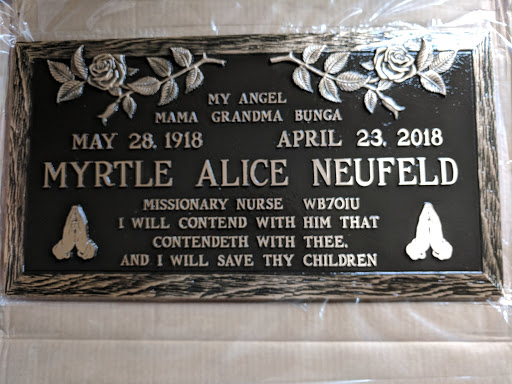
    Mom’s Grave Marker

    When my mother passed away in April, my brother and sisters and I chose a text for her grave marker: “I will content with him that contendeth with thee, and I will save thy children” (Isaiah 49:25, KJV). It was one of mother’s favorite texts, and her concept of “children” was broad. She was a nurse and a teacher and was involved in the lives of many.

    There was, however, a period in her life when she was deprived of her favorite text. Someone with scholarly credentials told her that the text didn’t mean what she thought it meant, and that she could not claim this as a promise for herself that God would save her children.

    She confided this to me in the car one day. She was deeply saddened not to have this text, but she didn’t want to use it if she was misusing it.

    Now if one looks at the context of the passage, both literary and historical, it is not talking about spiritual salvation of the descendants of a modern American mother, or of keeping them safe from all danger. It’s talking about the exiles of Judah who are to be brought back to their homeland. In that sense, anyone outside of the time frame of 2nd Isaiah cannot claim the passage for themselves, as it isn’t talking about them. It’s addressed narrowly and specifically.

    So are quite a large number of Bible verses.

    So here’s how I responded. I told her that yes, indeed, the historical context was different, but that I saw in that passage something about the character of God, portrayed in this passage. God is a God of redemption and works to redeem. God is interested in the generations to come. (It might not surprise you in this context to learn that Psalm 78:1-8 is my theme text for my teaching ministry. God cares about the generations to follow.) I could certainly find many other texts to indicate this as well, but Isaiah 49:25 encapsulates it very well, while placing it in the context of God’s negative judgment as well. This suggests in turn that God’s judgment is intended to result eventually in redemption.

    So while the text was not addressed to Myrtle Neufeld in the 20th century (which was when the conversation occurred), and did not specifically speak of her children and what would happen to them, it did express God’s nature and desire for those children. My mother was never naive enough to believe that, despite any choices made, God would make everything right. What she did believe was that God was working to save her children at all times and in all circumstances.

    Mom decided that she could use the text after all. Mission accomplished.

    So today I read this article from CNN. What struck me in this was not the debate about Romans 13. I have definite opinions on that, but at the moment I will only note that people I respect deeply, who are both sincere and well qualified, disagree with my definite opinions on Romans 13. Well, I should acknowledge that many agree as well! I’ll get to the matter of disagreeing on the meaning of texts in a moment.

    The passage that struck me was Philippians 4:13. “I can do all things through Christ who strengthens me.” Or let me quote a bit more in context:

    10 It is a great joy to me in the Lord that after so long your care for me has now revived. I know you always cared; it was opportunity you lacked. 11 Not that I am speaking of want, for I have learned to be self-sufficient whatever my circumstances. 12 I know what it is to have nothing, and I know what it is to have plenty. I have been thoroughly initiated into fullness and hunger, plenty and poverty. 13 I am able to face anything through him who gives me strength. 14 All the same, it was kind of you to share the burden of my troubles.

    The Revised English Bible. (1996). (Php 4:10–14). Cambridge; New York; Melbourne; Madrid; Cape Town; Singapore; São Paulo; Delhi; Dubai; Tokyo: Cambridge University Press.

    You know something? Here’s the comment from the article:

    When the Apostle Paul wrote that line, he was referring to a Christian’s ability to withstand suffering. It wasn’t about winning; it was about enduring loss. Paul wasn’t taking a victory lap; he was in prison contemplating his execution, says Van Voorst, a professor at Western Theological Seminary in Michigan.

    Um, true. Paul didn’t play basketball. But he wasn’t just talking about a Christian’s ability to withstand suffering. He was talking about being able to handle whatever life throws at you. If you’re a basketball player, what life throws at you might be a career-ending injury or it might be an opportunity to make a couple of free throws to end the game victoriously. Yes, it is quite possible to apply this verse in ways that are not appropriate. It doesn’t mean you’re always going to win, for example.

    Neither does Romans 8:28ff. The passage goes on to say that nothing can separate us from the love of Christ. It’s a powerful passage about spiritual things, about our ultimate salvation. But it’s also a powerful passage about God being with us at all times. It doesn’t mean things will happen the way I want them to. It does mean that, in the end, what God works out will be good. And yes, that good may come in the next life.

    I have two major problems with what goes on in this article, though first I must note that many things noted there about abused texts are quite correct. It’s certainly possible to misuse a text. It’s also possible to disagree quite rationally about the meaning of a text or to rob that text of all applicability.

    1. My first problem is this: Biblical scholars can suck the lifeblood from Scripture. With enough historical study, one can assure that nothing in Scripture applies to anything in anyone’s life. Scripture is understood in community, and how it applies to the present grows out of the community and its understanding. It is important to use historical scholarship as an anchor. It’s important to acknowledge and celebrate the history. But for those who believe that God is still God, it’s quite possible to think that God might act again in ways God has acted before. If you don’t believe God is still God, your argument is on that point, not in the understanding of Scripture.I would hope that scholars would encourage, inform, and edify the members of the community, not nit-pick them into abandoning a personal reading and application of Scripture.
    2. My second problem is simply this: If we understand that there are multiple possibilities for ways to understand and apply Scripture, we should also expect that a news article from CNN that quotes a couple of scholars cannot settle the issue of meaning for multiple Scriptures. This is why I prefer “I disagree with that view” to “That view is wrong.” There are some really bad interpretations out there, but some of those are held by highly qualified people, and a response should include careful argumentation. “There’s another way to view this” will accomplish more, I think, than “Your view of this is stupid.”

    Most obviously, I might suggest that a short article is hardly going to set the record straight on multiple Scripture passages. I found places I agreed and places I didn’t. I know of serious commentators who would agree and some who wouldn’t.

    As a life-giving, spiritually invigorating support, a text can be wonderful. As a club to beat up your neighbor? Not so much.

  • Literal Problems, Literally

    Literal Problems, Literally

    I found Should we read the Bible literally via Facebook, and want to commend it to my readers. I can’t tell for sure, but I suspect the writer is perhaps more conservative than I am, yet he makes many points I frequently try to make. I think he may be a bit too optimistic on the hope of recovering the word “literal” from popular abuse.

    I’ve often said that if I could take one saying away from Christian conservatives it would be, “The Bible plainly teaches …” Our frequent disagreements as Christians seem to challenge that idea. It’s always possible that the teaching is plain and we just want to work around it, but who has the right view and who’s working around? It would be better to just bring forth the arguments in favor and let someone else decide how plain it is.

    On the other hand, the phrase (regarding the Bible) that I’d most like to take from liberals is “We don’t take that literally.” The problem is, how do you take it? The meaning of the word “literally” is “literally” not that settled. Biblical scholars and theologians use it differently than the general population. So whether you’re telling someone to take it literally or not, the odds are they’re going to understand it differently.

    For example, I regard Genesis 1 as never having been written with the intention of developing a sequential, historical, scientific view of origins. Rather, it speaks in the context of its current cosmology and gives God’s role in creation. Contemporary readers would likely have perceived it in those senses, but there’s no necessity that one do so, and the elements the stories are trying to convey are not harmed by changing chronology or method of creation. (In my view, at least!) I do not doubt the reality of God’s action. Is that literal or not? It’s a bit more difficult to answer that question than the example of calming the sea in the referenced article. But that’s why I suggest that “not literal” is also not helpful.

    What we have to do is specify how we do read the text. For example, I read Genesis 1:1-2:4a as liturgy and the rest of Genesis 2-3 as myth, in the best sense of that word. “Myth” frequently becomes a synonym for “not true” when, in terms of literature, it speaks to the foundational function of a story in a society. A myth might not be a true story, in the sense of narrative history (we often use “literal” here), but it also might be. Historical events do become myths in functional terms.

    Ian Paul makes that point in the referenced article with regard to the story of calming the sea. There is extended meaning. One can take the sea and the boat allegorically, but the allegorical meaning is built, for many at least, on the idea that the underlying story really happened. I would disagree that one can’t get allegorical meaning if one doesn’t take the story as historically real, but there would be a difference in that meaning.

    All of which simply leads back to the first point. We need to be careful with our use of language. I think that too many Bible students use their own definition of literal, by which I mean the one understood by most Bible scholars, and tell people they should interpret the Bible literally. People in turn believe they are being told to make the Bible concretely applicable no matter what. Which problem is not helped when someone like Tim LaHaye says to take the Bible literally if at all possible, and then applies it by making all the symbols of Revelation apply in a concrete sense to future physical events. Some of the words in Revelation do refer to such things. Others refer to spiritual things. There is a variety of usage. It’s a vision; expect some variety in the author’s (and Vision-givers) intent.

    Most importantly, try to be aware of how you are taking a passage. Literal/figurative is not adequate. What type of figure is it? What time of reality does it reference?

    In answering those questions, you may well discover why I so dislike hearing that “the Bible plainly teaches.”

  • A Note on Modern Prophecy and Prophets

    A Note on Modern Prophecy and Prophets

    I was given the title “liberal charismatic” (not as a compliment) because I believe that all the gifts of the Holy Spirit are potentially in operation today and that God speaks to people now as much as he has at any time in history. On occasion, this makes for trouble, as people expect me to accept a variety of professed prophets as somehow authoritative due to the office they claim or that is claimed for them. In other word I believe in prophets and prophecy, but I do not consider any particular prophet authoritative as such.

    Going further, I very much doubt that I would have considered any ancient prophet authoritative solely on the basis that the individual made such a claim or that the claim was made about them. I doubt that the prophets themselves would expect such obedience to them apart from discernment. Moses is regarded as the greatest of the prophets in Hebrew scripture, and the record shows him making errors and being aware that he had done so. As a Christian believer in the incarnation, I would have to make a partial exception for Jesus, bearing the divine imprint (Hebrews 1:1-4), yet even here, I would suggest that one with discernment would note the message and the life and then be convinced.

    It is important here to distinguish inspiration from authority. Isaiah, for example, was an inspired person. This is my belief and the conclusion of the Jewish and Christian traditions. Further, both of those traditions have declared the book that bears his name authoritative. If we had lived in Isaiah’s time, however, while many of us would consider him inspired, we would find that his authority was much less accepted. I’m guessing, in fact, that Isaiah may have said many uninspired things in the course of his life, and many things that should not have been considered authoritative. He may well have said many things that were of divine origins that never made it into his book. If we found a fragment of a scroll the purported to contain sayings of Isaiah, and if these seemed, by the best scholarship available, to date back to Isaiah and to share literary characteristics with things we consider to come from Isaiah, would this fragment automatically have authority in the church? Absolutely not. We have canonized a book, not the theoretical potential output of a person, however inspired it may be. The homilies of St. John Chrysostom are quite inspiring, and perhaps inspired, yet they do not have the authority of scripture.

    Many are uncomfortable with the canonization process because however one interprets the process, it is a process in the church that results in the canon. In other words, church authorities are responsible for the collection of materials we regard as authoritative. I think it is necessary that we consider this a Holy Spirit guided process (or even more that the church is a movement guided by the Spirit, to the extent we’ll follow!) or we do not have a good basis for faith. There are those who believe the books have certain identifiable characteristics, and there are certainly some similarities, yet debates about canonicity have resulted from the fact that it’s not quite that smooth and well-defined. (I recommend chapters II [Canon] and III [Authority: Influence and Acceptance] in Edward Vick, From Inspiration to Understanding: Reading the Bible Seriously and Faithfully [Energion Publications, 2011], pp. 17-72, for a detailed exposition of these ideas.)

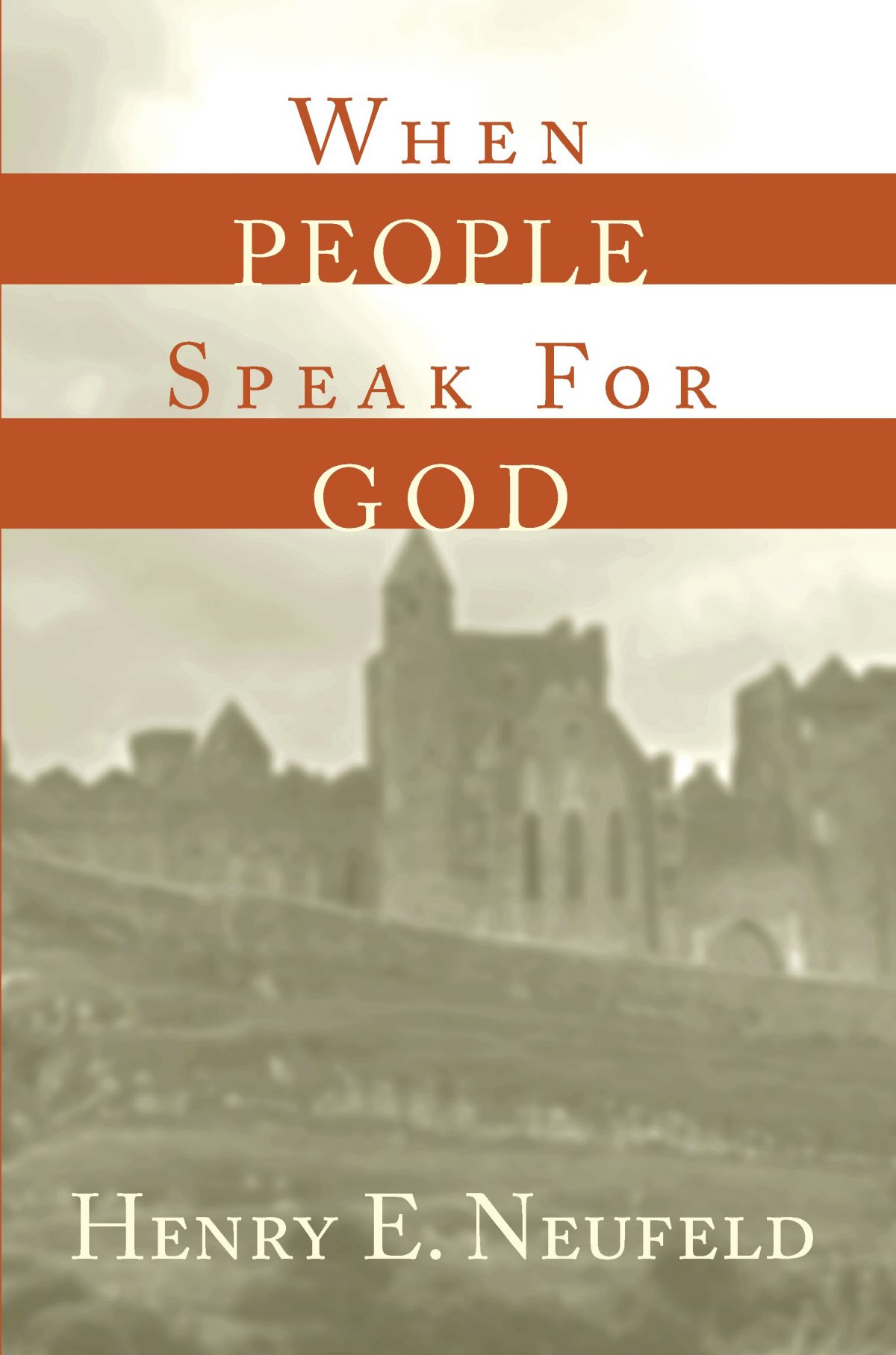
    In my own book When People Speak for God, I make the statement: “The last person, and the decisive person, to hear from God is you” (p. 4). I mean that very seriously, whether we’re dealing with the interpretation of scripture or hearing a word from one who claims to be a prophet, you need to hear, discern, distinguish, and act. I believe that anyone can hear from God. I consider this very scriptural, perhaps as scriptural as anything can be. It is demonstrated repeatedly in the text. We make the people who heard, such as Abraham, Samson’s mother, or Mary, very holy and so separate them. But when they heard from God, they were ordinary people carrying on rather ordinary lives. Anyone may be inspired. Authority results from discernment.

    Let me refer you to a  couple of tests for prophets in Deuteronomy. The one we hear most is from Deuteronomy 18:22, which is that if their word is not fulfilled, they are false. (Jonah would have fallen on this test, but that is for further discussion. See Jonah: When God Changes.) But there is another passage, Deuteronomy 13:1-3, which provides another test. There it says that if someone makes this claim, and even provides a sign which comes through, if they then tell you to worship other gods, they must not be obeyed.

    As a final point on theory, there are those who consider that if a modern word contradicts the Bible it must be rejected, while if it is in accord with the Bible it is redundant. I would suggest that this presents a false (and possibly dangerous) dichotomy. Throughout the stories in scripture, God worked with and guided people, without ever giving an indication that this would change. In fact, I think the best reading suggests that God speaks a great deal and the limitation is more in the fact that we decide not to listen. When a spiritual movement is young and lively, people listen and generate ideas. Then comes structure. Structure is designed to limit and control this spirit. So the authorities tend to want to shut it down at the source. God is done speaking and he ended with the last book we want to see as authoritative. There is room for freedom, and there is some need for structure, but death follows allowing either of those needs to become absolute. Let there be authority, but let authority by challenged.

    I wrote all of that to form the basis for the following. I listen to and apply discernment to any claim, whether the person claims to be a prophet or not. I have generally found in my experience that those who make no claim to speak for God, but just speak what they have learned in their own communion with God speak with much more authority and wisdom than those who make the claim. I think there is a great deal of indiscipline, lack of wisdom, and general confusion in much of the current prophetic movement in Christianity. I will only make specific charges if a person is part of a community of which I am a member, but for myself I work to discern what God is saying. Part of that process is listening myself.

    The one way not to be manipulated is to be a student, a learner, a thinker, and to let the Spirit of Truth work. When that is said, don’t be arrogant. I could be wrong. You could be wrong. Being wrong isn’t the end of the world as long as you keep your mind, your hearing, and your discernment active.


  • My Life and Educational Experiences for Bible Study

    My Life and Educational Experiences for Bible Study

    When I am introduced to speak or teach, mention will doubtless be made of my MA in Religion, concentrating in Biblical and Cognate Languages, though the correct degree name will be shortened, and the language skill usually exaggerated. In my mind, however, there are many things that have contributed to my study of the Bible. I’ve never encountered a biblical scholar who found this surprising, but sometimes non-academics are surprised.

    I thought I’d list some of the key experiences, many of them not of my choice, which have nonetheless been critical in forming my thinking and informing my study.

    1. Bible memorization. As a preteen and early teenager I attended a small private school where we memorized substantial Bible passages. By substantial I mean that we memorized Psalm 119, all 176 verses, Genesis 1 & 2, many Psalms, Luke 2, and so forth. We also memorized scatterings of texts on various topics. This memorization, which I certainly would not have accomplished if it had not been required, has nonetheless stuck with me and helps me see the broader picture. I don’t have to go read Isaiah 53 or 58, because I memorized them, and though I could not repeat them in the KJV (which we used), I still have a fair idea what’s there.
    2. Bible survey. At the same school we were required to memorize titles for most of the chapters (we covered the Psalms by knowing what chapters were in the five books). Along with memorizing, this again helped me with an overview, and made it much easier to find content that I need. I still surprise people by pointing them to a book and range of chapters even when I’m not sure of the specific verse they’re looking for. Further, we had workbooks which asked questions about the text of the entire Bible. These were not thought questions, but content questions. I think it’s unfortunate that people who teach critical and independent thinking often forget that having the facts at hand is useful in thinking, and those who teach the facts often forget that facts strewn about the landscape are not so helpful unless they are critically examined and ordered. Sometimes “Bible study” turns into a simple recitation of opinions, in part because students are so unaccustomed to reading the text and making their own judgment regarding the meaning.
    3. History and historiography. There is an obvious benefit to knowing biblical history and related ancient history. I think some study of other history–any other history–is of great value as well. One of the problems we have with studying the Bible both “seriously and faithfully” is that we make up special methods for studying it as opposed to other texts. We also make up rules for studying biblical history which might not be accepted elsewhere. There’s no substitute for actually reading and studying some good texts on history unrelated to the Bible.
    4. Sociology. I hated my undergraduate sociology, but I’ve come to value that area of study, though I still consider the one undergraduate course I took to have been seriously deficient. People are people, and studying how people behave and respond helps me read Bible stories more faithfully.
    5. And yes, language. Learning to read the biblical languages is valuable in many ways, including being able to spot nuances in the way things are expressed more easily. One of the most important things I learned, however, was how complex the process of translation can be. When you are first learning to read another language (and often for much longer), you are really mentally translating the text into your native language. It can be a struggle and should give you a great appreciation for those who translate on a professional basis. It’s so much easier to criticize scattered renderings where you have a strong opinion than it is to produce a quality translation of a substantial portion of the source text.
    6. English, my native language. The process of understanding an ancient text and then expressing it in modern terms will tax your knowledge of and fluency in your native tongue. Many times I have been trying to express something from the Greek or Hebrew text and have stumbled for lack of a good English expression. Many really bad ideas in biblical studies have resulted from this, such as claims that “English can’t really express this idea.” The real issue is can you use your native language creatively.
    7. Church life. I don’t think you’ll understand the Bible unless you’ve experienced church. I don’t mean that church is such a good representation of what’s in the Bible. Usually not so much. But a great deal of the Bible story is about people trying to form and maintain communities, and if you haven’t actually tried, you may not understand them. I hate church politics, but at the same time church politics is a necessary thing. Politics is what happens when people try to act together. You can do it well or poorly, morally or immorally, but you will have to do it.
    8. Experiencing family. I have nothing against folks who are single, and I remained single until I was 42, and then married and acquired a family all at once. When I was single I was always of the opinion that raising children was likely more difficult than I could imagine. I was right! But again, understanding people who thought of themselves as God’s family is easier after experiencing the parent side of being a family as well as the child side.

    There are other things that have helped, but I hope I have made the point that there are many things other than languages, and indeed many things other than academic study that help one understand. These other elements are even more important if one wants to teach. Being able to clearly express a set of ideas involves not only knowing those ideas well, but also knowing the medium of expression (language, art, etc.) and the audience well. The hermit professor, sitting like Simeon Stylites atop an ivory tower, has little impact on the world around.

    But further, I suspect not one reader of this post does not have one or more of the experiences I listed, or perhaps others I have not. That means that the person without the degree in biblical languages also has a contribution to make. We ought all be prepared to listen and learn.