Threads from Henry's Web

Tag: hermeneutics

  • A Problem in Translation: Isaiah 3:12

    A Problem in Translation: Isaiah 3:12

    In a post on Facebook by Bob Edwards, I encountered an interesting case that illustrates some of the issues Bible translators face in choosing what precisely out of the meaning of a passage to translate and how to accomplish that. My point here is not to critique the critique of the ESV, but rather to look at this particular passage and how it highlights issues faced by translators.

    Biases Up Front

    First, my own biases, especially as they relate to this passage:

    1. I’m egalitarian in that I believe all people, irrespective of gender, should not just be allowed, but should be encouraged to serve in whatever capacity they are gifted for. In case anyone is in doubt, I do mean leadership roles, including pastor, bishop, or whatever title a position is given.
    2. I believe that the Bible conveys to us a message that is inspired by God.
    3. I believe the message is related through the experience and in the cultural matrix of those who receive the message. Thus to get God’s will for my own life, I need to hear God’s message in my cultural matrix. This message may call, and indeed I think it does call for a disruption of the prevailing culture.

    The Passage

    I’m going to ignore further heremeneutical points in how I develop #3 in order to address the issues of this particular passage.

    As for my people, children are their oppressors, and women rule over them.

    Isaiah 3:12a (KJV, emphasis mine)

    The key word is “women,” which is translated in this way by a large number of Bible versions. The NRSVue changed the word to “creditors,” but prior editions also read women. Versions that do not read women include the NET and the CEB.

    So what is going on here? What leads to a particular translation of this word?

    The Text

    Well, the technical issues are rather straightforward, but one’s views on textual criticism of the Hebrew Bible will have some impact. The dominant position among translators has been to give priority to the Masoretic text (MT). There are some who argue for a higher priority on the LXX (Septuagint) and versions translated from it, such as the Syriac.

    In this case, the MT clearly reads “women.” The Jewish Publication Society Tanakh Translation (which I read from their excellent Jewish Study Bible edition), reads women in the text, with a footnote indicating that an emendation would produce “boys.” An emendation is a correction of the text based on internal factors, i.e., without full support of any manuscript. It’s a sort of proofreading of the text looking for things that a clearly copyist’s errors. In this case, the JPS translators did not think the emendation was well supported enough to be in the text, but thought it was worthwhile to let the reader know that there were alternatives.

    The variant translations in other English translations, however, are based on the LXX, which results in “oppressors” and “creditors,” with “creditors” replacing “women.”

    Those are some nice options. I like them. I much prefer them to “women” in the text.

    But what I like doesn’t settle a textual issue. Most of the translators are giving priority to the MT, and likely doing so because they consider that the most probable original reading. One can debate whether they are right, but what one believes about the rights and value of women should not be a basis for deciding on the text.

    I am absolutely not accusing those who have chosen a different reading to translate of allowing their biases to determine the translation. The LXX can reflect an earlier Hebrew reading, lost in the Hebrew manuscript tradition. It would take too long to go into details here. I’m looking at the choices translators made.

    First the Text, then the Translation Thereof!

    The first choice, then, is the text to translate. In this case, you have at least two options, along with some possible emendation of the text. (Note that one possible justification for a conjectural emendation is that there are multiple readings and these multiple readings may have grown from a difficult original which has been lost.)

    For those translators who chose to use the LXX text, conveying the meaning of the chosen text is fairly straightforward. There may be multiple views on what having creditors rule over you means, but it’s fairly easy to translate.

    But what if you believe the text says that “women rule over you” as part of a litany of the problems of God’s people?

    Clearly, most translators have chosen to just go with the word and perhaps provide a footnote. I’m not going to review interpretive notes in various editions, but they doubtless have some explanations for what they believe the passage means.

    Let me give just two options to illustrate the issue:

    1. A literal translation that may be misunderstood in a 21st century context
    2. A figurative translation that obscures the culture of the time in which the passage was first spoken/written

    If we go with #1, we convey accurately (assuming we made the right textual choice) the words that were spoken, but what happens in interpretation? It looks clear to me that this passage is not addressing women in leadership positions directly. Rather, it assumes that the audience will find being led by women to be objectionable, and thus uses this to convey the sad state of the country.

    My problem with this would be that we convey the source culture into the modern context without giving the reader adequate help in understanding the metaphor.

    If we go with #2, we then convey the way in which we understand the passage, but we obscure the original cultural context, and deny readers the opportunity to hear the Spirit speaking through the text in its original context.

    Adding a footnote is good and constructive with either option, indicating what one has done. Unfortunately, footnotes are much more often ignored than read.

    Conclusion

    Either option has the potential to lose some of the meaning. Depending on your primary concerns with the text, you will likely prefer one or the other, possibly vehemently. The difference, however, is in what the translator is most anxious to convey in translation.

    Here’s The Message for reference: “Skinny kids terrorize my people. Silly girls bully them around. My dear people! Your leaders are taking you down a blind alley. They’re sending you off on a wild-goose chase.”

    Ummm.

    Something is always lost in translation. The question is, what?

  • Why I Still Like the Wesleyan Quadrilateral

    Why I Still Like the Wesleyan Quadrilateral

    Yes, I’ve heard the complaints, and those who say it isn’t actually Wesleyan or has deteriorated through the years, but I met it in the United Methodist Discipline before I first joined a Methodist church (though without the name) and I still like it.

    For those who may not be aware of the quadrilateral, it states simply that doctrine is formed not from scripture alone, but from scripture, tradition, experience, and reason. (I discussed the importance of experience in a 2015 blog post.)

    On this blog, I have discussed this several times before. Today I want to add a metaphor and expand a bit on the hermeneutic that I use as a result. As I have noted before, many intractable arguments result from discussing conclusions from scripture without discussing hermeneutics, the way in which we come to those conclusions. The other person may seem obtuse to you, but if you understood how they are coming to their interpretation, you might understand their point of view. You also might still abhor it, but you’d understand it!

    The metaphor I want to introduce here is the confluence of four streams. This metaphor uses “confluence” to suggest the way sources interact to help form doctrine.

    To help clarify this and its purpose, let’s start with its opposite. For many, scripture is a fixed source of data. You go to it, mine the data, and then directly apply it to your life or the life of your community here and now. We should have learned from the experience of the Christian community that it doesn’t work that way. Thousands of denominations and various church splits, carried out by people who thought they were (and generally think they are) faithfully following the Bible should have given us a clue.

    The nature of scripture itself should give us a clue. It is not organized as a compendium of knowledge. It is not organized like an encyclopedia, or like the Boy Scouts Handbook (a metaphor I’ve heard frequently), nor like the more modern FAQ page. It’s a collection of a variety of material produced in a variety of ways, organized and presented differently, and then collected and placed in one volume. Out around the edges, various of those denominations disagree on the details of what should be considered part of the Bible.

    I have this feeling that God accomplishes what God sets out to do, thus when I see a Bible that looks almost entirely unlike what so many people want it to be, I come to suspect that God didn’t want what they want. If God had wanted that, it would be what we have. We don’t, so God didn’t.

    I recognized the problem back in 1993 when I was considering a return to church after about a dozen years, but I didn’t have the vocabulary to express it. For a number of reasons that seem to me providential, I visited what was then Pine Forest United Methodist Church (now Wilde Lake Church), and generally liked what I heard, but I’m an idea-driven person and I wanted to know what these Methodists believed. On being asked, the pastor thought and finally handed me a copy of the United Methodist Discipline.

    As I read that document (the first 100 pages or so, not the organizational stuff in the back!) I encountered the description of what is often called the Wesleyan Quadrilateral. I loved it. Not because I thought it was a good prescription for how to do Bible study, but because I thought it described how people study the Bible.

    We bring to our study what is in ourselves, such as our observation of the world, our thinking about various things, our experiences with others, our knowledge of past events, things we know work for us, things we know do not work, and our relationships or community, in whatever shape that community bears.

    The simple explanation for why our interpretations differ is that we differ. Those differences are not just in us, but in the way in which we are connected to others both in space and in time. These are not things we can escape; they are part of us.

    The Bible looks a great deal like it was produced by people much like us.

    Do I mean by this that there is nothing special about the Bible or that there is no divine inspiration involved? Not even a little bit! What I mean is that I see Divine action in a community of people that stretches not only through space around the world but also that stretches through time. It is a diverse book delivered through diverse people who lived in diverse communities to a wide diversity of other people and communities across the span of time.

    Does this mean that I can learn nothing from the Bible? Not at all! What it does mean is that I can’t reach into the Bible and grab a rock to throw at you or at anyone else, and truthfully call the rock “divine.” And I think that’s a good thing. Possibly even a Divine thing.

    As I was thinking about all of this, I was also looking at some pictures of river confluences (if anyone cares, along the Essequibo River in Guyana and its tributaries), and I thought, “A confluence of four streams comes closer than anything else I’ve thought of to the way the quadrilateral actually works!”

    Of course, there’s nothing quadrilateral about this metaphor. Well, except the “4” part.

    Let me note what I see as the problems of the previous metaphors, especially my own. The whole “quadrilateral” metaphor tended to make four elements equally authoritative in forming authoritative doctrine. In many ways, we’re still looking for that rock to throw, but we want its authority to be derived in a different way.

    My own response with the four-layer filter, in which I suggested that a doctrine should be tested by all four elements, suffers a similar problem. I don’t find it entirely unuseful, but as with many metaphors, it needs a “don’t stretch” warning label. My metaphor of the four-lane highway, a critique metaphor, similarly starts with our hoped-for conclusion and then tests it against the four, in this case looking for a lane that will work.

    The four streams metaphor suggests several things, including that the streams keep flowing. They are not actually static. The water in the stream that results is a mixture of all four, which may vary by season, situation, and geography.

    Is any of this safe? No, but nothing is safe. Doctrine is not a static object that exists outside our community. It is formed in community, practiced and taught in community, and it belongs to the universal church, not to you or me personally.

    This does not make me take the Bible lightly. In fact, it suggests to me that I need to immerse myself in scripture and also in my community of faith in order to be guided by the God who guided the community over time and continues to guide it and me. No superficial glance intended to prove myself right and someone else wrong will do for this.

    We embrace a diversity of interpretations that fit within the streams that meet at the confluence to produce doctrine. It is a continuing journey, along with that “great cloud of witnesses” led by Jesus, the “author and finisher.” (See Hebrews 12:1-3 with reference to Hebrews 11.)

  • Link: Revelation, We Have a Problem

    Link: Revelation, We Have a Problem

    Scot McKnight discusses the problem with the popular understanding of Revelation.

    I recall guest teaching a Sunday School class on Revelation from the study guide I wrote (currently not available as I revise it). The major question from the class was when I was going to talk about the seven-year tribulation and whether I was pre, mid, or post-trib. When I said, “None of the above,” they still insisted that I teach a session on the tribulation.

    Note that I believe there will be time(s) of trouble, what I do not believe in is the seven year tribulation and rapture separate from the second coming.

    The revisions of my study guide include illustrations and putting a bit more explanation rather than just scripture and study questions, which was my original approach. I prefer studying scripture directly as much as possible. For a marketable study guide, I need a bit more explanation.

    In the meantime, check out Scot McKnight’s notes.

  • Inerrancy and Understanding

    Inerrancy and Understanding

    I’ve just added Understanding the Bible – With and Without Inerrancy to the Energion Publications YouTube channel.

    I am the interviewer for this video, and am talking with two very good friends, Alden Thompson, who was my undergraduate advisor, and Elgin Hushbeck, Jr., a friend since the mid-1990s when we met on the old CompuServer Religion Forum. Both have since spoken at conferences which I’ve organized.

    The purpose of this video was not to settle the issue of inerrancy, which is unlikely to occur, but instead to discuss how each of these scholars use their view of inspiration as they interpret scripture. One interesting result is that while the emphasis is different, much of what they’d say about scripture is very similar.

    Neither would be accurately described as either liberal or progressive. This is a discussion between two conservatives, both of whom have a high view of scripture (they discuss what this means), regarding one potential dividing point.

  • Getting What Was Said

    It can be hard to go from a text to a sermon. The line from past to present can be hard work. But at the root, one must hear clearly what was said. Dave Black looks at a text.

  • Alden Thompson Speaking at Adventist Forum Conference

    Alden Thompson Speaking at Adventist Forum Conference

    Alden was my undergraduate advisor at Walla Walla University (then college), I publish two of his books (Inspiration: Hard Questions, Honest Answers and Who’s Afraid of the Old Testament God?), and he is a friend. Many of my friends have heard him speak in person. Here he is presenting a paper at a conference, so is somewhat less free-wheeling than he is normally, but he’s making some important points.


  • Of Hermeneutics and Annoyance

    Of Hermeneutics and Annoyance

    I tend to harp on hermeneutics. Sometimes that’s precisely what people want me to do. Groups that have me back to speak twice, at least, are generally happy with that topic. But others find it annoying, pedantic, and perhaps intellectually snobbish! “Why can’t we just read our Bibles and get on with it?” they ask. Or “Quit making it so complicated!”

    I understand their frustration, but without a great deal of sympathy. Christians have been “just getting on with it” for centuries, and the result is that we’re scattered all over the map in terms of how we understand scripture. I don’t consider having a variety of interpretations to be a problem in itself. To those who yearn for the magisterium, I would say that this simply means choosing one probably wrong option and then sticking with it.

    To a certain extent, just getting on and reading the Bible is a workable devotional approach. But even so, such a devotional approach requires a filter. Just try reading Numbers 31 devotionally and you may see the problem. Now there are many approaches to handling Numbers 31, though the most common one seems to be to pretend it’s not there as long as possible. Pretending that less enlightening (or apparently so) passages aren’t there is an approach to interpretation and application.

    This approach can even be made explicit. I’m embedding a clip from The West Wing, in which Toby Ziegler discusses the death penalty with his Rabbi. In this discussion the fictional rabbi expresses explicitly an approach many take implicitly. (To those annoying people who like to point out that various quotes/clips/etc come from fiction, I’m aware of it. I find fiction an excellent source for launching thinking.)

    Relatively few people (though there are some) would state this quite as explicitly as the rabbi does at the end, “wrong by any modern standard.” But it’s a common hermeneutic in practice.

    And as long as you’re prepared to argue modern standards or what seems, to you, to be spiritually enlightening, and to do so with other people who share your view of “enlightening,” that approach will work. It works quite well on the more conservative side as well, just with different definitions applied to what to keep and what not to.

    The Bible is susceptible to this sort of thing because it does reflect a long time period and lets us see a variety of experiences in different times and places. It doesn’t codify that much, and where it does, it is often under circumstances that don’t apply. In a post yesterday I used Leviticus 18:22 and 19:34. Those each evoke extremely controversial topics. Here’s another text I used in the same Sunday School class:

    The Lord spoke to Moses, saying: When any of you sin and commit a trespass against the Lord by deceiving a neighbor in a matter of a deposit or a pledge, or by robbery, or if you have defrauded a neighbor, or have found something lost and lied about it—if you swear falsely regarding any of the various things that one may do and sin thereby— when you have sinned and realize your guilt, and would restore what you took by robbery or by fraud or the deposit that was committed to you, or the lost thing that you found, or anything else about which you have sworn falsely, you shall repay the principal amount and shall add one-fifth to it. You shall pay it to its owner when you realize your guilt. And you shall bring to the priest, as your guilt offering to the Lord, a ram without blemish from the flock, or its equivalent, for a guilt offering. The priest shall make atonement on your behalf before the Lord, and you shall be forgiven for any of the things that one may do and incur guilt thereby. (Leviticus 6:1-7, NRSV, from Biblegateway.com.)

    In this passage the class largely came to the same conclusion about what applied and what didn’t with some variation. Feeling guilt, accepting responsibility, making restitution—these all seemed very applicable. Not so much bringing a ram without blemish.

    That doesn’t reflect a bad hermeneutic. In this case, most people were distinguishing lasting principles from temporary requirements. Both Judaism and Christianity have theology that removes the need for animal sacrifices in the present.

    The problem comes in when we try to discuss, and more particularly when we try to enforce our view of scripture on someone else. I’m fond of a quote from one of the books I publish, Philosophy for Believers. On page 119 of that book he says:

    Philosophers sometimes appear to talk in obscure ways. They do so because they take into consideration what people often overlook.

    In this case, I’m not simply looking for considerations that are overlooked, though they are, but for the underlying approach that results in a particular view. Quite frequently the way someone understands a scripture is simply locked into the tradition so thoroughly that an individual doesn’t even think about why. A single tradition might function well that way, but when you then discuss the text with someone else, the argument gets immediately heated.

    The reason these arguments get heated quickly is both that we often have a great deal of emotion (way too much, I believe) invested in our religious views and spiritual practices, and also that the other person seems obtuse and perhaps bullheaded not to see the obviously correct and plainly clear meaning of the passage presented. But you may have grown up and studied in a tradition that sees that passage completely differently. The difference may be in what applies and doesn’t, but it can also be in just what it means and how it applies. (I discuss this more in my essay Facing the Proof-Text Method.)

    Let me give an example. In the sermon on the mount, Jesus says a number of things, but I had a debate that dealt with two of them. It started with this one:

    33 “Again, you have heard that it was said to those of ancient times, ‘You shall not swear falsely, but carry out the vows you have made to the Lord.’ 34 But I say to you, Do not swear at all, either by heaven, for it is the throne of God, 35 or by the earth, for it is his footstool, or by Jerusalem, for it is the city of the great King. 36 And do not swear by your head, for you cannot make one hair white or black. 37 Let your word be ‘Yes, Yes’ or ‘No, No’; anything more than this comes from the evil one. (Matthew 5:33-37, NRSV, from Biblegateway.com.)

    Now it happens that I believe that this is an intensified command that we should conduct all of our dealings with others truthfully and with integrity, and thus it would negate the need for an oath. I would go so far as to consider “I swear to you” in conversations or business dealings to be at least unnecessary, and probably more so, it reflects the idea that some of my conversation can be a lie. I don’t think it forbids me from taking an oath to tell the truth, the whole truth, and nothing but the truth in court, though I consider “so help me God” to be questionable for the same reason as “I swear to you.” I speak always with God’s help, not being able to take my next breath without it. The words I would utter in court should be no more and can be no less with the help of God than any others.

    Now you can disagree with me on my interpretation. That’s part of my point. I’m not even fully explaining my approach, though many will see how I’m reading the passage. I’m certainly, in this case, allowing Jesus some hyperbole. For example, I would identify “anything more than this comes from the evil one” as hyperbole. Am I right? That would be an excellent point for discussion.

    Which, in this exchange, my correspondent and I did. I asked him how he interpreted it. He told me that it should be taken in the plain sense. I asked him to define that further. He said it should be taken as it would be understood by any high school student in the U. S. Having dealt with not a few high school students, I wasn’t quite sure what to make of that, but I then brought my counter-example.

    27 “You have heard that it was said, ‘You shall not commit adultery.’ 28 But I say to you that everyone who looks at a woman with lust has already committed adultery with her in his heart. 29 If your right eye causes you to sin, tear it out and throw it away; it is better for you to lose one of your members than for your whole body to be thrown into hell. 30 And if your right hand causes you to sin, cut it off and throw it away; it is better for you to lose one of your members than for your whole body to go into hell. (Matthew 5:27-30, NRSV, from Biblegateway.com.)

    My question here was (and is) just how an American high school student would undersand “tear it out and throw it away” or “cut it off and throw it away.” I see these as hyperbole, emphasizing the need to avoid lust, to get in ahead of the cause of adultery and not just stop before one crosses the threshold.

    My correspondent said that this passage should be understood as one’s willingness to stand up for one’s principles even to physical assault or martyrdom. I have great doubts that this is the way the average high school student would read the passage.

    Now for me, further discussion of the applicability of the passages would require that we first address our points of interpretation. Is it possible that Jesus used hyperbole? If not, just what does the second passage mean? If he does use it, is the first passage actually using hyperbole or is that just my literary excuse to get out of obeying the command of Jesus?

    All of those are great questions to discuss, but to discuss them profitably, we need to ask the questions under the question. In this case my correspondent was willing to do that. Some think I tell this story to denigrate my correspondent. In fact, the discussion was quite profitable and enjoyable. Yes, we disagreed profoundly in the end, but I certainly learned.

    There is one further layer worth mentioning and that’s to ask why a particular hermeneutic is chosen. We’re not actually stuck with our hermeneutic. We had to delay my discussion with Dr. Alden Thompson (Who’s Afraid of the Old Testament God? and Inspiration: Hard Questions, Honest Answers), but it will be rescheduled. That’s where we discuss the inspiration of the Bible, and how one understands that will impact what hermeneutic one will use. Back when I was an extremely arrogant undergraduate, Alden is the one who set me to thinking about this more seriously.


  • Numbers 30-31, Biblical Cultural Shock, and the Process of Hermeneutics

    Since I wrote recently about biblical culture shock, and have also commented from time to time on our impatience with the process in politics, it was interesting for me to come to Numbers 30 and 31 in my evening reading.

    [ncs_ad pid=’9780842334280′ adtype=’aer.io’ float=’left’]Numbers 30 is a sort of kinder, gentler sort of culture shock. It’s about vows in general, and more particularly about women and vows. When can “a woman’s man” abrogate her vow. If you read this passage negatively, there’s a certain sense that a woman needs to be protected from rash vows by a sensible man, whether by her father or her husband.

    Underlying that is a much more robust view of the sacredness of the vow in the first place. Promises are somewhat weaker in our modern society, so we really have two levels of culture (at least) in this passage to get past. The first is the idea that a rash vow to do something stupid would actually be binding. I think our modern view would be that if it’s rash and stupid, don’t do it, and God will forgive you. If it’s a verbal agreement with someone else, we still might wiggle out. Even if it’s in writing, we’ll probably try. But those “outs” are not permitted by the text.

    It’s important to note a category of cultural issue here. We have to adjust to the question in order to understand the answer. No, this isn’t presented in question and answer format, but much of Torah is answering various questions about how a group of people will come to be a society and live together. How do we work things out? There are other passages in scripture where this problem occurs. Take 1 Corinthians 14:40 as an example. I’ve heard this quoted so many times, often to state that we must rigorously follow the order of service contained in the bulletin. But the question Paul is answering here is not “can there be deviations from the church bulletin?” Rather, he’s talking about a large group coming together in which most people feel they have something to express in the gathering. (What about church bulletins? Use your common sense. I’d suggest saving trees by not printing them.)

    So once we’ve gotten past that, we have the next issue which is the subjection of the women to men in what is clearly a serious spiritual issue. There is an assumption underlying this passage that the responsible spiritual decision maker in the home is a man, whether the father or the husband. It is on his action that the result is based.

    I’m an egalitarian, and so, I suspect, are many of my readers. I don’t want to debate that right now. Whether you are egalitarian or complementarian, consider your reaction to the passage in connection with your existing beliefs about the roles of men and women. I’m reading this passage through with the Cornerstone Biblical Commentary on Leviticus, Numbers, and Deuteronomy, with the Numbers portion written by Dale A. Brueggeman. Here’s a quote regarding vows in the New Testament:

    As in this text, wives were expected to be subject to their husbands (Eph 5:22-24; Titus 2:5; 1 Pet 3:1-7), although mutual consent had become a strong consideration (1 Cor 7:4). … (397)

    So we’re going to find some variety among Christians today in how they might relate to the relationship between men and women reflected in this passage, as well as to the general idea of a vow.

    [ncs_ad pid=’1893729907′ adtype=’aer.io’ float=’right’]The attitude toward vows becomes a critical element of Alden Thompson’s exposition of what he calls “the worst story in the Old Testament” in chapter 6 (pp. 99-123) of his book Who’s Afraid of the Old Testament God?. The passage covered is Judges 19-21. There the nation of Israel has sworn a rash vow that they will not give any of their daughters to the Benjaminites as wives. When they find that they have reduced the tribe of Benjamin to a small number of men (no women at all!) they want to find a way out. Now the modern idea would be to get together and repeal the previous vote, but the sacredness of the vow/oath is such that this isn’t an option for them. Instead, they find alternative ways to provide wives. (You’ll have to read the passage.)

    I would suggest that, contrary to Alden’s chapter title (as much as I like it), the next chapter in Numbers may be the worst story in the Old Testament. Numbers 31 is pretty dismal. Those who might call Christianity or Judaism violent religions might well cite a passage like this one.

    And herein lies the question of interpretation. We find it easy to bypass or ignore a passage like Numbers 31. You’ll find very few Christians who believe that the behavior of the Israelites, even though it is presented as divine command, is something we would apply today. We’ll have various reasons for doing so, and in looking at how we apply this passage, we can discover a great deal about how we interpret scripture.

    Think about how you do it. Then compare how you respond to Number 31 with how you responded to Numbers 30. Are the two approaches the same? Or do you have a sort of ad hoc explanation which comes out with a result you “know” is right, but which cannot be applied universally?

    I’d suggest that we need to consider our method of biblical interpretation carefully and ask whether the same method works everywhere.

    I wrote something about Numbers 31 for the spring issue of Sharing the Practice. You can find that article online, Preaching an Unpreachable Passage.

  • Seven Marks: Apostolic Teaching

    Seven Marks: Apostolic Teaching

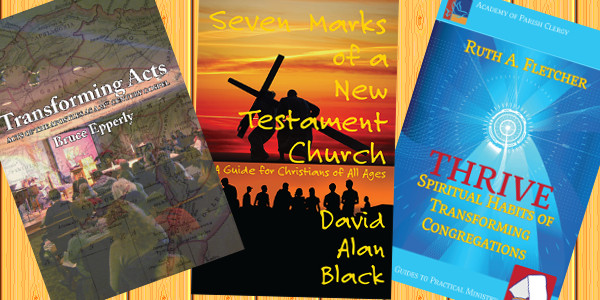
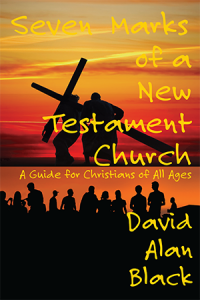
    nt church booksIn the video, Dave calls this simply “The Word of God.” I’m embedding it at the end of this post.

    9781631990465mOne of my observations in talking to people about their churches and church programs is that they find the first moment when a book or program differs from their situation and take one of two approaches. First, they might discard the entire thing. This is fairly common. That won’t work for us. It doesn’t matter that what we’re doing isn’t working either. Second, they try to follow the program precisely, despite any differences, because if it worked for the expert who wrote the book, it has to work for them.

    Neither of these is a strategy that is likely to succeed. Each person, community, church congregation, denomination (or jurisdiction within a denomination) is different. Each one will have different opportunities and perhaps a different call from God. I am passionately convinced that sharing the good news about Jesus with the world is our general calling. Whether that is going to involve a food pantry, classes, involvement in broader community outreach, collecting money for projects across the globe, or any one of a myriad of other possibilities, is wide open.

    Especially in protestantism we tend to downplay tradition, but our church tradition has a role. The way you will carry out certain missions is going to depend on the history of the church congregation. We don’t all get her in the same way, and we’re not going to move forward in the same way. Dr. Ruth Fletcher, in her book Thrive: Spiritual Habits of Transforming Congregations devotes an entire chapter to choosing, to the necessity of discerning the right path and making and carrying out decisions.

    The reason I wanted to emphasize this right now is that quite frequently we think we cannot benefit from something like “apostolic teaching” or “the Word of God” unless we absolutely agree on what it is and how we’re going to deal with it. But just amongst the books that I publish, we have Dr. David Alan Black, a Southern Baptist Greek teacher (and full-time missionary, he’d insist!) and Dr. Bruce Epperly, a United Church of Christ pastor, seminary professor, and a process theologian who are both going back to the same place: Acts of the Apostles. Now I’ll tell you that if you read both of their books, something I urge you to do for reasons beyond the fact that I publish both, you’ll find quite a number of things they disagree on and quite a number of points of different emphasis. But in a church that is often drifting and dying while repeating the same behaviors that led it to its current malaise, that one similarity is enormous. Let’s look back at the early church. Let’s ask what made Christianity what it is. Perhaps there is something there that would help us.

    Now one interpreter might be looking for a definitive, apostolic pattern to apply and follow. Another might be looking for a series of commands that one can carry out. Another might be reading the story and asking how are stories might relate. Yet certain things come out of such a study, and certain things result from going to the source.

    I’m very protestant in ethos. I’m not at all interested in things like apostolic succession, in the sense of a series of people who had hands laid on them by a person who had hands laid on them leading back to the apostles. But I’m very interested in seeing what those early apostles did. I’m very interested in connecting my story to theirs. There is nothing about that process that is mechanical or that allows me to depend totally on someone else’s work.

    Dave makes this point in the interview as he talks about us teaching one another. Why am I comparing what Dave has said with what two other authors have said? Is it so that I can sell more books? Of course I want to sell more books. I’m never going to lie to you and tell you I don’t care about selling books. But that’s not the key reason. I started publishing to do this. I wanted us to teach one another, to do on a broad scale what Dave is talking about in the local church (where I also want to see it done). I want is to help one another learn. I hope we find ourselves challenged.

    There is nowhere that I want to see this more than in our use of the Bible. How is it that we can begin to see more of this individual Bible study in the church? And let me specify here by “individual” I mean “individual in community.” Let’s avoid two serious errors: 1) That Bible study is individual without any community control or involvement, and 2) That Bible study is a communal affair that can be handled by an expert passing out information. The reason I named a series I publish “participatory” in spite of the number of people who thought that word was too long, is that it is individuals participating in community who have the best possibility to find the message for themselves, their churches, and their communities.

    Ruth Fletcher comments on this. Note how she doesn’t propose the same type of study for all types of churches.

    Even though this is an age when people care more about what the church does than what it believes, transforming congregations know they must lessen the gap between people’s experience of God and the church’s teaching about God if the church is once again to become a reliable source of wisdom. Beliefs matter. Transforming congregations that are creedal churches help individuals discover a deeper truth in the words they recite; those that are non-creedal churches create safe space where individuals can work out their own guiding beliefs. They create space within their own tradition where people have the freedom to honestly express doubts, to say what they do not believe, to ask questions that don’t have predetermined answers, and to wonder about the mysteries of the universe. (Thrive, p. 91)

    Bruce Epperly has a similar idea:

    The first followers of Jesus “devoted themselves to the apostles’ teaching and fellowship, to the breaking of bread and the prayers.” They were a church whose spirituality was truly holistic. They prayed and they studied, and discovered study was a form of prayer. We need thinking Christians, who take theological reflection seriously, who ask serious questions, and challenge unhealthy and superficial images of God and human experience. (Transforming Acts, p. 48)

    If you think the various visions are distant from one another consider this: What would happen to the church in America if we were to focus on studying the early church looking for insight into how to be a church following Jesus in the world today? I think that a number of wonderful things might happen despite how we decided to approach the question and the hermeneutical principles we took to the effort. Do I want us to debate such hermeneutical principles? Absolutely! The do make a difference. I think one of the greatest things we can do is to consider and discuss that issue seriously. But if we started at that point, we’d already be devoting ourselves, in our own limited ways, to the apostles’ teaching. Wouldn’t that be a good thing?

    The section on this mark in the video begins about 15:30. I’m not setting the video to the starting point, as I suspect most who are willing to invest time in the video will watch it as a whole once.

  • John Walton on Different Hermeneutical Presuppositions

    In an interview published on The Jesus Creed, though released by IVP, John Walton comments on different hermeneutical presuppositions. He is referring to the endless debates about how and when creation took place, but the ideas might be useful regarding other topics.

    Walton: We too easily believe that the world of biblical interpretation is a black and white world—that whatever view we have adopted is right and everyone else is wrong. Such a view is too facile. In many cases we do our best to be faithful interpreters, but the Bible just doesn’t offer enough information to give irreproachable confidence. Even as evangelicals with a common core of theological affirmations, we work with varieties of hermeneutical presuppositions and we weigh the evidence differently. Consequently we develop different preferences based on which view has the preponderance of the evidence supporting it. Though ultimately one position undoubtedly is right and others wrong, we are not always positioned to see that well.

    That being the case, it is uncharitable to simply label those who disagree with you as wrong, and even as less than Christian, when they have done their best to engage in faithful interpretation based on orthodox theological presuppositions and a defensible hermeneutic. Theoretically, people will know we are Christians by our love, and I am not sure that we always do a good job of that if we are constantly engaged in denouncing others who are simply trying to be faithful to the text.

    There are several things that interest me here. Overall, I wish more people would take this sort of thing to heart. Of course, when we get to “orthdox theological presuppositions and a defensible hermeneutic” we reopen all the questions again. Often the debate is just what presuppositions are truly orthodox and what hermeneutical principles are, in fact, defensible.

    This reminds me of another post I read recently, titled Types of Scholarship, and posted by Ken Schenck. There are a number of quite useful comments in the post, but he says that “a good deal of scholarship probably is bunk.” That’s very useful to know, right up until the moment that you have to determine just what is bunk and what isn’t. The problem is that not everyone agrees. I have published things that one person will say is quite horrible while another thinks it’s forward looking and well researched. I’ve encountered these contrasting attitudes much more frequently with other scholarly works I read.

    My point here is that much of what is written in any field is going to be discarded eventually, and the process of scholarship–publishing, getting responses, thinking some more, perhaps getting discarded–is probably necessary. If any person or small group of people was permitted to exclude the bunk, then we’d be very likely to filter out the gems, stuff that looks like bunk at first but turns out to be exciting.

    It reminds me of the comment one of my professors in graduate school made about Mitchell Dahood. I was making use of his commentary on the Psalms (Anchor Bible) and commented that I felt that in many cases I just couldn’t buy what Dahood had to say, yet in some cases he would come up with what seemed to me positively brilliant. I wondered if that was the result of my inexperience at the time. The professor said no. He said that Dahood was only right about 20% of the time (no idea where he got that figure!), but when he was right, he was so right that he made up for all the other times.

    So if that professor was right, would I consider Dahood’s work on the Psalms extremely valuable (20%) or bunk (80%)? Personally, I’m willing to filter the material to get the creative input.

    And since I usually try to mention a book or so that I publish, this post relates closely to the book I’m Right and You’re Wrong: Why we disagree about the Bible and what to do about it by Steve Kindle.