The Sunday School class I co-teach is beginning a study of Proverbs. I’m not leading this one. I’m relaxing a bit, I hope. But I have indicated I’ll do a bit of blogging on the material.
The assignment before the beginning of the study tomorrow was to read introductions to the book, both from the resource text we’re using (The Daily Study Bible volume on Proverbs) and from various Bible editions. I’m not going to try to provide my own introduction, except to note that I read multiple introductions that seemed to me to provide an excellent launching point for a new reader.
My interest is the place of Proverbs in the biblical canon. Why is it that we have a collection of proverbs in the canon of scripture?
While we work with the canon of scripture all the time, we don’t often think about it as much. The “canon” refers to those books which are canonical, which means they’ve been accepted by church law as authoritative in the church. This is a fairly strict legal definition in the Roman Catholic and Eastern Orthodox traditions. In Protestantism, it’s a bit less fixed. The general concept remains.
People often start talking about scripture with the concepts of inspiration and truth, and if a book is determined to be “inspired,” it is then scripture. That’s not precisely how this happened. There was a long process of history, tradition, discussion, and finally definitive determination. The determination can be better termed a determination that a particular set of books was and is authoritative rather than that these books were inspired.
Now that may catch you a bit off-guard. Surely these books are inspired! In fact, I believe just that. But being inspired is not sufficient to make them scripture. I personally hold that God has inspired other writings which are not scripture, but I do not advocate that such writings become part of scripture. The key difference is that the selected writings were seen as authoritative.
“Authoritative” involves the value of the material over time and space. For example, an ancient prophet might have sent a message to a particular individual that was specific to that individual. That message might have been from God, inspired by God, and sent by God’s authority, but if we discovered it today, as interesting as it might be, it would not be authoritative.
In my view, accepting the value and authority of scripture today involves accepting the validity of the choices made over time, and the belief that we have the inspired scriptures that God intended as authoritative scripture. God can and does act through the events of history and the actions of groups in order to bring the message.
So in Scripture we have the central authority. The question then becomes why does this particular passage, or in this case this particular book belong in the canon, and as part of the canon what is it supposed to accomplish.
It’s almost cliché to talk about different types of literature and how we interpret those. But it is almost equally cliché that we expect the end point of this interpretation to be some specific doctrinal conclusion. In other words, we expect all of scripture to end up providing us with data.
I would suggest (and have suggested) that while scripture is valuable for forming doctrine and guiding practice, this isn’t the main thing. In my book When People Speak for God, I suggest that we come to the Bible for information, but God comes to us in scripture for conversation. And eventually this conversation is to result in transformation.
Wisdom literature as a whole, and Proverbs in particular challenges a couple of assumptions often held about how we get scripture, and I think in turn about what scripture is to do for us. Wisdom literature comes from living. It’s collected wisdom of a culture. It leads us to ways of thinking, rather than to provide set conclusions. It’s not just about the wisdom it passes on, but it’s about how that wisdom is collected. It doesn’t come in visions, dreams, or direct divine speech. It comes through the process of living.
As an example, take Proverbs 26:4 & 5.
Don’t answer a fool according to his folly, lest you become like him. Answer a fool according to his folly, or he’ll become wise in his own eyes.
I got up before dawn and cried out. I put my hope in your words.
I’ve said in some of these posts that there were many ways I could go, but, of course, I choose one. With today’s text, though there are doubtless a number of ways I could go, I really kept thinking of one thing: What’s with the early morning thing?
Many people talk about their morning devotions, and emphasize prayer before you get up, and the importance of meeting God as you begin your day. This is supposed to make your day better. One of the side effects of this emphasis on morning devotions is that many who are not morning people simply decide devotions are not for them.
Let me start with the procedure that I have used in producing these meditations. It starts in the evening, generally shortly after I go to bed. I read and begin thinking about the text I’ll write on the next evening. Then I look back at it through the day, especially if, as has happened multiple times, I actually forget which verse I’m meditating on while I’m working. In the evening I write my post on the text and schedule it to be published the next day at 7 am, at which point I will be meditating on the next one.
Any number of times, this procedure has failed me. I’ve been so tired some evenings that I went to sleep without looking at the text first. A couple of times, I’ve forgotten until after work, and started meditating around dinner time. Once I completely failed in following my procedure, and sat down to write about the text and read it at the same time. Oddly enough, I still found a meditation, even though it was “speed meditation”!
While I like a morning prayer time, that time is infrequently the most important time of prayer for me in the day. For me there will be various times during work. Lunch time is one of the better times for reading scripture. Prayer is more likely to come multiple times during the work day at my desk. I’m pretty sure a strong majority of my prayer time over the last 30 years has occurred at my desk at work.
I believe the psalmist when he said he got up before dawn and cried out. I believe that was a good thing for him. But everyone approaches their day differently. The pattern we impose on our meditations can be itself a work, and a dead tradition.
I would suggest spending some time in prayer and meditation at any time that strikes you as valuable. Then watch what happens. I have found that if I don’t take breaks during the day and do something to keep my spirit in shape, the day will go badly. I have found it doesn’t matter if I pray right at the moment I get up. Now sometimes I do, because I feel called to pray about something specific.
No matter when you call out to God, you can apply the second half of this verse and hope in the divine words, whether on the pages of scripture or spoken to you in your heart.
Last night in our Tuesday night group we discussed signs and guidance. How does one get and follow the right guidance from God?
We were reading the Matthew 2:1-12, and following my gospel parallels, I suggested a parallel reading of Luke 2:8-20, which we did. You have various signs, a report of scriptural interpretation, dreams, and angels between the two stories. There are some remarkable parallels of content, along with some substantial differences, fitted to the message of each gospel writer.
But being a person who likes to set off discussion I asked about our individual ability to hear from God. How would we feel about the various means of receiving a message from God? How would we discern whether a message really was from God.
Pretty much everyone had experienced the twin claims about hardships. On the one hand people will claim that you’re obviously getting close to something big, and the devil is trying to prevent you from getting there. On the other, there are those who would say that if you’re on the right path, things will be easy, so you should correct course.
The same sign seems to mean two different things.
We mentioned some responses at the time to the fire at Notre Dame cathedral. Any lover of art and architecture can hardly help but be saddened by that fire. Yet it immediately has become a “sign” for many things.
At Energion, we’re releasing a book titled Ditch the Building on May 17. It’s available for pre-order now. It’s definitely not connected. But in some people’s minds, it could be. The fire has been seen as a sign of the times, of disasters to come for our planet. It’s been seen as a sort of judgment on dead religion. My Facebook feed is littered with lessons being learned with varying degrees of actual connection. Well, really very little connection.
No matter whether you are listening to a new idea, a message someone claims to have received directly from God, or the interpretation of a passage of scripture, your individual mind, enlightened by the Holy Spirit, is the final filter to separate sense from nonsense. The last person, and the decisive person, to hear from God is you. Even the firmest believer in the detailed accuracy of the text of scripture will realize that many interpretations of that scripture are nonsense.
… This is the other end of the telephone cord. Inspiration is not just about God. It is about how God communicates with human beings. Thus it is not just about God’s perfection; it is also about humanity’s imperfection. It is not just about God’s infinite perspective; it is also about humanity’s finite capacity to understand.
The human mind is probably the most neglected part of God’s creation….
I used to use Bill Mounce’s introductory grammar in teaching Greek, and I appreciated his attention to linguistics, though I generally wanted more. (I’ve switched to Dave Black’s Learn to Read New Testament Greek for those rare occasions when I have the opportunity to teach Greek. I’m probably prejudiced as Dave is a friend and I publish the Spanish translation of that book, Aprenda a leer el Griego del Nuevo Testamento.)
In a blog post, Mounce discusses the question of whether one needs to translate every word of the Greek text into English to be faithful to get inspiration and inerrancy of scripture. As one who doesn’t believe “inerrancy” is a good word to describe scripture, I find the question especially interesting. It illustrates the reason why I don’t like the inerrancy debate. So often, despite any efforts by scholars who use the word carefully, inerrancy leads to this sort of distorted question. Mounce correctly points out that the word is not necessarily the correct bearer of meaning to try to translate. Mounce suggests the meaning is found “more at the phrase level,” though I would say that meaning is found at a variety of levels, and that the ideal translator would convey the meaning expressed.
In this case, however, the “ideal” translator is more “ideal” in the sense of being “not real.” No translator can convey everything. If a truly master translator, for example, conveys the precise emotional feel of a Psalm, he or she is very likely to obscure the history. Eugene Peterson, in The Message, does an outstanding job of getting the punch of a parable’s message, and the result is beautiful, almost ideal. Well, until you realize that you’re losing both the historical connection, and also in some ways the possibilities inherent in the story form itself. This is not a criticism of The Message. I love it. I like to read it. But by accomplishing some things, the translator of necessity fails to accomplish some others. Therein lies the value of multiple translations.
Therein also lies the value of sharing one’s thoughts. It is imagined that someone like me, who reads the text in the original language, has somehow truly attained and truly understands. But over and over, I read and translate a passage for myself, and then I read it in other translations and find enrichment because those translators chose different options than I did. Sometimes I’ll say, “No, I think my way is better,” while at others I might correct what I did. Sometimes I just find that the other ways of expressing the meaning round out my understanding, while I can’t really find a translation that conveys the whole.
I was given the title “liberal charismatic” (not as a compliment) because I believe that all the gifts of the Holy Spirit are potentially in operation today and that God speaks to people now as much as he has at any time in history. On occasion, this makes for trouble, as people expect me to accept a variety of professed prophets as somehow authoritative due to the office they claim or that is claimed for them. In other word I believe in prophets and prophecy, but I do not consider any particular prophet authoritative as such.
Going further, I very much doubt that I would have considered any ancient prophet authoritative solely on the basis that the individual made such a claim or that the claim was made about them. I doubt that the prophets themselves would expect such obedience to them apart from discernment. Moses is regarded as the greatest of the prophets in Hebrew scripture, and the record shows him making errors and being aware that he had done so. As a Christian believer in the incarnation, I would have to make a partial exception for Jesus, bearing the divine imprint (Hebrews 1:1-4), yet even here, I would suggest that one with discernment would note the message and the life and then be convinced.
It is important here to distinguish inspiration from authority. Isaiah, for example, was an inspired person. This is my belief and the conclusion of the Jewish and Christian traditions. Further, both of those traditions have declared the book that bears his name authoritative. If we had lived in Isaiah’s time, however, while many of us would consider him inspired, we would find that his authority was much less accepted. I’m guessing, in fact, that Isaiah may have said many uninspired things in the course of his life, and many things that should not have been considered authoritative. He may well have said many things that were of divine origins that never made it into his book. If we found a fragment of a scroll the purported to contain sayings of Isaiah, and if these seemed, by the best scholarship available, to date back to Isaiah and to share literary characteristics with things we consider to come from Isaiah, would this fragment automatically have authority in the church? Absolutely not. We have canonized a book, not the theoretical potential output of a person, however inspired it may be. The homilies of St. John Chrysostom are quite inspiring, and perhaps inspired, yet they do not have the authority of scripture.
Many are uncomfortable with the canonization process because however one interprets the process, it is a process in the church that results in the canon. In other words, church authorities are responsible for the collection of materials we regard as authoritative. I think it is necessary that we consider this a Holy Spirit guided process (or even more that the church is a movement guided by the Spirit, to the extent we’ll follow!) or we do not have a good basis for faith. There are those who believe the books have certain identifiable characteristics, and there are certainly some similarities, yet debates about canonicity have resulted from the fact that it’s not quite that smooth and well-defined. (I recommend chapters II [Canon] and III [Authority: Influence and Acceptance] in Edward Vick, From Inspiration to Understanding: Reading the Bible Seriously and Faithfully [Energion Publications, 2011], pp. 17-72, for a detailed exposition of these ideas.)
In my own book When People Speak for God, I make the statement: “The last person, and the decisive person, to hear from God is you” (p. 4). I mean that very seriously, whether we’re dealing with the interpretation of scripture or hearing a word from one who claims to be a prophet, you need to hear, discern, distinguish, and act. I believe that anyone can hear from God. I consider this very scriptural, perhaps as scriptural as anything can be. It is demonstrated repeatedly in the text. We make the people who heard, such as Abraham, Samson’s mother, or Mary, very holy and so separate them. But when they heard from God, they were ordinary people carrying on rather ordinary lives. Anyone may be inspired. Authority results from discernment.
Let me refer you to a couple of tests for prophets in Deuteronomy. The one we hear most is from Deuteronomy 18:22, which is that if their word is not fulfilled, they are false. (Jonah would have fallen on this test, but that is for further discussion. See Jonah: When God Changes.) But there is another passage, Deuteronomy 13:1-3, which provides another test. There it says that if someone makes this claim, and even provides a sign which comes through, if they then tell you to worship other gods, they must not be obeyed.
As a final point on theory, there are those who consider that if a modern word contradicts the Bible it must be rejected, while if it is in accord with the Bible it is redundant. I would suggest that this presents a false (and possibly dangerous) dichotomy. Throughout the stories in scripture, God worked with and guided people, without ever giving an indication that this would change. In fact, I think the best reading suggests that God speaks a great deal and the limitation is more in the fact that we decide not to listen. When a spiritual movement is young and lively, people listen and generate ideas. Then comes structure. Structure is designed to limit and control this spirit. So the authorities tend to want to shut it down at the source. God is done speaking and he ended with the last book we want to see as authoritative. There is room for freedom, and there is some need for structure, but death follows allowing either of those needs to become absolute. Let there be authority, but let authority by challenged.
I wrote all of that to form the basis for the following. I listen to and apply discernment to any claim, whether the person claims to be a prophet or not. I have generally found in my experience that those who make no claim to speak for God, but just speak what they have learned in their own communion with God speak with much more authority and wisdom than those who make the claim. I think there is a great deal of indiscipline, lack of wisdom, and general confusion in much of the current prophetic movement in Christianity. I will only make specific charges if a person is part of a community of which I am a member, but for myself I work to discern what God is saying. Part of that process is listening myself.
The one way not to be manipulated is to be a student, a learner, a thinker, and to let the Spirit of Truth work. When that is said, don’t be arrogant. I could be wrong. You could be wrong. Being wrong isn’t the end of the world as long as you keep your mind, your hearing, and your discernment active.
One of the joys of being a publisher, as I’m sure I’ve mentioned a couple (hundred) times before, is the authors I get to work with. I have long considered our understanding of biblical inspiration and authority to be critical to discussions of Christian theology, polity, and ultimately our day to day life. Often we can at least get our bearings in serious debates by at least identifying the differences in how we are using the sources.
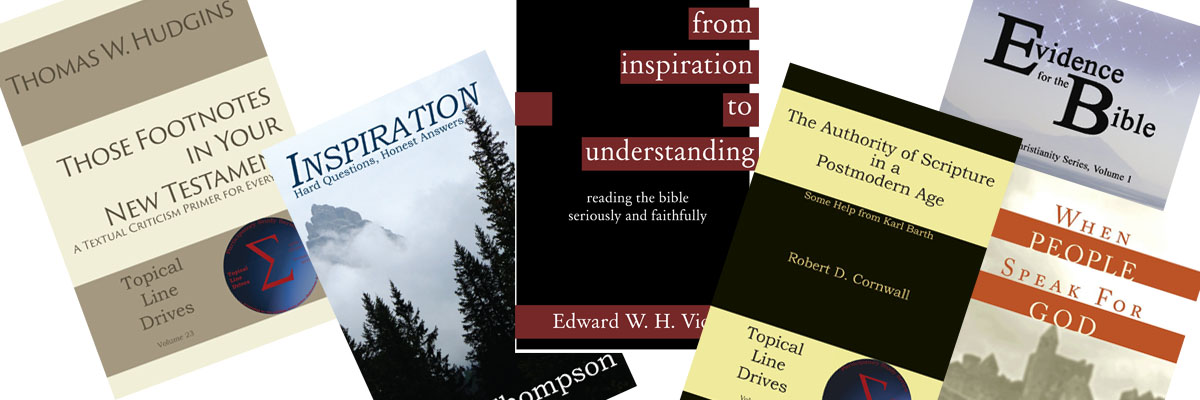
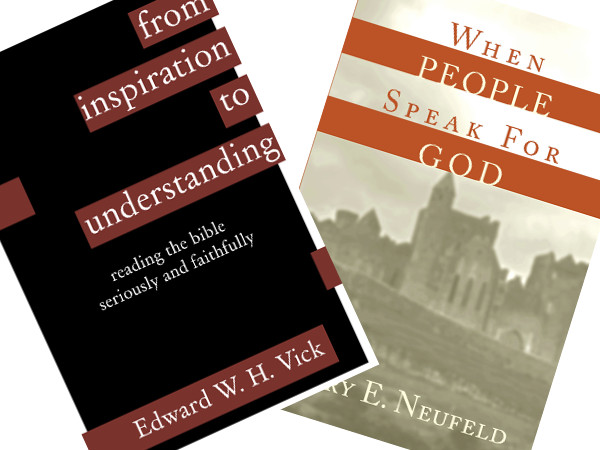
Because of my interest in this I wrote the book When People Speak for God, which is generally at a popular level. After I wrote that book, I encountered Dr. Vick through one of my other authors and received his manuscript for From Inspiration to Understanding. If his book had been written before, rather than after mine, it would have contained numerous footnotes referencing Dr. Vick’s work.
When we laid out From Inspiration to Understanding at Energion, we were using Scribus, which is actually an excellent page layout product, but is not quite the thing for an extended, thoroughly referenced book. The footnotes had to be laid out by hand, and were done as chapter end notes. This doesn’t convert well to electronic format, so there has been a considerable delay in getting the ebook editions out. But now they are complete.
The limited number of comments focus, as might be expected, on New Testament. In fact, it seems to me that most discussion of textual criticism tends to focus on the New Testament, and this sometimes leaves the wrong impression. For example, to a query about the reliability of the biblical text an apologist might respond with the number of manuscripts we have … of the New Testament. But what about Hebrew Scriptures?
If I were to answer the question posed (and if it’s not obvious, I’m not a practicing textual critic), I would have to say that when looking at a passage in the Greek New Testament I’m going to look at the external evidence first, and then the internal. This is for practical reasons. With the number of New Testament manuscripts, versions, and quotations available, one hopes to find the best reading somewhere in the external evidence. Internal evidence can help refine one’s choice, but in practical terms, most of the actual readings are likely to be contained in some manuscript somewhere.
I wouldn’t argue that all readings that ever existed are to be found in one of our extant manuscripts. There is a theoretical place for a conjecture. So I wouldn’t say that the external evidence places a fixed limit on where we can go with the internal evidence, but I would say that it sets a pretty fair boundary. I would require substantial evidence to go with a conjecture, and even then, it might be a conjecture about an original reading that would generate the external evidence as we have it. So it’s a line, but it’s a line in the sand. It can be moved. In my experience, however, it is rarely necessary to move it.
But when we turn to the Hebrew Scriptures/Old Testament, the situation is much different. The manuscripts we have come from a time much more removed from the composition of the texts involved, and there are less of them. I think the time between the composition of a text and the first extant manuscript receives too little attention in discussions, because the time before a text is established as sacred is when I suspect much of the variation will occur. It’s quite possible that there are a number of New Testament variations that we don’t consider simply because they are no longer represented in the manuscripts.
The shift to Old Testament textual criticism was rather interesting for me, as it seems to some extent that you travel to a different world. There are necessary differences because the nature of the external evidence is different. There are even more differences because there are more texts that are obscure. In reading commentaries, one might think that for OT texts lectiodificilior is turned on its head as one runs through possible readings, including conjectures until one finds a reading that “works.” Nobody is going to quite say it that way, but that is how it often feels. And, of course, lectio dificilior has its problems in that it’s quite possible that a difficult, yet translatable, reading could be introduced by error. So it’s not an absolute.
In the Hebrew scriptures we have more cases in which a passage is truly obscure. Nobody really knows how to translate or interpret. So you get a translation and footnotes. I had a professor in graduate school who absolutely hated the idea of conjectural emendation. He simply wouldn’t accept any. But he’d accept some very wild conjectures on how to translate the text that is actually there. He and I went a few rounds on what the difference was between arbitrarily conjecturing a text that you could then translate or arbitrarily choosing some English words you could say were a translation of the text. In either case, the meaning presented by your translation is a conjecture.
Conjectural emendation has a bad name, and there is a good reason for this. Critical commentaries on Old Testament books are often filled with conjectural reconstructions of the text that have very little basis in either an internal analysis of the text and transcriptional probabilities or in any external evidence. Often the emendations simply make the book fit some theory of composition, or better represent the theme that the commentator believes, for whatever reasons, must have been intended by the author or redactor.
Nonetheless, in theory, it is possible that a reading not contained in any manuscript could be the correct reading. The problem is always making a solid case that it is. Few conjectures have managed to gain the support of a strong consensus of scholars.
Does any of this make any difference to you and me as we try to study our Bibles? Well, yes and no. The problem, as I see it, is to acknowledge the value of textual criticism without believing one must get to that elusive “original text” in order to have good theology or be a good disciple.
I would suggest that it’s important to seek the best text of scripture simply because it’s important to seek out the best information we can on any subject. At the same time I don’t think we need to be concerned about variants, even substantial ones. We tend to take the biblical data in a selfish way, as though all the manuscripts exist in order to provide us with an accurate view of scripture. But each one of those manuscripts was (part of) someone’s Bible at some time and place. I can worry about whether the Hebrew text behind the Septuagint (LXX) is better or if the Masoretic Text is better, but early Christians lived and did theology with the LXX and the Reformation (not to mention Judaism) thrived on the MT. These aren’t just witnesses to which text I should use; they are Bibles, sacred texts, used by real people.
The much criticized Vulgate, abandoned by protestants in pursuit of the sources, was nonetheless the Bible for many people. So in modern times was the Living Bible, as flawed as I think it was as a translation.
If God desired the kind of precision that some of us seem to think is required of the biblical text, I think God would have taken a different approach. But instead of a clean process in which we can give absolute or near absolute answers to all questions about the text, we have a variety of materials produced in different ways. While we long for perfection, for the inerrant text, we don’t actually have it. The claim of inerrancy is made for the autographs, not for any text you have or are likely to have in your hands.
Which, incidentally, is why I have little use for the doctrine of inerrancy, one way or the other. And let me be clear that I do mean as expressed in the Chicago Statement. I just don’t care whether the autographs were inerrant or not. If God was happy to use an error-prone process of transmission, why must I conclude that he somehow protected the original manuscript.
Let me illustrate. Supposing that Ezekiel (my very most favorite prophet) is hearing from the Holy Spirit, and he slips and writes the wrong word on the page. It’s a mistake. The manuscript is now no longer inerrant. The autograph is flawed. Oops!
Now suppose instead that the first scribe to copy the book made the very same mistake, after which the original was destroyed. Now we have only one copy of the book of Ezekiel, and it has the very same error.
The first scenario is considered problematic. The second is OK. It’s a copyist’s error.
I disagree. God has chosen to provide God’s Word to us in written form with every evidence of human involvement all along the way. I find it amazing that the text has been preserved as well as it has been. I find it more amazing that it has been available, used, and defended by people in so many places and at so many times. Many of these people were defending texts that various modern scholars would call “corrupt.” They might have been preaching from a manuscript copied by a careless scribe. And yet preach they did! And they lived out their faith as they knew how.
It’s not just thousands of witnesses to the text. It’s thousands of Bibles used by many more thousands of people.
We ask the question of whether we can rely on the text. I think it’s the wrong question. The question is whether we can rely on God who, through the Holy Spirit, has been speaking since before anyone conceived of a Bible and who is ready to talk to us today. We’re not perfect. None of us. We don’t have perfect texts. None at all.
But we can work through the multitude of materials available to us and so communicate not only with God, but with the community of faith that God has established. It’s a community that extends across time as well as space. It’s made up of people who were never perfect but always trying and hoping.
Now don’t let the fact that we can’t get 100% of the original, perfect text keep you from getting as much of it as you can. And don’t let the fact that you can’t really know all there is to know about God keep you from trying to get to know God better.
I think that God has set this up so that in trying to know God better (vertically?) we also need to get to know and appreciate one another (horizontally). It is in community that we come to know.
Or better, it is in community that we keep on the journey toward knowing.
I’ve discussed this before, and discussed it both in my books When People Speak for God and Not Ashamed of the Gospel: Confessions of a Liberal Charismatic. I was asked after my Sunday School lesson last Sunday whether Zephaniah’s prophecy in 3:1-8 applied to America.
Let me annoy everyone: No and Yes.
There is pretty much nothing in the Bible that’s addressed to you. One could argue such passages as John 3:16, which are talk about the world in a way that probably encompasses all time. But in general, the words of the Bible are addressed to specific people at specific times. They are also spoken by specific people, but that’s a bit beyond this post.
I start this with the Ten Commandments. They were not written to you. We often treat them as the most universally applicable part of scripture there is, though we don’t actually keep them as Christians. As someone who grew up Seventh-day Adventist, I’m unusually aware of the Sabbath command. We Christians don’t even start to keep it, yet we pretend the Ten Commandments are central.
And we’re right not to keep them literally and specifically because we can read right at the start that they were addressed to a particular group of people at a particular time, and that group was not us, nor was that time now.
Nonetheless, if we consider the Bible in some sense inspired, we will see divine principles going into action in the life of the people of Israel. Those divine principles will be relevant, and will likely make those Ten Commandments applicable again—in principle. It’s interesting that while we claim to keep the Ten Commandments, and fail to do so literally, we also seem to miss out on the principles, such as not portraying God with any images. There’s an important principle behind that command, yet we create both mental and physical images of God that are both limiting and indestructible. God, for us, is in a box.
[ncs_ad pid=’1893729370′ adtype=’aer.io’]
And that fourth commandment isn’t irrelevant. Time belongs to God because he’s the creator. In my view, God doesn’t claim less time, but rather more. How do we honor God with our time and recognize him as creator with each minute?
But further, the Bible was not written to people with our philosophical and scientific views. Our options for how to think about things have changed. So if we’re going to find the principles, we’re going to have to see through the cosmology and the metaphors and translate them to our time and place.
Why couldn’t God speak directly to us and make it clearer in our terms? I would suggest several things: 1) God does speak to us today if we’ll listen, 2) It’s important to realize that God has spoken at many times and in many ways (Heb. 1:1), 3) It’s important to become part of the faith community over time as well as across space and culture, 4) The search for God may well be more valuable than finding God.
I think that if we truly treated the Bible as the treasure it is, as the combined experience of a community of faith over time, it would help us understand how to be God’s community today. Understanding metaphors that are foreign to each of us personally can help us bridge the gaps that must be bridged every day in order to live as God’s people doing God’s work in God’s world.
God has spoken. God is speaking. God will speak some more.
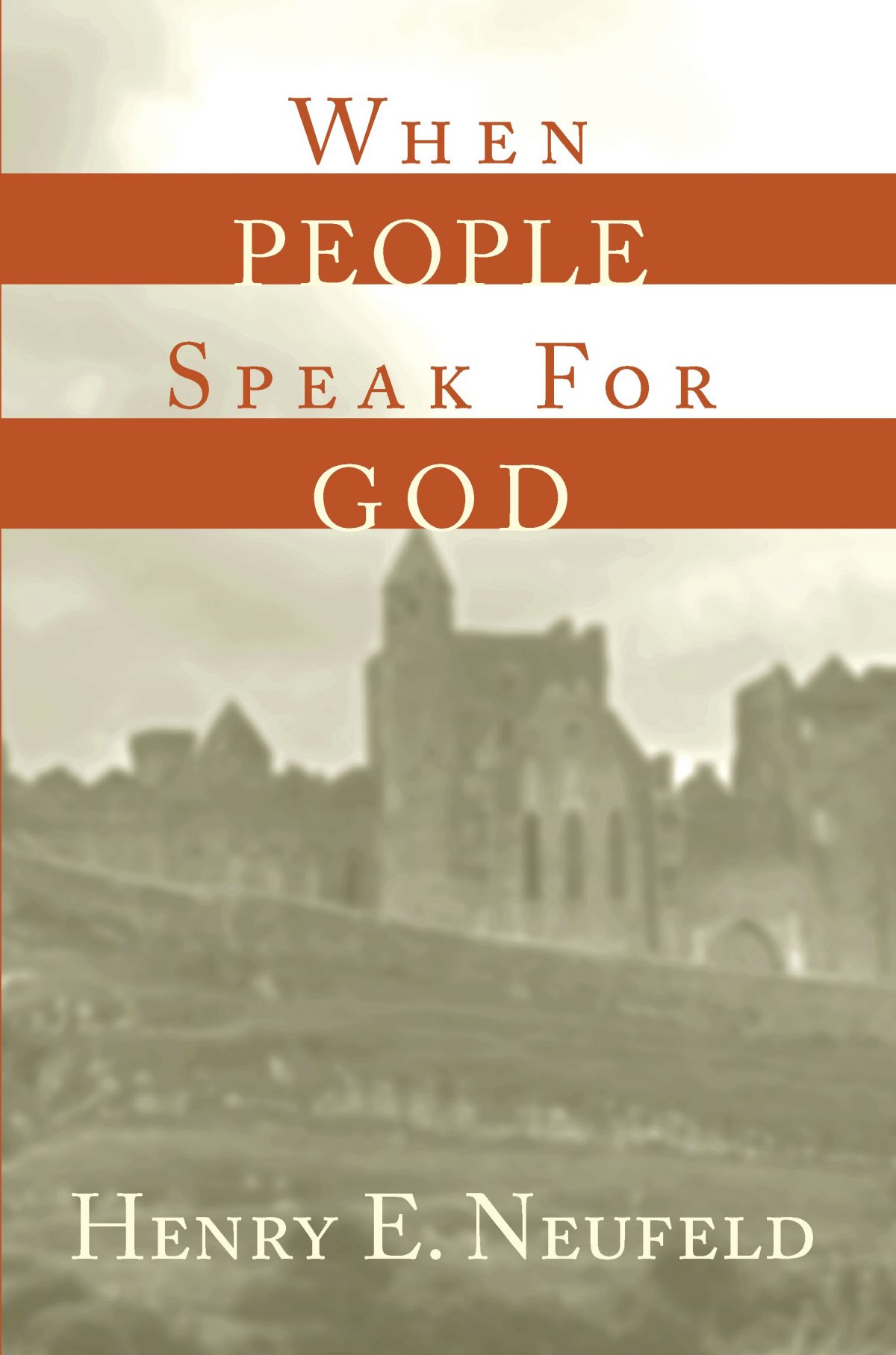
I ran across this while looking for something else. Dr. Alden Thompson was the author of the first book sold by Energion Publications, though it was published before I bought and renamed the company. We’ve now published a 5th edition, and this is overall our best selling book.
In this presentation Alden using a number of Adventist specific references, but I think the message comes through. There are a variety of responses to the violence in the Old Testament. One of the keys to Alden’s approach is his insistence that it is all inspired, even the parts we don’t like very much, and he makes that claim in the video. Alden’s teaching at Walla Walla University was quite formative of my theology and I still enjoy working with him. We’ll be releasing a second edition of his book Inspiration: Hard Questions, Honest Answers later this year, as the publisher of the first edition allowed it to go out of print.
Some other recent posts from the Energion Discussion Network:
Process Theology: Theology for Progressive Christians by Bruce Epperly
This relates to the discussion of whether God acts in history and if so how does God relate to history. This is a substantial issue in this entire study.
The Battle for the Bible by Steve Kindle
No, not the battle of Harold Lindsell. Well, yes, sort of. This essay and the two that follow it discuss why we differ widely on what we believe scripture teaches.
Books referenced tonight or at other times in the series:
Eschatology: A Participatory Study Guide by Edward W. H. Vick
This is the primary guide for this initial portion of my study. I am using it to help us look at definitions and map out the territory before we go into verse by verse studies of various passages.
From Inspiration to Understanding: Reading the Bible Seriously and Faithfully by Edward W. H. Vick
This is the more serious, 355 page discussion of inspiration. If you’re serious about studying what inspiration and authority are and looking at what those definitions mean for how we read the Bible, take the time to read this. I obviously also like my own book When People Speak for God, but if it had been published after From Inspiration to Understanding instead of before, it would have had dozens of footnotes to it.
History and Christian Faith by Edward W. H. Vick
“God acting in history” is a phrase that evokes many questions of definition. This little book will help you explore that idea and how it reflects in many areas.
The Adventists’ Dilemma by Edward W. H. Vick
What does it mean to say that Jesus is coming soon, if anything? This book examines the idea of a literal return of Jesus “soon” in a detailed way.
Process Theology: Embracing Adventure with God by Bruce Epperly
Process theology placed on a lower shelf. Bruce Epperly doesn’t shy away from application, but talks about how we should live with a God who is directly involved and impacted by the world.







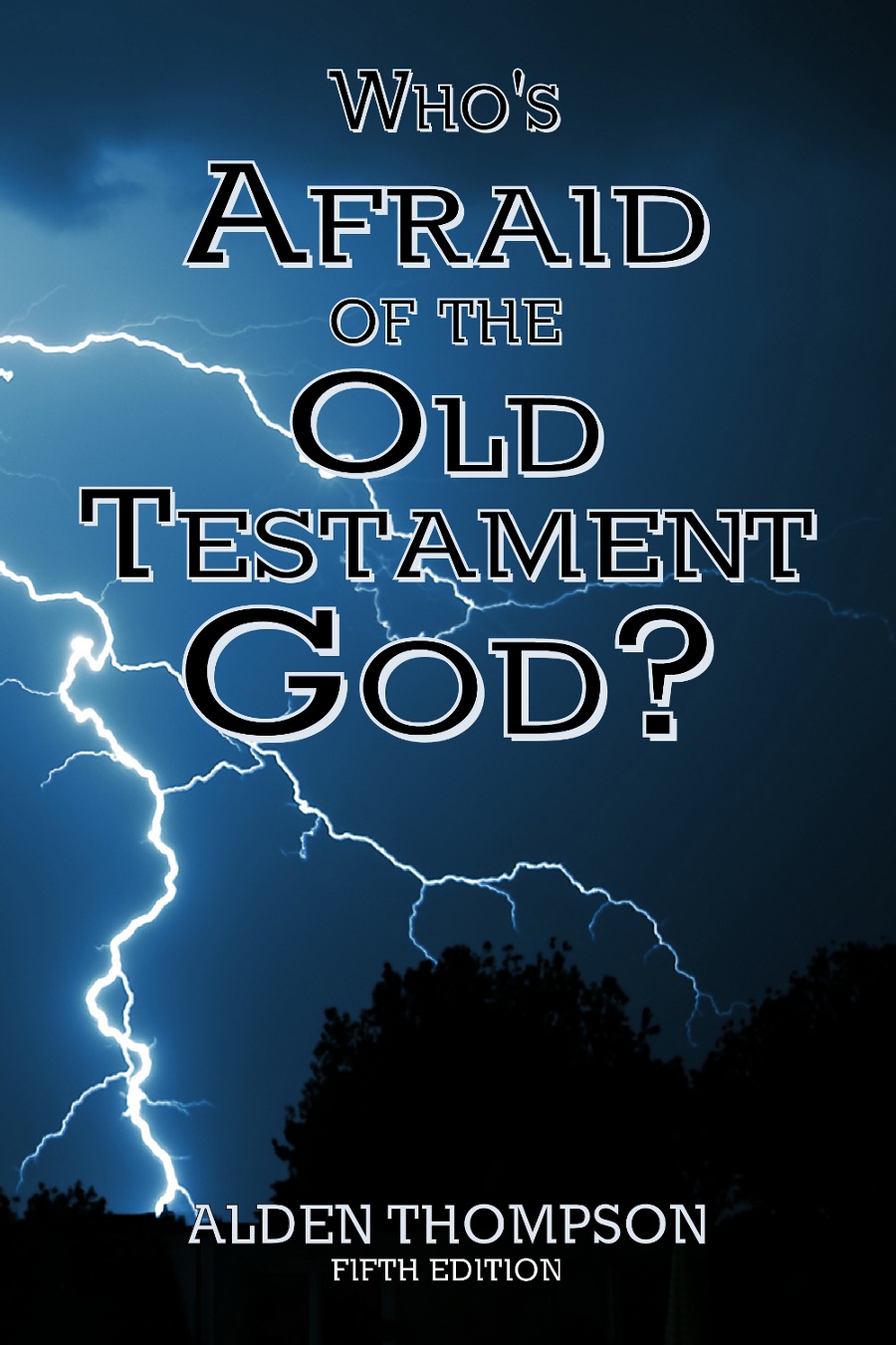
 I ran across this while looking for something else. Dr. Alden Thompson was the author of the first book sold by Energion Publications, though it was published before I bought and renamed the company. We’ve now published a 5th edition, and this is overall our best selling book.