Threads from Henry's Web

Category: Discipleship

  • The Importance of Studying Together

    The Importance of Studying Together

    Church and Sunday School are two different activities. Both can be valuable in one’s Christian life, but they do not substitute for one another.

    Sunday School has generally been in decline over the last few years, but I think there’s something even more important. Sunday School has too often been a light review of scriptures, taught in a general way and not an education that helps people grow in both faith and action.

    I looked at some statistics for Sunday School attendance, but didn’t find anything that addresses this specific problem. There’s a general decline in Sunday School attendance as opposed to church attendance, but there are many variables.

    My primary question is this: What is Sunday School attendance doing to make you a better disciple and to help you fulfill the Gospel Commission?

    Here are some questions:

    1. How long has it been since you learned something new in Sunday School?
    2. How long has it been since your Sunday School lesson led you to further Bible or other study during the week?
    3. Have you been encouraged to learn something about your neighbors, especially those not like you?
    4. Have you been encouraged to take positive action by something you studied?
    5. Have your beliefs been connected to a way of living in the world?

    These are not difficult questions. But sometimes making your Sunday School and church programs help people accomplish these things might be quite difficult.

    I have frequently encountered someone in Sunday School who has heard the preacher say something about witnessing, or helping those in need, or building up and serving in the church and community. They almost always have the question: How do I do it?

    And that’s where Sunday School should shine. This is a time for people to learn how to put things into action.

    I’m not one who thinks this has to happen on Sunday. Small groups that meet at other times are also good. The problem is to get people involved in such groups and to keep the groups from becoming another “check the box” activity. Small groups of any kind are not to make God like you more. God already loves you. These are to help you thrive in the life you now live by faith.

    Is this your experience? If not, why not? How do we grow more?

  • Strength in Weakness

    Strength in Weakness

    But he said to me, “My grace is enough for you, for strength is made complete in weakness.

    2 Corinthians 12:9a (my translation)

    This is one of the many passages I say are easy to preach, but not easy to practice. The problem with that line is that you may be preaching it wrong if you aren’t, in some way, practicing it.

    I don’t mean that God may leave you behind or exclude you because you have failed to understand weakness. Note the “grace” in there. Often we think grace is a substitute for taking action. It’s not. It’s the only means toward effective action. I may be saved by grace, but if I go banging my head against the wall, it will still hurt.

    I may also accept that I depend on Christ for everything, and still if I go trying to fix everything myself, refusing help, it’s still going to hurt.

    I was reminded of that last week when I injured my lower back. I thought I injured my hip, but those who know say otherwise. I immediately went into fix-it-myself mode. First I waited to get medical attention because it wasn’t bad enough. Then, well, I ended up going to the hospital by ambulance.

    I posted the following on Facebook:

    I ended up taking an ambulance ride to the ER early yesterday for an injury sustained in caregiving for Jody. The injury was actually about a week ago, but kept getting worse until I was in bad shape. The EMTs couldn’t find any blood pressure at first, and when I told them I hadn’t taken my blood pressure meds they said, “Thank God! You probably would have crashed.” Then my blood pressure rebounded to very high, but they said it stayed in a range they’d expect for the situation.

    In any case, the diagnosis is a strain to the sciatic nerve for which I have more pills to take in the next week than I’ve probably taken in my life up to now. I’m fairly weak and unable to make the walk to my office safely. (The hospital put an armband on saying I was a falling risk. I wish I could argue, but they were right.) I surprised them, I think, by refusing morphine, but they had said with the meds they were giving me the problem would begin to clear up in another half hour. I said I’ve been surviving this for a few hours now, I’ll wait for the steroids, etc to do their thing.

    From my Facebook Feed.

    I got a text of sympathy from my friend (and Energion author) Dave Black. Now Dave didn’t start preaching about weakness, but he has a connection there that reminded me of it. Perhaps it’s the title of his dissertation, Paul: Apostle of Weakness.

    Now Dave didn’t say anything to me about weakness. He didn’t have to. I started thinking about it.

    Here are some things that have occurred to me about weakness over the last few days as I try to recover.

    1. We don’t like to accept or admit weakness. In my case, this was shown as I tried to avoid medical care. Yes, I told myself I didn’t have time, but what I didn’t want to do was go get some orders from a doctor that I might even have to follow. A fate to be avoided diligently!
      I was sitting in my dining room, in serious pain, after I had nearly passed out in my bathroom. Do you want to guess what I was thinking? “I wonder if I could drive myself to the hospital.”
      I’m reminded of a aphorism I first heard in a military context: “After a certain point, quantity has a quality all its own.” Let me use something similar here. “After a certain point (which is probably behind you), strength has a weakness all its own.”
    2. Even after we accept weakness, we don’t want to embrace the extent of our weakness. Having realized that driving myself to the emergency room was not an option, I immediately thought of friends. Who can give me a quiet ride to the ER? The friend I chose to call is a retired physician. After a couple of questions he said, “You need to call an ambulance and go that way.”
      Ouch! I am not old and infirm. I am not sick. I am not weak. I don’t need an ambulance.
      And then facts jump up and intrude.
    3. Once we realize a weakness, we’d rather not ask for help. I encountered this in myself as my friend was driving me home from the hospital. I also needed to get some medications at the pharmacy. I started out with the idea of going by the pharmacy on the way home. It was only a little out of the way. Then I realized, weak again, that I couldn’t contemplate that ride.
      So, not wanting to ask my friend for any more help, I suggested he take me home and I’d get someone else to make a run later than afternoon. He had, after all, done enough!
      That was not his opinion. He dropped me off, took the prescriptions, got them filled, and brought them back to me.
      Lesson? You know more helping people and they’ll help more than you think.
    4. Those of us who have leadership roles want to avoid looking weak. This can come in many ways. Sometimes we don’t want to admit we don’t know the answer to a question. Sometimes we don’t want to admit family problems. Sometimes we just don’t want to admit anything. And church congregations tend to jump on such weaknesses. Might I suggest reading 2 Corinthians 12? Paul had that problem. Paul chose to model weakness. Jesus had that problem. The disciples, and especially Judas, thought he should wield strength. He used weakness. Your ministry may be tough with admitted weakness, but it’s going to be real, by God’s grace.
    5. Those of us not in leadership look for strong leaders to lead and protect us. This reflects our own lack of faith in “strength completed through weakness.” We preach about Jesus going to the cross. We talk about loving one another, but we believe that can only work while protected by strength, accomplishment, and yes, superiority. Bottom line, we don’t actually believe what Jesus said.

    The church is, in so many ways, not a collection of the “good” or “righteous,” or of people who can claim superiority to those around them, but rather it is a group of people who are so wounded that we can’t even admit how wounded we are. We’re trying to get to the point where we realize that the great physician is there.

    But that’s OK. The weakness is there. God’s gonna get you in the end!

  • The What-About Lifestyle

    The What-About Lifestyle

    Especially in political discussions we frequently here something like “but what about,” followed by a misdeed of the folks on the other side. In turn, we hear complaints about “what-about-ism,” which tends to annoy people on the other side, whichever other side that may be.

    This is not, as you might think, a preface to a political post. Rather, I have found myself asking just where this “what-about” approach comes from. And as I thought about it, I almost immediately realized that this is a lifestyle. Not a rare one either!

    Whether it’s in our personal lives, our work, or in our ministries, we have this tendency to look down the road, across the aisle, or over there somewhere, and we find someone or some organization that we can put in the “what-about” position.

    “My church is not doing well. But it’s doing better than that church down the road.”

    “My language is inappropriate sometimes, but not as often as _____’s.”

    “I’m occasionally rude, but there are others much more rude than I am.”

    “My church is really quite mission oriented. Well, more mission oriented than most churches in our area/denomination/conference.”

    We usually talk about judging and Matthew 7:1 as a command not to hurt other people. That’s not a bad lesson. We shouldn’t be judgmental. (I’m only a little judgmental, much less judgmental than several people I could name!) But there’s another point here. When we start living by judging other people, we start deteriorating ourselves.

    Paul said something about this:

    We do not dare to classify or compare ourselves with some of those who commend themselves. But when they measure themselves by one another and compare themselves with one another, they do not show good sense.

    2 Corinthians 10:12 (NRSVue)

    Many feel that if we aren’t vigorously judgmental, people will feel that they can slack off. They’ll do worse. But because the only standards we can achieve are fallible human ones, this judgmental approach actually achieves the opposite effect. There are some who become discouraged on being judged and give up. But there are many who, expecting judgment, carefully blunt the standards to make themselves look good.

    One key way of blunting the standards is to point at someone else.

    The northern Kingdom of Israel demonstrated this. It’s interesting to read the judgments given of the kings. Kings are generally judged to the first king of the northern kingdom, Jeroboam I. Later kings are either more evil than he was or evil, but not as much. The general standard is that they kept on repeating the sins of Jeroboam I.

    What strikes me about this sequence is the final king, Hoshea.

    In the twelfth year of King Ahaz of Judah, Hoshea son of Elah began to reign in Samaria over Israel; he reigned nine years. He did what was evil in the sight of the Lord, yet not like the kings of Israel who were before him.

    2 Kings 17:1-2 (NRSVue)

    He did evil, but he wasn’t as bad as his predecessors. And Samaria fell and the northern tribes went into exile in his reign.

    Hoshea could have said, “What about Ahab? He got to complete his reign!”

    [L]ooking to Jesus, the pioneer and perfecter of faith….

    Hebrews 12:2 (NRSVue)

    Put your eyes on the right standard. Better, let Him draw them.


    Some years ago I did a short presentation on this, which I titled “The Sin of Jeroboam.” Video here is kind of ancient, so bear with it!

  • Luke 11:9-13 – Giving

    Luke 11:9-13 – Giving

    9 And I say to you, “Ask, and it will be given to you, seek and you will find, knock, and the door will be opened to you. 10 For everyone who asks receives, and the one who seeks finds, and the the door is opened to the one who knocks. 11 Which father among you would give a snake to his son when asked for a fish? 12 Or if he asks for an egg, would give him a scorpion? 13 So if you, being evil, know how to give good gifts to your children, how much more will your heavenly father give the Holy Spirit to those who ask him?

    Luke 11:9-13 (my translation)

    One question that regularly arises out of this story is simply this: Will God just give us anything we ask for? We should find an answer to this by simply reversing the question. Which father, if his son asked for a serpent, would actually give that son a serpent? There is an assumption behind the story that the son is seeking good things and the father is giving those good things. The question arises more with the passage in Matthew 7:7-11, where, instead of the Holy Spirit, our Father in Heaven is said to give “good things” to those who ask.

    Luke’s focus is specifically on the Spirit and spiritual things, but the principles remains the same. A good father would not only provide good and appropriate gifts, he would also avoid dangerous gifts. A good father cares for the child who is asking and is not just a slot machine in the sky, prepared to rain whatever is asked on those asking.

    Now this might be seen as narrowing or tightening the passage. I would say rather that it’s putting passage into it’s own logical context, or rather recognizing what type of a story it is. It’s a story about desire on the one hand and care on the other. And within that care is also a story of respect, of seeing the person.

    This passage could say, “Don’t bother asking, because God already knows what you need and will surely take care of you.” But it doesn’t. It says ask, seek, knock.

    If God is on the other side of the door, why do I have to knock. Why doesn’t God show me the door and encourage me to go through it?

    God treats us as persons. God made us as persons. God recognizes our own being.

    “Behold I stand at the door and knock. If anyone hears my voice and opens te door, I will go in to him and will eat with him and he with me” (Revelation 3:20). Wow! Courteous God! But it’s not courtesy. It’s actual caring. I’d like to be your friend, companion. I’d like you to be part of my community, represented by sharing a meal. But I’m going to wait until you open the door.

    Think of the power on either side of that door. God the creator on the outside. Created being, totally dependent on that power on the other, and the one with all the power is waiting on the one without for permission. It’s our Luke 11 story turned inside out. But it tells the same story about the nature of our heavenly parent who is raising us up as his children.

    Many fathers hope for their children to be what they, the parents, planned those children to be. They have a plan for their children’s lives and they’ll manipulate them with all their power to become just what their parents would like them to be.

    Then there are those fathers–it is the week leading to Fathers’ Day!–who simply want their children to be whatever they choose to be and do that well.

    There are those who think that free choice diminishes God’s sovereignty. I don’t agree. I see the ultimate real power in a God who could force everything, but instead says, “If you want it ask.” “If you want in, knock.” I’m powerful enough to be unthreatened by treating you as a real person, one with desires, joys and sorrows, strengths and weaknesses.

    “I’m not threatened because I also choose to be the person who responds. You can’t make me, but I will.” So speaks the creator of everything from subatomic particles to galaxies.

    “I’m your good Father.”

  • Matthew 6:9b – Father

    Matthew 6:9b – Father

    Our Father in heaven.

    Matthew 6:9b

    Jody provided me with texts about fatherhood this week and quoted just this line specifically. It amused me when I read The Five Gospels, a product of the Jesus Seminar (Robert Funk, specifically), that the word “Father” was the one thing the seminar agreed was definitely something Jesus said.

    But what exactly does this mean? Why does Jesus invoke the image of fatherhood in telling us how to speak to the Father in heaven?

    I’m going to quote four authors that I publish and then make my own comments.

    First is Bruce Epperly, in his book One World:

    At the heart of the Lord’s Prayer is Jesus’ invocation of God as Abba, a term used to describe the intimacy between father and child. The God Jesus prayed to is not distant and demanding,
    preoccupied with rules and regulations, and ready to pounce on our slightest mistake. The God Jesus prayed to is like the best of parents – loving, patient, listening, and guiding, willing even to die for the well-being of the child.
    In calling God “Abba,” Jesus raised the bar for our images of God and our images of parenting. A good parent aspires to be godlike in her or his loving and protective care for vulnerable and impressionable children because this is the way the God of the Universe behaves. The Infinite is the intimate, and loves us more than we love ourselves.

    Bruce Epperly, One World: The Lord’s Prayer from a Process Perspective, p. 8

    There has been some controversy on just what the connotation of “Abba” is, but I think that Jesus’ own relationship to the Father gives us plenty of ground to hold that there is intimacy involved.

    The second book is Ultimate Allegiance: The Subversive Nature of the Lord’s Prayer. I like the title of this book, because we so often take passages like Romans 13 in such a way as to put temporal authority above divine authority. The Lord’s prayer subverts human authorities in any way in which they push us away from God. Our duty as Christians is to follow Christ’s example, not to glorify the temporal authorities, no matter how much they demand it.

    We see this sense of adoption present in Paul’s letter to the Romans, where he suggests that having been freed from the spirit of slavery we can now cry out ”Abba Father,” because the Spirit is speaking through us giving witness to our adoption as children of God. Yes, it would appear that Paul emphasizes this relationship by combining the Aramaic abba with the Greek pater, to emphasize this change in status. Therefore, when we address God as our Father – recognizing the gender related problems inherent in that confession – we give thanks that God has adopted us into the family, making us “heirs of God and joint heirs with Christ” (Rom. 8:15-18). Whatever promises are made to Jesus, our elder brother, are made to us, and we can receive them in trust, knowing that God’s love for us is infinite in character and breadth. Therefore, we need not be anxious about anything (Phil. 4:6).

    Robert D. Cornwall, Ultimate Allegiance, p. 12

    The third source is the forthcoming book Bold to Say, from New Fire Press, an independent imprint produced by Energion Publications the author is Rev. Geoffrey Lentz, a long-time friend.

    Praying to “our” father means that we are a part of a family.  This concept is a helpful corrective to a modern world that focuses so heavily on the individual and his or her rights.  The rabid individualism of the enlightenment often finds its way into church, but there is no place for it in God’s family. When we cannot pray, our sisters and brothers pray for us. When we do not have the words, those gifted with words use them on our behalf. When we lack faith, our friends lend us theirs, much like the paralyzed man’s friends did when they lowered him through the ceiling to Jesus. It was because of their faith that Jesus healed him (Luke 5:20). Our community—not only the church here on earth but all the company of heaven, the community of saints—carries us when we cannot manage on our own. When we pray, the saints are praying with us; the great cloud of witnesses cheer us on as we run our race (Hebrews 12).  To pray as a Christian means to never pray alone. And the most exciting thing about this blessed community called church is that the primary member is Jesus, our older brother. To say, “Our Father,” is to be a part of Jesus’ family, to call his father ours, and know that when we pray, he prays with us and for us (Hebrews 7:25, Romans 8:34, 1 John 2:1).

    Geoffrey Lentz, Bold to Say, forthcoming

    And finally, again emphasizing intimacy and community, we have Dr. David Moffett-Moore, in The Jesus Manifesto:

    “Our Father.” “Father.” All religions understand a transcendent God, a God who is the Holy Other, above and beyond. The mystics of all religions experience a God who is immanent, a God with whom we may be intimate, though most would hesitate to be too familiar with the holy. The Hebrew Scriptures do speak of God as the Father of Israel. But this is not what Jesus describes; he would not call God “father” as I call my dad “father” or as my children might refer to me. Jesus spoke of “Abba,” like an infant’s babbling sound for this big, strong, awesome, gentle, loving presence. “Dada” or “Papa.”
    It is one month old Declan or four month old Evan or 2 ½ year old Ryker. Even Alex at 6 has outgrown the magical mystical intimate wonder of the unconditional trust and abiding confidence of this relationship. Our God is our Abba, our Amma, our strong, gentle, abiding Presence.

    David Moffett-Moore, The Jesus Manifesto, p. 36

    One of the problems people have with this prayer is that our concepts of “Father” may significantly impact the way we read the verse. How did our fathers treat us? Did we have a relationship that could be called “intimate”? Were our fathers trustworthy?

    As with many short, succinct statements in scripture, this one draws a great deal of other material in. We cannot really understand God properly as father, without some idea of how God has acted. How does God function as father?

    I believe this is one of the most important reasons that the Bible is largely presented as story or in the context of story. We don’t have a generic theological treatise telling us in bullet points what God’s character is like. Rather, we have a story of God interacting with humans with all the ambiguities that introduces. This is a tremendous blessing because our lives are filled with various kinds of experiences and we learn to understand others by means of experience–by living a story with them, if you please.

    I recall a friend who had several children telling me how it was truly impossible to treat all children equally. Different levels of consequences and different boundaries are necessary simply because children are different. I think that’s an important point about fatherhood and childraising. Fathers recognize the different experiences of their children. God, in presenting scripture, recognized those different experiences and thus presented the rules and theology in the form of stories or embedded in the context of stories.

    This is a crucial element of recognizing God as Father. God sees you as a unique child. God values you as a unique person. This connection, as multiple authors I quoted point out, is emphasized by the word “our” in the prayer. We pray together with Jesus. We, like him, are God’s children. We are siblings, and he’s not ashamed to admit it (Hebrews 2:11).

    At the same time, we recognize in addressing our heavenly parent that we are also siblings of all humanity. We do not stand on higher ground, addressing the poor masses who don’t have our wonderful father in their inferiority. Rather, in praying this prayer, we are taking our example from the one who was indeed not ashamed to call us brethren. And face it, if Jesus can call us brethren/siblings, we can surely do so to others.

    One of the greatest misunderstandings of being Christians is the idea that it makes us better than or more important than other people. In the light of eternity, in the light of eternal wisdom and eternal righteousness, all of our good character isn’t even a dot on the paper. In recognizing our heavenly parent, we give up the right to look down on others.

    We’ll look at some characteristics in further posts this week, but we’re going to end up looking at a range of verses about fatherhood that go from creation to new creation.

    In the meantime, how can you better imitate your heavenly parent?

  • Psalm 78:5-7 – Generations

    Psalm 78:5-7 – Generations

    5 He established a decree in Jacob,
    and appointed a law in Israel,
    which he commanded our ancestors
    to teach their children;
    6 that the next generation might know them,
    the children yet unborn,
    and rise up and tell them to their children,
    7 so that they should set their hope in God,
    and not forget the works of God,
    but keep his commandments.

    Psalm 78:5-7 (NRSV)

    Jody has given me verses this week that relate to fatherhood. I’m not sure I’m up to the task of presenting a picture of good fatherhood, but I’m going to try.

    I’m not starting with one of the verses she provided, however. I won’t tell you what the final “verse,” better described as a task is, but I’m going to schedule that one to publish on Sunday morning. Today I want to introduce this series with a thought from my Sunday School class yesterday.

    We’re looking at what I call landmarks for Bible study, and the landmark today is the call of Abraham. The call of Abraham provides some interesting thoughts. In working with these landmarks, I point back to the one before, in this case the flood, and forward to the next, the exodus from Egypt. This provides us with parallels, similarities and differences, that help us understand the overall story.

    We sometimes take Bible stories in isolation. This come naturally, because we have an hour for Sunday School (or less), and each story can take up that much time and more. But there are patterns in the broader layout of scripture. In fact, it’s good to look at Bible books in the context in the canon, because the Bible as a collection is what we hold as the standard.

    Now here’s the pattern we observed. We have a perfect creation, and then the fall. Genesis 5 presents 10 generations, and then Genesis 6 tells us that everyone’s thoughts were only evil continually. Noah was found righteous, and chosen for salvation on the ark.

    Following this story we have 10 generations again in Genesis 11, and then in Genesis 12 we have Abram called. God doesn’t make any claims about how righteous Abram is. He just calls him, and Abram goes. But Joshua, in his farewell speech (Joshua 24:2) tells the Israelites that their ancestors, including Abram (or Abraham–Joshua uses the new name God gave him) “worshiped other gods.”

    What does this show us?

    First, please don’t spend time on debating the chronology. Let the story speak. Ten generations lead to a point where knowledge of the true God has almost disappeared.

    It’s worthwhile to consider the difference in God’s response in these two cases, Genesis 6 and Genesis 12. But what interests me here is the way the two genealogies emphasize the loss of the knowledge. This should have been transferred through the patriarchal line, father to son. This was the plan to maintain knowledge of God.

    It didn’t work.

    We observe this throughout the Bible story. The High Priest Eli’s sons were not like him, but were evil, and their father failed to change this (1 Samuel 2). Following this, even though Samuel himself had received a word from God (1 Samuel 3) regarding the situation, Samuel’s own sons did not follow in their father’s steps, but “took bribes and perverted justice” (1 Samuel 8:3).

    The pattern continues in the Kings of Judah. Israel has a fairly steady decline morally. Judah, on the other hand has good kings followed by bad kings. Manasseh, possibly the worst king of Judah, was the son of Hezekiah, possibly the best (2 Kings 21).

    Why doesn’t this work?

    We’re often told that all this was the result of a failure to discipline these children, to make them behave properly. If they had just trained them to strict enough standards, surely they wouldn’t have turned away later. If the patriarchs had just spent enough time making their heirs memorize the full history of their family line, they would surely not have failed.

    History is filled with “disciplined” children turning away from the ways their parents intended to teach them. Passing along ethics and good behavior can be a very difficult task. Indoctrination can fail very quickly when the child is presented with other ways of thinking. Many parents think that secular colleges rip away the faith they have so carefully inculcated in their children.

    In most cases, indoctrination will fall to the opportunity to think freely. More importantly, indoctrination won’t provide a framework for that thinking.

    My parents, when they were in their seventies, came to me and apologized. What for? They said that they had failed to present God’s grace to me in word and action. They regretted this aspect. They did not regret missed opportunities to indoctrinate me more. They regretted to presenting God’s grace to me.

    At the same time, I can testify that they got a number of things right. Most importantly, they lived and publicly testified to their faith.

    Now when I say “lived and publicly testified” I don’t mean that they read me Bible stories and expressed their belief in these stories, though the did that. What I mean is that they not only said they believed in prayer, but they prayed regularly. When I couldn’t find them after lunch, I knew they would be in their room, praying together, as they did three times per day.

    They told their own stories, often interesting stories of their lives, but they testified in these stories to God’s action. I knew that faith was important in their lives because that was how they lived.

    Now please don’t create a checklist of things you need to do to show by your life that your faith is important. That’s where God’s grace comes in. (Well, also before that and after that!) Look to your own experience with God, not to a set of checklist items that will convince others. If God is guiding you, it will be obvious, even in your imperfections.

    And if God is guiding you, if God is important to you, if you’re looking to God’s grace for yourself, it will be obvious to those who observe. Let others observe in you the continued story of God’s grace in action. Most importantly let the next generation observe it.

    And let this not just be about physical generations. Think spiritual generations. We need to be passing on our life’s experience to those younger in the faith or needing spiritual guidance. Too often experienced believers gather with others of similar history and inclination and don’t spend time with the less experienced.

    “Tell your children,” is the call.

    Who will you tell?

    (Featured image generated by Jetpack AI.)

  • John 16:29-33 – We Got This!

    John 16:29-33 – We Got This!

    29 His disciples said, “Now you’re speaking openly, and no longer using difficult sayings. 30 Now we know that you know everything, and there’s no need for anyone to question you. For this reason we believe that you came from God.” 31 Jesus answered, “So you believe now? 32 Take note that a time is coming, indeed has come, when you will be scattered each to his own place and I will be left alone. But I won’t be alone, because my Father is with me. 33 I have told you these things so you will have peace in me. In this world you will have hardships, but take heart! I have overcome the world.

    John 16:29-33 (my translation)

    In the warm up to this passage Jesus tells his disciples that a time is coming when he will no longer speak in “dark/obscure sayings,” but will speak clearly. Jesus states this as a future state, but the disciples quickly assume that they’ve made it, that everything is now clear. One of the characteristics that Jesus points forward to is this: They will be able to approach the Father on their own. Jesus doesn’t have to pray for them. They can pray, and the Father will listen.

    We often read the Bible as those looking down at the characters and judging them. We often speak negatively about the disciples. They are not ideal followers. We discuss why Jesus would have chosen such inauspicious looking people to take his message to the world.

    But if we look honestly around the room when we discuss such things, or look in the mirror, we should ask why Jesus would choose such inauspicious looking and sounding people as we are to take his message now. Because in every room where followers of Jesus are having fellowship, studying, or learning, there is a group of people whom God has chosen to carry the Divine message to the world. All the weaknesses of those original disciples and more are manifest.

    Yet we sometimes think, and even say, “We’ve got it.” We make the claim to such complete understanding that we don’t need to learn from anyone else. God is lucky to have such astute and able ambassadors to take the message out to the world.

    All of which collapses, all too commonly, on the first contact. We discover, suddenly, that we very definitely have not got it!

    Jesus knows this. Jesus is totally unsurprised. I imagine him looking at those disciples much as he looks at us. They think they’re ready, but I know they’re not. They’re in the world and they’re going to have tribulations, trials, troubles, hardships. They’re going to want to quit. They’re going to quit.

    But Jesus knows the answer to this as well. He’s not surprised that they think they understand, but he knows that there is something coming that will show that they don’t understand at all.

    Here’s a key: When you think you’ve totally got it, you don’t.

    The very fact that you think you have everything under control is a danger sign. I don’t care how good you are at what you do, and I am certain many of my readers are much better at navigating life in this world than I am, you will have a moment, or many moments, when you know you didn’t quite have it all.

    The disciples are prepared to go with Jesus the divine, Jesus the all-knowing, Jesus the conqueror, Jesus the one who will take care of everything. They are not prepared to go with Jesus the arrested, Jesus the accused, Jesus the tortured, Jesus the crucified. They really haven’t gotten the idea that any such things can happen.

    They’re seeing things “in the world,” from a worldly perspective. The solution to their problems come in worldly form. Jesus knows that with that vision, that limited, world-bound vision, they will not be able to face what’s coming. There will be tribulation and they will be scattered.

    “You will be scattered,” Jesus tells them, “and I will be alone.”

    Terror! Unimaginable things coming and Jesus will be alone!

    But no, that’s not how it is. Jesus has an answer. He will not be alone. Why? Because the Father will be with him. The Father he has just said loves these very disciples and will hear their prayers. The Father who is the ruler of the universe and knows everything.

    Jesus turns the “aloneness” back on the disciples. They will scatter and leave him alone. But where do they go? “Each to his own place.” The disciples will scatter and abandon Jesus, leaving him alone. But Jesus will not be alone, because the Father is with him. But the scattered disciples will each be alone.

    Isn’t it odd that Jesus tells the disciples that they will fail, and then tells them he said that so that they can have peace? How does prediction of failure point the way to peace?

    And here’s the core of the passage. “I have told you these things so that you will have peace in me.” Jesus is pointing the way to peace. It comes from two concepts: 1) In the world you have trouble, 2) In me you have peace.

    Our problem as Christians is that we live and think and solve (or not) problems in the world. Now there’s a sense, a very important sense in which we are in the world. A bit later (John 17:14-16), Jesus prays not that God would take his disciples out of the world, but that God would keep them from the evil one. This is where we get the saying that we are to be “in the world but not of the world.”

    That “in Christ” (“in me” in our passage, spoken by Jesus), is the key to the peace. Christ has overcome the world, and our task is to be “in Christ.” More accurately, our task is to put our faith in Christ and Christ will see to keeping us in him.

    This applies to all aspects of life. Whether I’m worrying about arranging an intractable schedule, paying bills, trying to work through issues of health, my peace is in Christ. That means knowing that I serve and am held by the one who has conquered the world.

    But it also applies to news of the world. I am here living that life in Christ. What is it that is controlling my thinking and my actions? Is it fear? Is it a resort to the weapons and methods of the world? I am reminded that while I am still in the world, my most important location and orientation is in Christ. That is where peace comes from. That is the only peace.

    I think one of the most important things we can learn from this passage is that it was spoken by Jesus with the knowledge that the disciples were going to think they got it, and that they were very definitely wrong. They were going to fail. Things were going to get very dark for them.

    The message of peace is not for the powerful, the perfect, those who are going to get everything right. It’s for the people who will realize that failure has come to them, but that God’s got it. They are in Christ. They can have peace with that realization.

    It may take some time as it did with the disciples. They did scatter. They did not have peace. Jesus died and was buried. Things were dark. They were alone.

    But then came that moment. He is risen! We are not alone. He is alive. We have peace in the only way we can.

    In Christ!

  • Psalm 119:101 – Evil Paths

    Psalm 119:101 – Evil Paths

    I have kept my feet away from every evil path
    so that I might keep your word.

    Too often we think of keeping from doing things that are wrong as a point-by-point effort. Make a list of things we shouldn’t do, and avoid those things.

    This can be a dangerous trap if undertaken independently of other reforms. It leads to an a sort of “goodness accounting” in which we count deeds done correctly, and use this a sign posts on our road to being better people. One of the more humorous, and yet destructive things this can lead to is keeping count of sins not committed, and considering these great accomplishments.

    This happens in dieting, a process with which I’m somewhat acquainting. It’s easy to tell yourself that you didn’t eat that dessert after lunch, and thus you can be excused for having an extra slice of cake at dinner. This kind of accounting results in forgetting the totals, and providing oneself an excuse for whatever one wishes to eat. Trust me, you’re not going to keep an accurate account. You don’t really want to.

    If you want to get to a destination, you need to get on a path that goes there. About three years ago various lab tests informed me that I needed to make a serious change in lifestyle, eat less, eat better, and get more exercise. One possibility is to try to count the things I was doing better, and do those until better numbers resulted in my lab test. The alternative was to change paths, to choose a new lifestyle that involved healthier eating and more activity. Once you get on that path, details become easier, because you realize that everything has to be different and it needs to stay that way. There is no day coming when cakes, pies, and ice cream from a substantial part of the diet, and there is no time coming when you can afford to go back to couch potato ways.

    Turning back to myself, I had to decide to change paths. I knew that, because I know myself well enough to know that any haphazard approach involving singular acts of self-sacrifice would end up with as many acts of self indulgence and no actual gain in health.

    (Please here this in the context of God’s sanctifying grace and reliance on divine power. I’ve discussed that before while meditating on this psalm and that hasn’t changed.)

    To look at another issue, and one on which I have had much less success, consider a balance in work and rest. Again, picking out this or that to change, drop,, or add to the schedule is likely to drive one crazy and increase tension. What is needed (I tell myself) is a change of approach overall. You see, I can’t say with the psalmist that I have kept away from every evil path.

    And here we need to consider “evil.” Some may be thinking, “A little bit of overworking, or even lots of overworking isn’t evil.” You see, we want to think of overwork as diligence. Then we try to keep things manageable by dropping this or that task, or taking a moment here or there instead of looking for a balanced way to approach life and work.

    Killing yourself by overeating or overworking is not really morally better than killing yourself more intentionally. It just looks better, feels better, and comes with a false sense of pride and self-justification.

    But in the end that balance, and simply following the ideal path that God lays out is the one path that leads anywhere helpful.

    What path are you on?

    (Featured image generated by Jetpack AI.)

  • Are You Comfortable?

    Are You Comfortable?

    Are you comfortable in the company of Jesus and Abraham, who took risks for God

    Think about this: If you heard a voice, one you thought was audible and not just in your head, and it told you to pack all your earthly goods and put them in a moving van and move, but told you that you would be told your destination after you drove the moving van out of the driveway, how would you react?

    If you’re a Christian, and you said, “No way,” you may need to think a bit about your use of the Bible. That is precisely what Abraham did. Jesus followed what his Father told him, and walked right into crucifixion. Are you comfortable in their company?

  • Psalm 119:14 – I Have to Be Joyful Too?

    Psalm 119:14 – I Have to Be Joyful Too?

    In the way of your testimonies I rejoice
    As over great wealth.

    Teachers and preachers often say that Jesus, in the Sermon on the Mount, was moving the law inside and making it of the heart. And that is certainly a theme of that sermon.

    But the fact is that the heart was always the object of the law. We are the ones who tend to look at the statutes, the regulations in modern terms, as the point of the law. It’s a simple path. We look at the law, and we do what we can to do what it says to do. So the point becomes the list of regulations for our lives. Aren’t these regulations wonderful? Shouldn’t we be happy about them?

    Isn’t that what this Psalm is about?

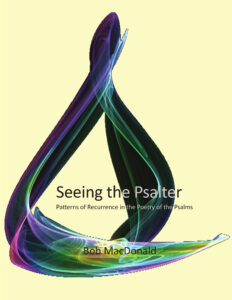
    Let me quote my friend and Energion author Bob MacDonald in the series he has just started on Psalm 119:

    Overall, Psalm 119 is a restful adoration of God and God’s promises.

    Have you thought of it like that?

    I commend his series to you, especially if you are musical. He does studies of the music of the Bible. There is great value in looking at these passages from different perspectives. I try to read a number of these as I meditate on the passage.

    “Restful” and “joy” both represent something internal, a response to the law (remember Torah/instruction), and not an external assent.

    And the Psalmist rejoices.

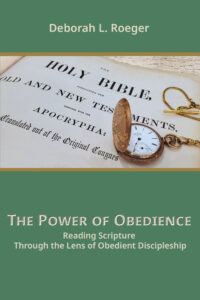
    I want to quote another one of my Energion authors, Deborah Roeger, author of The Power of Obedience:

    Before we conclude this lesson, we have some personal work to do. We have established that as God’s covenant people we are tailor-made by Him to live by His wisdom not our own! If we would lay down our right to live life on our terms – if we would turn to Him in submission, letting Him rule and reign as the perfect Creator and Lord of life in every aspect of our life – we would then joyfully know by experience what it means to know Him. If there is any area of your life that you have been holding back from Him, would you be willing right now to drop to your knees, bow your heart and your head before Him in complete surrender? Life will never be the same! And praise God for that!

    Deborah L. Roeger, The Power of Obedience, 43.

    This is a conclusion to an extensive lesson, but just on that one paragraph, do you think the Psalmist might well agree?

    (Featured image generated by Jetpack AI.)