Threads from Henry's Web

Tag: Christianity

  • Theodicy Again

    Theodicy Again

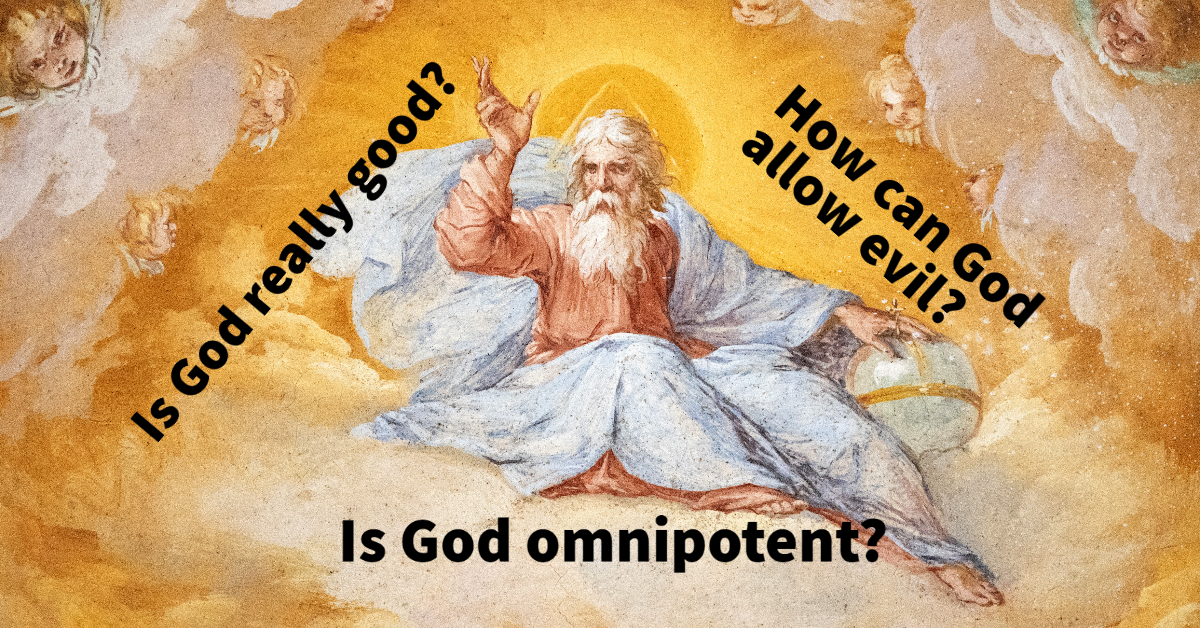
    Some time ago I did seven interviews on theodicy, or the problem of evil. One of the people I interviewed was Elgin Hushbeck. He and Larissa Munz now produce the Into the Desert podcast. They just released a video titled Christianity’s Biggest Problem, which I’ll embed below.

    The key value for this video is the way in which it outlines the question and potential problems.

    Playlist of My Theodicy Interviews

    Includes one with Elgin Hushbeck.

  • John Wesley, Sermon 63, The General Spread of the Gospel

    John Wesley, Sermon 63, The General Spread of the Gospel

    This is translated into modern English by Gemini AI, according to my prompts. Note that updates on terminology, especially including references to people groups and faiths that would not be considered courteous today are updated, and mentioned in the notes. This is done in accordance with my prompts and I take responsibility for the use of language. You can find the original sermon on ResourceUMC.org.

    Note that this is divided into sections, and following each section there are comments on the updating of the language. Bold text indicates that there is a related note and is not used for emphasis. I invite readers to check the accuracy of this work, as this is experimental use of AI, at least from my point of view.

    The General Spread of the Gospel

    “The earth shall be full of the knowledge of the Lord, as the waters cover the sea.” – Isaiah 11:9

    1. What a state the world is in at present! How does darkness—intellectual darkness, ignorance, along with the vice and misery that accompany it—cover the face of the Earth! From the precise inquiry made with tireless effort by our brilliant countryman, Mr. Brerewood (who himself traveled over a great part of the known world to form a more exact judgment), supposing the world to be divided into thirty parts, nineteen of them are professed non-Christian peoples, as ignorant of Christ as if He had never come into the world. Six of the remaining parts are professed Muslims. So that only five out of thirty are even nominally Christians!
    2. And let it be remembered that since this calculation was made, many new nations have been discovered—countless islands, particularly in the South Sea, large and well-inhabited. But by whom? By non-Christian peoples of the lowest sort; many of them inferior to the beasts of the field. Whether they eat people or not (which indeed I cannot find sufficient ground to believe), they certainly kill all who fall into their hands. They are, therefore, more savage than lions, who kill no more creatures than are necessary to satisfy their present hunger. See the real dignity of human nature! Here it appears in its genuine purity, not polluted either by those “general corruptors, kings,” or by the least hint of religion! What will Abbé Raynal (that determined enemy to monarchy and revelation) say to this?
    3. Only a little, and but a little, above the non-Christian peoples in religion are the Muslims. But how far and wide has this miserable delusion spread over the face of the Earth! So much so that the Muslims are considerably more numerous (as six to five) than Christians. And by all accounts that have any claim to authenticity, these are also, in general, as utterly strangers to all true religion as their four-footed brethren; as devoid of mercy as lions and tigers; as much given up to brutal lusts as bulls or goats. So that they are in truth a disgrace to human nature and a plague to all that are under their iron yoke.
    4. It is true, a celebrated writer (Lady Mary Wortley Montagu) gives a very different character of them. With the finest flow of words, in the most elegant language, she labors to “wash the Ethiopian white.” She represents them as many degrees above Christians; as some of the most amiable people in the world; as possessed of all the social virtues; as some of the most accomplished of people. But I can in no way accept her report; I cannot rely upon her authority. I believe those around her had just as much religion as their admirer had when she was admitted into the inner parts of the Grand Seignior’s seraglio. Therefore, despite all that such a witness does or can say in their favor, I believe the Turks in general are little, if at all, better than the generality of the non-Christian peoples.
    5. And little, if at all, better than the Turks, are the Christians in the Turkish dominions; even the best of them; those that live in the Morea, or are scattered throughout Asia. The more numerous bodies of Georgian, Circassian, Mengrelian Christians are a proverb of reproach to the Turks themselves; not only for their deplorable ignorance, but for their total, stupid, barbarous irreligion.
    6. From the most authentic accounts we can obtain of the Southern Christians, those in Abyssinia, and of the Northern Churches, under the jurisdiction of the Patriarch of Moscow, we have reason to fear they are much in the same condition, both with regard to knowledge and religion, as those in Turkey. Or if those in Abyssinia are more civilized and have a larger share of knowledge, yet they do not appear to have any more religion than either the Muslims or non-Christian peoples.

    Notes on Translation Choices:

    • Isaiah 11:9 Quote: Modernized the biblical language slightly.
    • “Mr. Brerewood”: Edward Brerewood (1565–1613), an English mathematician and antiquary, known for his work “Enquiries Touching the Diversity of Languages and Religions Through the Chief Parts of the World.” Wesley is referencing his statistical claims about global religious demographics.
    • “Heathens”: Consistent with our agreed-upon approach, this term has been translated to “non-Christian peoples” to avoid potentially offensive connotations while accurately reflecting Wesley’s distinction for those outside Abrahamic faiths in his context.
    • “Mahometans”: Consistent with our agreed-upon approach, this term has been translated to “Muslims.” “Mahometans” was Wesley’s contemporary term but is now considered outdated and potentially offensive as it implies worship of Muhammad rather than Allah.
    • “Basest sort” / “inferior to the beasts of the field” / “more savage than lions”: These are Wesley’s very strong, judgmental words, reflecting contemporary European views of certain indigenous peoples. They are retained to accurately reflect Wesley’s historical text, however, they represent a problematic colonial perspective from his era.
    • “Abbe Raynal”: Guillaume Thomas François Raynal (1713–1796), a French writer, philosopher, and critic of colonialism and organized religion. Wesley is likely referring to Raynal’s arguments about the “noble savage” or the inherent goodness of humanity uncorrupted by European society/monarchy/religion. Wesley here implies that these “savages” prove Raynal wrong.
    • “Lady Mary Wortley Montagu”: An English writer, poet, and traveler (1689–1762), known for her “Turkish Embassy Letters” where she described Ottoman society in a surprisingly favorable light for her time, challenging many Western prejudices. Wesley expresses skepticism about her account.
    • “Wash the Aethiop white”: A proverb (referencing Jeremiah 13:23) meaning to attempt the impossible, to change something fundamentally unchangeable, used by Wesley to dismiss Montagu’s positive portrayal.
    • “Grand Seignior’s seraglio”: Refers to the Ottoman Sultan’s palace harem, a place of exotic fascination and often misrepresentation in European literature. Wesley uses it to cast doubt on Lady Montagu’s perspective, implying her views are influenced by the environment she observed.
    • “Turks”: Used by Wesley to refer broadly to the Ottoman Empire and its dominant population, who were Muslim.
    • “Morea” / “Georgian, Circassian, Mengrelian Christians”: Specific geographic and ethnic groups of Christians living under Ottoman or Russian influence, often viewed as nominal Christians due to their isolation and lack of reformation. Wesley uses them to further illustrate the decay even within nominally Christian populations.

    The General Spread of the Gospel “The earth shall be full of the knowledge of the Lord, as the waters cover the sea.” – Isaiah 11:9

    1. The Western Churches seem to have the pre-eminence over all these in many respects. They have abundantly more knowledge; they have more biblical and more rational ways of worship. Yet two-thirds of them are still involved in the corruptions of the Roman Church; and most of these are entirely unacquainted with either the theory or practice of religion. And as to those who are called Protestants, or Reformed, what acquaintance with it have they? Put Catholics and Protestants, French and English together, the majority of one and of the other nation; and what kind of Christians are they? Are they “holy as He who has called them is holy?” Are they filled with “righteousness, and peace, and joy in the Holy Spirit?” Is there “that mind in them which was also in Christ Jesus?” And do they “walk as Christ also walked?” No, they are as far from it as hell is from heaven!
    2. Such is the present state of humanity in all parts of the world! But how astonishing is this, if there is a God in heaven, and if His eyes are over all the earth! Can He despise the work of His own hand? Surely this is one of the greatest mysteries under heaven! How is it possible to reconcile this with either the wisdom or goodness of God? And what can give peace to a thoughtful mind under so melancholy a prospect? What but the consideration that things will not always be so; that another scene will soon be opened? God will be jealous of His honor: He will arise and maintain His own cause. He will judge the prince of this world and strip him of his usurped dominion. He will give His Son “the nations for His inheritance, and the uttermost parts of the earth for His possession.” “The earth shall be filled with the knowledge of the Lord, as the waters cover the sea.” The loving knowledge of God, producing consistent, uninterrupted holiness and happiness, shall cover the earth; it shall fill every human soul.
    3. “Impossible,” some people will say, “yes, the greatest of all impossibilities, that we should see a Christian world, yes, a Christian nation, or city! How can these things be?” On one supposition, indeed, not only all impossibility but all difficulty vanishes. Only suppose the Almighty to act irresistibly, and the thing is done; yes, with just the same ease as when “God said, ‘Let there be light’; and there was light.” But then, humanity would be human no longer; their innermost nature would be changed. They would no longer be a moral agent, any more than the sun or the wind, as they would no longer be endowed with liberty—a power of choosing, or self-determination. Consequently, they would no longer be capable of virtue or vice, of reward or punishment.
    4. But setting aside this clumsy way of cutting the knot which we are not able to untie, how can all people be made holy and happy while they continue human? While they still enjoy both the understanding, the affections, and the liberty which are essential to a moral agent? There seems to be a plain, simple way of removing this difficulty, without entangling ourselves in any subtle, metaphysical arguments. As God is one, so the work of God is uniform in all ages. May we not then conceive how He will work on the souls of people in times to come by considering how He does work now, and how He has worked in times past?
    5. Take one instance of this, and such an instance as you cannot easily be deceived by. You know how God worked in your own soul when He first enabled you to say, “The life I now live, I live by faith in the Son of God, who loved me and gave Himself for me.” He did not take away your understanding; but enlightened and strengthened it. He did not destroy any of your affections; rather, they were more vigorous than before. Least of all did He take away your liberty—your power of choosing good or evil. He did not force you; but, being assisted by His grace, you, like Mary, chose the better part. Just so has He assisted five in one house to make that happy choice; fifty or five hundred in one city; and many thousands in a nation—without depriving any of them of that liberty which is essential to a moral agent.
    6. Not that I deny that there are exempt cases, where The overwhelming power of saving grace does, for a time, work as irresistibly as lightning falling from heaven. But I speak of God’s general manner of working, of which I have known countless instances—perhaps more within the last fifty years than anyone in England or in Europe. And with regard even to these exempt cases; although God does work irresistibly for the time, yet I do not believe there is any human soul in which God works irresistibly at all times. No, I am fully persuaded there is not. I am persuaded there are no people living who have not many times “resisted the Holy Spirit” and made void “the counsel of God against themselves.” Yes, I am persuaded every child of God has had, at some time, “life and death set before him,” eternal life and eternal death; and has in himself the deciding voice. So true is that well-known saying of Saint Augustine (one of the noblest he ever uttered): Qui fecit nos sine nobis, non salvabit nos sine nobis: “He that made us without ourselves will not save us without ourselves.” Now, in the same manner as God has converted so many to Himself without destroying their liberty, He can undoubtedly convert whole nations, or the whole world; and it is as easy for Him to convert a world as one individual soul.

    Notes on Translation Choices:

    • 7: “Western Churches”: Refers to the Christian denominations predominantly in Western Europe (including Protestant and Catholic).
    • “Corruptions of the Church of Rome”: Reflects Wesley’s Protestant stance and criticisms of Roman Catholicism.
    • “Papists and Protestants, French and English together”: Wesley’s direct comparison of nominal Christians across denominational and national lines.
    • “Holy as He that hath called them is holy?” / “righteousness, and peace, and joy in the Holy Ghost?” / “that mind in them which was also in Christ Jesus?” / “walk as Christ also walked?”: Kept as direct biblical allusions/quotes representing criteria for true Christianity (1 Peter 1:15; Romans 14:17; Philippians 2:5; 1 John 2:6).
    • “As far from it as hell is from heaven!”: Wesley’s strong, condemning rhetoric.
    • 8: “Astonishing is this, if there is a God in heaven”: Expresses the apparent contradiction of widespread unholiness given God’s existence.
    • “Despise the work of his own hand?”: Kept, highlighting God’s care for humanity.
    • “Prince of this world”: Kept as a biblical term for Satan.
    • “Nations for His inheritance, and the uttermost parts of the earth for His possession”: Kept as a direct biblical quote (Psalm 2:8). “Heathen” changed to “nations” for consistency with earlier choices.
    • “The earth shall be filled with the knowledge of the Lord, as the waters cover the sea”: Kept as a direct biblical quote (Isaiah 11:9, Habakkuk 2:14), which is also the sermon’s text.
    • 9: “Christian world… Christian nation, or city! How can these things be?”: Highlights the widespread skepticism about a truly transformed world.
    • “Suppose the Almighty to act irresistibly”: Wesley introduces and then rejects the idea of God forcing conversion.
    • “God said, ‘Let there be light; and there was light’”: Kept as a direct biblical quote (Genesis 1:3).
    • “Man would be man no longer… no longer a moral agent… not endued with liberty”: Emphasizes Wesley’s commitment to human free will as essential to moral agency, and his rejection of predestinarian views that would negate it.
    • 10: “Clumsy way of cutting the knot which we are not able to untie”: Wesley’s vivid metaphor for avoiding genuine theological struggle by resorting to what he sees as an unsatisfactory explanation.
    • “Subtile, metaphysical disquisitions”: Refers to complex philosophical debates.
    • “God is One, so the work of God is uniform in all ages”: A key principle for Wesley, allowing him to draw parallels between past, present, and future workings of God.
    • 11: “The life I now live, I live by faith in the Son of God, who loved me, and gave himself for me”: Kept as a direct biblical quote (Galatians 2:20) and a common testimony for Methodists.
    • “Assisted by his grace, you, like Mary, chose the better part”: Refers to Luke 10:42, emphasizing cooperation with grace.
    • “Without depriving any of them of that liberty which is essential to a moral agent”: Reiterates his core theological commitment.
    • 12: “Exempt cases”: Refers to instances of powerful, immediate conversion.
    • Poetry: The Charles Wesley hymn stanza is retained in its original form. “O’erwhelming power” is bolded for emphasis.
    • “God’s general manner of working”: Contrasts with the “exempt cases.”
    • “Resisted the Holy Ghost” / “made void the counsel of God against themselves”: Kept as direct biblical quotes (Acts 7:51, Luke 7:30), supporting the idea of resistible grace.
    • “Life and death set before him”: Kept as a direct biblical allusion (Deuteronomy 30:19).
    • “Has in himself the casting voice”: A powerful metaphor for individual choice.
    • St. Augustine quote: Qui fecit nos sine nobis, non salvabit nos sine nobis: Retained the Latin and Wesley’s translation, as this quote is a famous statement supporting human cooperation with grace, often cited by Wesley.
    • “Convert whole nations, or the whole world; and it is as easy to him to convert a world, as one individual soul”: Reaffirms the possibility of global conversion based on God’s power and consistent method.

    The General Spread of the Gospel “The earth shall be full of the knowledge of the Lord, as the waters cover the sea.” – Isaiah 11:9

    1. Generally, when these truths—justification by faith in particular—were declared in any large town, after a few days or weeks, a sudden, powerful, and impetuous force came upon the great congregation—not in a hidden corner, but prominently in London, Bristol, Newcastle-upon-Tyne, in particular—which,Like mighty wind or torrent fierce, Did then opposers all o’er-run.And this frequently continued, with shorter or longer intervals, for several weeks or months. But it gradually subsided, and then the work of God was carried on by gentle degrees; while that Spirit, in watering the seed that had been sown, in confirming and strengthening those who had believed,Deigned his influence to infuse, Secret, refreshing as the silent dews.And this difference in His usual manner of working was observable not only in Great Britain and Ireland, but in every part of America, from South to North, wherever the word of God came with power.
    2. Is it not then highly probable that God will carry on His work in the same manner as He has begun? That He will carry it on, I cannot doubt; however Luther may affirm that a revival of religion never lasts above a generation—that is, thirty years (whereas the present revival has already continued over fifty); or however prophets of doom may say, “All will be at an end when the first leaders are removed.” There will then, very probably, be a great shaking; but I cannot bring myself to believe that God has performed so glorious a work only to let it sink and die away in a few years. No: I trust this is only the beginning of a far greater work; the dawn of “the latter day glory.”
    3. And is it not probable, I say, that He will carry it on in the same manner as He has begun? At the first breaking out of this work in this or that place, there may be a shower, a torrent of grace; and so at some other particular seasons, which “the Father has reserved in His own power.” But in general, it seems, the kingdom of God will not “come with observation” [meaning: with outward display or spectacle]; but will silently increase, wherever it is set up, and spread from heart to heart, from house to house, from town to town, from one kingdom to another. May it not spread, first, through the remaining provinces [of England]; then, through the islands of North America; and, at the same time, from England to Holland, where there is already a blessed work in Utrecht, Haarlem, and many other cities? Probably it will spread from these to the Protestants in France, to those in Germany, and those in Switzerland; then to Sweden, Denmark, Russia, and all the other Protestant nations in Europe.
    4. May we not suppose that the same “leaven of pure and undefiled religion,” of experiential knowledge and love of God, of inward and outward holiness, will afterwards spread to the Roman Catholics in Great Britain, Ireland, Holland; in Germany, France, Switzerland; and in all other countries where Catholics and Protestants live intermixed and familiarly converse with each other? Will it not then be easy for the wisdom of God to make a way for religion, in the life and power thereof, into those countries that are predominantly Catholic; such as Italy, Spain, Portugal? And may it not be gradually diffused from there to all who claim the name of Christ, in the various provinces of Turkey, in Abyssinia, yes, and in the remotest parts, not only of Europe, but of Asia, Africa, and America?

    Notes on Translation Choices:

    • 15: “Violent and impetuous power”: Wesley refers here to the early manifestations of the Methodist revival, which sometimes involved dramatic physical reactions and intense spiritual conviction among the congregations.
    • Poetry: The two poetic stanzas are retained in their original form. These are from Charles Wesley’s hymns, common in Methodist worship.
    • “Graceful power” vs. “gentle degrees”: Wesley contrasts the initial powerful outpouring with the subsequent, more gradual spread of the work.
    • “Difference in his usual manner of working”: Reflects Wesley’s observation of God’s varied methods in revival.
    • 16: Luther’s affirmation about revivals: Wesley directly challenges Luther’s supposed pessimism about the longevity of religious revivals, asserting that the Methodist revival (then over 50 years old) proves otherwise.
    • “Prophets of evil”: Those who predict the downfall of the revival.
    • “Great shaking”: A biblical phrase for significant upheaval.
    • “Latter day glory”: A theological term referring to a period of great spiritual outpouring and widespread righteousness before Christ’s final return.
    • 17: “Shower, a torrent of grace”: Again, vivid imagery for revival’s beginnings.
    • “The Father has reserved in his own power”: Kept as a direct biblical allusion (Acts 1:7).
    • “Kingdom of God will not ‘come with observation’”: Kept as a direct biblical quote (Luke 17:20), referring to the silent, internal growth of the kingdom.
    • Geographical Expansion: Wesley lays out a specific, sequential vision for the spread of Methodism/Gospel:
      • “Remaining provinces”: Of England.
      • “Isles of North America”: Refers to his extensive work and connections in the American colonies/new states.
      • Holland (Utrecht, Haarlem): Wesley specifically mentions places where Methodism was gaining traction.
      • Protestant nations in Europe: His hope for a broader Protestant revival.
    • 18: “Leaven of pure and undefiled religion”: Kept as a biblical metaphor (Matthew 13:33).
    • “Experiential knowledge and love of God, of inward and outward holiness”: Key Wesleyan theological tenets.
    • “Roman Catholics”: Used this modern term instead of “Papists” (which Wesley uses) for sensitivity, as previously agreed.
    • “Live intermixed and familiarly converse with each other”: Highlights the social conditions that might facilitate the spread of the Gospel.
    • “Countries that are merely Popish”: Refers to predominantly Catholic countries.
    • “Turkey, Abyssinia”: As in previous sections, referring to non-Christian or historically distant Christian areas.
    • “Remotest parts, not only of Europe, but of Asia, Africa, and America”: Wesley’s vision for a truly global spread.

    The General Spread of the Gospel

    1. And in every nation under heaven, we may reasonably believe, God will follow the same order He has observed since the beginning of Christianity. “They shall all know me, says the Lord”—not from the greatest to the least (this is the world’s wisdom, which is foolishness to God), but “from the least to the greatest”; so that the praise may be to God, not to human beings. Before the end, even the rich will enter the kingdom of God. Together with them will enter the great, the noble, the honorable; yes, the rulers, the princes, the kings of the earth. Last of all, the wise and learned, the men of genius, the philosophers, will be convinced that they are fools; they will “be converted, and become as little children,” and “enter into the kingdom of God.”
    2. Then shall be fully accomplished for the house of Israel—the spiritual Israel, of whatever people or nation—that gracious promise: “I will put my laws in their minds, and write them on their hearts: And I will be to them a God, and they shall be to me a people. And they shall not teach every man his neighbor, and every man his brother, saying, ‘Know the Lord’: For they shall all know me, from the least to the greatest. For I will be merciful to their unrighteousness, and their sins and their iniquities I will remember no more.” Then shall “the times of” universal “refreshment come from the presence of the Lord.” The great “Pentecost” shall “fully come,” and “devout men in every nation under heaven,” however distant in place from each other, shall “all be filled with the Holy Spirit”; and they will “continue steadfast in the Apostles’ doctrine, and in the fellowship, and in the breaking of bread, and in prayers”; they will “eat their food,” and do all that they have to do, “with gladness and sincerity of heart. Great grace will be upon them all”; and they will be “all of one heart and of one soul.” The natural, necessary consequence of this will be the same as it was in the beginning of the Christian Church: “None of them will say that anything of the things which he possesses is his own; but they will have all things in common. Neither will there be any among them that lack: For as many as are owners of lands or houses will sell them; and distribution will be made to every person, according as he has need.” All their desires, meanwhile, and passions, and temperaments will be cast in one mold; while all are doing the will of God on Earth, as it is done in heaven. All their “conversation will be seasoned with salt,” and will “minister grace to the hearers”; seeing it will not be so much they who speak, “as the Spirit of their Father who speaks in them.” And there will be no “root of bitterness springing up,” either to defile or trouble them: There will be no Ananias or Sapphira, to bring back the cursed love of money among them: There will be no partiality; no “widows neglected in the daily ministration”; consequently, there will be no temptation to any murmuring thought, or unkind word, of one against another; while,They all are of one heart and soul, And only love informs the whole.

    Notes on Translation Choices:

    • Sermon Title: “The General Spread of the Gospel” is kept.
    • 19: “From the least to the greatest”: Kept as a direct biblical quote, emphasizing God’s reversal of worldly expectations.
    • “Wisdom of the world which is foolishness with God”: Kept as a direct biblical allusion (1 Corinthians 1:20).
    • “Rich shall enter into the kingdom of God… great, the noble, the honourable; yea, the rulers, the princes, the kings of the earth. Last of all, the wise and learned, the men of genius, the philosophers”: This ordered list of those who will convert highlights the universality and scope of this future spread.
    • “Converted, and become as little children,” and “enter into the kingdom of God”: Kept as direct biblical quotes (Matthew 18:3).
    • 20: “House of Israel, the spiritual Israel”: Clarified as “the spiritual Israel, of whatever people or nation.”
    • Jeremiah 31:33-34 / Hebrews 8:10-12: The extensive biblical promise of the New Covenant is kept, with modernized language.
    • “Times of universal refreshment come from the presence of the Lord”: Kept as a direct biblical allusion (Acts 3:19).
    • “Grand Pentecost”: Kept, implying a global outpouring of the Spirit.
    • “Devout men in every nation under heaven” / “all be filled with the Holy Ghost” / “continue steadfast in the Apostles’ doctrine, and in the fellowship, and in the breaking of bread, and in prayers” / “eat their meat… with gladness and singleness of heart. Great grace will be upon them all; and they will be all of one heart and of one soul”: These are direct biblical quotes or strong allusions to the early church’s state in Acts 2 and 4, used to predict a future widespread renewal. “Eat their meat” modernized to “eat their food.”
    • “None of them will say, that aught of the things which he possesses is his own; but they will have all things common. Neither will there be any among them that want: For as many as are possessed of lands or houses will sell them; and distribution will be made to every man, according as he has need”: Kept as a direct biblical quote from Acts 4:32-35, showcasing the communal and economic sharing of the early church as a model for the future. “Aught of the things” modernized to “anything of the things.”
    • “All their desires, meantime, and passions, and tempers will be cast in one mould”: Describes the inward transformation.
    • “Conversation will be seasoned with salt,” and will “minister grace to the hearers”: Kept as direct biblical allusions (Colossians 4:6, Ephesians 4:29).
    • “Spirit of their Father that speaketh in them”: Kept as a direct biblical quote (Matthew 10:20).
    • “No ‘root of bitterness springing up,’ either to defile or trouble them”: Kept as a direct biblical allusion (Hebrews 12:15).
    • “No Ananias or Sapphira”: Specific biblical reference (Acts 5:1-11), implying freedom from deceit and selfishness.
    • “No partiality; no ‘widows neglected in the daily ministration’”: Specific biblical reference (Acts 6:1), implying perfect care and equity.
    • “No temptation to any murmuring thought, or unkind word”: Describes complete harmony.
    • Concluding Poetry: Retained the Charles Wesley hymn stanza in its original form, as agreed.

    The General Spread of the Gospel “The earth shall be full of the knowledge of the Lord, as the waters cover the sea.” – Isaiah 11:9

    1. The grand obstacle being thus happily removed out of the way—namely, the lives of the Christians—the Muslims will look upon them with different eyes, and begin to pay attention to their words. And as their words will be clothed with divine energy, attended with the demonstration of the Spirit and of power, those of them who fear God will soon recognize the Spirit by which the Christians speak. They will “receive with meekness the engrafted word,” and will bring forth fruit with patience. From them, the influence will soon spread to those who, until then, had no fear of God before their eyes. Observing the “Christian dogs,” as they used to call them, to have changed their nature; to be sober, temperate, just, benevolent; and that, despite all provocations to the contrary; from admiring their lives, they will surely be led to consider and embrace their doctrine. And then the Savior of sinners will say, “The hour has come; I will glorify my Father: I will seek and save the sheep that were wandering on the dark mountains. Now will I avenge myself of my enemy, and pluck the prey out of the lion’s teeth. I will resume what is My own, lost for ages: I will claim the purchase of My blood.” So He will go forth in the greatness of His strength, and all His enemies shall flee before Him. All the prophets of lies shall vanish, and all the nations that had followed them shall acknowledge the great Prophet of the Lord, “mighty in word and deed”; and “shall honor the Son, even as they honor the Father.”
    2. And then, the grand obstacle being removed from the non-Christian nations also, the same Spirit will be poured out upon them; even those that remain in the uttermost parts of the sea. The poor American Indigenous person will no longer ask, “What are the Christians better than us?”—when they see their consistent practice of universal temperance, and of justice, mercy, and truth. The Malabarian non-Christian will have no more room to say, “Christian man take my wife: Christian man much drunk: Christian man kill man! Devil-Christian! Me no Christian.” Rather, seeing how far the Christians exceed their own countrymen in “whatever things are lovely and of good report,” they will adopt a very different language, and say, “Angel-Christian!” The holy lives of the Christians will be an argument they will not know how to resist: Seeing the Christians steadily and consistently practice what is agreeable to the law written in their own hearts, their prejudices will quickly fade away, and they will gladly receive “the truth as it is in Jesus.”
    3. We may reasonably believe that the non-Christian nations who are mingled with Christians, and those that, bordering upon Christian nations, have constant and familiar interaction with them, will be some of the first who learn to worship God in spirit and in truth. Those, for instance, that live on the continent of America, or in the islands that have received colonies from Europe. Such are likewise all those inhabitants of the East Indies that adjoin to any of the Christian settlements. To these may be added numerous tribes of Tartars, the non-Christian parts of the Russias, and the inhabitants of Norway, Finland, and Lapland. Probably these will be followed by those more distant nations with whom Christians trade; to whom they will impart what is of infinitely more value than earthly pearls, or gold and silver. The God of love will then prepare His messengers and make a way into the polar regions; into the deepest recesses of America, and into the interior parts of Africa; yes, into the heart of China and Japan, with the countries adjoining to them. And “their sound” will then “go forth into all lands, and their voice to the ends of the earth!”
    4. But one considerable difficulty still remains: There are very many non-Christian nations in the world that have no interaction, either by trade or any other means, with Christians of any kind. Such are the inhabitants of the numerous islands in the South Sea, and probably in all large branches of the ocean. Now, what shall be done for these poor outcasts of humanity? “How shall they believe,” says the Apostle, “in Him of whom they have not heard? And how shall they hear without a preacher?” You may add, “And how shall they preach, unless they be sent?” Yes, but is not God able to send them? Cannot He raise them up, as it were, “out of the stones?” And can He ever lack means of sending them? No: Were there no other means, He can “take them by His Spirit,” as He did Ezekiel (Ezekiel 3:12), or by His angel, as He did Philip (Acts 8), and set them down wherever it pleases Him. Yes, He can find out a thousand ways unknown to foolish humanity. And He surely will: For heaven and earth may pass away; but His word shall not pass away: He will give His Son “the uttermost part of the earth for His possession.”
    5. And so all Israel too shall be saved. For “blindness has happened to Israel,” as the great Apostle observes (Romans 11:25), “until the fullness of the Gentiles has come in.” Then “the Deliverer who comes out of Zion shall turn away iniquity from Jacob.” “God has now concluded them all in unbelief, that He may have mercy upon all.” Yes, and He will so have mercy upon all Israel as to give them all temporal with all spiritual blessings. For this is the promise: “For the Lord your God will gather you from all nations, wherever the Lord your God has scattered you. And the Lord your God will bring you into the land which your fathers possessed, and you shall possess it. And the Lord your God will circumcise your heart, and the heart of your descendants, to love the Lord your God with all your heart, and with all your soul” (Deuteronomy 30:3). Again: “I will gather them out of all countries, wherever I have driven them: And I will bring them again to this place, and I will cause them to dwell safely: And I will give them one heart, and one way, that they may fear me forever. I will put my fear in their hearts, that they shall not depart from me. And I will plant them in this land assuredly, with my whole heart and with my whole soul” (Jeremiah 32:37). Yet again: “I will take you from among the non-Christian peoples, and gather you out of all countries, and will bring you into your own land. Then I will sprinkle clean water upon you, and you shall be clean: From all your filthiness, and from all your idols, I will cleanse you. And you shall dwell in the land that I gave to your fathers; and you shall be my people, and I will be your God” (Ezekiel 36:24).
    6. At that time will be accomplished all those glorious promises made to the Christian Church, which will not then be confined to this or that nation, but will include all the inhabitants of the earth. “They shall not hurt nor destroy in all my holy mountain” (Isaiah 11:9). “Violence shall no more be heard in your land, wasting nor destruction within your borders; but you shall call your walls, Salvation, and your gates Praise.” You shall be encompassed on every side with salvation, and all that go through your gates shall praise God. “The sun shall be no more your light by day; neither for brightness shall the moon give light to you: But the Lord shall be to you an everlasting light, and your God your glory.” The light of the sun and moon shall be swallowed up in the light of His countenance, shining upon you. “Your people also shall be all righteous—the work of my hands, that I may be glorified.” “As the earth brings forth her bud, and the garden causes the things that are sown in it to spring forth; so the Lord God will cause righteousness and praise to spring forth before all the nations” (Isaiah 60:18; and 61:11).
    7. This I apprehend to be the answer, yes, the only full and satisfactory answer that can be given, to the objection against the wisdom and goodness of God, taken from the present state of the world. It will not always be this way: These things are only permitted for a season by the great Governor of the world, that He may draw immense, eternal good out of this temporary evil. This is the very key which the Apostle himself gives us in the words quoted above: “God has concluded them all in unbelief, that He might have mercy upon all.” In view of this glorious event, how well may we cry out, “Oh, the depth of the riches both of the wisdom and knowledge of God!” although for a season “His judgments were unsearchable, and His ways past finding out.” (Romans 11:32, 33). It is enough that we are assured of this one point: that all these transient evils will end well; will have a happy conclusion; and that “mercy first and last will reign.” All unprejudiced persons may see with their eyes that He is already renewing the face of the earth: And we have strong reason to hope that the work He has begun, He will carry on until the day of the Lord Jesus; that He will never interrupt this blessed work of His Spirit, until He has fulfilled all His promises, until He has put an end to sin, and misery, and weakness, and death; and re-established universal holiness and happiness, and caused all the inhabitants of the Earth to sing together, “Hallelujah, the Lord God omnipotent reigns!” “Blessing, and glory, and wisdom, and honor, and power, and might, be to our God forever and ever!” (Revelation 7:12).

    Notes on Translation Choices:

    • “Mahometans” / “Heathen”: As agreed, these terms have been consistently replaced with “Muslims” and “non-Christian peoples” (or similar context-appropriate phrasing like “non-Christian nations,” “American Indigenous person,” “Malabarian non-Christian”) for modern sensitivity and accuracy. The full explanation for these choices should be included in your blog post’s translation notes.
    • 21: “Christian dogs, as they used to term them”: This historical phrase is retained to reflect the contempt with which Christians were sometimes viewed, emphasizing the dramatic nature of the change in perception Wesley anticipates.
    • “Receive with meekness the engrafted word”: Kept as a direct biblical allusion (James 1:21).
    • “Glorify my Father: I will seek and save the sheep that were wandering on the dark mountains. Now will I avenge myself of my enemy, and pluck the prey out of the lion’s teeth. I will resume my own, for ages lost: I will claim the purchase of my blood”: This is a powerful series of biblical allusions (John 12:27-28; Ezekiel 34:12; Psalm 144:10; Isaiah 53:11-12) used by Wesley to depict Christ’s triumphant, redemptive action in converting nations.
    • “Prophet of lies”: Refers to false prophets or false religious leaders.
    • “Mighty in word and deed”: Kept as a direct biblical quote (Luke 24:19).
    • “Shall honour the Son, even as they honour the Father”: Kept as a direct biblical quote (John 5:23).
    • 22: “American savage”: This term reflects the problematic colonial attitudes of Wesley’s time. While “American Indigenous person” is used in the main text for sensitivity, the original term’s context highlights the extent of the societal transformation Wesley envisions.
    • “Malabarian Heathen”: Refers to people from the Malabar Coast in India. The direct quote attributed to them (e.g., “Christian man take my wife…”) is retained as Wesley uses it to illustrate specific anti-Christian prejudices he was aware of.
    • “Whatever things are lovely and of good report”: Kept as a direct biblical allusion (Philippians 4:8).
    • “Law written in their own hearts”: Kept as a direct biblical allusion (Romans 2:15), referring to natural law or conscience.
    • “Truth as it is in Jesus”: Kept as a direct biblical allusion (Ephesians 4:21).
    • 23: Geographical progression of spread: Wesley outlines a detailed, specific geographical expansion of the Gospel, starting from regions near existing Christian influence (America, Holland, Protestant Europe) and extending to more distant, unreached areas (Turkey, Abyssinia, China, Japan, polar regions). This showcases his strategic and global vision.
    • “Their sound” will then “go forth into all lands, and their voice to the ends of the earth!”: Kept as a direct biblical quote (Psalm 19:4; Romans 10:18).
    • 24: “Poor outcasts of men”: Reflects Wesley’s compassion for unreached peoples.
    • “How shall they believe… in Him of whom they have not heard? And how shall they hear without a preacher?… And how shall they preach, unless they be sent?”: Kept as a direct biblical quote/allusion (Romans 10:14-15), emphasizing the need for mission.
    • “Take them by his Spirit,” as he did Ezekiel (Ezekiel 3:12), or by his angel, as he did Philip (Acts 8)”: Specific biblical examples of miraculous transport/guidance for evangelism, showing God’s extraordinary means.
    • “Heaven and earth may pass away; but his word shall not pass away”: Kept as a direct biblical quote (Matthew 24:35), affirming God’s faithfulness.
    • “Uttermost part of the earth for his possession”: Kept as a direct biblical quote (Psalm 2:8).
    • 25: “All Israel too shall be saved”: A key eschatological hope (Romans 11:26).
    • “Blindness has happened to Israel… till the fullness of the Gentiles be come in”: Kept as a direct biblical quote (Romans 11:25).
    • “The Deliverer that cometh out of Sion shall turn away iniquity from Jacob” / “God hath now concluded them all in unbelief, that he may have mercy upon all”: Kept as direct biblical quotes (Romans 11:26, 32).
    • Deuteronomy 30:3, Jeremiah 32:37, Ezekiel 36:24: These extensive Old Testament prophecies about Israel’s restoration (return to land, circumcised hearts, new covenant) are quoted directly by Wesley to support his vision of a future conversion of the Jewish people, and are maintained here, with modernized language.
    • 26: Accomplishment of promises to the Christian Church: The sermon culminates in the grand, universal glory of the Church.
    • Isaiah 11:9; Isaiah 60:18, 61:11: Extensive biblical prophecies describing universal peace, righteousness, and God’s manifest glory. These are maintained for their prophetic weight.
    • “Walls, Salvation, and thy gates Praise”: Powerful imagery.
    • “Sun shall be no more thy light by day… Lord shall be unto thee an everlasting light”: Kept as direct biblical quote/allusion (Isaiah 60:19-20).
    • 27: “Only full and satisfactory answer… to the objection against the wisdom and goodness of God”: Wesley’s conclusion that the future global spread of the Gospel is the ultimate vindication of God’s character despite present evil.
    • “Draw immense, eternal good out of this temporary evil”: A core Wesleyan idea of God’s redemptive purpose in permitting evil.
    • “God hath concluded them all in unbelief, that he might have mercy upon all”: Kept as a direct biblical quote (Romans 11:32), crucial for his argument.
    • “O the depth of the riches both of the wisdom and knowledge of God!… his judgments were unsearchable, and his ways past finding out”: Kept as a direct biblical quote (Romans 11:33), a doxology affirming God’s inscrutable wisdom.
    • “Mercy first and last will reign”: A summary of his hopeful eschatology.
    • “Renewing the face of the earth”: Kept as a biblical allusion (Psalm 104:30).
    • “Unto the day of the Lord Jesus”: Kept as a common biblical phrase.
    • “Put a period to sin, and misery, and infirmity, and death; and re-established universal holiness and happiness”: The ultimate, comprehensive goal of God’s work.
    • “Hallelujah, the Lord God omnipotent reigneth!” / “Blessing, and glory, and wisdom, and honour, and power, and might, be unto our God for ever and ever!”: Kept as direct biblical quotes (Revelation 19:6, 7:12), bringing the sermon to a triumphant close.

    (Featured image is By Viktor, licensed from Adobe Stock.)

  • Psalm 119:128 – All

    Psalm 119:128 – All

    Therefore I completely keep all your precepts.
    I hate every false way.

    I think I say something about how many ways one could go in meditating on each of these verses, and I certainly could. Today I’m thinking about this line especially from a Christian perspective.

    I recall a young man coming to my door with his wife and his KJV Bible in hand, intending to convert me. It did not bother him that I was already a Christian. It was his duty to straighten out my theology in a hurry. Among the various things he told me was that the Sermon on the Mount did not apply to Christians in the “church age.” It was for the Jews and for a special transitional stage between the old covenant and the new covenant.

    Our discussion roamed through the New Testament. Passages from Hebrew Scriptures were not of importance to him. I think we spent more than an hour not communicating with one another.

    As he got up to leave he said he was worried about my salvation. “I have given you nothing but Scripture but you haven’t given me any scripture at all.” He paused. “Well, except for Matthew, and Hebrews, and James, and they don’t count.”

    Now when I read the Sermon on the Mount as recorded in Matthew, I find sentiments that fit with this passage. Not only is Jesus saying to keep all the law all the time, but he’s asking us to keep the law in our hearts. If one is angry at someone that person is guilty of murder.

    I can see why someone would want to dismiss the whole thing as applying to someone else. Big sigh of relief! It sounds pretty holy, but I don’t have to do any of it.

    We often talk and act as though the big problem with Israel was that they had too many laws or that they were too intent on keeping them. That misses the point that God gave Israel all those laws. God said they should keep all those laws. Leviticus (19:2 and other places) says to “be holy for I (the LORD) am holy.” Matthew 5 doesn’t back off from this, saying that unless your righteousness exceeds that of the scribes and Pharisees, you will not enter the kingdom of heaven, and then in 5:48 “Be perfect, as your heavenly father is perfect.”

    Old Testament or new, there is nowhere in scripture where God’s plan is not a plan to create a holy people. The thing we need to catch on to, and bluntly, that I think the psalmist has 100% is this: God’s call is for completely keeping all the commandments, while at the same time, he recognizes in many other verses that it is only through God’s power that this is accomplished.

    I’m again going to refer to the last verse, sort of a spoiler! “I have gone astray like a lost sheep. Seek your servant….” Note that it does not say, “I have gone astray like a lost sheep. Your laws are too tough, give me an excuse.” He does not say, “I have gone astray, please fix the map so it records that I am on course.

    There is a glorious purpose to which God calls us all, and to which only God can bring us. We can’t attain this, but God can. And God promises to do precisely that.

    Keep your eye on the goal. All * Completely.

  • I Am Not Ashamed

    I Am Not Ashamed

    There might be many reasons why someone would be ashamed of the good news about God that is represented in what we call the “gospel.”

    Not Ashamed of the Gospel: Confessions of a Liberal Charismatic
    This post is the first chapter of my 2005 book Not Ashamed of the Gospel.

    Historically, the shame was in worshipping a convicted and executed criminal, calling him God and following his teachings. Very few people doubt that Jesus died, and that he was executed by the barbaric method of crucifixion. Raised from the dead, alive today— that’s another matter entirely. But the death is the best established thing about Jesus.

    I’ve entered into debates about whether such a person as Jesus existed historically. All of these debates start— must start—with a list of things that I will demonstrate, limiting myself strictly to the tools of a historian, to the extent that past events can be demonstrated. These are the things that Jesus did or that happened to him. Many scholars have created such lists. Invariably, “crucified by the Romans” is on them. Jesus’ death by crucifixion is as established as a historical fact gets.

    It seems remote and distant to us. If we have shame in anything about Jesus or Christianity, it is something different than it was for Paul and other early disciples. For us, the cross is the symbol of a religion, a person, or a faith system. We see it on churches every day. We have pictures of crosses, sometimes with a figure of Jesus hanging on them. Sometimes the figure will be portrayed with a halo. We make earrings and necklaces with crosses. We know the crucifixion is a horrible thing, but the symbols involved in it have become commonplace and familiar, and they are objects involved in the rituals of the church, not in execution.

    We may be ashamed of some of the people who carry crosses, or of some of the groups that worship in buildings with crosses on them. We may object to where crosses are placed, such as on the lawns of public buildings. But none of this is quite what the “shame of the cross” would have been for the early followers of Jesus. Put yourself back in Paul’s time. Jesus was recently executed. The one political power in the world was the authority by which that execution was carried out. That particular form of execution was one reserved for the worst, and especially for rebels and political offenders. There was a shame in worshipping someone who had been crucified. It had the aura and the stigma of worshipping a mass murderer, perhaps a bit like modern Americans would feel about a cult worshipping Charles Manson.

    But in addition, it was something dangerous. The followers of Jesus were proclaiming as divine someone executed by the Roman authorities. Divinity was being carried by someone who was a rebel and a dangerous character. Proclaiming the kingdom of a rebel was an act of rebellion in and of itself. And here we have Paul proclaiming that he is not ashamed of this good news. He glories in the cross, glories in an instrument of shame. In disaster, he finds good news.

    One of the key elements of that good news lies in the fact that you see a cross with much different emotions than did the people of Paul’s day. That element is transformation. The symbol of the cross has been transformed from one of disaster, death, agony, shame, and despair into one of hope for many people. Not all people, and we’ll discuss that as well.

    That transformation comes from the way in which God used the experience of the cross. God came to the earth in the human form of Jesus. God experienced life with us. He took action as we might need to take action under the circumstances of our lives. He found himself in an occupied country, living under cruel foreign domination. He didn’t just come and appear on a mountaintop. He got involved in human experiences, human emotions, human weaknesses, and yes, human strengths as well. When it came down to it, he died a death in just the way that a human would have to do it in that time and place.

    The first part, then, of the transformation was involvement. The cross would never have been transformed as a symbol without the involvement. God, the infinite gap-crosser, crossed the gap and stayed on our side long enough to experience the worst of the worst.

    But not only did he get involved, he stayed involved. The second part of that transformation was endurance. God didn’t quit. He carried through. If he had not, we could think of the wonderful time when God was with people, lived with us, talked with us, worked with us, but we would always have a distance from him, because he would never have experienced the one thing that seems to terrify most of us—death. “Through death, he destroyed the one who had the power of death” (Hebrews 2:14). “He endured the cross; he treated the shame with contempt” (Hebrews 12:2).

    Jesus knew when to ignore what others thought was shame. The shame was intended to fall on the one who was punished. But Jesus had no reason to be ashamed and he knew it. Knowing what one should ignore is an important part of living in this imperfect world. Many people, Christians and others, have endured torture and death with dignity and even peace because they knew this lesson. What was intended to bring shame on them instead became a source of glory.

    The transformation that Jesus accomplished on the cross, symbolized by the transformation of the cross itself, is something that we all can grasp. Circumstances and our environment are not fixed things that we have to take as they are. They can be transformed by our attitude and by the way that we deal with them. Every cross in your life, everything that you would prefer not to have done or not to have encountered can be transformed. When we give testimonies of things that have happened to us, this is what we are doing.

    Some think that testimony meetings are about telling how dark our lives were before God intervened. And sometimes they are. But if you are focusing on the darkness, and the negative things that have happened, perhaps you haven’t let those things be transformed yet. Did you become involved, stay involved, and endure? Did you have contempt for the supposed shame? The real point of a testimony, a witness, is to present how things have changed, not how much they are the same.

    But there’s one more part of this process. Some of you may be wondering whether I’m going to ignore it. Jesus triumphed over the adversity. He rose again from the dead. His movement should have died. It came back to life. Without this, the transformation could not have taken place. In this sense, only one who was God, or totally in tune with God’s spirit, could have triumphed. We daily deal with circumstances and troubles. Jesus was dealing with the nastiest circumstance of all—death. He was there to deny and destroy the one who had the power over death.

    I’m not going to argue here about the physical resurrection of Jesus. It’s very hard, if not impossible to prove a miracle. But I do think the greatest evidence that something different happened that day in Palestine is that the movement surrounding Jesus didn’t go away. Having seen Jesus crucified, his movement should have failed, but it didn’t.

    But the critical element in transforming the symbol of the cross from one of shame to one of hope and glory was simply that the followers of Jesus believed that he had conquered death. You may debate me about the idea that without something special happening on the morning of the resurrection, the followers of Jesus would simply have scattered. You may have another explanation you think works as well. But I think there can be no doubt that unless the followers of Jesus believed that something had happened, there would have been no transformation, no Jesus movement, no Christianity, and the cross would forever have remained a symbol of shame, or passed into history as an example of the barbarism of ancient cultures.

    But the fact is that those followers did believe, they didn’t scatter, but continued to proclaim the victory of the person the Romans had crucified. And it was in that proclamation that the cross was transformed. Jesus could have died with dignity, endured the shame, and risen from the dead, but if nobody had arisen to proclaim those facts, no transformation would have taken place. It took human beings getting involved, carrying the message, and acting on the good news. I’m sometimes accused of being very human oriented in my religious beliefs. But I believe that this orientation toward what people do and how they respond is thoroughly Biblical. Not only did God accomplish reconciliation through Christ, but he gave us the same ministry. In other words, God knows and intends the human element to be critical in carrying out his mission on earth.

    And that leads to the other side of the issue of shame. We need to be prepared to deny the shame just as Jesus did on the cross. But we also need to be able to see shame when it’s appropriate. A great deal of who we are and how we live will be determined by our response to shame.

    In Ezekiel 9 we have a part of a vision of Ezekiel. The prophet has been shown abominations that the Israelites are committing right in the temple precincts. Then a man is sent out in the city to make a mark on certain people. The ones who are marked are those who “sign and cry” about the abominations committed in the land (Ezekiel 9:4). (I like the good old KJV “sigh and cry” because the Hebrew words involved here are alliterative). Then others are told to follow and slaughter everyone who is not marked. Notice that it is not the ones who themselves are not committing abominations, but those who are deeply bothered by the evil things that are going on.

    I have seen this passage turned outward many times, as though it is a call to Christians to sigh and cry about the abominations committed by everyone else. But we should remember that this passage was written by an Israelite prophet to Israelites. If we are going to transfer it to Christians we need to transfer it all the way. It isn’t speaking to Christians about their attitude toward the actions of non- Christians, but rather about their reaction to their own abominations.

    I said that the cross was a symbol of hope for some. But it’s a symbol of death and destruction for others. It becomes a symbol of shame again when those who proclaim it use it in shameful ways. The crusades, the inquisition, the holocaust—all were justified at some point by reference to Christianity and to the cross. All too often, others did not stand against those who abused the cross, and did not proclaim its true meaning. We can choose either to restore the cross again as a symbol of hope, or we can use it as a symbol of hostility, destruction, and death. In order to restore the cross to the glory of Christ’s transformation, we need to get to the point where we sigh and cry for the abominations committed by Christians.

    I was involved in a program a few years back in which we had an opportunity to write statements about ourselves on sticky notes, stick them to our shirts, and then engage others in the group in conversation based on what was written on their notes. I included “Christian,” “individual liberty,” and “no coercion” amongst the items on my list. Several people thought this was a surprising combination. To them, Christianity stood for compulsion, force, and tyranny. How could I be both a Christian and an advocate of liberty? I wish I could blame the problem on their prejudice, on their misconception of what Christians are. But too often Christians behave in a way that is completely the opposite of the principles Jesus taught, and totally incompatible with the way he behaved. At the same time, other Christians are silent. We need to be ashamed of what is truly shameful, and proud of what is worthy of pride.

    The answer lies in the symbolism of the cross. In the cross, God displayed his willingness to cross the gap and communicate with us where we are. He endured the force. He was subject to the compulsion. He was executed by the existing tyrants. In so doing he gave an example of liberation.

    But many of his followers have missed the message. They have decided that Jesus was so right that anyone who disagreed with him had to be forced into right thinking. They inverted the message, making Jesus into the tyrant and the torturer. If you really think about what happened on the cross, I think it will become terribly clear what a horrible reversal this is. Too often Christians have sided with the soldiers driving in the nails.

    So how do I respond to these things done in the name of Jesus?

    I’m quick to say that this is not what Jesus taught. But I reject the notion of telling other people that those who did this were not “real” Christians. I may even believe that in my heart, but if I defend myself by that means, I force others into deciding who is and who is not a real Christian. It’s likely that they won’t take on the task.

    What I have to do is acknowledge the wrongs that have been done, and testify to the transformation that Jesus intended. I need to sigh and cry—I need to specifically, openly, and sincerely denounce the shameful actions of my fellow Christians, and do so without distancing myself, without setting myself up as the one true Christian and good guy. I only compound the problem when I try to make others sort one Christian out from another. That is not their task. This is the time to acknowledge the problem.

    Please notice carefully that I say we need to denounce the actions. We deal with the fruit, not the people. Let God deal with the people. Gossiping is not sighing and crying, even if you do it with a whiny voice! Make sure that what you are sighing and crying about is an abomination. I have heard sighing and crying in the church about everything from minor discomforts and annoyances to personal preferences. In fact, we are much more likely to sigh and cry about our comfort than about real abominations.

    Christian readers may protest that they, as Christians, did not do any of these things. That is very likely true. But they were done in the name of Jesus, they were done in the name of the same faith, and they were often done without protest, or without adequate protest from other Christians. As we continue in the same tradition, we need to deal with the things that have happened in what is now, for good or bad, our history.

    Why should Christians take on such a burden? Because we are the ones who know the power of transformation. We are the ones who worship the crucified one. We are the ones who can make a difference if we will truly follow the one who transformed the cross from despair into hope.

    And we need not be ashamed of that!

  • The Wrath of the Lamb

    The Wrath of the Lamb

    Sometimes the process of preparing to teach Sunday School takes interesting turns, at least for me.

    I’m currently teaching from the Sermon on the Mount, and I was thinking about the transition from the beatitudes to the discussion of fulfilling the law. Sometimes we get so used to the way Scripture passages read that we don’t really notice the impact they would have had. “Blessed are those who hunger and thirst after righteousness …” transitions to “unless your righteousness exceeds the righteousness of the scribes and Pharisees.” We’re used to thinking of Pharisees as bad guys, and we can immediately translate that statement mentally into something less than it would have been to those who first heard it.

    It’s easy to suggest that the Sermon on the Mount does not represent some singular sermon, and that perhaps the beatitudes and the teaching on the law contained in Chapter 5 weren’t really run together that way when Jesus taught them. Indeed, the different settings for portions of the sermon in Luke might suggest that we have compilations of sayings rather than complete sermons.

    But, and it’s an important ‘but’, someone thought these two things went together. I love form, source, and redaction criticism and believe they provide important insights, allowing us to learn from the prehistory of the text in front of us, but in a case like this, they just kick the ball down the field a bit. We still should ask just why the passages go together.

    Let me skip my own answer, which I already had in mind, and go with the experience of thinking about the passage. I like to read what I’m going to teach very early, usually the Sunday afternoon after the previous lesson, and then think about it through the week.

    In this case, I had just gotten a new audio Bible (NRSV) for Audible (unfortunately it is no longer available). I wasn’t actually intending to think about the passage, and I just let the audiobook continue from where I had last left it, which happened to be in Revelation 6. I got to 6:16, and heard the words “the wrath of the lamb.” Or “hide us … from the wrath of the lamb.”

    Now here’s another phrase that doesn’t always have full impact. It takes on that “scriptury” sense in which we imbue it with holiness and piously let the jarring nature of the statement slip by.

    So picture a cute, wooly, harmless lamb. Now picture crowds of people calling for mountains or large rocks to fall on them — splat! — to save them from the wrath of, well, that fluffy bundle of cuteness. For Monty Python fans, let me note that it calls to my mind vorpal bunnies.

    So we go back a bit in Scripture to Revelation 5:5-6:

    (5) One of the elders said to me: ‘Do not weep; the Lion from the tribe of Judah, the shoot growing from David’s stock, has won the right to open the scroll and its seven seals.’ (6) Then I saw a Lamb with the marks of sacrifice on him …

    Revelation 5:5-6a

    I could spend all kinds of time on this, but I’m just looking at one thing: The Lion is the Lamb. Of course, if you read the texts I first reference in context, you’d also note that the fear of the wrath of the lamb was combined with fear of the one sitting on the throne.

    In this case, we have a direct literary relationship. In chapter 6, John is doubtlessly connecting referencing this lamb, who is also not just a, but the Lion. Slightly more intimidating than the wooly lamb I evoked earlier.

    So this turned my mind to something I get from orthodox theology, in this case the incarnation. Jesus is presented as totally human and totally divine. Compare Hebrews 2:17-18 to Hebrews 7:26-28 display a combination of incompatible features. One plus one equals one. Not normal logic.

    I like to distinguish belief in three ways. There is believing that. One can believe that something is true without absorbing it or responding to it. I believe that an aircraft is airworthy and safe, but I stay on the ground. Then there is believing in. In this case belief leads to a trust in the thing in which we believe. I believe that the aircraft is airworthy and safe, so assuming the crew is good as well, I get on board and fly. Then there is believing through. That is when I use one belief to impact the way I understand and respond to other things. In the case of the aircraft analogy I now learn to put reasonable trust in things in which it is reasonable to have confidence.

    In Christian terms, I go from believing that Jesus rose from the dead, to putting my trust in “the pioneer and perfecter of our faith,” and from there to living a life defined by not just by the hope of the resurrection but of the character and power combined of one who gave himself to death and arose. There is some room here to live in hope. The hope comes from seeing other things in the light of my belief in the resurrection.

    Now back to the incarnation, and lions, and lambs.

    There are many things that thinking conditioned (transformed?) by the incarnation can be, many of them at the same time. One is that we lose the binary sense. To take us back to Revelation 5, we can see in one person the Lion and the Lamb. We can see gentleness and sacrifice on the one hand and wrath on the other, all in the form of a wooly lamb, one that someone already sacrificed. That’s seeing these things through our belief in an orthodox doctrine. I have heard folks argue forcefully for an orthodox statement of doctrine, but seeing it only as a thing that must be affirmed to be true, and not something that impacts the rest of our lives.

    I maintain rather that if you really believe in something like the incarnation, it will reshape your thinking all over the place. Constantly. Irrevocably.

    I recall hearing Deanna Thompson, author of the Deuteronomy volume in the Belief Commentary series. She is a feminist and a liberationist. She recalled wondering why she should be the one to write a commentary on Deuteronomy. But she said that as she wrote the commentary, she realized that “a God without wrath will never liberate anybody.” A God such as the one presented in Deuteronomy.

    The Lamb is the Lion. They are not incompatible.

    And then another thing came to mind. I recently watched the movie “Aristocats” again. It’s a favorite of mine. It includes a song with the line:

    Everybody! Everybody! Everybody wants to be a cat!

    Aristocats

    At this point I imagine you’re thinking I’m a bit odd in the things I connect. I also assure you that I like cats.

    But if you look around church, everybody wants to be a cat. That is, we want to get to the Lion part of the act, or the rider on the white horse. We long (as the readers of Revelation did) for the avenging God who does nice things for the good guys (surely this includes us!) and gets all the bad guys. If possible, we want to skip over all the lamblike stuff, and definitely that “slain” stuff.

    So I wind back toward my original topic again, as I know you’re wondering what all of this has to do with Matthew 5? And indeed, in listening to Revelation I had every intention of not working on my Sunday School lesson.

    But Matthew 5 challenges us in a similar way. Jesus is here both the lamb who has humbled himself and is living as one of us, the “gentle Jesus, meek and mild,” and also the one who says our righteousness must exceed that of the scribes and Pharisees (remember that the audience would see that as a high standard), that we must be perfect, and that even being angry or insulting a brother can lead to hell.

    The Lamb is the Lion. Love and wrath work together. It’s not either-or, but both and.

    Featured image by Catherine Stockinger from Pixabay

  • Allan Bevere on the Problem of Evil

    Allan Bevere on the Problem of Evil

    My latest interview on theodicy, or the problem of evil, is with Dr. Allan R. Bevere. Allan is a retired United Methodist pastor and has a PhD in New Testament from the University of Durham (UK). You can find detailed information on this interview series, along with links to previous interviews here.

  • Questioning Omnipotence

    Questioning Omnipotence

    Thus far I have interviewed three people regarding theodicy, or looked at from another direction, the problem of evil. You can follow the link for current interviews. Tomorrow, I will be interviewing Dr. Allan R. Bevere, retired United Methodist pastor for the fourth interview in the series. I have commitments for several more interviews.

    One of the questions that I repeat in the interviews from multiple angles is that of omnipotence. Is God omnipotent? What does that mean?

    Today I want to share a link to a brief essay from someone who does not believe God is omnipotent and does not believe the concept is scriptural, Dr. Thomas Jay Oord. He is suggesting the word “amipotent” instead. He is writing a(nother) book, but he offers this summary of the idea as it relates to scripture: Omnipotence Not in Scripture.

    The most recent interviewee, Elgin L. Hushbeck, Jr. strongly affirmed omnipotence.

  • Theodicy Interview Series

    Theodicy Interview Series

    Yesterday I interviewed Dr. Robert LaRochelle as the first in a series of interviews on theodicy. You can find more information on this series on the page titled, shockingly, Theodicy Interview Series, which also includes the questions that will be asked of each interviewee for this series.

  • Review: Simple Faith Bible

    Review: Simple Faith Bible

    Subtitle: Following Jesus into a Life of Peace, Compassion & Wholeness

    I find it hard to fairly review study Bibles. On the one hand, I am a bit hesitant to have so much text combined with the text of scripture, because everything we do to add to the text, even arranging it into chapters and verses, tends to bias our viewpoint. But on the other hand, it is possible to provide people with necessary background and help them get more out of their study.

    In this second sense, a study Bible is a bit like having a number of teachers gathered to help you understand the text. Few benefits come without some downsides. As I like to say, while every cloud may have a silver lining, silver linings tend to come with clouds.

    So when the opportunity arose to review this Bible, I found the idea fascinating. Former U. S. president Jimmy Carter has been a Sunday School teacher for decades. While I confess that I worked diligently to get him out of office back in 1976 and 1980 as a precinct captain for Ronald Reagan, my appreciation for him as a person has grown remarkably since.

    The Bible itself is the NRSV, one that I regard as quite good. The copy I received was hardcover. There is a leather bound edition, which can be found using the cover widget at the left hand side of the page. I don’t believe I need to add anything to my previous comments on the NRSV.

    The paper is thin “Bible” paper. The text is of adequate size, though there is a certain amount of crowding required for the amount of text included in the edition. The introduction makes the purpose of this edition clear.

    The introductions to the book are time-limited as one might expect in a Sunday School class dedicated to getting to the things the class wants to talk about. They make no effort to cover the book introduced in any detail. They are more a theological note of introduction, leaving any content to follow-up studies.

    The devotional content is, well, devotional. While I could quibble theologically with some of it, most of it is just encouragement drawn from scripture, and the Baptist roots of the author are evident, though not thrown in anyone’s face. Titles like “Love That Covers” (1 Kings 2:3,9) or “Encountering God in Creation” (Romans 1:18-32) give the flavor.

    The problem I had with this Bible was in classifying it. Is it a study Bible? No, I don’t think so, as it is missing most of the landmarks that would help a student understand the Bible better. Is it a themed devotional Bible? This is much closer, as the devotional content is quite strong. But I still don’t see it fitting the definition.

    I recall the Spirit-Filled Life Bible that looked for the work of the Holy Spirit throughout scripture. Well I was concerned that this focus on one subject would prevent readers from hearing the main point of the text, the Bible had a devotional theme that followed through.

    Unfortunately, in the Simple Faith Bible, it seems to me that the editors and layout designers of the Bibles have failed to truly wed the devotionals to the text, so that you have loosely collected devotionals bound in one cover with the text of the NRSV Bible. Yes, the content is placed with the scriptures, but there is so much that has no comment, even limited comment, and there is so much that is skipped, that the two never come together.

    I would add my personal complaint. There is a view in the study of scripture that says, “Let’s study the stuff that makes us feel good and skip the stuff that annoys one.” I personally have written in defense of some form of “cafeteria Christianity.” We all do some picking and choosing, but try to deny it. Some do it by just reading the stuff we like and skipping over the stuff we don’t. Others explicitly choose, which is more honest, I think. Yet others interpret away the things they would prefer were different.

    In fact, a blind selection, or one that is denied can create more divisive debates as people build their Christianity on different scriptures while pretending they are doing otherwise.

    In the Simple Faith Bible we have a number of interesting cases. For example, in Romans 1:18-32, where many root debates on homosexuality, we have the “Encountering God in Creation” article, which mentions nothing about sin of any kind. Now this passage is not primarily about homosexuality, though this is not mentioned, but it is also not primarily about encountering God in creation. It is rather saying that humanity is wicked and lacks a good excuse. This leads up to informing us that God has an answer for the humanity God created.

    In Numbers 31, as the Israelites slaughter infants, we have a note about God’s attitude to wealth. I once called this an “unpreachable passage” while trying to propose ways from preaching it. We may not like it. In fact, we probably don’t, but if this is a devotional Bible, might someone decide to read it from cover to cover? If so, what about the difficult stuff?

    In Leviticus 19, verse 32 elicits a note on caring for the elderly, but skips verses 33 and 34 about treating the aliens living among you well. On the other hand, we miss Leviticus 18:22 which is famous again in the homosexuality debates. My hermeneutical challenge to both sides is to create a hermeneutic that applies the texts you want to apply and bypasses the others without using some form of special pleading. Of course, the very challenge I am making calls for special pleading, so no takers so far!

    Bottom line on this is that I find quite a number of the notes by Jimmy Carter quite uplifting and helpful in a devotional sense, and appreciate them, but I would probably prefer them in their own devotional volume to be read separately. In a devotional book, you understand that you are dealing with passages that happened to strike the author in a particular way.

    As a Bible, this is fine. The devotional that happens to be bound with it is uplifting. The combination … I find troubling.

    I received a free copy of this Bible from Zondervan in exchange for an honest review, and blog as a #BibleGatewayPartner.

  • Blaming and Sympathizing with Groups

    Blaming and Sympathizing with Groups

    Peace dove
    From OpenClipart.org

    I didn’t want to comment on the murder of 49 people in Orlando, not because I don’t sympathize with the victims or condemn the killing, but because I dislike getting tangled up in politics on this blog.

    If a Christian commits an illegal act, we often separate him (or her) from “our” Christianity, or even claim that the perpetrator was not a Christian at all. From local history here in the Pensacola area, I recall Paul Hill who committed murder here at the entrance to an abortion clinic. Paul Hill was an ordained (and later defrocked) pastor. He built his view on principles that were held by a large number of Christians. Yet when he went so far as to take two lives because of those views there were those who said he wasn’t really a Christian.

    That’s a claim of convenience. It keeps us clean. It prevents us from having to examine ourselves, and that is very unfortunate, even dangerous.

    On the other hand, we have the problem of someone looking at Paul Hill and saying, “See! That is what Christians do! Paul Hill was a Christian and he was also a murderer. So also all Christians!” That is an equally dangerous view. A faith tradition as broad and varied as our own is bound to have some people who go off the rails. If some Christians are opposed to abortion as murder, someone is bound to decide to become a vigilante and “fix” the problem. This isn’t an argument against the view that abortion is murder. Rather, it tells us that human beings will carry things too far, or perhaps jump the rails to something completely different.

    In fact, we can have similar results in society as a whole. I am always concerned when legislation is proposed and passed in the heat of emotions following an event. Rarely, I believe, is such legislation the best choice. We are capable of passing immoral laws because we are outraged by evil. Evil can generate more evil.

    Neither blaming the entire group of which a person is a part, nor excluding that person from your own group will help. A person who, up to yesterday, you would have called part of your own religious (or other social) group has now committed a crime does not become something else when he commits a crime. He was something else while living among you. The terrorist, murderer, or child molester of tomorrow may be sitting down the pew from you in church. There are evil people out there and there are triggers waiting to start them on doing evil deeds.

    The same is true of other faiths and social groups. There are Muslims who are appalled by acts of terror. There are Muslims who are evil. Just as we would wish to have the evildoer separated from our faith, and don’t like the idea of “Christian terrorist,” so Muslims would like to have terrorists separated from their faith. We don’t want to have all Christians blamed for the Paul Hills of the world. Muslims don’t want to all be blamed for the actions of one man in Orlando.

    This is not a matter of numbers. Some will point out to me that there are more Muslims espousing terror and violence by far than Christians. I’m not going to argue the statistics. I recently spoke at an interfaith event along with a number of other people, including a Muslim Imam. He’s a fine person and an advocate of peace. He doesn’t cease to be those things because others commit acts of terror. He is who he is, and so are millions of others.

    We need to grant them the courtesy we want people to grant us. We are each who we are apart from what other people who may claim the same label(s) does. Where attitudes of our group contribute, we need to fight that. In my experience, peace advocates tend to fight just such attitudes.

    And then there are the victims. It was interesting watching who mentioned what. The victims were from the LGBT community, gathered at a place where one would expect to find them. It appears that the perpetrator of this act of terror hated and despised gay people. This is also a fact and needs to be mentioned. LGBT people are targetted these days for who they are. It’s monstrously wrong to do so and we need to be aware that it is happening and conscious of what makes that happen. Think: What is it in my language or behavior that might make someone else think a gay person is less of a person than I am? Then don’t do or say that.

    We need to sympathize with those who are injured, and in doing so, we need to be willing to name them and to name the reasons they were targetted. We need to condemn evil, and at the same time give the same courtesy we would expect to the innocent.

    About a year after 9/11 I was traveling and rode in a taxi with a driver who was a Sikh. I made bold and asked him whether he had been threatened following the attacks because of his appearance. I recognized him as Sikh, but he might easily have been misidentified as a Muslim (some Sikhs were). He told me that for several months he could not wear his turban because of the threats. It was unfortunate that a man with no connection to Islam, much less the terrorists, was treated in this way.

    But it is equally unfortunate that Muslims with no connection to the terrorists are treated in that way because of hate for their group. We make every effort to be separated from evil acts by those who call themselves Christians. We should be equally sympathetic to those in other religious groups who are trying to do the same thing. It’s easier to blame the group. It’s more productive to be precise and accurate.

    Not to mention more Christ-like.