Explaining the Difference Between John and the Synoptics
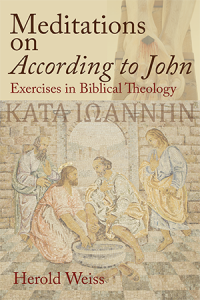
In the comments to my announcement for Thursday night’s interview with Dr. Herold Weiss there was a comment that included a question. I missed it and failed to ask it during the interview. I e-mailed it to Dr. Weiss, and he sent me a response. Since this ties into the topic of the interview, I will also include the YouTube embed of the interview video below:
 Q: As I’m sure Dr. Weiss knows, the Jesus Seminar allocated no sayings of Jesus in “According to John” as “likely authentic.” How does Dr. Weiss rate Jesus’ sayings in “John”, and how does he explain the vast difference between the Jesus of “John” and the Synoptics?
A: The difference between the Synoptics and John is due to the bifurcation of the oral tradition that started with the disciples but quite early departed into different trajectories. We can identify four of them: the tradition of Q, the tradition in the Gospel of Thomas, the tradition in Mark and the tradition in John. At some points there are connections between them. The tradition of John, as I point out in the book, can be seen being developed within the Johannine community, so that now there are some tensions withing the gospel. As for the work of the Jesus Seminar, I find it a bit pompous. The criteria of authenticity are logical, but their application is always subjective. All the sayings of Jesus are colored by the oral traditions behind them. That is also true of the work of the ‘historians’ of antiquity. They had no sense of responsibility to evidence and facts. The case of Josephus, or Tacitus is well documented. ‘Scientific history’ is a child of the XIX century.
There may be some who think that if we cannot be certain of every word in the gospels as ‘history’ we cannot believe in Jesus. I find that quite amazing. If one is to depend on history for what one believes, then all you have is a Jew who was crucified as a traitor by the Romans. The Gospel is about something else completely.
Here’s the interview video: