Threads from Henry's Web

Tag: Diversity

  • Psalm 119:172 – Sing Some More!

    Psalm 119:172 – Sing Some More!

    I will sing praise of your word,
    for all your commands are righteous.

    Though I did not translate literally in either case, I will note that there is a succession of terms used here. Verse 171 has the lips doing the praising, and in this verse, it’s the tongue.

    Why do we praise laws?

    In general, I’d say, we’re inclined to praise laws that prevent other people from doing things we don’t like, but to chafe at laws that restrict our freedom to do what we want. A law is “righteous” if it applies to others, and oppressive if it applies to us.

    The Psalmist describes all God’s judgments as righteous. As I’ve noted before, the Psalm does not specific authorship, but if we look at the traditional Psalmist, David, we can see that while he might not recognize his own guilt easily, when confronted with it by God’s messengers, he was able to acknowledge it. He was a king, but he was also subject to the will of God. (For an example, see 2 Samuel 11, the familiar story of David and Bath Sheba.)

    The problem that many of us have in relating to laws is very simply a lack of empathy. We cannot imagine ourselves in someone else’s circumstances, and thus we often miss what various actions and rules might mean to that other person.

    One of the critical elements of God’s laws is the need to be concerned for others. In Leviticus 19:18, the Israelites are commanded to love their neighbor as they love themselves. Jesus picks this up in his statement of the two laws.

    One cannot carry this law out without empathy. One has to have some understanding of how to apply love to one’s neighbor if one is to actually love that neighbor. When Jesus gives the golden rule, “Do to others as you would have them do to you” (Matthew 7:12), he makes empathy even more important. You again have to be able to think about what your neighbor might want in order to carry out this law.

    Some leave out this empathy in expressing how to fulfill this law. They figure that if they would like something particular done to them, that must be good for their neighbor too. But if you think about it for a moment, you’ll realize that what you’d like is for your neighbor to do to you something that you would like done. That means that to reciprocate, you need to look for something your neighbor would like done and do that.

    Let me illustrate with a simple case. My wife and I are very different. When we were setting out to get married 25 years ago, many thought it would never work. It has. There are several reasons for this, but the key reason is that we recognize and celebrate our differences.

    Jody likes to make a big deal of birthdays. She likes lots of people around. She wants them to have fun. She wants to be part of the crowd. It’s a big show. I like to try to arrange as much of that as I can. Why? Because she likes it. That’s it. I don’t need any other reason. She enjoys that celebration.

    You may imagine that I also enjoy such a celebration, but you’d be wrong. If I could, I’d keep my birthday secret. I don’t mind a few greetings, and appreciate that friends notice, but I don’t want a party or any large gathering of people. I find the idea of getting a bunch of friends together for a meal with cake and all that stuff to be rather annoying. Please, leave me alone and let me enjoy my birthday!

    Jody recognizes what I like, and she will keep things toned down and low key. I really appreciate this.

    This is an example of doing to something else what we would want done to us. Step one is finding out what the other person would like, just as you would prefer that they find out what you would like.

    Let me bring this back to our text. All God’s judgments are proclaimed to be right, and that is praiseworthy. Those who don’t care about someone else wants only laws that work in their own favor. Those who do care, those who have empathy, want laws that work for the good of all.

    Leviticus expresses this “good of all” approach in 19:15, “Do not twist justice in legal matters by favoring the poor or being partial to the rich and powerful. Always judge people fairly.” Fair judgment requires seeing the whole context, something not possible to the self-centered and unempathetic.

    How about trying to really understand what one other person wants today?

    (Featured image generated by Jetpack AI.)

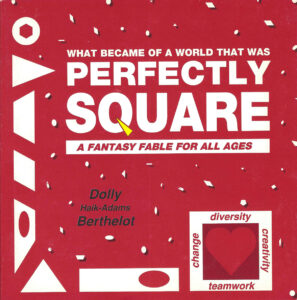
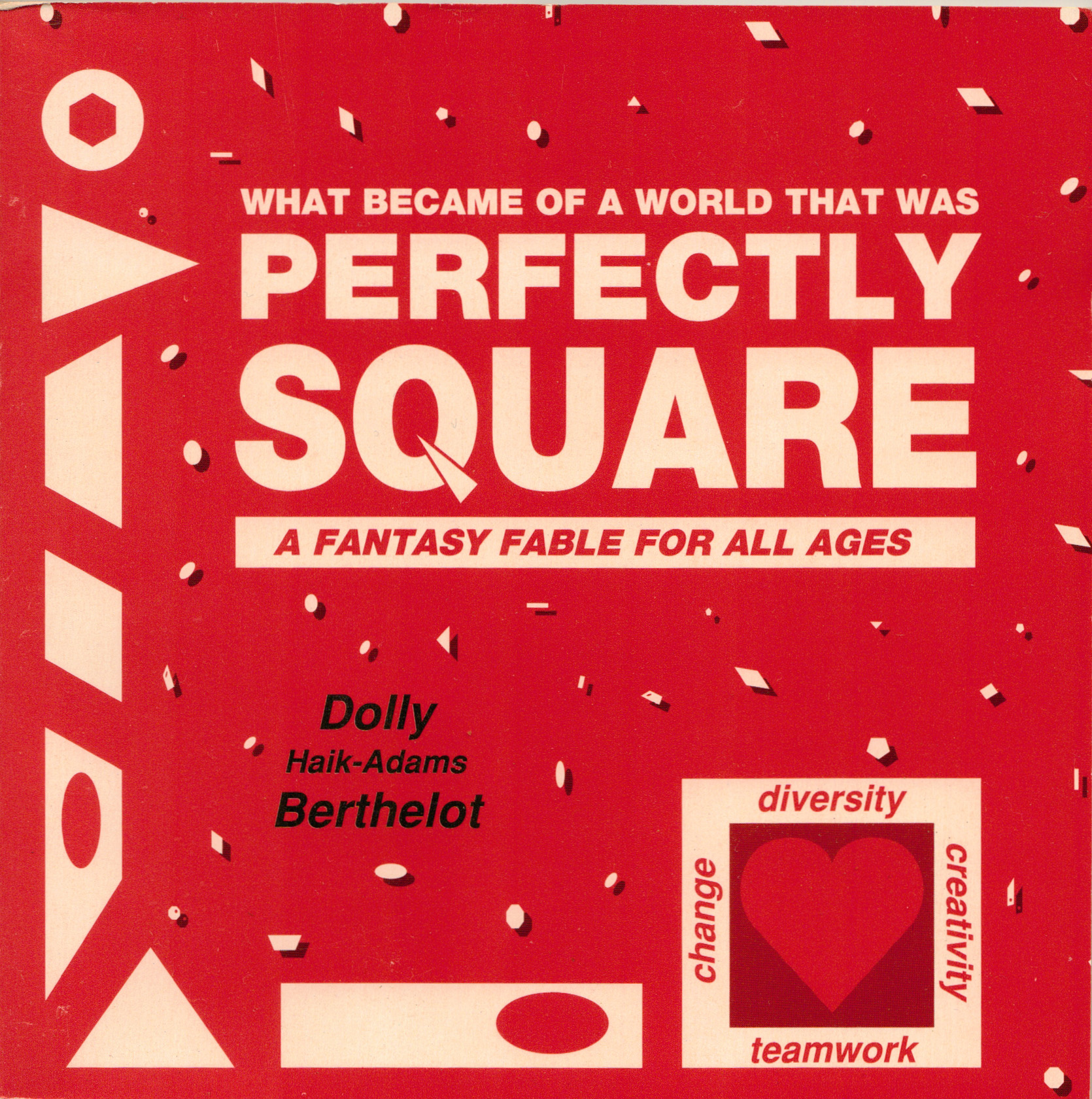
    I want to call attention to two posts on empathy from Energion authors. Idea Summary: Empathy is drawn from the book The God of the Growing Edge by Dr. Bruce Epperly. Empathy is Essential is by Dr. Dolly Berthelot. Both look at empathy and its impact on our actions in society. Dolly is also the author of PERFECTLY SQUARE, a fantasy fable about dealing with change and diversity, something that also requires empathy.


  • Psalm 119:152 – Eternally Varied

    Psalm 119:152 – Eternally Varied

    I’ve known this for a long time about your testimonies:
    You established them from ancient times.

    This is one of the cases in which my use of standard translations for each of the “law words” in this Psalm looks just a little off, but I’m sticking with it. Of course, it is quite possible to read this as including the record of God’s creation in which case we do learn from creation itself about how firmly founded God’s law is right from the beginning.

    I tend to blur the boundary that theologians prefer between special and general revelation. I think that potentially everything reveals God, provided that we are looking. The revelation provided in scripture or in prophetic words and experiences differs in approach and purpose, but not in quality.

    This applies to study of natural sciences for example. I would say that good scientific study provides potentially accurate information about that natural world, and is more likely to do so accurately than scripture.

    Hey! What? Are you speaking against the value of scripture? No. I’m saying that scripture does not have teaching us science as its purpose. We have the natural world and the minds God graciously provided us to study the natural world. The way to learn about these things is to “read” them in the way that is provided.

    This is another way that we can learn from “testimony” about how God has founded his rules. We see the record of the universe through devices such as the James Webb Telescope. We see the history of this world in the rocks. In studying these things we can learn not only about the things themselves, but about the God who created them.

    And note that I’m not here debating special creation and evolution. No matter what the process, God is the creator, and we can see the stability of what God has decreed for the entire universe.

    So in “reading” the universe I can learn that God has established his rules firmly “from ancient times.” God is not a God of chaos but of stability. It is in observing these things, however, that I also see God as a God of freedom and not of micromanaged control. Here others might disagree with my reading, both scientifically and theologically.

    Nonetheless, in the dance of stars and galaxies, where some even collide or pass through one another with a great deal of destructive force, I see a game with firm, stable rules, but played by elements with considerable options in how those rules are applied.

    And I bring this up because it is precisely this kind of disagreement about interpreting nature in terms of God’s presence in it and relationship to it as a reason why we need to get the real answer from written scripture. We need to get that all settled much more clearly.

    Except that we don’t. Get it settled clearly, that is.

    We get so many different interpretations of the Bible that it’s really hard to even catalog all the things that may claim the title “what the Bible teaches.” It doesn’t do any real good to explain to people that the problem is that they are all wrong, whereas I, of course, am right.

    I would suggest that if God wanted a unanimity in understanding either creation or the written word, God would have done things quite differently. “Differently” might have involved either different people, a different universe, or a different written word, or more likely all three. I suspect God didn’t do it the way we have it by mistake, so I take it God wants us to have to wade through the variety and do our best to interpret.

    I’m still going to argue for what I believe scripture teaches. I think that’s a good idea. I hope you do too, even if, or especially if you disagree with me. I think that disagreement, done right, can create growth. And all of that goes back to the God who created this all precisely as God desired it, not as I desire it.

    In disagreeing today with others, as you doubtless will, consider the God who made all those diverse wonders of nature, people, and viewpoints possible.

    Rejoice! Revel in the diversity God has created.

  • Psalm 119:130 – Light

    Psalm 119:130 – Light

    When your Word is revealed, light shines,
    giving understanding to the naive.

    This is a very important verse to me, and I think it is often misunderstood.

    I was raised on Bible-based materials. I studied that way in school. I spent a good deal of time with it in school. I had a disagreement with my mother about when I first read the Bible through. She said it was when I was around 9 or 10 years old. I recall reading it all the way through in my early teens. As an elementary student at a school with a Bible-based curriculum I memorized Bible passages in large quantities, including the chapter I’m writing about, all 176 verses of it.

    When I went to college and determined to study the Bible I majored in Biblical Languages, thinking this was the way to get back to the sources. With the weight I put on the value of scripture, I wanted to be as accurate in my knowledge as I possibly could because knowing the words contained in scripture was, I thought, of great value.

    It took me a very long time to get past the collection of words and data from and about scripture. I used the word “naive” in my translation of this verse, and I was naive in my approach to scripture. It was not only not possible for me to get to a 100% bedrock understanding, based only on my study, it was also not particularly desirable.

    That question drove me away from the church and from fellowship. I still enjoyed the study of and the text of scripture, but it was no longer a driving force as it had been. It was, instead, a bit of a hobby.

    Then I came back to it again. Marcus Borg wrote a book titled Reading the Bible Again for the FIrst Time. While I don’t agree with everything Borg teaches, I enjoyed the book. I empathized with the experience, because by the time I read his book, I had had a similar experience. The reading of the Bible became something very different to me.

    One very important change was that instead of looking for a simple, totally coherent system of beliefs about God, I began to seek to know God. When I began to seek to know God rather than about God I also began to see that the Bible points outside of itself to manifestations of God’s Word. By God’s Word were the heavens made (Psalm 33:6-9). This told me that God’s Word extended everywhere.

    I also saw in the Bible a great deal of diversity. Instead of seeing repetition of “sameness,” I saw God working in multiple ways in the stories of the Bible. I saw even more diversity in the way the stories of the Bible came to be presented as they were. I saw the way in which the Bible pointed to people who heard from God and who spoke for God. I saw a church in the New Testament where hearing from God and sharing were part of worship (1 Corinthians 14, for example).

    “Bible-based” no longer filled the requirement for me. “Based in the Word of God” came much closer, but only when we allow ourselves to understand that for those who are willing to listen, for those who are willing to see, for those who are willing to hear, and for those who are willing to imagine, God’s Word is everywhere.

    God’s word is just waiting for an opportunity to enter, an opportunity to make the naive wise.

    “I can never get away from your presence!” (Psalm 139:7b, NLT). No, for a God who is everywhere, that’s true. The problem is that we’re extremely capable of getting away from an awareness of God’s presence. The entrance of the data does not give light. The entrance of God’s Word creates knowledge and wisdom. It’s waiting for us to perceive the God’s presence.

    I’m amused by our common expression regarding an especially powerful meeting: “God was sure present in our worship service today!” That’s not how it works. God is definitely present. The question is whether the worship service is conducive to helping us perceive that presence.

    Similarly, a daily question, whether I’m in my home or my office, or traveling somewhere in my car, or taking a walk, or whatever I may be doing the question is whether I’m perceiving God’s Word in what I see. If I’m writing prose, poetry, or fantasy fiction, I can be perceiving God.

    Because God’s Word is absolutely everywhere.

    Are you going to perceive it today?

  • Recommending a New Blog: Dr. Dolly’s Musings …

    Recommending a New Blog: Dr. Dolly’s Musings …

    There’s a new blog, Dr. Dolly’s Musings … and I want to recommend it highly. Dr. Dolly Berthelot is an author with Energion Expand (an imprint of my company) with titles PERFECTY SQUARE and Scars to Stars. She has also been a friend and partner in various diversity and dialogue programs over the years. I consider PERFECTLY SQUARE to be one of the best approaches to understanding and managing the value of diversity.

    My company, Energion Publications and all its imprints were founded with a key value and mission of publishing diverse voices and helping to generate more dialogue between very different voices. This value and mission remains.

    I believe you will learn a great deal from Dr. Dolly’s Musings …. But don’t think this will be dry facts. Dolly is one of the most versatile users of words and imagery that I have every encountered. Just when you think she’s found the limits of her imagination, she’ll surprise you.

    We differ in background and some beliefs, but we share the desire to see people learn to work together and produce great value for all of us, not just economic value, but community as well, which is a value beyond price.

    You can read her introductory post here.

  • If You’re Nice, Diversity Will Take Care of Itself

    If You’re Nice, Diversity Will Take Care of Itself

    Bad Ideas I Learned from Good Leaders #2

    I’ve heard this one from so many people that I would hardly know who to blame for it if I wanted to blame someone. I’ve been told that if you will just be nice and positive, you can ignore the differences in your congregation and everything will take care of itself.

    This is incorrect. If you ignore the diversity that is present in your congregation, you will likely encounter a number of problems.

    1. You will find that people will have differing definitions of the boundaries and thus create conflict in the church unnecessarily.
    2. Different people offer different gifts, and if you fail to discover these gifts, there will be missed opportunities.
    3. Problems in the surrounding society may cause division in the church unnecessarily.

    If you don’t believe me on any of this, read 1 Corinthians. Here we have a church with division, and Paul tells them that God has brought them together from differing backgrounds, with different talents, and made them into one body with different gifts. Read especially 1 Corinthians 12. As a follow-up, read Romans 14, or even better Romans 12-14. (I’m not a good proof-text person. Read a few chapters!)

    Note here that I’m not talking about some sort of quota system or diversity inclusion. I believe in inclusiveness, but in this case, I’m assuming what I’ve seen in most churches, and that’s a variety of people already present. The problem is that they are carrying out a one-day-a-week religious program because the church has failed to incorporate them into a single body, the Body of Christ, to have an impact on their world.

    To accomplish this, it is necessary to actively acknowledge the differences among the members of the congregation. These differences should be recognized not for the purpose of a select group of individuals asserting superiority over others, but rather to appreciate the diverse gifts that have been gathered, value those gifts, and collaborate effectively by utilizing all available resources.

    Diversity in any organization is valuable. It allows us to accomplish things that none of us could achieve on our own. The problem is that many of us are so focused on our own strengths and weaknesses that we fail to recognize how others operate and what they can achieve.

    This could be as simple as finding the nerdy young person who doesn’t seem to fit in socially, but who, unknown to you, has a talent with electrical systems and would be able to run your sound system better than anyone else. That young person, being socially uncomfortable, is vanishingly unlikely to volunteer. They probably assume they’ll be pushed aside or ignored for no better reason than that they have been pushed aside and ignored over and over.

    This “different” person doesn’t need you to change their personality. They need you to let them be who they are and do what they are gifted to do. To do this, you need to have a clear understanding of what is a moral difference that is a standard for the church and what is a difference of personality. Too often, we treat Christian discipleship as a personality change.

    Don’t figure that you have to make the Jock do lots of hours of detailed Bible study. God may well have called them to a straightforward understanding of their faith and to be a good, kind, fun loving, and active person. And don’t expect the Nerd to be ready to engage in all those physical and social activities that you think are so essential to life.

    Oh, and don’t expect everyone who gets involved to be ready to serve on a committee. They might be quite willing to take direction but not to spend seemingly endless time discussing.

    In addition, there is value in being clear about the core beliefs of your church (or any other organization for that matter). This is not so you can go hunting for heresy. I recommend a short list of essentials, the common beliefs that unite this specific group. The purpose of clarity is to avoid unnecessary misunderstandings.

    Let me recommend a couple of books to help learn about and deal with diversity, whether in the church or in the community. I commend both of these books for making diversity a value rather than a burden to be borne or a duty to be carried out diligently.

    The first I already mentioned in the first post in this series, Perfectly Square by Dolly Berthelot. This book is short, illustrated, easy-to-read, and fun. It’s not particularly directed at churches. That’s a good thing. Your church is not perfectly square either. Church people are people. There are thought questions and discussion topics listed in the book. It’s good for group reading and discussion.

    It is also not a prescription for programs, but rather it is aimed at changing attitudes and opening up new ways of thinking about the differences we find all over.

    The aim is to recognize these differences and profit from them as a community rather than making them a cause of discord and division.

    The second is a book explicitly for church groups. I Know We’re All Welcome at the Table, but Do I Have to Sit Next to You? Now there’s a long title! But this book provides ideas and courses of action that a community group can use to begin to deal with those people we don’t want to deal with. The focus is on people and groups we may already have identified, probably stereotyped in our minds, and determined that we dislike or worse. How can you get back together.

    My suggestion here is that to really lead we need to learn how to work together, and use all of the diverse gifts and resources we have in our congregations in order to impact our communities.

  • Psalm 119:41 – Grace, Rescue, and Response

    Psalm 119:41 – Grace, Rescue, and Response

    Let your grace (chesed) come to me;
    Rescue me according to your word.

    I’m sure you can see where the “grace” and “rescue” come from in my title, but what is this matter of “response”?

    We’ve already talked about grace and rescue, and will do so again before I’m finished with these verse-by-verse meditations. But what struck me today about this verse is its place in the Psalm and the nature of this Psalm as a whole.

    I’ve now written 40 of these meditations, 41 when this one is completed. That represents five sections out of an eventual 22. Each section contains eight verses, and all of those verses begin with the same letter of the Hebrew alphabet.

    English readers often get the feeling that Hebrew poetry is unstructured or undeveloped. This is because it is difficult to translate poetry from one language to another. It’s even more difficult when the idea of poetry in the two languages differ.

    Unlike English, rhyme is not common in Hebrew poetry, though both alliteration and rhyme occur occasionally. The key to Hebrew poetry is a parallelism of ideas and rhythm. The rhythm is next to impossible to translated, though some fairly credible efforts have been made by people with the right skills. Those skills are sadly not mine.

    Psalm 119, however, adds a structure in with these 176 couplets, divided as they are into sections and arranged according to the alphabet. Why do you do a thing like this?

    The answer, at its root is simple, I think. The psalmist is overwhelmed by the God of Israel who has provided a self-revelation, pointed to glory through laws, signs, and presence, and who leads toward glory.

    Most of us have ways in which we react to things that impress us. When that is favorable, we have ways of expressing that praise. This is not merely a religious thing. The psalmist is looking at a body of stories and laws that make up Israel’s Torah. Others might be looking at mountains, or beautiful animals in the wild (or in one’s home!), or gazing at the wonders of the universe through a telescope, or looking at the amazing things, living and otherwise, that are two small for human vision unassisted.

    What do you do when you see these things? Well, you can go to church and sing hymns or other songs of praise and worship. I imagine most of my readers find that to be a suitable response, as indeed do I. What I’m suggesting is that we look at what others have done or might do.

    1. Like the psalmist, we might write some incredibly complex and interest poetry suitable for reading, singing, or deep study, an offering of one’s best to the Lord in written form.
    2. Or one might take impressive photographs with an eye for a scene that nobody else imagines.
    3. One might go out and serve others, helping maintain the order and structure of society, for example as police officers, court officials, or military personnel.
    4. A scientist might observe and structure the data into valuable theories, useful for predicting other results, publishing them in often very obscure journals, known by only a few.
    5. An engineer might take those theories and turn them into technology, such as medical devices, aircraft, spacecraft, or even better telescopes and microscopes for someone else to use in greater learning.
    6. Someone else may choose to teach, helping to guide God’s children into better ways of living in God’s world.
    7. A fiction writer might fashion a story of the imagination, opening up vistas of thought.
    8. A mathematician might work out a complex formula, pages filled with symbols and figures.
    9. A musician might represent the glory he can just barely see with sound, lifting our hearts and minds higher through this sound.

    The very nature of this response is challenging.

    I’ve been asked many times why it was that I memorized Psalm 119 as a child. The bottom line is that I had to do it. It was a requirement. But the next question is why, having been forced to memorize it, I still like it, even love it. “All that dull repetition! How can you stand it?”

    For me, it’s because, having spent time memorizing, then studying this Psalm, first in English, but later in Hebrew, I have found it to be an amazing work of literature. It reflects someone’s love and appreciation, but also their hope. Someone is looking for higher ground and this is how that someone presents it.

    I’m grateful for the Psalm. I’m enjoying meditating on it. I’m enjoying that various trails it suggests to me that are outside its actual structure.

    How will you express your response to the beauty that there is around us?

    (Featured image is from Adobe Stock by ckybe, licensed, not public domain.)

  • Choose Your Shape!

    Choose Your Shape!

    Well, perhaps, “choosing” should be “recognizing.” Weird? Doesn’t make sense? Read on!

    In the late 1990s I participated in a program here in Escambia County called CommUNITY Dialogues, led by a creative and interesting communications specialist (and I had not, up to that time, used “creative” or “interesting” with regard to such people!) named Dr. Dolly Berthelot.

    It was a great program, and I learned a great deal. The reason I’m writing about it, however, is that it was the first diversity training program I’d experienced that I considered personally valuable.

    While I valued and value diversity, I felt that many interfaith and diversity programs negated their own value by asking people to give up their own beliefs on entry. The result was a debate largely centered around whether divesting oneself of one’s own “diverse” views was a good idea or not.

    What Dr. Dolly did was invite us to explore our beliefs and those of others and to look at ways in which we could understand one another and work together by celebrating and taking advantage of our differences. I have always believed that this would be valuable, but in my experience people of strong convictions tend toward excluding others, and those advocating diversity want to diminish the value of one’s own values.

    You may, in fact, decide to change your belief on some topic as a result of dialogue, but eliminating the differences before they are experienced and understood is, in my view, suboptimal. (I like that word!)

    I say all of this to bring us to the present, and some of the work of Dr. Dolly Berthelot. I publish her book PERFECTLY SQUARE, and I have spent some time looking at a training program she has developed, SELFSHAPES. She has developed a simple quiz based on this program, and I have implemented it on our web site.

    I’m not going to discuss it in detail here, because it is best experienced first. I have commented before that I have found things I’ve learned about human nature, including sociology and psychology, and definitely about different personality characteristics more helpful in Bible study and teaching than learning biblical languages. (I in no way regret learning the languages. I say this to emphasize the extreme value of learning to understand people for biblical studies and theology.)

    And, of course, for life.

    So head on over to the Energion Publications retail site and check out the quiz. It’s called Dr. Dolly’s SELFSHAPES. There are no pop-ups, and very little advertising. At the end we offer you the opportunity to share on social media and to sign up for an e-newsletter to keep up with developments.

    Enjoy!

  • Do Liberals and Conservatives Really Need Each Other?

    Do Liberals and Conservatives Really Need Each Other?

    Early in my college days I encountered a man who would have a substantial influence on my life. It started as he explained textual variants and alternate possible translations in Genesis 1 for 2nd year Hebrew. I’d taught myself that far, and hadn’t done badly figuring out the rules, but my knowledge was less than practical. That man was Dr. Alden Thompson, now professor emeritus at Walla Walla University, and author of several books, two of which I publish.

    While showing me things that I had never seen before, and wasn’t sure I wanted to see, Alden displayed a gentleness and spiritual depth that had a profound impact on the way in which my theological understanding would develop. It is an approach he has modeled for decades and truly grown into even more as he moves forward.

    Looking at the divisions in his beloved Seventh-day Adventist Church, Alden doesn’t want victory for liberals or conservatives or any of the many other variations one might find. What he wants is conversation and an appreciation of the gifts that all bring to the table.

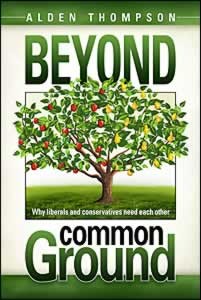
    Even though I don’t publish it, as we approach celebration of Consider Christianity Week, I wanted to call attention to Alden’s book, Beyond Common Ground: Why Liberals and Conservatives Need Each Other. Alden is talking about faith and a church organization, but the principles he discusses apply broadly, most importantly, learning to listen to and value the diversity. He matches that with a willingness I often don’t find in either liberal or conservative circles: A willingness to recognize the fear that new ideas and change may bring and to honor the need of solid ground for some people.

    While Beyond Common Ground is written very personally and is anchored therefore in its author’s community, it discusses issues I have seen trouble, divide, and sometimes destroy communities of various types. Consider reading this engaging and challenging book as you think about Christianity during Lent, and of course during Consider Christianity Week.

    Here’s a short video interview with Alden:


  • Would You Like a World that Was Perfectly Square?

    Would You Like a World that Was Perfectly Square?

    Not sure? Tonight you can find out!

    0964440601On the Energion Hangout tonight I’ll be interviewing my friend Dr. Dolly Berthelot, author of PERFECTLY SQUARE: A Fantasy Fable for All Ages, and an all around great person.

    Let’s get the commercial part out of the way first. This book was first published in 1994, and its message is still relevant, possibly even more relevant, today. In fact, I suspect that in another 50 years, its message will still be on point and up to date. So I’ve taken up distributing the book. You can find the Energion catalog page at the link above or by clicking on the cover picture.

    And while we’re at it, you can find the interview tonight (7:00 pm central / 8:00 pm eastern) via the Google+ Event page, or you can use the embedded viewer here.

    With that out of the way, let me tell you about Dolly Berthelot. I encountered Dolly through the CommUNITY Dialogues™ program she offered through the Human Relations office here in Escambia County Florida. I believe I got involved through mutual friends at the Unitarian-Universalist Church of Pensacola (then Pensacola Unitarian-Universalist Fellowship).

    My view of diversity programs at the time was negative, to say the least. I had attended a number of these programs while in the USAF and also some with civilian organizations, and they were uniformly boring and generally useless. I remained committed, however, to the idea that we could learn to reap great benefits from our differences by listening to one another.

    I’d say that the key failures of diversity programs that I attended were rather straightforward. First, they had a tendency to tell you what a few differences were and basically explain that you had to get along anyhow. Then they’d attempt to make all the diverse people in the room drop all their differences, or treat them as unimportant, so they could get along. It appeared that the diversity trainers really didn’t like diversity. Their hope was that everyone would cut off the rough edges and get along, or just not mention anything that might be controversial.

    In CommUNITY Dialogues™, things were quite different. Dolly taught (and encourages) unity in diversity. We are all different, and this isn’t a problem to be solved, but an opportunity to be grasped. We need to make the most of our diversity because it’s a great thing.

    So now, 20 years after the book was first released, and quite a number of years after I enjoyed that dialogues program, I’m taking up distributing this book. For various reasons (I’ll get her to explain tonight), Dolly hasn’t been as active. But she’s passionate and ready to go with the message of unity in diversity. Join us!


  • And Now, Prayers from Everybody

    … or almost, that is. According to this Christian Post story, quite a variety of clergy have joined in the various services that will be involved in the inauguration.

    So if people want to bash Rev. Rick Warren or Bishop Gene Robinson, they should at least consider the broader range of targets available.

    Before anyone misunderstands me, let me tell you what does not disturb me here. First, I think that the president-elect is a man of faith, and that should be reflected in his inauguration. Second, I also think he will be president of a diverse nation, including people of a variety of faiths and of no faith (set of religious practices), and that should be celebrated as well.

    Under the circumstances, we’re beginning to see the sort of representation that is needed, and some of us, at least, should have expected this all along–that the participants in the weekend would not only include the folks who pray at the inaugural itself, but who would be involved in many events surrounding that one.

    What I would be delighted to hear from our political leaders at some point would be an explicit acknowledgement that our celebration of diversity extends specifically to include those who are atheist, agnostic, non-religious humanist, and so forth.

    Why do I, as a Christian, get worked up about this? Because recent polls show that these are people who are actually despised by large percentages of the population. An interesting set of poll numbers can be found here, in which I would simply note that 56% say they would be willing to vote for an otherwise qualified homosexual, but only 46% would be willing to vote for an atheist. Both of those numbers are troubling to me, but in the wake of movements such as Proposition 8 in California, consider that less people regard atheists as acceptable. I take the golden rule seriously–do to others as you would have them do to you–and I think it applies here.

    The problem, in my view, is that we work on these groups one at a time, rather than simply learning to celebrate diversity as long as that diversity is not injurious in a society with a variety of beliefs and practices. (I don’t advocate tolerance of people who practice human sacrifice, for example.) The reason I would like to hear something said is that it is only by expressing the view publicly that each of these groups consists of people, who should be judged on their merits whether for a job in one’s business or for public office, that we get people to think about them and change their attitudes. If nothing else, the previous century should have taught us that silence doesn’t work.

    I grow more able to celebrate the inauguration mix as a whole, though still wondering about homogenization. I prefer a robust diversity where each practices his or her own religion, and it is the differences, not the sameness, that is celebrated. But one thing at a time.