

God as Father
I intended to schedule this post for Sunday morning, but life intervened. Jody suggested that as my final post for Father’s Day Week, I should look at divine fatherhood overall through scripture.
She had some difficulty with the concept of God as father, because while she and her father were able to reconcile before his death, she had difficulty thinking of her relationship to Father-God in a positive way. Many people have that very problem due to the way they related to their own fathers in this life.
And we can expect that any human representative is going to present an imperfect and challenging representation of God. This is an inevitable result of the human condition. When Jesus told people that they knew how to give good gifts to their children, he doubtless knew that there were people in the crowd who truly did not know how to give good gifts. There were likely people who didn’t know how to give at all because they were so self centered.
But that parental relationship is still a valuable analogy. This works two ways. First, parental love and commitment to children provides one of our better examples of a loving, self-sacrificing commitment. When I talk about good and bad parents, readers have no problem thinking of examples. We may differ on were the boundaries lie, but we do have an image of good parents.
Second, this works in reverse. We are told in this way that as parents, we are to be the sort of parents who can point the way to God. Being “godly” as a parent doesn’t mean adhering to a set of doctrinal standards. It means having a particular attitude.
My own observation over the years is that children do well with quite a variety of parents. One critical common characteristics of parents I believe would be called “good” by their children later in life is simply that those parents cared. They were committed to doing right. They may have failed. No, they almost certainly did from time to time. They weren’t perfect, but they tried.
And so Jesus could point to the idea of a good father as a way to point to God, and people can get an idea of what God’s love means.
The best way to discover some depth in this view of God is to look at the experience of people with God. I frequently refer to the Bible not as a compendium of doctrine, but as a book of experience. That experience is primarily the experience of people with God.
Jody spent a year looking at texts about God the Father. I’d suggest just such a project if you want to build your relationship with God. Here are a few key points.
- God as creator is God as Father. At creation God not only produces human beings, God then goes on to care for them by providing a garden, animals, and companionship.
- God is not eternally indulgent. God is patient, but there comes a time for trouble. Witness repeated failures of the people, and events such as the flood, slavery in Egypt, the exile, and so forth.
- God’s parental love is not determined by our being the cutest or best behaved children. Hosea, particularly the first few verses of Hosea 11 or all of Ezekiel 16 (which is some rather rough reading!) emphasize.
- God’s love is not limited, as seen in John 16 & 17 and many other passages. God keeps loving right up through death on the cross.
- God’s love is relentless. See Romans 8:31-39.
- God’s love will win in the end. See Revelation 21 & 22.
We spend our time worrying about the little things. God’s love is the big thing.
God is Love!
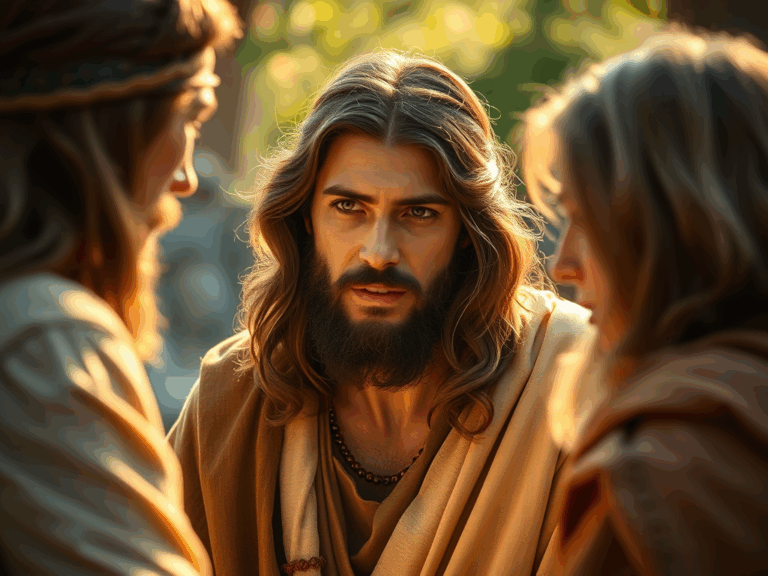
(Featured image generated by Jetpack AI.)

“God’s love…is the big thing..”
Oh, my Henry…is there a day that goes by that I live like I doubt God’s love for me? That’s would have to be à resounding “Yes!” Something for me to think about & make a correction.