Perspectives on Paul: Paul’s Gospel or Another Gospel IV
Continuing … !

Continuing … !
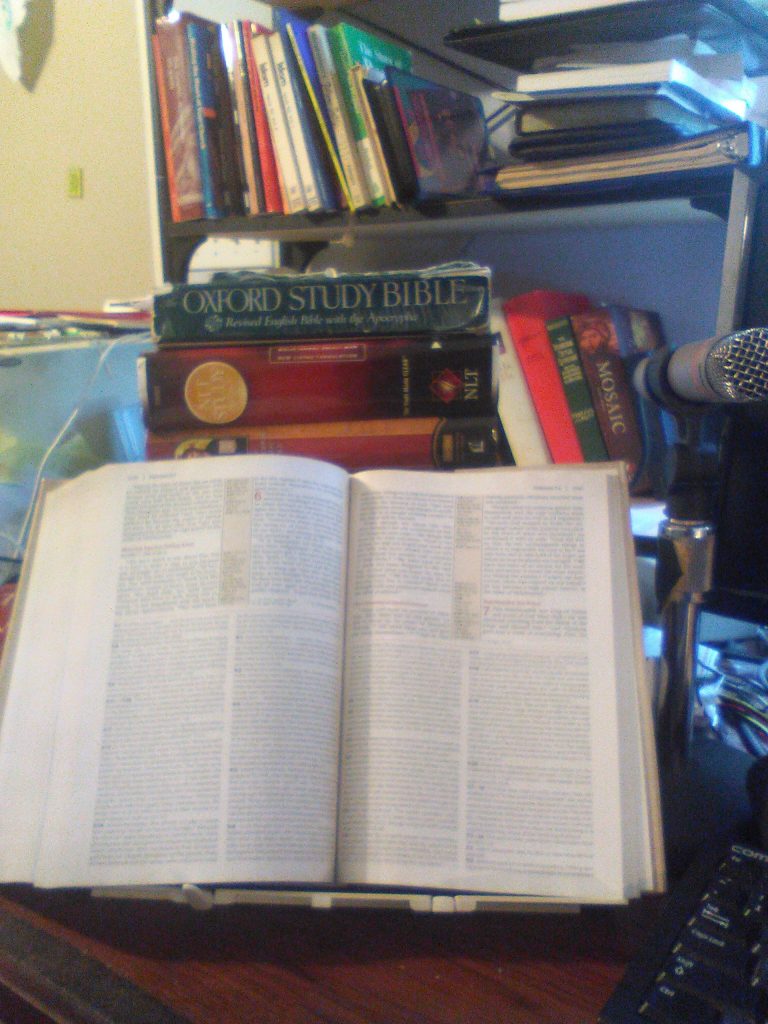
When I am introduced to speak or teach, mention will doubtless be made of my MA in Religion, concentrating in Biblical and Cognate Languages, though the correct degree name will be shortened, and the language skill usually exaggerated. In my mind, however, there are many things that have contributed to my study of the Bible….

Titles for people, that is. Thomas Hudgins makes some important points on this issue in a post on the Energion Discussion Network. I tend not to be radical (well at least I think so), but on this it seems like Jesus was pushing us pretty strongly away from hierarchies and spiritual authority. There’s a great—and quite…
A commenter on my post Words from the Mouth of God asks: Would you please comment on Matthew 4:4 in this connection. Yes, and it’s a most helpful passage to bring up here, and it suggests quite a number of things to me. I’m going to look at the application in connection with what I…
… at least according to this test. (HT: TheoPoetic Musings, who also turned out to be a secular humanist, though not quite as much of one as I am.) I scored 62 of 166, 37% which makes me a secular humanist! The interesting thing about this test was that I had a hard time deciding…
When I see a headline like The Search for the Heterosexual SUV, I go to the actual source hoping against hope that it will turn out to be in the Onion. Of course, since I know that the American Family Association has called for a boycott of Ford, I know I don’t have much hope….
Kevin at Everyday Liturgy is beginning some reflections on his visit to St. Gregory Palama monastery. This caught my attention, since my recent discussions of the atonement led to some discussion of the Eastern Orthodox view of the atonement, and thence to some articles on St. Gregory Palamas, and I now have a plan to…
I am not an expert in Biblical criticism, but could it be that the writing in Ephesians is different from that of Galatians because Paul, not having to be in an apologetics mode, could allow his thoughts to flow through his pen onto the page without the feelings of defensiveness, without fear of counter attack? However, if Paul did not write Ephesians, it must certainly have been someone who had accepted his gospel, and been endowed with double portion of the Spirit that inspired him. In that connection I have often wondered, as I read Melancthon, what we might have learned from Martin Luther, as well as Paul, had not they been forced to always be on the front lines of battle. I think of Luther as a mighty rushing cataract, a warrior, sweeping away centuries of the false; while Melancthon, like a good shepherd, with stones forming gentle, still pools of water so that the lambs and sheep can drink safely. To me this represents the difference we see in the writings of Galatians and Ephesians.