Threads from Henry's Web

Category: Bible Study

  • Follow-Up on Study of the Gospel of John – Introduction

    I’ll include the YouTube for my first study session on the Gospel of John below. During my discussion I promised to provide a link for the article I referenced suggesting that the Rylands Papyrus, P52, may be dated a bit too early. The article I referenced is available on Academia.edu, and is titled The Use and Abuse of P52: Papyrological Pitfalls in theDating of the Fourth Gospel. I believe registration is required, but it’s not behind a pay wall.

    In addition, you might want to review Larry Hurtado’s comments on an article dealing more generally with early dating of NT manuscripts. The article itself is behind a pay wall, and I haven’t read it.

    I find that these notes generally reaffirm my belief that most paleographical dating of New Testament manuscripts provide too narrow a window, one that is not justified by the level of the evidence. If one truly considered the window, the old date for P52 is about at the lower edge of the new window. Our tendency is to read probabilities as certainties, and thus if we have a date of 125 +/- 25 years, we will often cite it as 125. But that window is important. I’m not a paleographer, so I couldn’t comment on the particulars.

    This coming Thursday, again at 7:00 pm central, 8:00 pm eastern time I will be discussing John 1:1-18. I will post a link to the event, a video trailer for that lesson, and some questions/points to think about prior to the study here tomorrow.

    Also, we will be having a 1/2 hour author interview in the series of Energion Publications Tuesday night hangouts on air with author David Cartwright regarding Cartwright’s recently released book Wounded by Truth – Healed by Love. Elgin Hushbeck, Jr. will conduct the interview. For the second half hour, Elgin will be discussing historicity and the gospels with me, particularly with reference to the Gospel of John. Click here for full information on the Tuesday night hangout.

    And finally, here’s the YouTube for last Thursday’s introduction to my study on the Gospel of John. We’re using Meditations on According to John by Dr. Herold Weiss as the text.

  • Some of My Own Books on Sale (Gospel of John Study)

    Some of My Own Books on Sale (Gospel of John Study)

    henry_saleThe advantages of being a publisher is that I can put books on sale to go with posts. Normally I only do that for things on my company page (Energion Publications), but since I’m starting a study of the Gospel of John on my Google+ Page/YouTube Channel, I’m doing it with a few of my own books. I haven’t spent time pushing my books for some time, I think.

    In any case, the book I’m using for the study, Meditations on According to John by Dr. Herold Weiss, and three of my own books are on sale for 30% off until the end of the month, so this is your opportunity.

    While I’m following Dr. Weiss’s book, I won’t be reiterating the contents of it in the video. I intend to spend more time in the nuts and bolts of how one interprets the passage. Dr. Weiss subtitled his book “Exercises in Biblical Theology,” and I’m going to be doing some exercises during the week myself and sharing these each Thursday night. So if you want to get what he has said, you’ll need to buy his book.


  • When Should You Talk about Textual Criticism?

    I’ve posted a question that originates with Thomas Hudgins over on the Energion Discussion blog. Here are my comments to go with that post.

    The question has quite a number of implications. For example, if your listeners do not normally look at the textual notes in their Bible translation, they might not be aware of the issues. Not mentioning a difficulty might be an issue of honesty. (“Pastor, you never gave me any idea how many variants there are in the New Testament text. You lied to me!”) On the other hand, constantly mentioning textual variants, most of which are fairly minor (though translations normally mention only a very small minority, NET excepted, and thus only ones that impact meaning more significantly), and discussing the text all the time can be very distracting.

    I resonate with much of what Thomas says in his post. It’s very easy, as a pastor or teacher, to leave the wrong impression. You can leave your listeners thinking they can’t study the Bible at all unless they’ve spent time with textual criticism as you have. You can make them think no translation is at all trustworthy.

    There are always at least two types of tension here.

    First, there’s the issue of what skill is needed in order to study the Bible. I took a Biblical Languages major as an undergraduate, rather than religion or theology, because I wanted to understand the Bible better. I don’t think I wasted my time. I can get more out of a passage using what I learned, including a quarter each in New Testament and Old Testament textual criticism, than I could if I was limited to English translations. On the other hand, it is not impossible to understand the vast majority of scripture using an English translation, especially considering the number we have available and the wonderful resources we have in addition.

    Second, there’s the issue of the trustworthiness of the Bible. Many pastors avoid issues in the text because they’re afraid people will get the idea that they cannot trust the text of scripture. (“If major translations don’t even agree, how can I be sure?”) I think this is a questionable approach, because the vast majority of the text of the New Testament is not in dispute. It’s much more convincing to mention that before, rather than after, someone discovers textual variants. If you haven’t mentioned it, you’ll sound like you’re on defense, and you’ll sound like you’re making it up as you go along.

    Some may ask why I’m concerned this much about the reliability of the text when I don’t accept the doctrine of biblical inerrancy. There are three answers to this:

    1) It is a matter of historical fact that we have very strong evidence for the text of the New Testament, and that variations are, on the average, minor. Are there significant variants? Yes, but the disputed texts are not that numerous. In fact, a great deal of debate in this area centers around the vocabulary used to describe the situation. Numbers always need to be kept in perpsective.

    2) I do believe in the providential preservation of God’s message. (Vocabulary alert: What is meant by “providential preservation” differs from person to person.)

    3) I believe we need to be honest at all times.

  • Trailer and Theme for My Study of John

    Trailer and Theme for My Study of John

    john banner

    Above is the theme banner for my study of the gospel of John. The video below is a trailer for it. I am working on getting used to video. I’m more comfortable with text, I think.

  • Studying Through John

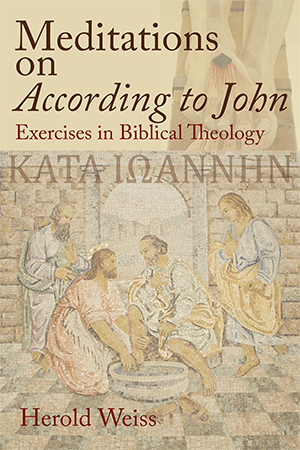
    Meditations on According to JohnWith the new year I’m starting a new online study, working through the Gospel of John using Herold Weiss’s book Meditations on According to John.

    A previous effort by my wife and I to conduct a group discussion failed both due to our schedules and due to low participation. In this case, I will be essentially video blogging live.

    I will personally be studying the book through in Greek, and also studying Leon Morris’s commentary in the NICNT series. That provides a conservative counterpoint to Dr. Weiss. I’ll discuss where I stand in connection with all this in the introductory study.

    I will always have the Q&A app enabled so that people can interact via text. In addition, I’ll be watching my Twitter feed for any comments or questions. If anyone wants to participate via video, let me know through the comments below or via e-mail (henry@energion.com). The only requirements I will have for participation are that you get a copy of the book (ebook is fine), read the material including the Bible passages, and if there is a sharp disagreement, be comfortable stating your position and then letting it go. I’ll state mine and let it go as well. I’m not expecting video participation but will be pleased if there is some. While I can’t imagine it will be a problem, there is a limit of 10 people (9 + me) on the video.

    So get out your Bibles and your favorite reference sources and plan to join the discussion! I’m posting the YouTube below. At 7:00 pm Thursday night, January 6, it will be live. Once the event is complete, it will show the recording.

  • Of Scholarship and Tribalism

    When I was working on my MA, one of my professors recommended a paper I had written for publication. He suggested submitting it to the university’s journal, Andrews University Seminary Studies. I was of course greatly pleased to have one of my papers recognized in this way, especially considering the respect I had for that particular professor.

    Some days later I was approached by the journal editor who informed me that the paper had been read by one reviewer, and that he wanted to talk to me before proceeding further. Apparently this reviewer had suggested that I was trying to become “a new Wellhausen” and that the paper should not be published for many, many reasons.

    Now the fact is that my paper was not as interesting, nor as creative, nor as radical as the work of Julius Wellhausen, and the reader was in no sense commending me by referring to that famous name. Rather, it was his way of saying I was jumping tribes. The editor had several suggestions for me, but the one he favored involved dividing my paper into two parts, separating my interpretation from my discussion of structure, and he would publish the one on structure and then “consider” publishing a separate paper on the interpretation. Considering the interdependence of the two portions of the paper, after seeking some advice, I chose to withdraw the paper.

    Now one isn’t supposed to know who one’s reviewers are in circumstances like these, but I found out because the reader cornered me right after graduation and told me. His reason for doing so was that he was concerned for my soul as, if I did work such as I had done in that paper, I was headed straight for perdition. Oh, and he also disagreed with my approach to the scholarship, but that was a footnote.

    At the time, I associated such tribalism with conservative and fundamentalist scholarship. I had grown up in the Seventh-day Adventist Church with a belief in the Mosaic authorship of the Pentateuch, a 6,000 year age for the earth, a literal seven day creation week, and traditional authorship for the books of the New Testament, including all the gospels, the pastoral epistles, Hebrews, and Revelation. So I had seen the arguments that would make the same John author of the gospel, the epistles and the book of Revelation. In that context, suggesting I was trying to be a second Wellhausen was to suggest a radical departure from the norms of the tribe.

    Well, I learned about jumping tribes. I first became unchurched and uninvolved. After many years I joined a new tribe. I became a member of a United Methodist congregation. In this new tribe, I thought, I would find church without the sort of loss of freedom to think represented by my former denomination. And indeed, there is a substantial difference. Yet there is a note of very similar tribalism.

    Repeatedly I have heard in meetings that one should only use United Methodist curriculum. Presumably this is because organizationally prepared and approved curriculum materials are safe whereas others might lead the congregation astray. These arguments come from all sides. At one meeting it was in objection to a piece of Baptist material that was said to have “too much Jesus” in it. Really?

    As a publisher, although not an academic publisher, I have noticed this same sort of thing from scholars. There are boundaries to the scholarship one wants to consider and discuss, and these boundaries often don’t have to do with the quality of the scholarship involved.

    Excursus: What do I mean by quality in scholarship? Primarily I mean that a scholar should have a good overview knowledge of the literature in the field, have given consideration to opposing viewpoints in forming arguments, cite good sources, include original work, accurately represent opponents’ work, and present arguments based on evidence.

    Readers give great latitude on all those points to someone they agree with, and become hypercritical with someone outside their tribe. Considering that people are people, there are always points to be criticized. In academic publishing, that’s one of the points. Hear those criticisms and hopefully improve down the road. The goal is consensus. (The tribes have labels such as “evangelical,” “fundamentalist,” “liberal,” “progressive,” “Methodist,” “Baptist,” and on and on.)

    But that consensus comes at a price. Once a consensus is formed, it becomes difficult to get people to reconsider the consensus, because there is a tribe named “mainstream scholarship” and membership in it is desirable. You don’t want to be a crackpot. So the scholars wait for a sufficiently famous individual to break with the consensus or for something earth shattering to happen, that will break the consensus. Then people can move.

    But if the consensus can later be broken, then surely it was already fragile even when it couldn’t be challenged, and the various crackpots who challenged it back then, and were summarily dismissed, may actually have been right. But no, we have to move with the consensus. Or so we’re told.

    Of course, if a different tribe opposes us, they are just anti-intellectual! Know-nothings! Nobody in our own tribe supports them, so they can be dismissed!

    What interests me most is that I see this view all around. Conservatives tell me that liberals are against academic freedom. Liberals tell me it’s conservatives. Evangelicals in the “evangelical mainstream” are accused of being there just because “evangelical” is a good label. Those outside are accused by those on the inside of just wanting the approval of men. The players and the playing field changes; the game does not.

    I think it is quite possible for someone who grew up in a traditional background such as I did to have studied the same material I did, and to have concluded honestly that he or she should stick with the same set of views. I should not accuse that person of just seeking the approval of people (the SDA community, for example) because of that conclusion. It is possible for someone who starts from a liberal position to move toward conservative positions. I would like to see these things argued on the evidence. In fact, I don’t think one has successfully defended a position until one has defended it against the folks outside of the tribe.

    It is from this view that I get my philosophy of publication. In particular, I designed the Participatory Study Series to represent different views. In this series the study guide to Ecclesiastes advances the claim that Solomon did, in fact, write the book, while the guide to Ephesians suggests that Paul did not write that epistle. It happens I disagree with both positions, but I’m delighted to see both books in the series. I also publish the book The Authorship of Hebrews: The Case for Paul, which claims that Paul did write the book of Hebrews. Three for three: I disagree with all.

    Well, I do admit that the last one has adjusted my position. I used to say that it was quite certain Paul did not write Hebrews, but beyond that it was impossible to say. Now I just say that there is no conclusive case on authorship.

    Many might (and do) say that I have no idea what I’m doing if I can publish things that differ this greatly. On the contrary I have a very specific aim. If someone studies through the Participatory Study Series, I would like them to have approached the study of various biblical books from a number of different perspectives and developed the ability to evaluate these viewpoints and come to conclusions of their own. I never had, and do not now have, the desire to provide a set of study materials that display just one viewpoint.

    This is not because I don’t have a viewpoint. I definitely do. While I never pursued academic work beyond the MA level, and while I do not write scholarly articles myself, I have been a lifelong consumer of biblical scholarship. What I want is for people to interact with these different viewpoints, especially those outside of the views of their tribe, and to be able to make up their own minds and defend their position. I bluntly find all the tribes (including the “no-tribe tribe) to be deficient on this point.

    I’m often told that I look scattered. My response is that biblical scholarship looks narrow to me. I don’t mean in the sense that one can’t find a great variety of views, but rather in the sense that there are too few conversations between the various tribes.

    My suggestion for the New Year is that you include in your reading a variety of materials written by people who would not be comfortable in your church or in your scholarly “club.” When you do so, try to give them the same benefit of the doubt that you would give to someone who was in your own crowd, or alternatively apply the same critical approach to those on the inside.

    I think the results could be great!

  • Embrace Interpretation

    multimeterWhen I tell someone that they need to consider how they interpret a particular verse, I often get that glazed-over or eye-roll expression that says, “There you go again. Why can’t it just be simple?”

    The fact, however, is that we have to interpret everything. As I look out my window at the branches of a tree in front of my office, there is a great deal of interpretation going on automatically that lets me see this in a coherent way and identify it as a tree. Everything requires some interpretation.

    The picture at the top shows a multimeter that I use in my work. It’s a fairly simple piece of equipment as such gear goes. The other day I was trying to measure a simple voltage and was getting weird results. I must have been tired because I didn’t realize immediately that I had it set on the wrong range for the voltage I was trying to measure. I single click of a switch and all was well. The result was in the interpretation.

    When we study the Bible we are interpreting a tradition that is thousands of year’s old. It involves the experience of people over a great deal of time. Consider how difficult it can be to understand the culture of people in our own country even centuries ago.

    I don’t mean that the Bible is incomprehensible. I just mean that we should be surprised that it requires some effort for us to adjust ourselves to hear what it says. It’s not like reading today’s newspaper, though interpretation is required there as well.

    It’s worth the effort.

  • Some Comments on Writing Introductions with Special Attention to John

    Studying JohnI’m planning to start doing some discussion of Bible passages using Google Hangouts on Air during the coming year. Basically, I’m going to work through material I intend to use in Sunday School. One may ask why I’m doing this, considering that the last time I tried, I had little success. Well, the difference is that before we just created a hangout and waited for discussion. In this case, if necessary, I’m just going to talk through the material I’ve prepared and record it for my YouTube channel. This will be my personal channel, which I’ve been neglecting for some time, not my business channel. Thus whether anybody shows up or not I’ll be talking! (Could be a sign of insanity.) Watch for more information here.

    I’m planning to follow the recent book Meditations on According to John by Herold Weiss, which approaches the book thematically. It’s that approach that I like. I will not necessarily agree with everything in the source book, but I’ll stick with the general structure. I’ll be consulting other materials, of course. Right now I’m reading The Gospel According to John (Revised) by Leon Morris in the New International Commentary on the New Testament series.

    Introductions to Bible books are a very interesting art form. One has to cover a broad range of material and draw on many parallels (or not) as well as many themes from the book in order to provide some generalities to help the user in study. The readers, on the other hand, will not necessarily be prepared to hear all of that yet, because they haven’t yet read the book. I recall one of seminary professors remarking that he wanted to offer Introduction to the New Testament and Introduction to the Old Testament as senior rather than freshman religion courses. He thought students were not ready to appreciate a good introduction until they’d been exposed to, and struggled with, more of the questions. He was only partially saying this tongue-in-cheek. I know that I’ve enjoyed reading Old Testament introductions and theologies much more since I completed my MA program than I ever did as an undergraduate.

    But the art of introduction is to provide the material without completely putting the reader to sleep, and come to some conclusions without losing your entire reading public. The problem is that by now there are so many theories on each book of the Bible that it’s very hard to sort through them all, classify them, decide what needs to be covered in detail, and then focus in on a conclusion. And then, suppose you’re wrong! What happens the someone’s understanding of the book ? We consider context important, and this sets the context, but it’s also easy to place a book in the wrong place.

    For example, was the gospel of John written before or after the destruction of Jerusalem in 70 CE? The consensus indicates it was written later, but there are a number of clues in the book that point to an earlier date. Then there are multiple theories for the origins of the book. Does it involve sources, or was it written more or less as is? How many sources and what did they contain? And whether or not there were sources, who was the author, and if you have sources, who authored them and who was the final redactor? All of these questions have an impact on how you will understand the book.

    I’m reading conflicting introductions right now. Leon Morris leans toward Johannine authorship of the gospel and the epistles, and also toward an early date. Herold Weiss tends to see sources, a late date, and an unknown author. I kind of like that as I get to look at both sides. And the thing is that I find lots of reason to doubt almost all conclusions. In this sort of a mass of theories with evidence light on the ground doubt is a very reasonable position!

    I consider myself a defender of biblical criticism. I appreciate such methods as form, source, and redaction criticism. The problem is that to a man with a hammer, everything looks like a nail. To a biblical scholar with form criticism on his mind, everything is an orally transmitted pericope. To a biblical scholar with redaction criticism on the brain, everything appears to have been added by one redactor or another. And with all due (dis)honor to William of Okham, entities are multiplied all across the landscape. I believe there is orally transmitted material in scripture. I believe there are books that are constructed from sources. In fact, Samuel-Kings identifies sources. I believe that there have been redactors. But the details are very hard to pin down.  The more general ones can be stated with some certainty, though not beyond reasonable doubt. the more detailed the conclusion, the less certain one can be.

    Now in the gospel of John, I’m not sure that there are really sources in the classic sense of the word. It seems to me to be a rather heavily united work. Are there stress lines? Yes. I see some places where it doesn’t seem to be sewn together as well as we might like. But after publishing more than 125 books, I can’t count the number of times I’ve told an author, “You’re transition here doesn’t make any sense.” Books written by human beings don’t always meet the criteria of the theology professor in the ivory tower. That’s because it’s hard to find the Bible book written by someone in an ivory tower!

    So was John written by the apostle John or another eyewitness? Is it valuable in studying the historical Jesus? First, let me note that I’m quite weary of reading discussions that hinge entirely on preconceptions about historicity. One senses that certain scholars don’t want any of the gospels to be written by eyewitnesses, because that would suggest too much historicity in the life of Jesus. It’s easier to dismiss if we don’t have actual eyewitness reports. On the other hand we have folks who must conclude that the gospels were written by eyewitnesses because they must be history. We can determine who was the author based on the evidence (if there’s enough) without necessarily giving up everything else.

    For example, I’m not nearly as excited about eyewitness testimony as it seems everyone else is. This comes from my experience with storytelling and hearing. My mother is now 96 years old, and we can sit down with various family members and get into some amazing disagreements about what went on. I remember a rare occasion in a recent discussion when I disagreed with my mother on something that happened and she said, “You know, I think you’re right.” That was astounding. Normally I defer to her because, quite frankly, she has a better memory than I do. But as I compare my memory with the stories others in the family tell, and compare their memory in turn with what others remember, I find that human memory is rather fallible, especially as our lives move forward. Since our family seems to be fairly long lived on both sides, I’ve had plenty of opportunity to hear stories evolve over time.

    But perhaps a better parallel to oral transmission of stories in the gospels is my experience in church discussing reports of contemporary miracles. These stories also change. Persons with more authority in the group tend to tell the most authoritative version, and other people’s stories will converge toward theirs. Over time, there will be different versions. If you were there, you may not recognize the story by the time a few years have passed.

    As a result, I no longer conclude that if we have eyewitnesses, we somehow have a reasonably accurate history, and if we are hearing from the next generation, we immediately do not. Rather, stories can achieve new highs or new lows within hours or days when humans are involved. In my opinion, there is history to be derived from the gospels, but since our kind of history is not what the gospel writers were aiming at, it’s not surprising that it’s hard to achieve. The question is how well the achieved their own aims.

    And so we come to the question of whether any gospel, and particularly the gospel of John, were written as history. The answer, in my view, is yes and no. The problem is that we tend to take this as a binary question with an easy “yes” or “no” answer. No, I don’t think any gospel writer sat down to write history. By that I mean that they did not have as their primary consideration recording of facts in historical sequence for the purpose of providing a precise view of what happened. But that doesn’t mean that they didn’t care what happened at all. What they were interested in was in presenting the meaning of what happened. God has intervened in history and has been present in the person of Jesus of Nazareth. What does this mean? Now to get to the second question means that you have to have some basis in actual events, but your presentation and what you think is important may be different.

    In this I take an example from preachers’ stories used as illustrations. There are some stories that have been repeated many times and now exist in many different versions. But generally differences come from the lesson the preacher wants to take from that illustration. The story will be shaped to its final purpose. That may annoy a consistency freak (and I confess to being disturbed by stories that exist in more than one version), but it’s natural human story telling. Thus we get different numbers of demoniacs when Jesus crosses the sea, or different numbers of times that the cock crows, or that Peter denies Jesus. I think efforts to reconcile this stuff are doomed to failure and of no practical value. In fact, they are some of the best evidence that we’re dealing with real stories told by real people. If someone made it all up, they’d be more consistent.

    So I’m open to the idea that John the apostle wrote the gospel, and that it does, in fact, contribute to our knowledge of the historical Jesus. But I’m more interested in how it contributes to our understanding (rooted in history, yes, but not stuck there) of who Jesus was and is. Interestingly enough, I find that when I read Weiss’s essays, I don’t suddenly find that I must reject his conclusions if I change my mind about the dating of the book. (I haven’t changed my mind about the date, but I might, and I don’t hold my current view of a late date very tightly.)

    As i study the book I’m going to be focusing on theology, but always mindful of history. I’m really enjoying the journey so far.

    PS: A couple of resources from Energion Publications on this topic.

    9780954018719

    Meditations on According to John

  • Rambling Through Ephesians

    Rambling Through Ephesians

    Wedding Band with Ephesians 3:14-21 insideThis past Sunday I was reading the Lectionary passages for Christ the King Sunday in which the epistle is Ephesians 1:15-23, in which Paul gives thanks for the Ephesian believers. I find the style of Ephesians quite fascinating, and especially these long prayer passages. In fact, I used two of them in a pamphlet I wrote some years ago, Prayer Scriptures for Prayer Warriors in which I paraphrased some passages of scripture into the form of prayers.

    The image to the left is of the inside of my wedding band, which is inscribed Ephesians 3:14-21. This passage of scripture was read as a prayer and Jody’s and my wedding, and it’s something we want to be reminded of regularly.

    As I finished reading Ephesians 1:15-23 I couldn’t help but go on reading. I ended up reading the entire book and then going back and reading the first 14 verses as well. There were a number of things that struck me and I’m just going to mention a few thoughts that came to me as I read. One element, that of thanksgiving, stuck with me through the week. I’m going to blog about it for my Energion Publications thanksgiving message. This is a rambling post as the title indicates, so be warned!

    Even though I read 1:1-14 last, let me start at the beginning of the book. Right in verse one the words “by God’s will” stood out to me. Paul is an apostle by God’s will. Frequently I think we remember our will and our gifts in connection with whatever vocation we follow. We may acknowledge God’s call, but we remember mostly the human process and recognition. I have heard people talk about who was involved in laying hands on them and praying, as though this was more important than the call of God. I do not want to diminish the historical connection to the community that’s involved in the human recognition, but I think we’re in much more danger of forgetting that we are who we are by God’s will. I can say, “I’m Henry Neufeld, publisher by the will of God.”

    Now there could be a tendency to make this a matter of pride. I am what I am by God’s will, therefore all must recognize how important I am. But this isn’t the point here at all. In fact, we will see some comments on our call later, the call to be a servant, not an overlord. We like to read “chosenness” and “calling” as something that makes us special and puts us above. That’s not the way it works in God’s kingdom.

    I’m going to skip past the entire Thanksgiving prayer of 1:15-23, as I plan to base a thanksgiving message on it, but it has been an encouragement to me all week. I’ve been thinking about thanking God  always, particularly for people. Who are the people you can thank God for?

    Ephesians 2:8-10 provides one of the greatest encapsulations of the gospel in a few words that we’re going to find anywhere. I think if we read it frequently, it would help us. We’re saved by grace through face, and it’s not the result of works. But at the same time one of the gifts God gives is to begin restoring to us the purpose for which we were created. One analogy I like to use for salvation is that it is like the gift of a toolkit. A toolkit is a wonderful thing, but merely having it is not very useful. There are many things it can do. Now the toolkit analogy can break down. All happens as God works in our lives. Both our justification and our sanctification are God’s gifts to us. We may debate the matter of choice between Arminians and Calvinists, but whether we have a choice about receiving this gift and remaining in God’s plan, but in either case it is totally God’s power.

    2:20-21 – the foundation of the apostles and prophets and Christ the cornerstone remind me of Hebrews 1:1-4 and 2:1-4, an interesting set of parallels.

    3:12 – both “access” and “boldness” remind me of Hebrews 4:14-16.

    4:1 – walk/live in a way that is worthy of your calling. I tie this back to verse 1, by the will of God. Our temptation is to think “special me.” God seems to see it the other way around. We need to live up to the calling. Continuing through verse 14, look for all the instances of various forms of “one” and “all.” It’s an interesting theme. Again, this looks back to our calling. We are always called to help build up the body.

    4:15 – “speak the truth in love” is one of the most difficult ones to keep, but the most important. We are often tempting to abandon truth for a form of love, or, on the other hand to abandon love while we boldly defend some height of truth. Very few are the vigorous defenders of truth who nonetheless are able to do so with respect and in love.

    4:22 – I’ve heard Ephesians and other epistles divided between the faith and salvation part and the “works” or the “what then” part. Ephesians mixes these together with another example here. It is because Christ is faithful that we can leave behind the former behavior.

    4:34 – giving grace to others. There is a call of grace. We are treated graciously and called to gracious living. God provides the example

    5:1-2 – imitators of God. That’s a high standard, but it’s one that is quite common in scripture. This is one reason it’s very important to look at the nature of God. If we are to be imitators, we need to know what God is like. Is God a God of violence or gentleness? Love or hate? Or are those alternatives actually appropriate? Perhaps God combines characteristics in ways our minds find difficult to comprehend. “Be imitators” is a challenging task.

    We should note further that this opens the section on family relations, which is often read as though it is about authority. But as we get to 5:25 we realize that husbands, whatever else they may be charged with, are to love their wives as Christ loved the church. That means being ready to die for her. If we’re fighting for any position here it’s for the privilege of being the first to die. Any volunteers?

    Of course chapter 6 brings us the familiar “armor of God” passage. We should remember that this armor is designed to be used in fending off evil, not in attacking other people. The spiritual warfare metaphor can be very helpful, but if someone doesn’t pay attention to the entire message, it can be used very destructively. I’d strongly recommend the entire book of Ephesians so as to understand the context in which the armor is provided.

    Be imitators of God. Imitate God. Ouch! Wow! I think that one will stick with me for some time.

    You may wonder why I wanted to ramble through this book. There are two reasons:

    1) I’m frequently asked how one can enjoy reading the Bible. Many people find it to be a task. I don’t find it easy to answer this question empathetically. For me the odds are more that I will get carried away reading the Bible and get lost in thought. I didn’t come by that attitude by my own efforts. To a large extent it started with the way my parents taught me. Scripture can be hard to follow in early reading. The first time you read through the Bible or even just the New Testament you may find it slow going. But the more you know, and the more you can draw connections, the more interesting it gets. My early studies of computers were similar. I had to put the work into early reading so that later reading could be much easier. In the case of the Bible, my parents got me started, and it’s a start I’ve been thankful for ever since.

    2) It’s important to do devotional study. One of the strong temptations of my life is to neglect my devotional life while telling myself it’s OK. I’m reading plenty of Bible passages in preparing to teach Sunday School or to write something. I’m usually at some point in the editorial process of a good Christian book. So my excuse for not doing devotional reading is that I’m reading plenty of scripture. But you also need to spend time with God through scripture, not checking references or debating someone’s theology or preparing a manuscript. Ephesians  has stuck with me through the week and helped me deal with certain things that were going on. If I hadn’t let God lead me to do this reading, I would have had a more difficult time during the week.

    So I encourage you to find time for devotional reading, time when God can lead you to the next passage or the next thought. And keep at it until it becomes second nature to you, however long that may take!


  • How and Why Ezekiel, Hebrews, and Leviticus Shaped My Theology (Briefly!)

    In a comment, Steve Kindle asks:

    … in regards to your formative books, Hebrews, Ezekiel, and Leviticus, is it because you see Hebrews as teaching substitutionary atonement that springs from Leviticus? And Ezekiel foresees a renewed covenant that Hebrews embellishes? Just wondering.

    The briefest answer would be “no.” But leaving it at that would be rude, or at least would appear rude to me.

    My view of the atonement does not center on the substitutionary view, nor on the even more specific penal substitutionary view. This annoys one set of my friends, and perhaps an enemy or two. To annoy the rest, I must emphasize that I do not deny substitutionary atonement. I believe it is one way in which Scripture talks about atonement, though I don’t see the strong courtroom sense of the modern PSA in Scripture. What I actually believe is that there are many metaphors in in Scripture for God saving us from sin and death, and that each of these enlightens us in some way. Each of them, however, if made the sole metaphor, will also tend to lead us into various forms of imbalance.

    While the substitutionary view of atonement does occur in Hebrews, substitution itself is not in focus. Similarly, I do not get such views of substitution as I do have from Leviticus. The most famous quote on this is Leviticus 17:11, quoted at Hebrews 9:22, but if this is made to carry the weight Christians often make it carry, it will actually produce a contradiction in Leviticus, and the ransom theory/metaphor, one which fits the text of Leviticus more closely, works quite well in Hebrews.

    So having eliminated substitution as the formative view, what exactly did lead me to take these three books so seriously. I must admit that the key reason is simply that I chose to study them. I had no idea what I was getting into, but elements of the books fascinated me. But in fact some common themes became very much formative for me.

    Once I got started on Ezekiel, however, the key issue because the presence of the glory of God. There are interesting movements of God’s glory throughout the book, and they produce some quite interesting ideas. My first question was why we have a vision of God’s glory in Babylon in the first chapter, then we see the glory leaving the temple in Jerusalem in the 8th and 9th chapters, and finally it returns to Jerusalem in the 43rd chapter. The illogic on the surface of the first chapter led one commentator, whose name I forget though Eichrodt comes to mind, to suggest that the first chapter was moved by a later editor. Obviously God’s glory couldn’t appear in Babylon before it left Jerusalem.

    But on thinking a bit further I came to believe that was precisely the point. God’s glory was not restricted to the land of Israel. God was able to act anywhere. At the same time as God was able to act anywhere God has not rejected Israel either, so we see the glory return to the temple and life flow from the temple later in the book. In its very structure, Ezekiel looks forward to the blessing of the entire world in fulfilment of the promise to Abraham. Chapters 8 & 9 also make clear, however, that one cannot behave however one wishes and still expect God’s glory to remain and bless. So we see the withdrawal of God’s glory in those chapters along with the condemnation of all who do not sigh and cry for the abominations in the land (9:4).

    External to the three books I would point out that this “presence/absence of God” idea stuck with me. You’ll see it in Torah in wilderness, and you see that the presence of God is not necessarily safe, but is much to be desired. But the whole ceremonial system, as I was taught to call it, didn’t seem to make sense. In fact, the problem was that I heard about it almost exclusively as substitutionary sacrifice for sin. What I, as a Christian, was supposed to know was that lambs (little, cute, wooly lambs in Sunday School terms) were killed because of how awful people’s sins were, and this had pointed to Jesus dying as the lamb of God. Now I in no way want to diminish the view of Jesus as the lamb of God, and especially the application of that we see with the lion/lamb metaphor in Revelation 4-5. But why is there this huge body of literature starting in the latter portion of Exodus and going through numbers, with a few points in Deuteronomy? So from there I started my study of Leviticus.

    I began to see a much broader sense of the ceremonial law, how many of the things taught by the prophets were foreshadowed in liturgical form. These include a priestly teaching of the doctrine of repentance, a repeated turn away from ritual as powerful in itself, and a drive to learn to distinguish holy and unholy, not to simply avoid the unholy, but to become holy, to increase the bounds of the holy. God told the Israelites to be holy because he is holy. A simple yet extremely daunting command.

    My wife said that during this study I would come away from my personal devotion time detached, as though I had been in an extraordinary time of spiritual experience. All I can say is that I would love to write a study guide for Leviticus with the intention of drawing more Christians into that story, but that I feel utterly inadequate to the task. In my study I would read the text in Hebrew, then in the LXX, and finally in an English translation before going to Milgrom’s commentary. It takes hard work to get even a good start on this material, but I consider it well worthwhile, in fact, the most worthwhile year of personal devotions I have engaged in.

    And that turns me back to Hebrews, where I see Hebrews 6 as the center of the book’s message, but if you step back right before, one of the characteristics of mature Christianity is having one’s faculties trained by practice to discern good from evil, a close parallel to Leviticus. I think it is also closely aligned in goal, i.e., this training of the faculties is part of the endurance, staying on the track. And note that I don’t think this contradicts it being a gift from God. The Torah is also a gift from God, and it was instruction. It’s purpose was to train.

    If I could summarize, I get from this that my faith is to be an active faith, an active seeking of the presence of God, a life of practice. We are changed and transformed by looking, by finding, by discerning (2 Corinthians 3:18). That is the key element of theology that I get from Ezekiel, Hebrews, and Leviticus, and I think it shapes all else.