Threads from Henry's Web

Category: Bible Study

  • Quick Thoughts after Reading Different Greek Texts

    Quick Thoughts after Reading Different Greek Texts

    Reading Greek editionsYesterday I read a few chapters (4 actually) of Hebrews with Stephen’s Textus Receptus (1550) beside my NA27, both from Logos Bible Software. It was an interesting exercise. I noticed a few things I hadn’t noticed before and was reminded of some things I know, but can easily neglect.

    I started into biblical languages to get past the gatekeepers. I wanted to read the original text for myself and discover what was there without depending on others. In that goal I failed. It’s amazing the number of little things you can notice when you look at different edited texts. And that is what our Greek New Testaments these days are. (I’ll stick with discussing the Greek, though I could make similar, but not identical, points about Hebrew.) Someone studies the manuscripts available, or existing editions, or starts with an edition and just looks at particular variants, and produces a text which I then read. I can take the Nestle-Aland 27th edition text and read it from their edition, or from the UBSIV Bible I also have which uses the same text. They list different variants. Why? Because the editors determine that for the purposes of this edition, those are the variants you need to see.

    Now it happens I’m fairly happy with most of their choices, though one reason I have various editions is so that I can check on other details. In my reading yesterday, for example, I noticed quite a number of differences in word order. It would be quite a daunting task to cover all those differences in a textual apparatus, but they might actually be meaningful. I’m very careful doing so, but I have been known to argue emphasis based on word order. Do I have the right word order?

    My point is not to make one feel helpless. Rather, I think we should be thankful to those who have gone to the work to provide us with these tools. I’m thankful that I can read my Greek New Testament in an edition that combines information from thousands of sources and then gives me notes on a selected set of the most important variants. Hebrews 12:1 has its crowd of witnesses. Whenever I study the Bible, I am standing on a substantial pyramid of other peoples’ shoulders.

    At the same time I have to remember that there is a time to get out of the rut of the ordinary and to look at things that are substantially different. I’m now interested in studying variations in word order, though I doubt I will ever have the time. Nonetheless, it looks like a field that could be fascinating to research and study.

    Lessons? 1) Always go for the source, even if you won’t really get there. 2) Be thankful to those who have gone before!


  • Eschatology: Daniel 9 – 2

    Eschatology: Daniel 9 – 2

    Eschatology study with Henry Neufeld

    Tonight I’ll be discussing various understandings of the 70 weeks prophecy of Daniel 9 with Elgin Hushbeck, Jr.

    Google+ Event Page

    YouTube:

  • Eschatology: Daniel 8 with Intro to Daniel 9

    Update: I want to provide two reference links. These are not specifically recommended as better than others, but rather as somewhat representative of their category. The first, giving Daniel 9 (the 70 weeks prophecy) in an historicist context, is The Seventy Week Prophecy of Daniel (Bible Light). The second, showing a futurist interpretation, is Daniel 9:27 Commentary on the site Precept Austin. These two are largely recommended by being at the top of the Google results. In print I use the SDA Bible Commentary for historicist material (and related Seventh-day Adventist literature) and a variety of critical commentaries on Daniel for a 2nd century BCE termination for Daniel 9:27. There are a number of other positions as well.

    I’ll spend a little bit more time on Daniel 8 and its interpretation and then look at Daniel’s prayer and some introductory issues on Daniel 9. Next week, April 14, I will be joined by Elgin Hushbeck, Jr. to discuss the time prophecy portion of chapter 9.

    Google+ Event Page

    YouTube

  • Eschatology: Daniel 8

    Eschatology: Daniel 8

    Some Eschatology SourcesTonight I’ll continue my study of eschatology by looking at Daniel 8. This is a fairly straightfoward chapter to interpret with a great deal of the interpretation provided right in the text. The most interesting element, I believe, is to look at its place in the structure of Daniel and how it impacts our understanding of other visions.

    In addition, as a former Seventh-day Adventist I will look at the Adventist (not just SDA, but advent movement) interpretation of Daniel 8:14. The SDA view of this verse sheds light on a number of significant elements of hermeneutics. In fact, the doctrine of the investigative judgment, which eventually grew up out of the early interpretation of the verse is one of my key doctrinal disagreements with my former denomination.

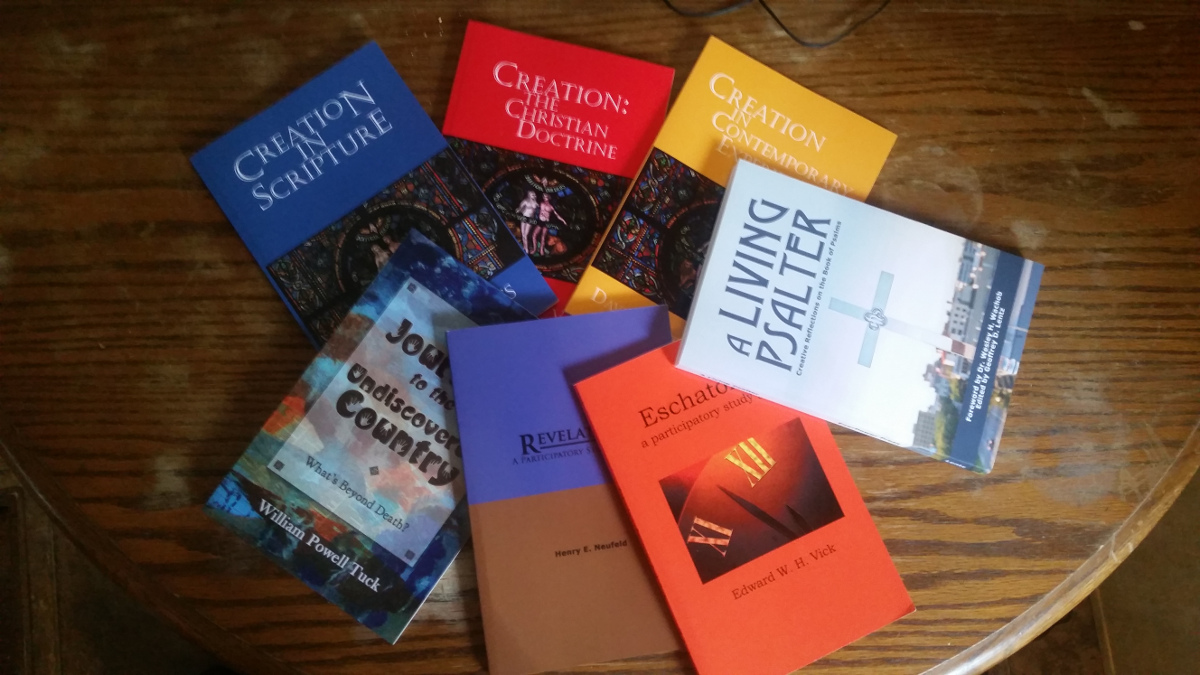
    As background for this discussion, let me recommend the following two essays by Dr. Edward W. H. Vick, who is also the author the the book Eschatology: A Participatory Study Guide, with which I began this series.

    1. 1844 – 1: Between the Disappointments
    2. 1844 – 2: After the Disappointments

    Here are the links for tonight’s discussion:

    Google+ Event Page

    YouTube:

  • Eschatology: Daniel Passage-by-Passage

    I’ll be looking at chapters 6 & 7 tonight, though 7 will doubtless stay in focus as we go through 8 & 9.

    Google+ Event Page

    YouTube:

  • No Thursday Night Study Tonight

    No Thursday Night Study Tonight

    I’m fighting a cold and will not try to talk for an hour on the hangout on air. I’ll announce one for next week when we’ll continue the study of Daniel.

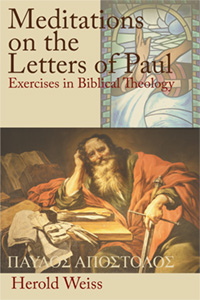
    Also, Dr. Herold Weiss has agreed to join me again for an interview on Paul’s eschatology. We will shortly be releasing his new book Meditations on the Letters of Paul.

    Meditations on the Letters of Paul

  • Caring about Credibility

    Caring about Credibility

    9781631992230mI’m sometimes disappointed with posts that don’t attract comments compared to those that do. I’m not talking about my site, where comments are few and far between. Right now I’m looking at a post on the Energion Discussion Network, titled Credible Christians for a Credible Gospel. It was written by Allan Bevere, and makes an important point.

    The gospel is credible in and of itself, but it only gains credibility as it is demonstrated by individual saints and the church collectively in the good works that bear witness to God’s kingdom.

    We talk about grace, and that’s good, but grace accomplishes something in us. Do our beliefs make a difference? Can people see that?

    I invite your comments over on EDN.

  • Eschatology: Daniel Verse-by-Verse III

    I am a bit rushed, so here are the links without much comment.

    Google+ Event Page

    YouTube:

  • Eschatology: Daniel Verse-by-Verse II

    I’m continuing with the dream of Daniel 2 and hopefully connecting it to the golden image of Daniel 3. I’m grotesquely short of time, so will spend it both reading and doing what has to be done!

    Google+ Event Page

    YouTube:

  • Eschatology: Daniel Verse by Verse – I

    Tonight will be my first session on the book of Daniel. I’ll be starting with chapter 1 and going as far as I can. I expect the whole book to take some time, though the first several chapters should go more quickly than the later ones.

    Google+ Event Page

    YouTube:

    I’m going to skip over a good deal of introductory material (though not all of it!) in order to move forward. There are a couple of reasons for this. Most importantly, introductions are often wasted when introducing the topic. That may sound strange, but the reason is that if those reading the introduction aren’t fairly well acquainted with the text, they won’t follow the arguments. How can you know whether you think Daniel is a literary unity, rather than a collection of materials if you haven’t read it? Secondly, I want to use multiple perspectives in interpretation and let us work this out as we move forward.

    To make up for this seeming lack, I recorded an introductory video on the dating of the book, and also created a resource page. The video is embedded on the resource page.