
I’ll be tackling this rather intense topic tonight and likely failing to hold it down and get it under control! Following the event I will post more resources.
Informational Link: What Does It Mean to Survive Death?
I’ll be tackling this rather intense topic tonight and likely failing to hold it down and get it under control! Following the event I will post more resources.
Informational Link: What Does It Mean to Survive Death?
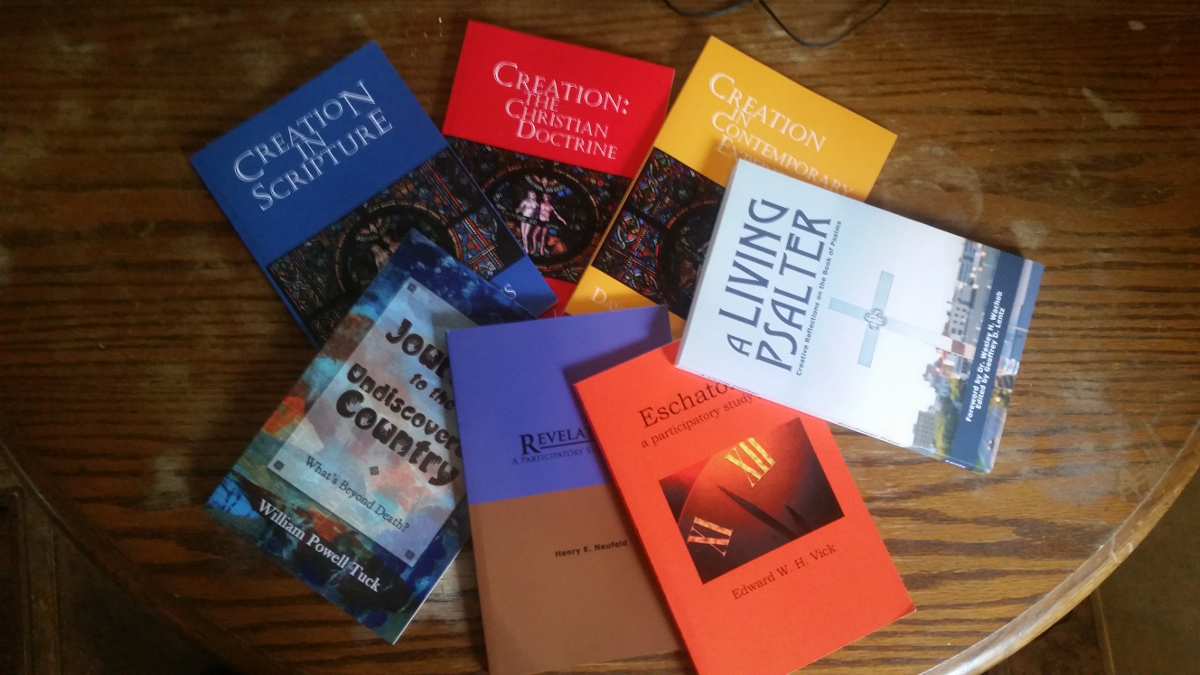
On Thursday night I’m going to do two things: 1) Present some material related to chapter 6 of Eschatology: A Participatory Study Guide (titled “Eschatology Future and Present”), and 2) Discuss October 22 as the anniversary of the Great Disappointment of October 22, 1844, as it is recalled in Adventism. On Thursday I will also kick off publication of some articles by Energion authors on that event and its implications for how we study the Bible generally and eschatology in particular. I’ll provide links to that material here.
Here are the links for the event. Below the YouTube viewer, I will post a couple of questions to consider relating to Thursday night’s study.
In the study questions (page 67 of the book), Dr. Vick asks:
(3) We cannot construct a theology without making assumptions. With what assumptions would you organise your beliefs? Which of the assumptions suggested in the chapter would you be in agreement, and which would you reject? [emphasis mine]
 The latter part of this question will be hard to answer without the book, but consider the first line. Do you agree or disagree? Feel free to comment here or to bring your comments to the study on Thursday night. If you enter the comments via the Q&A app, they can become part of the study.
For some perhaps even more provocative suggestions, the following questions come from page 65, and might help in feeling out your way on assumptions.
What can I believe and what can I not believe? What are the implications of the answers I give to the question? This question then ramifies into more precise formulations.
What can I not believe about how things happen in the system of an ordered cosmos?
What can I not believe about how historical reports come to be written?
What can I not believe about the reliability of human testimony as an avenue to knowledge, whether given verbally or in writing?
What can I not believe about the capacity of a being with human limitations to foretell the future?
What can I not believe about the supernatural?
What can I not believe about claims that the supernatural causes events to take place within the cosmos? (p. 65)
I’m sure that as you consider these questions, you’ll quickly see their implications for how you might read scripture. One can be open on some of these, certainly. But thinking about how you would approach the question can nonetheless be critical.


We complain about it, write about it, claim it’s important or even critical, design programs to create it, but what is it?
I don’t mean that none of us know what we mean when we say “biblically literate” or “biblically illiterate,” but do we all mean the same thing? I don’t think we do, and that creates problems in communication.
Between age10 and 14 I attended a school that was extremely serious about Bible study. We had study guides that took us through the entire text of scripture, asking questions as we went. We memorized substantial portions of scripture, such as the entire Sermon on the Mount and Psalm 119. We also memorized selections of texts on various topics, such as four texts on the Sabbath and the state of he dead. (We were SDA, so these were considered important.)
I greatly value the knowledge I gained in this way, but when I was done, was I biblically literate?
This depends, of course, on what one means by biblically literate. Here are some definitions I’ve heard (or experienced):
(No, I didn’t plan to make that seven. It just happened.)
When I refer to “experiencing” a definition, I mean that I’ve seen someone tacitly dismiss someone else as knowledgeable because they lack one of these elements. I’ve encountrred this attitude about every one of these points. “If he or she doesn’t know x, the person is biblically illiterate.”
I have encountered this with regard to creation. When someone discovers that I accept the theory of evolution, they will suggest that I am unacquainted with Genesis 1 & 2. I am very acquainted with those chapters. In fact, I had to memorize them as one of those long passages in school. Memorizing them does not mean that I will interpret them the same way others do.
I fell into the trap myself recently. I was listening to Deanna Thompson respond to her award for book of the year from the Academy of Parish Clergy for her commentary on Deuteronomy in the Belief series. She confessed that she did not read Hebrew. My initial reaction was to think that it wasn’t really possible for someone to contribute to the interpretation of Deuteronomy (of all things!) without reading Hebrew. Yet right within her brief remarks accepting the award, she expressed some rather profound understanding. I mentally took it back and was glad I had only thought it internally.
This experience does not make me think that learning Hebrew is unimportant. It just makes me think more carefully about what I expect. I have no problem with the value of most of these benchmarks of knowledge. I think they’re important. But what is it that I want the average person in the pew to know? What about my church leaders? Pastors (if we make a distinction)? Seminary professors?
My own definition would be close to #7. I think hearing the overall story of scripture is critical to everything else. Fit the passage into a broad view of the whole. Of course, this type of knowledge might well look superficial to others.
My suggestion would be simply that we pay attention to what type of biblical literacy a person has, if any. Far too many people in the church could really claim none of these elements. We should work on that. But we should also recognize other approaches and what kind of knowledge those other approaches support.
Taken from chapter 5 of Eschatology: A Participatory Study Guide by Edward W. H. Vick. You can find out more about this study on the Google+ Event page.
Description:
This study is from chapter 5 of the book Eschatology: A Participatory Study Guide by Edward W. H. Vick. This will be some very basic background, discussing the quest for the historical Jesus and how it has impacted our understanding of Christian eschatology.We will also discuss (again!) the critical issue of the way in which we read and interpret scripture and how that will impact our understanding of eschatology, which draws on such a wide variety of sources.
Or watch here:
I’ve had a hard time keeping up with blogging this week. It’s a busy month. On Wednesday nights I’m teaching from Revelation for a youth group at a local church, and of course I have my Thursday night events, one of which I’m announcing here, which are a sort of spiritual discipline for me.
I was going to try to both talk about Daniel and Revelation (in a very general way) and then go on to talk about eschatology and the quest for the historical Jesus, but I have decided not to do that and give myself a slightly more relaxed session talking about the structure and rhetoric of Daniel and Revelation. The two books are substantially different, yet they are the two acknowledged works of apocalyptic literature in the Bible, and almost any Christian discussion of eschatology touches on them at one point or another.
Growing up as a Seventh-day Adventist meant that I repeatedly studied these books. I even took a college class titled just “Daniel and Revelation.” There was an extract of the SDA Bible Commentary combining the comments on Daniel and Revelation in one book.
While I will be looking at these two books in particular, my study since has led me to look at a much broader range of material, from Ezekiel, to several chapters in Jeremiah, to much of the latter portion of Isaiah, and much more in the Bible, and also a considerable amount of non-biblical material. Yet these two books still tend to hold pride of place.
Is their purpose to give us an end-times outline? If so, in what detail, and if not, what is their purpose? I’ll be discussing this on video this evening.
I’ll be working from Chapter 4 of Dr. Edward Vick’s book Eschatology: A Participatory Study Guide and looking at the nature of prophecy and the literary nature of the texts. I’ll also be looking at ways in which we interpret prophetic literature. I apologize for posting this very late. I will try to comment in writing and add some links tomorrow and Saturday.
In the video, Dave calls this simply “The Word of God.” I’m embedding it at the end of this post.
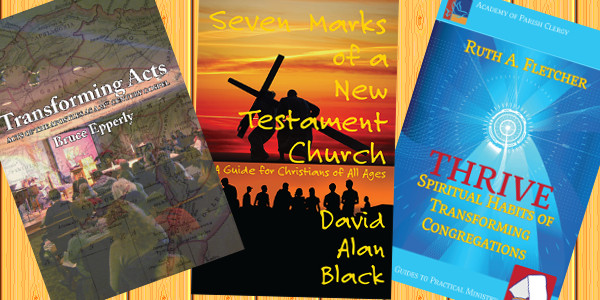
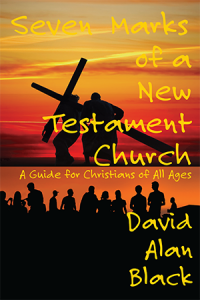 One of my observations in talking to people about their churches and church programs is that they find the first moment when a book or program differs from their situation and take one of two approaches. First, they might discard the entire thing. This is fairly common. That won’t work for us. It doesn’t matter that what we’re doing isn’t working either. Second, they try to follow the program precisely, despite any differences, because if it worked for the expert who wrote the book, it has to work for them.
Neither of these is a strategy that is likely to succeed. Each person, community, church congregation, denomination (or jurisdiction within a denomination) is different. Each one will have different opportunities and perhaps a different call from God. I am passionately convinced that sharing the good news about Jesus with the world is our general calling. Whether that is going to involve a food pantry, classes, involvement in broader community outreach, collecting money for projects across the globe, or any one of a myriad of other possibilities, is wide open.
Especially in protestantism we tend to downplay tradition, but our church tradition has a role. The way you will carry out certain missions is going to depend on the history of the church congregation. We don’t all get her in the same way, and we’re not going to move forward in the same way. Dr. Ruth Fletcher, in her book Thrive: Spiritual Habits of Transforming Congregations devotes an entire chapter to choosing, to the necessity of discerning the right path and making and carrying out decisions.
The reason I wanted to emphasize this right now is that quite frequently we think we cannot benefit from something like “apostolic teaching” or “the Word of God” unless we absolutely agree on what it is and how we’re going to deal with it. But just amongst the books that I publish, we have Dr. David Alan Black, a Southern Baptist Greek teacher (and full-time missionary, he’d insist!) and Dr. Bruce Epperly, a United Church of Christ pastor, seminary professor, and a process theologian who are both going back to the same place: Acts of the Apostles. Now I’ll tell you that if you read both of their books, something I urge you to do for reasons beyond the fact that I publish both, you’ll find quite a number of things they disagree on and quite a number of points of different emphasis. But in a church that is often drifting and dying while repeating the same behaviors that led it to its current malaise, that one similarity is enormous. Let’s look back at the early church. Let’s ask what made Christianity what it is. Perhaps there is something there that would help us.
Now one interpreter might be looking for a definitive, apostolic pattern to apply and follow. Another might be looking for a series of commands that one can carry out. Another might be reading the story and asking how are stories might relate. Yet certain things come out of such a study, and certain things result from going to the source.
I’m very protestant in ethos. I’m not at all interested in things like apostolic succession, in the sense of a series of people who had hands laid on them by a person who had hands laid on them leading back to the apostles. But I’m very interested in seeing what those early apostles did. I’m very interested in connecting my story to theirs. There is nothing about that process that is mechanical or that allows me to depend totally on someone else’s work.
Dave makes this point in the interview as he talks about us teaching one another. Why am I comparing what Dave has said with what two other authors have said? Is it so that I can sell more books? Of course I want to sell more books. I’m never going to lie to you and tell you I don’t care about selling books. But that’s not the key reason. I started publishing to do this. I wanted us to teach one another, to do on a broad scale what Dave is talking about in the local church (where I also want to see it done). I want is to help one another learn. I hope we find ourselves challenged.
There is nowhere that I want to see this more than in our use of the Bible. How is it that we can begin to see more of this individual Bible study in the church? And let me specify here by “individual” I mean “individual in community.” Let’s avoid two serious errors: 1) That Bible study is individual without any community control or involvement, and 2) That Bible study is a communal affair that can be handled by an expert passing out information. The reason I named a series I publish “participatory” in spite of the number of people who thought that word was too long, is that it is individuals participating in community who have the best possibility to find the message for themselves, their churches, and their communities.
Ruth Fletcher comments on this. Note how she doesn’t propose the same type of study for all types of churches.
Even though this is an age when people care more about what the church does than what it believes, transforming congregations know they must lessen the gap between people’s experience of God and the church’s teaching about God if the church is once again to become a reliable source of wisdom. Beliefs matter. Transforming congregations that are creedal churches help individuals discover a deeper truth in the words they recite; those that are non-creedal churches create safe space where individuals can work out their own guiding beliefs. They create space within their own tradition where people have the freedom to honestly express doubts, to say what they do not believe, to ask questions that don’t have predetermined answers, and to wonder about the mysteries of the universe. (Thrive, p. 91)
Bruce Epperly has a similar idea:
The first followers of Jesus “devoted themselves to the apostles’ teaching and fellowship, to the breaking of bread and the prayers.” They were a church whose spirituality was truly holistic. They prayed and they studied, and discovered study was a form of prayer. We need thinking Christians, who take theological reflection seriously, who ask serious questions, and challenge unhealthy and superficial images of God and human experience. (Transforming Acts, p. 48)
If you think the various visions are distant from one another consider this: What would happen to the church in America if we were to focus on studying the early church looking for insight into how to be a church following Jesus in the world today? I think that a number of wonderful things might happen despite how we decided to approach the question and the hermeneutical principles we took to the effort. Do I want us to debate such hermeneutical principles? Absolutely! The do make a difference. I think one of the greatest things we can do is to consider and discuss that issue seriously. But if we started at that point, we’d already be devoting ourselves, in our own limited ways, to the apostles’ teaching. Wouldn’t that be a good thing?
The section on this mark in the video begins about 15:30. I’m not setting the video to the starting point, as I suspect most who are willing to invest time in the video will watch it as a whole once.
… so it is not left to this sort of discussion. I did some study of and discussion of the so-called Bible codes some years back, and I’m not spending more time. The problem is that using the methodology in question (and its variants) one can come up with so many things and such vague things that it becomes self-defeating to try to respond.
In my view, by doing this sort of thing (trying to know things that are not present in the text), we go well beyond what the Bible was intended to do. The Bible is there to help you come into communication with God. That it conveys some information is not the main issue. We get stuck arguing about informational details while ignoring the broad sweep of the text.
When we turn to the Bible codes, we begin not just concentrating on informational details, we’re creating new content. It may be nice to feel that we know these things, but in fact we do not. Nobody knows. That’s the way God intended it.
Tonight I’ll be basing my presentation on Chapter 3 of Eschatology: A Participatory Study Guide by Dr. Edward W. H. Vick. The event description can be found on Google+.
I’m embedded a YouTube viewer below.
This will be on my YouTube channel and Google+ at 7 pm central time tonight.
I’m actually going to start from what I left off last week and talk about “this generation shall not pass,” which will require me to talk a bit about biblical inspiration. Following that I plan to introduce my (not so original) simple view of eschatology and then look at Mark 13 and how it might fit in.
Next week I’ll be looking at the variety, and some history of prophecy in Old Testament times, and then next week we’ll tackle chapter 4 of Dr. Vick’s book, Prophecy and Apocalyptic.
As I work on these, I’m also working on a series of four talks on Revelation to be presented to some teenagers during the month of October. That may be more challenging than these presentations.
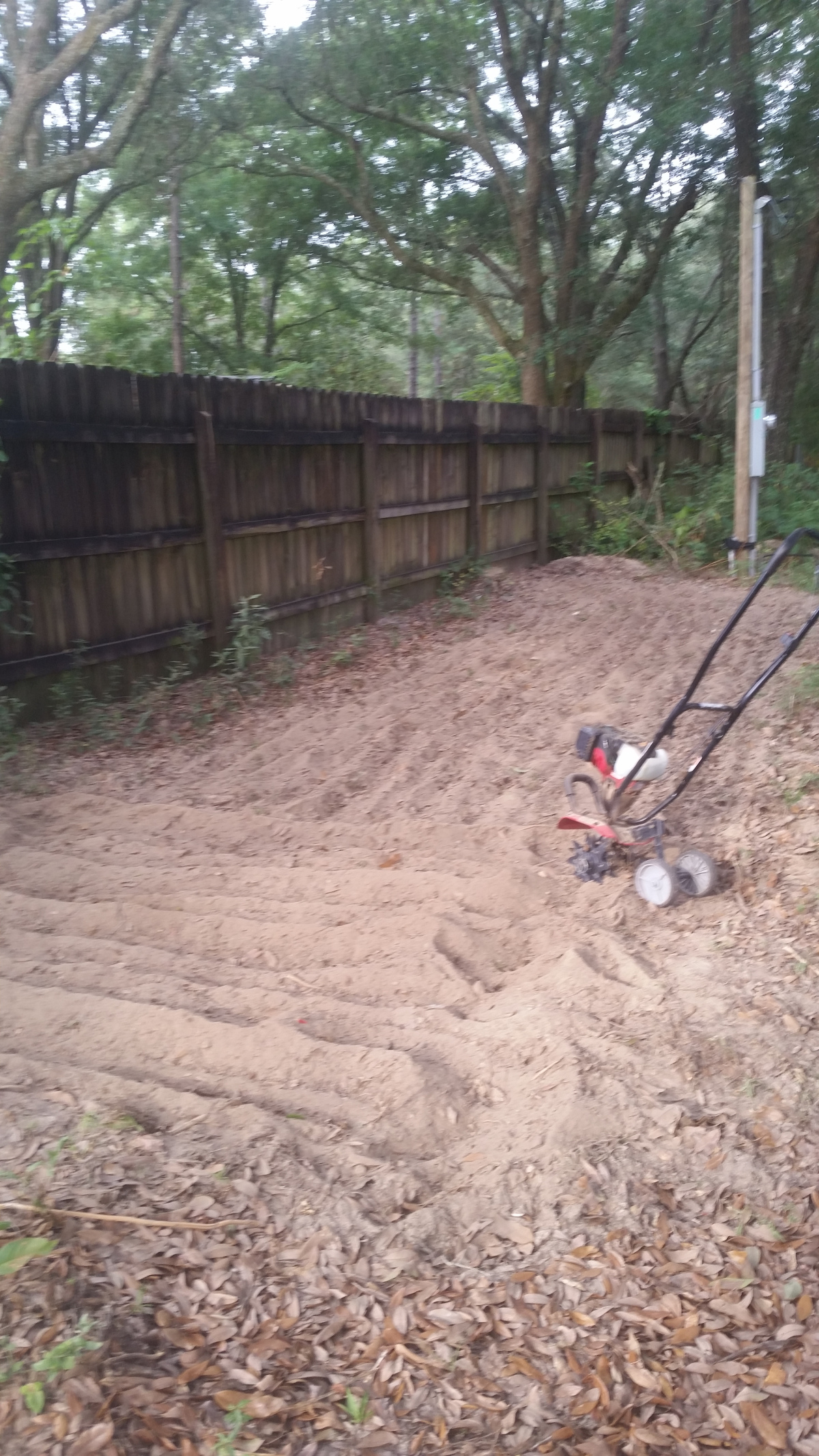
Well, my prospective, perhaps presumptive garden, that is.
One of the important elements to understanding stories in the Bible, parables included, is our perspective. In Christian circles, when we hear “the sower went forth to sow,” (Matthew 13:3), or perhaps “a farmer went out to sow his seed,” we generally see ourselves in the role of the one doing the planting. We are evangelising, and people have different kinds of hearts. Have you ever heard someone describe another person as being rocky ground? Or perhaps someone has said, “He’s trying to dig some hard ground there!” Usually these expressions are used regarding targets of evangelism.
I’ll mention evangelism later, but first, let me place myself in the role of one receiving the seed. Is that not what I do when I pray and hope to hear from the Lord? Is that also not what I do when I open my Bible and hope to be changed by God’s message? So I am the ground, not the sower.
But let me tell you the story of my garden thus far. Fortunately for me, I have few plans that involve saving money on food, supplementing my diet, or saving on the food budget. I had one purpose in starting a garden: I need to spend more time in physical activity. Now I’m a bit of a workaholic. I have a hard time not doing anything. The easiest way to get myself to do what I need to do was to make it into work. Then I can feel good while I do it.
So I picked a plot on our little place out here and started to work on it. It has gone through being broken up with an excavator (at which time I killed power to my office and broke our water line, but that’s another story), lots of hoeing and raking, and digging up of roots and rocks. This morning I finally got to the point of being ready to actually till the plot. My previous work had been aimed, not at getting the soil ready for actual planting, but at removing obstacles. I have a large pile of brush, roots, and rocks at either end of the plot, things I have removed as I worked.
Then I had a period of time when I was just too busy with work. Between my work with computers and computer networks and my publishing work, I was simply overwhelmed. The phone would ring by 8 am and I wouldn’t get that much done outside. What do you suppose happened? Well, the plot got some new growth, but not the stuff I want to grow, of course, since I hadn’t yet planted. So out came the weedwacker, the hoe, and finally the rake.
Today I finally got to the tiller. That’s the tiller, in the picture to the left. I borrowed it from my friend Tom Hunt. If you need a floorplan done for a new house, he’s the one to go to.
There were some interesting things about using the tiller as well. Weeds leave behind small roots that tend to wrap themselves around anything available. No matter how may rocks you’ve removed there may be a few more. Run the tiller in a couple of directions. The pile of dirt from one pass may hide some hard soil. Power tools are great, but I ended my morning session more tired than when I worked with the hoe. The tool helps, but the human still better put heart and back into the effort.
Let me apply these to Bible study just a bit. You might want to reference my post from yesterday. Here are some thoughts I had while listening to that wonderful purr (or roar) of the tiller motor.
I’m sure there are many more lessons, but those are the ones that occurred to me as I worked this morning. But does any of this apply to evangelism?
Do you see what happened? Quite frankly, all the lessons but one applied to me. As for reaching others, I have one duty: plant the seed. Now planting the seed can be complex, but I suggest that it starts with some of the points I made above. Let God’s word impact your life. Continue to let God’s word impact your life. Continue some more letting God’s word impact your life. Continue yet much more letting God’s word impact your life.
You’ll impact the lives of others.