I had chosen to lead into Isaiah 61 by starting with Luke 4:16ff, but I only got to the end of 4:16, “stood up to read.” I don’t work well with these schedules.
I’ve been having an interesting time preparing for my study tonight, and I’m feeling the boundaries of a 1/2 hour study. Most people will probably be glad. In order to make this work, however, you’ll need to read the material suggested. In this case, the “Introduction” from Meditations on the Letters of Paul by Herold Weiss and “Becoming Galatian: Spiritual Practices for Reading Galatians,” and Lesson 1: Introduction and Background,” from Galatians: A Participatory Study Guide by Bruce Epperly. The scripture passage will be Galatians 1:1-5, but it would be a good idea to read the entire book—it’s only 6 chapters—and also read and compare the introductions to other letters of Paul, whether disputed or not. Just start at Romans and read the first verse or two of each book until you get to Hebrews.
I’m finding the idea of posting two or three times on this topic during the week difficult, but that’s not a reason to abandon it. It’s important to allow topics to percolate, and one of my bad habits is to study the material on Thursday morning. In this case, I have looked at it some before today, but not enough, and I intend to change that.
But for tonight we’re going to look broadly at what is contained in the reading material and then focus on what made Paul an apostle, what made his letters authoritative for the church, and the nature of these letters as evidence. I’ll also touch on why I’m using Galatians, besides the fact that I think Epperly’s study guide is the right sort of challenging material to get us out of a rut on how we read the book. I think Herold Weiss similarly challenges our standard approaches (read his article Paul Did not Teach Righteousness by Faith), but he does son on a broader basis. We’re going to use Epperly’s more focused book to get to Weiss’s broader understanding.
Note here that I don’t mean that we will necessarily agree with either one. Rather, I’m looking at the focus and at ways of getting us each to let Paul’s writings speak to us. We will never completely discard our background. Yet we can try to give the scriptures the greatest possible chance to change us. That is the goal of this study.
Paul was impacted by his mystical experiences and the intervention of God by a vision of light. (Source: Adobe Stock [licensed]).Tonight I begin my new series of Thursday night studies on the apostle Paul. My approach will be a bit different than usual. I’m more interested in developing the background, particularly in Israelite religion and Judaism and looking at the way Paul draws from his theological sources.
I’ll also introduce my approach to the subject. I’ll be working first with material from Energion Publications authors. I publish these materials and I’m acquainted with them. More importantly, I wouldn’t have published them if I didn’t consider them valuable.
I’m going to use Galatians as my basic guide. That wasn’t my first choice. I’ve often felt that Pauline scholars spend excessive time in Romans and Galatians and neglect books like 1 Corinthians or Philippians in developing their view of Paul’s theology. But I have come to believe instead that what I saw as deficiencies in building a picture of Paul from these letters is more a result of misreading Paul than of choosing the wrong letters. Of course, I will still maintain that in order to understand Paul and his theology, one needs to consult everything he wrote, but I doubt anyone actually disagrees with me on that point. It’s rather a matter of emphasis.
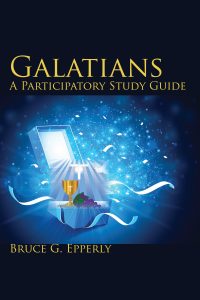
In studying Galatians, I’m going to start from a foundation of reading the book with Bruce Epperly’s study guide in the Participatory Study Series, titled creatively Galatians: A Participatory Study Guide. (The title is not Bruce’s fault. It’s standard for the series, and therefore my fault.) Besides the fact that I publish the book, my reason for choosing this is that it is written by a progressive theologian, also a process theologian, who is nonetheless very favorable to Paul’s writings. I would like to create a conversation here between evangelical and progressive approaches to interpretation and also to take a look at the way our existing theology impacts our reading.
As part of the resources for this study, I’m going to be interviewing scholars from our Energion Publications author list with a variety of perspectives. Because I’m using Bruce Epperly’s study guide, I’m starting by interviewing him. I completed it this morning, and I’m excited by the results and what he had to say. Bruce is always entertaining. He’s the first of several. I hope you will listen to (or watch) all of them. Here’s the video:
It’s not necessarily a bad thing for our theology to impact our reading. In fact, I think it would be quite shocking if it didn’t. I am only reading the Bible because I grew up in a Christian home and have a theology that suggests that this book is useful. My existing theology is also going to have an impact on the way I place the content of the book. In turn, Paul is himself impacted by his own background and theology. This doesn’t suggest that interaction with the book doesn’t have the potential to change or even totally revolutionize our existing thinking. Paul encountered God in a new and different way on the road to Damascus and his theology was revolutionized. Yet one can still see his background in his destination.
It’s easy to separate Paul from his own background. In fact, it’s easier to do so than not. So I’m going to emphasize the background. Now I’m not in search of some undiscovered country where I hear Paul 100% as he was. My theology will be in tension with his as I learn, and I hope yours will be there as well.
It’s my hope to provide additional video notes and some blog posts each week. Just as we have with the Energion Publications Tuesday Night Hangouts I’ve changed these to a half hour each. I also hope that you will pick up a copy of Bruce Epperly’s book and do a study of Galatians at the same time as I do.
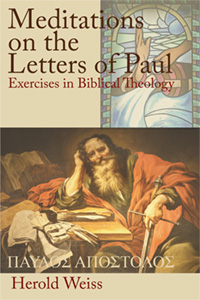
I will be consulting the other books listed, and also providing a resource page with a list of available books. But another book will be with me for the entire study is Herold Weiss’s book Meditations on the Letters of Paul. Herold brings some impressive scholarship to his reading of Paul, and I will be making full use of his material. As a suggestion, pick up copies of both of these books and follow along. And yes, I will be interviewing Herold as part of my series asking “Who was Paul?”
Here’s the viewer for tonight’s presentation:
Note that if you want to participate in live chat you will need to go to my YouTube channel and watch there. I will be watching the live chat for questions and comments. Note that I have put the books involved on sale on Energion Direct. You will be able to see them on the home page.
No, it’s not the end of the world. It’s the end of my series. I went into my hiatus in presenting these studies one episode short of completing the series, so tonight I’ll be wrapping up the eschatology series and preparing for my next series which will be looking at Paul’s letters and their background, especially in Hebrew scripture.
A little over a week ago I reviewed the NIV Cultural Backgrounds Study Bible using the Olive Tree electronic edition. On Tuesday I received my hardcover copy from the publisher. (Note: I received this copy free of charge in exchange for an honest review. No other strings were attached!) This is not an extraordinarily new experience in Bible editions, but it is a good one.
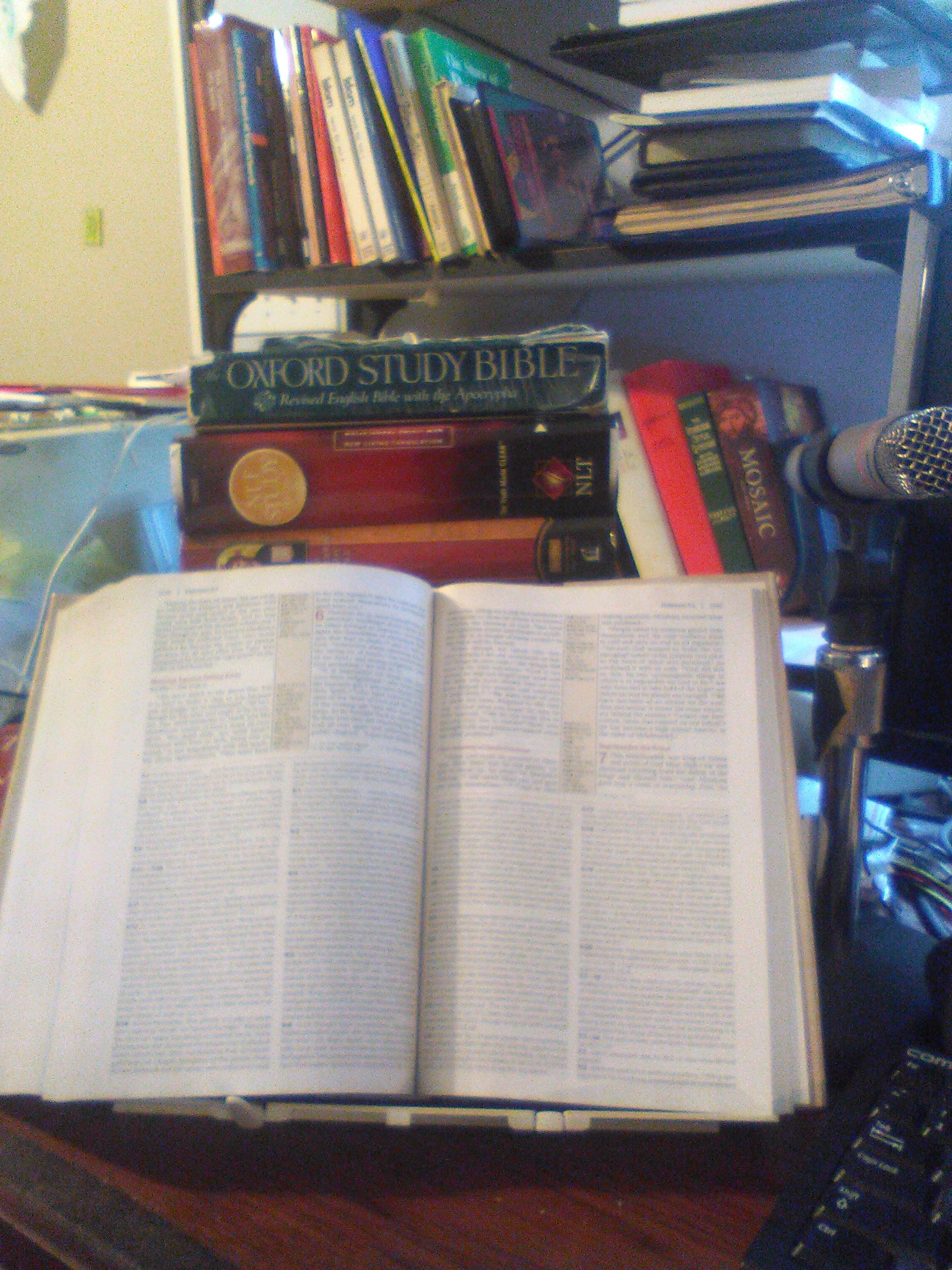
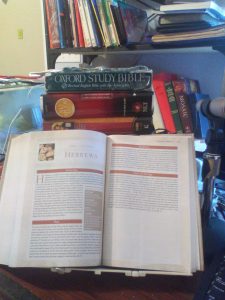
The Bible is 6″ x 9″, so fits nicely on all my disorderly stacks of books. It’s about 2 1/4″ thick, which makes it substantial, but not the largest Bible I use. The picture at the top shows it in my (not necessarily its) natural environment. That’s my actual desk, and so you can see it in comparison to the other study Bibles I have around it. You can click on the image to see it in high resolution. These days I rarely carry a physical Bible to church, other than my Greek & Hebrew testaments (I have years of marking and marginal notes in them), so I don’t worry that much about the physical size of a study Bible.
These days I rarely carry a physical Bible to church, other than my Greek & Hebrew testaments (I have years of marking and marginal notes in them), so I don’t worry that much about the physical size of a study Bible. That said, I can say that I prefer working with the electronic edition of this Bible, even though I am not well-acquainted with Olive Tree software. There is a great deal of information to present, and the size of an edition is always a compromise.
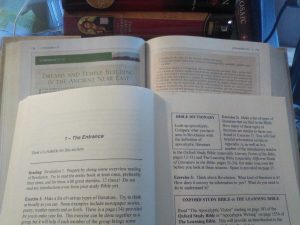
In this case, the text is small (as is common with study Bibles). The image just below shows it by comparison with my own Revelation: A Participatory Study Guide, which is printed in a 12 point font. The notes appear slightly smaller, though I’m not good enough to say for certain, and the impression may be created by a different (sans-serif) font for the notes. This note on text size is not intended as criticism, but it is one of the major reasons I prefer to use an electronic edition in which I can set font size. This is a problem for just about every study Bible out there. There is so much information to be included that something has to give. Having done page layout on a large number of books myself, I understand this completely.
The biblical text is printed in two columns with reference notes in the center. This is a classical style of presentation, but not one of my favorites. Again, I should emphasize that nobody can avoid all criticisms for the layout of a text. Doubtless others would complain about a single column with notes on the outer margins, for example. The double-column format is so standard that I have only a couple of Bibles that don’t follow it. An excellent example is The Jewish Study Bible (JPS Tanakh Translation), which uses a single column for the text with notes consistently in a narrower column to the right. I find their edition quite friendly.
There are a variety of excurses and notes included directly in the text section, besides the standard notes which are in two columns at the bottom of the page. The notes supplement and follow-up on the introduction, generally providing information that is applicable on a wider basis, i.e. not to just the text in question. For example, just before the text of Isaiah we have an introduction to “The Oracles of the Prophets,” followed by a short introduction to the book of Isaiah itself. But about three pages in we have a nearly three-page section titled “The Historical Background of Isaiah,” which provides a great deal of helpful information that will also relate to others of the prophets.
But just after these sections, on p. 1122, is an inset titled “Dating Methods.” No, this is not for those of you interested in origins and how rocks and fossils might be dated. Rather, it presents the basics of how one tries to place a particular oracle at a particular date. This is a tightly packed, extremely useful essay. Everyone should read it, no matter what portion of the Bible you’re studying. That’s why I chose Isaiah for this brief tour!
I mentioned that I will comment on some more specifics regarding the book of Hebrews. I will do so, but this past week has been intense, and I didn’t yet get to it. Nonetheless, the picture to the left at this point is the introduction to the book of Hebrews. I will go through that introduction in more detail in a post I hope to publish by Saturday.
Having the physical copy of this Bible in my hands makes me completely comfortable in recommending it. It’s easier to scan the portions I’m not emphasizing. For example, in using an electronic version I rarely “leaf through” the book, and thus might have missed the excellent introductory material for Isaiah. My main concern with study Bibles is that people tend to take the word of the note writer as to the meaning of the text. It’s certainly appropriate and valuable to get the opinions of others, but when one doesn’t find out why the writer believes a certain thing, one is left with either accepting it on authority—surely the author of such a fine volume would have his facts straight!—or having to dig elsewhere for that background information. That’s the value of this type of explanation.
I believe that it’s easy to let our theology keep us from reading the Bible, especially the narrative parts. The Bible is filled with stories. One example is the story of the flood. When Genesis 6 says (using the KJV), “It repenteth me that I have made man,” the first reaction is to try to explain how God didn’t really repent, thus preserving doctrines of omniscience expressed particularly in foreknowledge. A vigorous desire to preserve one’s theology can prevent one from hearing the story as it is actually told.
Jonah is just such a story. It’s very easy to make this a story about obeying God. The story was explained to me when I was a child as an illustration of the bad things that could happen to you if you went against God’s will. Another lesson, often taught at the same time, is that God can and does work miracles. Many people have seen belief in the whale (really more like “great fish”) as a test of one’s belief in the truth of scripture.
But to spend our time on the reality of the great fish, whether to disparage the idea or uphold it, is to stray from the story.
I’ve been delighted to publish a couple of books by Bruce Epperly that deal with Bible stories from a less theologically defensive position. Bruce tends to let the stories speak and as such he gets lessons from them that we might otherwise miss. A few months ago we released Ruth and Esther: Women of Agency and Adventure. I commend that study to you.
This week we released another book about stories, Jonah: When God Changes. Just the subtitle is likely to unsettle a few people. I think it’s good to be unsettled. I think that Jonah was unsettling when it was first written and it was intended to be.
We often have to work hard to love and care for people who are actually very similar to us. We tend to discount the command of Jesus to love our enemies. But in Jonah we have a call to love people we now hate—and with good reason!—and to take God’s message to them. While Jonah’s message sounds like a “fire and brimstone” sermon, it becomes a call to salvation, just as Jonah feared it would (read the last chapter)!
Bruce really works this little book and calls to our attention things we might normally miss in pursuit of theological comfort. I suggest that you give up that comfort and read the book!
[ncs_ad pid=’0664239013′ float=’left’ adtype=’aer.io’]On page 238 of his NTL commentary on Hebrews Luke Timothy Johnson uses the word “interrupt” to describe the transition between exposition and exhortation starting in Hebrews 5:11. In a way I’m nitpicking here, and because I am, I must also note that overall I find Johnson’s commentary nearly the most useful I’ve read, and if I were just talking about theological reflection, I would call it the best.
I have a couple of objections to use of the word “interrupt,” however. First, it seems to me that calling the transition an interruption divides the text without consideration for the author’s purpose in writing. There is no exposition here which stands alone, and which can then optionally be applied to the hearers via an exhortation. Rather, the intention is exhortation and the exposition underlies the exhortation and is illustrated and illuminated by the nature of that exhortation.
Second, the exhortations also help raise questions for the further exposition that follows. In the case in question (Hebrews 5:11-6:12), the question of the faithfulness and reliability of God is raised, which will be answered in Hebrews 6:13ff. This is also the critical question of the entire book. God has provided the final High Priest (logically and temporally), who will offer the final sacrifice, and will provide the way back to the presence of God. Since this is all final, human beings are presented with this final choice, in the view of our author. If you reject this, what means can God provide for you?
Without exhortation, the exposition would be dry, pointless, and incomplete. The exhortation is an integral part of developing the topic.
I emphasize this because of some of my experience in studying Pauline epistles in college and graduate school. We would make it through the theological exposition in the beginning of the book, but when we got to the practical admonitions, those were treated as something of an afterthought by Paul. “Here’s your theology of salvation, and oh, by the way, there are a few things it would be a good idea to do …”
But for Paul those admonitions grow out of the theology he has presented. The practical elements are not appendices to letters that are otherwise theological treatises. It would be better to call the theological exposition introductory matter to the practical sections. Perhaps this explains why Galatians and Romans seem to get so much more treatment from a theological viewpoint than 1 & 2 Corinthians.
Sometimes I think the worst thing about biblical scholarship is that it is carried out by biblical scholars. Their interest is in extracting theological propositions and historical data. The writers, especially Paul, are writing pastorally. The two don’t always work well together.
At least that is the view from someone who took Romans (through chapter 8!) and Galatians (through chapter 4!) in school. As far as I could tell, the professors were happy with that.
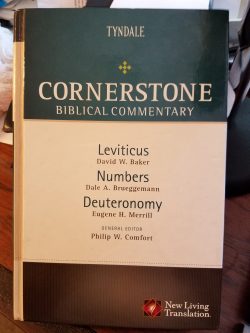
I’m about to move from the section on Numbers in the Cornerstone Biblical Commentary and from there go on to reading Deuteronomy. I’m reading this in parallel with a reading of the Hebrew text.
I’ll first note that I find this commentary very helpful, and I believe it would be helpful to a person preparing lessons or sermons on these books (Leviticus, Numbers, and Deuteronomy), which are not that easy to work with. The authors of all three sections provide good theological reflections on the passages, which I find helpful despite the fact that they are somewhat more conservative than my own theology.
One of the keys for Christians reading the Pentateuch is being open to the questions and looking for the answers. It is much less important to have a set of “good” answers at hand when you finish. It’s OK to admit that the culture reflected is very different from modern culture, and is hard for us to apply. As I have noted before, and recently read in Luke Timothy Johnson’s NTL commentary on Hebrews, modern Christians don’t really understand the idea of sacrifice, amongst other things, and so see the entire tabernacle/sanctuary service/cult as a foreign land.
Numbers 35 illustrates some difficulties. Here we have the concept of the avenger who will kill the person who has killed (even accidentally) a relative. So the cities of refuge are provided. There the killer can find refuge provided the killing was inadvertent. (Just how “inadvertence” is defined is up for some discussion.) In this passage we find the rule requiring at least two witnesses for a capital charge.
So we have a mitigation of vengeance killing, yet even if the person is found innocent of capital murder, he will be restricted to the city of refuge. Having been found not guilty, he still suffers exile. But modern readers may miss what many commentators see as the reason he remains until the death of the high priest. The death of the high priest is seen as atoning. I find the argument for this latter point less compelling than some, but nonetheless a serious possibility, and one which might well impact our understanding of Jesus as both high priest and sacrifice in Hebrews.
Which leads backward, in a sense, to the idea that the land itself is polluted by murder and that atonement must be made in order to remove this pollution. The atonement for intentional, premeditated murder can only be made by the death of the murder, and no ransom can be accepted. There is no indication in the text of what happens in case of doubt, when two witnesses cannot be produced. There would be no atonement. Clearly, people are not expected to atone for a sin they cannot determine existed.
We have here a tension between what we would see as Christian principles and a society based on vengeance. There is mitigation, and yet there is considerable accommodation as well. I think it is a good example of how God works with people. It’s easy for us to say that God should make things absolutely right (as we see it) in an instant. But it is not that easy to change a culture and a society.
Yet if you look at Judaism today, you see an amazing edifice built on just this kind of material, and Christianity grew out of this same soil with some interesting outside influence!
Regarding Numbers 33 and the 42 stations on the route to the promised land, footnote #1 on page 420, (Cornerstone Biblical Commentary on Numbers), notes that “[p]atristic commentators compared these 42 stations to the 42 (3 x 14) generations in Jesus’ genealogy, but that doesn’t shed any light on ch 33 …”
It is quite true that this comparison sheds no light on chapter 33, but I doubt that there was any intention by the author of Matthew to shed light on Numbers. More likely, if he was making a connection, he was intending to have Numbers 33 shed light on his genealogy. Clearly he went out of his way to get 42 generations and divide them into three groups of 14. It’s very easy to make too much of numerology.
Despite that, I am more and more convinced that New Testament authors quite frequently intended to draw more of the Old Testament narrative into their writing than just what was quoted. One reason for this is that I have noted how the lack of knowledge of the Hebrew Scriptures/Old Testament in modern audiences makes discussing certain passages more difficult. The corollary to this is that a greater knowledge would make discussion easier. New Testament writers could count on greater knowledge among their readers than we can today.
What might Matthew be drawing into the text here? I have argued that Matthew 2:15, when it quotes from Hosea 11:1, “Out of Egypt I have called my son,” is drawing the broader story there into his narrative. At first glance, one might accuse Matthew of taking something that is clearly not Messianic and making a prophecy out of it. Hosea 11 continues with telling us that the more YHWH called his people, the more they went away. My initial reaction to this, and the reaction of many, is that Matthew is grabbing a single clause out of context, and making a prediction of something that isn’t actually a prediction. But I’d suggest instead that Matthew is presenting Jesus as Israel doing it right. When God called Israel at various times, they went away, as Hosea is saying. Jesus, on the other hand, when called out of Egypt or when called to the cross, continues to come.
My suspicion is that the use of 42, besides being the numerologically comfortable grouping of three pairs of sevens (and there are so many ways a set of numbers can be presented!), is intended to point us back to the travels of the Israelites in coming to the promised land. I am in no way suggesting that these 42 stops were in some way predictive, nor am I suggesting that Matthew 1:1-17 gives some sort of new or special meaning to Numbers 33. Rather, I’m suggesting that Matthew uses 42 generations as an allusion to Numbers 33 and to Israel coming out of Egypt and to the promised land.


 I’m going to use Galatians as my basic guide. That wasn’t my first choice. I’ve often felt that Pauline scholars spend excessive time in Romans and Galatians and neglect books like 1 Corinthians or Philippians in developing their view of Paul’s theology. But I have come to believe instead that what I saw as deficiencies in building a picture of Paul from these letters is more a result of misreading Paul than of choosing the wrong letters. Of course, I will still maintain that in order to understand Paul and his theology, one needs to consult everything he wrote, but I doubt anyone actually disagrees with me on that point. It’s rather a matter of emphasis.
 It’s not necessarily a bad thing for our theology to impact our reading. In fact, I think it would be quite shocking if it didn’t. I am only reading the Bible because I grew up in a Christian home and have a theology that suggests that this book is useful. My existing theology is also going to have an impact on the way I place the content of the book. In turn, Paul is himself impacted by his own background and theology. This doesn’t suggest that interaction with the book doesn’t have the potential to change or even totally revolutionize our existing thinking. Paul encountered God in a new and different way on the road to Damascus and his theology was revolutionized. Yet one can still see his background in his destination.
 A little over a week ago I reviewed the NIV Cultural Backgrounds Study Bible using the Olive Tree electronic edition. On Tuesday I received my hardcover copy from the publisher. (Note: I received this copy free of charge in exchange for an honest review. No other strings were attached!) This is not an extraordinarily new experience in Bible editions, but it is a good one.
 physical size of a study Bible.
 In this case, the text is small (as is common with study Bibles). The image just below shows it by comparison with my own Revelation: A Participatory Study Guide, which is printed in a 12 point font. The notes appear slightly smaller, though I’m not good enough to say for certain, and the impression may be created by a different (sans-serif) font for the notes. This note on text size is not intended as criticism, but it is one of the major reasons I prefer to use an electronic edition in which I can set font size. This is a problem for just about every study Bible out there. There is so much information to be included that something has to give. Having done page layout on a large number of books myself, I understand this completely.
 ul information that will also relate to others of the prophets.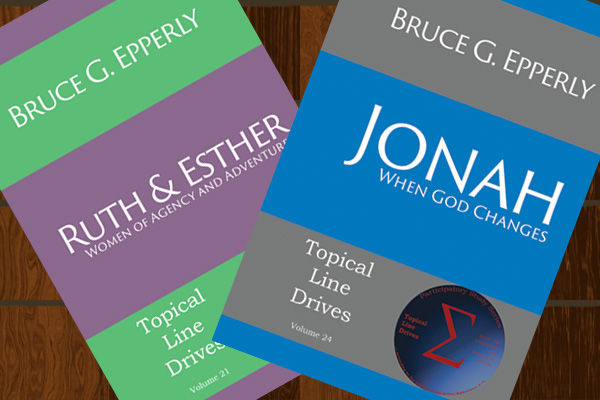
 Regarding Numbers 33 and the 42 stations on the route to the promised land, footnote #1 on page 420, (Cornerstone Biblical Commentary on Numbers), notes that “[p]atristic commentators compared these 42 stations to the 42 (3 x 14) generations in Jesus’ genealogy, but that doesn’t shed any light on ch 33 …”