I ran across this while looking for something else. Dr. Alden Thompson was the author of the first book sold by Energion Publications, though it was published before I bought and renamed the company. We’ve now published a 5th edition, and this is overall our best selling book.
In this presentation Alden using a number of Adventist specific references, but I think the message comes through. There are a variety of responses to the violence in the Old Testament. One of the keys to Alden’s approach is his insistence that it is all inspired, even the parts we don’t like very much, and he makes that claim in the video. Alden’s teaching at Walla Walla University was quite formative of my theology and I still enjoy working with him. We’ll be releasing a second edition of his book Inspiration: Hard Questions, Honest Answers later this year, as the publisher of the first edition allowed it to go out of print.
Tonight I’ll be finishing my preparatory studies for eschatology as I look at a few more visions, especially from Zechariah, and then at a bit of chronology in preparation for studying the book of Daniel on a more verse by verse basis starting next week.
I’m starting in about 15 minutes. Tonight I’m going to be looking at Revelation 21 & 22 and their use of 3rd Isaiah (chapters 56-66). I want to look at how imagery is used and reused and how this impacts the way we interpret.
I’ve posted the event for my study on eschatology tonight. I’ll be looking at Isaiah for at least two sessions, the first focused on the servant passages as an exercise in interpretation, and the second on the language of the latter chapters and how it is incorporated into apocalyptic and in turn into our eschatology.
I enjoyed reading the responses for a number of reasons other than the actual answer given to the question. Quite frequently we respond to an article based on whether we agree with the answer or not. The well-argued, well-presented article is one that supports our own point of view. The scattered, poorly presented one is the one we oppose. In my experience only a few people can say, “This was a well-written article even though I disagree vigorously with its conclusion.”
I’m going to do precisely that in this case. Both of these responses to the question are well-written, and they are even well reasoned. It may seem odd to say that when they come to opposite conclusions. It’s important, however, when you read something this short regarding a topic this complex, that you ask yourself just where the author is coming from. Having edited books by both men, I have a leg-up in doing that, but if you read carefully you can clearly see the approach each takes to revelation (particularly scripture), theology, and finally doctrine. These approaches can be experienced at length in Dr. Weiss’s book Meditations on According to John: Exercises in Biblical Theology, and Dr. Parunak’s book Except for Fornication: The Teaching of the Lord Jesus on Divorce and Remarriage.
You can get some idea of the difference simply by counting the number of scriptural quotations in each post. My quick count gives me eight quotations by Dr. Parunak and one by Dr. Weiss. There are some who will think that gives the answer. Dr. Parunak is being more scriptural than Dr. Weiss. I would suggest that this is something like determining how scholarly a book is by counting the footnotes. I have a book on my shelves which has an overwhelmingly large number of footnotes. But if one eliminates footnotes to the author’s own works, footnotes to unreliable sources, and simply incorrect footnotes, the count drops dramatically. The notes give the impression of scholarship, but unless they are also carefully and correctly done, they are not themselves good scholarship.
So the question here is how scripture is used in each case. If you think of it this way, Dr. Weiss is actually inviting you to read more scripture, as he refers to broad theological concepts. You’d need to read at least the books of John, Romans, and Galatians, to actually pick up on some of the ideas he’s presenting.
So now, in turn, am I intending to put down Dr. Parunak’s work based on changing the way I count from a quotation count to a necessary reading count. Absolutely not! This is, in fact, one of the best exercises I’ve seen in years of the way in which the approach an author takes to scripture impacts his or her results.
For Dr. Weiss, scripture is a varied landscape, reflecting a variety of viewpoints, backgrounds, cultures, and even theologies. This landscape invites us to study and to form theology. He would never (and in my experience has never) simply quote a text and say that the text settles the issue. He would always apply that text to a study of the theology of the book of the Bible it came from and as part of the work of its author, particularly its human author. He demonstrates this in a range of books, but particularly in his book Creation in Scripture in which he looks at the variety of views on creation that are contained in the Bible. Some people wonder how he can do this. Surely the creation story is not told repeatedly, even if one accepts that there are two stories in Genesis, which many do not. But Weiss is talking about views of creation, how God is understood to be the creator: Theology, not science or history.
In the YouTube video below you can watch me interview him about the gospel of John, though Colossians comes up at well!
Dr. Parunak, on the other hand, sees scripture as more directly from the hand of God, in the sense that all scripture presents a unified picture of doctrine that can be deciphered by the interpreter, and can and should be tested and result in a high degree of certainty. So he will draw a more direct connection between a particular scripture passage. He does not have room for a variety in scripture such that we could say that one theology differs from another.
You can see me interview Dr. Parunak below, and you’ll hear him express this for himself:
Though I find the question of pluralism interesting, I find the way in which we answer it even more interesting.
My point here is not to critique either approach. I am not forced to publish anything. I wouldn’t have published books by these two authors unless I found their contribution valuable. But you and I as readers have to answer for ourselves the question of what we believe, and to do that we need to get behind the question of what an author believes to why he or she believes that. “Because the Bible says it,” is not really an answer unless you also know how that author or speaker reads and interprets the Bible.
So what about my answer to the question posed? Can the great world religions be vehicles of salvation for their adherents? I must note first that I regard my discussion of methology as much more important than any answer I might give here. Let me use Dr. Weiss’s terminology, which he discusses in his book Finding My Way in Christianity, pages 192 & 193. Exclusivism, he says, is the belief that all are saved through the sacrifice of Jesus and must confess in order to do so. Inclusivism says that there may be those in other faiths who are saved, but they are saved by the sacrifice of Jesus. Pluralism says that any religion may provide salvation and that Christianity does not have an exclusive hold on the true salvation story (I am using my own wording though working from Weiss’s material).
As I look at the question, I find it very difficult to answer without implying something I don’t mean. I am saved by the grace of God, not by a faith tradition, or a particular set of doctrinal beliefs. So just because someone says “Lord, Lord” doesn’t mean they are on the right road. My church membership is not what saves me. So in the sense that I believe God’s grace comes to me without consideration for my merit, in which I include meritorious beliefs as well as meritorious acts, I cannot exclude anyone. How wrong would I have to be in order to be excluded from God’s grace?
On the other hand, since I do believe that God was in Christ reconciling the world to himself, i.e., I believe that the incarnation is conceptually an exclusive event, and I also believe that there is just one God, however differently we may understand God, then I also see no salvation outside of Jesus, not because one has to understand this in a particular way, but because that was God’s ultimate act, one I see not merely as historical, but also as timeless and unbound by geography. God said that God was not too far away, that God was able to understand and to feel, and that God was able to deal with our guilt, our brokenness, and yes, our healing.
I find that both a message worth proclaiming, and at the same time a call for humility. How wrong can I be and yet be the subject of God’s grace? And in that case how wrong should I allow someone else to be and still consider them to be under God’s grace?
Actually I have an easy answer to that one. Nowhere has God made me the one to decide. I am simply convinced that if infinite God was willing to become finite and limited and live life as I must live it, that God isn’t going to miss any useful option in seeing God’s grace become effective on God’s children. I must sincerely doubt that God’s grace is less effective than mine.
Tonight will be my last study hangout for the year as I look at eschatology and advent. You can see more at the Google+ event page. In January I will restart this series by looking at Isaiah.
Jody and I are teaching Sunday School tomorrow, and the starting point is the Adult Bible Studies Uniform Series, Winter 2015-2016. Thus we start the Advent season by studying the 4th commandment (the Sabbath command; some count these differently) and related texts. If you know me, you’ll probably know that I’m not a fan of the Adult Bible Studies series. In fact, I’m not really that much of a fan of Sunday School curriculum. The problem I have with it is not bad content, but rather homogenized content, as the series is edited to be used in many contexts. It’s a hazard of producing material that can be used generally.
If I could have my own way, I’d strongly suggest that such material only be used at the starting level, and that more challenging material follow, eventually leading to Sunday School classes going straight to sources and bringing in a variety of views. But they should bring this variety in through studying serious examples of material from various streams, not by watering down the material.
That said, I also want to emphasize that I’m not trying to critique the author of these lessons. In fact, I’ve added his book The Bible’s Foundation: An Introduction to the Pentateuch to my planned reading list. I’m not trying to critique the editors either. It’s simply that when something is written for this broad of an audience, the edges get knocked off before it’s finished, and I think the people in our pews can benefit from experiencing those edges. It was the misfortune of this lesson to sand down (in my view) one of the edges that I think very important.
Note to those who like short posts: This won’t be short. I’m planning to refer my Sunday School class to it if they want more. For the same reason I won’t be quoting much from the lesson, because I expect the primary readers to be people who are holding this lesson in their hands.
First, I’m going to look at the topic and where I see difficulties. Then I’m going to follow up with some of my own take on that material. I will also talk about the issue of space. Priorities are always hard to work out when you have limited space in which to express your view. I’m also writing against that constraint.
Two passages take pride of place in the discussion, both from Exodus. The first is Exodus 20:8-11, the Sabbath command itself, and how that might work out in modern times. In this discussion we go from the Sabbath command itself, which specifies that no work is to be performed on the seventh day of the week, and roots this in the creation account (“in six days YHWH God made heaven and earth”). This passage brings discomfort in a couple of different ways, as generally mainline Christians worship on Sunday (if they show up at all), and do not believe in a literal six day creation week.
In addressing the second point, the lesson gives us one of the best parts of the lesson, noting that the story in Genesis 1, and rooting the Sabbath in creation in the commandment as well, is the faith assertion of the writing that the Sabbath was “embedded within the very structure of the universe” (p. 7). Then he also shows us how a single event can take more than one meaning by referring to the reiteration of this command in Deuteronomy. So this command can have multiple meanings, one more universal (creation) and one more specific to Israel (the Exodus), though considering the way the Exodus motif is drawn into Christianity in the gospels, the second is somewhat universal as well.
The one thing I would add is that if one looks at the two stories of creation in Genesis, 1:1-2:4a and 2:4bff, one can see that at least the final redactor was not all that concerned with the physical structure or chronological history of creation, but rather had theological issues in mind. Genesis 1:1-2:4a is a liturgical passage. Worship in ancient near eastern temples reflected in some ways the people’s view of cosmology, and so liturgy was (and in my view, is) to reflect reality. Genesis 1 then places the Sabbath command into the heart of the liturgy as a weekly reminder of who is in charge. It’s difficult to be certain precisely how much of that liturgy was thought by author, redactor, or early reader to reflect reality. I suspect that if our concern is science, we should be more interested in the difference in cosmology (waters below, earth, firmament, waters above) than in the chronology, as the latter is liturgical. We do not maintain that Jesus was raised precisely on the date of Easter because we celebrate at that time, and we do not hold that Jesus is somehow raised once a year every year. Similarly, we don’t maintain that the ministry of Jesus was a week-long affair because we commemorate the resurrection through gathering for worship each Sunday. These are liturgical remembrances. The Israelites were capable of designing good liturgy, and embedding God as creator in a central way laid that foundation.
Thus I don’t think that creationism, whether old or young age, really needs to come into this. I accept the theory of evolution and would have no problem with commemorating creation on a weekly basis on the seventh day of the week. I can even imagine that this liturgical role might have been in the mind of the writer of Genesis 1 at the time, though it’s entirely possible that he thought this literally happened in a literal seven day week. That bothers me no more than his cosmology does, which is not at all. God must speak to people as they are. Imagine Genesis 1 starting with an explanation of the physics of a singularity.
But having moved past that we ask how do Christians keep the Sabbath today. There are two lines drawn between a text and modern practice in this lesson. I’m pretty sure the way the lines function is pretty much by accident. But I do think this is what classes are likely to get out of the material. On page 8 we are told that for us the Sabbath has become Sunday because we celebrate the resurrection, and we carry out Sabbath-keeping by attending Sunday School and church and participating in the life of the church. This paragraph looks like a kind of direct connection. We do obey this law and we do it in this particular way.
My problem here is that while I can draw a connection between commemorating the resurrection and commemorating creation, and I think a rather good one, that connection is not made explicit. On the other hand I cannot draw a very good connection between the command to rest and give rest to your entire household and those (even animals) that depend on you and going to Sunday School and church. I can find plenty of Old Testament warrant for participating in community education and worship life, but it’s not what the Sabbath command talks about. So here we travel fairly directly down the road from Old Testament law to modern application, yet I see a chasm in the road that isn’t bridged.
Before I did deeper into how I might handle the Sabbath command, however, I want to look at the other passage, Exodus 31:12-16. which calls for the death penalty for breaking the Sabbath. The lesson draws a very different line here. Citing 1 John 4:18, we are told that “… we cannot reconcile a loving God who demands death for working on the sabbath. We cannot affirm the death penalty for sabbath violation” (p. 7). And yet, we have Leviticus 19:18 “love your neighbor” on the one hand, and the deaths of Ananias and Sapphira (Acts 5) as death penalty counter-examples. We have a canon-within-the-canon disjunction, but only by assertion.
One of the tests of a hermeneutic is to ask whether it can be applied consistently. Now I will note that I know of consistent approaches that would deal with all these texts, but they are simply not expressed. That is my key issue here, and it has been my key issue with many United Methodist materials since I first joined a UM congregation. Way too much is presented by assertion. A scholar asserts, so we assume that is what we should believe. Then another scholar asserts something different, and the more thoughtful members wonder what’s wrong. A good illustration is the long-time church member who came to me wondering how she could ever learn to study her Bible. She kept reading the study notes and couldn’t see how the text said what she was seeing. She was shocked when I said, “How do you know the people who wrote the study notes are right?”
It’s hard to show people how we got to the conclusion as well as the conclusion itself, but if I were to make a choice, it would be for us to present less conclusions and show our work. Teach the members to study by our examples, and they can go form more conclusions for themselves.
So let’s go back to these two texts. How would I approach them? Here’s the first point:
Unless you are a Jew, the letter of these two laws does not apply to you.
How do I know this? Simple. They are addressed to the children of Israel. Read the beginning of Exodus 20. Ask yourself, “Who is the audience?” You’ll get it. I’m appalled at movements to put Ten Commandments monuments on courthouse lawns. The tables are very much an expression of the letter, especially when extracted from the story in which they are presented. We have no intention of keeping most of them. We can start with the one in question in this week’s lesson. We do not keep the Sabbath according to the letter of the Sabbath command and we don’t intend to. We don’t keep the one about graven images either, and we don’t intend to, not according to the letter of the law. We would at least claim that we ought to keep the one about coveting, but doubtless we won’t. So why put the text of those laws up on courthouse lawns? That isn’t (and shouldn’t be) the law that the court is enforcing. When we see people bow down in front of those tables of the law it gets even worse. No, the text isn’t a graven image (according to the letter), but bowing down in front of it and making it a central issue starts pushing the boundaries.
The boundaries of what, you ask? Well, the boundaries of the principles that are expressed in these commands. Those principles are expressed in a variety of ways, and they are modified in a variety of ways. They come from the story as well as from the command itself. One of the things to note about Bible stories is that many things are told in a very sparse way without commentary. People often cite the she-bears in 2 Kings 2:23-25 as an example of divine violence in the Old Testament, but there are two things one should note: 1) The story doesn’t comment one way or the other as to whether it was a good idea for Elisha to curse the boys and 2) it doesn’t even say that God sent the she-bears, just that they showed up. I think it’s likely that the writer thinks God sent the she-bears and at least didn’t disapprove of Elisha’s behavior. But the story doesn’t actually say that. (See a homily I wrote about Elisha and the She-Bears here.)
So we start from the point of view that we are not commanded to do any of these things. I can say this at least for my Sunday School class as we are all gentiles! But nonetheless this is scripture for us, and we see God in action. So using this approach let me tell you some of the principles I find in the Sabbath command.
I agree fully with our lesson that God is in charge of time.
God as the creator is made central to our lives, our ethics, and our worship.
Care for one another and care even for creation is embedded at this same place, as the Sabbath command is to apply to all within our gates. We aren’t even to make slaves work. All get to rest.
There is a need to specifically set aside time for rest. I’d suggest that if we don’t do it specifically, the rest time will never happen. I can certainly testify to that in my own life. This fourth point is the place where I violate the principles of the Sabbath command most regularly and directly!
Considering these principles, does going to church on Sunday fulfil the Sabbath command, not in letter (which would mean truly resting every Saturday all day)? In terms of the first element, I think it does. The shift to the resurrection is not nearly as radical as it seems, as the resurrection is itself a reaffirmation of God as creator. This shift also goes along with another Christian shift, expressed especially well in the book of Hebrews, and that is the shift from the Torah (in its narrower sense as the Pentateuch) as the center of our faith and understanding of God to the person of Jesus. That principle is carried out.
By keeping this celebration weekly, we also meet in some sense the second principle. Unfortunately, I think we fail to affirm adequately why we are in church each Sunday. It just sort of happens, as it did in our lesson. There we are for no better reason than that it’s what we do. It’s our habit. I don’t want to knock having church attendance a habit. That helps you through the difficult times. But it needs to be much more than that as often as possible.
But as for time for rest, and giving rest to others, I would suggest our Sunday worship pretty much fails. I’d note the number of work related e-mails I receive on Sunday afternoon from pastors. My point here, however, is not that these pastors shouldn’t send me e-mails on Sunday afternoon. Rather it is that there needs to be explicit times for the rest that we need, and that this rest needs to be extended to others as well. For pastors, Sunday is pretty much a day of work. They need to find themselves a day off. Their Sabbath is likely to come in two parts at least: Their worship with their congregation, which may actually be debilitating, and their time for their own rest that will need to come later in the week. Congregations should be aware that Sunday doesn’t work as a Sabbath for their pastor or generally for their church staff. They should positively participate in finding the appropriate rest time for those who serve them.
Finally, I go back to point #3, and note that often our worship on a Sunday morning is about us. That is also a failure to apply the principles of the Sabbath command. The rest we need is to be extended to others. It is an inclusive rest, and it applies to all of creation.
You’ll note here that while I say that the written command does not apply, from its principles I find a great deal that we should consider imperative in our lives. I could easily get all of this wrong. Realizing that the letter does not apply should lead us to a process of discernment and asking just what it is that God would have us to learn from a particular passage. I’m laying out what I see here. What do you see? If you disagree, can we discuss it? Perhaps we’ll all learn together. In applying principles we will get to practice the sort of community that results from us all being part of God’s creation, and in turn all being part of God’s redemption. The law grows! In us, it is alive!
And then we turn to Exodus 31:12-16, which seems to be the more difficult passage. As I have already said, this law does not apply to me and it does not apply to you. I am not commanded to carry out the death penalty on Sabbath breakers. But can I reconcile the death penalty for Sabbath breaking with a loving God? That’s a more difficult question. I think it needs to be met with a counter-question: Do I have to reconcile it?
Just as I believe God could not start his discussion with Israel about God’s role as creator by explaining a singularity and the big bang (and is that really the answer or will we look back and laugh at it in another few decades or centuries?), so God could not simply change everything about people in one act. In this case, I’ll only go so far as to say that applying the death penalty to the Sabbath command simply puts it into that most serious category of crimes. Should I support the death penalty for it now? I don’t think this passage answers that question or even points to an answer. I would agree that I could not now affirm the death penalty for this command as the act of a loving God, but I think it’s much harder to discern its role for the Israelites in their very earliest history.
So the question that I ask instead is what would make Sabbath breaking an offense of the most dire nature. Here I think we must go back first to the fact that these commands are addressed to Israel at Mt. Sinai following the Exodus. There is no death penalty, for example, in Genesis 2:1-4a. There’s just a blessing. Why is there one here? And I see as a good answer that the Sabbath was a marker of identity. It identified Israelites to others as Israelites. It identified them as YHWH’s people. Violation was seen in these passages as tantamount to treason, to a rejection of that identity. That the death penalty applied I would suggest is an example of a thing not changed, rather than an indication of God’s eternal will.
We often imagine how God might have changed everyone in a moment, but I suspect those of us who have tried to change the ethos of a group of people are much less certain that this result can be obtained quickly. People don’t change all that easily. When God interacts with people we will see not only God but the people he interacts with. If you’re thinking that I’m wrong, just consider how quick we are to want others killed today, whether it is as part of our judicial system or in war. We resort to “kill them” awfully quickly. Perhaps we haven’t moved as much from the world of Exodus 31:12-16 as we’d like to think.
Fortunately, we have other passages that tend to work on us in those areas as well. We as Christians struggle with identity. We are in the world but we are supposed to be different. Where is our identity to be found now? John 13:35 might suggest something: “If you love one another.” We don’t have the death penalty for this one, but perhaps we ought to consider that this definition of identity should have the highest respect that we can give anything in our church and community.
Now, having laid out how I see these texts, I want to ask how you do. I’ll be listening to my Sunday School class, and I’ll be happy to listen to (or read!) comments here. My main hope here is that by laying out our thinking we can learn to help one another grow, always looking back to scripture and to those around us to see what principles we should be applying in our lives.
Tonight I’ll continue my discussion of Ezekiel, which I see as a book that stands somewhat between classical prophecy and apocalyptic, though more on the side of classical prophecy. Nonetheless you’ll see aspects of the structure and language of Ezekiel in much of apocalyptic literature, enough so that I would suggest that being acquainted with Ezekiel is a prerequisite for serious study of Daniel or Revelation.
We’ll be focusing on the glory of God and how it moves and is used symbolically in this book, right up to the temple vision. Depending on how I manage to use the time I may finish talking about this book. I’m obviously not covering this in detail, but I hope this may provide a start for those who’d like to study more.
I’ll be following this study with some selections from Jeremiah and 2nd and 3rd Isaiah, and then I’ll move to some of the visions of Zechariah before going to Daniel. We’ll be doing a full verse-by-verse study of the book of Daniel. It’s important to get a look at these prophetic books so that we can see clearly where Daniel differs and think about why it does so.
For tonight, you can view/listen through the event page on Google+ or using the YouTube viewer below.
My post is very late, so I expect I won’t have a live audience tonight at all (they’re always very small), but still I need to provide the link for those who watch later. There will be some interesting connections tonight with my discussion with Steve Kindle (and his book I’m Right and You’re Wrong) on the video below:
Tonight I’ll be spending most of my time in Ezekiel 1 along with dealing with some background. I’ll follow this next week by looking at the glory of the Lord in Ezekiel as a guide to the theme of the book. Finally, I’ll look at the temple vision as part of looking at what is literal and what is symbolic, not to mention whether the very “literal/symbolic” dichotomy is actually valid.

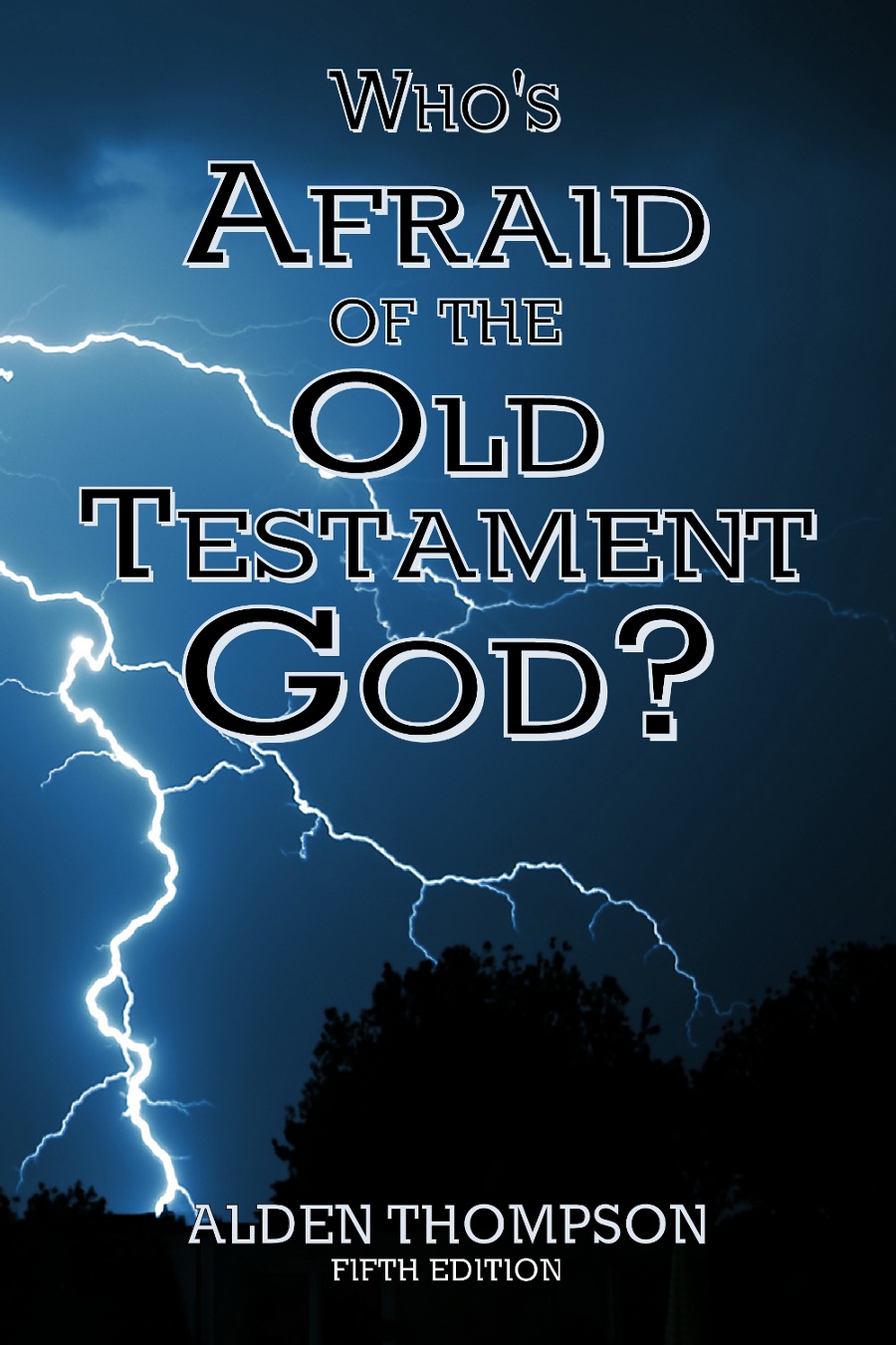
 I ran across this while looking for something else. Dr. Alden Thompson was the author of the first book sold by Energion Publications, though it was published before I bought and renamed the company. We’ve now published a 5th edition, and this is overall our best selling book.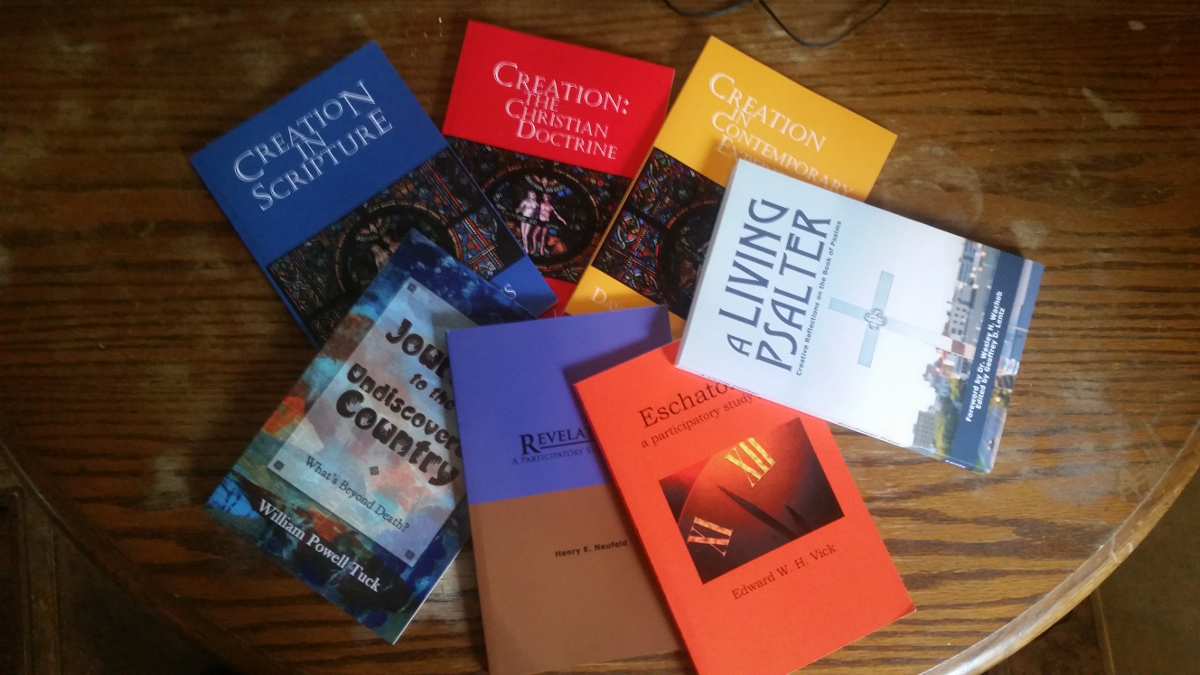
 Tonight I’ll be finishing my preparatory studies for eschatology as I look at a few more visions, especially from Zechariah, and then at a bit of chronology in preparation for studying the book of Daniel on a more verse by verse basis starting next week.