Threads from Henry's Web

Category: Theodicy

  • Theodicy Again

    Theodicy Again

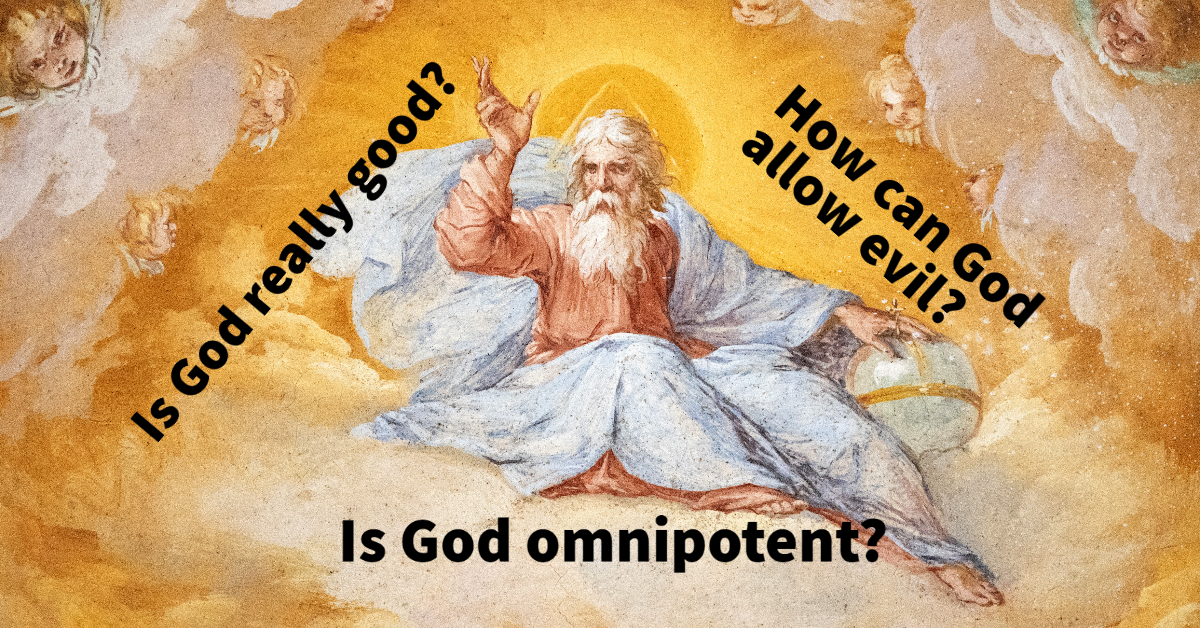
    Some time ago I did seven interviews on theodicy, or the problem of evil. One of the people I interviewed was Elgin Hushbeck. He and Larissa Munz now produce the Into the Desert podcast. They just released a video titled Christianity’s Biggest Problem, which I’ll embed below.

    The key value for this video is the way in which it outlines the question and potential problems.

    Playlist of My Theodicy Interviews

    Includes one with Elgin Hushbeck.

  • Psalm 119:78 – Get the Bad Guys!

    Psalm 119:78 – Get the Bad Guys!

    Let the arrogant, who wrong me with lies, be put to shame.
    I will meditate on your precepts.

    The Psalms are very real. You’ll get all the emotions represented. “Get the bad guys” is a common prayer, though it’s often disguised as praying for them, asking God to change them into someone we would like better.

    I’m taking a bit of a side-trip with this verse, because the question is so familiar. When people ask about God and what God does for/to people, there are two big questions. First, why do such bad things happen to good people? Second, why do the wicked (or the proud or arrogant) prosper?

    Both of these questions come from comparing ourselves to others. The question is why don’t we do better than people who are not as good as we are, and why do people who are nastier than we are prosper.

    And thus the prayer to get the bad guys is most often a prayer for God to make people who are worse than we are prosper less than we do or suffer more. After all, they deserve worse than what we do!

    I don’t blame the psalmist for praying that his enemies be put to shame. From time to time I’ve joined him. I don’t think God goes along with that plea. God’s more interested in getting through to me. And I expect to them.

    Let those who boast, boast in the Lord. For it is not the one who recommends himself who is genuine, but the one the Lord recommends.

    2 Cor 10:17-18 (Author’s Translation)

    Whose recommendation are you seeking?

    Due to the connection to theodicy, I’m embedding my own interview in my series on that topic, just for fun!

    (Featured image generated by Jetpack AI.)

  • My Interview on Theodicy

    My Interview on Theodicy

    As a continuation of my series on Theodicy, Steve Kindle interviewed me using the same set of questions I’ve used with all the other participants. This was recorded a year ago, but I just finished the production and posted it yesterday.

    For more information on the series: Theodicy Interview Series.

  • Theodicy Interview with Rev. Steve Kindle

    Theodicy Interview with Rev. Steve Kindle

    I posted the video from my interview with Steve Kindle in my theodicy video interview series. The video is embedded below, and you can find out information on this series at Theodicy Interview Series.

    The next interview to be posted is by Steve with me, asking me to answer the questions I’ve set up for this series. Following that, I’ve added an additional author, Dr. Terrell Carter, author now of three books from Energion Publications, and several from others.

  • Theodicy: Interview with Dr. Ron Higdon

    Theodicy: Interview with Dr. Ron Higdon

    This is the sixth interview in my series on theodicy (check the link for a full list). Ron Higdon has experienced and dealt with the issues of theodicy practically as a Christian believer, as a pastor, and as a father. His interview is distinguished by his immediate reference to where the Bible starts on this topic. The video can also be found with more resources listed on henryneufeld.com.

    Ron Higdon: Theodicy
    Note: The next interview is with Steve Kindle, and is already recorded. Steve, in turn, interviewed me, and that is also recorded. I hope to follow up with both of those videos posted this week.
  • Allan Bevere on the Problem of Evil

    Allan Bevere on the Problem of Evil

    My latest interview on theodicy, or the problem of evil, is with Dr. Allan R. Bevere. Allan is a retired United Methodist pastor and has a PhD in New Testament from the University of Durham (UK). You can find detailed information on this interview series, along with links to previous interviews here.

  • Questioning Omnipotence

    Questioning Omnipotence

    Thus far I have interviewed three people regarding theodicy, or looked at from another direction, the problem of evil. You can follow the link for current interviews. Tomorrow, I will be interviewing Dr. Allan R. Bevere, retired United Methodist pastor for the fourth interview in the series. I have commitments for several more interviews.

    One of the questions that I repeat in the interviews from multiple angles is that of omnipotence. Is God omnipotent? What does that mean?

    Today I want to share a link to a brief essay from someone who does not believe God is omnipotent and does not believe the concept is scriptural, Dr. Thomas Jay Oord. He is suggesting the word “amipotent” instead. He is writing a(nother) book, but he offers this summary of the idea as it relates to scripture: Omnipotence Not in Scripture.

    The most recent interviewee, Elgin L. Hushbeck, Jr. strongly affirmed omnipotence.

  • Football: I suspect God was indifferent to the ultimate outcome

    Football: I suspect God was indifferent to the ultimate outcome

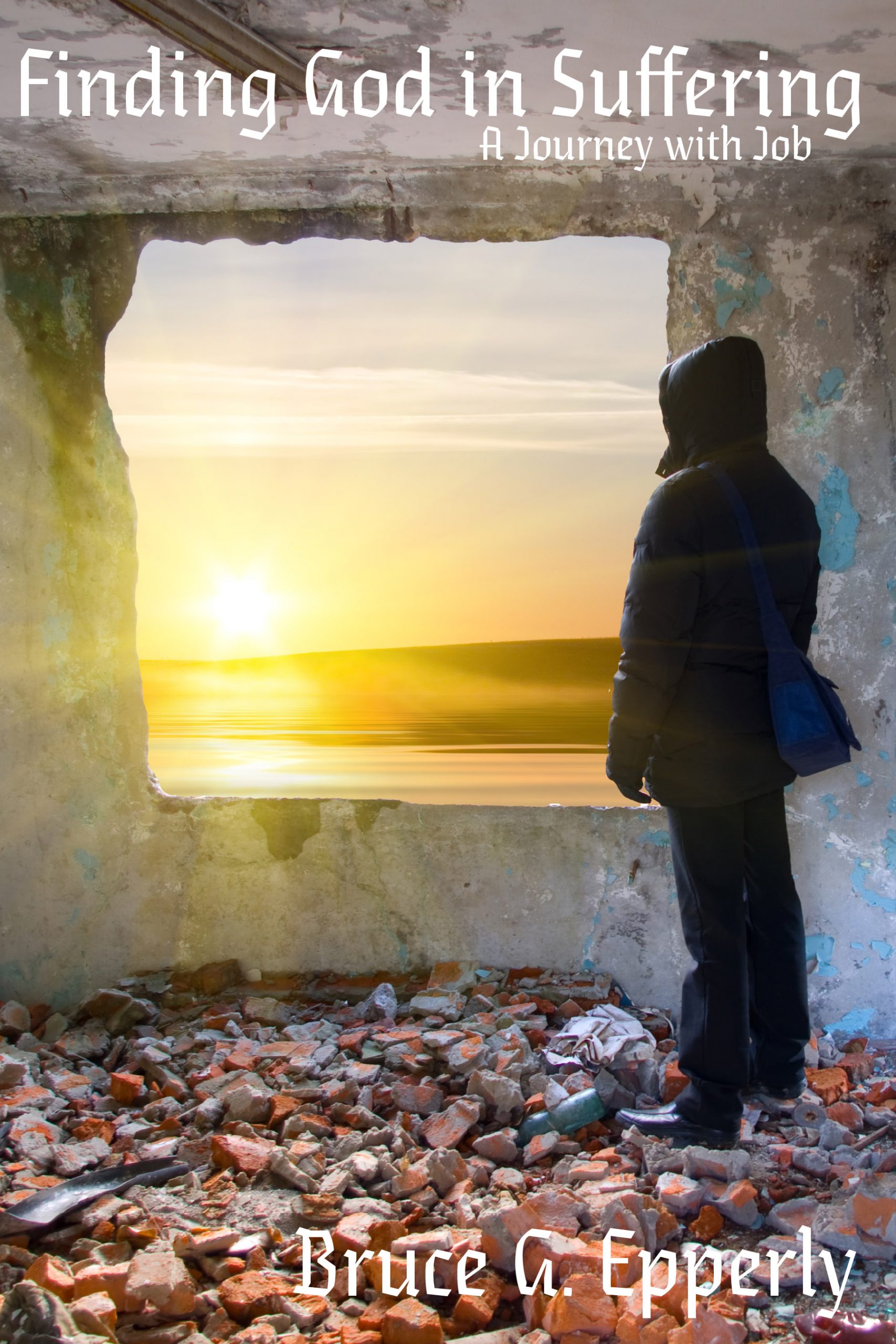
    Finding God in Suffering: A Journey with JobBruce Epperly, author of the recently released book Finding God in Suffering: A Journey with Job, questions the view that God determines the outcome of football games (or, I suspect, any other sport), rewarding the faithful and punishing the unfaithful. The title to this post includes his money quote from his post, Is God a Seahawks Fan?. Here’s the full paragraph:

    I am sure that God was present on the playing field but not as a miracle worker or team mascot; God was there urging the players to achieve their best as team members, to be sportsmanlike, and to remain healthy amid a rough and tumble game. I suspect God was indifferent to the ultimate outcome.

    I found this post refreshing. God is involved, but God isn’t there to make your team win–or lose. He’s there with each person.
  • Theodicy and Politics

    This is another brief thought. As I was thinking about politics I also considered some of the questions that come up in theodicy. In politics, many of us look for protection from risk, from the consequences of our own actions.

    It seems to me that in theodicy many people prevent “consequences” as an example of an evil universe. The idea seems to be that a “good” universe is one in which everyone is comfortable and never has to do any suffering no matter what. The universe as created, of course, includes many, many consequences.

    We should at least divide these between consequences of our own actions, and consequences of the actions of others. If my actions bring consequences for me, that’s one thing. When those consequences begin to hurt my wife, my children, or my grandchildren, that’s another matter. But in reality, it’s hard to imagine an arrangement of the universe that distinguishes those things.

    It may be that we really do live in the best possible universe–if people are allowed meaningful choices.

  • Explaining Suffering – or Not

    As a follow-up to my notes on God’s Problem, I would like to comment briefly on how a diversity of explanations do coexist, and how they might justifiably do so.

    First, despite our best efforts to find logical explanations, in general people use case by case explanations pretty readily. They may believe that one person suffers because of their own sin, another is under the attack of the enemy, and yet another is having his faith tested. Simultaneously, they may look strictly to a future divine intervention to resolve the problem.

    Second, I would ask if the problem of suffering is actually a single problem. There is no necessity that all suffering be explained in a similar fashion. It is quite rational, I think, and frequently done, to divide suffering from natural disasters or non-moral causes as one issue while suffering because of wrong moral choices of others or because of evil is quite another matter.

    This will even work its way into the creation-evolution debates because of the question of whether physical death predates human sin. Old earth creationists and theistic evolutionists both have to answer this question if they are to claim compatibility with Christian theology. Young earth creationists maintain that both groups are out of bounds on that very issue.

    My observation is that any explanation of suffering fails at some point, or at least fails to satisfy.

    1. There is no explanation–suffering just happens.
      This may well be right, though I think there are some reasons why we live in a universe that is so designed as to allow suffering. The problem for this one is that it is ultimately unsatisfying for a great many people. They just can’t accept it.
    2. Suffering as a punishment for sin.
      This one works for some, though it tends to lead to vindictiveness and to erode love for one’s neighbor. Consider the implications of those who believe HIV/AIDS is a judgment on gays and lesbians. The view is corrosive. (Note that this isn’t a valid argument against it being true, though I think there are such valid arguments. The main problem here is that one will inevitably encounter someone who is clearly undergoing undeserved suffering under this view, and that tends to shake one up. Then the question becomes not only why good people suffer, but why God would discriminate between one bad person and another. For example, why would HIV/AIDS be created to punish gays, while somewhat lesser STDs punish promiscuous heterosexuals? (Please note that the question is based on a false premise and I’m aware of that. It is one of the questions, however, that tends to shake one’s faith in the basic premise, as it should.) Alternatively, why would a hurricane hit New Orleans one year, but a relatively quite area of coastline another? Is there supposed to be a correlation between the evil and the response?
    3. Suffering as a test of faith.
      Suffering does test one’s faith and many other things, but the question is whether a God who intentionally puts one into such a test is in accordance with a “loving” God. We can, as I have noted, adjust our view of what “loving” means, but that has its own risks. I tend to think that our faith is tested, but that God here operates in terms of parameters, not precise direction.
    4. Blessing and cursing.
      This is simply a variation on punishment for sin. An additional problem here is that my sin may harm many, and my good deeds may benefit many. I may cause undeserved suffering or undeserved blessing. If I manage the family finances badly, more people suffer than me. One is reminded of Abraham’s question about destroying the innocent with the guilty (Gen. 18).

    All of these views have various difficulties, but I think few people adhere strictly to just one. I do think that many tend to claim just one even if they don’t use it consistently. The bottom line here is a very human one–most of us can’t stand not to have an answer. If we see someone else suffer, and we don’t have an explanation that either excludes us from a similar result, or at least limits our liability, life can be too difficult to face.

    I still do not have a good explanation. At the root of the way I understand this, however, is the notion that God creates a universe and then largely lets it function. He may intervene in order to have communion with his creatures, but he does not routinely alter the course of cause and effect in the physical world*.

    Now I get to return Ehrman’s book to the library, and go back to cogitation. I hope you have enjoyed the journey.

    *For this reason I tend to reject the idea of some that toward the “end times” (whenever they may be) we have massive healing and so forth.