Threads from Henry's Web

Category: Discipleship

  • Underlying Principles for Christian Education and Discipleship

    Underlying Principles for Christian Education and Discipleship

    Chalk rubbed out on blackboard

    … and with that pretentious title.

    Actually, last night I talked on the Energion Tuesday Night Hangout (I’ll embed the video at the end as well) about Christian education and how one might go about choosing curriculum.

    My sister, Betty Rae, asked me a question via e-mail this morning, and I thought it was so on point that I would post her comments and my response here. What am I actually up to at Energion Publications? For those who wonder, yes, my sister and I communicate like this quite a bit.

    From her comments:

    I have been trying to understand what is the purpose or goal you have in what you are doing.  I think I may have glimpsed something tonight.  Please tell me if I am right.

    The early NT church consisted of home gatherings.  They had no center of worship, like the Jerusalem Temple.  So All that was Christian centered in these small groups.  Luther calls them “small companies;”  Ellen White, “little companies.”  So if there is a difficulty with the church at large, the church may be preserved in the “small study groups,” as you are calling them.  I saw in your presentation that you are encouraging the preservation of the individuality of individuals and groups.  Your presentation tonight holds great significance as I see it.  By leaving the groups free, even to making them free not to use your materials, room is left for the working of the Holy Spirit.  Hopefully, the small groups will follow that example, and also leave the individuals in their groups free.

    The time will come, however, if there is religious oppression, that small groups will be suppressed; as an example, “The Conventicle Act” in England, for disobeying of which John Bunyan spent 12 years in prison.  During times of religious revival and opposition, believers were forced to meet in small groups, even outdoors in forests and mountains, for which they were severely punished if they were caught. John Wesley was forced, even to preach out of doors, when denied access to the churches.  The Advent Movement believers met in small groups after they were thrown out of the churches, coming together in camp meetings.

    On an individual basis, churches in this country have already persecuted and tried to suppress small groups, calling them “cults.” (The devil will always mix his counterfeit in with the true.  Fear of being called a “cult” has discouraged the “small group.”)  One thing that drew disapproval was the groups’ using of materials “unauthorized” by the denomination, which you addressed tonight in your presentation.  Your work may be small, but who hath despised the day of small things!

    Here’s my response:

    One of my fundamental beliefs is that spiritual choices made through duress, emotional manipulation, or spinning data are of no positive benefit and are indeed destructive. Thomas Aquinas and I are not even playing on the same ball field on this one!

    I carry this so far as to say that if I were helping to bring a Jew into Christian fellowship (no human “converts” anyone), I would want to make sure that person understood Judaism as well as Christianity to be sure he or she is making a choice that is as informed and as free as possible. Similarly, if a person is kept in the church because he or she was prevented from getting outside information, that brings no glory to God. While it may build up the church organization, the Kingdom of God is not built.

    I could summarize this by saying that God’s kingdom cannot be built by deception, and trying to deny people information from another perspective is deception. That’s the reason leaders do it. The leadership is afraid that if we, the followers, have information other than what they approve, we might decide differently than we have.

    This is often done for the best of motives. In the church, the idea is to prevent people who are less informed from being led astray. So information is restricted in pursuit of truth. But just because an approach is intended to accomplish something does not mean it will accomplish that. We often give credit to people for being well-intentioned, but the universe does not. The laws of physics don’t care about your intention. You may intend to fly when you jump off the cliff, but gravity (and the rocks below) does not say, “I’ll give him/her credit for having good intentions.” It’s just plain splat!

    Similarly in politics we have a desire to limit information to what is accurate and unbiased. I agree that the internet provides a huge reservoir of material that ranges from misleading in presentation to flat out wrong. But those who would like to clean that up somehow, other than by countering false with true, are playing with fire. Whether it’s by controlling political spending or trying to narrowly define a “real” journalist, it’s going to head toward control, and control will lead to mass falsehood and delusion. The universe will not regard the supposedly truth-loving intentions of the censors.

    So I do advocate freedom in ideas, and I follow that belief in the small (very small) world of my publishing business. I restrict what I publish not because I think the other stuff is bad, but simply to define a reasonable audience for me to try to address.

    At the same time I personally advocate a program of education in churches, however carried out, that makes sure people are aware of the full range of ideas that are out there. Carrying this out will involve reading books that are written by people who disagree with and disapprove the church’s views as well as hopefully hearing directly from them. There’s nothing like hearing an idea from an advocate. I may be ever so careful to present my adversaries position, but hearing me is not as good as hearing them.

    Those are the beliefs that underlie what I said about curriculum last night.

    And for those who might need context, the actual presentation:

  • Called to Wealth, Safety, and Comfort

    Called to Wealth, Safety, and Comfort

    Credit: OpenClipart.org
    Credit: OpenClipart.org

    I first heard the story of the Rich Young Ruler (Matthew 19:16-22) when I was a child, and it wasn’t long before I heard the excuses. The excuses did not come from my parents, I should note, as they lived pretty close to the final command: Go, sell, give.

    I have a few sayings about Bible study, such as –

    • Less evidence, more writing
    • More obscurity, more claims of clear and absolute solutions.
    • Less evidence, more theories

    But most important,

    • Harder to follow, more excuses

    What I was told way back then, as the glaciers receded, was that this was an extreme case, and that God didn’t call everyone to do that. Fair enough, I suppose, though I did find sermons that diminished it to a mild admonition to put a bit more in the offering plate rather bland. Still, Jesus seemed to accept sale of only half of Zacchaeus’s possessions (Luke 19:1-10).

    I concede that not everyone is called to sell everything (and confess that I haven’t), but doesn’t it seem strange that such a large percentage of the members of the American church believe their call is to wealth, safety, and comfort?

  • Of Politics, Cats, Context, and Church

    Of Politics, Cats, Context, and Church

    Cheena the CatThe other day I was browsing through my Facebook feed, which I do only occasionally, and becoming more and more annoyed at the politics posts. It’s not that I don’t care about politics; I do. It’s that I don’t like very much of what anyone says about politics on social media.

    As I browsed, I scented a certain odor, and I thought the odor was familiar in some way, and not from reading about politics.

    But first, let me talk about my cat. The cat you see in the picture to the left, at least mildly annoyed by having her picture taken, is Cheena. Now this post isn’t about cats. In fact, though I will talk about politics a bit, it isn’t really about politics. Nonetheless, Cheena the cat helped me along.

    You see, I remember one day trying to explain Cheena to another cat person. She’s not that friendly, she’s a one-person cat, she’s stubborn, self-centered, and wants just her choice in attention. “So,” said this other cat person, “she’s a cat.”

    Just so. She’s a cat. But you see, I’ve had many cats, and what I was trying to say was that, compared to the many other cats I have experienced, Cheena stands out for those characteristics. Pretty much every cat I’ve known makes its own decisions as to how long to sit on someone’s lap. But most of my cats, at least, have frequently curled up on my lap and purred. Cheena does this about every 3rd or 4th Christmas.

    It’s about context. I could have been explaining how truly cat-like Cheena is, apart from, you know, fur, claws, and pointed ears. I would have used much the same words. But I wasn’t. I was talking in the context of the behavior of numerous cats, and trying to explain how Cheena differed from them.

    It’s hard to accomplish that with just a few words. Someone who doesn’t want to take the time to understand Cheena’s behavior probably won’t get it. And why should they take the time? (I might note, however, that often people take more time to understand Cheena than they do many other things one might think more important.

    So back to politics, remembering that I’m looking to illustrate something else. I wonder if any of us could give a five minute speech, much less an hour-long press conference, without saying something that could be extracted to produce an attack ad—or meme—against us.

    The biggest problem I see with the political dialog is that very few people have taken time to look at the source and context of the material they present. (One of the most important purposes of finding a primary source, such as video of a speech, is to get the quoted line[s] in context. From Clinton’s “basket of deplorables” to Trump’s supposedly kicking a baby out of his rally, things get placed into whatever context a writer or sharer desires, irrespective of validity. Very few of these items are completely made up, but even fewer are totally truthful, representing the true intent and behavior of the person involved.

    We tend to construe statements from our friends in the best possible light, while we construe those of opponents in the worst way possible. Sometimes we end up lying both times. Our person isn’t as good as we claim and the other guy isn’t as bad. But my call here isn’t for balance, but rather for accuracy. I find counts of positive and negative stories quite irrelevant. How much positive or negative information was there? Was it reported accurately and in accordance with its value? Was it sourced?

    Many people share material without even reading it. The basis for sharing is not the accuracy of the content but whether they agree with the headline.

    Now here’s a question. How may of you followed the link in the preceding paragraph? If you did follow it, how many of you realized it was a secondary source, and then followed the link to the primary source? Did you then read the actual study? Do you know what the methodology was? What social media platform was studied? How they determined shares vs. clicks? Do you think the headline of the secondary source was accurate?

    We might want to blame social media for this, or perhaps the nature of politics. Politics is dirty business, after all. Yet I think we are all to blame, and we do it all the time.

    Now where was it I had smelled this odor before?

    It was in church.

    Notice how in 1 Corinthians 1:11 Paul observes with indignation (and possibly feigned shock) that he has even heard that there are factions in that church. Sometimes we think factions simply refers to differences of opinion, but Paul is quite open to differences of opinion (e.g. Romans 14). There’s something that’s different about factions.

    Factions build up around supporting one another no matter what, and putting down other people. Factions thrive on gossip. In Romans 1:29 we find “rumormonger” as one of the sins Paul lists showing how corrupt people are. Notice how many other words in the list there have to do with the way we talk about one another (slanderer, anyone?).

    When someone whispers a juicy detail about another church member to us, and we repeat it, even if we preface it with “I don’t know if this is true, but I heard …”, we’re guilty of rumormongering, gossip, and slander. It’s a sin. Paul saw it as a sign of depravity. It’s endemic in our churches, and generally we are unrepentant about it. Oh—it’s a sin when you do it about people outside the church too, even a politician.

    Gossip starts easily, and it can be stopped just as easily. If you want to see how it starts, just check the feed of your favorite social media platform, but don’t blame the technology. That’s precisely how those rumors about “Widow Brown” started in church. Someone says something they heard, or something they think might be the case, and the fire is started (James 3:5). And on it goes. We’ve all heard it. I suspect we’ve all been guilty of helping the flames spread at some point.

    How can we stop this fire? Apply two tests to what you’ve heard: 1) Is it well-founded and accurate? and 2) Am I a person who needs to know this? Apply similar tests before you repeat: 1) Do I know the source and that it is accurate? and 2) Does the person I am about to tell need to know?

    If it’s politics, it’s appropriate to pass accurate information on to those who need to decide their vote. In church, much more commonly the answer to the second question in each case is “no.” I know it’s hard to imagine, but we really don’t need to know the latest juicy story about our fellow church members. But even in politics we can ask the question of whether the information is actually of value. Should you pass on even accurate information about a candidate’s family? I’ll leave that to your conscience.

    I demonstrated some of the ways to check out a story with the link I used above. That’s good for your political information. If you find a story that has no source, or that uses as a source someone who couldn’t possibly know the information, reject it immediately. If an article says that “a study shows” insist on finding the study itself. Could the research they did produce the answer they produced? If not, drop the subject. If the story says “____ said,” ask whether they could know or not.

    In church, the procedure of Matthew 18:15-18. But first, make sure what you’re about to ask about is any of your business. If it’s not, dismiss it from your mind. If it is something that would be your business, going directly to the person is the best way to start. Afraid to go to that person? Don’t like confrontation? Then don’t share it. In fact, make “shut up” your default configuration.

    And do it about politics too. Unless you truly know.

  • What Have They Seen in Your House?

    What Have They Seen in Your House?

    pile-of-treasure-300px
    Credit: OpenClipart.org

    Yesterday the Scripture for my Sunday School class was Isaiah 40:21-31. The daily readings in the student guide included the first 20 verses of the chapter as well. Those acquainted with critical scholarship on the book of Isaiah recognize this as the opening of 2nd Isaiah, chapters 40-55.

    At first I was going to avoid the topic of authorship and date, but two things intervened: 1) The teacher’s guide brought the subject up, thus reminding me that people in the UMC will be hearing about and discussing this, and 2) I believe chapters 36-39 intentionally transition from the collection of oracles in the first 35 chapters. I don’t mean by this that I argue unified authorship for Isaiah. In fact, I favor the idea of an Isaianic school that was active from the time of the prophet through the exile, producing the three major horizons of the text.

    But treating the book as two tends to make us treat it as though the first and second parts are not related. Just because one believes in collection and editing doesn’t mean that the original writers, the collectors, and the editors were stupid or uncreative.

    The critical question of Isaiah 39, I believe, comes in verse 4: What have they seen in your house?

    Chapter 38 tells us of Hezekiah’s miraculous healing. In fact, chapters 36-39 are about God’s power active in and for Israel. Then comes the time to show people what’s important, and what does Hezekiah show? His treasury and his equipment.

    The power and sovereignty of God were there, but Hezekiah was more interested in the wealth and the military equipment. Despite God’s healing and rescue from the Assyrians, his value was in the stuff.

    And so we get Isaiah’s prediction of exile and the loss of all that treasury.

    Now comes chapter 40, and the horizon has changed. The people are in exile. What is it that they should be talking about? What should they rely on?

    It’s the one who sits above the circle of the earth (40:22). It’s the One who saved Jerusalem from the Assyrians and who healed Hezekiah. But Hezekiah didn’t give credit where it was due for what had happened.

    I think this might be the question God has for us in our churches today. When someone visits and we show them around, what have they seen in our house? When someone hears me talk, what have they seen? Is it the building or the parking lot? Is it the multitude of our programs? Is it the erudite pastor? When someone hears me teach about the Bible do they see Greek and Hebrew tools in action so as to praise my education?

    If so, then I have failed if following God’s call. In Isaiah 36-39 we see Hezekiah receiving God’s blessings. Salvation came not from the treasury or the weapons in the armory but from God’s action. He is healed by God’s intervention. Yet when he has visitors, his witness is to the treasury and the armory. Similarly, when I speak about God, I can either bear witness to God, or I can bear witness to myself and my stuff, whether that “stuff” is knowledge, a library, a church setting, or a catalog of church programs.

    Stuff is quite useful, yes, but only when it reflects its creator.

    So what have they seen in your house?

  • A UMC House Church

    A UMC House Church

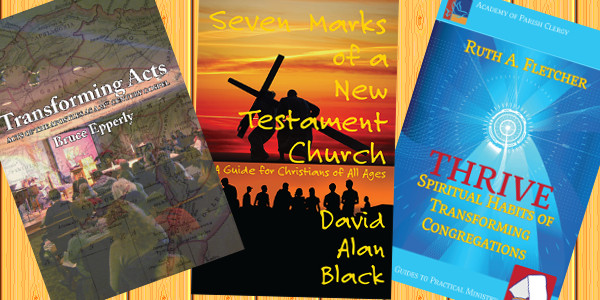
    nt church booksOne of the points I have tried to make in my series regarding the books Seven Marks of a New Testament Church, Thrive: Spiritual Habits of Transforming Congregations, and Transforming Acts: Acts of the Apostles as a 21st Century Gospel is that one can follow these “Jesus principles” of church leadership under many different formal structures. Some structures may make it harder than others, but I suspect it is more that each structure has different strengths and weaknesses, mostly the result of the fact that all of them involve humans.

    Here’s a video about a house church under the UMC banner. You won’t see anything “non-Wesleyan” here, or violations of the Book of Discipline, but you will see a creative and dynamic living out of the Christian faith. This is certainly a thriving congregation, carrying out transforming acts, and showing marks of a New Testament church!

  • Ham in My Hash Browns

    Ham in My Hash Browns

    Ham in my hash browns!
    Credit: OpenClipart.org.

    Nearly 20 years ago a waitress at a well-known breakfast chain messed up my order for hash browns by adding diced ham.

    If you don’t find anything odd about that sentence, you are, perhaps, a candidate for counseling. But I digress.

    I had wanted jalapeños, onions, mushrooms, and cheese. I got all of those. Plus ham.

    As a vegetarian, I don’t eat ham. The waitress was very nice and got me a new order with what I wanted, but for years (yes, years) thereafter, I was known to remind the staff at that particular chain that I did not want any meat in my hash browns. None at all.

    I was reminded of this last night when I asked Jody if she had done a certain thing, something that we had both forgotten a couple of months ago, but that I didn’t want forgotten again. She said she supposed she’d have to wear forgetting this one monthly task once for some time, considering how long it took me to forget about the ham in my hash browns. Well, I obviously haven’t actually forgotten it. I have quit mentioning it. One step at a time, you know!

    I was reminded of it again this morning as I read Numbers 32. The story takes place after the Israelites have defeated a variety of enemies on the east bank of the Jordan River, and are preparing to cross into the promised land. The leaders of the tribes of Reuben and Gad really like the territory that has been conquered as it is good for their flocks, so they come to Moses and Eleazar and ask for this land rather than a share of the land across the Jordan. Moses is angry with them and reminds them of something that had happened nearly 40 years before. He calls them a brood of sinners. It’s really not a very pleasant conversation.

    [ncs_ad pid=’9780842334280′ float=’right’ adtype=’aer.io’]They reply that they will certainly help their fellow-Israelites conquer the land, but that they like this land just fine. Eventually with that agreement, Moses agrees to grant them the land (somehow the half tribe of Manasseh gets in the mix toward the end), and we get an explanation of what cities they built and what territory each took.

    In reading about this, I note that commentators try to decide whether the final decision was a positive one or not. Was it a good idea to let these two and a half tribes settle east of the Jordan? I don’t know of any way to determine the answer. I suspect that there would have been problems either way. But when interpreting stories one thing to remember is that some things in a story, even in a fictional one, happen because they happen. I think it is a mistake to always try to find a moral in a story, even a Bible story. Some things just happened that way, and there is not great moral in it.

    Despite the fact that I’m unable to decide one way or another on the value of having some of the Israelites settle to the east of the river, I do see some potential questions, and perhaps resulting lessons in the story. One might be that there is no reference in this chapter to seeking the will of the Lord. It’s entirely a human decision. Given the frequency with which Moses consults with the Lord before taking action, is it possible that the writer here is trying to make a point?

    But one of the values in stories is that they can connect to different aspects of our lives, and today Moses’s response connected for me. Here come these poor tribal elders, much younger than Moses, one of the few survivors from those who left Egypt as adults, and they are coming to one who is now a revered leader. I suspect there was a bit of fear and trembling going on. They ask what seems to be a simple question: Could we have this territory?

    Now consider. The territory has been conquered. It’s going to go to someone. All the tribes are going to get some land. It might be a good idea to occupy the territory, in fact. On the surface, there is nothing wrong with their request. It’s perfectly reasonable. They don’t even say they won’t help with the conquest of the promised land. They just haven’t mentioned it.

    The CBC commentary I’m reading right now calls the solution involving them joining the other tribes in the conquest while leaving their wives and children in fortified settlements a compromise. But I see no delay and discussion. It looks to me as though they already had that ready, but hadn’t managed to roll it out.

    Moses reacts. Forty years ago other Israelites did this, and it’s right at the top of his mind. He remembers those people and those lessons, and he’s not about to let anyone forget the lesson.

    About 40 years before some other people had sinned. In fact, their actions were only similar in a superficial way, but Moses had learned the lesson well. Perhaps too well. Someone could put ham in his hash browns once, but never again! He calls them a brood of sinners while reminding them of past failings.

    It may seem that I’m being a bit disrespectful in my treatment of Moses, a man who spoke to God face-to-face. But if there’s anything we learn from the broader story of scripture it’s that every human being has weaknesses. Scripture is not afraid to take note of those weaknesses. Now Moses becomes a special case. I was working through Hebrews 3:1-6 this morning as well, and the argument that Jesus is greater than Moses. That argument must be made because of the great respect we grant Moses as Christians.

    The thing is that having learned his lesson, he applied it where it didn’t really apply. The continuing discussion makes it clear that these elders are not opposed to conquering Canaan, nor do they want to shirk their responsibilities. They’re simply proposing a plan for making good use of this land.

    Moses, to his credit, calms down, considers the situation, and they all agree to a plan. It’s a reasonable ending to a story.

    But for me, it’s a reminder that sometimes we do need to forget the faults and failings of others. Our own as well! And we don’t need to fit everyone into the narrative of past failures. The failure Moses remembers was real and it was important. It was a failure that did not need to be repeated. But Moses misapplied it to these elders.

    Brood of sinners? No, just looking for a good place to care for their flocks.


  • Seven Marks: Christ Centered Gatherings

    Seven Marks: Christ Centered Gatherings

    nt church booksIt has been some time since I posted my last installment of my discussion of the book Seven Marks of a New Testament Church by David Alan Black, along with some commentary from the books Transforming Acts: Acts of the Apostles as a 21st Century Gospel, by Bruce Epperly and Thrive: Spiritual Habits of Transforming Congregations by Ruth Fletcher. My most recent installment was actually an excursus, Is There Such a Thing as a New Testament Church?. (You can find most entries in the series by searching for the words “seven marks.”)

    9781631990465mI find this topic as a whole, and this chapter in particular, are examples of a topic where we should read material from people outside our own tradition. We need to strip away some of the “stuff” that has gathered in our denominations and churches that keeps us from being Christ-centered. It’s easier to be building-centered, tradition-centered, or us-centered. All three of my authors suggest things that would take us away from those three centers and ask us to seek what is Christ-centered.

    Dave Black cites “They devoted themselves to … the breaking of bread.” in the heading to this chapter and indicates he sees this as a reference to celebration of the Lord’s Supper (also called Communion or the Eucharist). I was interested in how many references I had to choose from in all three books. One of the key points Dave makes is this:

    And how often was the Supper observed? If we compare Acts 20:7 (“On the first day of the week, when we came together to break bread….”) with Rev. 1:10 (“On the Lord’s Day….”), it seems that it was observed every Lord’s Day, that is, every Sunday. (p. 33)

    Of course, the frequency is not the most important point. I would suggest that the most important point is that this is something instituted by Jesus which calls us to remember his incarnation and sacrifice for us. It centers the act of worship around the person of Jesus who is, or should be, the center of our faith and worship. Thus, “Christ-centered gatherings.” Now there is more than performing a certain ritual to a Christ-centered gathering. In fact, if your communion service is just an act of ritual, you may well have a problem in your church. Let me bring in Ruth Fletcher on this point:

    ThriveBecause individuals who participate in the worship life of transforming congregations will have an active daily prayer life, images and words they encounter in the corporate worship will connect them with experiences of the Spirit they have had during the week. A phrase in a song, in a reading, or in the proclamation may well remind them of a time in which they experienced a call upon their lives, a clarity of purpose, or an impetus to take compassionate action on behalf of someone else. Those moments of resonance will be what infuse the worship service with a sense of integrity and power.

    Worship in transforming congregations will offer reminders of what the congregation is trying to become. (p. 134, emphasis mine)

    I would note that Dr. Fletcher is part of a denomination that practices communion on a weekly basis at every worship service. The question here is the next step. Why is it that we want to have Christ-centered gatherings? I think it is because of the last line, which I have highlighted above. We come together to center ourselves on Christ, and thus to prepare to be the body of Christ in the world when we leave in whatever way the opportunity presents itself.

    This is critical: If your worship service is not leading you to service, to acting as the hands and feet of Jesus, to being a witness, and to proclaiming the good news, it can hardly be Christ-centered. Certainly we focus on Jesus, but if we do so simply to get a dose of “specialness” for ourselves, to satisfy our own emotional, spiritual, and social needs we will fall short. By this I don’t mean that our spiritual needs are unimportant. They are, in fact, critically important. But they will never be satisfied unless we carry what we experience in worship out to wherever it is we go during the week.

    Now think of your last worship service. How much of the “worship service” led to actual service out in the world? I suspect that it cannot be real worship in the sanctuary of a church unless it leads to the presence of Christ, through you, outside. We tread the room in which we meet as a sanctuary. It even has some architectural similarities to a temple. But it is each one of us as a group, no, better, as a community, who is filled with the Holy Spirit and called the temple of the Holy Spirit.

    I would say that communion then is:

    • Christ-commanded
    • Christ-centered
    • Christ-commissioned

    And we are the body of Christ, commissioned to be his body in the world. What better way can we have to remind us of this than to participate in communion?

    I would like to suggest further that communion, and likely church fellowship in New Testament times was not a large amount of liturgy with a moment when a small piece of bread is provided and dipped into wine or juice, for that one moment of “communion.” Rather, when the saints gathered, they shared a meal. Many of our churches are too large to share a meal on this basis, and that in itself may be a problem. Large churches, of course, can have small groups that gather and have this type of communion. If we are to spur one another on to good works (see Hebrews 10:24), we need to see one another, hear one another, and know one another. In such a circle we can draw our community together and prepare to extend our circle.

    9781938434648sBruce Epperly notes:

    The story of Philip and the Ethiopian eunuch reminds me of the origins of the American denomination, the Christian Church (Disciples of Christ). From the very beginning, Disciples of Christ have practiced open communion and have been a model for the ecumenical movement’s communion hospitality. In the early nineteenth century, Thomas Campbell, a newcomer to the United States from Ireland, was appalled by sectarianism among religious groups in the new nation. Even Presbyterians from different sects would not take communion with one another. Inspired by his vision of the New Testament church, Campbell welcomed everyone to the Communion Table. “Don’t fence the table,” he proclaimed. “Anyone who seeks to follow Jesus as the Christ is welcome, regardless of denominational background.” As early Disciples of Christ proclaimed: “We have no creed but Christ.” Our unity in Christ and our allegiance to Christ compels us to expand the circle of his love to include everyone. (p. 78)

    I think that there should be nothing that does not lead us forward into a new sense of mission. But what happens in our churches? Do we feel a welcome such that we are nearly compelled to share this with others? Some may object that the call is not to the church, but if the church (building) is where the church (the body of Christ) meets, then should it not be inviting people to it as Jesus did? When Jesus Christ was here in the body, people flocked to him. He didn’t have to hunt for them because there was something there that they wanted.

    We need that attractiveness and welcome in the church. Not the excitement of new glitzy programs, entertainment, and excitement, but the welcome that says that here is a place where the longing of my soul can be satisfied. Here there is not just a building but a community of people whose unity and love for one another is so special that I want to be a part of it, and that they welcome me to be a part of them.

    I’ve met people who want to be prophets. Some have asked me to pray that God would call them as such. I always ask them if they are aware of the kind of life led by prophets in scripture. Is this what you really want? Similarly we need to ask ourselves about being the body of Christ. If our gatherings are Christ-centered, they will not be “me-centered.” If we are to be the body of Christ we must remember what happened to the body of Jesus, the Christ. Then, as we look to close our doors to those in need, even to our enemies, to those who hate and would kill us, we need to remember who it was that He gave his life for.

    Christ-centered? We need it. We claim to want it. Do we want it enough?

  • Same-Sex Marriage, Moving Candlesticks, and the Judgment of God

    Same-Sex Marriage, Moving Candlesticks, and the Judgment of God

    kineso ten luchnianMy instinctive reaction when I disagree with people on major issues is to come out swinging. Despite this instinct, I believe I am called to be a facilitator, to try to help people talk intelligently and communicate effectively about controversial topics.

    So if you’re looking for a statement about what I believe regarding same-sex marriage, you’re going to be disappointed. If that’s what you’re here for, go for the “Back” button, mutter about click-bait, and go on to more productive activities. In fact, I’ve been criticized this very day, and on a few others, for not taking a stand on the topic. By “not taking a stand” people mean that I will publish material on either side of the same-sex marriage debate along with a number of other issues.

    Do I have an opinion? Yes I do. Will I make it public? No I won’t. [sarcasm]I will restrain myself from benefitting the world with my great wisdom.[/sarcasm] I will, instead, follow what I believe is my calling. Face it, folks! While there is a great deal that has not been heard on this topic, it’s not because it hasn’t been said. In case you missed it in the previous couple of paragraphs, I believe I am called to be a facilitator. As a friend of mine recently pointed out, it’s difficult to be a facilitator and a prophet at the same time.

    Just after I finished reading my dose of blogs and social media this morning, I joined in a conversation and Bible study, and I was asked an important question. We were looking at some interpretational issues in Revelation 2 & 3, the letters to the churches. There are a number of places where judgment is threatened. I was asked about Revelation 2:5, where the NRSV translates “remove your lampstand from its place.” It sounds a bit harsh. The question was, just what did this mean?

    My answer is that I believe it is symbolic, but only at one remove.

    1. The lampstand is a church.
    2. The church does not repent.
    3. The church is removed.

    I think we likely have many “removed” churches. They’re still sitting there occupying space, but the light has gone out. God is not there. The glory has departed. It’s harsh, but I think it’s true.

    You see, I believe in the judgment of God. In fact, because of the way in which I believe God’s judgment works, I believe God’s judgment can be quite implacable. Mercy holds the door open while there is an opportunity for repentance, for change, but eventually the door shuts. I believe the door shuts, or the voice ceases, when we cease to listen. I would commend Hebrews 6:4-6 (or really, it would be better to read 6:1-12; or hey, just read the whole book!) on this. There comes a time when we no longer hear the call to repentance.

    So my answer was that a church can fail. It can essentially lose its place because it does not listen to God. I think this is important. I’m not a universalist. I believe that God’s freedom gives us responsibility, and with responsibility comes the consequences of our actions. This means that we have a choice. The choice has a result. That result fits the choice.

    I further believe that God has sent the Holy Spirit to guide us and the church. Yes, we start in scripture, but we read and interpret that with the help of the Holy Spirit. This may not result in agreement, but the most important part is the listening. As long as we are listening for the voice of the Holy Spirit, and willing to hear and to do, we have that opportunity to repent, to change direction. Once we are no longer listening, when we no longer have ears to hear, we will no longer hear what the Spirit says to the churches. America is filled with churches that affirm doctrinal statements and action plans, yet do not do what they know.

    As I facilitate discussion, I let many things pass. People seem to get tense mostly about abortion, homosexuality, and evolution. I find myself restraining myself on many other topics, including immigration, care for the poor, spreading the good news of God’s grace, carrying out the mission of the church, and training and empowering our young people (to do all of the above, of course!), all of which I consider of critical importance for the church today.

    Not all of you are to be facilitators however. I can leave definitions undone in a publishing company, but if your church is to do ministry you have to make decisions, and to make good decisions you need to listen for the voice of the one who walks among the lampstands (Rev. 1:9-20).

    Please do listen. “I will remove” is a very harsh phrase.

    But I think it’s very real.


  • Church as a Social Occasion

    Church as a Social Occasion

    Or perhaps as the social occasion.

    Thom Rainer has a post titled Seven Things Church Members Should Say to Guests in a Worship Service. It comes complete with a header picture of people who, to me, look like they’re forcing excessive smiles. I probably see it that way because I’m an introvert. I suppose that there is nothing wrong with these seven things, though I must note that I prefer that the restrooms be well-marked with signs so that I don’t have to ask someone where they are, and I’m very likely to be the guy who forgets who you are even though you’ve been down the pew from me for months. In fact, I’d just as soon you let me sit there, think, and pray as come try to make a social occasion out of it.

    There’s nothing wrong with being the social person. There’s very much right with being a friendly person. Yet I’m left with several questions. The most important question is just what it is we’re trying to accomplish.

    It seems to me that all of this is aimed at getting more people to attend your church service. The goal is to make people “church-going” and to make sure that an adequate number attend your church. In order to accomplish this we try to make church a great social occasion with a friendly atmosphere (provided one likes that sort of thing).

    I confess that I may be hypercritical here. But all of these lists, and in fact a huge percentage of the talk about church growth seems to center around how many people we have in church. So if you have a church that is a very strong social club, you’re a successful church.

    But in reading the gospel commission I can’t seem to find the part about making sure large numbers of people attend church once per week. That isn’t even mentioned, much less presented as a goal.

    Someone’s going to say that this is the goal. We get them into church and from there we make disciples of them. But I don’t seem to see as many lists of ways to make disciples out of the people you manage to get to attend your worship service. I don’t see nearly as much about getting the people who are good, church-going people to go out and make those disciples. I don’t see nearly as much about getting those people to observe the things Jesus commands.

    I recall a pastor recently who said to the church: The only excuse for a church to exist is to be a witness to Jesus Christ. I’d refocus that to this: The only excuse for us to have a church service is to help us be and become better disciples of Jesus.

    This means that there is a good reason to get people to attend church, provided that church is about becoming better disciples. As I’m been reading about fellowship, I think there’s much more to the idea of communion as a shared meal celebrated regularly. Our church gatherings are not so much services as training and motivation to become active servants. In order to do that we need to be reminded of who we are and of how we are part of a body.

    Perhaps if we built these times around a common meal where interaction involved more than greeting and attempting to remember names, singing a few songs, and listening to someone lecture, we might be able to build the body of Christ as a community that serves, and in fact embodies Jesus Christ for the world. That might mean we need to break up some of our huge congregations and spread out into the community in smaller groups.

    I’m no expert on church organization or church growth. I’m pretty sure that, despite my own tendency, Sunday morning isn’t designed as a time of individual prayer and meditation for me. I can do that many other times. Yet I can’t help but get the impression that our church activities are centered around that Sunday morning worship service. If singing hymns and listening to a lecture of variable quality doesn’t light up your life, you’re just the wrong type of person.

    But do these worship services really help us to be Christians? Do they carry out the gospel commission? Are the spaces in which we do these activities well utilized in pursuit of the gospel? Despite being a person whose habit it is to be in church every week almost without exception, I’m seeing it as less and less productive.

    Perhaps our problem is that the goal is the wrong one. Filling our church sanctuaries on Sunday morning was never the aim of the gospel commission. Making disciples was.

    Is it?

  • Seven Marks: Genuine Relationships

    nt church booksThe fourth mark of a New Testament church that Dave Black finds in Acts he calls genuine relationships. The early believers devoted themselves to the fellowship, to their community. There are so many words for it.

    9781631990465mIn America today we rarely think of the church as a community and even more rarely as our community. Yet much of the New Testament’s teaching on the church centers around things that relate closely to this idea. We go to church for a “service.” We don’t participate in community. We take our children there for some moral education, not so that they can build relationships for their life. Often we barely know one another.

    I’m not trying to make us all extroverts. I’m an introvert. I tend to make small numbers of closer friendships. I’m not talking about the number of friendships we each make. I’m talking about how we fit together into this larger community, one that includes various personalities, a wide variety of gifts, people who are like us, and also people who are not-at-all like us.

    What we think about our community is going to impact everything else we do. Dave’s first mark is “evangelistic preaching.” That’s proclamation of the good news. But is the “good news” of your church the idea that one can join up, provided they’re not too different and become just like everyone else there? Or is the good news that through God’s Spirit we can all, with our various backgrounds, become one in Christ Jesus, contributing with various gifts, and receiving the salvation and healing that Jesus offers?

    I suggest reading 1 Corinthians 12-14. Don’t skip over chapter 13. So frequently people who want to study about spiritual gifts study chapter 12, those who want to look at church order and how to structure your meetings at the church read chapter 14, and those who want to talk about love read chapter 13.

    But that is to miss what Paul is doing. In this book Paul is looking at the various reasons why there are factions in the Corinthian church. When he comes to the start of chapter 12 he’s looking at the great gifted ones who lord it over everyone else. Genuine love, as expressed in chapter 13 is the key. How can one identify genuine gifts in action? It’s by the way they operate under the direction of that one Spirit and the way they carry out love in the church.

    1 Corinthians 13 is not about marriage but about the church. It gives good advice for a marriage because it tells us how genuine relationships work.

    ThriveHow do followers of Jesus work together when the church meets? Chapter 14 tells us they work for “edification.” That’s building. That building is based on the genuine love that is expressed in chapter 13. So these three chapters work together.

    I heartily recommend Dave’s chapter, but I’m going to quote this time from Ruth Fletcher in the book Thrive: Spiritual Habits of Transforming Congregations. Fletcher defines a difference between “friendliness” and “welcome”:

    Friendliness assimilates newcomers into what already exists; welcome integrates newcomers by helping them know they belong. Friendliness says, “We’re glad you came to our table. We hope you feel at home here eating what we like to eat and doing things the way we like to do them.” Welcome goes beyond friendliness to say, “We want you to bring your gifts to this community. We know when you offer those gifts that we will be changed by your presence among us.” (p. 78)

    Fletcher implicitly provides us with a good description of community. Rather than being a place where the current members give and others receive, it’s a place that welcomes people to become part of the giving, whatever it is that they may have to offer.

    9781938434648s
    Bruce Epperly discusses this in his chapter Faith Without Fences

    One of the critical things we need to look at in the church if we are to be such a community is gossip, judgment and criticism. For us to help one another grow, we need to be able to talk about ways to grow. Serious discussion of spiritual growth will not prosper where there is no trust, and gossip destroys trust. Gossip is always followed by judgment and criticism, and it destroys community.

    Losing this spirit of judgment does not mean that one loses the ability to discern between different options, nor that one cannot recognize sin or destructive behavior. It does involve a change in the way we think and talk about these things. Our talking will be impacted by our thinking. Don’t imagine that you can pretend not to be judgmental and nonetheless deal with issues as a community.

    I’m fairly unreceptive of the complaints of those who think that repenting of gossip, judgment, and criticism (three sins endemic in church life) means that we can no longer reform or call others to repentance. Gossip, judgment, and criticism don’t result from a genuine desire to help others find repentance. They result from our desire to feel that we are better than others and to let others in our inside group know that we are better than others.

    A genuine concern for others will result in talking to them and doing it in constructive way. Note that this isn’t a strategy change. It’s repentance from a sinful approach (judgmental) and a turn to a genuinely constructive  approach (edifying/building). If we have genuinely repented of the need to feel morally superior to others, I think we will generally know the difference. Most of us have been helped to find a better approach to some issue by a more experienced or knowledgeable friend. It feels different.

    One critical point is that it comes from relationship. I have friends who help me with my business decisions who can quite comfortable tell me that some idea would be idiotic. We’ll laugh and go on to a better plan. Why can we do that? Because we have a relationship that comes before the correction. I highly value those friends and that correction. It has saved me from many errors.

    “Genuine relationships” open the way to the various elements of community. If you truly want to help those you think are on a wrong path, establish a genuine relationship with them first. As you do so, you may become aware that you also have things in your life that can be improved by what you learn from them.

    I think back on growing up in my missionary family’s home. You could not visit my parents’ church without getting invited to lunch. Not invited to join us at a restaurant, but to come join us for the family meal. My mother always made sure she had enough to feed guests. One never knew who would be a guest.

    In Mexico, when a mother and son needed refuge from violence, she was invited into our home, even though there was a threat of violence to us involved. She was different from us, of the Chamula people, and only spoke a bit of Spanish, much less any English. But she had a home with us as long as she needed it.

    Think about your own church. Would a visitor be welcome? Any visitor? As you bring in new members do you try to remold them after your own image or do they become a genuine part of the church family with their gifts and their warts? Does anyone in your church invite people home to lunch or dinner? Are your homes open? If someone was escaping domestic violence would they get a referral to a nearby shelter or would someone in your church open heart and home to them? If you see young people in your church without parents do you gather in groups to complain about “this generation” or do you decide to welcome the opportunity to get to know them and even mentor them?

    I think becoming a community built on genuine relationships will require a great deal of repentance on the part of the American church. But if we want to truly be disciples of Jesus, carrying out the gospel commission, this is one mark we can’t afford to lack!