Threads from Henry's Web

Category: Discipleship

  • Seven Marks: Excursus on Change

    Seven Marks: Excursus on Change

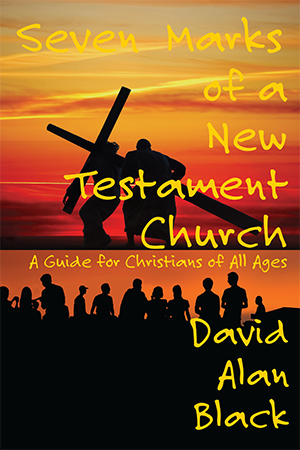
    nt church books9781631990465mOne of the most interesting and troubling things I’ve found about myself and my church (any of the churches of which I’ve been a member!) is the number of things we know we should do and even decide we will do, but which never get done. Seven Marks of a New Testament Church is certainly ecclesiology, but is it shelf ecclesiology (that’s nice) or is it practical ecclesiology (let’s do that)?

    In this case I can’t point fingers. In my personal life I need to get more exercise and lose a significant amount of weight. How long have I known this? Well, I’m the son of a doctor who was medical director of a health conditioning center when I was in my teens. And yes, he knew about these things before that time and after that time, and he taught them to me. I cannot claim that I didn’t know what the health effects of a sedentary lifestyle and excessive food intake (biblical gluttony, no?) would be. While I’m working on reforming this now, I do so slowly and under constant temptation to avoid the needed change. It’s not that I’m tempted to do useless things. In fact, I’m tempted to work, and for me work involves being in front of a computer. So one good thing tempts me away from another one. But that doesn’t make it right. I know I should get more exercise. I know I should eat less. Making those changes so that they are a fundamental part of my new normal is very difficult.

    Romans 7 anyone? I know many Arminians see Romans 7 as a description of our pre-Christ experience. I see it as very descriptive of what I and many Christians live every day. The problem comes in when we make Romans 7 into a continuous, hopeless loop about everything. Yes, we all have our Romans 7 experiences, but we’re invited into Romans 8. Not that we’ll live at “Thanks be to God, through Jesus Christ our Lord” (7:25) at all times and on all subjects.

    It’s easy to make excuses. I’m very busy. It’s hard building up a small publishing company. I have a lot of work to do. I’m very healthy, taking no medications and very rarely missing work. I don’t smoke. I don’t drink. I’m a vegetarian, for heaven’s sake! (Ice cream, sweets, lots of butter, bread—they’ll do it even to a vegetarian!)

    But no matter how many excuses I produce, I know this: I need to change.

    There are many reasons why we don’t change, and many excuses for why we can ignore things that we hear.

    1. We find some fault with the messenger. The wrong person is making the suggestion, so it can’t really be right.
    2. We nit-pick the message. There’s something in there that won’t work in our situation, so we discard everything new and go back to what we were doing.
    3. We are change-weary. We’ve tried to make changes so many times and have failed. Why should we try yet another thing?
    4. We don’t see our present problems. We’re so used to the way things are and the level of success we’re having, that we think that’s precisely what should be going on.
    5. Other people are much worse off than we are. The church down the street is so inward-looking. By comparison, we’re outgoing, gospel-oriented, and on fire for missions. (This is like my “I don’t smoke” excuse. I’m better than the person who’s killing himself with cigarettes.)
    6. This change is going to cause problems. Usually this means that the leadership is afraid of losing control.
    7. I don’t have enough guidance. Where is the calendar, worksheet, study guides, long term plan, etc.?

    I could go on, but we’ll stop at seven. Nice number!

    I think, nonetheless, that our bottom line is fear. We are surviving the way we are, but will we survive after we change? The pastor wonders if he’ll lose members. The members wonder if they’ll be happy with the new church service on Sunday morning. The education team wonders if anyone will attend Sunday School. Everyone wonders whether they’ll be annoying their neighbors. And while we might not admit it, we wonder whether we’ll be happy ourselves. So we stay the same.

    One of the great fears is that we will lose control. This has been the bane of the church from very early times, I think. We’re very much afraid of the movement of the Spirit because the Spirit is not under our management. Not that we don’t try!

    In Thrive: Spiritual Habits of Transforming Congregations, the 12th habit Ruth Fletcher mentions is Choosing (p. 123). Here’s a key quote:

    Transforming congregations learn to choose and choose again. They don’t have to get it right the first time around. They can gain insight from any action they take and that insight will aid them opting to take the next step into the future. Transforming congregations acknowledge that when they act with courage, some people may decide to leave, but they would rather decide to do something than to remain lukewarm about everything. (p. 126)

    Bruce Epperly comes at this from another angle in Transforming Acts:

    The spiritual leaders acknowledged that they couldn’t do everything. They confessed that the task of sharing God’s word left no time for taking care of domestic issues. They needed partners in ministry: so they prayerfully chose a group of people to insure that everyone had a share in the community’s resources. They let go of control, and let go of power, so that human needs could be met.

    In ways that are still countercultural, they relinquished the power of the purse for a greater good, the well-being of the whole people of God. They recognized that within the body of Christ, everyone  has a role – their spiritual leadership of the community did not lead to micromanaging or power plays, or a sense of spiritual superiority, but a vision of shared responsibility. Perhaps, their selfless  leadership inspired the Apostle Paul’s vision of the multi-gifted body of Christ in which the well-being of one shapes the health of the whole body and the whole body, operating effectively, provides nurture and support for each constituent part. (pp. 67, 68)

    Giving up control and choosing to act. When we have acted, we choose to learn from that action and act again.

    What has impressed me about the church, not to mention my own life, is what a difference we could make if we simply acted on the things we already know are right. Yes, new information is good, but we have a tendency to collect the information and fail to perform the actions. There are many controversial things. But if we laid those aside and simply acted on what we know to be right, what might happen?

    I doubt that church would like like the church in America at this moment.

  • Seven Marks: Baptism

    Seven Marks: Baptism

    nt church books(This continues a series that started here, and continues with part 2, part 3, and part 4.)

    The second mark of a New Testament church according to Dr. David Alan Black is Christian baptism. He explains why he explicitly uses the term “Christian” with baptism. There’s a distinction there that’s important and Dave discusses it. Here’s the video. The discussion of Christian baptism begins at about 08:45.

    There are several things that Dave says about baptism that I fully agree with. He believes in baptism by immersion of believers, i.e., people who make the choice to be baptized. He also believes baptism should immediately (or very closely) follow the decision. I also, however, believe that this is an area on which there should be a great deal of tolerance for differences.

    For example, I attend a United Methodist congregation. The norm is to baptize infants and then confirm them as youth. I grew up in a church (Seventh-day Adventist) where one dedicated children as infants and then baptized them when they made their own decision. I made my decision to be baptized at age 9.

    While I strongly prefer one option, and many of my reasons are the same as Dave’s, I am quite able to be a member of a church where the practice is different. I would note that the United Methodist Discipline does allow for baptism by immersion, so a United Methodist pastor can practice believer’s baptism by immersion. He or she could not, however, refuse to perform infant baptisms, at least as I understand it. I know that some Methodist pastors are quite dogmatic on the point. My preference would be to see a quite open choice. For example, if a family prefers some kind of baby dedication, where is the problem? Again, I also know a number of Methodist pastors who would go along with that.

    I’m going to refrain from arguing the biblical material on this. I think Dave has gone over that quite well, and in this case I am substantially in agreement.

    Let me bring in short quotes from our other two authors.

    Ruth Fletcher brings in a completely different issue that may cause some concern to United Methodist readers, or those from any other church that has a fairly high view of sacraments. I’m quoting from Thrive, page 141:

    As the church finds its way into the future, the role of clergy will shift even more than it already has. Although some ministers will preach and lead worship, many will give their time to training lay people as worship leaders and small group facilitators. Although some will offer pastoral care, that care will extend beyond the members of the church into the neighborhood. Although some will teach, that teaching will focus on equipping individuals to serve in various roles both inside and outside the church. The sacramental tasks of baptizing, leading in communion, presiding at weddings and funerals increasingly will be shared with people beyond those who are ordained.

    Here I would have to say two things. First, I personally don’t see that baptism should require an ordained person. Second, as a member of a community that requires that an ordained person carry out any baptism, I will not put my first belief into practice. That is a matter of submission to the community. While I would forcefully argue for and even insist on using the community’s permission with regards to the method and time of baptism, I would also argue that where my community has a firm position, I should, as a member, live in accordance with that rule. Nevertheless I do believe that every member should be in ministry, and that ordination should not be reserved for one gift or set of gifts but should be for all. We should lay hands on and commission every member to minister using their gifts.

    Let me continue with a slightly longer quote from Bruce Epperly in Transforming Acts (p. 85):

    Such dramatic experiences – whether evangelical or mystical in nature – are not normative for all Christians. Some of us are born Christian. As cradle Christians, we are dedicated or baptized as infants, and then grow in grace not by drama but through a gentle, day to day walk with God. Nevertheless, most of us eventually face moments in which we have to say “no” to one way of life – or certain behaviors or lifestyles – to say “yes” to another.

    Providence is both gentle and dramatic. We can experience God, while we are playing with our children and looking across the table at a beloved spouse or friend; we may also discover God in the storms of life, helpless yet saved by a power beyond ourselves.

    Third, Paul’s Damascus road experience invites us to connect our spiritual experiences, whether at worship, at camp, or on the road, with discovering our vocation and mission in life. Paul is clear that his mystical experience was not an end in itself, but an invitation to a new self-understanding and vocation as God’s messenger to the Gentile world.

    Bruce is talking about the dramatic conversion experience of Paul, which relates in some ways to baptism. Numerous times I’ve encountered people who do not remember a time when they did not know Jesus. They don’t recall a particular decision moment, because they were believers from as early as they can remember. In some ways, my own view of baptism as a thing to be chosen by believers relates to my own experience. I grew up in a Christian home, but I distinctly remember the time when that belief became mine rather than someone else’s. It was no longer my parents’ faith. It was mine. That was at my baptism.

  • Some Lessons from Tilling My Garden

    Some Lessons from Tilling My Garden

    Well, my prospective, perhaps presumptive garden, that is.

    One of the important elements to understanding stories in the Bible, parables included, is our perspective. In Christian circles, when we hear “the sower went forth to sow,” (Matthew 13:3), or perhaps “a farmer went out to sow his seed,” we generally see ourselves in the role of the one doing the planting. We are evangelising, and people have different kinds of hearts. Have you ever heard someone describe another person as being rocky ground? Or perhaps someone has said, “He’s trying to dig some hard ground there!” Usually these expressions are used regarding targets of evangelism.

    garden and tillerI’ll mention evangelism later, but first, let me place myself in the role of one receiving the seed. Is that not what I do when I pray and hope to hear from the Lord? Is that also not what I do when I open my Bible and hope to be changed by God’s message? So I am the ground, not the sower.

    But let me tell you the story of my garden thus far. Fortunately for me, I have few plans that involve saving money on food, supplementing my diet, or saving on the food budget. I had one purpose in starting a garden: I need to spend more time in physical activity. Now I’m a bit of a workaholic. I have a hard time not doing anything. The easiest way to get myself to do what I need to do was to make it into work. Then I can feel good while I do it.

    So I picked a plot on our little place out here and started to work on it. It has gone through being broken up with an excavator (at which time I killed power to my office and broke our water line, but that’s another story), lots of hoeing and raking, and digging up of roots and rocks. This morning I finally got to the point of being ready to actually till the plot. My previous work had been aimed, not at getting the soil ready for actual planting, but at removing obstacles. I have a large pile of brush, roots, and rocks at either end of the plot, things I have removed as I worked.

    Then I had a period of time when I was just too busy with work. Between my work with computers and computer networks and my publishing work, I was simply overwhelmed. The phone would ring by 8 am and I wouldn’t get that much done outside. What do you suppose happened? Well, the plot got some new growth, but not the stuff I want to grow, of course, since I hadn’t yet planted. So out came the weedwacker, the hoe, and finally the rake.

    Today I finally got to the tiller. That’s the tiller, in the picture to the left. I borrowed it from my friend Tom Hunt. If you need a floorplan done for a new house, he’s the one to go to.

    There were some interesting things about using the tiller as well. Weeds leave behind small roots that tend to wrap themselves around anything available. No matter how may rocks you’ve removed there may be a few more. Run the tiller in a couple of directions. The pile of dirt from one pass may hide some hard soil. Power tools are great, but I ended my morning session more tired than when I worked with the hoe. The tool helps, but the human still better put heart and back into the effort.

    Let me apply these to Bible study just a bit. You might want to reference my post from yesterday. Here are some thoughts I had while listening to that wonderful purr (or roar) of the tiller motor.

    1. Different tools accomplish different things. No matter how much you may have gotten with one approach, try taking another look from another angle or with some different help.
    2. Weeds don’t stay dead. You’re never really done. It’s easy to get complacent and think you already have it covered. Now it’s all about telling other people. Don’t get in that place. If you neglect your heart garden for a while, you may find the ground hardening and the weeds getting tall.
    3. Don’t imagine that a period of neglect is the end. That’s what weedwackers, hoes, shovels, rakes, and tillers are for. Those of you who have forgotten your biblical languages after seminary, consider this as well. How about working on reviving them? Yes, I believe you can study the Bible effectively without the biblical languages, but after investing all that time and effort wouldn’t you like the benefit of that tool?
    4. Don’t be blind to the rocks that are still there. You may have removed bunches of rocks, yet there are still some to find and remove. I often joke with Jody that it would be nice if I could measure the quality of my cleaning by the quantity of dirt I removed and not by what was left. Read 1 Corinthians 8:1-3 if you’re thinking you’re good!
    5. Tools help but they don’t do the job. I love Logos Bible software. I love sites that let me compare versions (BibleGateway.com, for example). But these things don’t do your studying for you. They will make you more efficient. Many Bible students amass information and yet don’t get to what the text is saying to them. I was reminded of that forcefully as I moved the tiller through my prospective garden. It did more work than I could have accomplished with the hoe, but it still required me to make the application!
    6. Sometimes you get so tangled with the weeds that you can’t really go on clearing and tilling. I experienced this as left-over weeds and roots tangled up the tiller. I had to stop and clear the blades so the tiller could work efficiently. I’ve experienced this in preparation for teaching my Eschatology series on Google Hangouts on Air (link to next session, Thurs. night at 7 pm central time). Eschatological views are based on many, many texts, and there are many, many views on each of these texts, plus mountains of theology done to tie them together or explain them away. It’s very easy to get so tangled in the details that you can’t see the actual text in front of you. I bounced this off my wife Jody, who has a practical mind set. I asked her to read Mark 13 the other day and then question me about it. She had a set of questions that helped clarify the chapter.

    I’m sure there are many more lessons, but those are the ones that occurred to me as I worked this morning. But does any of this apply to evangelism?

    1. Quit trying to judge the people you witness to. You can’t see what’s under the ground.
    2. The best way to witness is to till your own heart. I can’t emphasize this enough. Most people can tell very quickly if you’re trying to use them for something else. So if you are making relationships with other people in order to convert them or make them into church members, they’re going to get that feeling. But if you are genuine and genuinely care about them, they will also know that.
    3. The Christian life and Christian witness isn’t a strategy. See #2. Enough said!
    4. God is the one who changes people. You witness. God acts. Be humble enough to give God the credit. Be humble enough to let God take the responsibility.

    Do you see what happened? Quite frankly, all the lessons but one applied to me. As for reaching others, I have one duty: plant the seed. Now planting the seed can be complex, but I suggest that it starts with some of the points I made above. Let God’s word impact your life. Continue to let God’s word impact your life. Continue some more letting God’s word impact your life. Continue yet much more letting God’s word impact your life.

    You’ll impact the lives of others.


  • Keys to a Church Following Jesus

    Before I dig into this series organized around Dave Black’s book Seven Marks of a New Testament Church, I want to make a couple of off-the-cuff remarks.

    Over the last few years I’ve come to believe that we have two key elements that need to be changed, but more fundamentally, we keep talking about the church too much differently than we talk about individuals. As individuals, we need to be following Jesus, not just appropriating the label “Christian.” As a church, we need to be following Jesus. Those who are following Jesus will be witnesses. A church following Jesus is a witness.

    What do I see as the two key elements?

    1. Lack of Bible study and reflection. I see this broadly, as in study that leads us closer to God.
    2. We do not lead lives of prayer. This differs from praying occasionally, or offering pre-written prayers in a church service.

    I think that if we were to correct these two elements, others would correct themselves. I need to correct them as well. There are those who commend me on my biblical knowledge and who consider me a man of prayer. (Others, not so much!) But the fact is that I don’t live up to the standards I believe in. While we are, indeed, all imperfect, we can all keep heading in the right direction.

    I also think these two elements are much more closely connected than is generally realized. Prayer should be communication, conversation, not a monologue directed at God. Bible study should include the discipline of listening and a constant process of opening one’s self up to what God has for one in scripture.


  • Last Night on the Tuesday Night Energion Hangout: Stewardship

    Last Night on the Tuesday Night Energion Hangout: Stewardship

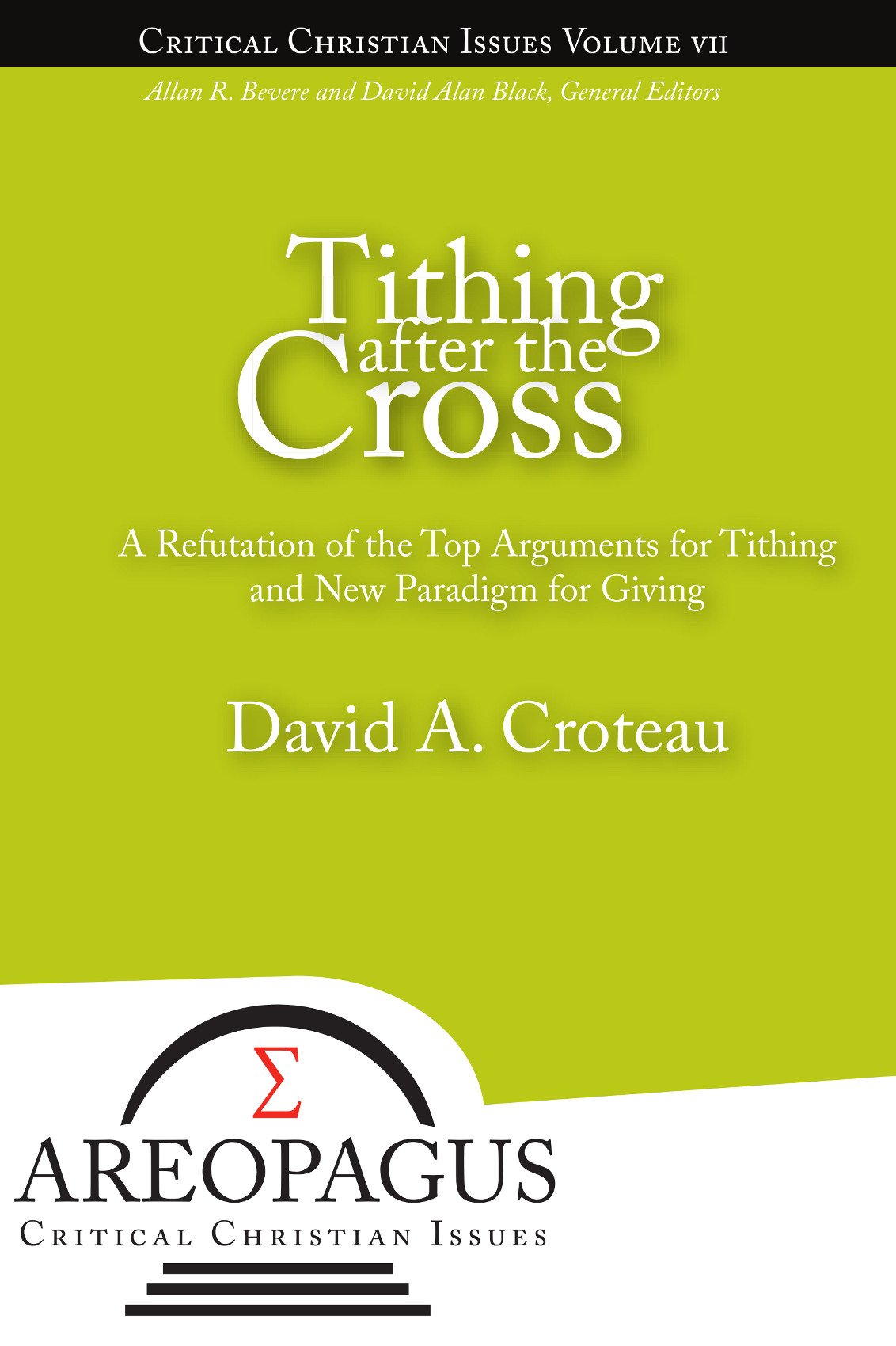
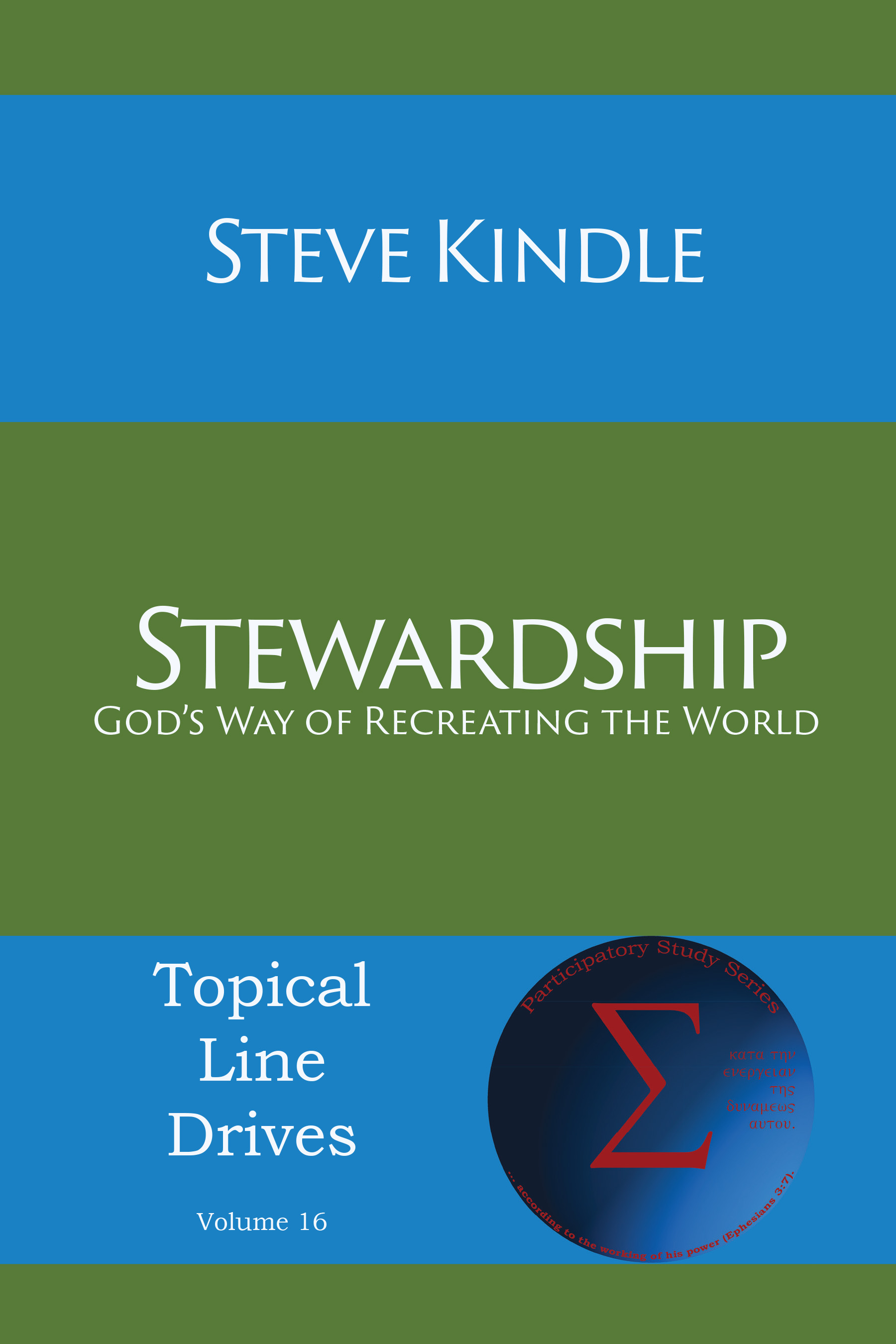
    97816319917389781938434129Pastors and church leaders cringe at the “s” word, because so many members don’t want to hear about it. Sometimes they blame the members for not wanting to dedicate their wallets to the Lord. But is that precisely what we should be asking church members to do?

    I think the resources to carry out the gospel commission already exist. Those resources are tied up in our individual wallets, bank accounts, and possessions at the individual level. At the church level they are tied up in buildings and supplies, things we’re sure we have to have. But do you know that there are thousands of churches around the world that get along without the things that we, in American churches, absolutely have to have?

    Come to think of it, am I aware that there are people who do without things that I count on every day?

    My guests were David Croteau, author of Tithing after the Cross and Steve Kindle, author of Stewardship: God’s Way of Recreating the World. They come from different denominational and theological backgrounds and belong to different generations. Yet in looking at what the Bible says about stewardship, they both come to the same conclusions. You’ll be amazed at the level of agreement.

    I have heard many of my fellow Americans say that the government needs to get out of charity and let the church do it. You know what? How about if the government could spend way less on social welfare programs because the church was doing its job? I don’t just mean giving out money; that’s part of it. But giving out money results from letting the gospel change our priorities so that we give ourselves to the Lord (2 Corinthians 8:5), and everything else results from that.

    Just think! We might even turn the world upside down (Acts 17:6)!

    Here’s the video:


    Earlier today Dave Black commented on this as well.

  • Helping One Another Change

    I just extracted a note from Dave Black’s blog to The Jesus Paradigm. (That site supports his book by the same name as well as a few others that don’t have their own domain name.) In it Dave talks about admonishing, encouraging, and upholding. You’ll have to go read the post to find out what these are about.

    For my purposes here, they are all ways in which we help one another change for the better. In my view, there’s too little helpful activity of this nature in our churches today. We don’t want to get into each other’s business, and often we’re in congregations that are large enough that we don’t really know one another’s business enough to be helpful. In my own congregation I know that one of the considerations whenever we discuss greeting people is that there is a risk of approaching a life-long member as a new visitor. If I can’t be sure a person is a part of the congregation, how can I possibly respond to them in a helpful way about anything else?

    But I think that even in groups small enough to do so, we would have a hard time doing it. We seem to move too easily from neglect to condemnation without taking the necessary steps in between. Dave points out the different ways of handling different people. In order to interact with someone in a helpful way, whether correction or encouragement or any other approach, you have to know them pretty well. One big difference between correction and condemnation is simply the relationship between giver and receiver.

    I “correct” my wife’s use of the computer on a regular basis. I know more about computers than she does, she knows that, and so it generally works. Even so, it still won’t work if I am condescending or impatient. But if I both understand her starting point and work to help her get to where she wants to go, things work extremely well.

    She, on the other hand, corrects my work in the kitchen. It turns out that in the same set of circumstances, I can actually produce a meal with her direction. The things I don’t know how to do she does. The things I might ignore, like precisely which position the oven shelves occupy, she encourages me to get right.

    So here we are in the church. Let me just list some things we might need to work toward in our churches so we can truly help one another change.

    1. We need to know one another better, whatever that takes. If that means more home churches, great! If you can find a way in a large church to get some sort of accountability as a group, great!
    2. We need to understand forgiveness. I hear someone saying that we’re talking about correcting, not letting people off the hook for their misdeeds. That attitude is precisely the problem. Correction that comes with condemnation isn’t generally going to be mutual. We are all sinners together looking to Jesus. We abuse this in two ways. First, we decide we’re all sinners, so we can just forget about trying to change. Second, we can decide that some sinners are more equal than others. I think the call of Jesus is to mutuality. We are all sinners. We all press toward the mark.
    3. We need to ditch our pride. Ouch! Just about anything we do, even what is normally good, will be spoiled by pride.
    4. We need to know the difference between essentials and non-essentials. Too often when we correct others, we are asking them to follow our traditions instead of theirs. If you want to successfully show someone a better way, it helps if the way you’re showing them actually is better.
    5. We need to let love reign in us. All of 1 John is filled with excellent material, but 1 John 4 is particularly important on this point. Note that there is some help here defining love as well as applying it.

    We definitely need to get past the point where the only encouragement or exhortation in our churches comes from the pulpit, and is therefore easily ignored by those in the pews.

    Let us pay attention to each other, so as to stir up of love and good works … (Hebrews 10:24).

    12Therefore restore the weakened hands and the disabled knees, 13and prepare straight paths for your feet so that the lame might not stumble but rather might be healed (Hebrews 12:12-13).

  • Being Subject to the Authorities

    The Forum - from Rome.info
    The Forum – from Rome.info

    While I haven’t written anything on it myself, I’ve published quite a number of books regarding how Christians should relate to authority. These include Christian Archy and The Jesus Paradigm (David Alan Black), Ultimate Allegiance and Faith in the Public Square (Bob Cornwall), Rendering unto Caesar (Chris Surber), and Preserving Democracy (Elgin L. Hushbeck, Jr.). The last one isn’t primarily about the Christian’s relationship to authority, but it does deal with what the author believes are the legitimate functions of government, and ways in which the authorities can definitely be illegitimate.

    As I was reading from Luke 12 this morning, and realized that Jesus was speaking to people who were likely facing persecution, sometimes from those very authorities, I started to think a bit about why we tend always to start with the “rendering unto Caesar” passage, and much less from Romans 13:1-7, 1 Peter 2:13-17, or Acts 5:29. The first of those passages is quite frequently abused by those who believe that one must obey the government no matter what.

    I’m not going to write an extremely long post on this today. I just wanted to bring the subject up. The one line I appreciated most in the commentary I read on these passages came from The New Interpreter’s Study Bible, p. 2029, commenting on Romans 13:3-5.

    Governing authorities derive legitimacy and serve God by punishing bad and approving good—that is, by implementing justice. The just purposes of government evoke submission by the ascent of conscience (v. 5) rather than by fear of punishment. An unjust tyrrany, by implication, would not qualify as an authority instituted by God.…

    There are a couple of points in that passage that I believe are overstated, but I think the main point is correct. Paul here speaks of the government carrying out it’s legitimate functions, functions which the Roman government often did quite well. When, at other times, the authorities turned against the good, then one must obey God rather than human authority (Acts 5:29). A Christian would obey the legitimate authority even of an unjust government, where that is possible (often it is not), and would reject only the unjust actions. I think 1 Peter 2:13-17 implies this. Christians were to be model citizens wherever they could thus blunting accusations brought against them. When the state ordered them to do something they could not do in good conscience, then the authorities would be unable to say, “These people just ordinary lawbreakers.” Rather, they would only have the matter of conscience at hand.

    Having government ordained by God cuts both ways. First, it gives authority and order a divine imprint, and becoming simply a rebel or an anarchist is precluded short of a complete loss of legitimacy. Second, however, it places human government under the divine authority. Note that I don’t mean by this anything at all like theocracy. I do not think theocracy is desirable, nor is it called for in this passage. Rather, what this means in practice is that one’s conscience controls. It should make me subordinate to all legitimate authority and limit when I can stand against that authority to cases when I would be required to perform an act that was evil or unethical.

    The “government no matter what” spin that some have put on this passage tends to make Paul into somewhat of an idiot. Perhaps we need another rule of interpretation: If the way you interpret a passage makes the author look like an idiot, reconsider. Sometimes the God’s wisdom may look like foolishness to us, but so does actual foolishness.

    I know I’ve left a huge number of holes in this discussion, but I’ll leave those for later discussion. It’s a blog post, and sometimes I have to write one that is less than 1000 words!

  • From My Editing Work: Discipleship Is Costly and Liberating

    From Reframing a Relevant Faith, forthcoming by C. Drew Smith:

    When Jesus comes upon these fishermen they are doing what they normally do on any given day; they are fishing. Indeed, this was their life; this was their existence. Fishing was what was routine and comfortable for them. While their occupation as fishermen was hard work that brought many challenges, it is what they knew and it is who they were. Yet, when Jesus calls them, he calls them to leave their lives as they know them. He calls them to turn away from their normal existence and to let go of what they know best. How costly is such a decision?

    While leaving fishing may not seem big to us, let’s take into account what Jesus demands from another. A rich man approached Jesus wanting to know how he might gain eternal life. Jesus told him to keep the greatest commandments; to love God and to love others. Jesus then told the man, “Sell all your possessions and give to the poor.” At this demand, the man turned away, refusing to accept the cost.

    We must be careful not to distance ourselves too much from this story. In calling us to follow him, Jesus always demands that we relinquish our claims; our claims of independence, our claims to security and freedom, our claims to what we own, and our claims to live our lives as we see fit. To answer the call of discipleship is always costly. If it is not, it is not discipleship.

    Yet, even as we speak of discipleship as costly, we must also view it as liberating. The call to the two sets of brothers to leave what they know, what gave them comfort and security, is at the same time a call to find liberation and hope in something that is transformative. While their lives of fishing certainly gave them a sense of normality, they were unknowingly missing what authentic life with God was like. Jesus’ call for them to leave their nets and follow him was a call to embrace a new liberating existence. (pp. 75-76)

    I just sent Drew the proofs for this one. It’s still available for pre-orderm but will be going to the printer in the next couple days.


  • How and Why Ezekiel, Hebrews, and Leviticus Shaped My Theology (Briefly!)

    In a comment, Steve Kindle asks:

    … in regards to your formative books, Hebrews, Ezekiel, and Leviticus, is it because you see Hebrews as teaching substitutionary atonement that springs from Leviticus? And Ezekiel foresees a renewed covenant that Hebrews embellishes? Just wondering.

    The briefest answer would be “no.” But leaving it at that would be rude, or at least would appear rude to me.

    My view of the atonement does not center on the substitutionary view, nor on the even more specific penal substitutionary view. This annoys one set of my friends, and perhaps an enemy or two. To annoy the rest, I must emphasize that I do not deny substitutionary atonement. I believe it is one way in which Scripture talks about atonement, though I don’t see the strong courtroom sense of the modern PSA in Scripture. What I actually believe is that there are many metaphors in in Scripture for God saving us from sin and death, and that each of these enlightens us in some way. Each of them, however, if made the sole metaphor, will also tend to lead us into various forms of imbalance.

    While the substitutionary view of atonement does occur in Hebrews, substitution itself is not in focus. Similarly, I do not get such views of substitution as I do have from Leviticus. The most famous quote on this is Leviticus 17:11, quoted at Hebrews 9:22, but if this is made to carry the weight Christians often make it carry, it will actually produce a contradiction in Leviticus, and the ransom theory/metaphor, one which fits the text of Leviticus more closely, works quite well in Hebrews.

    So having eliminated substitution as the formative view, what exactly did lead me to take these three books so seriously. I must admit that the key reason is simply that I chose to study them. I had no idea what I was getting into, but elements of the books fascinated me. But in fact some common themes became very much formative for me.

    Once I got started on Ezekiel, however, the key issue because the presence of the glory of God. There are interesting movements of God’s glory throughout the book, and they produce some quite interesting ideas. My first question was why we have a vision of God’s glory in Babylon in the first chapter, then we see the glory leaving the temple in Jerusalem in the 8th and 9th chapters, and finally it returns to Jerusalem in the 43rd chapter. The illogic on the surface of the first chapter led one commentator, whose name I forget though Eichrodt comes to mind, to suggest that the first chapter was moved by a later editor. Obviously God’s glory couldn’t appear in Babylon before it left Jerusalem.

    But on thinking a bit further I came to believe that was precisely the point. God’s glory was not restricted to the land of Israel. God was able to act anywhere. At the same time as God was able to act anywhere God has not rejected Israel either, so we see the glory return to the temple and life flow from the temple later in the book. In its very structure, Ezekiel looks forward to the blessing of the entire world in fulfilment of the promise to Abraham. Chapters 8 & 9 also make clear, however, that one cannot behave however one wishes and still expect God’s glory to remain and bless. So we see the withdrawal of God’s glory in those chapters along with the condemnation of all who do not sigh and cry for the abominations in the land (9:4).

    External to the three books I would point out that this “presence/absence of God” idea stuck with me. You’ll see it in Torah in wilderness, and you see that the presence of God is not necessarily safe, but is much to be desired. But the whole ceremonial system, as I was taught to call it, didn’t seem to make sense. In fact, the problem was that I heard about it almost exclusively as substitutionary sacrifice for sin. What I, as a Christian, was supposed to know was that lambs (little, cute, wooly lambs in Sunday School terms) were killed because of how awful people’s sins were, and this had pointed to Jesus dying as the lamb of God. Now I in no way want to diminish the view of Jesus as the lamb of God, and especially the application of that we see with the lion/lamb metaphor in Revelation 4-5. But why is there this huge body of literature starting in the latter portion of Exodus and going through numbers, with a few points in Deuteronomy? So from there I started my study of Leviticus.

    I began to see a much broader sense of the ceremonial law, how many of the things taught by the prophets were foreshadowed in liturgical form. These include a priestly teaching of the doctrine of repentance, a repeated turn away from ritual as powerful in itself, and a drive to learn to distinguish holy and unholy, not to simply avoid the unholy, but to become holy, to increase the bounds of the holy. God told the Israelites to be holy because he is holy. A simple yet extremely daunting command.

    My wife said that during this study I would come away from my personal devotion time detached, as though I had been in an extraordinary time of spiritual experience. All I can say is that I would love to write a study guide for Leviticus with the intention of drawing more Christians into that story, but that I feel utterly inadequate to the task. In my study I would read the text in Hebrew, then in the LXX, and finally in an English translation before going to Milgrom’s commentary. It takes hard work to get even a good start on this material, but I consider it well worthwhile, in fact, the most worthwhile year of personal devotions I have engaged in.

    And that turns me back to Hebrews, where I see Hebrews 6 as the center of the book’s message, but if you step back right before, one of the characteristics of mature Christianity is having one’s faculties trained by practice to discern good from evil, a close parallel to Leviticus. I think it is also closely aligned in goal, i.e., this training of the faculties is part of the endurance, staying on the track. And note that I don’t think this contradicts it being a gift from God. The Torah is also a gift from God, and it was instruction. It’s purpose was to train.

    If I could summarize, I get from this that my faith is to be an active faith, an active seeking of the presence of God, a life of practice. We are changed and transformed by looking, by finding, by discerning (2 Corinthians 3:18). That is the key element of theology that I get from Ezekiel, Hebrews, and Leviticus, and I think it shapes all else.


  • Major on the Clear Stuff

    I get disturbed when I see people around me disturbed by the latest Bible mystery, or obscure interpretation of prophecy. These things sell books, and bring in offerings, but I don’t think they produce better followers of Jesus.

    I don’t have a problem with discussing difficult or controversial passages, but the church has been living with new interpretations of prophecy that mean, well, generally that mean that you ought to send money to the person who truly knows.

    I grew up in the Seventh-day Adventist church. Practically every year as I grew up there would be a new evangelist in town, or even the same evangelist, who would have figured out how the beasts in Daniel and Revelation really meant something that was happening right now. One favorite was to find communist Russian in Bible prophecy. Of course, there is less interest in that these days. I used to wonder if the preachers thought I wouldn’t remember that the same symbol had definitely meant something completely different the year before.

    But over time I’ve found that people do forget that sort of thing. They forget the previous prophecy or interpretation and move on to the next one. In terms of last day prophecies, Christian history is filled with the failure of the last day foretellers. I have come to the conclusion that God didn’t want us to know precisely what was going to happen at the end of time. I think there’s plenty of good reasons to believe this. What God did want us to know was enough to be ready.

    You don’t need to know the identity of the antichrist. You just need to know what it means to be anti-Christ. (Spend some time in 1 John, not Revelation, to get an idea.) You don’t need to know just when persecution will begin. You just need to know who your Lord is and that you will be faithful. You don’t need to prepare yourself physically for disaster by stockpiling food and survival supplies. You need to be living as the one you claim as Lord lived. He was headed for immediate disaster, and he knew it. Yet he spent his time seeking and saving the lost, not looking to his physical survival.

    We are doing so poorly with the part of the Christian message that is very clear and quite uncontroversial (in theory, at least!) that we really have no business in the trivia.

    Here’s my end time formula:

    Let each of you look not to your own interests, but to the interests of others. Let the same mind be in you that was in Christ Jesus, … (Philippians 2:4-5, NRSV, via BibleGateway.com)

    Go, read the rest of the passage (Philippians 2:4-11). Or you could read the whole book!