Threads from Henry's Web

Category: Discipleship

  • Prophecy and All Believers

    We had an interesting discussion today in Sunday School. We were discussing the 3rd chapter of my book When People Speak for God,  titled Messengers – God and Prophet. The questions at hand were just what is prophecy, who are God’s messengers (with a side-order of how can you tell) and how does getting a message from God work.

    I started by repeating an important point, I  believe, that prophecy in a biblical sense is not the same as prediction.  I do not deny prediction as a part of prophecy,  but thinking of prophecy as primarily about prediction will provide a distorted view of prophecy. Denying all prediction will distort one’s view as well.

    Further, discernment is always a requirement. A key passage in considering discernment is 1 Kings 22. What lessons one might draw from that story might be quite interesting. But that discernment was needed is quite clear.

    Combining the result of that story with  Jeremiah 42 & 43 and my own observations of life I think that we have a greater problem with doing what should be done after we know what it is, than ever we do with actually discerning what is right and wrong.  The most common question I hear (and ask,  for that matter) is “how do I know what God’s will is?” when the real question should be “how can I put into action what I already know is right?”

    This led us to the question of naming prophets.  Who in the church today might be called a  prophet?

    In the church I think we should be much less about who is in the office of prophet than was the case in Old Testament times,  and much more about all God’s people being prophets, perhaps a fulfillment of Moses’ wish: “Would God that all the Lord’s people were prophets and that the Lord would put his spirit upon them” (Numbers 11:29).

    I think that this goes well with the idea of the priesthhood of all believers. It is not about finding people to occupy an office of prophet, but rather to recognize this gift when it is received and exercised.
  • Doctrinal Standards – The New Works

    I’ve had some interesting conversations about God’s grace recently, and especially about its limits.

    Most people these days seem to firmly resist the idea that we need works in order to earn God’s favor, but many seem to think that we need to have correct beliefs. If we don’t believe the right things about the way grace is sufficient for all our sin, then, well, it won’t really be sufficient. Because, while grace can apparently handle murder, lying, cheating, stealing, and adultery, it is not up to dealing with a failure to discover the correct doctrine about grace. Amazing, isn’t it, that God could be so easily stopped? We seem to have replaced justification by works with justification by correct belief.

    I think it’s hard for us to believe that grace is actually sufficient. We want to insert ourselves in there somewhere. Having been told that we can’t work our way in, we still find a distinction, this time about whether we have come to a correct doctrinal understanding.

    Now two points:

    1) I’m not saying that beliefs are not important. In fact, while I have no difficulty thinking that God can accept a person who is completely wrong in their understanding of grace and how it works, I do think that many people suffer a great deal by not understanding just how gracious God is. Misunderstanding can hurt. It doesn’t make God hate you, but it’s uncomfortable nonetheless. I know many people who live their lives worried that an angry God is going to send them into eternal torment because they forgot to confess one deed or failed to understand some command. That’s sad. Personally, I think grace is sufficient not just for my sin, but also for my stupidity.

    2) I’m not a universalist. I think there is real evil in the world and that people sometimes take a turn that way. I know there are those who think there is good in the worst of us, but I think there are those who are just evil. The problem is, with our ability to mask evil with a pretense of goodness, and our ability to obscure goodness through just plain bad judgment, I suspect we aren’t up to figuring out who actually is truly evil.

    I could be wrong about any of that. I think it’s important to recognize my potential to be wrong. I think it’s also important for me to try to be as right as I can. But no amount of my wrongness can actually limit God.

  • Why Not to Tithe

    Why Not to Tithe

    9781938434129The word “tithing” has undergone quite a substantial change in meaning over the course of my life. Growing up as a Seventh-day Adventist, it meant giving precisely 10% of one’s income to the church. This money had a special use in the SDA church, supporting pastors. For my parents, the tithe was just the starting point of their giving. They put aside an additional 10% and gave that to various other activities of the church. They called this offering. They had an additional fund, I believe around another 10%, that they used to help people personally.

    When I started attending Methodist churches, I found that the term “tithe” had a somewhat different meaning. I think I ran into this first in a stewardship campaign, in which people were encouraged to begin to “tithe” at 2%. The idea of a “2% tithe” was somewhat puzzling to me, as I knew the Hebrew word was derived from “10” and was used pretty much exclusively in that sense. (Not 10%, as not every instance of 10th turned out to be precisely 10%, but always related to 10.)

    So tithing had the meaning of giving, rather than a specific type of giving, and the number was no longer considered relevant. There was a sort of goal at 10%, but the other amounts were still considered tithing. If one needed to distinguish them, one might say “full tithe” but I rarely heard that.

    In my own view, however, there was no obligation for Christians to follow the tithing laws from the Pentateuch, and even SDAs were not doing so. There was a more substantial effort on the part of SDAs to translate, but it nonetheless was not the same thing. It was not that Christians should be less generous. It was just not a law addressed to us. At the time, however, I was afraid to say that I didn’t believe in tithing. Why? I was afraid people would start giving even less, and the giving in Methodist churches (and many others) is rather dismal as it is.

    In other words, I didn’t really believe in grace. I didn’t trust grace.

    I believe that tithing can be a good starting point or guideline. I don’t believe Christians are called to give less. Rather, we are called to give more. I also don’t believe that we are necessarily called to give all to our local church. But we are called to give it to the kingdom of God, whether in the form of helping our neighbor in trouble, feeding the homeless, carrying out acts of love and mercy, supporting missionaries and all who are working in service to God and others. I believe this should be a response to grace, not a price we pay or a duty we fulfil. All giving, whether to support your local church, your local food pantry, or world missions, should be a joyful response to God’s grace.

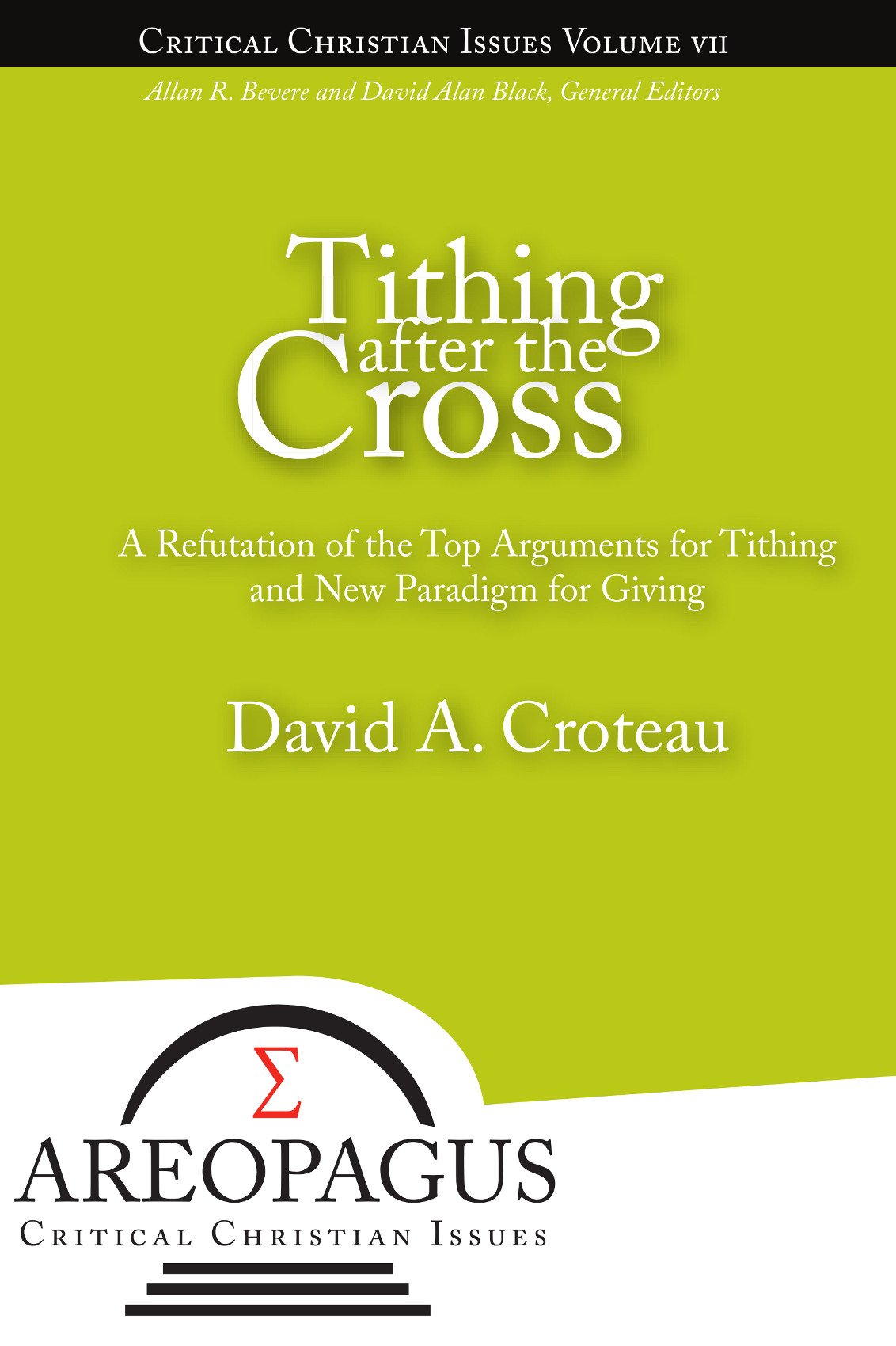
    Recently I had the opportunity to publish a small book on tithing, titled Tithing after the Cross by David A. Croteau. He says boldly what I failed to say, and backs it up with a large amount of additional research. While he has written larger works, in this book he distils it into a short volume that anyone can read. Don’t worry! He didn’t “dumb it down.” He made a concise version.

    This afternoon he’ll be on the Janet Mefferd show with an interview on the topic. Show time is 4:00 PM eastern time. I invite you to listen and then check out his book, Tithing after the Cross, on Energion Direct.

  • From My Editing Work: Personal Salvation vs the Social Gospel

    From Seven Marks of a New Testament Church by David Alan Black, p. 6:

    In the fourth place, evangelism in the New Testament was always characterized by genuine concern for the social needs of the lost. When I was in seminary, a good deal of distrust existed between those who emphasized personal salvation in evangelism and those who emphasized the so-called social gospel. The two, however, are indivisible.

    (forthcoming … at the printer)

  • The Problem with Church Debates

    It hit me on Sunday as I was listening to a fine sermon for Pentecost at my home church, First United Methodist Church of Pensacola. Rev. Bob Sweet was enumerating a number of things the Holy Spirit might do for us, changes we should all make. A number of his points elicited laughter, because we all felt a bit guilty. Then he hit “stop gossiping.” This time the laughter was loud and noticeably nervous. You know why? Because everyone knew we weren’t going to stop gossiping.

    And then it hit me. The real problem with our church debates is that most of us know we’re debating the meaning of divine commands which we have no real intention of obeying anyhow. I’m not talking about things we disagree with, so we don’t do. I’m talking about things we all agree we ought to do, but never get around to doing.

    Those are the things I need to look at in my own life. What about you?

  • To a Generation yet to Be Born

    To a Generation yet to Be Born

    image

    This is my mother, who will be 96 at the end of May. She’s looking over a book titled Seeing the Psalter. She spent a good hour with it, commenting on methodology and various translations.

    How can she do this? Well, after years as a missionary nurse, she decided to take Hebrew and completed two years. She then taught herself Greek, with a little (remarkably little) help from me.

    She and my dad both passed on their love of Scripture to me. That’s Psalm 78:1-7 in action.

    When she was done looking over the book she took out some sheet music, went to the electronic keyboard and said, “Let’s have worship!” She led our small group of family and we shared God’s wonderful deeds (see Psalm 78 again).

    That’s how you share faith from one generation to the next.

  • The Biggest Divide in Christianity

    … according to me, of course!

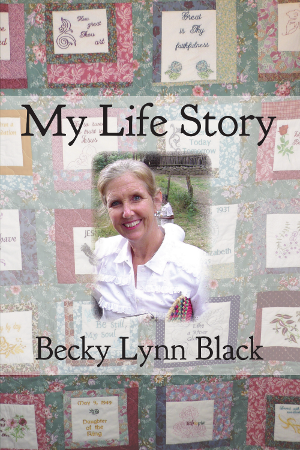
    I’m sitting here doing page layout on My Life Story by Becky Lynn Black. As I was doing that, I read small portions. I don’t read much while I’m doing page layout. What the text says is less important than how it will look, so my brain is in a different mode. I was both appreciating portions of the book that I did read, and asking myself a question: If you didn’t know Dave Black, and just received this manuscript cold, would you have published it? I’ll answer that later.

    In glancing at a page in layout, I saw this:

    … what I found in these Bible majors were men who were as spiritually shallow,
    vain, and frivolous as the rest of civilization!

    She’s talking about the men9781631990007m at a Bible college, a place she hoped to find a husband. (We’re too early in the layout for me to tell you what page that quote will be on.)

    Over the course of the day, I’ve worked on publicity for a philosophy text, I’ve worked on the cover for a book on preparing sermons, and I’ve followed up on items on several other titles under preparation. If my schedule holds, later today I’ll be reading a manuscript on process theology, and laying out a study guide to a book about the Lord’s prayer. The authors of this material vary a great deal in their theological perspectives. Some would consider these differences to be among the essentials of the faith. What is it that attracts me to these manuscripts? I work for myself. (Well, I think God might well challenge me on that, but though I try, I don’t want to claim divine inspiration for my actions.) I don’t have to publish anything I don’t want to.

    Here’s the answer:

    • Passion
    • Commitment
    • They mean it
    • They’re not willing to stay in the shallow end of the spiritual pool
    • Passion

    Oh, I put that one twice.

    I think that if we are truly committed to Jesus Christ and passionate about following him and serving him, he will find a way to teach us.

    What will never work is apathy.

    That’s the biggest divide. Those who really care and those who don’t.

    I want to publish the people who really care. I want to find the readers who really care. I want to help them care more. I want to help myself to care more and be more effective. It’s never enough!

    To answer the question I asked myself, I have no doubt that the answer is yes. I think this is a manuscript that too many editors would look at and say, “Who was Becky Lynn Black?” In the pages of the manuscript I would have found the answer, had I not already known. You can find it too.

    Of course, as a publisher, I want you to buy the book. Take that as given. But what I really hope you’ll do is share your testimony. Tell people what God has done in your life. Place that task above all the theological debates. I don’t mean that you need to compromise your principles. People who are truly committed don’t do that. But make your primary story be about Jesus Christ in your life. I think you’ll find that story does more than anything else.

  • Quote: Theology Moving from the Classroom

    This is another quote from my editing work:

    James is a theologian, but his theology moves from the classroom and the study to the street corner and the soup kitchen.  James is a “practical theologian,” whose beliefs motivate his actions and whose actions transform his beliefs.  Theological reflection and worship find their fulfillment in faithful action. — Bruce Epperly, Holistic Spirituality: Life Transforming Wisdom from the Letter of James (forthcoming)

    I’ll probably be posting more of these than I have in the past, as I really enjoy the work of editing and often find nuggets to share!

  • How to Die – How to Live

    I learned from my wife, a 12 year veteran as a hospice nurse, that it’s important to think and talk about end of life care and dying. We tend to avoid it, especially when we’re younger. First, it’s because death seems so far away. Surely we have 50, 60, or 70 years, at least, to go! Then we avoid it because it seems that talking about it makes it come nearer. Fear of death impacts our lives in so many ways.

    Over the last couple of weeks, several families close to us have experienced the death of a loved one. Yesterday, Jody’s uncle and godfather passed away. When so many deaths in your immediate circle of friends and family come so close together, it tends to make you think.

    I suspect that’s why Jody reposted something I wrote for her devotional list back in 2010 this morning, titled Life and Death. I might retitle it, as I have here, How to Die – How to Live. The “How-To’s” are amazingly similar, I believe.


  • Soup Kitchen for the Soul or How I Learn from Authors

    9781893729797I am frequently amazed by our authors at Energion Publications. I suppose that other editors and owners are likewise amazed, but I think we have a very special group. Just the other day I received notice from an author that he had signed his contract, but that he wanted to donate his royalties to our literature fund, a fund we use to send books overseas or to people who can’t afford them. I hadn’t asked. In fact, I don’t ask for funds to support that project. We’re not a non-profit. It’s just one of the ways we try to give back.

    The thing that impresses me most about our authors, however, is the way they live what they believe. I don’t know of any of our authors who doesn’t in some way embody the books they have written. When I hear what they are actually doing, it’s what I would expect based on what they wrote in their books. And that’s a great thing.

    Way back when … well, actually in 2010 … we were contacted by a potential new author who had a story to tell. I like books that tell a story, particularly when that story is a testimony. This was Renee Crosby and her life and vision had been changed by a seminary assignment. She had been asked to serve a certain number of hours in the community as part of an assignment. She spent that time in a soup kitchen. Now as the book will tell you, Renee had become extremely busy in church. She was an active Christian. But that activity was generally in church. When she reluctantly went out to complete her assignment, she encountered Jesus in a new way, right there in the soup kitchen.

    So she wrote her book Soup Kitchen for the Soul to invite other people to this same discovery. I was hooked immediately. I have frequently visited churches that are busy, filled with active members. But if you review their church bulletin or newsletter, the vast majority of what they do is designed to serve the members. It’s people in the church doing things for people in the church. Now there’s nothing wrong with that. People in the church should be doing things for one another, caring for one another, building one another up. But we should also be “provoking one another to love and good deeds” (Hebrews 10:24), and those good deeds should serve those outside the church as well.

    This is a book with a great message. It deserves to be read much more than it has. It deserves to be studied.

    But Renee is now experiencing the next phase of her testimony. As she explains in the video below, she is in treatment for breast cancer. But she’s not taking it lying down. Instead, she’s trying even more to provoke others to love and good deeds.

    We’re also going to donate 5% of our proceeds in addition to what Renee donates as our way of supporting her in this endeavor. In addition, the book is now 30% off with the use of the pink30 coupon. To use that coupon, you need to enter the coupon code on your shopping cart on checkout from Energion Direct. If you need some more help with the coupon, you’ll find it here.