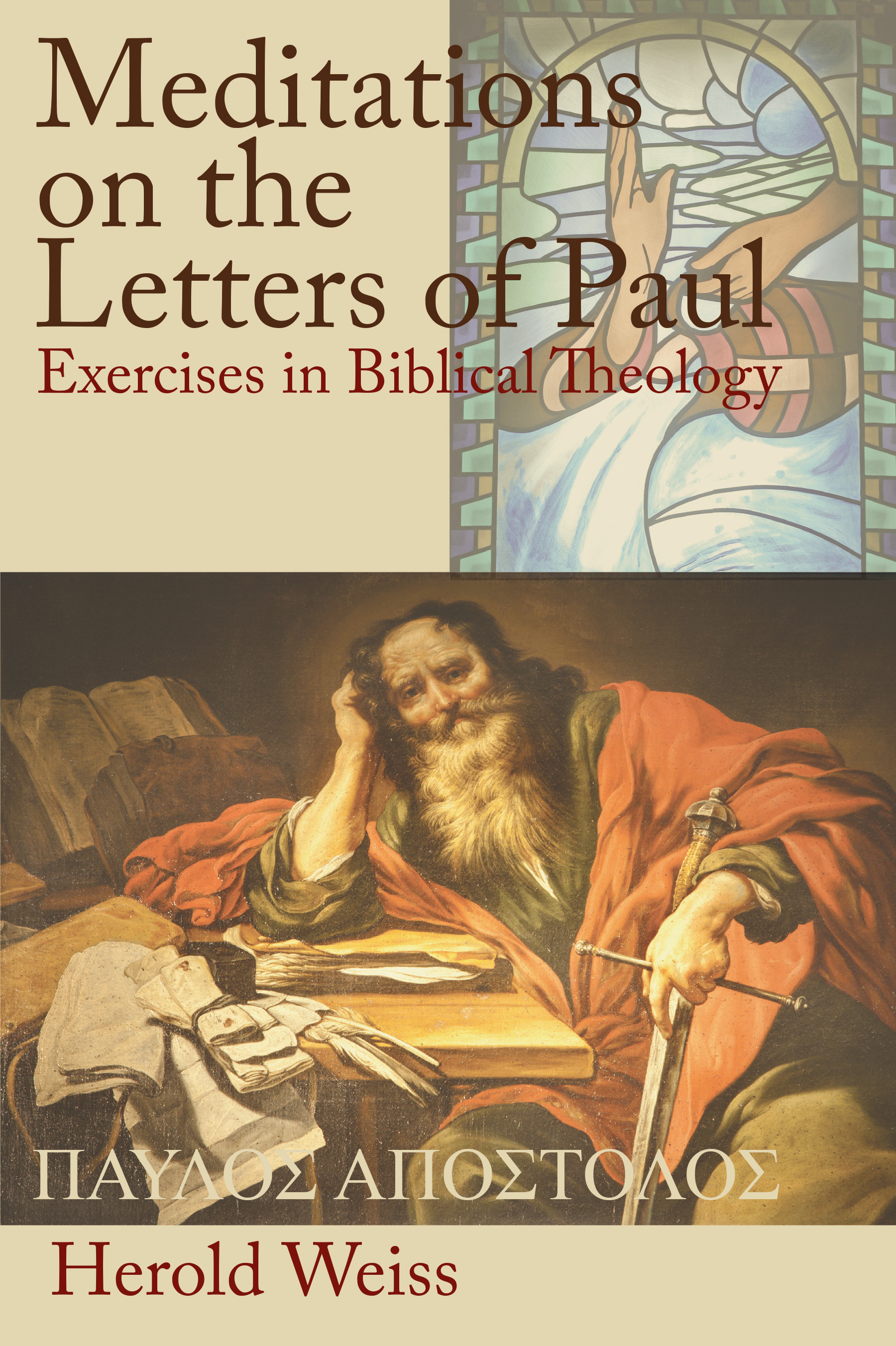
On Thursday night I’ll be interviewing Dr. Herold Weiss, author of Meditations on According to John and the forthcoming Meditations on the Letters of Paul, to be released this week. We’ll be talking about Paul’s eschatology and how critical it is to understanding Paul’s theology.
I’m fighting a cold and will not try to talk for an hour on the hangout on air. I’ll announce one for next week when we’ll continue the study of Daniel.
Also, Dr. Herold Weiss has agreed to join me again for an interview on Paul’s eschatology. We will shortly be releasing his new book Meditations on the Letters of Paul.
On the Energion Hangout tonight I’ll be hosting Dr. Bruce Epperly and Dr. Allan Bevere to discuss salvation in Christian theology and the terms I’ve listed. Doubtless many others will come up.
I’m sometimes disappointed with posts that don’t attract comments compared to those that do. I’m not talking about my site, where comments are few and far between. Right now I’m looking at a post on the Energion Discussion Network, titled Credible Christians for a Credible Gospel. It was written by Allan Bevere, and makes an important point.
The gospel is credible in and of itself, but it only gains credibility as it is demonstrated by individual saints and the church collectively in the good works that bear witness to God’s kingdom.
We talk about grace, and that’s good, but grace accomplishes something in us. Do our beliefs make a difference? Can people see that?
It seems that many people believe that in order to be firm in one’s convictions, one must be arrogant, loud, and generally rude. Rude and angry speech is praised as telling it like it is. Courtesy is often ridiculed with the incredibly overused term “political correctness.”
I object to political correctness when it is politically enforced, when the law mandates the use of one term over another. Let’s see, perhaps like Florida state employees being ordered not to use the term “climate change.” Not what you were thinking of? I believe it’s the same principle.
I believe in referring to people as courteously as possible, not because I am unsure of my beliefs, though I think uncertainty is certainly appropriate in many cases, but because I believe that is the best way to communicate what I believe. Shouting loudly may impress people who already agree with me, but it turns off those who are in opposition.
If you truly care about communicating your ideas and about persuading others, you need to learn to practice a firm sort of courtesy. This may involve using labels for others that they can accept. It may require you to drop cute one-liners that impress you.
One of my objections to speech codes is that by forcing people to be courteous (sort of) when they would not do so on their own initiative, it’s harder to identify those who can safely be ignored, i.e., all those folks who think their point is to be made by loud, obnoxious presentation.
Courtesy, friendship, and openness to dialogue are not enemies of the truth. Rather, they are essential to communicating it.
I’m continuing with the dream of Daniel 2 and hopefully connecting it to the golden image of Daniel 3. I’m grotesquely short of time, so will spend it both reading and doing what has to be done!