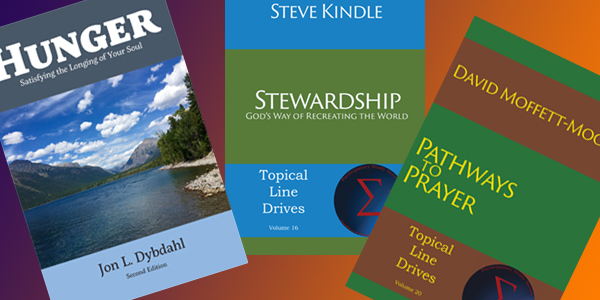
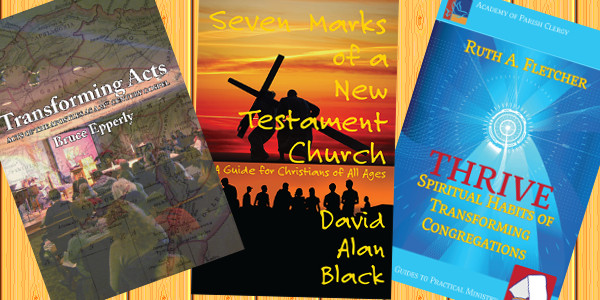
 It has been some time since I posted my last installment of my discussion of the book Seven Marks of a New Testament Church by David Alan Black, along with some commentary from the books Transforming Acts: Acts of the Apostles as a 21st Century Gospel, by Bruce Epperly and Thrive: Spiritual Habits of Transforming Congregations by Ruth Fletcher. My most recent installment was actually an excursus, Is There Such a Thing as a New Testament Church?. (You can find most entries in the series by searching for the words “seven marks.”)
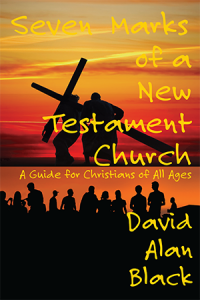 I find this topic as a whole, and this chapter in particular, are examples of a topic where we should read material from people outside our own tradition. We need to strip away some of the “stuff” that has gathered in our denominations and churches that keeps us from being Christ-centered. It’s easier to be building-centered, tradition-centered, or us-centered. All three of my authors suggest things that would take us away from those three centers and ask us to seek what is Christ-centered.
Dave Black cites “They devoted themselves to … the breaking of bread.” in the heading to this chapter and indicates he sees this as a reference to celebration of the Lord’s Supper (also called Communion or the Eucharist). I was interested in how many references I had to choose from in all three books. One of the key points Dave makes is this:
And how often was the Supper observed? If we compare Acts 20:7 (“On the first day of the week, when we came together to break bread….”) with Rev. 1:10 (“On the Lord’s Day….”), it seems that it was observed every Lord’s Day, that is, every Sunday. (p. 33)
Of course, the frequency is not the most important point. I would suggest that the most important point is that this is something instituted by Jesus which calls us to remember his incarnation and sacrifice for us. It centers the act of worship around the person of Jesus who is, or should be, the center of our faith and worship. Thus, “Christ-centered gatherings.” Now there is more than performing a certain ritual to a Christ-centered gathering. In fact, if your communion service is just an act of ritual, you may well have a problem in your church. Let me bring in Ruth Fletcher on this point:
Because individuals who participate in the worship life of transforming congregations will have an active daily prayer life, images and words they encounter in the corporate worship will connect them with experiences of the Spirit they have had during the week. A phrase in a song, in a reading, or in the proclamation may well remind them of a time in which they experienced a call upon their lives, a clarity of purpose, or an impetus to take compassionate action on behalf of someone else. Those moments of resonance will be what infuse the worship service with a sense of integrity and power.
Worship in transforming congregations will offer reminders of what the congregation is trying to become. (p. 134, emphasis mine)
I would note that Dr. Fletcher is part of a denomination that practices communion on a weekly basis at every worship service. The question here is the next step. Why is it that we want to have Christ-centered gatherings? I think it is because of the last line, which I have highlighted above. We come together to center ourselves on Christ, and thus to prepare to be the body of Christ in the world when we leave in whatever way the opportunity presents itself.
This is critical: If your worship service is not leading you to service, to acting as the hands and feet of Jesus, to being a witness, and to proclaiming the good news, it can hardly be Christ-centered. Certainly we focus on Jesus, but if we do so simply to get a dose of “specialness” for ourselves, to satisfy our own emotional, spiritual, and social needs we will fall short. By this I don’t mean that our spiritual needs are unimportant. They are, in fact, critically important. But they will never be satisfied unless we carry what we experience in worship out to wherever it is we go during the week.
Now think of your last worship service. How much of the “worship service” led to actual service out in the world? I suspect that it cannot be real worship in the sanctuary of a church unless it leads to the presence of Christ, through you, outside. We tread the room in which we meet as a sanctuary. It even has some architectural similarities to a temple. But it is each one of us as a group, no, better, as a community, who is filled with the Holy Spirit and called the temple of the Holy Spirit.
I would say that communion then is:
- Christ-commanded
- Christ-centered
- Christ-commissioned
And we are the body of Christ, commissioned to be his body in the world. What better way can we have to remind us of this than to participate in communion?
I would like to suggest further that communion, and likely church fellowship in New Testament times was not a large amount of liturgy with a moment when a small piece of bread is provided and dipped into wine or juice, for that one moment of “communion.” Rather, when the saints gathered, they shared a meal. Many of our churches are too large to share a meal on this basis, and that in itself may be a problem. Large churches, of course, can have small groups that gather and have this type of communion. If we are to spur one another on to good works (see Hebrews 10:24), we need to see one another, hear one another, and know one another. In such a circle we can draw our community together and prepare to extend our circle.
 Bruce Epperly notes:
The story of Philip and the Ethiopian eunuch reminds me of the origins of the American denomination, the Christian Church (Disciples of Christ). From the very beginning, Disciples of Christ have practiced open communion and have been a model for the ecumenical movement’s communion hospitality. In the early nineteenth century, Thomas Campbell, a newcomer to the United States from Ireland, was appalled by sectarianism among religious groups in the new nation. Even Presbyterians from different sects would not take communion with one another. Inspired by his vision of the New Testament church, Campbell welcomed everyone to the Communion Table. “Don’t fence the table,” he proclaimed. “Anyone who seeks to follow Jesus as the Christ is welcome, regardless of denominational background.” As early Disciples of Christ proclaimed: “We have no creed but Christ.” Our unity in Christ and our allegiance to Christ compels us to expand the circle of his love to include everyone. (p. 78)
I think that there should be nothing that does not lead us forward into a new sense of mission. But what happens in our churches? Do we feel a welcome such that we are nearly compelled to share this with others? Some may object that the call is not to the church, but if the church (building) is where the church (the body of Christ) meets, then should it not be inviting people to it as Jesus did? When Jesus Christ was here in the body, people flocked to him. He didn’t have to hunt for them because there was something there that they wanted.
We need that attractiveness and welcome in the church. Not the excitement of new glitzy programs, entertainment, and excitement, but the welcome that says that here is a place where the longing of my soul can be satisfied. Here there is not just a building but a community of people whose unity and love for one another is so special that I want to be a part of it, and that they welcome me to be a part of them.
I’ve met people who want to be prophets. Some have asked me to pray that God would call them as such. I always ask them if they are aware of the kind of life led by prophets in scripture. Is this what you really want? Similarly we need to ask ourselves about being the body of Christ. If our gatherings are Christ-centered, they will not be “me-centered.” If we are to be the body of Christ we must remember what happened to the body of Jesus, the Christ. Then, as we look to close our doors to those in need, even to our enemies, to those who hate and would kill us, we need to remember who it was that He gave his life for.
Christ-centered? We need it. We claim to want it. Do we want it enough?




 I ran across this while looking for something else. Dr. Alden Thompson was the author of the first book sold by Energion Publications, though it was published before I bought and renamed the company. We’ve now published a 5th edition, and this is overall our best selling book.