To Mary Willis Shelburne (3/21/1955): “We were talking about Cats & Dogs the other day & decided that both have consciences but the dog, being an honest, humble person, always has a bad one, but the Cat is a Pharisee and always has a good one. When he sits and stares you out of countenance he is thanking God that he is not as these dogs, or these humans, or even as these other Cats!” (3:587).
A few months ago a friend, commenting on my approach to publishing, and really to many other things, said, “It’s hard to be both a prophet and a facilitator.” Now he wasn’t talking about the way a prophet might get his or her words from God, but rather that prophets advocate ideas. Facilitators encourage others to do so and to enter into dialogue.
He’s absolutely right, and this is demonstrated by my post today on the Energion Discussion Network, Toward a Biblical Church. In it you might say I’m advocating for diversity, or perhaps trying to facilitate discussion of our diverse views of church that we have in the Church. I think Paul does a rather good job of this in 1 Corinthians 12. We often read just the sections that talk about us being one. But Paul is talking about how we can be one body while coming from diverse places and backgrounds, and he doesn’t say all those differences are eliminated, but rather that they cease to be central when we’re in this one body.
We would do well to study 1 Corinthians, and particular chapters 12-14, regularly in the church. Paul is looking at precisely the sorts of problems we have in many of four churches today, and his prescription in chapter 13, applied in chapter 14, is also still quite applicable. I do note that we can only wish that we had some of the Corinthian problems, such as too many people coming to church filled with excitement and a desire to express what they’ve heard from the Lord. But we do have ample portions of the problems of factionalism and self-centeredness.
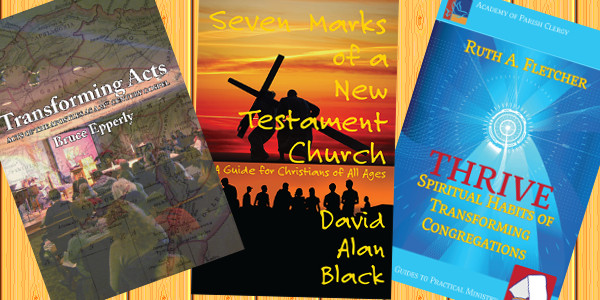
Is there a way to advocate changes in our church organizations, whether at the denominational or congregational level, without also implying that everyone else better do it the same way? That’s what I’d like to do. If you’ve read any of the books I linked in my EDN post, or some of my posts on Seven Marks of a New Testament Church, you’ll know where I got these.
I’d like to see a church where Jesus is acknowledged as the senior pastor. I’m not as concerned about what we write on signs or church bulletins, though I’d be pleased to see Jesus listed there. My problem is that I think we might list Jesus on the sign and then keep on living just the way we did before. “What would Jesus do?” has become a slogan, often used just to claim that Jesus would support what we wanted to do in any case, but it’s also a very good question—if we let Jesus answer it.
I’d like to see a reduction of church facilities. In fact, I like the idea of house churches, and one of the major reasons is that we cease to spend so much money on the physical structure. Some churches rent space temporarily, and for them it’s a stepping stone for the time when they can have a real church in a real church building. Perhaps living without a building should become a way of life.
I like a church with accountability outside of itself. This is why I’m not really a congregationalist. But I could be. It’s quite possible for a church to make itself accountable to others, and to live in an accountable way by being open and honest, especially in finances.
I’d like to see a church that empowers youth. “Empower” is often seen as a buzz word, but it’s a good one if it’s actually put into practice. The church can be a safe place for those who are young or inexperienced to learn. This would involve sharing in all aspects of church life, with appropriate levels of support and supervision. That young person in your church who feels called to a preaching or teaching ministry should have the opportunity to practice.
I’d like to see a church where many people share. Many churches center around the pastor and his or her preaching. That’s what brings people in. How about testimonies, short messages from various congregants, presentations by experienced people other than the pastor, and hearing from those who are learning to share? In a seminar on faith sharing I sponsored, I recall that only a small portion of the people who came to the class felt comfortable talking about their faith. Where better to get comfortable than in church?
I’d like to see a church where members could safely explore ideas. Our focus is often on making sure we have good doctrinal statements. What I’ve found, however, is that few people actually know what those statements say. I honestly don’t think that this problem will be corrected by more talking from the front about the doctrinal statement. People’s minds and will must be involved, and that means allowing exploration.
None of these things require a particular variety of church organization, though in many cases, existing church and denominational structures will work against them. I’d like to emphasize that even though I have a hankering after house churches, I am a member of a regular United Methodist congregation. I’m not trying to beat up on people in regular churches.
It’s the evening of Good Friday and I find myself a bit too tired to blog coherently or to come up with some uplifting words. I generally try not to write when I feel this way. No use spreading the weariness around.
But of course Good Friday was a day that made something like my weariness of the moment trivial and insignificant.
On the other hand, perhaps, as God participated through the incarnation in our human activities, it has all been elevated to a new importance. It’s a matter of perspective.
I did find some good reading today. Dave Black talks about looking for what’s real. In Good Friday and Easter God’s integrity and completeness in giving to us calls for such integrity also from us. I was reminded by Dave’s post of a question I was asked shortly after returning to the church. I’d been away for 12 years following graduate school and most people were inclined to think this was because I had found out something about the Bible I just couldn’t live with. So I was asked what was the most important apologetics tool one could have. I said, “A church that is truly following Jesus.” Not the intellectual key to certainty the questioner wanted, but I stick with the answer.
Then Steve Kindle, editor of our Energion Discussion Network, posted On Warming Ourselves by the Fire. You owe it to yourself to read that and then prayerfully think about what God’s call might be for your life.
I suspect a bit of weariness truly is a small matter.
I’ll be addressing some additional points about dating and prediction as well, while emphasizing the symbols and imagery and what the book would have sounded like to those who first read it.
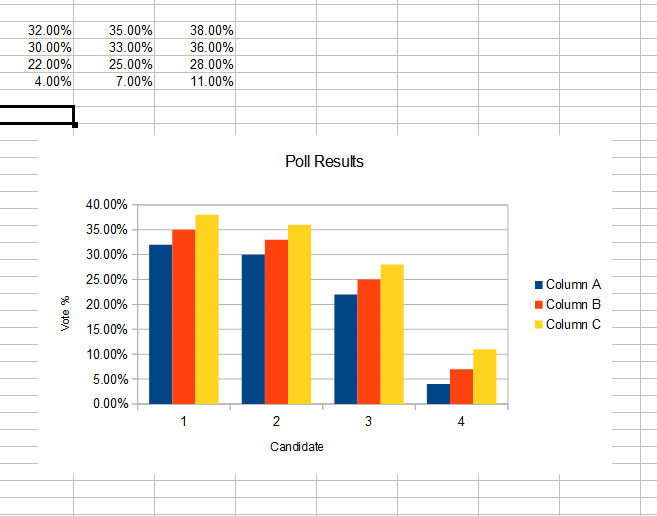
I suspect that most of the times numbers are used in the media, people are being misinformed in some way. Frequently it’s by ignoring the margin of error. I’m going to discuss this with others on this afternoon’s Global Christian Perspectives. I’m providing a couple of links:
Bottom line, however, is that a poll is not the election, i.e., it shows what people think when it is taken, not at the time of the election. It doesn’t predict; prediction is the result of analyzing the data.
On Thursday night I’ll be interviewing Dr. Herold Weiss, author of Meditations on According to John and the forthcoming Meditations on the Letters of Paul, to be released this week. We’ll be talking about Paul’s eschatology and how critical it is to understanding Paul’s theology.
I’m fighting a cold and will not try to talk for an hour on the hangout on air. I’ll announce one for next week when we’ll continue the study of Daniel.
Also, Dr. Herold Weiss has agreed to join me again for an interview on Paul’s eschatology. We will shortly be releasing his new book Meditations on the Letters of Paul.
On the Energion Hangout tonight I’ll be hosting Dr. Bruce Epperly and Dr. Allan Bevere to discuss salvation in Christian theology and the terms I’ve listed. Doubtless many others will come up.