Threads from Henry's Web

Category: Bible Passages

  • After Teaching on the Sermon on the Mount

    After Teaching on the Sermon on the Mount

    My Sunday School class just finished a several-week study on the Sermon on the Mount. We did not use any study guides as a class, though I consulted three books I publish, One World: The Lord’s Prayer from a Process Perspective, The Jesus Manifesto: A Participatory Study Guide to the Sermon on the Mount, and Ultimate Allegiance: The Subversive Nature of the Lord’s Prayer. Some class members did make use of those references, and I also provided links to and some printed copies of John Wesley’s sermons on this topic. Class members also used a variety of Bible translations and other reference works.

    At the end of the class, one of the members commented that he was very glad to have studied the entire sermon, because he could see how it fit together and how the various parts built on others. He commented that we often read the Beatitudes and the Lord’s Prayer, while not continuing to cover the rest of the three chapters.

    Over the years I have read and studied this sermon many times, and I never fail to find something new with each adventure in it. There are three (well, maybe four) general approaches to it.

    First, let me dismiss my “maybe four.” I had one young man come to my house to try to get me saved. That I already professed Christianity was not important to him. I needed to understand it the way he did. One of the things he wanted me to understand was salvation by faith, which in his view eliminated anything having to do with works. He specifically told me that the Sermon on the Mount does not apply to Christians. I found it interesting that the longest collection of the teachings of Jesus we have was regarded as not applicable.

    Dismissing dismissal, I have found three general approaches, with the first two covering most and the third as a sort of supplement based on sermons I’ve heard.

    1. The sermon is a description of righteousness, designed to let us know we can’t attain it, and drive us to the cross.
    2. The sermon contains the central ethical teachings of Jesus which we are expected to follow.
    3. The sermon is descriptive of ways in which our behavior impacts others and our own social environment, and provides a guide to more effective functioning of society.

    I’ve intentionally made these as distinctive as possible. One of the things that struck me as I studied this time was that the sermon truly can function in all three ways. You might expect a Reformed theologian to embrace something like #1. Wesleyans might tend more toward #2. I’ve only heard a few people who go purely one way or another, though they often sound like they do! The third option is more often exhibited in preaching broadly based on the sermon when the speaker is trying to make applications in the social gospel.

    It struck me this time through that all three elements are present. There are repeated indications that the expectations expressed are well beyond our ordinary capabilities. Loving your enemies is well beyond most of us, though I’ve heard people cut the command down to size to make it possible. Consider, however, that Jesus’ own demonstration of this command involved requesting that the Father forgive those who were in the process of crucifying him.

    In the class we all commented on how potentially frightening it was to sincerely pray, “Forgive us our trespasses as we forgive those who trespass against us.” Do you really want to be forgiven as you forgive? Perhaps you are a paragon on virtue in the matter of forgiveness, but I suspect not many of us are.

    Then there is the simple matter of most of chapter five, which sees all these things as expressions of what’s in the heart. I shocked some in the class by explaining that I had been a murderer during the prior week. I had been on the phone with a customer “service” rep who whose ignorance was exceeded only by his arrogance. (Can you perceive me despising him even now?) I told them that if I’d been physically with him, I’d likely have strangled him. Jesus isn’t giving me points for not being able to carry this out.

    Thus I think that the Sermon on the Mount very much calls us to realize that we are quite imperfect, and also directs us to an unattainable standard. That’s where grace comes in, and grace is reflected in some of those very passages on forgiveness. God is more forgiving than we are.

    At the same time, there is a great deal of value in the second way of looking at this. However unattainable the standard is, it is a good one. That is, it tells us about things that are good to do. The problem with perfection is that you fail to attain it, and end up apathetic. I can’t do what I’m supposed to, so why do anything? Perfectionism has created a large number of failures.

    The problem is that each time you lower the standard, you end up aiming lower. If you’re headed north following the north star you know you’re unlikely to get to that north star, or even the north pole. But if you decide that unattainability makes it unimportant, you’re likely to get nowhere. That’s where keeping a high standard and incredible grace together does well.

    I can’t resist quoting one of my favorite scriptures: “Work out your own salvation with fear and trembling, for it is God who works in you both to will and to do his good pleasure” (Philippians 2:12-13). We often hear that preached by halves. I can’t count the number of times I’ve heard “work out your own salvation with fear and trembling” from someone who was only vaguely aware of the next verse, if at all. Similarly, we can say, “It’s God, so don’t bother to do anything.” Neither of these is effective.

    And that leads to the third point. I wouldn’t use the third option alone, but in many cases this sermon shows us how society works. “Forgive and you will be forgiven,” speaks of God’s forgiveness, but also points to a way of life. The one who is unforgiving builds an atmosphere of unforgiveness. “Judge not, lest you be judged,” is also a very good principle in society. The verse, Matthew 7:1, is one of the more abused passages in scripture with some destroying it by overapplication and others essentially dismissing it by referencing exceptions.

    Jesus himself provides some clarification in Matthew 7:15-20. Thus we wind up with those who avoid 7:1 by calling every judgment “fruit inspection” and those who eliminate fruit inspection by calling it all judgment. Both passages are right there and both apply. There’s some wisdom needed, and doubtless we will not attain perfection!

    I enjoyed reading these passages and looking for the variety of applications. I’m grateful for grace in all circumstances. I’m grateful for a standard, which tells me that God’s glorious purpose is greater than I can imagine. Finally, I’m grateful for wisdom in looking at how we can better live with one another.

    It’s an error to treat everything as an answer to the question of whether one is going to heaven. Some things are about a better life here as well.

  • The Wrath of the Lamb

    The Wrath of the Lamb

    Sometimes the process of preparing to teach Sunday School takes interesting turns, at least for me.

    I’m currently teaching from the Sermon on the Mount, and I was thinking about the transition from the beatitudes to the discussion of fulfilling the law. Sometimes we get so used to the way Scripture passages read that we don’t really notice the impact they would have had. “Blessed are those who hunger and thirst after righteousness …” transitions to “unless your righteousness exceeds the righteousness of the scribes and Pharisees.” We’re used to thinking of Pharisees as bad guys, and we can immediately translate that statement mentally into something less than it would have been to those who first heard it.

    It’s easy to suggest that the Sermon on the Mount does not represent some singular sermon, and that perhaps the beatitudes and the teaching on the law contained in Chapter 5 weren’t really run together that way when Jesus taught them. Indeed, the different settings for portions of the sermon in Luke might suggest that we have compilations of sayings rather than complete sermons.

    But, and it’s an important ‘but’, someone thought these two things went together. I love form, source, and redaction criticism and believe they provide important insights, allowing us to learn from the prehistory of the text in front of us, but in a case like this, they just kick the ball down the field a bit. We still should ask just why the passages go together.

    Let me skip my own answer, which I already had in mind, and go with the experience of thinking about the passage. I like to read what I’m going to teach very early, usually the Sunday afternoon after the previous lesson, and then think about it through the week.

    In this case, I had just gotten a new audio Bible (NRSV) for Audible (unfortunately it is no longer available). I wasn’t actually intending to think about the passage, and I just let the audiobook continue from where I had last left it, which happened to be in Revelation 6. I got to 6:16, and heard the words “the wrath of the lamb.” Or “hide us … from the wrath of the lamb.”

    Now here’s another phrase that doesn’t always have full impact. It takes on that “scriptury” sense in which we imbue it with holiness and piously let the jarring nature of the statement slip by.

    So picture a cute, wooly, harmless lamb. Now picture crowds of people calling for mountains or large rocks to fall on them — splat! — to save them from the wrath of, well, that fluffy bundle of cuteness. For Monty Python fans, let me note that it calls to my mind vorpal bunnies.

    So we go back a bit in Scripture to Revelation 5:5-6:

    (5) One of the elders said to me: ‘Do not weep; the Lion from the tribe of Judah, the shoot growing from David’s stock, has won the right to open the scroll and its seven seals.’ (6) Then I saw a Lamb with the marks of sacrifice on him …

    Revelation 5:5-6a

    I could spend all kinds of time on this, but I’m just looking at one thing: The Lion is the Lamb. Of course, if you read the texts I first reference in context, you’d also note that the fear of the wrath of the lamb was combined with fear of the one sitting on the throne.

    In this case, we have a direct literary relationship. In chapter 6, John is doubtlessly connecting referencing this lamb, who is also not just a, but the Lion. Slightly more intimidating than the wooly lamb I evoked earlier.

    So this turned my mind to something I get from orthodox theology, in this case the incarnation. Jesus is presented as totally human and totally divine. Compare Hebrews 2:17-18 to Hebrews 7:26-28 display a combination of incompatible features. One plus one equals one. Not normal logic.

    I like to distinguish belief in three ways. There is believing that. One can believe that something is true without absorbing it or responding to it. I believe that an aircraft is airworthy and safe, but I stay on the ground. Then there is believing in. In this case belief leads to a trust in the thing in which we believe. I believe that the aircraft is airworthy and safe, so assuming the crew is good as well, I get on board and fly. Then there is believing through. That is when I use one belief to impact the way I understand and respond to other things. In the case of the aircraft analogy I now learn to put reasonable trust in things in which it is reasonable to have confidence.

    In Christian terms, I go from believing that Jesus rose from the dead, to putting my trust in “the pioneer and perfecter of our faith,” and from there to living a life defined by not just by the hope of the resurrection but of the character and power combined of one who gave himself to death and arose. There is some room here to live in hope. The hope comes from seeing other things in the light of my belief in the resurrection.

    Now back to the incarnation, and lions, and lambs.

    There are many things that thinking conditioned (transformed?) by the incarnation can be, many of them at the same time. One is that we lose the binary sense. To take us back to Revelation 5, we can see in one person the Lion and the Lamb. We can see gentleness and sacrifice on the one hand and wrath on the other, all in the form of a wooly lamb, one that someone already sacrificed. That’s seeing these things through our belief in an orthodox doctrine. I have heard folks argue forcefully for an orthodox statement of doctrine, but seeing it only as a thing that must be affirmed to be true, and not something that impacts the rest of our lives.

    I maintain rather that if you really believe in something like the incarnation, it will reshape your thinking all over the place. Constantly. Irrevocably.

    I recall hearing Deanna Thompson, author of the Deuteronomy volume in the Belief Commentary series. She is a feminist and a liberationist. She recalled wondering why she should be the one to write a commentary on Deuteronomy. But she said that as she wrote the commentary, she realized that “a God without wrath will never liberate anybody.” A God such as the one presented in Deuteronomy.

    The Lamb is the Lion. They are not incompatible.

    And then another thing came to mind. I recently watched the movie “Aristocats” again. It’s a favorite of mine. It includes a song with the line:

    Everybody! Everybody! Everybody wants to be a cat!

    Aristocats

    At this point I imagine you’re thinking I’m a bit odd in the things I connect. I also assure you that I like cats.

    But if you look around church, everybody wants to be a cat. That is, we want to get to the Lion part of the act, or the rider on the white horse. We long (as the readers of Revelation did) for the avenging God who does nice things for the good guys (surely this includes us!) and gets all the bad guys. If possible, we want to skip over all the lamblike stuff, and definitely that “slain” stuff.

    So I wind back toward my original topic again, as I know you’re wondering what all of this has to do with Matthew 5? And indeed, in listening to Revelation I had every intention of not working on my Sunday School lesson.

    But Matthew 5 challenges us in a similar way. Jesus is here both the lamb who has humbled himself and is living as one of us, the “gentle Jesus, meek and mild,” and also the one who says our righteousness must exceed that of the scribes and Pharisees (remember that the audience would see that as a high standard), that we must be perfect, and that even being angry or insulting a brother can lead to hell.

    The Lamb is the Lion. Love and wrath work together. It’s not either-or, but both and.

    Featured image by Catherine Stockinger from Pixabay

  • Link: On the Participles of Hebrews 6:4-6

    Link: On the Participles of Hebrews 6:4-6

    Via Dave Black, I found this post, which outlines the participles of this passage well. I have expressed my view on this passage previously, and it takes the participles into account and aligns with one of the positions suggested.

  • A God Without Wrath

    … a God without wrath does not plan to do much liberating. Indeed, that God’s anger is kindled when harm is done to the least among us not only gives us hope that earthly injustices don’t have the last word but also insight into God’s compassionate nature.

    Deanna Thompson, Deuteronomy (Belief: a Theological Cimmentary on the Bible), 31

    This is an excellent point. We need to think about what is necessary when evil asserts itself.

  • Review: Grace & Truth Study Bible

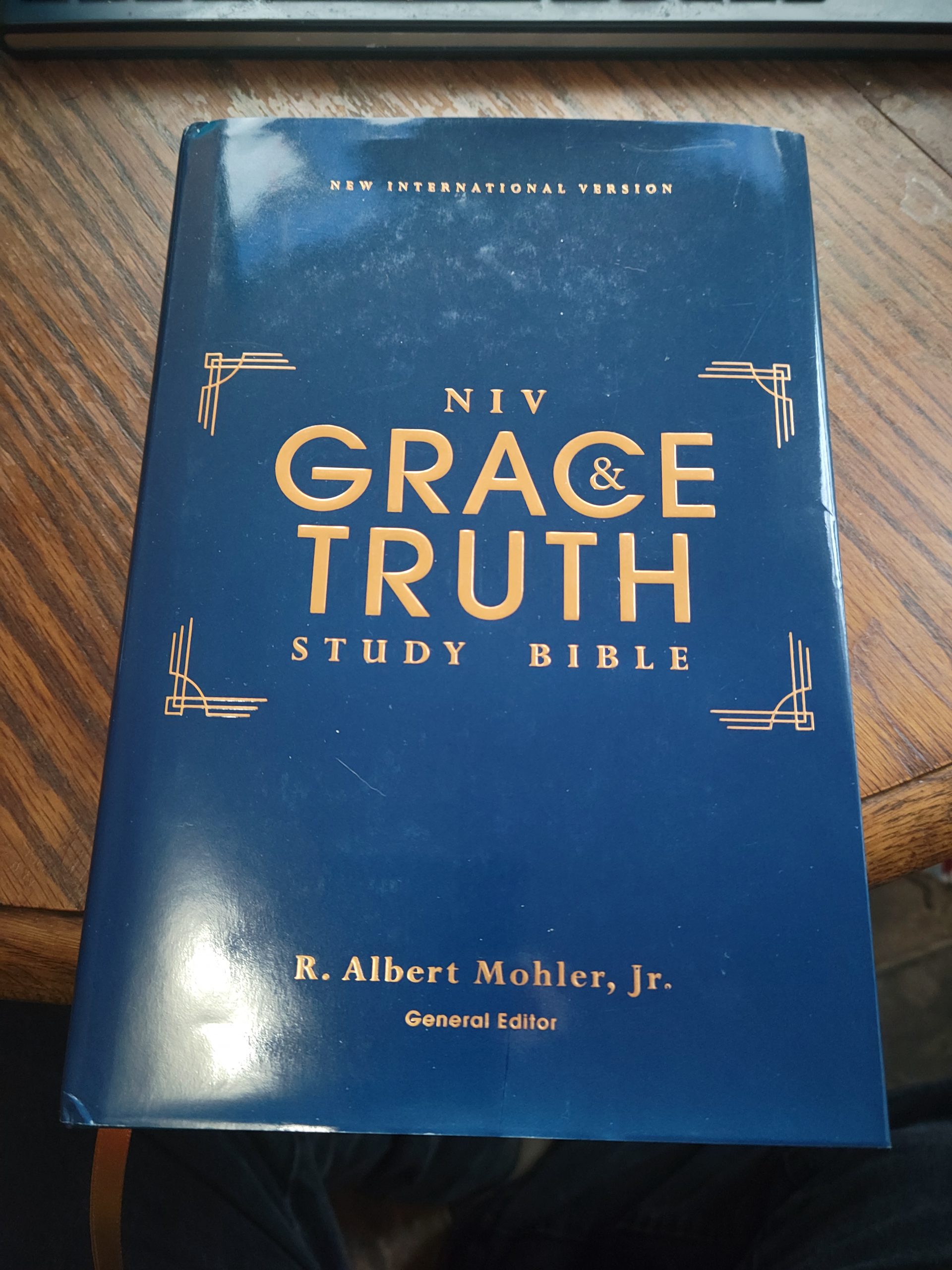
    Review: Grace & Truth Study Bible

    This review is of a Bible I received as a #BibleGatewayPartner.

    When I set out to review a Bible, I find it difficult to determine precisely what I should discuss. There is the translation it is based on, the nature and extent of the notes, the theological positions that drive those notes, and elements of the edition such as text size, arrangement, and paper quality.

    In approaching the Grace & Truth Study Bible, edited by R. Albert Mohler and published by Zondervan, the question became even more interesting when I added it to my Bible store, and found that my distributor has 17 editions/formats available, ranging in price from $39.99 (unjacketed hardcover) to $279.99 (Premium Goatskin, gilded edges). The edition I’m reviewing is priced at $49.99, and is a jacketed hardcover.

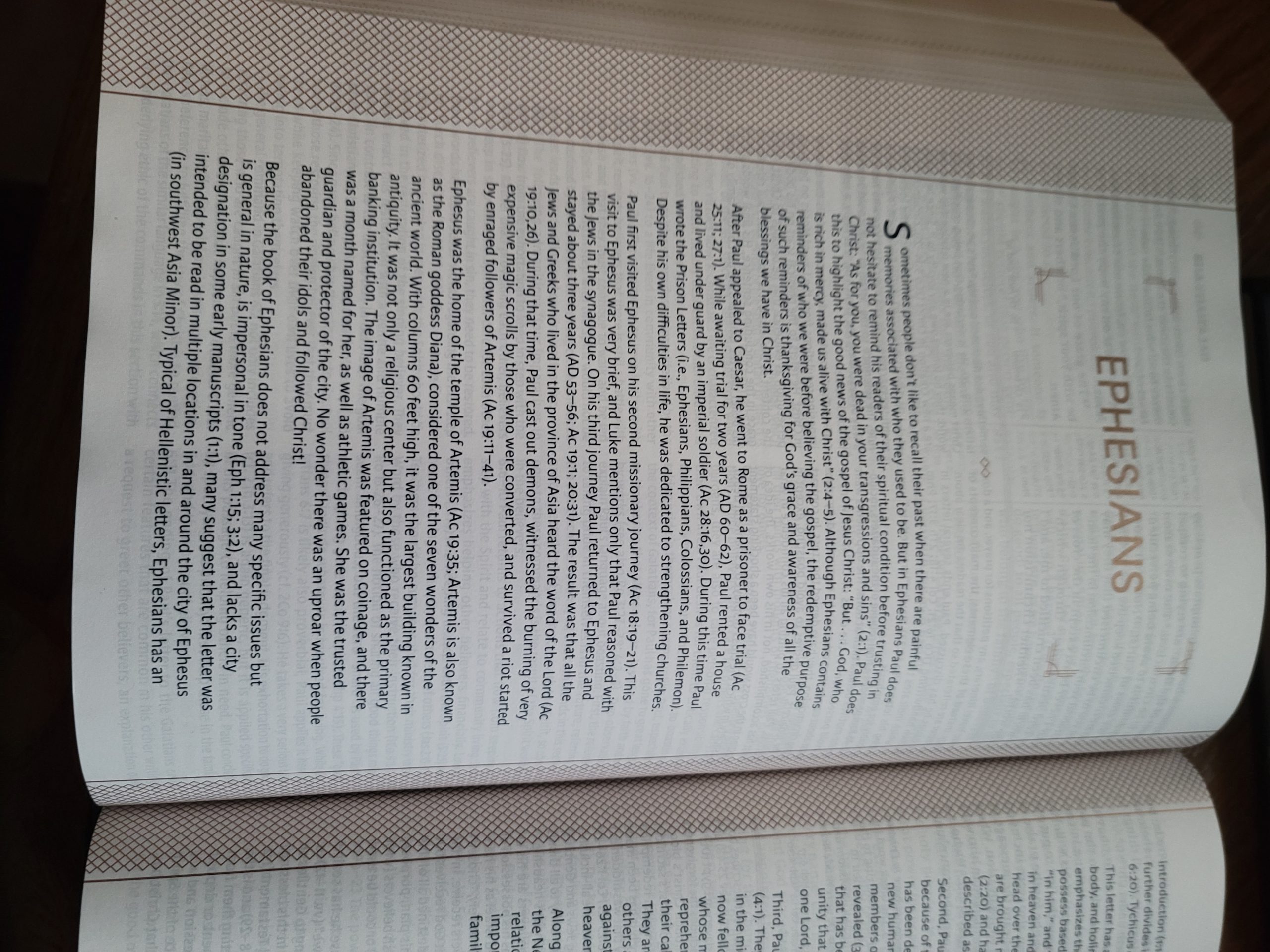
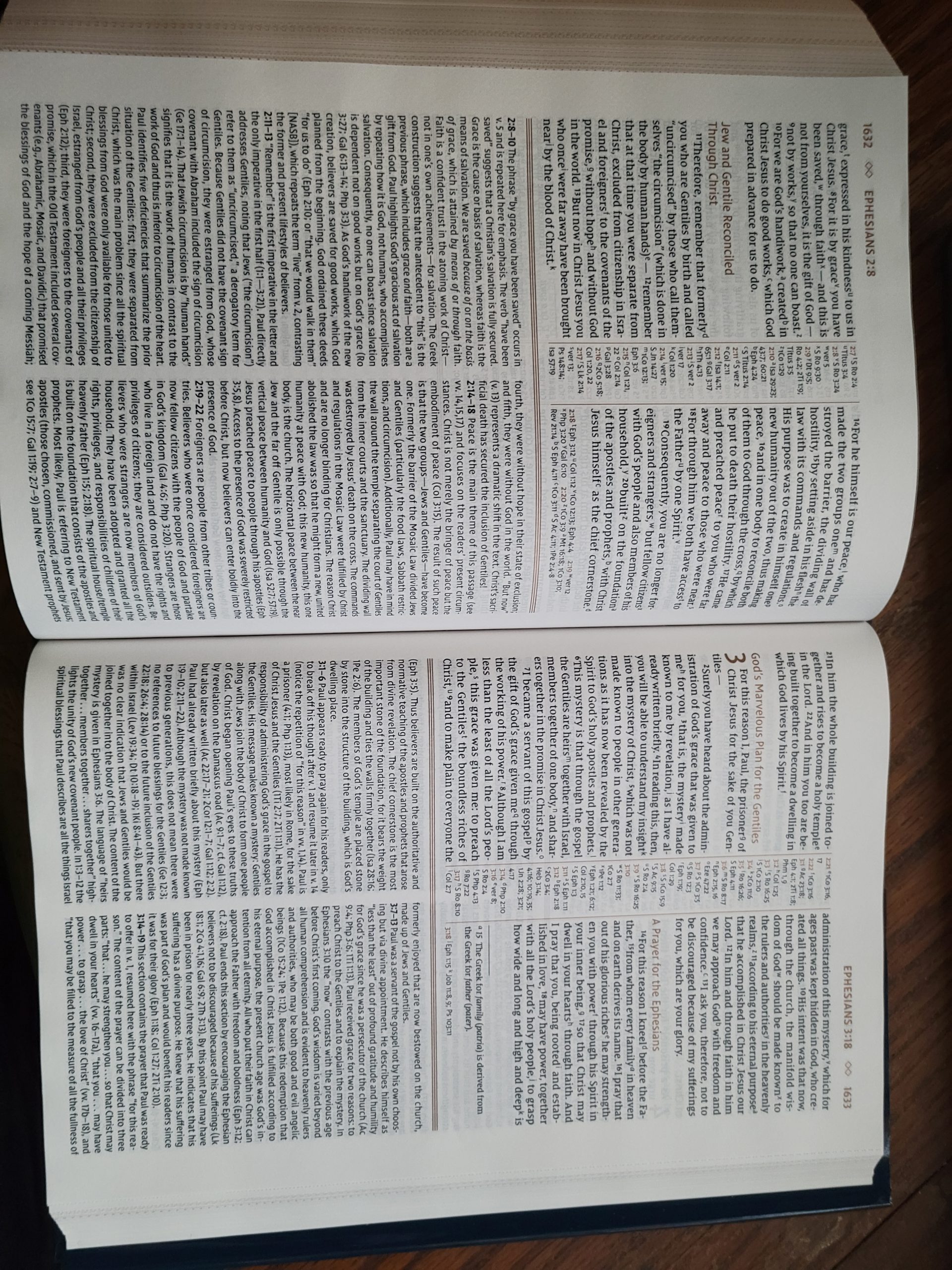
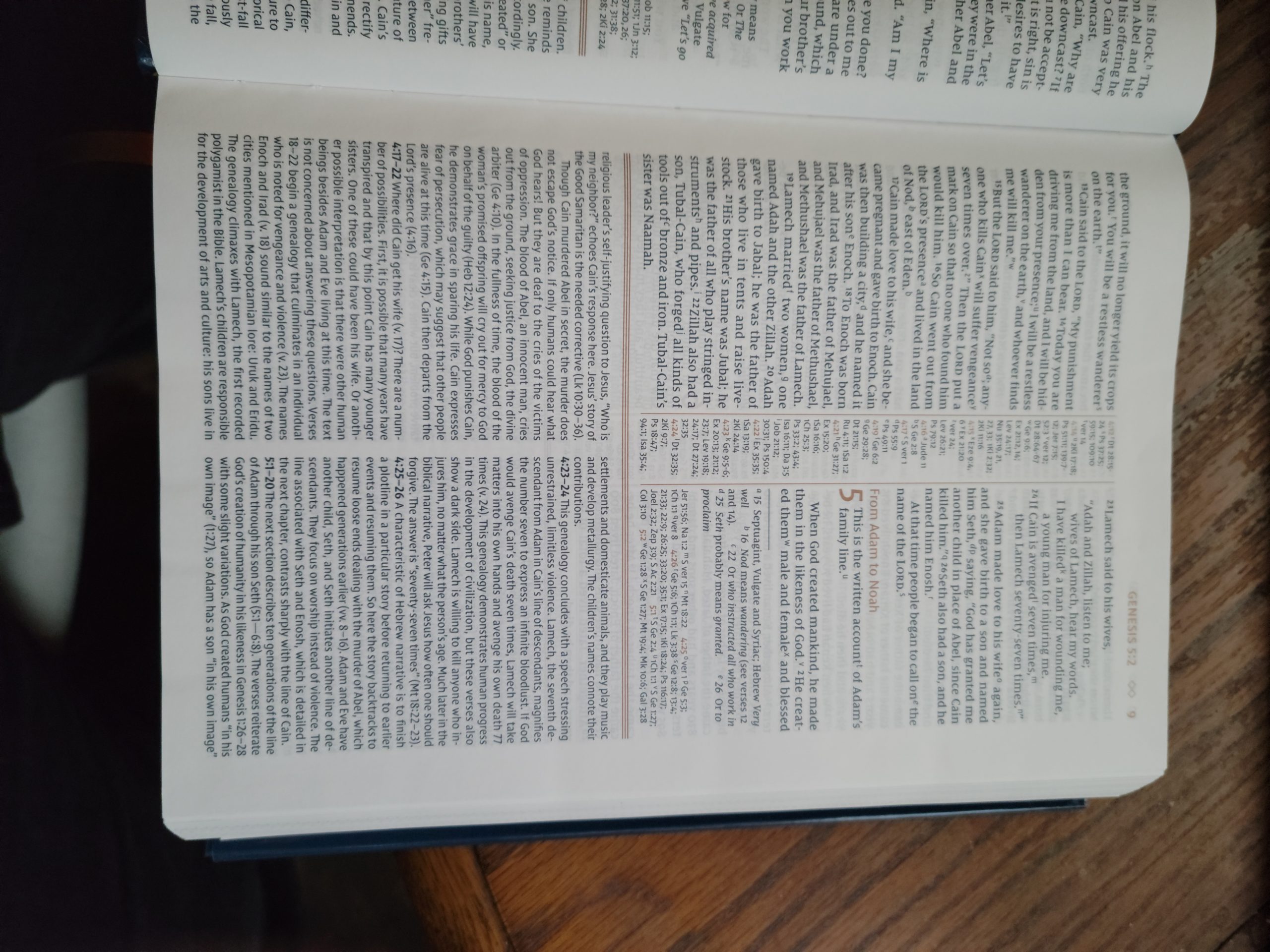
    I’ll begin with a few pictures.

    Edition / Format

    The production is of good quality, as you would expect from a Zondervan product. The layout is quite traditional for a study Bible. You have an introduction to each book, notes at the bottom of each page (allowing me to continue to remind classes to read from the upper part!), and cross-references in the center of the Bible text. In the back you’ll find a concordance and some fairly standard Bible maps.

    Other editions have some variations on this, such as different page sizes, binding, and paper.

    Overall, there is nothing to criticize about the layout, and in fact, I kind of like the straightforward approach. We don’t have numerous “features” added that really tend to detract from study. There is a text, and there is a commentary, one study Bible! I think few modern readers make great use of cross-references, but it is nice to have them.

    The big weakness of this particular edition is the 9 pt font. I found it hard to read extended portions of the text. I’m just five years short of three-score and ten, and thus my eyes may not be quite as good as those of some readers, but I read extensively and rapidly, and reading this Bible feels like work.

    It’s important to note, however, that several of the editions do have larger print than the one I’m reading, so one can look at the page and font size and choose a better compromise along those lines.

    Content

    The translation used is the New International Version. My general comment on this edition is simply that it is a compromise between woodenly literal and freely interpretive dynamic translation work. This means it suffers from the problems of both formal and dynamic equivalence, but it also shares in the benefits. There is no such thing as a perfect translation, and the NIV covers a great deal of ground. It is definitely evangelical in flavor and thus it is not surprising for it to be the basis of this study Bible, considering the general editor. You can find brief comments on the NIV at My Bible Version or in my book What’s in a Version?

    First, let me note that I do not intend to criticize this study Bible for differences in theology. Dr. Mohler is a Southern Baptist and I’m United Methodist. The header of this blog proclaims me a “passionate moderate, liberal charismatic,” and while each word of that description brings up issues when applied to my theology, it does not suggest that I’m a conservative evangelical. A book edited by a conservative evangelical is one I expect to be, well, conservative and evangelical. And this book is that.

    I strongly recommend that Bible students have on hand study Bibles that disagree with them as well as ones that are from their own theological tradition. I have gotten valuable insights by comparing the comments in various study Bibles.

    The commentary is not dedicated to railing against theological opponents. I would describe most comments as gently conservative, but often not putting controversial issues front and center. For example, in the introduction to Genesis there is a comment about treating this not as a scientific or historical account, but understanding it as theology and even as a work of art. I know of people all across the spectrum who would find the literary description of Genesis as quite acceptable. Conservative evangelical interpretations are espoused in the notes as one would expect.

    Another example is Romans 1, which is a frequent citation in arguments about homosexuality. The notes do, in fact, express a conservative view, but it correctly (in my view) see the primary point of the passage in idolatry, and it places idolatry at the foundation of human sin.

    Book introductions don’t spend a great deal of time on issues of dating and authorship and don’t enter into controversies on these issues, but do assume a relatively conservative chronology regarding the writing of the text. For example, you could read the introductions to each of the gospels and miss any issues of authorship and dependency between the various writers.

    The strength of the notes is that they are a nice blend of theological and devotional. Some study Bibles emphasize giving you technical and background details that you might not know. While you will get some of that from this Bible, the devotional value appears to be primary. I would say that this is a sort of theology that is readable by the average Sunday School class. It is not seminary material. It doesn’t give you a list of options for various issues, but basically preaches its way through.

    Overall

    Overall, I found nothing surprising here. The Bible was very much as I imagined it would be when I first looked over the descriptions involved. I personally wouldn’t recommend it as your sole study Bible. There is a strong possibility of absorbing relatively controversial conclusions without being alerted to the possibility of disagreement. That can be nice for morning devotions, but not as your sole opportunity to study.

    I do think it would be valuable as one study Bible out of a set that one uses to study. The other study Bible should be from different tradition streams, and also with a different emphasis. There are a number of evangelical study Bibles that do more analysis of the issues, for example. That may be less devotional, but if you want a balanced perspective, it’s good to know what other views exist.

    Note: I received this copy of the Grace & Truth Study Bible as a #BibleGatewayPartner, with the only requirement being an honest review.

  • Who Was Paul? – Interview with Timothy Dwyer

    Who Was Paul? – Interview with Timothy Dwyer

    For those eagerly waiting for me to continue my perspectives on Paul (and everyone else!), here’s my latest “Who Was Paul?” interview, this time with Dr. Timothy Dwyer, author of the book The Gospel in Colossians.

    The guy with the stupid smile is me. Dr. Dwyer looks much more sane!

  • And Yet Another Week

    And Yet Another Week

    I’m delaying the restart of my studies on Paul for another week. This week was not conducive to getting ready.

    I will be starting by applying the study of the law that I presented before thanksgiving to Galatians 2 & 3, particularly chapter 3. How should we understand law as we read these chapters.

    I will be making the presentation live on Facebook on the Henry and Jody Neufeld page and simultaneously streaming it to the Energion Publications Facebook page. I will continue to post the video and the PowerPoint to this blog.

    I apologize for twice delaying the restart.

  • Perspectives on Paul 11-18-20

    Perspectives on Paul 11-18-20

    I wrote a short story as a lead-in to this study and posted it on The Jevlir Caravansary. It is titled About the Jump in Safety Violations. It illustrates what I’m trying to say about the law in this discussion.

    Video

    PowerPoint

    PDF (4 Pages)

    https://henrysthreads.com/wp-content/uploads/2020/11/111820.pdf
  • Perspectives on Paul 10-28-30

    Perspectives on Paul 10-28-30

    I recorded this on 10-21-30 because of the approach of Hurricane Zeta on the evening of the 28th.

    Video

    PowerPoint

    PDF

    https://henrysthreads.com/wp-content/uploads/2020/10/102820.pdf
  • Perspectives on Paul for 10-21-20

    Perspectives on Paul for 10-21-20

    I’m a bit behind posting these, but here are the files from the last Perspectives video. Note we will be continuing the discussion this coming week, as I only completed about half of what I had planned. The key theme text will be Jeremiah 31:31-34.

    Remember that a good deal of the material I’m covering presently relies somewhat on Hebrews, which is not generally regarded as Pauline. I am one who does not believe Paul was the author. This may provide us with some material on which to base a discussion of the differences and similarities of the theology of Hebrews and of the uncontested Pauline letters.

    (Note that I publish the book The Authorship of Hebrews: The Case for Paul by David Alan Black, which contends that Paul was the author. Though I think Dave makes the best possible case, in the end I am not convinced.)

    Video

    PowerPoint

    https://henrysthreads.com/wp-content/uploads/2020/10/102120.pdf