The critical historian is one who formulates a question, attends to the data relevant to answering that question, weighs possible answers, and then affirms that answer which handles the relevant data best.
But you need to read the whole thing to get what author Jonathan Bernier means by that.
Brooke Borel of FiveThirtyEight.com published an article recently titled Fact-Checking Won’t Save Us from Fake News. Headline readers will not be led too far astray by that headline, though they will miss some interesting reasoning on the topic. I agree with Borel that fact-checking won’t save us. It’s useful, but it’s just one element.
A common reason to reject fact checkers is that we don’t agree with them or find inaccurate data in them. In other words, if we can’t trust the fact checkers to check the facts, what good are they?
That is not, however, my concern with fact-checking is this: No amount of care in writing or in fact-checking can save us from readers who do not read with some sort of discernment. “Discernment” is more common in Christian usage. You can translate it to critical thinking if you wish.
The reason fake news can be so successful is simple. Companies have been using the same tendency to build brand loyalty. An advertising slogan like “mothers who love their babies use …” goes a long way. As humans we start our lives depending on known authorities for information and the primary way we learn is through a combination of influence and authority. Once an authority is trusted, we tend to continue trusting it.
So fact-checking sites (and how long will it be until we’re inundated with fake fact-checking?) go the same way that other news media sources have gone, i.e., one accepts them when they affirm what one wants affirmed, and one rejects them otherwise. Truth is a popularity contest. We shouldn’t be shocked at this. It always has been. We just get to see the work in progress more clearly now.
One more thing militates against discerning reading and that’s time pressure. We simply don’t have time to be knowledgeable and informed about every topic, so we trust our health to the doctor, our soul to the pastor, our shelter to the builder, and so forth. And so we must. There’s more information out there than we can absorb and evaluate. Improved communication has made us more aware of competing claims. The pastor might once have been the one spiritual authority in a small community. Now he or she is challenged by hundreds of voices. How do we respond? By trusting the voices of those nearest us. In some ways it’s a survival trait. Often it works. Sometimes it doesn’t.
So what do you do? Well, let me suggest a couple of simple points about reading anything that might let you quickly figure out what you’re reading. Many people don’t even recognize warning signs.
Here are some of those:
Extraordinary claims.
Faked credentials.
Credentials similar to those of another site. I’ve seen “christiantoday.com” cited as Christianity Today magazine, which is christianitytoday.com. Now christiantoday.com doesn’t make any claim to be christianitytoday.com, but a reader should be sure of which site is actually referenced.
Failure to provide sources.
Sources that could not possibly know what they claim to know.
Authorities cited from the wrong subject matter. One famous “claim-maker” in biblical archeology was actually a nurse by training, for example.
In reading, however, you can save yourself a lot of trouble by observing the difference between data and inferences from data. For example, in my business I might note that sales have increased by 10% for three months in a row. I infer from this that we are growing and that we will likely grow another 10% or so next month. The current growth is a claim of fact. The future growth is an inference from that. Whether my inference is good or bad depends on a number of factors.
It is important to distinguish claims of fact from these inferences or predictions. Note the term “claims.” People often are misled by something that was never even claimed to be a fact. But even more often an inference built on theory is presented as though it is a fact. Let me give a hypothetical example.
Let’s say that a news article says that the budget deficit 10 years from now will be $X trillion if a certain law is passed. If I disagree should I call that claim a lie? False? Or should I just say I disagree with the inference? In such an article the claims of fact will be the spending levels in the law, the revenue sources as stated in the law, and whatever other factors are included that might change the budget deficit. The actual budget deficit 10 years from now can only be determined based on predicting a wide variety of future events and deciding the impact of those events based on economic theory.
I have seen fact checkers take a claim like that and state that it’s false, not because any number was cited incorrectly, but because the theory behind those predictions was not accepted by the majority of economists. It may surprise you to know that the majority of economists can be wrong. So can any minority.
If you read any news article carefully, looking at what are claims of fact, and what are inferences from those facts, you can avoid a great deal of misinformation. I would be delighted if fact checkers limited themselves to determining whether politicians and other news sources cited facts correctly, and did not try to determine whether someone’s theory was valid or not, but again human nature steps in. We want to get to the final answer. We rarely want to take the time to tease out the details.
I’m again reminded of the quote I’ve cited several times recently: “Philosophers sometimes appear to talk in obscure ways. They do so because they take into consideration what people often overlook” (Philosophy for Believers, 119).
If you don’t want to be deceived, you will need to start taking “into consideration what people often overlook.” If you don’t do that, no amount of fact-checking will help you.
In today’s Christmas sermon our pastor told a story he’s told before, but with a slightly different slant, and that reminded me of a number of things I’ve been thinking about over the last couple of weeks.
Let me be clear that I’m not criticizing the pastor for telling the story with a different slant. In fact, I think that’s honoring the genre. Stories, like gems, are most beautiful when we look at different facets and under different light.
Let me draw in another thread here, or better, another story. Some years ago I was leading a Bible study group. The topic was somewhere in the book of Revelation, and as we went over some of the details and the options for interpretation, one of the participants exclaimed, “Why couldn’t God have just written it all clearly across the sky?!”
Precisely! Why not? It’s valuable to consider how it is that God communicates with us. We make assumptions, often based on what we want to know, but we have to ask if the communication is designed to provide us with the kind of data we want. That study group participant, for example, wanted a clear understanding of the future, which the symbols of Revelation were not providing. It might be valuable to ask whether those symbols are intended to provide that information.
Here’s another thread, another story, to draw into this discussion. I was reading Ezekiel 37 recently and came to verse 9. God speaks to Ezekiel and tells him to prophesy to the wind (breath, as it turns out) to come into the bodies which have been assembled and covered with flesh and skin. When Ezekiel speaks to the wind, the wind obeys and the bodies come to life.
It struck me that God is in the valley (omnipresence, yes, but we don’t always mention it), and is in command of the wind. Why tell Ezekiel to tell the wind? Of course, if you’re a Bible student at all, you’ve seen that principle in action many times. In fact, it occurs a couple of times before verse nine in this very chapter, but somehow it struck me at that point in this story.
God tends to accomplish things through people. Most importantly, God communicates with people through other people. Quite freqently, he does this in stories, and even in stories that come at the same thing from different angles. (Angels too!)
This isn’t what most of us would prefer. Given the choice, we’d like a single, definitive account of the nativity, a single, definitive, systematic theology, and a single, definitive code of conduct that would allow us to know what God wants at all times and in all places.
Speaking of which, the people in Jesus’ time wanted certain things and generally had certain ways they hoped those things would be accomplished. A new king, genuinely and provably from the line of David, equipped with a large (obviously victorious) army, resulting in independence from the Roman Empire. We present that list as though we feel that there was something wrong with them for wanting all those things. In reality, if you read the prophets and don’t assume the answer is “Jesus,” you’d likely get tbe same idea. And considering how we in America react to a bit of inconvenience in the political sphere, we’ be yelling even louder to get rid of the oppressors and looking even harder for a savior figure.
So we have the son of God showing up in a way that was quite contrary to expectations, and we have multiple stories. Think about it! Very few people got the word directly, and most of those who did were from unexpected places and professions. Astrologers figure it out in the stars, and Herod hears from them. Shepherds hear from the angels, and others hear from the shepherds.
We, in turn, hear from multiple witnesses that don’t really agree. I’m not calling the historical difficulties insuperable, but the amount of energy that goes into reconciling them is a testimony in itself to how different they are. The differences are challenging, and I think enlightnening.
We like to combine the stories so we hear about shepherds, wise men, a trip to Egypt, and other events all in one sequence. But the writers don’t combine all those elements. Mark and John can tell the story without birth narratives. That gets drawn into debates about historicity, but I would suggest it’s more important to hear the individual voices.
These are stories, and they are being told from a particular slant. They are threads in the broader story of the Christian faith — both the combined narratives and the individual ones.
And right here there is another warrant for telling stories with different slants, seen through different filters. Consider that our Christian narrative is drawing another narrative into itself. We draw in those prophecies of Isaiah and Zechariah, and we give them new meanings. (Matthew does a lot of this.)
In one sense, we’re borrowers of another story. In another, we’re writing a new conclusion to an existing story. In another, we’re immigrants, drawn into someone else’s story.
It’s easy to sit around and call other angles on the story “wrong,” and try to create the definitive story. But to each of us God says, “Prophesy to the wind” (Ezekiel 37:9), and “the wind blows where it wills” (John 3:8), both of which I cheerfully take out of context, and the story (stories) refuses to be contained or constrained.
Where will you find yourself in the story you’re creating with God in the coming year?
Dave Black has some interesting thoughts on syntax in the Greek New Testament and its importance for exegesis. I’ve extracted them to JesusParadigm.com so as to have a permanent link (by permission).
I became a convert to the importance of linguistics in understanding biblical languages when I read James Barr’s The Semantics of Biblical Language in graduate school, and I took up the topic with all the fervor of a convert. I recall hearing more than one person comment that New Testament Greek doesn’t really have syntax, by which they meant that the relationship between words, phrases, clauses, etc. is indicated in Greek by word forms rather than by word order as it is in English.
In reality, however, word order has a more subtle impact on the meaning than it does in English. As is usual with such binary distinctions, one can get in trouble with this one.
When I have taught Greek, which is only on rare occasions, I start immediately talking about Greek word order, and such linguistic concepts as semantic range. With classes of lay people, I usually have the equivalent of a single term or perhaps a year with each student. In that time, I think it is more important that they come to understand some concepts of how language works and improve their ability to read material on the language in commentaries.
My suggestion to those who want to go further is to make sure that they read lots of Greek text. This is why I like reader’s lexicons (listing words by chapter/verse), and the even more accessible tools available in good Bible software. It is quite possible for someone to use these tools to avoid actually studying and understanding, but a person who will do that will likely do the same thing with whatever resources are available.
If your interest in biblical languages is aimed at going a grabbing a Greek word that you can emphasize, then that’s as far as you’ll get. And you will often be wrong. Your “wrongness” may sound important, but it will still be wrong.
The excellent tools available now give you the opportunity to both cover large amounts of text by letting you look up the meaning of forgotten (or never learned) words quickly, and also to dig deeper. As the material Dave links to indicates, however, you need to think about more than word studies if you want to dig deeper into the meaning of the text.
I’ve been thinking a bit about this common statement, and I think the answer is both “yes” and “no.” And therein lies a significant problem, if not several!
I recall an online discussion some years ago with a gentleman who maintained that one should always take what he called the plain meaning of the text. I asked him how one would identify the plain meaning. He told me that we should take what the passage would mean to an average American high school student.
This approach worked reasonably well, though perhaps not correctly, in providing a meaning of Matthew 5:33-37, which, according to him, commands us not to take an oath to speak the truth in court. At a minimum this does make sense of the passage.
Then we came up against Matthew 5:27-30 (clearly not doing the chapter in order), which he told me should not be taken literally. The obvious interpretation, he said, was that one should stand up for Jesus even in the face of martyrdom.
Whether this is a correct interpretation or not, I would suggest that it would be unlikely that an average American high school student would come up with that interpretation without a great deal of coaching.
The problem is that when we read we will read in one context or another, and if we are not conscious of the context, we will supply one.
Where does it come from? If we’re church people, it’s likely to come from the traditions of our denomination or church group. If we’re not, we may supply a completely modern context for statements in an ancient document.
Thus the first difficulty with having scripture interpret itself is that nothing is interpreted without external input. the person I am, what I know, and what I think all will impact the way I will read a passage. If I am to hear the passage as other than a reflection of my own mind, I must be open to the external factors that have shaped it.
Shaped it, because it did not come into existence in a vacuum, nor was it transmitted in a vacuum, nor does it exist in a vacuum. Words have meaning in context, and that context is a part of the society in which the language is spoken. God’s expression comes to us in human words that have meaning to human minds in a human context.
Take a word like “heaven.” We may debate whether the Bible teaches an ancient cosmology or not. I would argue that it doesn’t teach any cosmology at all. Rather, it communicates about other topics using words and ideas shaped by that ancient cosmology. It doesn’t correct it either. That’s part of the context.
Here indeed scripture may help us interpret scripture, as we learn more about the words and concepts used by the writers of scripture to express their ideas and thus come to understand them better. Scripture, after all, contains ancient literature. But in the same way we can learn about scriptural concepts by reading other ancient literature that may share the same, similar, or even distantly related concepts. I recall the excitement of reading Ugaritic literature for the first time and expanding my ideas of various concepts in the ancient world.
What most people mean by scripture interpreting scripture, however, is that you can come to understand a concept that is unclear in one place by finding texts about it elsewhere. If there are intertextual relationships, this can be very helpful, but just as it’s important to avoid parallelomania in the way we interpret relationships between literatures of different cultures we also need to avoid seeing intertextual relationships where they do not exist.
While I am quite convinced that all scripture is inspired and useful, I am quite convinced that it is not all useful in the same way. Words and concepts can differ in meaning in different places.
Thus while scripture can help us interpret scripture, it does not stand alone, and the gathering of texts from various places is hardly a guarantee of correct understanding. We need to be consistently aware of all the various relationships: between the text and its historical and cultural context, between ourselves and the text, between ourselves and our own cultural environment, and between ourselves and God’s Holy Spirit.
In the end, people interpret scripture, hopefully under the guidance of the Spirit. They may be aided in this process by many things.
My sister sent me a link to a video that I thought was helpful in some ways on this topic. Probably the most important thing here is that panentheism, process theology, and open theism are separate theological positions. Often two of these (panentheism + process & panentheism + open theism [less commonly]) may be held together, but they are not essential to one another. In the video, you’ll hear a discussion of panentheism that does not embrace process or open theism. Unfortunately, in my opinion, he refers to them as heresies. I prefer to keep the word “heresy” for a particular discussion of church canon law. I admit it can be a valid term in discussing orthodox Christianity, but it is also pejorative by nature, and even when quite correctly applied, is a discussion stopper rather than encourager.
With those caveats, the video:
One of the things I like, though I’m not sure I embrace, is the distinction between essence and energy. God is in the universe via his energy, but not his essence. Note, however, that one of the key elements of process theology, if combined with panentheism, is that God is impacted by what goes on in the world. This is one reason an orthodox theologian would call it heresy. A God who is impacted by things outside his control is hardly omnipotent.
I’m embedding the YouTube of the session below. There were a couple of points on which I didn’t quite say everything I wanted to, or left things a bit unclear. I’m going to post on two topics, and link to them below:
We now have more than 125 books in our catalog by more than 50 different authors. We have come quite a long way in the last ten years. So look for gifts for pastors, theologians, and even some light reading!
If the King of Kings came into this world to die on a cross and we are His followers, what makes us think our interaction with the world should be any less sacrificial? We are servants, not masters. Our war is fought through sacrifice, not domination.
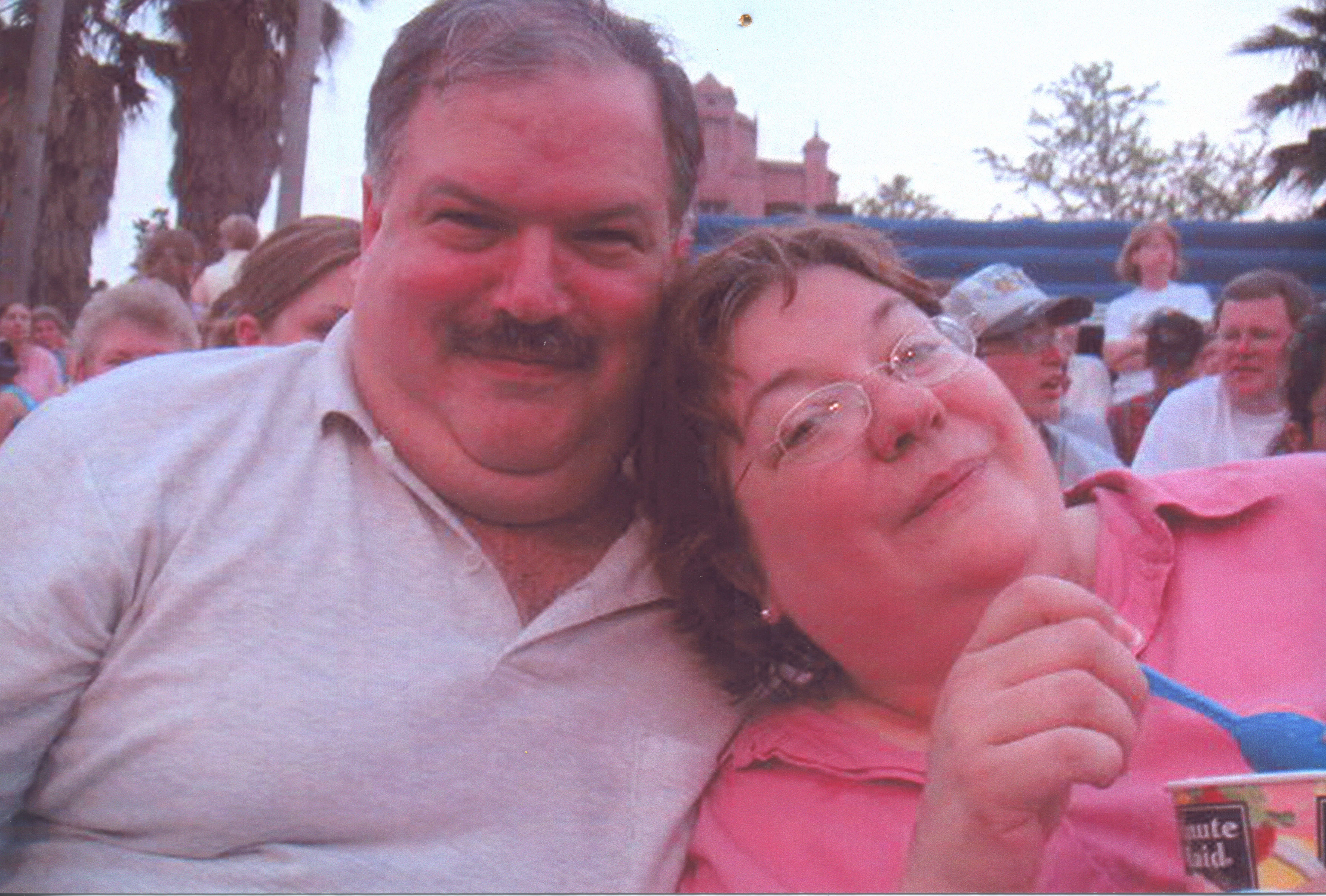
Today is my wife Jody’s 60th birthday. She’s 60 years young today. I know that’s a cliche, but in her case it’s also very true. At heart she is quite flexible. Attaining the big six oh has not cost her sense of humor, her flexibility, or her ability to relate to young people. I’ve always been amazed at the way young people just collect around her.
I got married late. I had a hard time imagining shaping my life to the needs of someone else.Now I can’t imagine living without her. We have become one.
Marriage, whether you’re young or old, is an exercise in mutual submission. Before I was married I thought this was a matter of big issues. But in reality it’s a constant thing as you work with little things. For example, a birthday party. Jody likes lots of people and thrives on activity and noise. I think three is a crowd and four is in danger of becoming a mob. I’ve forgotten my own birthday, and even done so when I was a teenager. I forgot my 13th birthday, in fact, and was quite shocked when my mother said Happy Birthday that morning.
Jody wanted a great birthday party for her 60th. I thought she deserved it and was determined to make it happen. Fortunately for me, fate, in the form of daughters, both heart and blood, who took over, planned, and executed everything. So this afternoon Jody will be gathered with friends from 2 pm to 5 pm. She demonstrated her sensitivity to my personality by telling me I didn’t have to be there the whole time. That was nice, but I rather think I should be there the whole time.
I can’t help drawing serious lessons, so here goes. I recall preaching at a church once where we had just become members. Few people knew me, but the pastor knew my background, so when he was out of town he invited me to take the pulpit. I did so. The practice at the end of the service was for the preacher to walk down the center aisle to the back door first, at which time the congregation was dismissed. Thus the preacher could shake everyone’s hand as they left. As I reached the second pew going down the aisle, an elderly lady grabbed me by the arm and said, “Young man, you don’t know what sort of things are going on in this church! There are four generations of my ancestors in that cemetery [she waved at the windows to where it was located], and none of them would approve of the goings on in this church!” I extricated myself without starting a fight, but I remember thinking that the first place I’d go for advice on how to run a church would be the people in the cemetery!
That woman represents how so many of us get old and crotchety and spend our time criticizing those who are young and still have energy, hope, and ideas. Jody is precisely the opposite. She believes that one of the great things about being old is that you have the opportunity to encourage young people. You can give advice, but you let them be who they are. They haven’t yet been broken into cynicism by the world around them. Being with her is refreshing.
She has arthritis and significant amounts of pain, but she’s keeping active and moving forward. I look forward to her encouragement in the years to come and hope I can be a true companion to her as God intended.