Threads from Henry's Web

Category: Christianity

  • Psalm 119:1 – Living According to God’s Law

    Psalm 119:1 – Living According to God’s Law

    Introductory Note

    I’ve been meditating on Psalm 119 recently after a conversation with an author regarding a forthcoming book reminded me of it. I’m going to write a few short devotionals. I’m not sure how many I’ll write, but reading this Psalm does make me think.

    For any devotional on Psalm 119, please remember that I’m commenting on no more than a few verses at a time, and thus won’t cover all, or even a substantial number of related ideas. Also, please remember that this is poetry, not a theological essay, so even within the text of the Psalm, ideas are not completed in a systematic way.

    Psalm 119:1

    Blessed are those blameless in their living
    Who act according to God’s instructions.

    Now there’s a challenging verse. We all have ways of avoiding it. But I think it pursues us through all our escape routes.

    Our escape routes often start from something very good. That’s what makes them so tempting.

    1. As Christians, we look immediately to the grace of God, given through Jesus. This is a good thing. We realize that being blameless and having all our actions fall within the range of God’s instructions (Torah), is not something we’re going to accomplish, and we are driven to a gracious God who forgives. But we can use this to avoid the issue. “Because God is gracious, I can safely ignore this,” we think. We think the only reason God talks about good actions is to let us know we can’t make it. But the Psalmist, at least, is talking about doing, hoping to do, an mourning the failure to do.
    2. We can decide that a totally blameless life is, in fact what we’re going to do, on our own and in this life. This leads us astray in two ways. It can be horribly discouraging and end up in cynicism, inevitable failure, and self loathing. On the other hand, it can lead us to imagine ourselves successful even when we aren’t and an incredible spiritual pride that falsely assumes one is blameless.
    3. We can engage in trimming the text, so as to make “blameless” less daunting. We can’t reach the goal, so we move the goal closer, or we pretend the goal is closer. This can result in complacency and also to a trust in ourselves for our salvation. The problem with aiming low is that we generally manage to reach no higher than our aim.

    That’s my long way of getting to this: God has instructions that are worth our attention. Even in our limited ways of attempting to follow these instructions there is blessing, not just bringing us to Christ, as important as that is, but also simply as good ways to live.

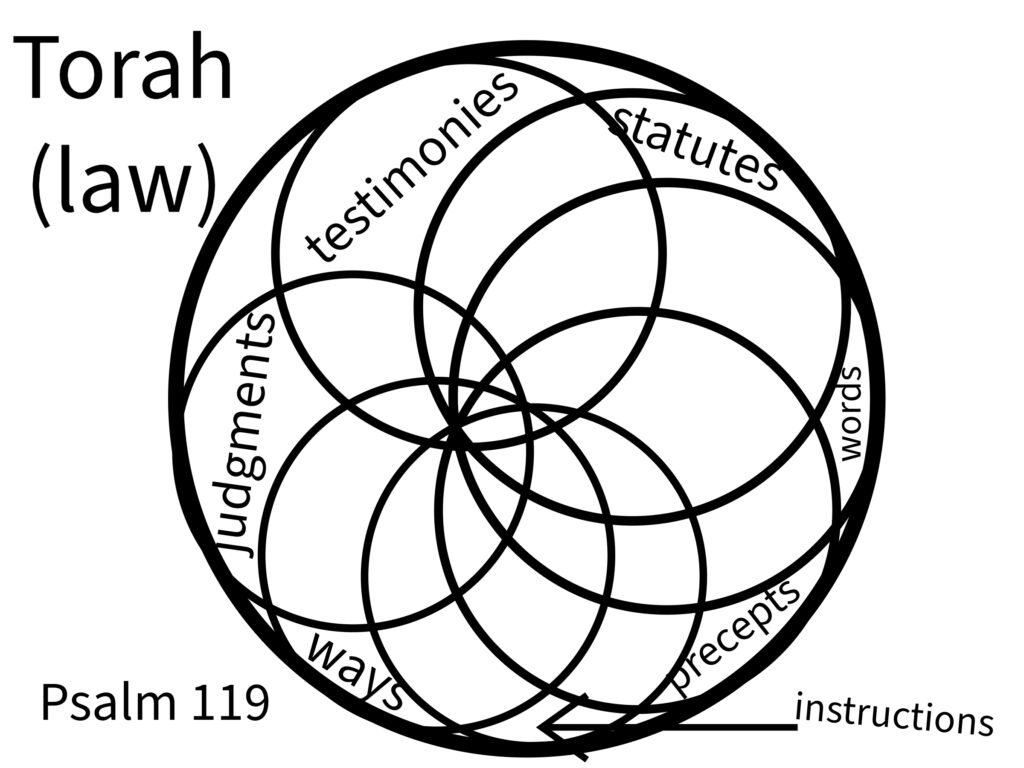
    Torah, the word used here for “instruction” (your translation may read “law”), goes beyond giving us a list of rules. I’ll discuss the various rule/law/instruction words in Psalm 119 along with other verses. It also includes stories of heroes of the faith. They were blessed in following Gods law, but they were not generally “blameless.”

    One need go no further than the last version in this section. (Psalm 119 is divided into 22 sections of 8 verses each, in which each verse begins with the same letter of the Hebrew alphabet.) “I remember your edicts. Don’t abandon me completely!”

    The Torah referenced here is the story of how God never abandons, even those who do forget.


    Some Definitions of Law in Scripture

  • Christian Education Should Be Broad and Deep

    Christian Education Should Be Broad and Deep

    Christian education programs in churches are often the least well-thought-out elements of church life.

    Many may think I’m exaggerating or being unfair. I didn’t get this from a survey, so I can’t point you to statistics, but I am drawing on many years of experience with Sunday School and other programs, so while these are observations, and may be somewhat based on anecdotes, those anecdotes are numerous, and they are first hand.

    Here are some of the things I have noticed:

    1. Use of repetitive curriculum.
    2. A lack of goals.
    3. Willingness to interrupt Christian education programs for almost any other activity.
    4. Lack of teacher training.
    5. Lack of discipleship in action in & for church leadership.
    6. Failure to highlight and open up ministry opportunities for every member.
    7. Narrowness.

    Let me expand on each of these just a bit.

    Use of Repetitive Curriculum

    I have been in Sunday School classes that were using standard denominational and/or interdenominational curriculum materials for decades. Often, seen independently, these materials were not bad. The problem was that they did not nurture growth as they continued to discuss the same topics at the same level.

    I have seen comparisons of time in Sunday School (and even more in my Seventh-day Adventist days, Sabbath School) vs college or seminary classes. The idea was that the members should be happy that they were getting such a wonderful education.

    But if a student spend 30 years studying the same set of subjects at precisely the same level in a college, that would be considered time wasted. I don’t mean that we don’t need to review basic doctrines and theological ideas.

    We also need to grow.

    A Lack of Goals

    This is another way to look at the first point. What is the goal of your class or small group? Do you hope to grow? Do you hope to be a better witness? Do you hope to learn anything new?

    Or is your Christian education program, whatever form it takes, designed to make you feel good that you have attended Sunday School all your life, or that you are frequently at church like a good person?

    These goals need not be academic. It is good to learn more about doctrines, but what about learning how a church functions? Or even better how is should function as a part of the body of Christ? What about learning how to express your faith “with gentleness and respect” (1 Peter 3:15 NIV)?

    I have yet to attend a church that wasn’t scrambling for leadership in various programs. Here’s the question: Were you preparing church members to lead? Were you recognizing potential leaders and tailoring your educational activity, whether one-on-one, small group, or the whole congregation to help them develop and use their potential?

    Willingness to Interrupt

    This is a pet peeve of mine, and I’ve encountered it in every church I have ever attended. I don’t recall Sunday School classes being interrupted for things that were useless. This is not about denigrating the interrupting activities.

    But, and it’s a big one, I’ve seen small group activities, including Sunday School, most easily put aside for any other activity of the church. It’s possible that leaders recognize that their Christian education programs have no goals and are just marking time, so they can be put aside without harming the day-to-day life of the church.

    That should be a very big red flag! If you can easily put aside your Christian education programs, they are probably not set up to actually serve our Lord and His body.

    Lack of Teacher Training

    I have observed this in two ways. First, we tend not to have any idea of how we would prepare someone to be a teacher in the church. Second, we tend to throw anyone into the mix at just about any time.

    A third observation would be that we often don’t recognize capabilities that members bring into the church. A public school teacher may well be prepared to contribute to your children’s or youth programs. (On the other hand, they may prefer not to do what they do during the week, and may have other talents.)

    We can err by falling into the ditch on either side. We can create a set of requirements that are a barrier to entry for new members. On the other hand, we can entrust the education of the congregation to the unprepared.

    I recall early in my experience with the United Methodist Church the pastor invited me to preach. He knew I have an MA in religion and read the Bible in their original languages. He had talked to me quite extensively and was satisfied with my doctrinal integrity. A member involved in the United Methodist lay speaking program objected strenuously to me being allowed to speak when I had not completed the certification program.

    I had no objection to taking that program and thought it would be very useful in becoming acclimatized in Methodism. I was disappointed. As a program it was a program. One checked boxes. I still found it valuable for the people I met and a number of teachers who were gifted and helpful. But to this one leader, it was a box that needed to be checked.

    Lack of Discipleship in Action in & for Church Leadership

    Truly learning to do requires doing. This is true in your daily life and work. It’s true in the church.

    Everyone who is in leadership should have one or more people they are training and/or mentoring in their own skills and gifts. I see church after church losing long-time leaders, and lacking trained replacements.

    Note that mentoring is not just letting someone follow you around, or talking to that person occasionally. It is allowing someone to learn the job and potentially–indeed hopefully–become better than you are at that particular activity.

    The church should never have a shallow bench.

    And if you think that’s hard, read the gospel again. Watch Jesus work with his students: Disciples.

    Failure to Highlight and Open Up Ministry Opportunities to Every Member

    There are people who see things that need to be done and have the initiative to jump in and just take over. There are other people who are willing to serve, but need someone to point out what is needed.

    The first class of people tend to think the second class are lazy and wonder why they don’t just find something to do and get active already!

    People won’t always recognize ways in which they can serve. Indeed, if they are isolated from the small group which is active in leadership, they may never have the opportunity to know. They many not even know who to ask.

    I’ve heard by an 80-20 and a 90-10 rule, the latter being the pessimist’s view. Twenty percent of the people do 80% of the work. This is presented as a form of condemnation of the 80%. They’re just pew sitters.

    But if you are part of the 20%, and I’m pointing fingers at myself here, you are also part of the problem. You are letting this happen! You should not be participating in denying that 80% their blessing of service.

    Hard?

    Jesus. Disciples. Boom!

    Narrowness

    Here’s where I annoy the most people.

    Our Christian education needs to prepare people to be the salt of the earth. Salt needs taste, or “savor” as the KJV has it in the beatitudes. Salt has identity (its saltiness) and witness (what it does when spread out in food, etc).

    We need identity and witness.

    An educational program that just prepares people to repeat your church’s doctrinal views accurately is not adequate. Neither is one that prepares people to be evangelists of your church building, property, form of organization, or human traditions.

    People need to know stuff. Lots of stuff. Stuff about all the stuff.

    Some people were worried when I invited a Calvinist to address our Wesleyan/Methodist young people. I’d be worried if I tried to bring them up on just what I believe but not to understand how other Christians understand various beliefs.

    Oh, about that Calvinist teacher? He preached Christ and Him crucified. I was glad I invited him.

    Summary: Discipleship

    The critical element here is discipleship. “Imitate me as I imitate Christ” (1 Corinthians 11:1 my translation). It can be frightening, especially if you’re honest with yourself about your success at imitating Christ.

    It’s still God’s ordained idea.

    And that answers all of the points. Set our standards high: He did. Be willing to do the hard work: He did. Make the building of disciples our priority: He did.

    That’s church.

  • The Moral Influence of Jesus’ Death

    The Moral Influence of Jesus’ Death

    In my Sunday School class yesterday we discussed Mark 15. We’re reading this with Allan Bevere’s Keeping Up with Jesus: A Narrative Devotional Commentary on Mark.

    In the thought questions for chapter 15, Allan asks both why Jesus is silent at his trial as depicted in Mark, and what it means that Jesus died for our sins.

    On the first question, there were a number of answers, including simply, “prophecy,” that it was expected. But I want to focus on one note I make myself about this, because it relates to the third question, which is how we understand Jesus dying for our sins. (There are three questions following each chapter in the commentary. I’m focusing on the first and third.)

    In a trial with a foregone conclusion, there is really no point in making a defense, unless you are doing so for someone listening. In this case, I suspect the crowd is well selected for hostility (at least of the moment), and thus not prepared to actually listen to a defense.

    This leads me to what I think is a key point about the death of Jesus. It creates a story of contrast and of black and white confrontation. Nobody is seeing the day in shades of gray. In a book by one of my favorite authors, David Weber, there’s a quote by one of the characters, which I paraphrase from memory here: “Very few days are outlined in black and white, and most of those days have a body count.” I don’t know if that quote is original to Weber, and I can’t locate the correct book, but it’s good.

    The day of the crucifixion was not set out in gray, and it definitely had a body count. It creates the moment of contrast between what good is willing to do and what evil is willing to do. Good dies for others; evil kills what it does not like.

    A portrayal such as this is one that day to day reality can’t really live up to. We don’t have the clear line drawn in the story. We have our struggles both to understand and to do. But that is a critical value of the story: It drives us to higher ground. If we let it.

    So what did this have to do with the third question. What does it mean that Jesus died for our sins?

    What I loved about this question was that it called for each person to think: What does that mean to me? It’s easy to be very prescriptive. We like to have one interpretation and get everyone to understand it.

    The Values of Multiple Metaphors

    I would suggest that no single metaphor can possibly do justice to the atonement. It’s a good thing we don’t have only one!

    Moral Influence

    As an undergraduate working on my degree in biblical languages, there was a required course on exegesis of Romans in Greek, to be taken after I completed intermediate Greek. The professor for this class was an advocate of the moral influence theory of the atonement. This theory is often presented simply as Jesus providing an example in his life of how we should live and influencing good behavior in us.

    That’s not the whole story. In that theory, the portrayal of good and evil meeting at the cross becomes a powerful influence, a powerful changemaker.

    I didn’t get that in class. I wanted something other than penal substitutionary atonement, and I hoped that I could accept what this scholar presented. I wanted to read this view in Romans. I tried to do so diligently.

    It never worked.

    It took me some time to realize that there was something here for me to take in and make a part of my understanding. That portrayal, brutal as it was, was a necessary part of the story of salvation. It was easy to miss this in other views. Then I started to see other metaphors for the atonement, and to see how they build a picture.

    Penal Substitutionary Atonement

    In fact, I came back to appreciate the courtroom metaphor presented by penal substitution, which, among other things helps portray completeness, and finality while excluding the idea of us earning the result. I have conservative friends who still think I’m ditching this dominant evangelical view of the atonement and progressive friends who wonder why I don’t just ditch it. To me, however, each of these views is essential. Since this is not my main topic, I’ll leave it at that.

    I turn next to expressions of faith by the Apostle Paul. Paul can be an annoying character. He covers a lot of ground and expects you to keep up.

    About Paul

    I was interviewing author Herold Weiss, author of the book Meditations on the Letters of Paul in a series I did titled “Who Was Paul?” One question I asked was this: Let’s imagine you’re at a conference and you have the duty of introducing Paul as the next speaker. What do you say?

    Herold laughed and said, “I don’t have to answer that. You see, Paul would never have been invited to speak in the first place!”

    He’s likely right. Paul was too much of a disruptor to be invited to church conferences. It was much more likely that conferences would be held to talk about him and what he was doing, such as in Acts 15.

    Paul, Good and Evil, and Crossing the Line

    In many of Pauls’ letters we have what looks like a theological section, which generally talks about salvation and will frequently inform you that it is not of works. Then you move to a section that talks about things you ought to do. Often these sections are presented as distinct, as though Paul had multiple personality. “Not of works, now get to work,” so to speak.

    I think a closer look will allow these to be coordinated, and I think Philippians is an excellent place to do so. The reason is that until chapter 3, which seems to be a kind of side-tirade, Paul is ready to go through the basics quickly.

    By Philippians 1:27 he’s telling his readers/hearers to live in their community in a way that is “worthy of the good news (gospel).” He wants to hear that they are “standing firm,” and “striving together” for the gospel. He continues that God has granted the the privilege not only of believing (a privilege, a gift, not a purchase), but also of suffering for Jesus as well.

    Not of works. Here come the works.

    Well, yes and no. Paul is writing here, I think, on that line drawn between good and evil at his crucifixion. You get a choice. Are you a crucifier or are you crucified?

    Too often Christians have answered that they are with the crucified one while picking up nails and erecting crosses.

    Persecuted or Persecutor

    I was asked once in Sunday School who I thought was right when two groups were fighting over doctrinal points, really fighting, to the extent of killing one another. It has happened way too much in Christian history. I said that anyone who was killing the other one over their beliefs was wrong. Killing people in the name of the one who went to the cross silently and said, “Father forgive them,” is blasphemous.

    Have I departed from Paul and his letter to the Philippians? I think not.

    How to Look at Other People

    Paul now tells the Philippians to make his joy complete (2:2) by being of one mind (sharing viewpoint) and having the same love. Nothing is to come from selfishness or vanity, but they are to regard others as better than themselves (2:3) then also look to the interests of others, rather than their own.

    I think Paul is looking at that line. Are you a crucifier or are you with the crucified?

    Philippians 2:5-11 is a famous passage. Jesus emptied himself, humbled himself, became obedient, and went to the cross. Others called for his blood.

    This was a portrayal of the nature of good and the nature of evil. That is something we should not forget about the crucifixion, if for no other reason that we avoid becoming the persecutors.

    As Paul says it in Galatians: “I have been crucified with Christ. I’m no longer the one living, but Christ lives in me” (Galatians 2:19b-20a). That’s the line drawn in morality and in history. Paul has no intention either in Philippians or in Galatians of telling his hearers that this is easy. He doesn’t suggest that everyone will love them after the decision or that they will get a new job, drive a better car, or be suddenly totally free of disease.

    Be crucified with Christ.

    Identifying the Power

    Things start going off the rail again right here. We think that having been crucified with Christ, or at least made the choice of which side of that line we want to be on, we must get on the ball and be better people.

    Indeed, Jesus was exalted after death and given the name above all names. But first he went to that cross, was taken into the tomb, and was raised again by the very power he laid down in the first place.

    Remember where the power comes from.

    Having died, and been buried with him by baptism, you don’t come back and start fixing yourself.

    “So, if anyone is in Christ, there’s new creation. The old stuff is gone. It has all become new.” (2 Corinthians 5:18b)

    You can’t sanctify yourself. You’re dead. You’ve got no stuff at all. It’s all new, and it’s all His.

    Who Works?

    So back to Philippians and one of my favorite passages:

    (12) So, my beloved, just as you have always obeyed, not only when I’m there, but also when I’m away, with fear and trembling work out your own salvation. (13) For it is God who works in you all, both to will and to accomplish his pleasure. (Philippians 2:12-13)

    So how does this work?

    I wonder why it’s so hard to see God at work in us morally when we already know God is at work in us. If you are a believer in God and that God is the creator, then everything, ultimately, is a gift of God. I could paraphrase this physically as “Do your own breathing with fear and trembling, for God is at work in you both to make you want to breathe and also to make you breathe.”

    I don’t think that’s a ridiculous way to put it. I couldn’t type the next letter without God. God makes the various particles move around in a certain way. God brought me into the world. I can’t even make mistakes without God.

    If you try to take over and do your own working, that just makes everything harder. God knows that and has a plan for all that as well. God makes you want. God works in and through you. But ultimately it’s all God.

    If you go try to do it yourself, then it’s like jumping back to the person who just died, forgetting about being buried and raised to new life by divine power, and deciding to do it all just as if none of that every happened.

    Does this mean there’s nothing to do? Actions are still important. Actions have consequences. Paul even says this in Galatians, his strongest book against works of the law. “Don’t be deceived! God is not mocked! Whatever a person sows that person will also reap” (Galatians 6:7).

    The Life Context of Commands

    Again we have to look at context, in this case, life context. Not every command, not every discussion of good and bad, smart and stupid, effective and ineffective is about whether or not you are saved or have eternal life. Deciding someone’s eternal state is not my job and it’s not yours. Let’s say that I am hiking a trail in some beautiful mountains, tremendous beauty all around, and I get careless, lose my step, and fall off a cliff. Gravity (created by God) still works. The ground (created by God) is still hard. My body (created by God) is still not up to a fast encounter with a hard place. I die.

    Are the mountains still beautiful? Yes.

    I also still have eternal life.

    But it would have been a good idea to be more careful.

    The Invitation

    The invitation to salvation is not an invitation to an untroubled life. It’s not an invitation to always make perfect decisions. It’s not an invitation to comfort.

    It’s also, and this is critical, not an invitation to think of yourself as better than other people. It’s not an invitation to be God’s favorite grandchild, spoiled rotten and looking down on all the other children who have somehow failed to earn all that love.

    If you thought going to church was joining the popular kids’ club and becoming one of the important people, you missed the point. If you get a charge out of feeling superior, you’re missing the point.

    “Looking to Jesus, the author and completer[sic] of our faith …” (Hebrews 12:2).

    Completion

    Read Philippians 2:5-11 again. Try to imagine just what it was that Jesus thought was not something to hang onto, what Jesus gave up. That’s where God is taking you. Don’t diminish that by looking sideways or looking back. When your measuring stick is God’s glory and God’s grace, the differences in human beings are literally not measurable.

    And just as Jesus not only went to the cross and the grave, but rose again and ascended, so we now that God will complete what God has started.

  • My Interview on Theodicy

    My Interview on Theodicy

    As a continuation of my series on Theodicy, Steve Kindle interviewed me using the same set of questions I’ve used with all the other participants. This was recorded a year ago, but I just finished the production and posted it yesterday.

    For more information on the series: Theodicy Interview Series.

  • Beastly Attributes

    Beastly Attributes

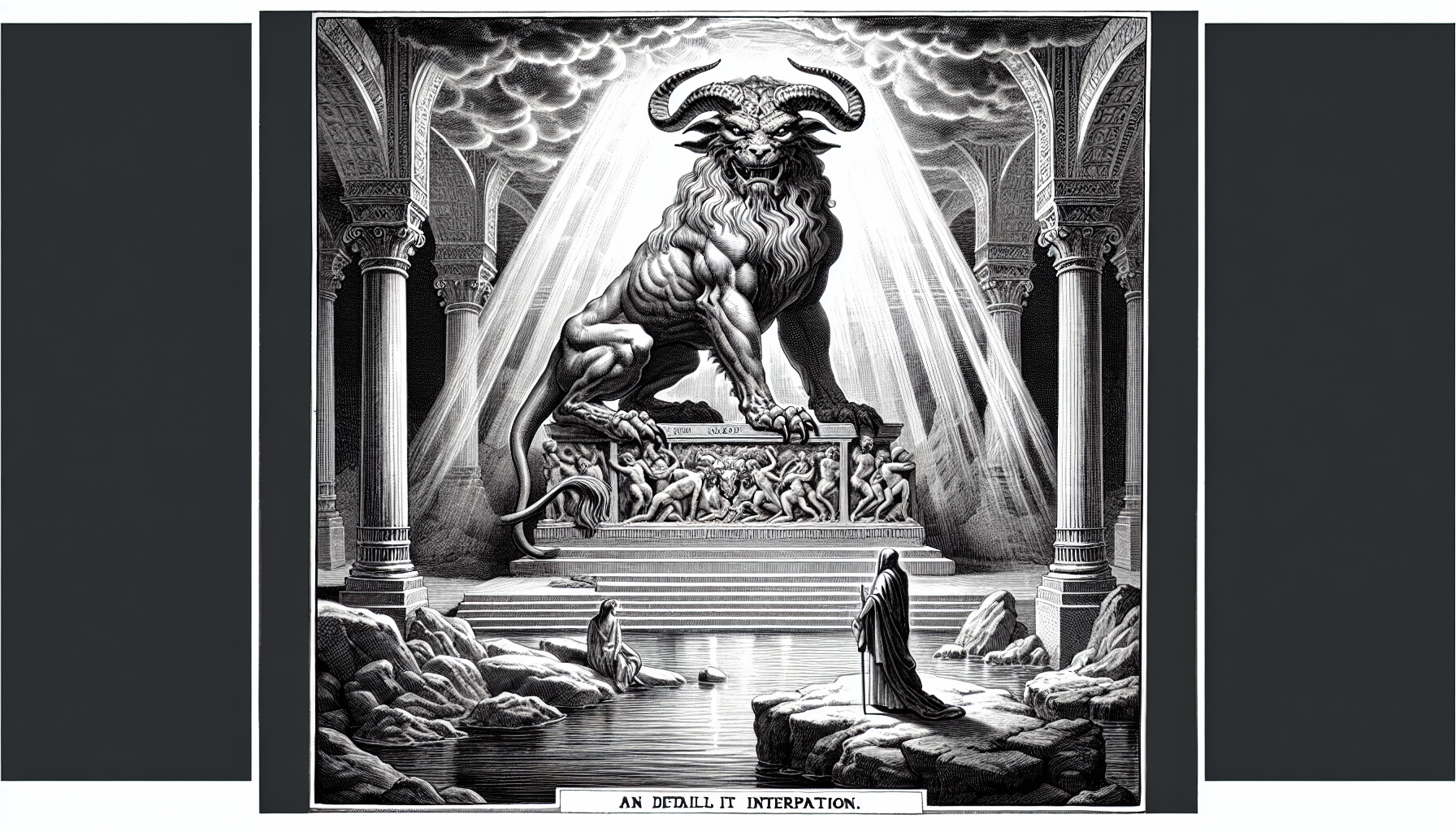
    I’m following up on my post from yesterday, Making an Image to the Beast. I think these chapters contain quite a lot of useful information that is not primarily prediction, but is definitely prophetic, in the sense of bringing God’s Word to our situations.

    I want to talk a bit more about what kind of image we create through our actions as the Church, but first, I wanted to look at the nature of the dragon and beasts, of whom we finally get an image late in the story.

    Here are some of those attributes and the references:

    1. Tears down others – 12:4, drawing 1/3 of the stars. Beasts and dragons rarely fall alone.
    2. Consumes and destroys – 12:4
    3. Is not the greatest power – 12:8. Note that verses 8 & 9 compile a great deal of what is now Christian belief about the Devil. The imagery hear draws on a number of passages in Hebrew scripture.
    4. Persecuter – 12:13
    5. Sweeps people/things away – 12:15. It’s humorous to note here that there is a single Greek word for “carried away by a river.” There’s got to be some history for that word!
    6. Angry with those not on his side – 12:17.
    7. Speaks blasphemy – 13:1,5.
    8. Though not the geatest power (see #3), operates with great authority – 13:2.
    9. Puts anger into action in war with the “other side” – 13:7.
    10. Wants all the attention and worship – 13:13.
    11. Deceives – 13:14.
    12. Applies force to get worship – 13:16-17

    Now if you’ve read Revelation, you’re probably acquainted with these items, but I thought it useful to compile a list. I didn’t intend it to have 12 items. That’s coincidental.

    If you’re following along, an interesting mental exercise is to ask just what wisdom is involved in counting the number of the beast.

    Almost forgot! The featured image was generated from text on Adobe Express this time. Just trying things out!

  • Making an Image to the Beast

    Making an Image to the Beast

    I’m working on the 2nd edition of my study guide to Revelation, and I’ve been meditating on Revelation 12 & 13, and especially 13:14-15.

    By the miracles it was allowed to perform in the presence of the beast it deluded the inhabitants of the earth, and persuaded them to erect an image in honour of the beast which had been wounded by the sword and yet lived. It was allowed to give breath to the image of the beast, so that it could even speak and cause all who would not worship the image to be put to death.

    Revelation 13:14-15 (REB)

    I don’t want to spend a great deal of time discussing the approach I take to reading and understanding Revelation. I wrote a study guide for that purpose. The short version is simple. I think we miss a great deal of the message of Revelation when we spend our time looking for specific historical referents for the symbols. It’s possible to come up with a plausible scheme. In fact, many sort of plausible schemes have been proposed. But nobody has managed something truly definitive.

    I lean closest to the allegorical approach, but more precisely I believe that through imagery that is worked into a tapestry Revelation presents us we a number of principles which are very broadly applicable. I describe this in terms of a theme park in my study guide. It’s not a sequential story; rather, it’s an interacting set of scenes.

    In this passage we can work with a number of questions, such as who is the dragon and the beast that comes up out of the earth. Those questions are good, but I’m skipping over them to this one: Why does the beast that rises up out of the earth want to make this image? The beast is performing miracles, and through this miraculous power, he creates an image, which in turn does other things.

    Let’s take the simple answer: If you’re a beast, you want an image.

    We tend to think of the image as a statue or some other sort of representation of what a person or thing is. But an image can also be something deceptive, something that helps you think more favorably of what that image represents. The image of the beast is less beastly than the beast itself. That is its value.

    In an age of political operatives and media manipulation, we should be able to feel this one in our bones. A politician has his or her own personality, but then through political operatives he or she can also have an image. Polish up the image but leave the reality tarnished. Or for the reverse, one’s opponents or enemies can create a false negative image. In either case, the “beast” doesn’t look like its “image” and vice versa.

    So what image do we display through our churches? When someone looks at the reality, is the beast behind the image, or the lamb?

    How’s that for jumping the rails?

    I think it’s a valid jump. Paul tells us that we are the body of Christ. Jesus told the disciples that they would be known as His disciples by their love for one another.

    Many people are going to form their opinion of who Jesus is by viewing Him in us. There can be a lamb behind the image just as well as there can be a best. An image can be transparent, letting people see the reality, just as it can conceal the beast that’s behind it.

    If you read Revelation 12 & 13 you’ll get some good ideas about what beast-like behavior is, and why this 2nd beast needs an image to do its will.

    The question is whether we will allow Christ to be seen through us and through the way we “do church.”

    I think I’ll follow this up with a post on ways in which our churches can take on the image of the world around, to the detriment of our witness.

    Featured image AI generated via Jetpack

  • On Listening to One Another

    On Listening to One Another

    On the various Energion Publications web sites, we have been emphasizing listening in commemoration of Pentecost. This Sunday is Pentecost Sunday, but we’re going to continue the topic for a few weeks into what’s called “ordinary time” in the church calendar. It’s precisely in ordinary time that you need to remember the lessons of receiving and listening to the Spirit.

    We need to continue listening even when we can’t see the flames of fire or hear God’s voice, or detect other signs of God speaking. God speaks in many ways, sometimes yes with thunder and lightning, but at other times God speaks through those who are around us.

    Hearing God in Others

    One element of listening that we often neglect is listening as the Spirit speaks to us through other people.

    This was a lesson I started to learn in Guyana, South America, where I lived as a teenager. My parents went there as missionaries with my father assigned as Medical Director of Davis Memorial Hospital in Georgetown. Thus I spent a good portion of my teen years among people of a different culture.

    I would often get rides to various places with the hospital’s driver, Brother Carr. (Note that when I was growing up as a Seventh-day Adventist, I was taught to address my elders as “brother.” That was so ingrained that I can’t actually remember his first name.) There was another gentleman who worked security and also some other functions around the hospital, and was occasionally a backup driver.

    I recall discussing world events with these two men. Different country, different race, different culture, different perspective on just about everything. Those conversations have stuck with me. One day one of these men took me to the seawall which keeps the Atlantic Ocean from flooding Georgetown. After explaining the history, starting with settlement by the Dutch, we turned to current events, which at the time involved Mainland China replacing Taiwan in holding China’s permanent seat on the security council of the United Nations. Elements of that conversation have stuck with me.

    Why do I bring up all of this now?

    Very simply, there are good reasons to not only read books, watch videos, and listen to sermons/lectures on a variety of subjects. It’s important to learn about these things from more than one perspective. This can involve expanding your circle of friends. Intentionally expanding your circle so that you meet more people who are not exactly like you.

    Difference can include:

    1. Differences of faith, including those with a secular or humanist view as well as those of other religious groups
    2. Differences of race, even beyond those we talk about most
    3. Differences of nationality, to include people from countries that are less like our own
    4. Differences of theology within our own faith tradition, such as Reformed, Wesleyan, or Open/relational or progressive, moderate, and conservative
    5. Differences in levels of wealth and privilege (While some object to the term “privilege,” I openly confess to being privileged. It was a foregone conclusion I would go to college and if I wanted, to graduate school. I have never feared starvation. My life is filled with reasons for thanksgiving!)
    6. Differences in geography, such as living in an urban, suburban, or rural area

    There are certainly many more, but these are some of the many things that I think many of us don’t interact with enough. For example, I sometimes give money to someone who is homeless, but it’s much harder to get me to say hello. (I publish two books, The Vicar of Tent Town and The Fringe, both of which challenge stereotypes of what it means to be homeless.)

    Some Books

    And now for a short commercial … well, not really. Some thoughts!

    I was thinking about four books that I publish, all by African-American authors. I’m writing about them here, rather than on my company blog because these thoughts are my own, apart from any marketing plan. (No, I don’t deny wanting to sell the books, but if I was writing marketing text, I’d do it in “company” space!)

    I want to recommend these four books for specific things in which they can give you a different perspective. In the case of three of the books, the reason I’m listing them here is not the central reason the author wrote the book, nor the reason I published it.

    Let’s start first with Dr. Terrell Carter’s book I Have to Live with Them?: Understanding How Black and Brown Christians Navigate Their Relationships with White Christians in the American Church. This is the one book of the four that is precisely intended to help readers understand the dynamic of race relations in the church. It’s written by an African-American pastor who pastors a predominantly white congregation. This one is in the Energion Publications Topical Line Drives series, which means it’s short and to the point. It’s not meant to break major new ground. It’s meant to get you to the starting gate. Dr. Carter has two other titles with Energion as well, which you can find on his author page.


    The second book in this list is not written to address any of the issues I’m discussing here, but it does. It’s The Seven: Taking a Closer Look at What It Means to Be a Deacon by Dr. Lonnie Davis Wesley, III. This is, unsurprisingly, a book about the ministry of deacons in the church, and it’s written by someone who pastors a large Baptist church in Pensacola, Florida, Greater Little Rock Baptist Church. As an aside, if you live in the Pensacola area, visit this church. I strongly commend it.

    The reaons I’m talking about the book here, however, is because of the background it gives you about the black church in America. It will teach you things about deacons in the church. It will develop your understanding of the early church and what led to their being deacons. If you’re dealing with problems of church polity, you will find scriptural ideas in here that just might help. But it will also help you look at all these things with new vision.


    The third is Grant Me Justice: A Mother’s Journey from Murder and Mourning to Mercy and Dancing. This book deals with grief, anger, and the search for justice, but it also tells an important story, the story of a mother and what gave her perspective on what was happening. It’s a story also of grace. And it’s a story that will help many see things from a very different perspective.

    An important lesson to learn in reading this book is that hearing the stories of others can provide so much help to each of us in understanding our own journey of faith. God’s grace is high and wide, and its sufficient. God doesn’t have a perspective problem. Stepping into the shoes of a grieving parent as you peruse the pages of this book can change you in many wonderful ways.


    Last, but not least (these books are in no order of precedence), I have a children’s book. The book is What Color Am I? It’s the 8th book in the Kamden Faith Journey series. This entire series is about a grandmother helping her grandson in his faith journey. It provides an opportunity for parents to read with the children and discuss important topics with them. In this book Kamden sees a Black Lives Matter protest and asks his Nana for an explanation. What are they doing? Why are they angry?

    The response is gentle, faithful, and powerful. I wonder if you, reader, have looked at these various issues from the perspective in this book. It brought tears to my eyes as I created the book layout.


    Conclusion

    Whether it’s with these books or others and whatever the subject or your situation, try to find an opportunity to listen to someone whose perspective differs greatly from your own. It may benefit them, but it will definitely benefit you.

    Note: Featured image for this post was generated using Jetpack AI as a test.

  • The Importance of Teaching Sanctification

    The Importance of Teaching Sanctification

    Teachers and pastors frequently avoid talking about sanctification. Some of the reasons include:

    1. The very word “sanctification” sounds difficult and over-theological
    2. There is a fear of perfectionism
    3. There is a fear of the judgmental spirit that goes with perfectionism
    4. Sanctification doesn’t really sound all that graceful
    5. We might have people believing that their works earn salvation

    A Detour on Christian Perfection

    When I first joined a United Methodist congregation, I had the idea that Methodists would know a great deal about John Wesley. One Sunday night I discovered how wrong I was.

    I had been invited to teach on the doctrine of Christian perfection as taught by John Wesley. In preparation, I researched the forms of this doctrine expressed in Methodist doctrinal statements. I found that in the United Methodist Discipline there were actually two statements, one derived from the Methodist Episcopal Church and the other from the United Church of the Brethren. With a typical Methodist willingness to leave wiggle room in doctrinal beliefs, both were included.

    As I began to teach that Sunday night, I started with this question: “Did you know that we have not one, but two doctrines of Christian perfection in the Discipline?”

    I was greeted by complete silence. Finally, someone raised their hand and asked, “We have a doctrine of Christian perfection?”

    This surprised me, as it was a doctrine with which I did not agree, at least in some forms, yet I had thought it would be thoroughly know in Methodism.

    In his book A Plain Account of Christian Perfection (also available online as a PDF) John Wesley collects his various statements on the topic. It’s worth reading. He notes the point on which I disagree most completely, the idea of knowing one has attained this state and testifying to it. I might also mention a nice, short introduction from Energion Publications, Holiness of Heart and Life by Allan R. Bevere. It will give you a good introduction.

    When the word “perfection” is added to “sanctification,” people are sure to get nervous. I bring it up here because since John Wesley, it will inevitably come up. For the record, while I agree that God can create in the believer whatever holiness God desires, I believe such holiness is impossible to measure or to know.

    Back to Sanctification

    Shouldn’t we avoid talking too much about sanctification in order to steer clear of perfection and perfectionism?

    I believe that the effect in the church is quite the opposite. By avoiding talking about sanctification, and how it occurs, we open the door to all varieties of perfectionism and performance-driven living. These are destructive of people’s lives, both through the pride and spiritual superiority generated by a feeling of good performance and Divine favor and from the discouragement and apathy that results from a failure to attain whatever level one expects.

    A Note from Paul

    I recall my class in Exegesis of Ephesians in graduate school. We made it to the end of Ephesians 3. We missed this: “I implore you then–I, a prisoner for the Lord’s sake: as God has called you, live up to your calling” (Ephesians 4:1 [REB]).

    Thunder from the Pulpit

    Like Paul, pastors are going to preach to their congregations about doing things. They will talk about stewardship, informing congregations that their money should be surrendered to God. They’ll talk about the work that needs to be done around the church. They’ll admonish parishioners to do things in their community and perhaps the world.

    Much of this will be good. Many (not all) of these things need to be done. My resources do belong to God and I should use them as God calls me to.

    So when people enter the church, they are often presented with a litany of stuff they are supposed to do.

    The result? People who tend to do things charge off to do things. People who tend to sit in pews, sit in pews. Both sets of people very often feel some sense of guilt for the things not done, and superiority or inferiority to the others.

    Yes, the feeling of superiority works on both sides. I’m a doer, and I have heard pointed remarks about my doing from those who think I should be less of a doer. I have heard similar remarks regarding others. There are those who can condemn you for doing too much while asking you to do more. The doers, like me, have a strong tendency to consider ourselves superior to the pew sitters.

    The Answer in Sanctifying Grace

    As Paul goes on in Ephesians, he talks about many things we need to do. Note the number of times the word “gift” appears in the text. Finally, in chapter 6, we get to the word finally: “Finally, find your strength in the Lord, in his mighty power” (Ephesians 6:10 [REB]).

    Paul can do it this way because he has made sure to emphasize God’s prevenient and justifying grace, the gift of being part of the family apart from anything you do. Elsewhere, he expresses this in a more compact fashion: “… work out your own salvation with fear and trembling. For it is God who works in you both to will and to do God’s good pleasure” (Philippians 2:12-13).

    Sanctification, like everything else, is a gift. It is not a possession or a call to personal pride. It is not something we have to or are able to measure. We need to talk about this gift. God is working in each and every person. There is no comparing the journey of one person to that of another. There is no more pride, boasting, or shame in sanctification than there is in justification.

    I’ve been studying 1 Corinthians 12-15 with my Sunday School class. We just finished that section. Now the whole of 1 Corinthians can be considered Paul addressing this very issue. He sees spiritual pride causing division. The “I am better” factions start with boasting about the person who preached to them or who baptized them. There are some super-pride people who boast that they are connected only to Christ. They are the real Christians unlike all those other people, who look to some pastor or evangelist.

    This sense of spiritual superiority led off in many directions, as it always does. There is nothing so dangerous as a person with a sense of their own spiritual superiority. We like that feeling of being better than. Some of the Corinthians thought they were better because of their spiritual gifts. Paul stomped all over that in 1 Corinthians 12-14.

    Paul is teaching practical sanctification in the entire book of 1 Corinthians. He’s also talking about how it can be derailed.

    One way it can be derailed is by ignoring it. If we don’t teach people to do anything, well, they won’t be proud of their doing. It doesn’t work that way. Without an understanding of the gift and gratitude for that gift, we head down performance-drive, or performance diminished paths.

    Conclusion

    Only if we teach that sanctification is a work of God, graciously given by God, measured by God, and judged by God can we talk about things to do and have any hope of not generating spiritual pride, criticism, judgment, and finally factions and schism.

    Featured photo credit 117597185 © Antonio Guillem | Dreamstime.com

  • I Am Not Ashamed

    I Am Not Ashamed

    There might be many reasons why someone would be ashamed of the good news about God that is represented in what we call the “gospel.”

    Not Ashamed of the Gospel: Confessions of a Liberal Charismatic
    This post is the first chapter of my 2005 book Not Ashamed of the Gospel.

    Historically, the shame was in worshipping a convicted and executed criminal, calling him God and following his teachings. Very few people doubt that Jesus died, and that he was executed by the barbaric method of crucifixion. Raised from the dead, alive today— that’s another matter entirely. But the death is the best established thing about Jesus.

    I’ve entered into debates about whether such a person as Jesus existed historically. All of these debates start— must start—with a list of things that I will demonstrate, limiting myself strictly to the tools of a historian, to the extent that past events can be demonstrated. These are the things that Jesus did or that happened to him. Many scholars have created such lists. Invariably, “crucified by the Romans” is on them. Jesus’ death by crucifixion is as established as a historical fact gets.

    It seems remote and distant to us. If we have shame in anything about Jesus or Christianity, it is something different than it was for Paul and other early disciples. For us, the cross is the symbol of a religion, a person, or a faith system. We see it on churches every day. We have pictures of crosses, sometimes with a figure of Jesus hanging on them. Sometimes the figure will be portrayed with a halo. We make earrings and necklaces with crosses. We know the crucifixion is a horrible thing, but the symbols involved in it have become commonplace and familiar, and they are objects involved in the rituals of the church, not in execution.

    We may be ashamed of some of the people who carry crosses, or of some of the groups that worship in buildings with crosses on them. We may object to where crosses are placed, such as on the lawns of public buildings. But none of this is quite what the “shame of the cross” would have been for the early followers of Jesus. Put yourself back in Paul’s time. Jesus was recently executed. The one political power in the world was the authority by which that execution was carried out. That particular form of execution was one reserved for the worst, and especially for rebels and political offenders. There was a shame in worshipping someone who had been crucified. It had the aura and the stigma of worshipping a mass murderer, perhaps a bit like modern Americans would feel about a cult worshipping Charles Manson.

    But in addition, it was something dangerous. The followers of Jesus were proclaiming as divine someone executed by the Roman authorities. Divinity was being carried by someone who was a rebel and a dangerous character. Proclaiming the kingdom of a rebel was an act of rebellion in and of itself. And here we have Paul proclaiming that he is not ashamed of this good news. He glories in the cross, glories in an instrument of shame. In disaster, he finds good news.

    One of the key elements of that good news lies in the fact that you see a cross with much different emotions than did the people of Paul’s day. That element is transformation. The symbol of the cross has been transformed from one of disaster, death, agony, shame, and despair into one of hope for many people. Not all people, and we’ll discuss that as well.

    That transformation comes from the way in which God used the experience of the cross. God came to the earth in the human form of Jesus. God experienced life with us. He took action as we might need to take action under the circumstances of our lives. He found himself in an occupied country, living under cruel foreign domination. He didn’t just come and appear on a mountaintop. He got involved in human experiences, human emotions, human weaknesses, and yes, human strengths as well. When it came down to it, he died a death in just the way that a human would have to do it in that time and place.

    The first part, then, of the transformation was involvement. The cross would never have been transformed as a symbol without the involvement. God, the infinite gap-crosser, crossed the gap and stayed on our side long enough to experience the worst of the worst.

    But not only did he get involved, he stayed involved. The second part of that transformation was endurance. God didn’t quit. He carried through. If he had not, we could think of the wonderful time when God was with people, lived with us, talked with us, worked with us, but we would always have a distance from him, because he would never have experienced the one thing that seems to terrify most of us—death. “Through death, he destroyed the one who had the power of death” (Hebrews 2:14). “He endured the cross; he treated the shame with contempt” (Hebrews 12:2).

    Jesus knew when to ignore what others thought was shame. The shame was intended to fall on the one who was punished. But Jesus had no reason to be ashamed and he knew it. Knowing what one should ignore is an important part of living in this imperfect world. Many people, Christians and others, have endured torture and death with dignity and even peace because they knew this lesson. What was intended to bring shame on them instead became a source of glory.

    The transformation that Jesus accomplished on the cross, symbolized by the transformation of the cross itself, is something that we all can grasp. Circumstances and our environment are not fixed things that we have to take as they are. They can be transformed by our attitude and by the way that we deal with them. Every cross in your life, everything that you would prefer not to have done or not to have encountered can be transformed. When we give testimonies of things that have happened to us, this is what we are doing.

    Some think that testimony meetings are about telling how dark our lives were before God intervened. And sometimes they are. But if you are focusing on the darkness, and the negative things that have happened, perhaps you haven’t let those things be transformed yet. Did you become involved, stay involved, and endure? Did you have contempt for the supposed shame? The real point of a testimony, a witness, is to present how things have changed, not how much they are the same.

    But there’s one more part of this process. Some of you may be wondering whether I’m going to ignore it. Jesus triumphed over the adversity. He rose again from the dead. His movement should have died. It came back to life. Without this, the transformation could not have taken place. In this sense, only one who was God, or totally in tune with God’s spirit, could have triumphed. We daily deal with circumstances and troubles. Jesus was dealing with the nastiest circumstance of all—death. He was there to deny and destroy the one who had the power over death.

    I’m not going to argue here about the physical resurrection of Jesus. It’s very hard, if not impossible to prove a miracle. But I do think the greatest evidence that something different happened that day in Palestine is that the movement surrounding Jesus didn’t go away. Having seen Jesus crucified, his movement should have failed, but it didn’t.

    But the critical element in transforming the symbol of the cross from one of shame to one of hope and glory was simply that the followers of Jesus believed that he had conquered death. You may debate me about the idea that without something special happening on the morning of the resurrection, the followers of Jesus would simply have scattered. You may have another explanation you think works as well. But I think there can be no doubt that unless the followers of Jesus believed that something had happened, there would have been no transformation, no Jesus movement, no Christianity, and the cross would forever have remained a symbol of shame, or passed into history as an example of the barbarism of ancient cultures.

    But the fact is that those followers did believe, they didn’t scatter, but continued to proclaim the victory of the person the Romans had crucified. And it was in that proclamation that the cross was transformed. Jesus could have died with dignity, endured the shame, and risen from the dead, but if nobody had arisen to proclaim those facts, no transformation would have taken place. It took human beings getting involved, carrying the message, and acting on the good news. I’m sometimes accused of being very human oriented in my religious beliefs. But I believe that this orientation toward what people do and how they respond is thoroughly Biblical. Not only did God accomplish reconciliation through Christ, but he gave us the same ministry. In other words, God knows and intends the human element to be critical in carrying out his mission on earth.

    And that leads to the other side of the issue of shame. We need to be prepared to deny the shame just as Jesus did on the cross. But we also need to be able to see shame when it’s appropriate. A great deal of who we are and how we live will be determined by our response to shame.

    In Ezekiel 9 we have a part of a vision of Ezekiel. The prophet has been shown abominations that the Israelites are committing right in the temple precincts. Then a man is sent out in the city to make a mark on certain people. The ones who are marked are those who “sign and cry” about the abominations committed in the land (Ezekiel 9:4). (I like the good old KJV “sigh and cry” because the Hebrew words involved here are alliterative). Then others are told to follow and slaughter everyone who is not marked. Notice that it is not the ones who themselves are not committing abominations, but those who are deeply bothered by the evil things that are going on.

    I have seen this passage turned outward many times, as though it is a call to Christians to sigh and cry about the abominations committed by everyone else. But we should remember that this passage was written by an Israelite prophet to Israelites. If we are going to transfer it to Christians we need to transfer it all the way. It isn’t speaking to Christians about their attitude toward the actions of non- Christians, but rather about their reaction to their own abominations.

    I said that the cross was a symbol of hope for some. But it’s a symbol of death and destruction for others. It becomes a symbol of shame again when those who proclaim it use it in shameful ways. The crusades, the inquisition, the holocaust—all were justified at some point by reference to Christianity and to the cross. All too often, others did not stand against those who abused the cross, and did not proclaim its true meaning. We can choose either to restore the cross again as a symbol of hope, or we can use it as a symbol of hostility, destruction, and death. In order to restore the cross to the glory of Christ’s transformation, we need to get to the point where we sigh and cry for the abominations committed by Christians.

    I was involved in a program a few years back in which we had an opportunity to write statements about ourselves on sticky notes, stick them to our shirts, and then engage others in the group in conversation based on what was written on their notes. I included “Christian,” “individual liberty,” and “no coercion” amongst the items on my list. Several people thought this was a surprising combination. To them, Christianity stood for compulsion, force, and tyranny. How could I be both a Christian and an advocate of liberty? I wish I could blame the problem on their prejudice, on their misconception of what Christians are. But too often Christians behave in a way that is completely the opposite of the principles Jesus taught, and totally incompatible with the way he behaved. At the same time, other Christians are silent. We need to be ashamed of what is truly shameful, and proud of what is worthy of pride.

    The answer lies in the symbolism of the cross. In the cross, God displayed his willingness to cross the gap and communicate with us where we are. He endured the force. He was subject to the compulsion. He was executed by the existing tyrants. In so doing he gave an example of liberation.

    But many of his followers have missed the message. They have decided that Jesus was so right that anyone who disagreed with him had to be forced into right thinking. They inverted the message, making Jesus into the tyrant and the torturer. If you really think about what happened on the cross, I think it will become terribly clear what a horrible reversal this is. Too often Christians have sided with the soldiers driving in the nails.

    So how do I respond to these things done in the name of Jesus?

    I’m quick to say that this is not what Jesus taught. But I reject the notion of telling other people that those who did this were not “real” Christians. I may even believe that in my heart, but if I defend myself by that means, I force others into deciding who is and who is not a real Christian. It’s likely that they won’t take on the task.

    What I have to do is acknowledge the wrongs that have been done, and testify to the transformation that Jesus intended. I need to sigh and cry—I need to specifically, openly, and sincerely denounce the shameful actions of my fellow Christians, and do so without distancing myself, without setting myself up as the one true Christian and good guy. I only compound the problem when I try to make others sort one Christian out from another. That is not their task. This is the time to acknowledge the problem.

    Please notice carefully that I say we need to denounce the actions. We deal with the fruit, not the people. Let God deal with the people. Gossiping is not sighing and crying, even if you do it with a whiny voice! Make sure that what you are sighing and crying about is an abomination. I have heard sighing and crying in the church about everything from minor discomforts and annoyances to personal preferences. In fact, we are much more likely to sigh and cry about our comfort than about real abominations.

    Christian readers may protest that they, as Christians, did not do any of these things. That is very likely true. But they were done in the name of Jesus, they were done in the name of the same faith, and they were often done without protest, or without adequate protest from other Christians. As we continue in the same tradition, we need to deal with the things that have happened in what is now, for good or bad, our history.

    Why should Christians take on such a burden? Because we are the ones who know the power of transformation. We are the ones who worship the crucified one. We are the ones who can make a difference if we will truly follow the one who transformed the cross from despair into hope.

    And we need not be ashamed of that!

  • Look to Jesus (Hebrews 12:2)

    Look to Jesus (Hebrews 12:2)

    The other day I was just waking up and realizing that I faced a challenging day. I decided to do a little scripture reading before even getting up. I chose to read a language I read only very slowly and with difficulty (Syriac), because that usually gives me more time to meditate. I have a tendency to rush.

    I started in Hebrews 12, and got to verse two, which begins: “Look to Jesus.”

    This seemed to me to be good advice. I stopped there for a bit and marked those two words. (Yes, two words in Syriac.)

    If I had chosen to read it in Greek, the impact would have been a bit different, as the word order goes approximately thus: “Looking to the author and finisher (perfecter) of our faith Jesus.” Not a difference in meaning overall, but it was those first two words that stopped me for a moment, and that was helpful that morning. Good advice, as I said.

    Then I went on to “the head (or beginning) and finisher (perfecter) of our faith.”

    Now that’s a profound statement. This passage (Hebrews 12:1-3) is frequently used a works and behavior modification passage. “You have all these great, holy, and faithful witnesses watching you, so get on with the work of being a Christian. Jesus has saved you, and he expects you to act like it.”

    But that’s not what the passage says. Yes, there is a call to follow, but that call is put in its context right here. It’s Jesus all the way. He begins, he finishes.

    What about all those faithful witnesses?

    Here’s where I get into Bible contradictions. People ask me whether there are contradictions in the Bible and I say, “Yes! They are the best part!”

    Hebrews 11:27 tells us that Moses left Egypt by faith, “not fearing the wrath of the king.” Exodus 2:14 tells us that Moses was afraid and fled. If that isn’t enough, we’re told that Israel passed through the red sea “by faith.” Have you read the story? Not all that much faith was on display!

    Day after day there is not that much faith on display in my life. I worry about everything. I shouldn’t do that, but I do.

    But Jesus is the author and the perfecter of my faith.

    Jesus rewrites the stories of those witnesses’ lives from a grace view. He is doing the same thing for you. It may be very slow, but it’s happening.

    That crowd of witnesses? They’re not people who lived perfect lives and are looking down on you to criticize your every mistake. They know you’re going to make mistakes. They did. They know your faith can be pretty weak at the most difficult moments. Theirs was.

    They’re there to remind you that God saw them through and God will see you through. The grace filtered view of your life is going to make your story heroic.

    Look to Jesus, beginning to end.