Threads from Henry's Web

Category: Christianity

  • Jumping the Christmas Gap

    Jumping the Christmas Gap

    Most of the time I’m suggesting that people lighten up when they get too deep into theology, so today, when people are lightening up, I want to talk a bit of theology.

    This day represents the core of my Christian faith in so many ways. When I get into discussions about what is essential in Christianity, I always jump straight to the incarnation. There are other ways of thinking about this, but this is the core of my faith, and the launching point for my understanding of ethics.

    All the examples, yelling, legislation, enforcement, and incentives in the world do not do what the incarnation does for me.

    It’s all about jumping gaps.

    You may go on to bridge gaps later, but we start with a jump. And as Christians (of orthodox theology) that’s the incarnation. Infinite God jumps the distance between infinity and the finite. Contemplating the vastness of the universe as we know it can make us feel very small. The distance between infinity and the finite is, by definition, greater than the difference between me and the universe with trillions of galaxies.

    I believe God crossed that gap. I can talk about this in many ways, but that sets the standard.

    I’m teaching through the sermon on the mount with my Sunday School class, and we’re dealing as a whole with passages on the law in Matthew 5:17-48. Verse 48 says to “be perfect as your Father in heaven is perfect.”

    Ouch!

    But it’s a really glorious ouch! This is the example set.

    One of my three favorite books of the Bible, the ones that I find most definitive for my theology, is Hebrews. Hebrews opens with this passage:

    1In old times God spoke to our ancestors through the prophets in many portions and in different ways. 2In these last days, however, he has spoken to us through a Son, one whom he has made heir of everything, and through whom also he created the universe. 3This Son is the brightness of his glory and the exact representation of his real essence. He sustains everything by his powerful word. He performed a cleansing from sins and sat down at the right hand of majesty in the {spiritual/heavenly} heights. 4Thus he became as much greater than the angels as the fame {reputation} he has inherited is of a more outstanding nature than theirs.

    Hebrews 1:1-4 (my translation, emphasis added)

    Across the impossible gap, God communicated with us.

    This differs almost infinitely from anything we would conceive of doing. For us, it would be a military campaign, or a program of political or religious persuasion. To but it bluntly and simply, God instead showed up on our level and said, “Hi! I’m the One.”

    Helpless.

    In a manger.

    Now I find that an amazing concept in itself, but I also see both an invitation and a challenge. The invitation, amongst many other things, says that more things than you can imagine are possible. I’ve set the standard, opened the path, connected with you, and I’m ready to work in you.

    As Paul says in Philippians 2:5-11, Jesus, the anointed one, didn’t consider the heavenly glory and power something to cling to, but rather emptied himself. Then in the next couple of verses he points us to the Way that this works. “Work out your own salvation with fear and trembling.” Sometimes we stop there. That’s because we haven’t gotten the incarnation. We think that the best way to get things done is to hassle and harangue, to push and force.

    The incarnation, on the contrary, says to us, “I value you enough to jump across infinity to reach you.”

    If you get that, you aren’t going to try to fly the gap the other way. You’ll realize that won’t work. That’s why the next verse in Philippians says, “For it is God who works in you, both to will and to do God’s good pleasure.” The book of Hebrews expresses this in 10:20 as “a new and living way, His (Christ’s) flesh.”

    I read and meditate on these verses, and what comes to me is this: How can I find it so difficult to jump the gap between myself and other people

    • Down the pew from me in church
    • Across the aisle
    • Of different denominations
    • Of different religions
    • Of different cultures
    • Of different skin colors
    • Of diffent opinions and lifestyles in so many possible ways

    “But they’re wrong!” someone retorts. Humorously, I’ve heard this more often about the color of the carpet, the placement of the pews, or the style of the music than about the apparently more weighty differences.

    When Jesus reached out to me, I was not right. I needed spiritual change. I needed other changes in my life. If Jesus waited for us all to be right, no salvation would ever happen. It would be like a doctor refusing to treat people who were not already healthy, only worked out on an infinite scale.

    But remember, reaching out is not about you fixing everybody. That’s because you and I are not all right ourselves. We cross the gaps in relationships, bring that connection to the infinite with us. The rest is up to God and the flawed human to whom we’ve crossed the gap. I don’t have the plan. I don’t have the power. I’m just hopefully letting God work through me.

    I’ve commented on this to many classes. People say they are not ready to be witnesses. Why? They have problems. They don’t know enough. They don’t have all the answers. Some suggest I go speak to people for them, using my greater training. Everyone is always a witness. The question is what kind. Is God working in and through you, or are you getting in the way.

    The distance between me and God is not measurably different than the distance between God and the worst sinner out there. With God providing the power, surely I can cross the gap to anyone.

  • Habitually Going to Church?

    Infographic: Old Habits Don't Stick For Churchgoing | Statista You will find more infographics at Statista

    Interesting! It used to be said that if the habit is established while they’re young, they won’t lose it later. I don’t know how true that might have been, but it doesn’t appear to work in this chart.

  • Theodicy Interview with Bruce Epperly

    Theodicy Interview with Bruce Epperly

    The second in my series of interviews on theodicy is now available. Dr. Bruce Epperly discussed this with me for around an hour. You can see the video below. (The first interview can be found here.)

    The purpose of this series is to showcase a variety of views on theodicy and even ways of expressing those views. I expect the next interview to be with Dr. Allan R. Bevere.

    Speaking of Allan, he participated in a discussion on the problem of evil with Bruce some time ago. You might want to go back and listen to that as well.

  • A Robust Theodicy?

    A Robust Theodicy?

    As I conduct interviews on theodicy with various authors, I’d like to suggest this:

    We need a theodicy (and in fact a full theology) that is as comfortable in Job as in Deuteronomy. This would be the expression of a faith that isn’t forgotten in good times or repudiated in bad.

    Here again is the first video:

    I will be interviewing Dr. Bruce Epperly and Dr. Allan R. Bevere on Thursday, November 10, 2022 and will be posting those interviews over the next couple of days. Further interviews will be announced here.

  • Church Titles, Anyone?

    Church Titles, Anyone?

    I have frequently observed that if we were to understand the way authority works in the Kingdom of God, we would have less arguments about who gets what title. Maybe we’d drop as many titles as possible.

    Dave Black comments on this, and quotes Markus Barth today. I think he has a point.

  • Are the Pillars Choking Your Church?

    Are the Pillars Choking Your Church?

    I wrote this essay some time ago. I’m strongly in favor of caring for our long-term church members, those who keep the church going through thick and thin, and have been doing so for a long time.

    But as a member of the long-enduring group, I advocate every effort being made for the next generation, physically and spiritually.

    Of Trees and Saplings

    Featured image by S. Hermann & F. Richter from Pixabay

  • Believing Impossible Things

    Believing Impossible Things

    In Alice in Wonderland, the queen says that sometimes she has believed six impossible things before breakfast. A fair number of years ago, someone told me that in response to points of my Christian faith. The aim was most likely to shock or offend me.

    How did I respond? I don’t recall what I said. It wasn’t terribly memorable. But I do know what I thought. Yes, indeed, I do believe a number of impossible things before breakfast, not to mention after breakfast as well. I have never understood the desire to make so many of the very difficult aspects of the Christian faith as rational as possible. If God can be explained rationally within the incredibly tiny sphere of my personal knowledge, there’s really no point. That’s a mini-god.

    Now I don’t mean here that all aspects of religious faith are irrational. There are things I believe that can be rationally explained. Various arguments for the existence of God can, for example, open up a crack through which some light may shine. The arguments of a historian may create a place in which a virgin birth, or a resurrection might just be hinted at as an explanation for so many things.

    But I believe in a God who created the universe. I was thinking the other day while I gazed at a picture of galaxies seen from the Hubble Telescope in a part of space that looked empty to the naked eye. The space was filled. Now it’s not entirely impossible to suggest that this was created by someone or something. But when you add to that the idea that the entire universe was created by Someone who actually cares about anything that happens to me, you are proposing something patently impossible. If you claim it is possible, other than in one’s imagination, I suspect you of not really comprehending just how far that is out of the boundaries of comprehension.

    As we come up to Easter, we will commemorate a God who became flesh, lived here, and ultimately permitted himself to be tortured and killed. I believe that happened. If you try to reply to that problem with the doctrine of the trinity, let me note that you have responded to an apparent physical impossibility with a logical impossibility, the idea that one person can really be three, and three can be one.

    Yet I believe all of those things. I have disappointed not a few people when I decline to try to make all these beliefs rational. The incarnation (a person being 100% God [whatever we mean by that] and 100% human at the same time) is both a logical and, should we be able to figure out what would be involved, would doubtless also be a physical impossibility.

    People who believe all these things can certainly also believe in a great number of truly rational and reasonable things. I believe in the laws of nature and live my life largely in accordance with them. (Some of that health stuff is overcome by my general desire to enjoy life!) I find often that I agree to a large extent with those who do not believe in God on matters of ethics, politics, and as far as it applies to daily life, rational interaction with the universe.

    But I still believe that God, one capable of creating all those galaxies, well past my imagination already in the physical universe, also, as one member of the trinity (three in one!) became flesh (100% divine and 100% human), died, and rose again from the dead.

    The same God also notices when a sparrow falls.

    Six impossible things before breakfast?

    Trivial!

  • A God Without Wrath

    … a God without wrath does not plan to do much liberating. Indeed, that God’s anger is kindled when harm is done to the least among us not only gives us hope that earthly injustices don’t have the last word but also insight into God’s compassionate nature.

    Deanna Thompson, Deuteronomy (Belief: a Theological Cimmentary on the Bible), 31

    This is an excellent point. We need to think about what is necessary when evil asserts itself.

  • Kierkegaard on Heresies

    Kierkegaard on Heresies

    “The established church is far more dangerous to Christianity than any heresy or schism. We play at Christianity. We use all the orthodox Christian terminology — but everything, everything withour character …. There is something frightful in the fact that the most dangerous thing of all, playing at Christianity, is never included in the list of heresies or schisms” . 

    (Provocations, p. 227) – via Dave Black Online
  • Suicide Recovery at Church

    Suicide Recovery at Church

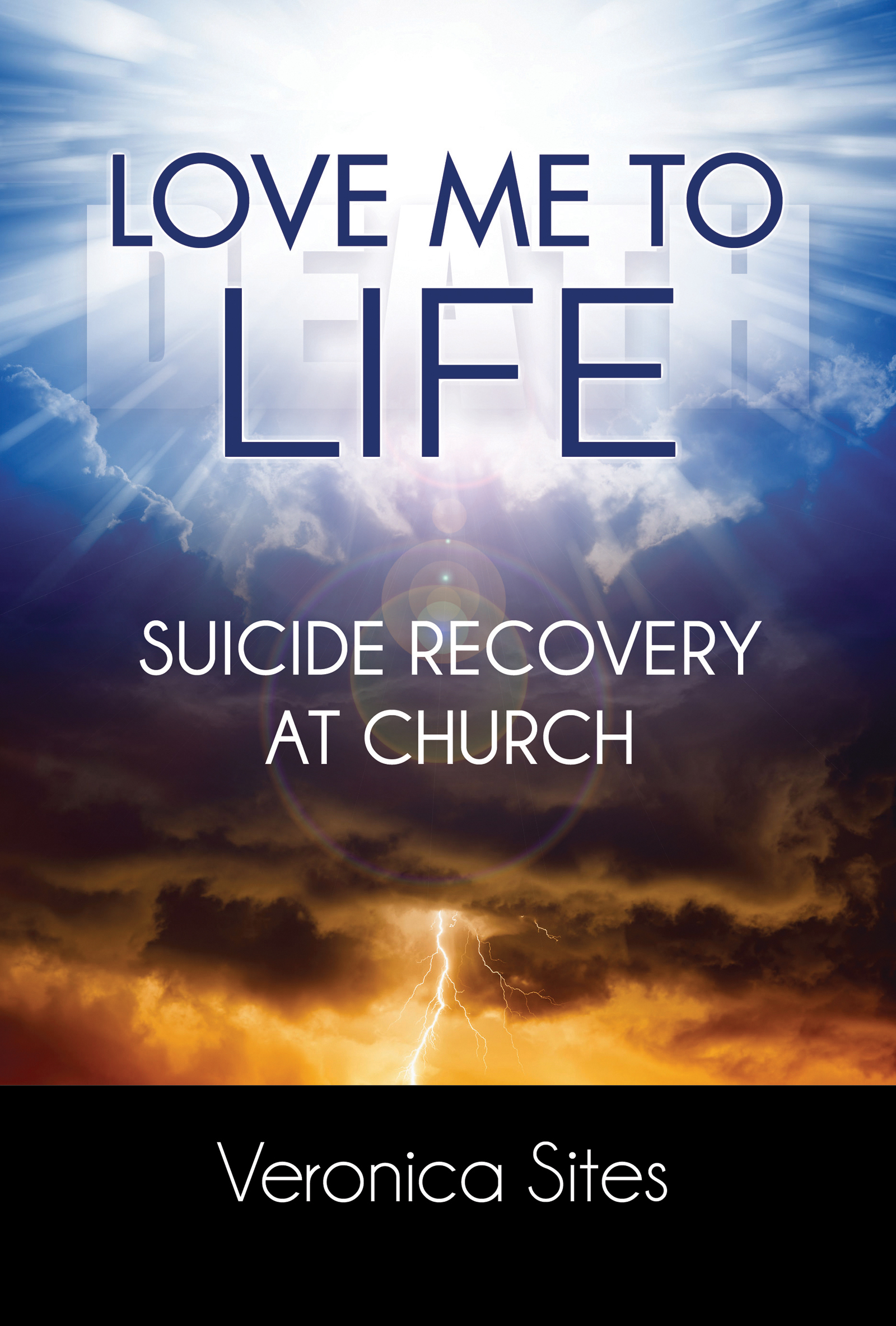
    This video is my interview with Dr. Veronica Sites, author of the newly released book Love Me to Life: Suicide Recovery at Church. I was particularly pleased both to publish this book and to do this interview because suicide is often ignored or swept under the rug in the church. This results in harm to just about everyone, those who contemplate suicide, those who survive it, family, and friends.

    Veronica takes this issue head-on and discusses it seriously. There are many practical points in the interview, pointing to even more practical materials in the book. I think any pastor or church leader would benefit from a serious study of this. Don’t be caught off guard!

    Do you know where you can refer someone who is contemplating suicide? Do you know how to listen? Are you going to add condemnation to the burdens that person is already bearing?

    Love Me to Life will help you respond faithfully and positively to those who are very much in need.