Threads from Henry's Web

Category: Christianity

  • An Example of Doing Biblical Theology (Mark)

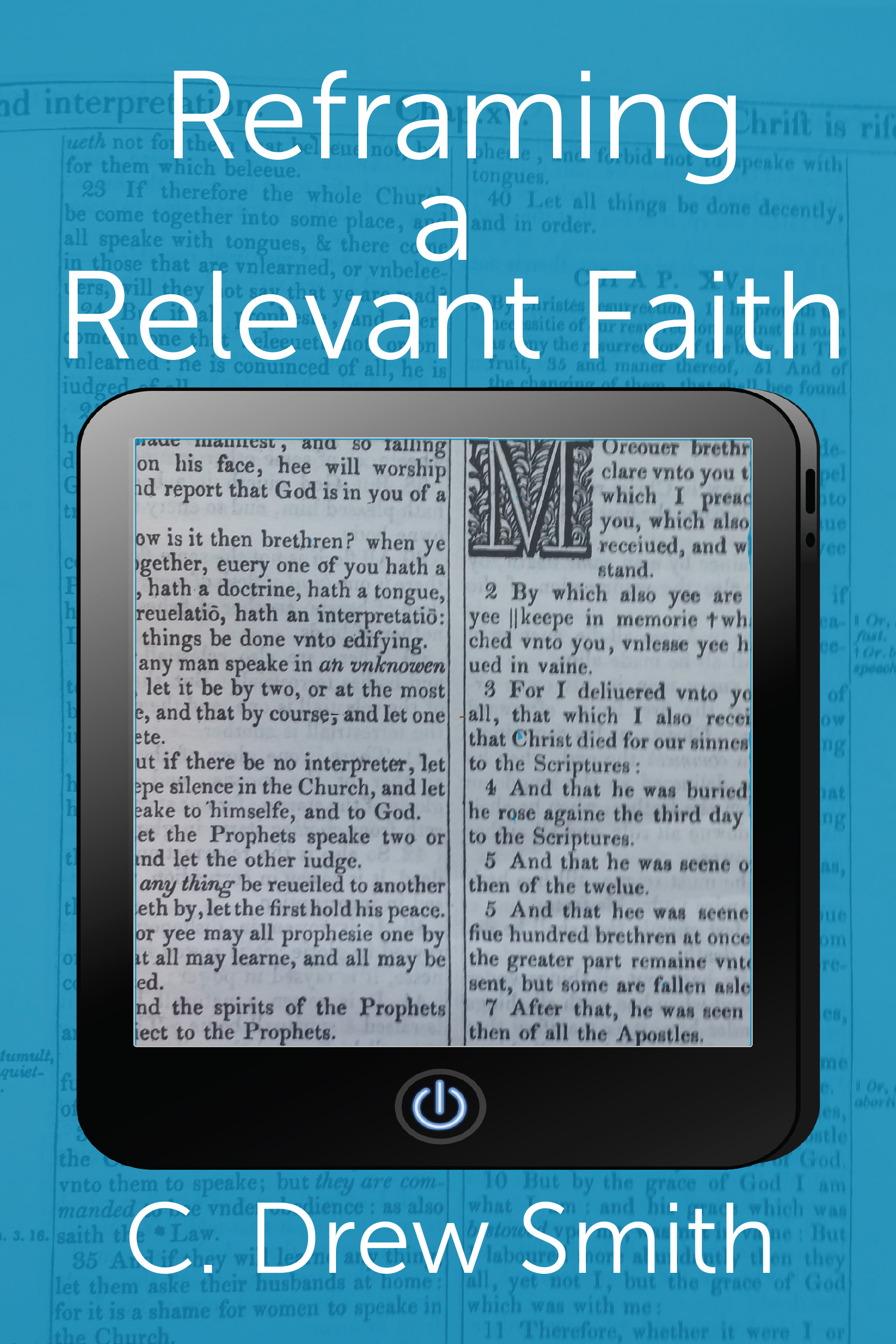
    9781631991219Drew Smith, author of Energion title Reframing a Relevant Faith, has posted an article, Mark’s Presentation of Jesus’ Vindication and Exaltation as an Act of God, which shows some of the nuts and bolts of biblical theology in process.

    Drew will be my guest on my study of According to John on April 16 to discuss how biblical theology is done. One of the questions I’m going to ask him is how the view of the crucifixion and exaltation differ from Mark to John. I think the answer to that question can illuminate some of the topics I’ve been discussing in the study.

  • According to John and Psalm 82 Last Night

    I’m embedding the viewer here. I spent a great deal of time on Psalm 82, and I think that trying to do that just straight talking until I was out of breath may not have been my best choice. I’ll consider posting further on Psalm 82 and John 10:34 here in writing and hopefully clarify where I was trying to go.

    Some of what I’m saying here also relates to what I posted today on Matthew 4:4 and Deuteronomy 8:3.)

  • Every Word from the Mouth of God

    A commenter on my post Words from the Mouth of God asks:

    Would you please comment on Matthew 4:4 in this connection.

    Yes, and it’s a most helpful passage to bring up here, and it suggests quite a number of things to me. I’m going to look at the application in connection with what I said in the previous post, but I want to make a few other points as well!

    First, however, let’s quote the passage and connect it to its sources. (Unless otherwise noted, all translations in this post are mine and are often intentionally just a bit too literal.)

    But he [Jesus] answered:

    It is [has been] written, “It not by bread alone that a human being will live, but by every word that comes from God’s mouth.”

    Jesus answers with a quotation, and the perfect verb form emphasizes that the word is established and remains so. It’s a clear and intentional quotation of scripture, and the line comes from Deuteronomy 8:3. It’s part of the reminder of the law that is given to the Israelites as they prepare to cross the Jordan into the land of Canaan. But let’s look at that passage as well.

    You shall be sure to the entire body of commandments which I command you today so that you may live and grow and enter and possess the land which YHWH swore to your ancestors. 2And you will remember all the way that YHWH your God has brought you over these 40 years in the desert so as to humble you and test you to find out what is in your heart, whether you will obey his commands or not. 3And he humbled you by making [letting-NRSV] you suffer hunger, then gave you manna to eat (something you weren’t acquainted with and neither were your ancestors) in order to teach you that it is not by bread alone that a human being will live, but rather by everything that comes from the mouth of YHWH shall a human being live.

    I think this illustrates something I have been mentioning in my study of John, and indeed something I mention quite regularly in Bible study, that the New Testament writers could draw in a broad range of imagery from the Hebrew scriptures through a simple quote. Note here that it’s not simply that Jesus was hungry, though he doubtless was, but also the 40 years of wilderness wandering are evoked by the specific reference, assuming readers were acquainted with that passage.

    That wilderness time was a time of testing, and it was also a time of humbling the Israelites by forcing them to depend on God. They may have had miraculous food on a daily basis, but they didn’t understand it and couldn’t be sure of the next day based on any natural experience. They received this bread so that they’d know that they were truly dependent on God.

    This is evoked in the temptation in that Jesus is going through this experience of testing and humbling, but with the added note, so briefly mentioned in the gospels, that he had fasted those 40 days. So he suffered this experience without the presence of miraculous food, and in fact rejected bread that came from the wrong source or from wrong actions.

    Besides showing that Jesus experienced testing as we might, it also shows Jesus doing it right, according to Matthew, where the Israelites (and all humanity) have gotten it wrong. Often in discussing the mission of Jesus we miss the importance of Jesus both living his life as a human being and getting it right. It is not just that he died for our sins, but that he lived through our hardships and temptations. Matthew in particular evokes the story of the exodus and wilderness wandering.

    I’d add here that I believe this is what he is trying to do in Matthew 2:15 which quotes Hosea 11:1. Some have tried bravely to make a Messianic prophecy out of Hosea 11:1, to make Hosea actually predict the flight into and return from Egypt. But what Matthew is trying to do with that passage is not present a prediction that is fulfilled, but rather to evoke a story that needs to be completed. Jesus comes out of Egypt (Matthew 2:15) and he experiences the wilderness (Matthew 4:1-11), and he does it right.

    Before I leave this theme, I want to note that this passage is reflected in Wisdom of Solomon 16:20-29, but especially verse 26: “… so that your children, whom you loved, O Lord, might learn that it is not the production of crops that feeds humankind but that your word sustains those who trust in you” (NRSV). I find quite a few nifty little nuggets in the apocrypha, and the Wisdom of Solomon is quite a great source on this, and shows how the Deuteronomy passage, to which it doubtless alludes, was heard somewhere around the time of Jesus (+/- 50 years or so!).

    But now I turn to how this applies to my understanding of inspiration, expressed in my previous post. The fact is that I think it reinforces it. As I have noted, all scripture begins with an act of God. That may be a speech act, but it may not, in the narrower sense of “speech.” But that’s where I may have conceded too much, and I’m happy to correct my error. If we look at the world as described in scripture, there is no act of God that is not an act of the Word of God. Genesis 1 and John 1:1-18 should make that quite clear. So word and act are united in God. By the report of God’s act we know of it, although we may also know of it by its result. We see the Word of God in everything that is. The light by which I type this comes from God’s word. In scripture we have the genuine testimony of those who have seen God in action. Sometimes that will include words attributed to God, but sometimes they will report actions.

    In Deuteronomy, I would read the word “word” in a narrower sense suggested by the context, particularly that a human being lives by living according to the law/Torah/instruction provided by God. Those are the specific words referenced. I think Jesus, in using this passage, conveyed to us by the words of Matthew, intended to expand that concept. Certainly, as Christians read it, they came to believe that we would all live by the Word that proceeded from God.

     

  • Video Repost: Idolatry and Trust

    My sister was going through my older YouTube videos and called my attention to the one titled Idolatry and Trust from six years ago. It relates to some of my more recent comments on God in my study on John. I’m amused to watch myself in this, as I clearly had a written transcript and had it placed too low for me to both read it and look properly into the camera. Note also that the URL provided in the video no longer exists. For information, you can use this site.

  • According to John: Who Is This Son of Man?

    I’m running a little behind today, so I’m just going to give you the link. You can check out the details via the event on Google+. The YouTube viewer is embedded below.

  • Words from the Mouth of God?

    In comments to an earlier post one reader notes that there are those who call the Bible “words from the mouth of God.” I respond that I do not think the Bible is words from the mouth of God, but rather the testimony of people’s experience of God. There are those who think I diminish the authority and power of the Bible in this way. I disagree. I think that the testimony that results from the experience of God is much more valuable, and I believe it also more accurately reflects the nature of the biblical text itself.

    I believe that it’s valuable to be able to distinguish the nature and function of various portions of scripture. While all scripture is inspired, not all scripture is produce in the same way and it does not necessarily function in the same way. There are some obvious examples, such as the speeches of Job’s friends in the book of Job. That is surely quite a substantial amount of writing that is not words from the mouth of God. One may say that it is inspired and that it is profitable, yes, but in words that the book of Job actually attributes to God, we are told that it is not God’s message in those passages. They contribute to a message provided by the book, but the words are not God’s words.

    Now most people who talk about verbal inspiration are not surprised by this sort of statement. There are also those who point out to me that it’s God’s Word, but not necessarily God’s words in all cases. It seems to me, however, that we might as well just come out and say it. Often our affirmations about scripture get in the way of what scripture actually is and how it functions.

    I prefer to say that scripture is the testimony of those who have experienced God, brought forth in various ways using various forms. It is providentially preserved by God as the message that we need. It begins with an act of God (which may be an act of communication, but it might even be a permissive act, or lack of action, such as permitting the Assyrians to come against Israel (2 Kings 17). It might be reported as the words of God, as much material in the prophets is reported. It might be reported in the form of a story, or history researched and reported, as in Samuel-Kings. It might be a letter written to a church as in many of the epistles of the New Testament. In the end, it must be recognized by the community and then interpreted, in all cases providentially guarded by God. (Of course, we realize that in the interpretation, at least, God’s providence does not prevent our error or even our stupidity!)

    Much of our discussion of inspiration centers around how the original text came into being. This is, indeed an interesting topic, but the majority of our differences come not from potential differences in the source texts but rather from our ways of interpreting them (see my post yesterday, Book: I’m Right and You’re Wrong). Further, I think our affirmations about inspiration often fly in the face of what we actually observe in scripture. This can result in us trying to make scripture fit our conception of what it ought to be.

    If nothing else, the incarnation, in which God acts very much contrary to what everyone expects, should suggest to us the dangers of trying to force God’s actions into our molds. But it seems to me that we do this with scripture.

    Consider Isaiah 7:1-17. This contains the famous “virgin” passage, but that’s not what I want to discuss. Read the passage carefully and look who’s talking at various points. I identify a narrator who gives the historical situation and then reports that Isaiah got a word from the Lord with instructions for action and a message to give to Ahaz. We also have a report on Isaiah’s action, and then some words that Isaiah said, some of which appear to be the words of the Lord, but some appear to be Isaiah simply expounding on what God is going to do. This entire passage is part of an overall Bible book which includes more than one type of literature, and even includes an historical interlude, but only a fraction of the whole claims to actually be God’s words.

    There are those who think I make these comments because I don’t believe the Bible is very historical. I would note that I am not very disturbed by those who are skeptical of the historicity of many Bible passages. But I really find relatively little in the parts of scripture that actually claim to be history that I cannot accept as at least generally historical. What I mean here by “generally” is that I treat an account that says it’s taken from the “chronicles of the kings of Judah” (1 Kings 14:29 and many other references) as precisely that: it’s taken from the chronicles and it has precisely the historical veracity of those chronicles, always adjusted for second hand reporting. I don’t see it as necessary or valuable for God to “fact check” the sources. The message (word) of God is conveyed by the testimony (words) of a human writer depending on the words of other human writers.

    Considering that those words will in turn be interpreted by very limited human beings such as me, I’m pretty happy with that situation.

  • Energion Hangout this Evening

    Using Google Hangouts on Air, I’ll be interviewing Energion author William Powell Tuck (The Last Words from the Cross, The Church Under the Cross, Journey to the Undiscovered Country, and many more) regarding the season of Lent, particularly as it relates to those who are undergoing trial and testing, those who suffer, and those who are experiencing grief.

    The event link is the first part of the text above and provides details. I’m embedding a YouTube viewer below.

  • Hebrews: Authorship and 6:1-8

    Thomas Hudgins links to a post in which someone supports Luke as the author of Hebrews. The post to which he links indeed supports Luke, but I find a number of other things somewhat more interesting. The topic is Hebrews 6:1-8, one of the more controversial passages in scripture, and the title is An Enduring Call for Christian Maturity: An Exegesis of Hebrews 6:1-8. I find the suggestion of Luke as the author of Hebrews quite plausible, though I remain agnostic on the subject, but I found a great deal to disagree with in the exegesis. I need to write something more detailed on this topic. My disagreement shouldn’t be too surprising, as I come at this from the Arminian perspective. I hope, however, that I am also faithful to the text of Hebrews.

    On the other hand, the more I have looked at this passage, the more I have begun to think that the term that ties this passage to the previous (and Chilton rightly starts with Hebrews 5:11 which gives clear indication of moving forward), is the various forms/cognates of the word teleios, a verbal form being found in 5:9, referring to the completion of perfection of Jesus, particularly, as verse 10 notes, leading up to Jesus as the Melchizedek figure, which will be the focus of chapter 7.

    Contrary to my Wesleyan roots, I’m thinking less and less that the perfection/maturity involved is so much that of the believer as what the believer is brought into in Christ. I agree with Dave Black (you can find some of his comments in his blog archives; search for Hebrews 6) that we should allow the passive force of the verb, “be carried along” to come forth in translation. Now in the overall message of Hebrews, this does mean that something is accomplished in the believer’s life, but the believer’s activity is to continue to be carried.

    As I said, I would like to discuss this further, but I don’t have time this afternoon. In fact, I will doubtless spend many more days working with this passage. In the meantime, despite my disagreement on some points, I really appreciate seeing such thorough analysis of this passage. It’s often neglected.

  • I Didn’t Know They Had a Feast

    Today, says Allan Bevere, is the feast of John and Charles Wesley. The source of this is The Lectionary Page. It is, however, listed amongst the Lesser Feasts and Fasts. (It’s an Episcopal site. What can I say?)

  • Book: I’m Right and You’re Wrong

    Book: I’m Right and You’re Wrong

    When I started Energion Publications just over 10 years ago, my primary interest was in Bible study materials. My goal was to get the people in our churches to study the Bible more, and to do so for themselves. My complaint about much of the material available was that it was often shallow and repetitive, and that people had often been seeing the same things over and over again. (I don’t mean that there were or are no good materials; merely that there are not enough materials that address people in the pews.)

    It wasn’t just that some material was shallow. It was that often when the material was a bit deeper it tended to present conclusions without really teaching students just how those conclusions were reached. Quite frequently, church members were simply accepting the conclusions they were taught on authority, not because they had really examined them and come to accept them for good reasons. Their pastor, or some well-respected person from their denomination or tradition stream claimed that a verse meant a certain thing, so that’s what it meant.

    When people from two different tradition streams would meet, debate could get heated as people fired spiritual canon loaded with pre-interpreted texts. They thought they were firing them at one another, but generally they were firing them past one another, because their targets had memorized a completely different interpretation for that particular passage.

    I launched several projects in response to this. First was the Participatory Study Series, the first series I know of to intentionally select authors from different tradition streams to cover different books of the Bible. My idea was to give people a chance not just to study about the various methodologies, but to study a whole book of the Bible with the guidance of a qualified scholar from different traditions. Thus you can study Philippians with the guidance of process theologian Bruce Epperly and Ecclesiastes with conservative evangelical Russel Meek. As time goes on, this variety will increase rather than decrease.

    There was still more to be done. Our conclusions about scripture depend heavily on our approach to interpretation, our interpretation depends to some extent on our view of authority, and both interpretation and authority depend, to some extent on our understanding of inspiration.

    Thus I published Learning and Living Scripture: A Introduction to the Participatory Study Method, but that little book didn’t really deal with the conclusion. It embraced it and invited more! So I wrote my own book about inspiration and listening to God, When People Speak for God, and then acquired a truly masterful work, From Inspiration to Understanding: Reading the Bible Seriously and Faithfully by Edward W. H. Vick. Shoring up a more conservative viewpoint was Elgin Hushbeck’s Evidence for the Bible.

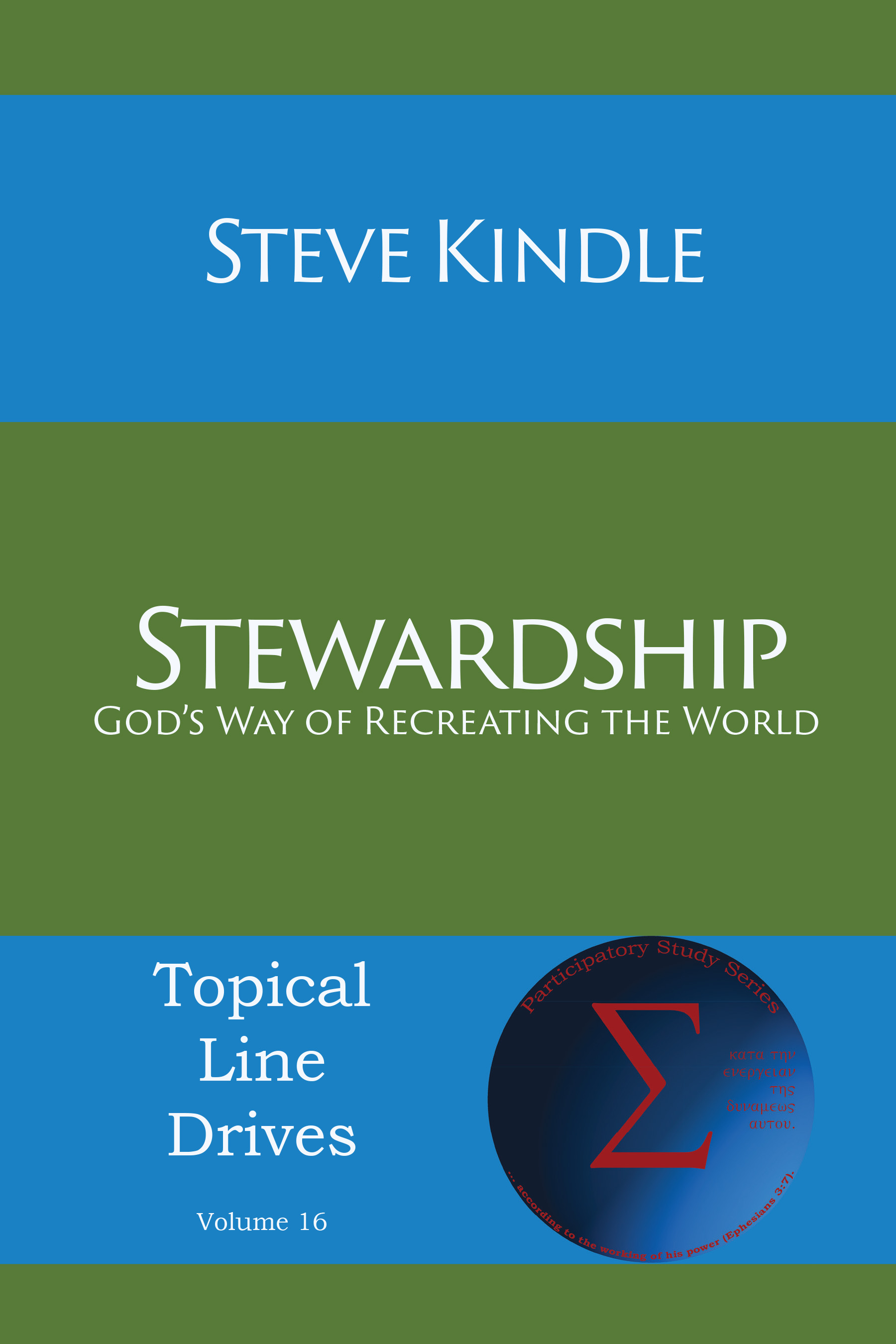
    9781631990991With all those books, the question still remained. How does one learn to understand and even benefit from the variety of approaches to Bible study?

    Well, now we have a short, easy-to-read book that will help you understand why we disagree about what the Bible says, and why so many of those disagreements are so intractable. It’s I’m Right and You’re Wrong: Why we disagree about the Bible and what to do about it. It’s a challenging title, and in just 40 pages, you’re going to begin to get a picture of the variety of scriptural interpretation.

    Author Steve Kindle writes with a gentle passion. This is not a book proving that his approach to interpretation is the one and only right approach. He doesn’t deny that there is objective truth out there; he just doubts that we are going to be able to get there with are finite and not-so-objective minds. What he does instead is try to give us an idea how various approaches work.

    There are at least two things you can do, starting with this book. The first is simply improve your ability to converse with people whose approach to the Bible might be different than your own. With the basic information Rev. Kindle provides, you can build your understanding by listening to others. Second, you can use the excellent footnotes to find more detailed expositions of these various approaches and learn more about them than could possibly be contained in a 40 page book.

    As a publisher, of course, I would be delighted if you’d also embark on a journey with the Participatory Study Series and actually study some books using guides written from a perspective other than your own.

    At a minimum, however, learn how to break through the hostility that often characterizes debates about the Bible to come to understand how someone else has become convinced that he’s right and you’re wrong!

    Note: This book is already printing, but we’re leaving the pre-order pricing up for one more day. That means you can order from Energion Direct for just $3.49. If you take this opportunity to get 3 or more copies, shipping will be free. The shipping charge is just $2.00 on orders of less than $9.99.