Category: Christianity
-
Spectrums: Liberal to Conservative Is not Enough
Last weekend Dave Black was our guest here in Pensacola. I recorded some videos for promotional and educational purposes and Dave also preached and talked about missions (with plenty of pictures) at Chumuckla Community Church. I will be posting some of these videos soon, but they are not quite ready yet.Dave is a professor at Southeastern Baptist Theological Seminary. I’m a United Methodist with the dreaded ‘L’ word in my blog tagline (“Thoughts on biblical studies, religion, and living from a passionate moderate, liberal charismatic Christian”). Obviously this is some sort of liberal-conservative dialogue.
Not really. I’ve written recently about dialogue and why, as a publisher, I publish books from a variety of perspectives. In a video I produced in the early days of Energion Publications I used a triangle, with the points being charismatic, liberal, and evangelical. I would note that for this to work now it should be “conservative evangelical” as the label “evangelical seems to have lost some cohesion. This will happen to words, especially those that are perceived as positive labels.
But even those three points fail to catch some of the issues, and there’s a bit of a tendency to think of Christians grouped at the points of the triangle. One of the reasons many have trouble with labels is that people don’t fit into the center of the semantic range of a label. In addition, on different issues one may take different positions. I have political views on some subjects that seem very conservative, while on others I seem quite liberal. Similarly on theological issues I don’t try to fit all in one camp.
There are two points (I think!) in all this rambling. The first is that we don’t fit cleanly into one label on all issues. The second is that we may be able to connect with people in other camps on particular issues. In all cases (should this be #3?) this should suggest options for learning from one another.
For example, when many charismatics talk about modern revelation they use theological arguments that are also commonly expressed by liberal or progressive theologians. Not a few of those I’ve talked to want to deny any connection, but behavior and practice tell a different story. There is some theology to be learned here! Similarly many charismatics should—and do—learn biblical studies from their evangelical brethren.
Many liberals or progressives, on the other hand, don’t want to be linked to charismatics because of emotionalism or other extremes. Yet too frequently progressive biblical reflection tends to be more a matter of challenging the conclusions of evangelicals rather than developing a robust theology and application of scripture. Yes, this can be a stereotype. I have several authors in the Energion Publications list, such as Dr. Bob Cornwall, Dr. Bruce Epperly, and Dr. Drew Smith, none of whom fit the picture. And there are many more like them.
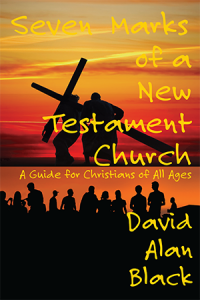 One of the interviews I conduced with Dave was about his book Seven Marks of a New Testament Church. Dave goes back to the book of Acts for keys to how the church should behave now, in the 21st century. And this brings up a very different spectrum: church structure.
We could make a spectrum that runs not from conservative to liberal, but from strongly hierarchical to mutually submissive, from high church to low, from central control to local. Similarly we might look for a spectrum of views on who is in charge of the church, how much, and in what way. That could run from Jesus in charge directly to a highly hierarchical view of how the lordship of Jesus is implemented in the life of the church. None of these would exclude people from any liberal-conservative, charismatic-evangelical, or any similar ideological spectrum.
My plan is that as soon as I’ve posted my interview with Dave on his Seven Marks book, I’m going to start blogging through the Marks. As I do so, I’m going to bring in points from some other authors, such as Bruce Epperly, whose book Transforming Acts: Acts of the Apostles as a 21st Century Gospel also goes back to Acts to ask what we can do in the church today. Beside both of those I’m going to reference the book Thrive: Spiritual Habits of Transforming Congregations by Dr. Ruth Fletcher. There are definite differences of approach in these books, but there are also many points of contact.
So I’m going to ask two questions in my series:
- Can we find a way to apply these seven marks in other theological and ecclesiological traditions? (I fully believe we can, though there are places where our ecclesiology needs to change, and that’s a good thing!)
- More specifically, how can a United Methodist congregation look back to the New Testament and so become a more authentic witness for Jesus in the world today? There are those who would say many of these ideas are not possible under denominational rules, but I wonder. How much would a simple commitment to being “servant of all” on the part of those at the top of the organizational chart might change the reality without altering the paperwork?
So watch here over the next week. I’ll post the video and then begin the discussion. I hope I can find some people to discuss this with me vigorously. My comment policy is largely open. If you don’t threaten the family friendly nature of the blog, you can express yourself.
-
Eschatology: Mark 13
While I titled the event Eschatology: Mark 13, Matthew 24, and Luke 21, I will be focusing on the first. I will be mentioning the parallels and likely working directly from gospel parallels. I’m embedding the YouTube viewer first, then I’ll make a few comments.
I had hoped to post more earlier, but the work load this week prevented it. I also hope to post something more this afternoon, giving some background for what I’ll be saying. It is obviously impossible to do a detailed exegesis of Mark 13 in an hour, so I’ll be looking at some key points.
First, yes, I won’t be able to resist. I’ll mention some elements in the parallels that could play into arguments over Markan vs. Matthean priority.
Second, I want to talk about my overall view of biblical eschatology, and how I read that in Mark 13. Note that this is, to a certain extent, eisegesis. My overall view is the result of my study of many eschatological and apocalyptic passages, and not a derivative from Mark 13. Yet I will use it. I had planned to wait to present this overview, but I think it’s better for me to give my “mini-eschatology” first and then develop how I connect it with much broader and deeper eschatological views as I move forward.
Third, I want to focus on just what the disciples would have expected when they heard or encountered this material. Thus I’ll discuss the debates on whether this is original to the gospel (as a whole), whether certain elements were added later, and also just when this was written.
All of that leads to the point where I—finally—talk about “this generation shall not pass,” which has provided fodder for biblical and theological debate for the last two millenia. How was it understood in the past and how shall we read it now?
In studying eschatology from a biblical perspective, it is important to realize that one needs to resolve a broad range of questions nearly every time one wants to resolve one question. For example, the way in which one understands Daniel 9:27 impacts how one will understand “the abomination of desolation” and how one understands the vision of Daniel 7 will impact how one understands the son of man coming in the clouds. Not to mention whether one is certain those particular references are in view. Deciding how to understand those chapters involves a range of decisions regarding the text of Daniel as well as its historical and cultural context. Those decisions involve a number of issues regarding how one dates literature.
I say this because I expect to circle back to many of these passages after we’ve studied others. I think it would be useful to read Mark 13 again after we have done further study of Daniel. Jesus did not live in a cultural or theological vacuum either. Certainly his disciples did not. How might they have drawn these passages into their understanding of the words in the gospels? It is possible that what you or I decide in studying Daniel might be the correct historical understanding, i.e., we might be right about when it was written and how it would have been understood by its original audiences, but that the understanding we get there might not be the one the disciples would naturally draw in as they studied the words of Mark.
Complicated? Indeed. Fun? I think so!
-

Learning about the Homeless
Over the years I’ve heard many discussions of what one should do about people asking for money at streetcorners, or at the exit from the interstate, or wherever they may be found. The vast majority of these discussions were about ethics. Do I have a duty to help such people if I can? If I help them, will I be encouraging their (presumed) addiction? If I give, how much should it be?It’s good to discuss ethics, though quite often what we discuss remains abstract. We decide what the ethical thing to do and then continue doing whatever we felt like doing in the first place.
But what if that isn’t the question?
This week, on the Energion Discussion Network Renee Crosby is offering some posts, and today’s post struck a nerve for me. It is much easier for me to give a dollar or two than it is to get to know someone and to converse. But that is one thing that Renee suggests. It’s not that you shouldn’t give that dollar (or more). Rather, that may not be enough.
Check it out and think about it!
Also, note that EDN is offering a free book drawn from those eligible comments by eligible people (Energion employees, contractors, and authors are excluded). So comment and discuss over there and you might win a free book as well as learning something new.
-
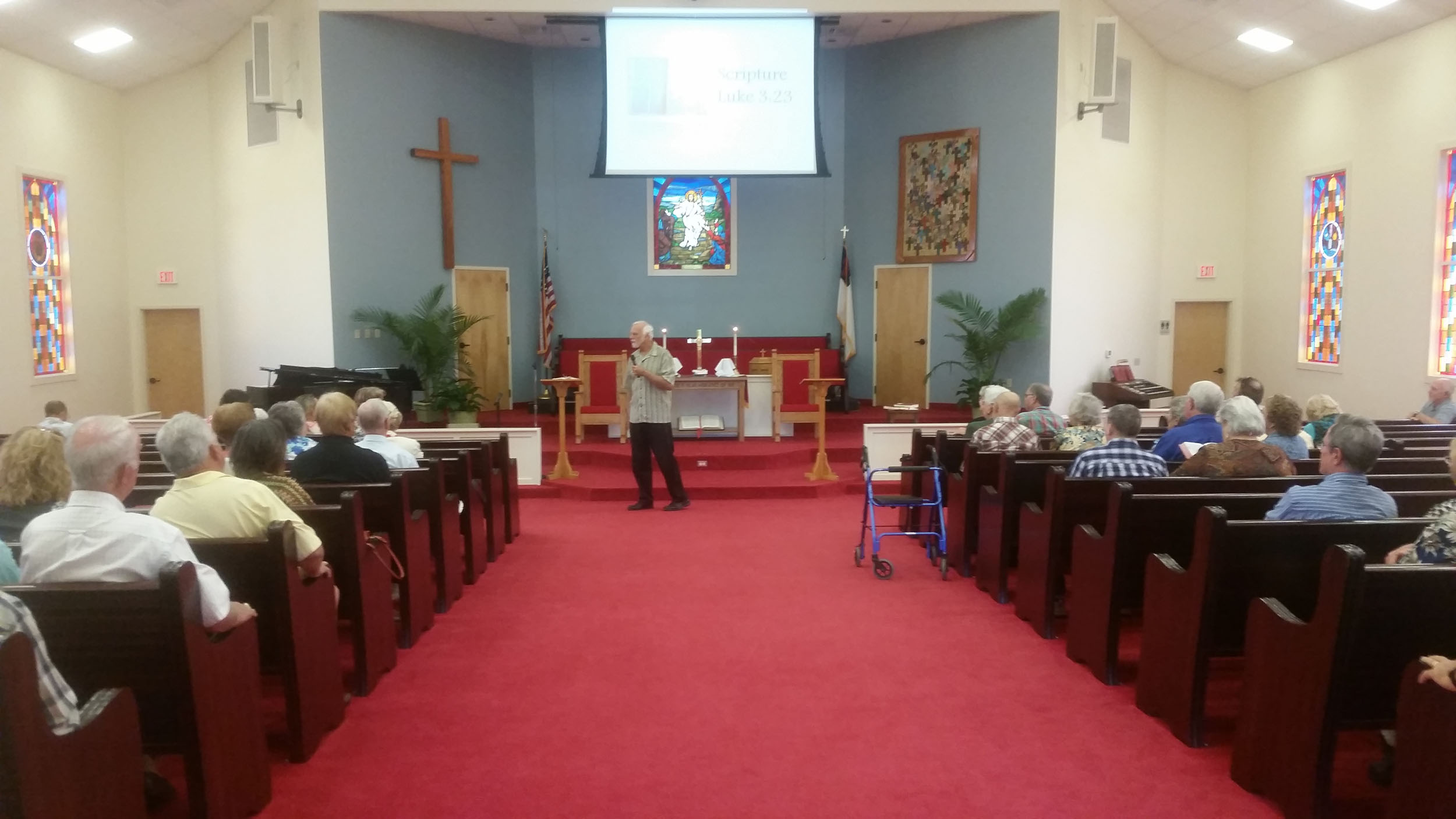
Dave Black at Chumuckla Community Church
 I had the pleasure today of hosting Dr. David Alan Black at Chumuckla Community Church. I’ve been teaching there for the last five weeks, and preached once. Today Dave shared pictures of some of his mission work and also preached. His sermon was titled “Jesus and the 30 Year Transition, working from Luke 3:23. Well, and a few other texts.
Dave spoke with strong conviction about turning from temporal things to eternal and from ourselves to something bigger than ourselves. He said that every Christian is a missionary. Your call may be to the other side of the world or the other side of the street. One of the keys is simply to give of yourself to others.
I can’t do justice to the entire message. Dave manages to hold attention. He uses lighter moments effectively while bringing home a solid message. A few folks I know could take some homiletics pointers.
Dave is on his way home, and I’ll be continue to work on publishing, but I was again reminded of one of the privileges of publishing. It’s wonderful to be able to learn from so many wonderful people who are authors for Energion Publications.
-
Speaking of Biblical Interpretation
James McGrath posted a rather humorous piece this morning, titled The Fundamentalist Interprets Scripture (Sheep and Goats).
I think he makes an important point here, but it is my belief that we all have our ways of avoiding what scripture says. The liberal finds things out of date. The conservative finds ways of categorizing texts, or let’s scripture interpret scripture by finding a text that says something different. The moderate (yes, even passionate moderate!) cuts the sharp edges off of the text making it seem more mainstream and less challenging. And we all find it much easier to notice the passages that correct someone else’s behavior.
I do it very poorly, I admit, but I really want to read scripture so that I can become more closely acquainted with God, seen especially through Jesus Christ, and so that by beholding I can become changed. (Hear the echos of my memorization of the KJV as a child!) Not so that by my beholding I can correct the rest of the world. I want to share, but let the Holy Spirit do the conviction, as necessary.
If we all studied the Bible (and yes, other books as well) with this goal, might the world not be a better place?
-
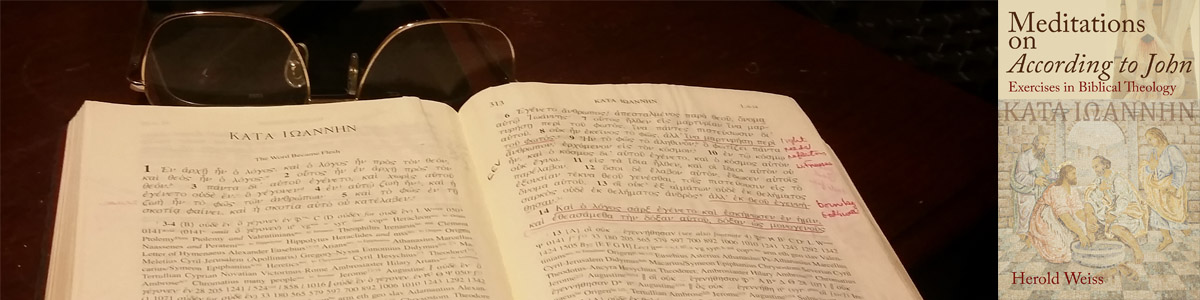
According to John: Where Are You From
 I’ve been planning to create some short notes on John, discussions of topics about which I’ve gotten a number of questions. I recorded the first of these today, and here’s the embedded YouTube video:
Tonight I’ve decided that I will focus much more on the trial of Jesus and the relationship between ritual, symbol, and spiritual reality. You can find more information on the Google+ Event Page, or you can view using the embedded viewer below.
-
Another Note on the Eucharist Celebrated Weekly
 … at least.
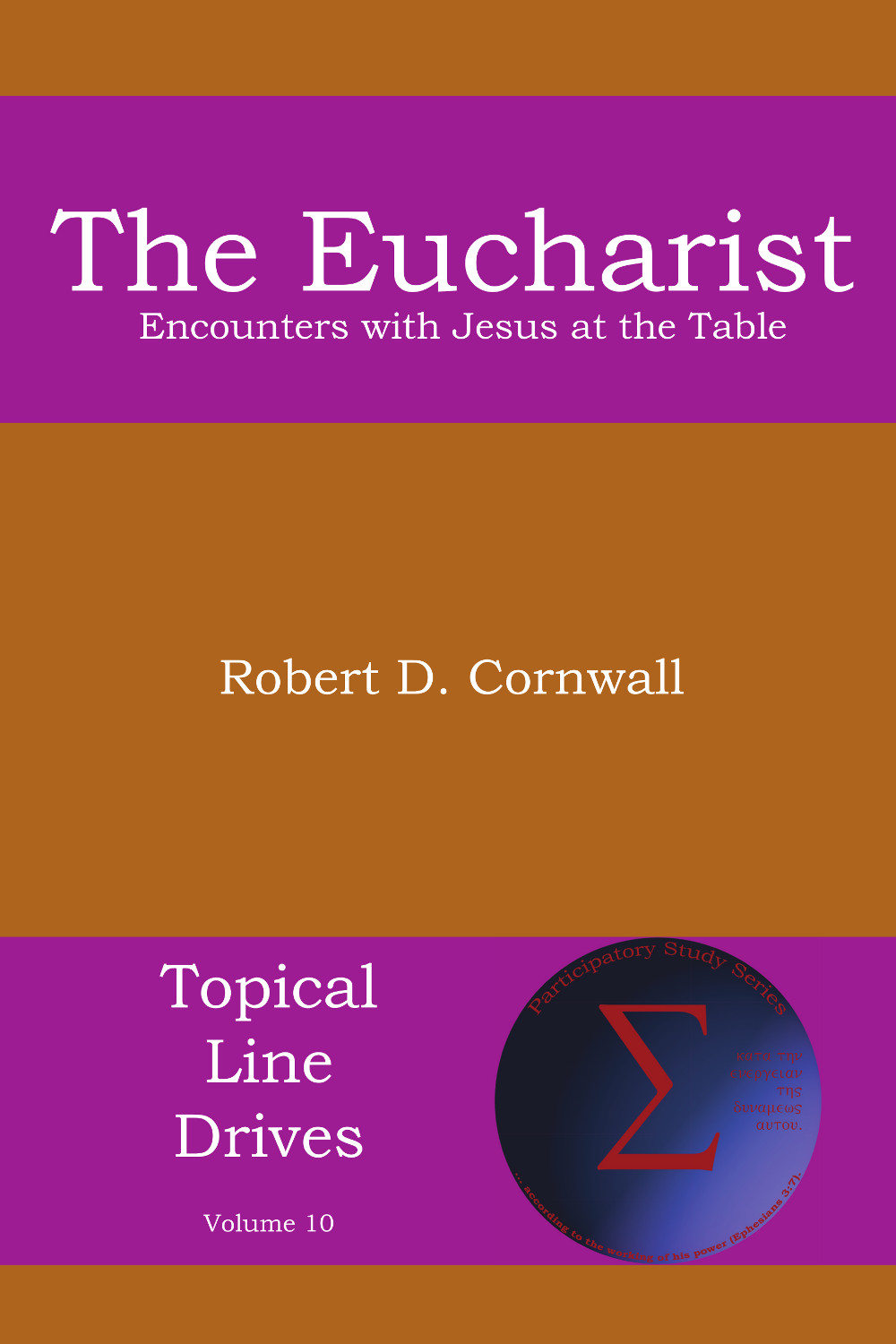
Bob Cornwall shares a bit on this topic, including, of course, a link to his book in Energion’s Topical Line Drives series.
I often don’t like John Calvin, but I do like this view of the Eucharist. I don’t see the need for some kind of physical description, but I do believe that through carrying out this common ritual as commanded by Jesus we share in community.
I like the weekly celebration as part of the service. Our pastor normally connects the celebration with the topic of his sermon and makes it a combination of traditional elements and up-to-the-moment connections. I recently experienced this with someone who read the liturgy word for word, and I must say that the difference was striking to me. I think there are ways to make traditions both familiar, so people feel able to participate and also new, so that participating is an uplifting challenge.
In any case, check out Bob’s article.
-
Last Night on the Tuesday Night Energion Hangout: Stewardship

 Pastors and church leaders cringe at the “s” word, because so many members don’t want to hear about it. Sometimes they blame the members for not wanting to dedicate their wallets to the Lord. But is that precisely what we should be asking church members to do?
I think the resources to carry out the gospel commission already exist. Those resources are tied up in our individual wallets, bank accounts, and possessions at the individual level. At the church level they are tied up in buildings and supplies, things we’re sure we have to have. But do you know that there are thousands of churches around the world that get along without the things that we, in American churches, absolutely have to have?
Come to think of it, am I aware that there are people who do without things that I count on every day?
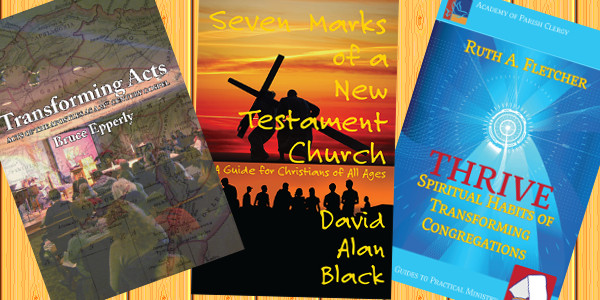
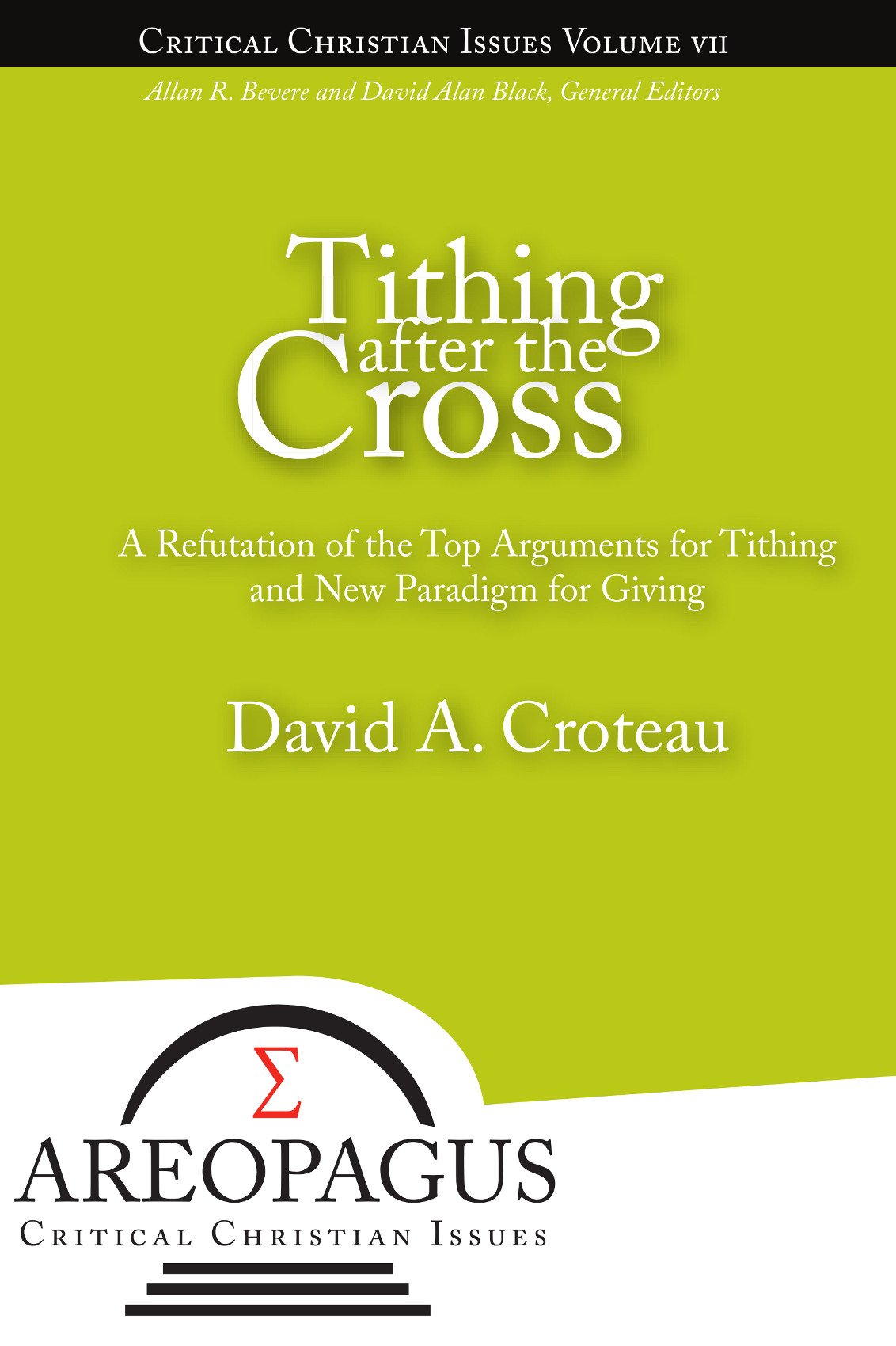
My guests were David Croteau, author of Tithing after the Cross and Steve Kindle, author of Stewardship: God’s Way of Recreating the World. They come from different denominational and theological backgrounds and belong to different generations. Yet in looking at what the Bible says about stewardship, they both come to the same conclusions. You’ll be amazed at the level of agreement.
I have heard many of my fellow Americans say that the government needs to get out of charity and let the church do it. You know what? How about if the government could spend way less on social welfare programs because the church was doing its job? I don’t just mean giving out money; that’s part of it. But giving out money results from letting the gospel change our priorities so that we give ourselves to the Lord (2 Corinthians 8:5), and everything else results from that.
Just think! We might even turn the world upside down (Acts 17:6)!
Here’s the video:
Earlier today Dave Black commented on this as well.
-

Choosing Pastors and Church Continuity
Last week I encounter two posts that got me wanting to say something about the same topic: pastoral leadership and church mission and continuity. The first was The United Methodist Church Should Give Up Its Game of Musical Chairs, and the second was not obviously related, 5 Reasons Why the Sunday Sermon Is Boring (both HT Dave Black Online). I do tend to see them as related, and I’ll explain why.The United Methodist Church has an approach to assigning pastors. We call it itinerancy, because it grew out of the system of circuit riders, but we Methodists should admit that it bears very little resemblance either in theory or in application to circuit riding. And yes, it has its problems, sometimes serious ones. Bigger churches get preference. Places that are well established and have good income are more likely to get experienced and effective pastors. Places where the ground to be ploughed is hard often get pastors who are tired or inexperienced.
I would also say that quite frequently churches get what they deserve under this system. If a congregation is lively and active and wants to impact its community for good and for God, then it will often get a similarly lively pastor. I once heard a United Methodist district superintendent say she wasn’t going to waste a good pastor on a church that wasn’t going anywhere.
But the system has the bottom line problem of all systems: People. One can write a similar list of problems for almost any system. A call system often results in similar disparities, this time because the same pastors the bishop would have assigned to more active or larger churches are chosen by such churches, while the smaller or less active churches are left to choose between the remnants. On the other hand, pretty much all systems have at least one plus: People touched by God’s grace.
We often believe we can rewrite the rules for church polity and thus solve the church’s problems. But our rules do not solve problems. Our rules provide a framework for us to live in community. Yes, they can encourage or discourage various kinds of behavior, but they will not make a successful church. For the church to be successful, we need to proclaim the gospel and act on it in our community. That will require discernment and listening to the Holy Spirit. There are independent congregations that find their way and there are churches with a pastor assigned by a bishop that do so. There are house churches that proclaim the gospel. There are also house churches that go nowhere. The building, furniture, and human rules won’t make it all work.
So what about those boring sermons. How does that relate?
I’m glad you asked! The sermon is another point at which we hope certain rules or procedures will solve the problem and make the sermon “work.” But like a pastoral call, we get stuck with what happens. If the called or appointed pastor is a good preacher, we’ll get a good sermon. I know there are classes on homiletics and good books on sermon preparation and presentation. I even publish one. But some people simply aren’t preachers. I know more than one person who was a deep thinker, perhaps an excellent discussion leader, certainly someone who did her or his homework, yet the sermon was just not the right medium for the person.
But the pastor has to present a sermon!
And there is our problem with both elements. We have churches that are pastor centered. Why is it that a church cannot function with a change of pastor? Why is it that a church cannot function in the absence of a pastor? Why is it that a change of pastor will bring active ministries crashing down?
In all cases, I would say, the ministries are too pastor-centered. We are the body of Christ (1 Corinthians 12:27). Paul doesn’t tell us that the pastor is the body of Christ and we are the pastor’s minions. Rather, we are the body of Christ and “pastor” is a gifting and calling exercised within that body. A pastor won’t necessarily be a good preacher. And despite those who advocate pastor-teachers (and there are many of those), I believe that the two exist separately as well as together, though the work overlaps. Both pastors and teachers (in one person or not) equip the saints (Ephesians 4:12) for the work of ministry. The means may be different, but the goal is the same: To produce disciples who go forth and minister.
Now teaching and preaching are not necessarily the same, either. One friend of mine told me that the sermon was more a form of art than of teaching. It carried the worship service forward in an artistic way. I don’t really object to this except to say that if this is worship in the form of an art, it shouldn’t be an individually-centered thing, but rather something in which the whole congregation participates.
I would suggest that the needed response to the problems addressed in both these articles is to make our churches less pastor-centered. We need to spread out both the work and the leadership. If a church needs to call a new pastor, they should have continuing, active ministries waiting for the new pastor’s added touch, not for him to revive before moving forward.
Am I against pastors? No! Am I against professional pastors? In some cases. I see a problem when churches that are small spend too much money on having a professional pastor. There is a place for a lay-led congregation or a pastor who is bi-vocational. But whether the pastor is a full-time worker who is paid, or a lay person volunteering part-time, the church shouldn’t center on that one person. Pastoring or teaching should equip others and help them find their place of service in the church and in the community. Further, churches need to recognize this as work. When the pastor sits down in his office with someone for an hour or so, that’s not wasting time. That’s equipping. When the pastor teaches people how to visit and encourage others, that’s not trying to get out of work, she’s doing her job.
I’d further suggest that we, as a church, should not reserve ordination or commissioning for pastors. We should discover the gifts God has given to each member and commission them for that service in the body. Do you have gifts of administration? Let’s pray over you and lay hands on you commissioning you to administer the church office. Do you have the gift of encouragement? Let’s pray over you and lay hands on you, commissioning you to go out and encourage, recognized by and supported by your church.
Recognizing, equipping, sending! Sounds like fun! And we might even find that we had fewer discouraged pastors if we did it.