Threads from Henry's Web

Category: Bible Study

  • Exodus 31:12-17 – Daily Bible Study

    Exodus 31:12-17 – Daily Bible Study

    As I continue my posts on the Daily Bible Study readings for this week’s Sunday School lesson, I come to what may be, for many, a somewhat more troubling passage. It’s not that the passage mandates no work on the seventh day of the week, though that bothers some, but more that the penalty for violating this law is death.

    This frequently brings on the standard Christian response, which is dismissal: This is from the Old Testament, so we don’t have to worry about it. The big problem with that is that, by incorporating themes from Hebrew scripture into the New Testament and by basing any number of beliefs on it, Christianity has accepted this as part of our history, and part of our scripture.

    We face the fact that most of us work on the seventh day. Certainly by rabbinic definitions, but also by practically any definition, I have already worked on this seventh day. Some of the actions involved in posting this blog count as work. So I have violated a law from the scripture.

    I grew up as a Seventh-day Adventist, so I have another perspective from which to look at this. I grew up refraining from work, as we defined it (which differed from rabbinic definitions). Some Seventh-day Adventists have told me they believe I left the church because I didn’t like the Sabbath. This is quite incorrect. The Sabbath is one of the things I miss about the Seventh-day Adventist community. I don’t actually believe this is a command applying to Christians, so I do not feel obligated, but there was a great value in the obligation to rest at specific times.

    I believe the New Testament view would make all time sacred to God and all time to be used by the guidance of the Holy Spirit. I see a violation in failing to take the appropriate rest, not in the keeping of a specific day. This is because there has been a revolutionary shift brought on by the death and resurrection of Jesus. But this is not my primary topic.

    The focus of this statement of the Sabbath command is on God as the creator. This is quite frequently the case, such as in Genesis 2:1-4a and the Sabbath command in the Ten Commandments. The rest is tied to the creator. The authority for the rest is tied to creative activity. This is a theme repeated from most of our scriptures this week. God, as creator, asserts God’s power as legislator.

    In Israel, this law was particularly tied to idolatry, which, as we have seen in other scriptures this week, is a fundamental sin. The most attractive form of the temptation to idolatry is the temptation to attribute divinity to what is created. The sun, for example was seen in much of the ancient near east as the god of justice. This is why Psalm 19 asserts God’s authority over justice, and his creative and controlling power over the sun itself.

    I could discuss the nature of and use of the death penalty, but I’m going to avoid that on this occasion, except in the sense that it emphasizes the importance of the command in question. Idolatry separates one from God in a way that nothing else can. Nothing else can do so — logically — because all the other ways we might think of separating ourselves from God turn out to involve idolatry.

    When, for example, I do not rest as God would direct, and do not maintain my health, I am putting my own labor above God. This is a form of idolatry. I am more concerned with my own activities than I am with that Ultimate Concern.

    Thus the Sabbath command was very much central for Israel, and the thing to which it points—constantly reminding ourselves that God is Creator and the true Ultimate Concern, remains central for us.

  • Hebrews 11:1-3 – Daily Bible Study Text

    Hebrews 11:1-3 – Daily Bible Study Text

    Hebrews 11:1-3 begins thus: “Faith is the substance of things hoped for, the evidence of things not seen” (KJV). Most of the words here are at least a bit controversial.

    It may be easier to understand the passage if we accept that the writer is not trying to define “faith” or the Greek word “pistis,” but is speaking of the function of faith. In Hebrews we have a kind of hand-in-glove paired ideas of this faith or faithfulness. On the one hand, one of the key concepts of the book is God’s faithfulness, and it is from this platform that the author calls for a response of faith, endurance, and boldness.

    If you look back to chapter 3, verses 1-5, and especially verse 2, you will see the expression of the faithfulness of Jesus, who is faithful “as was Moses,” though the point of the passage is to say that Jesus is faithful to a greater mission and authority than was Moses. In verse 5 we are called upon to hold firmly to the boast and the boldness of hope.

    This is one of many cases of the author of Hebrews signaling upcoming topics. Though it is the boldness and the boast of our hope we are to hold onto tightly, we have some similar wording in 11:1 where faith is the “substance” of the things we hope for. I believe it’s necessary to get to a point in the semantic range of the word used for faith, so that it is a faithful acceptance and affirmation, it is the key to what we are to hope for.

    The context of chapter 11 makes this nature of the faith clear. It is a belief that drives endurance in hope that underlies the actions of all of the people of faith in the chapter. They didn’t just sit around and believe really intensely. They remained faithful to their call.

    But the real key is not their faith, or the genuineness of their belief, but rather the faithfulness of the one in whom they are believing and trusting. We have only to look a few verses back to 10:23 to support this idea: “Let us hold on to the confession of our hope without wavering, because the one who promised is faithful.

    Our faith is enabled and brought forth by the one who is faithful in everything, an idea that has been building from the beginning of the book of Hebrews. The one who is faithful has been faithful in accomplishing our redemption and thus we have but to put our faith in his, faithfully.

    Of course, the passages for this week all deal in some way with creation, so we have verse 3 telling us that it is by faith that we can understand God as the creator. Yet again we see God’s authority and power established by God’s creative power.

    This combined faithfulness of God with a response of faith is quite common in scripture. In Romans, we have a great affirmation of God’s faithfulness in chapter 8, followed by chapter 9, which some see as a complete change of topic, as though Paul said, “Well, I’ve got to say something about Israel, so here goes.” In fact, when I took Exegesis of Romans in college, the professor was content to make it just through chapter 8.

    There is a subject change, but it is incremental and not one that turns a big corner. Yes, Paul is going to talk about Israel and the salvation of Israel, but they way he does it emphasizes God’s faithfulness. It would be natural in a church of both Jews and Gentiles for people to ask after the firm, or perhaps fiery proclamation of God’s faithfulness at the end of Romans 8, to ask, “But what about Israel? It’s God’s biggest promise! Is God faithful there?”

    So the discussion that follows, rather than being a sort of excursus, is a historical and eschatological affirmation of the foundation of the book’s message: God is faithful.

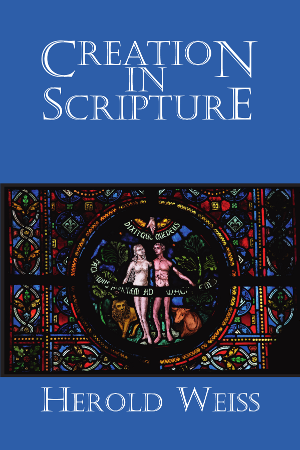
    Which reminds me that one of the authors I publish, Edward W. H. Vick, commented in a couple of his books (Creation: The Christian Doctrine and Eschatology: A Participatory Study Guide), that we can’t really talk about soteriology without talking about creation and eschatology, and we can’t talk about creation without talking about soteriology and eschatology. These topics tie together frequently and powerfully in scripture.

    This week, with these scriptures, we’re not even going to try!

  • Psalm 33:3-9 for the Daily Bible Study

    Psalm 33:3-9 for the Daily Bible Study

    I’m continuing with comments on the scripture passages for this week from the Daily Bible Study, which my Sunday School class uses as curriculum.

    This passage, like most of the passages this week, links God’s Word (whether in words or not) with creation and justice. We are to praise God because his word holds true, his work endures (v. 4). He loves righteousness and justice and his unfailing love fills the earth (v. 5).

    It’s interesting to note that this passage, very much like yesterday’s passage from Proverbs, states the attributes first and then makes the power explicit. “By YHWH’s word the heavens were made, by the breath of his mouth all their host” (v. 6). “He spoke, and it was, he commanded, and it stood firmly” (v. 9).

    I quote it fairly frequently, but I wonder how often we think about who this must be when we talk about being in God’s presence, or hearing God’s voice, or looking at something that we say must surely be the act of God.

    It’s possible for us to affirm the right things about God and never even imagine a tiny fraction of what all this would be like. Perhaps a slightly less casual attitude might be in order.

    The reference “Ephesians 3:14-21” is inscribed inside my wedding band. This is a powerful passage, and I just want to call attention to a few lines: “… that you may be able to grasp with all the saints the breadth, length, height, and depth, (19) to know the love of Christ that surpasses knowledge, so that you can be filled with all of God’s fullness.”

    We often—I often—don’t really get this. It is in the nature of a teacher to explain things, but in this case we have to say we can’t make this clear. It surpasses knowledge. It surpasses our ability to imagine it.

    And then verse 20: “Now to the one who is able to immeasurably more than we ask or conceive according to the power that is working among us …” And that points us back to Psalm 33 and the one who speaks and it is done.

    Do you ever pause and try to imagine this? Or is “we are the body of Christ” just a description of an ordinary gathering of humans?

    Here is a link to a story and a poem I wrote some time ago, but that I believe connect to our lesson this week: It Got Very Quiet up in the Mountains and What Was It Like?

    Featured image credit: Image by Arek Socha from Pixabay

  • Job 9:4-10 – A Sunday School Text Used Out of Context

    Job 9:4-10 – A Sunday School Text Used Out of Context

    I like reading the texts before I’ve read the lesson material so that I can see what I can learn from them without the direction of the lesson topic. So why do I call this text “out of context” when I haven’t even seen how it will be used by the lesson material.

    The reason is simply that the text trims out the material that would let us know the speaker or the point in the argument at which this text appears. If we look back to Job 9:1, we find that this is one of Job’s responses to his friends, the friends who have come to make sure his depression is as deep as possible.

    When you consider that when God appears in this story, God doesn’t think much of what has been said before God’s appearance, it is perhaps not helpful to take theology out of any of the speeches from chapter 3 through chapter 37. While God commends Job, it is not for Job’s speech.

    In my experience, most Christians who quote from Job at all quote from the speeches of Job’s friends, and don’t trouble to take note of who is speaking. That’s because Job’s friends maintain what most of us feel, which is that many, if not most of the bad things that happen to people are the result of their bad decision. God, according to this view, is in the business of rewarding good behavior and punishing bad.

    Job doesn’t really counter this so much as simply assert his innocence. In this passage he’s declaring God powerful, but also distant. That’s Job’s problem with all this. He’d like God to show up and answer his questions. God hasn’t done that.

    What is trimmed out of our reading is the fact that this is Job speaking (v. 1), and that he has just declared that God will not answer. His comments on God’s power are not so much praise as they are a declaration of God’s distance. At the end of verse 3 he declares that God won’t respond one time in a thousand.

    With all that trimmed, this can sound like a declaration of praise for the Creator. What it actually is, is a complaint about the distance of a God who allows Job to suffer and yet refuses to explain himself.

    Job is often referred to as a theodicy, a justification of God’s behavior. Theodicies usually try to explain how God can be good, all-powerful, and yet allow suffering or evil to exist. The book of Job doesn’t actually attempt any theodicy. Job is answered, insofar as he is at all, when God appears and challenges him. In the story, Job never finds out what was going on in the background. We, the readers are privy to the council, and to what God is proving through Job’s suffering.

    Equally interesting to me is the fact that Job is quite satisfied with the answer, even though on a logical basis it’s not much of an answer. What Job longs for is what he sees lacking: God needs to take note of him. Once this has happened Job is quite happy.

    One of the reasons for that, I suspect, is that Job simply sees that God truly is that great, and is in turn grateful that God has paid attention to his complaints at all, even though God doesn’t answer the questions Job has raised.

    So let’s go full circle back to the point about context. Sometimes texts can be used out of context. The problem is that we generally try to make scripture authoritative. If one uses a text out of context and pretends that this reading is authoritative because it is scripture, that presents quite a problem.

    When I was in elementary school we had a program of scripture memorization that included memorizing lists of four texts. We’d have four texts on the Sabbath (I was Seventh-day Adventist at the time), four texts on the state of the dead, and so forth. Today I would view a number of these texts as taken out of context. And for their purpose, some of them were.

    On the other hand there are allusions and literary borrowing. Revelation, for example, is filled with verbal allusions to various passages in Hebrew scripture. These are not used as proof texts, but rather form part of the literary fabric from which the report of John’s vision is woven. As long as we understand what is going on, there is no problem. The problem is that we often see only one use in scripture: proving doctrinal points.

    I’m reminded of the saying, “Good fences make good neighbors.” This is quoted in a pious way, indicating that by erecting effective barriers, we can live more peacefully. I actually think this is quite correct. Boundaries, well-defined and reasonable, are very helpful to relationships.

    That was not the meaning of this line when it was first written. You might take the time to read the Robert Front poem.

    Sometimes in our Bible reading we need to realize that we are reading a story, seeing a picture, getting a sense, and not learning a doctrine.

  • Link: Interview with Brent A Strawn

    This interview is excellent, though in some ways frightening, and in all ways challenging.

  • Authorship of (Pauline) Epistles

    Authorship of (Pauline) Epistles

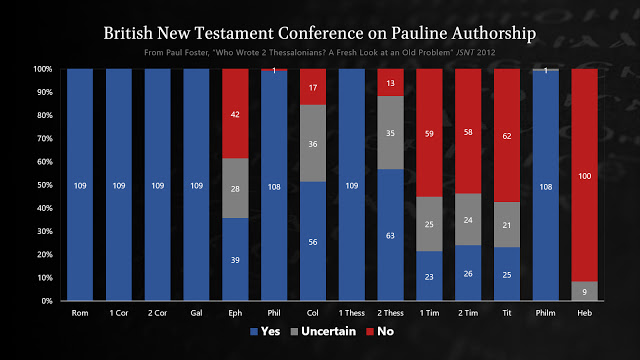
    Evangelical Textual Criticism has a post with the following graphic:

    Data collected by Paul Foster at the 2011 British New Testament Conference
    (Hat Tip to Peter Gurry on Facebook)

    While I imagine there might be minor variations in a survey of American scholars, I think the results would be similar.

    It’s always fun to see the numbers on Hebrews, since I would describe myself as uncertain (with the nine and not the 100), but also publish the book The Authorship of Hebrews: The Case for Paul by David Alan Black, which argues forcefully for Pauline authorship.

    I remain unconvinced of Pauline authorship, but Dave did more to move the needle for me than anyone, and I believe he argues his case in exemplary fashion, which is why I published the book.

  • Starting Leviticus

    Starting Leviticus

    I mentioned in my post about completing the study of Romans that our next book was Leviticus. This was by choice of the group, but it is surely driven somewhat by the number of references I have made to Leviticus.

    While I experienced Leviticus as a child, going to a Christian school where we read—really read—the entire Bible, and memorized a great deal, it never really caught my attention.

    Two factors combined to catch my attention:

    1. I changed my view of biblical inspiration
    2. I studied through Leviticus using the three volume commentary on it in the Anchor Bible series by Jacob Milgrom.

    Studying with Milgrom

    Here’s a key Milgrom quote, and this from a man who does not tend to speak in one-liners!

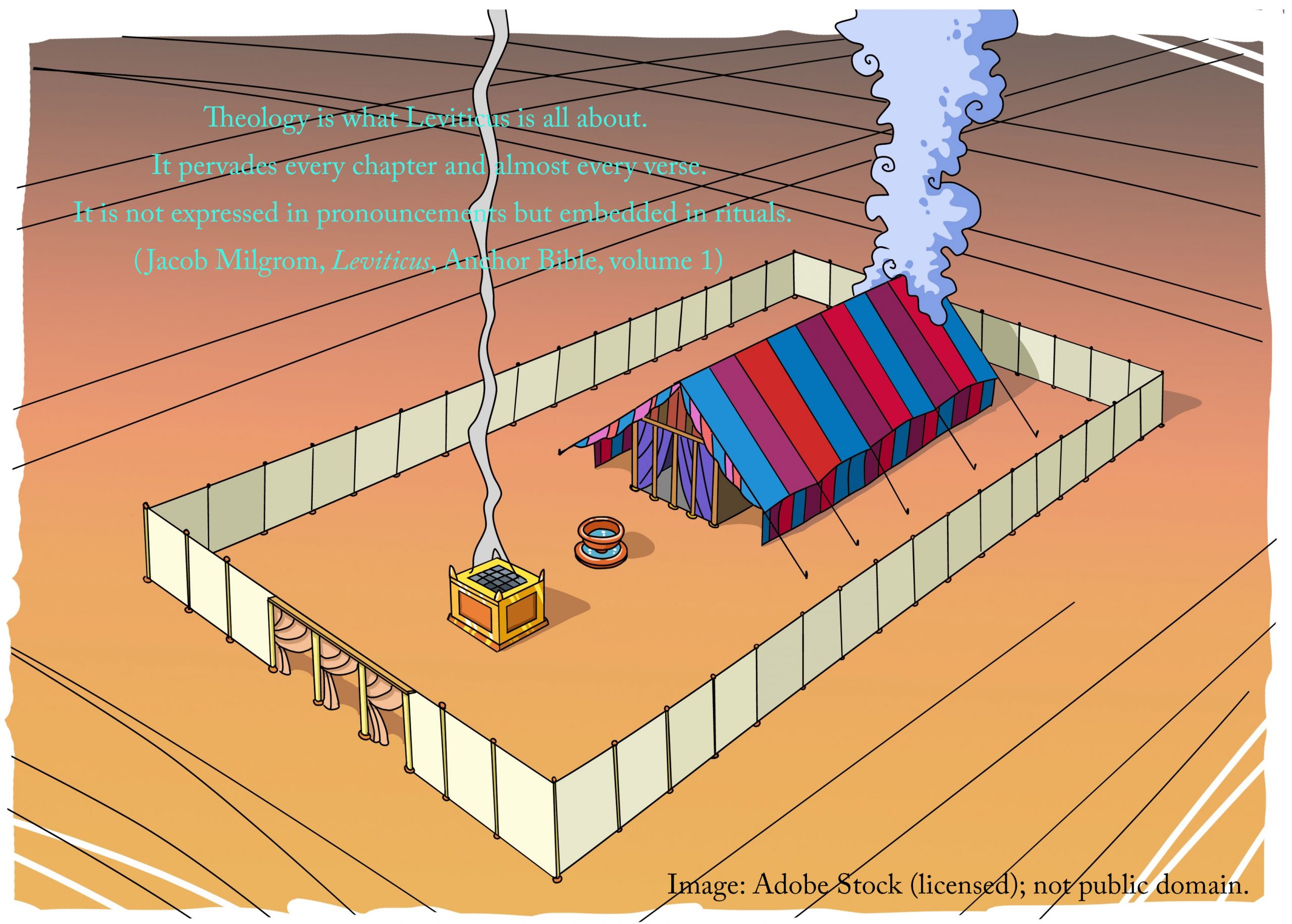
    Theology is what Leviticus is all about. It pervades every chapter and almost every verse. It is not expressed in pronouncements but embedded in rituals.

    Jacob Milgrom, Leviticus, Vol. 1, Anchor Bible. (New York: Doubleday, 1991), 42. (Link is to my review.)

    One of the key lessons I learned in that book is that ritual matters. The way we worship both reflects and creates theology. When we go to church and listen to one person from the front do all the talking, that has an impact on how we see the Christian life, learning, discipleship.

    I recall that I was once asked to speak at a church where, unknown to me, people felt they could delegate that task of prayer to the prayer warriors. The pastor who invited me knew I’d say something different.

    I would like to say something similar about study to the church as a whole: You can’t leave your study to pastors or scholars. You need to get involved.

    Bottom line here is that our ritual matters in many ways.

    I asked a question in a previous post:

    If God showed up on Sunday morning, would God enjoy what was going on?

    Henry’s Threads, “A Morbid and Boring Christianity

    I think it’s a good question. In terms of Leviticus, would it be a “pleasing odor?”

    What’s God Really Like?

    Inspiration in the Production of Scripture

    The other element is my change was my view of inspiration. There is a single element that is critical. I came to regard the process of inspiration and transmission of scripture as a critical element in our understanding. I see scripture as a compendium of the experience of people with God. It is important to recognize both the divine and human element.

    Out of that divine-human story, I see God working with people through scripture. In Leviticus, we see God as educator. Yes, we see the human report of what happened. I’m not trying here to debate details on how human and how divine scripture is; in fact, I think that’s the wrong question. What we’re looking for is the process behind what we have. We want to see God in action.

    Is that perhaps arrogant? I don’t believe so. I believe God has left God’s imprint all over creation, and very much in the way in which God’s chosen people were developed and prepared. Looking at this process is even more critical than connecting dots between specific scriptures.

    Things I Won’t Be Doing

    In focusing on the way ritual expresses theology and develops worshipers, there are two things I will not be emphasizing.

    First, I will not be looking for the minor ties between specific scripture prophecies and New Testament events. While I accept predictive prophecy in principle, in practice I find that the detailed interpretation of a prediction/fulfillment is rarely necessary to learn the lessons expressed.

    Second, I will not be doing a detailed symbolic connection between elements of the ritual. Those sorts of things (and the resulting debates) are available elsewhere.

    I will be focusing on the expression of theology through ritual and the relationship of that ritual to forming God’s people. I hope to learn something about discipleship and instruction/nurture through this book.

    (Featured image credit: Adobe Stock #158382143. Licensed, not public domain.)

  • Finished Romans Class

    Finished Romans Class

    Earlier this evening I finished my Wednesday night class on the book of Romans. For the study of Romans 16, I used a sermon by Dr. Fred Craddock off of YouTube. Here it is:

    I have never found anything that is quite like this as a presentation on Romans 16. Dr. Fred Craddock was indeed an exceptional preacher.

    In an unpredictable result, the class has chosen to continue immediately and they want me to begin a study of Leviticus. With the number of references I have made to Leviticus in teaching, this is not as surprising as one might think, yet I didn’t expect it.

    It will be interesting to see what I can post here regarding the class.

    Read my review of Jacob Milgrom’s commentary on Leviticus, my primary study related to the book.

  • Evaluating Doctrines regarding the Holy Spirit (Pneumatology)

    Evaluating Doctrines regarding the Holy Spirit (Pneumatology)

    I have encountered a few questions lately regarding the work of the Holy Spirit, particularly the manifestation(s) and gifts of the Holy Spirit as they may be observed in a church setting. There is always a problem with evaluating theology based on the visible actions of God, because this gets confused with identifying God’s actions. This latter is difficult to accomplish.

    My aim in this post is to point to the way in which I look at any Christian doctrine, using as examples the manifestation (note singular) and gifts of the Holy Spirit. By my use of those expressions I point you to 1 Corinthians 12-14, where those are used in verses 4 & 7 of chapter 12.

    (I have a prior series on 1 Corinthians 12-14, which includes 1 Corinthians 12-14, 1 Corinthians 12-14 Greek Terms, 1 Corinthians 12, 1 Corinthians 13, and 1 Corinthians 14.)

    What I frequently hear done is that one identifies what the gifts of the Spirit are by looking at the list in 1 Corinthians 12, sometimes combining this with lists in Romans 12 and Ephesians 4, and thus identifying whether a gift is “of God,” that is, has its source in God’s action, by whether it occurs in the list. Should one use a gift that is not in the list, that gift is seen as suspect.

    I find that process suspect, because I do not believe that Paul is attempting to teach the Corinthians about the gifts of the Spirit here. Rather, Paul is teaching them about true spirituality, and is using the gifts as an illustration. I imagine that the Corinthians would have agreed with the list of spiritual gifts he gives, and thus he can use it to illustrate the real way to test.

    He gives that real way in 12:3, which can be boiled down to the assertion that Jesus is Lord. That is the key assertion. How that works is detailed in verses 4-11, with 11 being the wrap-up. It is one Spirit, that acts in the church under the church’s one Lord.

    We depart from this test at our peril in the church, and it is the test that Paul puts up front. He doesn’t say, “Check out whether the person is speaking in tongues,” or “Check out whether they can prophesy,” or even “Look at whether they have some gifts of administration.” Rather, he emphasizes that all of those come from one Lord.

    I am not a theologian by profession, though many will point out that a Christian is always a theologian in a certain sense. Having the opportunity of reading and studying under some quite gifted theologians, however, I don’t want anyone to think I’m claiming to be one them.

    I found this view repeatedly stated by one of the authors I publish, Edward W. H. Vick. To summarize his various statements, just one of which I will quote below, the way you determine if a doctrine is Christian is by asking whether it is centered in Jesus Christ. He makes this note in his book Eschatology: A Participatory Study Guide, in From Inspiration to Understanding: Reading the Bible Seriously and Faithfully, and Creation: The Christian Doctrine.

    I quote the latter here:

    The essential Christian conviction is that God moved toward man and made his decisive revelation in Jesus Christ, that what is known of God is known in Jesus Christ, that in Jesus Christ we have the clue to the meaning of reality, not this or that part of reality only (although this as well), but to reality as such. This means that the Christian must attempt to see every aspect of reality in the light of God’s revelation in Jesus Christ. We emphasize: the starting‑point, the sine qua non of Christian theology is belief in Jesus Christ. Belief in Jesus Christ is evoked by God’s revelation in Jesus Christ. That is given. Once present it is never questioned. The faith in Jesus Christ that is a result of God’s revealing activity in Him provides the theologian with the starting point. All Christian doctrine, works from this starting-point, A Christian doctrine of creation must start here. No scientific research or discovery can touch this basic religious conviction or its theological expression. It is a method of interpreting the world and an explanation of the very existence of the world. It is an explanation of the world that says basically that the world is dependent on a reality that may not be known by an examination of the world alone.

    Edward W. H. Vick, Creation: The Christian Doctrine, (Gonzalez, FL: Energion Publications, 2013), 104-105.

    You can have numbers everywhere and plenty of scriptures and calculations to back them up, but if the center of your eschatology is not Jesus, the Christ, it is not Christian. It may be partially, even mostly, based on scripture, but it will remain outside Christian doctrine. Similarly, you can know ever so much about creation, whatever your view on the details is, but if you do not find Christ in creation, your doctrine of creation is not a Christian doctrine.

    Finally, and perhaps most importantly, you can know ever so much about scripture, but if Christ is not at the center of your interpretation, it is not Christian. Note here that I do not mean that non-Christians cannot interpret scripture, nor that Christians should not do historical interpretation using sound, scientific methodologies. I’m speaking of the scriptural interpretation that nurtures and builds (edifies, to use the term from 1 Corinthians 14) our faith and our community.

    I use this principle in two ways. First, as you have seen, I define (having learned from Dr. Vick), a doctrine as Christian based on whether it is centered in Jesus Christ. Multiple tie-downs to various scriptures, appeals to experience, or a variety of other options do not make a Christian doctrine.

    Second, however, I use this to help me define the essentials. When looking at doctrinal disagreements, I ask how those disagreements impact the view that Jesus has come in the flesh (1 John 4:2-3) and that Jesus is Lord. This is not a clean checklist, because not everything has an equal impact. I’m usually willing to trust the expressed intent of the person who holds the doctrine.

    I believe it is important to know the difference between essentials and non-essentials in order to prevent ourselves from becoming narrow and judgmental. Romans 12-14 covers much of this ground, and it is often quoted out of context on both sides of the divide: the importance of right doctrine, and the importance of some flexibility and of letting the Lord lead.

    This leads me to the way in which I evaluate either gifts attributed to the Spirit or manifestations attributed to the Spirit.

    First, the manifestation of the Spirit comes in many ways, one of which is the availability of the gifts of the spirit. The spirit is also made manifest through the fruit of the Spirit (Galatians 5:22-24). Most importantly, the gifts are made manifest directly in calling forth the confession that Jesus is Lord (1 Corinthians 12:3).

    Second, does the expression of any doctrine of the Spirit center on Jesus Christ, in other words, is the doctrine itself a specific expression of the broader statement that Jesus is Lord?

    Third, as Paul expresses himself in the rest of 12 and then reinforces and expands in chapters 13 and 14, is the expression of the doctrine or the manifestation of the Spirit something that builds the body of Christ? (The term we’re used to in chapter 14 is “edify,” which is fine, provided you really hear it!)

    The love chapter, 13, is often treated separately from 12 & 14, but Paul is here giving us a key to the way in which we identify gifts. For example, are people claiming superiority over others because of the gifts of the Spirit? That is not manifesting the love of Christ, nor is it building the body of Christ. It is therefore hardly an expression of the statement that Jesus is Lord.

    Tomorrow (hopefully I will make time!), I will discuss the idea of manifestations a bit more, but this is going to be the foundation of everything. I think one of our human problems is equating “things that make us comfortable” with “things that build the body.” Those may not be the same thing.

    So we’ll discuss!

  • Of Isaiah 40 and Grasshoppers

    Of Isaiah 40 and Grasshoppers

    Last night in our Tuesday night group we discussed this rather interesting chapter, one that I believe expresses the basics of the gospel message well.

    Now I don’t mean by this that it mentions the name of Jesus or even directly predicts anything about his ministry. There is some material here that is used of John the Baptist and Jesus, but that is another subject. What I mean is the basic principles. I will express these as: We can’t, God can, God does.

    There are those who find the whole depravity thing in Christian theology somewhat morbid. But there’s a really simple point, and one I think is obvious once you see it. We really can’t!

    Once we accept the fundamental idea of God as creator at all, we accept total dependence and our inherent smallness. As Isaiah calls us, grasshoppers. God looks down from the circle of the earth and the inhabitants (that’s us) are as grasshoppers.

    If we think about it for a moment, not only can we not do good without God, we can’t do anything at all. We can’t exist. We are, before our creator, nothing at all.

    And yet!

    And yet, God is coming to God’s people. God cares, in great detail.

    Here is the Lord GOD; he is coming in might,
    coming to rule with powerful arm.
    His reward is with him,
    his recompense before him.
    Like a shepherd he will tend his flock
    and with his arm keep them together;
    he will carry the lambs in his bosom
    and lead the ewes to water.

    (Isaish 40:10-11, REB)

    God’s greatness is not something that should make us miserable. Face it, we have looked at the universe and it is incomprehensibly large. We are small. Yet we are significant. If God is the creator, as we believe, then God is incomprehensibly large, and we don’t really have anything to offer.

    And yet!

    When I consider your heavens
    the work of your fingers
    the moon and the stars
    which you have put in place,

    What is a human being
    that you take notice?
    A mortal that you seek him out?

    Yet you have made him a little lower than God,
    with glory and honor you have crowned him.
    You have made him rule over what your hands have made.
    You have put everything under his authority.

    Psalm 8:4-7 (my translation)

    Isaiah 40 tells us that while we can’t, God can, and God will.