Threads from Henry's Web

Category: Bible Passages

  • On Violence and Suffering

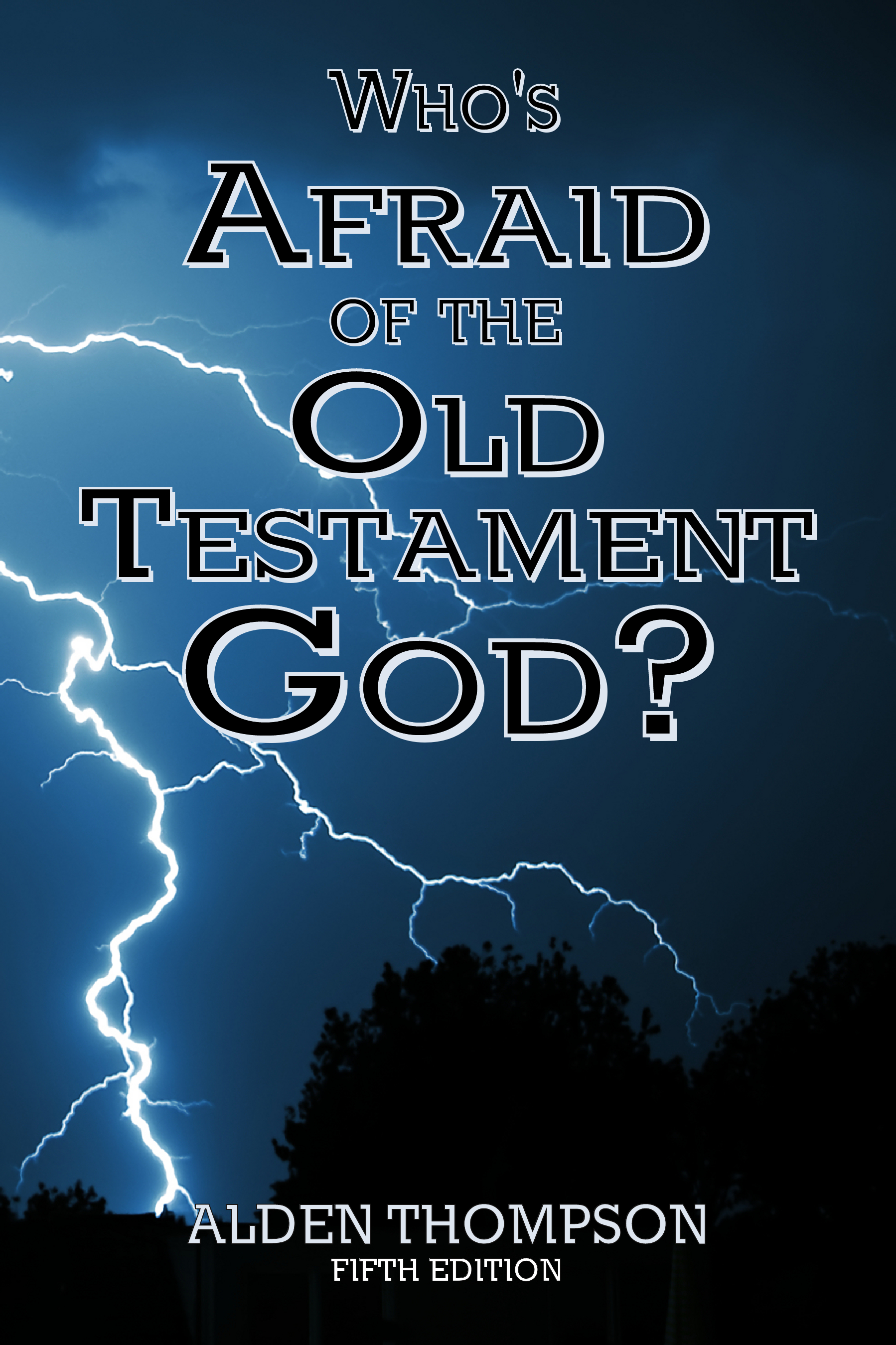
    9781893729902fMy friend and Energion author Allan Bevere posted this morning on this topic, and I want to call attention to it for several reasons. First, this is a topic I find very interesting. Second, I think it’s appropriate to discuss the problems of violence and suffering together at some points. Third, I don’t think that emphasizing a distinction between the Old and New Testaments really solves the problem. It ditches some texts, so if your plan is to explain things away text by text you make your task easier. But the basic issues remain the same.

    I also was reading my own book notes on Bart Ehrman’s book God’s Problem. Ehrman tends to set a lot of people off, but I don’t find him all that annoying. Do I disagree? Yes, in many ways. But that just makes life interesting. Recently, I published a book on this topic, Bruce Epperly’s Finding God in Suffering: A Journey with Job. It’s interesting to see what different results people get from reading the same material. Note that Epperly is a progressive Christian and his approach illustrates one of the problems in religious dialog: We dialog with one group and it is applied to a much broader group. I used Waltke in my notes (link above), and Waltke definitely takes a different approach from that of Ehrman. Yet so does Epperly, and it’s a different different approach.

    Then there’s the book Allan is reading, Who’s Afraid of the Old Testament God? As the publisher, I’m obviously very happy with that book, but I should add that Alden Thompson was my undergraduate advisor and taught me Hebrew (2nd & 3rd year). The fourth edition of the book was also the first title released by Energion Publications.

    Now, to add to the fun, we’re planning a discussion between Allan Bevere (The Character of Our Discontent), Alden Thompson, and myself. It’s scheduled for June 2, 2015. Watch for more information here or on any of my social media feeds.


  • According to John: Excursus #2 – Interview with Dr. Herold Weiss

    john-weiss-trailerYou can get more details on the Google+ event, and you can watch either through that link, or using the viewer below.

    I apologize for posting this so late. I will post the YouTube and some comments tomorrow. Dr. Weiss is the author of the book I’m using for this study, Meditations on According to John.

  • According to John and Psalm 82 Last Night

    I’m embedding the viewer here. I spent a great deal of time on Psalm 82, and I think that trying to do that just straight talking until I was out of breath may not have been my best choice. I’ll consider posting further on Psalm 82 and John 10:34 here in writing and hopefully clarify where I was trying to go.

    Some of what I’m saying here also relates to what I posted today on Matthew 4:4 and Deuteronomy 8:3.)

  • Every Word from the Mouth of God

    A commenter on my post Words from the Mouth of God asks:

    Would you please comment on Matthew 4:4 in this connection.

    Yes, and it’s a most helpful passage to bring up here, and it suggests quite a number of things to me. I’m going to look at the application in connection with what I said in the previous post, but I want to make a few other points as well!

    First, however, let’s quote the passage and connect it to its sources. (Unless otherwise noted, all translations in this post are mine and are often intentionally just a bit too literal.)

    But he [Jesus] answered:

    It is [has been] written, “It not by bread alone that a human being will live, but by every word that comes from God’s mouth.”

    Jesus answers with a quotation, and the perfect verb form emphasizes that the word is established and remains so. It’s a clear and intentional quotation of scripture, and the line comes from Deuteronomy 8:3. It’s part of the reminder of the law that is given to the Israelites as they prepare to cross the Jordan into the land of Canaan. But let’s look at that passage as well.

    You shall be sure to the entire body of commandments which I command you today so that you may live and grow and enter and possess the land which YHWH swore to your ancestors. 2And you will remember all the way that YHWH your God has brought you over these 40 years in the desert so as to humble you and test you to find out what is in your heart, whether you will obey his commands or not. 3And he humbled you by making [letting-NRSV] you suffer hunger, then gave you manna to eat (something you weren’t acquainted with and neither were your ancestors) in order to teach you that it is not by bread alone that a human being will live, but rather by everything that comes from the mouth of YHWH shall a human being live.

    I think this illustrates something I have been mentioning in my study of John, and indeed something I mention quite regularly in Bible study, that the New Testament writers could draw in a broad range of imagery from the Hebrew scriptures through a simple quote. Note here that it’s not simply that Jesus was hungry, though he doubtless was, but also the 40 years of wilderness wandering are evoked by the specific reference, assuming readers were acquainted with that passage.

    That wilderness time was a time of testing, and it was also a time of humbling the Israelites by forcing them to depend on God. They may have had miraculous food on a daily basis, but they didn’t understand it and couldn’t be sure of the next day based on any natural experience. They received this bread so that they’d know that they were truly dependent on God.

    This is evoked in the temptation in that Jesus is going through this experience of testing and humbling, but with the added note, so briefly mentioned in the gospels, that he had fasted those 40 days. So he suffered this experience without the presence of miraculous food, and in fact rejected bread that came from the wrong source or from wrong actions.

    Besides showing that Jesus experienced testing as we might, it also shows Jesus doing it right, according to Matthew, where the Israelites (and all humanity) have gotten it wrong. Often in discussing the mission of Jesus we miss the importance of Jesus both living his life as a human being and getting it right. It is not just that he died for our sins, but that he lived through our hardships and temptations. Matthew in particular evokes the story of the exodus and wilderness wandering.

    I’d add here that I believe this is what he is trying to do in Matthew 2:15 which quotes Hosea 11:1. Some have tried bravely to make a Messianic prophecy out of Hosea 11:1, to make Hosea actually predict the flight into and return from Egypt. But what Matthew is trying to do with that passage is not present a prediction that is fulfilled, but rather to evoke a story that needs to be completed. Jesus comes out of Egypt (Matthew 2:15) and he experiences the wilderness (Matthew 4:1-11), and he does it right.

    Before I leave this theme, I want to note that this passage is reflected in Wisdom of Solomon 16:20-29, but especially verse 26: “… so that your children, whom you loved, O Lord, might learn that it is not the production of crops that feeds humankind but that your word sustains those who trust in you” (NRSV). I find quite a few nifty little nuggets in the apocrypha, and the Wisdom of Solomon is quite a great source on this, and shows how the Deuteronomy passage, to which it doubtless alludes, was heard somewhere around the time of Jesus (+/- 50 years or so!).

    But now I turn to how this applies to my understanding of inspiration, expressed in my previous post. The fact is that I think it reinforces it. As I have noted, all scripture begins with an act of God. That may be a speech act, but it may not, in the narrower sense of “speech.” But that’s where I may have conceded too much, and I’m happy to correct my error. If we look at the world as described in scripture, there is no act of God that is not an act of the Word of God. Genesis 1 and John 1:1-18 should make that quite clear. So word and act are united in God. By the report of God’s act we know of it, although we may also know of it by its result. We see the Word of God in everything that is. The light by which I type this comes from God’s word. In scripture we have the genuine testimony of those who have seen God in action. Sometimes that will include words attributed to God, but sometimes they will report actions.

    In Deuteronomy, I would read the word “word” in a narrower sense suggested by the context, particularly that a human being lives by living according to the law/Torah/instruction provided by God. Those are the specific words referenced. I think Jesus, in using this passage, conveyed to us by the words of Matthew, intended to expand that concept. Certainly, as Christians read it, they came to believe that we would all live by the Word that proceeded from God.

     

  • According to John: Who Is This Son of Man?

    I’m running a little behind today, so I’m just going to give you the link. You can check out the details via the event on Google+. The YouTube viewer is embedded below.

  • Hebrews: Authorship and 6:1-8

    Thomas Hudgins links to a post in which someone supports Luke as the author of Hebrews. The post to which he links indeed supports Luke, but I find a number of other things somewhat more interesting. The topic is Hebrews 6:1-8, one of the more controversial passages in scripture, and the title is An Enduring Call for Christian Maturity: An Exegesis of Hebrews 6:1-8. I find the suggestion of Luke as the author of Hebrews quite plausible, though I remain agnostic on the subject, but I found a great deal to disagree with in the exegesis. I need to write something more detailed on this topic. My disagreement shouldn’t be too surprising, as I come at this from the Arminian perspective. I hope, however, that I am also faithful to the text of Hebrews.

    On the other hand, the more I have looked at this passage, the more I have begun to think that the term that ties this passage to the previous (and Chilton rightly starts with Hebrews 5:11 which gives clear indication of moving forward), is the various forms/cognates of the word teleios, a verbal form being found in 5:9, referring to the completion of perfection of Jesus, particularly, as verse 10 notes, leading up to Jesus as the Melchizedek figure, which will be the focus of chapter 7.

    Contrary to my Wesleyan roots, I’m thinking less and less that the perfection/maturity involved is so much that of the believer as what the believer is brought into in Christ. I agree with Dave Black (you can find some of his comments in his blog archives; search for Hebrews 6) that we should allow the passive force of the verb, “be carried along” to come forth in translation. Now in the overall message of Hebrews, this does mean that something is accomplished in the believer’s life, but the believer’s activity is to continue to be carried.

    As I said, I would like to discuss this further, but I don’t have time this afternoon. In fact, I will doubtless spend many more days working with this passage. In the meantime, despite my disagreement on some points, I really appreciate seeing such thorough analysis of this passage. It’s often neglected.

  • Date and Authorship Notes

    Two weeks ago I participated in a conversation with Elgin Hushbeck, Jr. regarding how scholars determine date and authorship. Readers who consult more than one Bible Handbook, Bible Dictionary, or introductory material from more than one study Bible will find that there can be considerable variation in the information regarding a particular book. Elgin and I only touched on a few of the key issues.

    Here’s the YouTube:

    I know many of you will not want to watch an hour long discussion. I want to write a few notes here. I’ll provide a link to this post to Elgin, and if he wants to respond on his blog, I’ll provide a link to it here. I don’t actually intend to argue with any of his views in these notes.

    Let’s consider a hypothetical case from modern life, the college term paper. Here we have strong external evidence that the material was written by the student, as that student turns it in, perhaps even saying, “Here’s my paper!” There’s a title page with the student’s name. Depending on how one applies the analogy, one might consider the title page internal or external evidence. (Some authors are named internally in New Testament documents, while some are named in titles added later.)

    A responsible and reasonably intelligent professor, however, will have to consider the possibility that the student has plagiarized the paper. How might this be done?

    Bypassing modern methods of checking the internet, the professor might consider the student’s style as demonstrated in other assignments, as well as the student’s level of learning. A poor student who suddenly turns in a top notch paper might be suspect. References to things the student is unlikely to know, or to experiences the student is unlikely to have had might also trigger interest.

    Before there were easily available internet searches, a professor would be limited to using his or her memory and library resources. Now a good deal of potential material can be checked quickly and automatically.

    This would be internal evidence, looking at the nature of the document. The synoptic problem in the gospels starts with the fact that there are close parallels between the first three gospels, closer parallels than most believe can be explained by common oral sources, so students of the gospels look for a pattern of copying between these three. Who was first? Explaining common text between Matthew and Luke, text that does not occur in Mark, on the assumption that Mark was written first, results in the idea of Q, a hypothetical written source.

    But the analogy also provides us a reason why scholars tend to examine the internal evidence closely, even though there may be quite strong external evidence in favor of a particular author. They see potential motivation for an author to have attributed a letter to a more famous person, thus giving it greater authority. On the other hand, the motivation might be to honor the person named.

    In the video I refer to the example of Colossians. What’s interesting in that case is that the main arguments against Pauline authorship result from the theological positions taken and some of the vocabulary used. Standing against this is the fact that the author named in the book is Paul (but see above regarding reasons to question this). If one tries to date the book much later, then it is likely there would be no church in Colossae, as it was largely destroyed by an earthquake in the early 60s CE. Thus both the author’s name and the destination of the letter would be a literary device.

    Thus your answer to the question of authorship is going to come down to whether you evaluate the internal evidence (style, vocabulary, theology) as sufficiently strong to overcome both the book’s own attribution and early church testimony, or perhaps that internal evidence as sufficiently weak.

    My personal view is that  it is very probable that Paul is the author of Colossians, and that the difference in theme results from a difference in the issues to which he was responding, and in turn the differences in style and vocabulary are due to the differences in theme. I think it also unlikely that a letter to a church in a city recently devastated by an earthquake will not mention [ed 022815] such an experience, and this suggests to me a date earlier than Paul’s death. It is also less likely that a letter will be written in Paul’s name while Paul is still alive to repudiate it.

    But notice that I state this as a probability. Historians don’t generally dealing in proving this or that in an absolute sense. They look at probabilities. I think it is most likely, but not absolutely certain, that Paul is the author.

  • According to John – Excursus 1 – Interview with Dr. Bruce Epperly

    9781938434136sThursday night will represent an excursus in my study through the gospel of John, as I interview Dr. Bruce Epperly, author of the books Healing Marks and Process Theology: Embracing Adventure with God, about the healing stories of Jesus. We’ll be discussing what it means to say that Jesus was a healer and we’ll likely have time to talk about words like “panentheism” that have come up in the study thus far. You can use the link above for more details. I’m embedding the YouTube player for this event at the end of this post.

    There’s also something to look forward to further down the road. Dr. Herold Weiss, author of our text Meditations on According to John, will join us on March 12 to discuss his approach to the gospel. We’ll touch on date and authorship, but most importantly on the theology of the book.

  • According to John: To Bear Witness to the Truth

    According to John: To Bear Witness to the Truth

    20150214_172739My Google Hangout on Air on the gospel of John tonight will be based on chapter 6 of Herold Weiss’s book Meditations on According to John, “To Bear Witness to the Truth.” I will focus on the meaning of “true” or “genuine” in the gospel.

    I’m embedding the YouTube player below. Note that you have to sign in with Google+ to use the Q&A App.

  • According to John: From His Fullness We Have All Received

    According to John: From His Fullness We Have All Received

    john bannerI’m a little late posting the event for this, but my study of John will continue. I expect to post a couple more notes on the last hangout in this series as well as a follow-up to my conversation with Elgin Hushbeck, Jr. on the Energion Publications weekly hangout. For more information, see the link above. I will embed the viewer below if you want to go via YouTube.

    My major purpose in doing this study was to engage in the discipline of following through the book(s), both According to John and Dr. Herold Weiss’s Meditations on According to John thoroughly, discussing the material, and taking questions and comments. This is a difficult process for me because both my training and my inclination is in the historical exegesis of the text, using the word “exegesis” as narrowly as possible to refer to extracting the historical meaning to the first audience. So thinking about the theology is hard work for me, and some of the rough edges definitely show. At the same time, I think this is a worthwhile exercise. Fortunately for me, some people who have a great deal of skill have challenged me on some points and that has helped me dig even deeper.

    This week’s topic introduces an interesting aspect of biblical theology: comparing and contrasting the theology of two different passages. Colossians and John share some points of theology here according to Dr. Weiss, and we’re going to look at how one can examine this sort of claim and what the results are.

    I do plan some conversations with experts for this series. Dr. Weiss himself has agreed to join me for a discussion. I suspect that one will emphasize christology and the statements he’s made relating the christology of John to various stages of the early church. That will in turn doubtless tie into some discussion of the trinity. Dr. Drew Smith, author of Energion Publications title Reframing a Relevant Faith will be joining me to discuss biblical theology and how it differs from systematic theology among other topics. Dr. Smith has his PhD from the University of Edinburgh in New Testament where his dissertation dealt with the theology of Mark. We’ll try to make him talk about John nonetheless! I will announce dates for these conversations soon.

    So join the fun tonight at 7:00 pm central, 8:00 pm eastern, or watch the video later and respond through comments of blog posts.