Threads from Henry's Web

Category: Bible Passages

  • Perspectives on Paul: Introducing Salvation

    Perspectives on Paul: Introducing Salvation

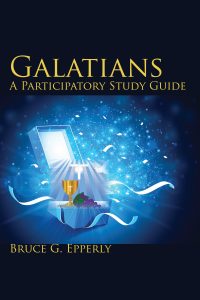
    We’re going to start our look at Paul’s soteriology by reading Galatians 2:15-3:18 and looking at Bruce Epperly’s fourth lesson in Galatians: A Participatory Study Guide, “The Dynamics of Grace.” Here’s a quote:

    Three key words are present in Galatians – grace, justification, and faith. Put simply, grace is God’s love embodied in the life, death, and resurrection of Jesus Christ. The cross of Christ is victorious over sin and liberates us to live freely through God’s Spirit. Grace can’t be earned, but is God’s loving gift for all who have gone astray. Earning God’s love by following the law ends up separating us from the grace of God. God gives us everything, but we want to justify ourselves as if the cross and resurrection never occurred. We can’t nullify God’s grace by our dependence on Jewish law; but we can diminish our experience of grace. (p. 34)

    Tonight I’m going to talk about some views of what salvation is, what we are saved from, what we are saved to, and how this is accomplished.

  • Experience, Authority, and Paul (Galatians 1:1-2:14)

    Experience, Authority, and Paul (Galatians 1:1-2:14)

    Last night for my perspectives on Paul series I reviewed what we’ve discussed so far and wrapped up my discussion of Paul’s claim to authority as an apostle. I can summarize this as follows: The Bible records religious experience, i.e., people’s experience of God in one way or another. (Even revelation, such as a vision, is an experience of the divine.) In order to understand, or even better, connect with the same narrative, one needs experience.

    Beyond the summary, let me note that my own personal experience of the moment is not decisive and authoritative. Yet experience does eventually become authoritative within a particular tradition.

    I mentioned some books I worked on at the end of last year as well as others I consulted. Here are some books and notes.

    Philosophy for Believers by Edward W. H. Vick. In particular, chapter 6, “Experience and God.”

    Inspiration: Hard Questions, Honest Answers by Alden Thompson. I was working on this in December. I think one of the key contributions Alden makes to the discussion is to focus so strongly on observing the process of inspiration in progress. One might say, “experiencing the experience.”

    The Ground of God: Contemplative Prayer for the Conteporary Spirit by Donna Marie Ennis. I brought this book in simply because it reflects spiritual experience. Often the intellectual approach reflected by biblical exegesis and systematic theology is contrasted and opposed to a mystical approach. I think an ideal will mix both experience and intellectual study. It was fun to read Alden’s and Donna’s books over the same period of time.

    Galatians: A Participatory Study Guide by Bruce Epperly. Bruce takes a fresh and refreshing approach to Paul. Often progressive writers dismiss Paul while more conservative writers read him in a narrow way. Bruce is a progressive, but he sees Paul as a creative, challenging, and exciting pioneer of theological thought.

    Meditations on the Letters of Paul by Herold Weiss. Herold’s approach to Paul is incredibly helpful with a series of essays on themes Paul addresses. This is his second book subtitled “Exercises in Biblical Theology.” The first was Meditations on According to John. One of the key contributions, I think, is to help bring together biblical exegesis and theological reflection, which are often divorced, unfortunately.

    So here’s the video:

  • Resuming Perspectives on Paul: Starting the New Year

    Resuming Perspectives on Paul: Starting the New Year

    I’ll review a bit of our material and where we are and then proceed with Lesson 2 of Bruce Epperly’s book, Galatians: A Participatory Study Guide.

    As I’ll be talking a bit about interpretation, let me also embed my chat with Elgin Hushbeck, Jr. from Tuesday night (01/03/2017).

  • God Perfected through Suffering

    God Perfected through Suffering

    For it was appropriate for
        him,
            for whom everything exists
                and
            through whom everything exists,
        in bringing many children to glory,
            the pioneer of their salvation
        to perfect
            through suffering

    (Hebrews 2:10, very literal)

    I wouldn’t suggest that any Greek students translate the way I just did, or your Greek teacher may suggest you learn English. I’m trying to bring the focus onto certain things and it’s sometimes hard to gauge what this is going to do for readers of the English text that results.

    I think this text is one of those that we tend to discount, because what it’s actually saying is a bit startling. In his commentary, Luke Timothy Johnson points out that this text forms a sort of envelope with 2:18, and that the verses between are a carefully structured argument. I quite agree, but I want to just bring your attention to the stark initial statement. Johnson emphasizes how outrageous this concept would be in the Greek world. I would suggest it would sound outrageous just about anywhere. When a Bible writer says something that sounds outrageous we have our defensive mechanisms: Discounting (take 20% or 30% off the rough edges), find a balancing text so we can believe that one instead, or just move on to something more edifying.

    In this case I think we tend to focus on the suffering, since we have heard the story of the cross so many times. That was something shocking to those who first heard it, but it has become routine now, not that when we’re called to suffer as Christ did, we take that very seriously. We  tend to think we’re suffering for Jesus every time we have a bad day. No, we’re just living in the world. Some days just aren’t as nice as others!

    But the idea that the Son, described in such majestic terms in Hebrews 1:1-4 is to be made perfect, or perhaps complete, through suffering is a little bit more difficult. Luke 2:52 notwithstanding, we tend to think of Jesus in majesty all the way through. Just look at all the halos around the baby Jesus in art. I suspect not so much halo spotting by Mary. In Hebrews, we’ll hear this theme many times, one of the key ones is 5:9, where “having been made complete he became the means of eternal salvation.

    I’d suggest two points here that we avoid, and we need to affirm and absorb instead:

    1. God is much more involve in and impacted by our lives and situation. The incarnation may have been an event in history, but it’s also an eternal reality. God is much more involved. We sometimes wobble between transcendence and immanence. God has no problem with both.
    2. The suffering and death of Jesus was a necessary part of atonement, in different ways. I do not affirm penal substitutionary atonement as the singular theory expressing the truth of the atonement. It is, in my view, just one metaphor that helps us think about our salvation. But if we think incarnation, to be complete it must be real, and, well, complete. Becoming human and then not facing death would be to become something other than human; rather, it would be a contradiction. So Jesus became complete as the means of our salvation by living and dying as we do.

    As difficult as it is sometimes to keep this in focus, salvation requires both the glory and the suffering. And when we are called to suffer, or even given the gift both of believing in Christ, but of suffering for him (Philippians 1:29).

    I don’t know about you, but I suspect that could involve more than some mild annoyances.

  • Checking Facts and the Authorship of Hebrews

    Checking Facts and the Authorship of Hebrews

    Dave Black just posted a note on the authorship of Hebrews which brings up an important point: Fact checking. This comes up all over the place these days. It’s so easy to just quote something you’ve heard or to reference a secondary source when a primary source is available. As an editor I’m reminded of this constantly when I look up quotes in books or check references. Sometimes one must cite a secondary source, but most commonly one can find a way to access the information directly.

    So assuming you read Dave’s post (which I copied to our Topical Line Drives site so we’d have a permanent link), did you follow his advice: “Look up these verses for yourself if you like”?

    I remain unconvinced that Paul wrote Hebrews, and I actually find the issue less critical than others do. I think one can look at the book itself and figure back to the issues that were important to the author. It’s nice to know authorship, but when it’s uncertain, I dislike making conclusions that depend on a specific answer to a complicated question. I’ve switched from the “anyone but Paul” school to the “uncertain authorship, but Paul is possible” option after reading (and publishing) Dave’s book.

    But that conclusion is less important than the broader one: Do you get as close to the source as you can in checking facts?

  • Credit to One of My Teachers

    Credit to One of My Teachers

    Today in Sunday School class the teacher referred back to challenge I had presented to the calls some time ago. I had suggested reading the prophecies of Isaiah, particularly 2nd Isaiah (40-55) without our “Jesus colored glasses.” I don’t suggest this not because I think Christian readings are inappropriate, but rather because it helps give you a sense of history. Place yourself as best as you can into the place and time from which the prophecies were spoken.

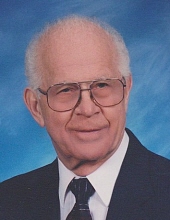
    Professor J. Paul Grove
    J. Paul Grove

    Our Sunday School teacher today, Melinda Henry, brought this challenge back to the class, after she had taken it herself. In her experience an teaching it led to placing ourselves into these prophecies, particularly the servant passages, and seeing there the call to be a servant in just that way.

    When she did this I was reminded of when I was first challenged to read this passages in a different way. My undergraduate major in Biblical Languages was offered by the School of Theology at Walla Walla College (now a university). Thus most of my classes were taken with students who were preparing for pastoral ministry.

    I took a class in Hebrew prophets from J. Paul Grove, and I confess that I didn’t really like it that much. He was the one to first challenge me to read Isaiah in that fashion. In addition, he had the requirement that we produce three sermon outlines per week derived from the texts we were studying. I hated that requirement and even tried to get out of it by pointing out that I wasn’t going to be a preacher. But the professor insisted.

    It was a great experience and has stuck with me ever since. Paul Grove has gone on to his rest (as they would say in his SDA tradition), but I wanted to express my gratitude for pointing me toward some ideas I have used repeatedly in the years since, even though I thought it was wasted effort at the time.

  • Perspectives on Paul: The Formation of Paul’s Gospel

    Perspectives on Paul: The Formation of Paul’s Gospel

    Apocalyptic background - flash and lightning in dramatic dark sky

    I’m resuming/continuing my study this evening, looking at Lesson Two from Galatians: A Participatory Study Guide by Dr. Bruce Epperly. I’ll be sticking closely with the lesson itself tonight, discussing how Paul was chosen and learned. I will doubtless discuss a number of these topics from related materials in other epistles.

    Here’s the viewer:

  • No Bible Study Tonight

    I will not be continuing my Bible study on Perspectives on Paul tonight, but will resume next Thursday night. A variety of things have come together to make it impossible to accomplish.

    Next week we will be starting lesson #2 of Dr. Bruce Epperly’s book Galatians: A Participatory Study Guide, “Chosen by God.” The Scripture is Galatians 1:11-24.


  • Perspectives on Paul: Date and Authorship of the Epistles

    I will review how date and authorship is determined (or not) and how that relates to the way we will answer the question of Paul’s gospel.