Threads from Henry's Web

Author: henry

  • The Ethics of Publishing

    One of our authors sent me a link to Christianity Today’s article Is Buying Your Way onto the Bestseller List Wrong?

    In the interest of honesty—and that’s what this is really about—let me note that I’m not playing in the same league as the folks referenced in this article as a publisher. I do work with publicity campaigns. I do market books. But the best I’ve done is to get a book temporarily onto the Amazon.com bestseller list for a very narrow category. That wasn’t even my goal in those few cases, but it happened. So I should be clear that few temptations of the level described here are ever presented to me. Nobody has offered to put one of my books on the New York Times bestseller list, and the costs involved simply reinforce what I already said: As a publishing enterprise, I’m not in this league.

    But the ethics of the situation seems rather simple to me. It doesn’t matter what the “everyone” is doing in the industry. It doesn’t matter if it’s standard practice. The tobacco companies had “standard practice,” and while it was legal at the time, it wasn’t ethical. It doesn’t even matter if the New York Times bestseller list is a game. What matters to me, and what should matter to any Christian writer or publisher, is whether our own actions are true and honest. We don’t live according to other peoples’ standards.

    When you write publicity copy, there’s always the possibility that one can disagree on what is honest. What does “the best book on ____” mean? I have even seen such hyperbolic claims in the prefaces to Bible translations. I try to avoid that kind of statement, both because of the question of truthfulness, but also from consideration for my own credibility. Even if I think I’ve found the best book on a subject, such subjective judgements are empty claims at best. I should think what I publish is good, but I can say that without resorting to empty statements or falsehoods. Even though we can disagree, I think that in most cases we do know what is right and wrong, and we know when we are rationalizing the thing we want to do.

    Ethicists have to study questionable instances in order to develop the proper principles. People in those equivocal situations need that kind of nuance. Rationalizers do the same thing, but for a different reason. They want to make simple look questionable. If you can make a truly simple decision look doubtful, that gives you cover.

    As Christians we should instead be looking for “whatever is true, whatever is honorable” (Phil. 4:8). When we find we have strayed off the path, we need to acknowledge and correct the error. I confess it would be nice to be a large enough player in the industry to have to worry about these things. I hope that if that happens, I will be able to uphold the appropriate standards, by God’s grace.


  • Energion Google Hangout on Air Tonight – Creation and Christianity

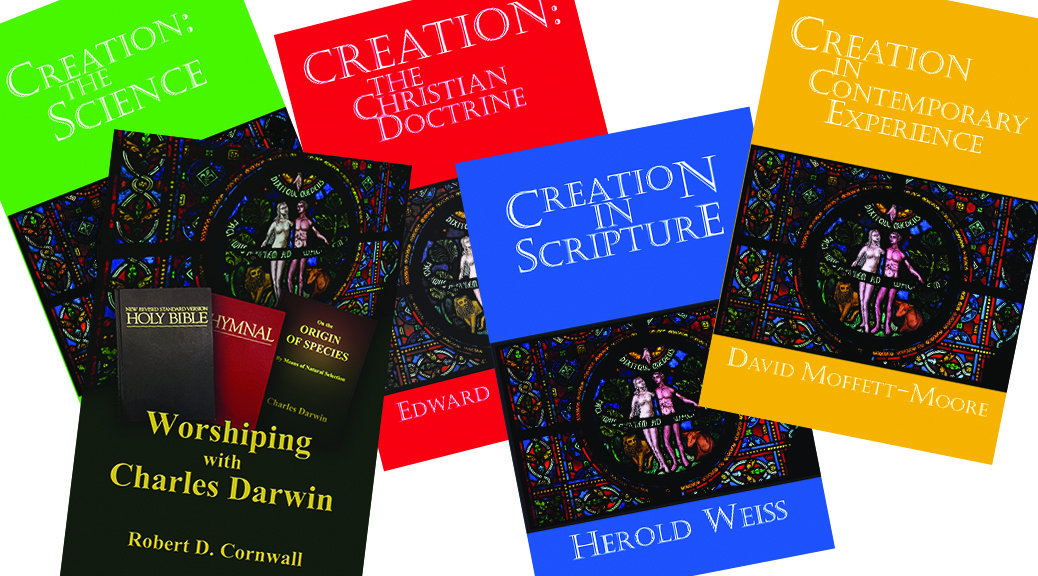
    creation-5Tonight at 7:00 pm central time for the weekly Energion Google Hangout on Air I’ll be moderating a panel of four authors. You can find the event information on our Google+ page.

    The participants are:

    This event is not a debate about creation and evolution. While I vary the content from hangout to hangout, I avoid outright debates. Each of these authors accepts the theory of evolution but also believes that God is the creator. Dr. Herold Weiss started the series, which also includes Creation: The Christian Doctrine by Dr. Edward W. H. Vick, who is unavailable for this panel. What I have asked them to do for this panel is talk about how their beliefs about creation impact the way the read scripture, teach, worship, and live.

    The YouTube embed to view the event is below. If you want to ask questions of the panel using the Q&A App, you’ll need to sign into Google+. There should be a link on the YouTube viewer at the time the event starts for you to do so.


  • Better Learn to Live with Technology

    Mark Bauerlein at First Things doesn’t like laptops in the classroom (HT: Dave Black Online.) Even the title of the post says something about his view of technology. For what it’s worth, I write things by hand on my tablet. I teach Sunday School using notes, book, and Bible references on my tablet as well. If a speaker is boring, I might well be reading e-mail. The solution? Improve your content.

    I agree with one of the commenters who said he used a laptop in class and if he ended up in a class where the teacher banned laptops, he dropped the class or found a section with a different teacher.

    Just so!

  • Quote: Prayers Make a Difference, But

    “I think my prayers make a difference, but they’re not omnipotent.”

    Listen to the whole interview by Doug Pagitt with Dr. Bruce Epperly, author of the recently released book Finding God in Suffering.

  • According to John: Making Himself Equal with God

    The reading is chapter 2 of Herold Weiss’s book Meditations on According to John, Making Himself Equal with God and the scriptures in it. My recommendation is to read the entire gospel of John through each week during this study. The topics are so carefully tied together through the entire book.

    Here’s the trailer:


    And you can watch the event here (Jan. 22, 2015, 7:00 pm central, 8:00 pm eastern):

  • Follow-Up on According to John – The Word Became Flesh

    I’m embedding the YouTube of the session below. There were a couple of points on which I didn’t quite say everything I wanted to, or left things a bit unclear. I’m going to post on two topics, and link to them below:

    1. Theological Development and Determining Date and Authorship

    2. Extreme Basics of Textual Criticism

    Here’s the YouTube:

  • Follow-Up on According to John: Theological Development and Determining Date and Authorship

    In my Google Hangout discussion I mentioned using the development of theological concepts in dating a particular writing. I don’t think I really covered the issue involved all that well, so I’m going to follow up briefly here. My purpose is not to argue any particular position, but to illustrate the issues.

    If I might start from a slightly broader approach, one of the ways in which one dates a particular writing is by looking at things in it that connect to events outside of it. Hopefully some of those things outside of it can be dated more precisely than the writing itself. In all cases, one should be aware that no single element provides an absolute answer. One normally gathers a set of arguments and searches for the best possible explanation of all the data. Often people reject an argument as weak when it is not intended to stand alone at all, but rather is just suggestive. It has to be combined with other data.

    To take an example from the Hebrew scriptures, the destruction of Samaria (722-721 BCE) is described both in 2 Kings and in Assyrian records. We can get quite precise dating from the Assyrian records, while we only have relative dating from Kings. We can tie the events together with a high degree of accuracy because the event is described in both.

    Narrowing it down a bit, consider both the authorship and dating of the pastoral epistles, Titus and 1 & 2 Timothy. Many scholars believe that these were written by someone in Paul’s name after Paul had died. Note here how authorship and dating interact. If Paul wrote the pastoral epistles they must date no later than the early 60s CE, since Paul dies in that period. He is unlikely to be producing new epistles after his death! Here, however, it works the other way. If it isn’t Paul that wrote them, then it is likely they were written after Paul’s death. Nobody is likely to be sending around letters claiming to be from Paul while Paul was still alive, at least not without inviting scandal.

    But why the later date? One argument relates to church history. Some would hold that the church organization displayed in the pastoral epistles is too advanced to reflect the time of Paul. In a sense, then, the later writer would be using Paul’s name to bless these developments in church organization. I’m not going to try to argue this one way or the other as that’s not my purpose. What I do want to point out is that this form of dating requires two things: 1) A correct reading of the level of church organization reflected in the epistle, and 2) An accurate assessment of the development of church organization.

    Regarding the first, let’s consider the Greek word episkopos. When you see this word in the pastoral epistles how do you understand it and translate it? How do you see it’s relation to the diakonos? Is it bishops and priests, or perhaps a more informal general overseer and local minister? What is the role and authority of those making the appointments. I’m not an expert on any of this. What I will point out is that people see these terms and the discussion of church leadership in the pastoral epistles differently. This will impact any decision on dating that relates to the development of church organization.

    Regarding the second, one has to determine just how church structure developed. This is a task for a church historian who will look both at the New Testament evidence, and the evidence of the early church fathers as they either reflect or describe the church organization that exists at that point.

    Now remember that each argument need not be decisive. Far from it. There will be many minor indicators and many indicators that could be argued either way.

    I referenced one in my discussion, the dating of Hebrews, and my difference of opinion with my friend (and Energion author), Elgin Hushbeck, Jr. One of the most important datable events of the first century of church history is the destruction of Jerusalem in 70 CE. Now, Elgin and I differ on the probable dating of the book of Hebrews. First, note that if the author of Hebrews is Paul (ably argued by David Alan Black in The Authorship of Hebrews: The Case for Paul), then it must be dated no later than the early 60s CE. Why? See above on Paul’s death.

    But the particular point that I mention here is that Elgin and I take the same piece of evidence and see a different result. I see the author of Hebrews building his entire argument on the tabernacle in the wilderness, and thus see the destruction of the temple (not in existence at the historical time our author is referencing) as much less relevant. In fact, one might argue that the author uses the tabernacle because the temple was no longer in existence. But Elgin argues that one could hardly make this argument after the destruction of the temple without mentioning that event. And as much as I may hate admitting it, he does have a point. So the evidence weighs lightly in this case.

    But now we finally get down to the issue at hand, which is dating based on theological development. This is akin to dating the pastoral epistles based on church organization but each element of the argument becomes harder. Let’s consider the case of christology. I would argue a high christology for the gospel of John. The Word was God. The Word became flesh. Case closed. Well, not quite as easily as all that, but I’d come back to those two points after arguing other interpretations.

    To date a writing in this way requires one to both read the theology of the writing in question correctly and also to have a well calibrated idea of the way in which theology developed. If you move into later times, you can look at whether a writer argues for or against gnostic positions, and just what gnostic positions are reflected. I parallel John 1:1-18 to the thought developed in Hebrews 1:1 – 4:13. In both cases we have the message presented through Jesus (a Son/the Word) placed against the message presented by Moses, with superiority attributed to the message through the Son. I would argue that the christology of Hebrews 1:1-3 is as high as the christology in John. If I then date Hebrews to the decade or so following the destruction of Jerusalem, some would say that the christology is questionable at that point. Most interpreters since the time of the reformation, for example, have interpreted the term “Word of God” in Hebrews 4:12 as referring to the scriptures and not to the person of Jesus.

    If we turn to Elgin’s dating, which is earlier, then his reading of Hebrews as high christology (as he does) means that a high christology and the associated vocabulary would be available much earlier. I refer to Elgin because he’s a friend. There are plenty of scholars who would hold either the position I do or that he does. Elgin and I hope to arrange a discussion of this between us, not so that one of us can win, but so that we can clarify the way these arguments are formulated and help readers make their own decisions. This particular type of argument is one of the weakest. I’m not arguing that it’s not worth doing, but it requires a broad knowledge and very careful work to make successfully.

    A reverse effect is also possible. One might find a way to read Hebrews as having a lower christology, simply present Jesus as the Son of God, because one assumes due to date that this is the way it should be read. In doing this sort of work, one should always be very conscious of one’s own biases.

    My point in going through all of this is to help readers get an idea of how to read introductions to Bible books, especially when those introductions differ. There are massive differences in dating given for portions of the New Testament. Matthew, for example, might be dated all the way from the 40s to the late 80s. Luke is often dated in the mid-80s, but there’s an interesting piece of internal evidence that suggests an earlier date. Acts ends before the death of Paul. One explanation for this is that the book was written before Paul died. There are other explanations; never imagine that a debate such as this is settled in one line! In addition, Luke was written before Acts (relative dating is important!), and so Luke must have been written before the mid 60s because it must have been written before Acts. But if there’s a good reason for Paul’s death to be left out of Acts, other than that it hadn’t happened yet, all this might change!

    Knowing how these arguments are formulated will help you read introductions intelligently.

  • Follow-Up on According to John: Textual Criticism

    This post relates to my follow-up on my second session of studies on the Gospel of John. First, I’d like you to read my earlier Textual Criticism – Briefly. This dates from 2006, but I don’t see anything I need to correct. I would like to expand on a few points, however.

    On the matter of older manuscripts, one of the key reasons this is less of a concern than it might be otherwise is that we have so many manuscripts available that we can afford to make a few mistakes. Really! I mean that! There are so many manuscripts, Lectionaries, quotations, and translations that the New Testament scholar can be overwhelmed with the sheer quantity of potential evidence. Having done most of my own work on the Old Testament/Hebrew Scriptures, I really notice this difference when I turn to NT passages.

    Second, we try to avoid other potential problems by looking for a reading that shows up in different geographical areas. The point of this is that we are more likely to be finding manuscripts that reflect different exemplars if they were copied in places that are far apart. This again helps to correct for any other problems that a lack of a detailed history might cause. In modern textual criticism this is accomplished by looking for manuscripts in different families.

    Most scholars would still hold that there are three major families of manuscripts, the Alexandrian, the Western, and the Byzantine. One of the current debates is over the value of the Byzantine manuscripts. Unless you get seriously into textual criticism, you will not likely need to engage with this particular debate. Just look for variety!

    When you encounter a textual note in your English translation, you likely won’t have this kind of information. The best source for a person who does not know Greek and cannot resort to a good Greek edition is a commentary that discusses the available evidence. A brief explanation such as this might help you understand such discussions.

    Finally, let me comment on what variants mean for the reliability of our text. The number of variants in the NT text is often cited as a reason to believe that the text is hopelessly uncertain, but that’s simply not the case. The more manuscripts you have, considering that they are copied by hand, the more variants you will have. But the more manuscripts you have, the better you are able to determine the original reading. In addition most variants are relatively insignificant.

    Why do I say insignificant? Let me give an analogy from my publishing work. When I edit a manuscript the majority of issues I find will be very easily identified typographical or spelling errors. There is never any doubt what the author was trying to say, and correction is easy. In a much smaller number of cases a word will be wrong and the correction a bit more difficult, yet one can be fairly certain of the desired result. In a relatively small number of cases an author will have written something I simply can’t decipher, and I have to ask what he or she meant.

    The vast majority of errors in the manuscripts belong to the first category. Sure, they are variants, but it’s obvious what the original text is. Of the remainder, a large percentage have an almost overwhelming consensus on what the correct reading is. The number on which there is a viable dispute is rather small.

    The problem in debate is the meaning of the word “significant.” I mentioned the need for definition when we use this term the other day. Two people who disagree on the number of significant variants may only differ on the meaning of the word “significant.”

  • Quote: Philosophers Talk in Obscure Ways

    9781938434549I thought of this quote as I was preparing for my study on John tonight:

    Philosophers sometimes appear to talk in obscure ways. They do so because they take into consideration what people often overlook. If a poet (Longfellow) can say, ‘things are not what they seem’, the philosopher will give reasons why. The fact is that we do not always make a correct judgment about what we sense. Perception may mislead. So, taking this into account, the philosopher says, ‘I seem to see a red pencil.’ By using the expression ‘I seem to’ he suggests that what he sees may not be what it seems to him to be.

    In spite of this allowance for doubt, it is usually the case that what seems to us to be so in our ordinary experience is probably so. So we quite reasonably judge that the way things seem is the way they are. So in our ordinary course of life we do not say, ‘I seem to see a pigeon’, ‘I seem to hear a loud noise’, ‘I seem to be touching a tennis ball’. We only use the term ‘seem’ when we have some doubt about what we are perceiving.

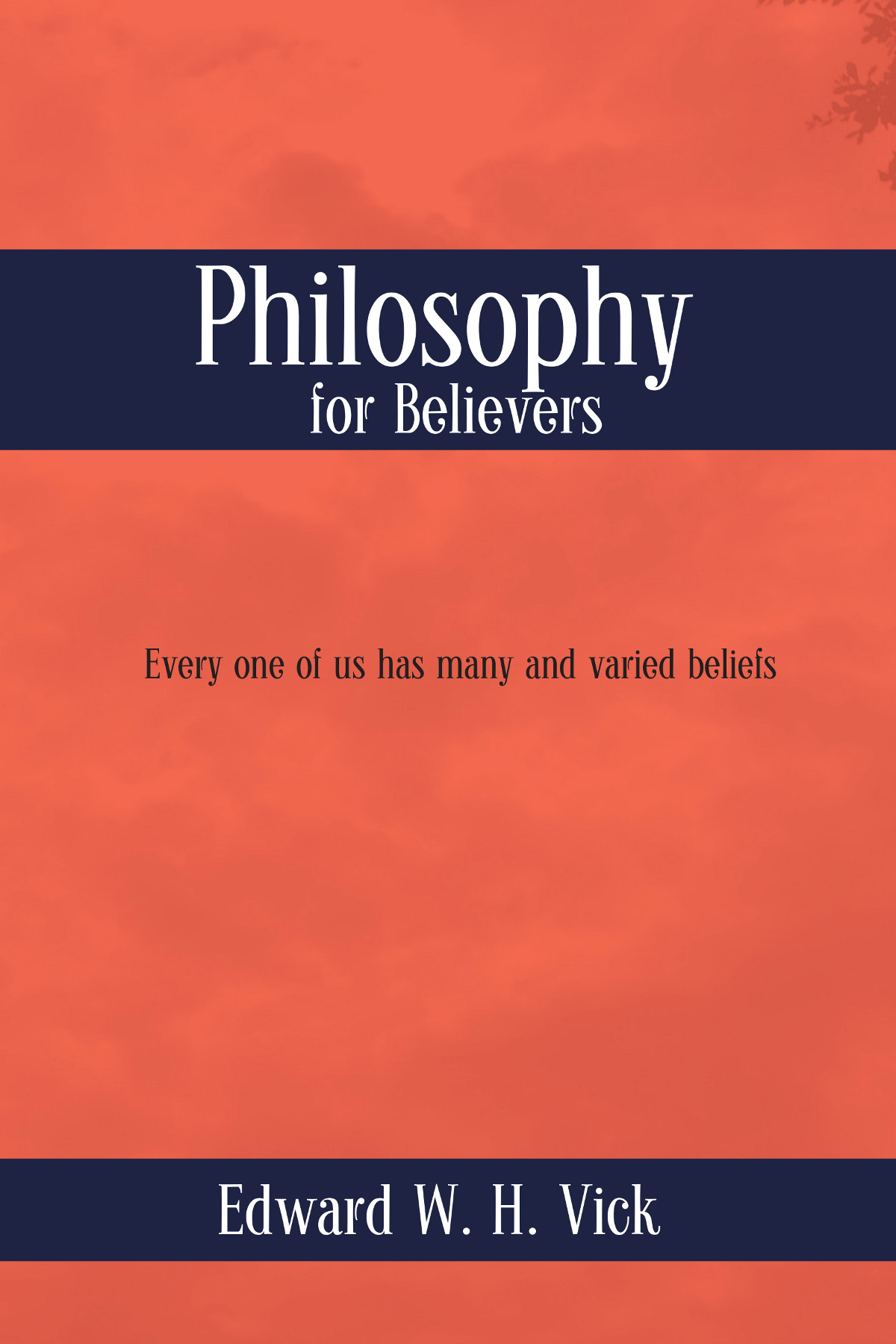
    The question is whether there is an analogy from such ordinaryexperience to religious experience.… (Edward W. H. Vick, Philosophy for Believers, p. 119)

    I was thinking of the first two sentences in connection with the use of definitions. Philosophers tend to spend more time defining, and often those who are not philosophers get rather impatient with this. But I was working with the word “significant” in connection with textual criticism.

    One of the great arguments in textual criticism and its application to Christian faith and understanding of the Bible involves what are significant variants. So one person says that there are many significant variants in the New Testament text, meaning, perhaps, that the variant could impact a translation in some way. Another says that there are less significant variants, but still a fair number, considering only those variants which would impact the exegesis of the particular verse as significant. Yet another says that there are very few or even no significant variants at all, considering as significant only those variants that would impact a Christian doctrine.

    Thus we have great, and sometimes angry debates, which might go back to what we think is significant.

    Perhaps getting a bit more pedantic about the definitions would help!

  • Link: Did Jesus Perform Miracles?

    I’d like to call attention to a discussion on the blog Across the Atlantic regarding whether Jesus actually performed miracles. This blog features point/counterpoint between Antonio Piñero and Thomas Hudgins. We have thus far Part 1a, Part 1b, and Part 2a. I’ll leave it to you to follow if you wish.