Threads from Henry's Web

Author: henry

  • Spectrums: Liberal to Conservative Is not Enough

    Spectrums: Liberal to Conservative Is not Enough

    nt church booksLast weekend Dave Black was our guest here in Pensacola. I recorded some videos for promotional and educational purposes and Dave also preached and talked about missions (with plenty of pictures) at Chumuckla Community Church. I will be posting some of these videos soon, but they are not quite ready yet.

    Dave is a professor at Southeastern Baptist Theological Seminary. I’m a United Methodist with the dreaded ‘L’ word in my blog tagline (“Thoughts on biblical studies, religion, and living from a passionate moderate, liberal charismatic Christian”). Obviously this is some sort of liberal-conservative dialogue.

    Not really. I’ve written recently about dialogue and why, as a publisher, I publish books from a variety of perspectives. In a video I produced in the early days of Energion Publications I used a triangle, with the points being charismatic, liberal, and evangelical. I would note that for this to work now it should be “conservative evangelical” as the label “evangelical seems to have lost some cohesion. This will happen to words, especially those that are perceived as positive labels.

    But even those three points fail to catch some of the issues, and there’s a bit of a tendency to think of Christians grouped at the points of the triangle. One of the reasons many have trouble with labels is that people don’t fit into the center of the semantic range of a label. In addition, on different issues one may take different positions. I have political views on some subjects that seem very conservative, while on others I seem quite liberal. Similarly on theological issues I don’t try to fit all in one camp.

    There are two points (I think!) in all this rambling. The first is that we don’t fit cleanly into one label on all issues. The second is that we may be able to connect with people in other camps on particular issues. In all cases (should this be #3?) this should suggest options for learning from one another.

    For example, when many charismatics talk about modern revelation they use theological arguments that are also commonly expressed by liberal or progressive theologians. Not a few of those I’ve talked to want to deny any connection, but behavior and practice tell a different story. There is some theology to be learned here! Similarly many charismatics should—and do—learn biblical studies from their evangelical brethren.

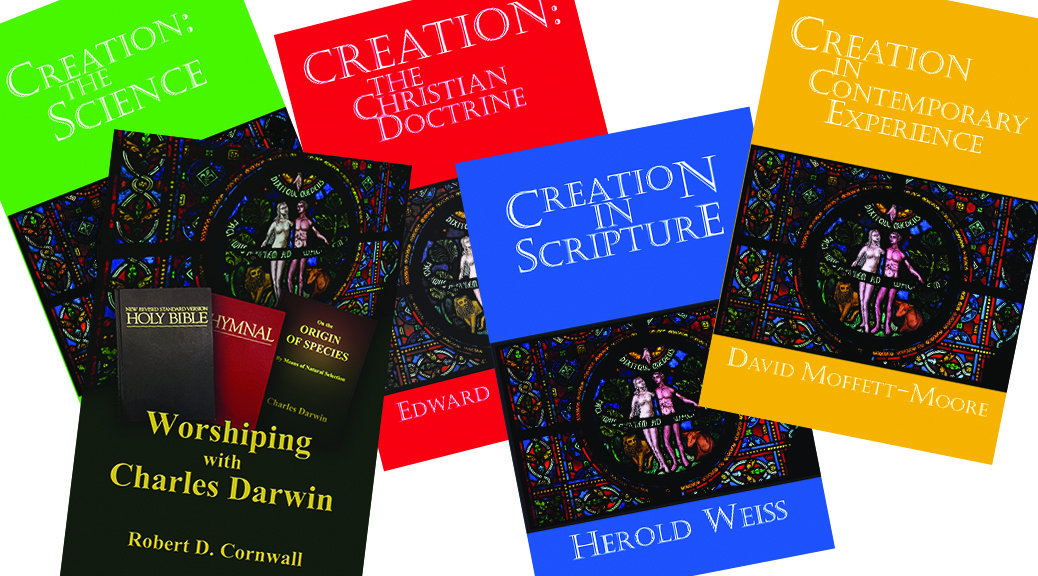
    Many liberals or progressives, on the other hand, don’t want to be linked to charismatics because of emotionalism or other extremes. Yet too frequently progressive biblical reflection tends to be more a matter of challenging the conclusions of evangelicals rather than developing a robust theology and application of scripture. Yes, this can be a stereotype. I have several authors in the Energion Publications list, such as Dr. Bob Cornwall, Dr. Bruce Epperly, and Dr. Drew Smith, none of whom fit the picture. And there are many more like them.

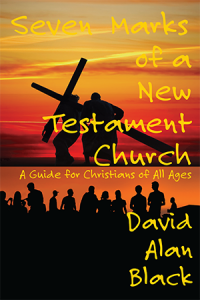
    9781631990465mOne of the interviews I conduced with Dave was about his book Seven Marks of a New Testament Church. Dave goes back to the book of Acts for keys to how the church should behave now, in the 21st century. And this brings up a very different spectrum: church structure.

    We could make a spectrum that runs not from conservative to liberal, but from strongly hierarchical to mutually submissive, from high church to low, from central control to local. Similarly we might look for a spectrum of views on who is in charge of the church, how much, and in what way. That could run from Jesus in charge directly to a highly hierarchical view of how the lordship of Jesus is implemented in the life of the church. None of these would exclude people from any liberal-conservative, charismatic-evangelical, or any similar ideological spectrum.

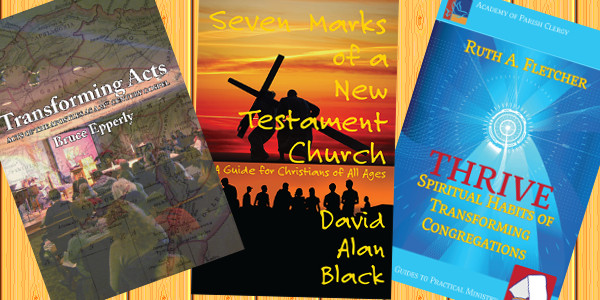
    My plan is that as soon as I’ve posted my interview with Dave on his Seven Marks book, I’m going to start blogging through the Marks. As I do so, I’m going to bring in points from some other authors, such as Bruce Epperly, whose book Transforming Acts: Acts of the Apostles as a 21st Century Gospel also goes back to Acts to ask what we can do in the church today. Beside both of those I’m going to reference the book Thrive: Spiritual Habits of Transforming Congregations by Dr. Ruth Fletcher. There are definite differences of approach in these books, but there are also many points of contact.

    So I’m going to ask two questions in my series:

    1. Can we find a way to apply these seven marks in other theological and ecclesiological traditions? (I fully believe we can, though there are places where our ecclesiology needs to change, and that’s a good thing!)
    2. More specifically, how can a United Methodist congregation look back to the New Testament and so become a more authentic witness for Jesus in the world today? There are those who would say many of these ideas are not possible under denominational rules, but I wonder. How much would a simple commitment to being “servant of all” on the part of those at the top of the organizational chart might change the reality without altering the paperwork?

    So watch here over the next week. I’ll post the video and then begin the discussion. I hope I can find some people to discuss this with me vigorously. My comment policy is largely open. If you don’t threaten the family friendly nature of the blog, you can express yourself.


  • Eschatology: Mark 13

    While I titled the event Eschatology: Mark 13, Matthew 24, and Luke 21, I will be focusing on the first. I will be mentioning the parallels and likely working directly from gospel parallels. I’m embedding the YouTube viewer first, then I’ll make a few comments.

    I had hoped to post more earlier, but the work load this week prevented it. I also hope to post something more this afternoon, giving some background for what I’ll be saying. It is obviously impossible to do a detailed exegesis of Mark 13 in an hour, so I’ll be looking at some key points.

    First, yes, I won’t be able to resist. I’ll mention some elements in the parallels that could play into arguments over Markan vs. Matthean priority.

    Second, I want to talk about my overall view of biblical eschatology, and how I read that in Mark 13. Note that this is, to a certain extent, eisegesis. My overall view is the result of my study of many eschatological and apocalyptic passages, and not a derivative from Mark 13. Yet I will use it. I had planned to wait to present this overview, but I think it’s better for me to give my “mini-eschatology” first and then develop how I connect it with much broader and deeper eschatological views as I move forward.

    Third, I want to focus on just what the disciples would have expected when they heard or encountered this material. Thus I’ll discuss the debates on whether this is original to the gospel (as a whole), whether certain elements were added later, and also just when this was written.

    All of that leads to the point where I—finally—talk about “this generation shall not pass,” which has provided fodder for biblical and theological debate for the last two millenia. How was it understood in the past and how shall we read it now?

    In studying eschatology from a biblical perspective, it is important to realize that one needs to resolve a broad range of questions nearly every time one wants to resolve one question. For example, the way in which one understands Daniel 9:27 impacts how one will understand “the abomination of desolation” and how one understands the vision of Daniel 7 will impact how one understands the son of man coming in the clouds. Not to mention whether one is certain those particular references are in view. Deciding how to understand those chapters involves a range of decisions regarding the text of Daniel as well as its historical and cultural context. Those decisions involve a number of issues regarding how one dates literature.

    I say this because I expect to circle back to many of these passages after we’ve studied others. I think it would be useful to read Mark 13 again after we have done further study of Daniel. Jesus did not live in a cultural or theological vacuum either. Certainly his disciples did not. How might they have drawn these passages into their understanding of the words in the gospels? It is possible that what you or I decide in studying Daniel might be the correct historical understanding, i.e., we might be right about when it was written and how it would have been understood by its original audiences, but that the understanding we get there might not be the one the disciples would naturally draw in as they studied the words of Mark.

    Complicated? Indeed. Fun? I think so!

  • Learning about the Homeless

    Learning about the Homeless

    9781631991271sOver the years I’ve heard many discussions of what one should do about people asking for money at streetcorners, or at the exit from the interstate, or wherever they may be found. The vast majority of these discussions were about ethics. Do I have a duty to help such people if I can? If I help them, will I be encouraging their (presumed) addiction? If I give, how much should it be?

    It’s good to discuss ethics, though quite often what we discuss remains abstract. We decide what the ethical thing to do and then continue doing whatever we felt like doing in the first place.

    But what if that isn’t the question?

    This week, on the Energion Discussion Network Renee Crosby is offering some posts, and today’s post struck a nerve for me. It is much easier for me to give a dollar or two than it is to get to know someone and to converse. But that is one thing that Renee suggests. It’s not that you shouldn’t give that dollar (or more). Rather, that may not be enough.

    Check it out and think about it!

    Also, note that EDN is offering a free book drawn from those eligible comments by eligible people (Energion employees, contractors, and authors are excluded). So comment and discuss over there and you might win a free book as well as learning something new.

  • Dave Black at Chumuckla Community Church

    Dave Black at Chumuckla Community Church

    Dave Black preaching at Chumuckla Community ChurchI had the pleasure today of hosting Dr. David Alan Black at Chumuckla Community Church. I’ve been teaching there for the last five weeks, and preached once. Today Dave shared pictures of some of his mission work and also preached. His sermon was titled “Jesus and the 30 Year Transition, working from Luke 3:23. Well, and a few other texts.

    Dave spoke with strong conviction about turning from temporal things to eternal and from ourselves to something bigger than ourselves. He said that every Christian is a missionary. Your call may be to the other side of the  world or the other side of the street. One of the keys is simply to give of yourself to others.

    I can’t do justice to the entire message. Dave manages to hold attention. He uses lighter moments effectively while bringing home a solid message. A few folks I know could take some homiletics pointers.

    Dave is on his way home, and I’ll be continue to work on publishing, but I was again reminded of one of the privileges of publishing. It’s wonderful to be able to learn from so many wonderful people who are authors for Energion Publications.

  • Dave Black Visiting

    IMG_6226I spent the morning in the library at First UMC here in Pensacola as Kyle Hall recorded videos of interviews with Dave Black. We discussed his books Why Four Gospels?, The Jesus Paradigm, Christian Archy, Will You Join the Cause of Global Missions?, It’s All Greek to Me, and Seven Marks of a New Testament Church. We had a great time!

    You can expect to see videos of these interviews on the Energion YouTube channel and elsewhere over the next few weeks.

    On Sunday, Dave will join Jody and me at Chumuckla Community Church where he will share mission pictures and experiences during the Sunday School hour and then preach at the Sunday morning service.

  • Eschatology: They Remembered Him

    Eschatology: They Remembered Him

    9781938434105sI had hoped to do a bit more writing on how we interpret the Bible before tonight’s discussion. In diving into teaching a bit on eschatology, I have come to feel a bit like someone who has encountered one of the versions of the certification test for senior generalists, or the ultimate final exam. (You’ll find a few different versions and titles.) The extra credit question, “Define the universe. Give three examples,” is a bit of the right feeling.

    There does not seem to be any aspect of biblical studies that is not important or even critical in understanding eschatology. Some of the best examples of how not to interpret an be found in the way people handle this subject. There is always the problem of background information. How much must the student know before tackling a topic? But in eschatology, those background items become even more critical.

    Tonight I’m going to work from Dr. Vick’s second chapter, “They Remembered Him,” and discuss what is the core of explicitly Christian eschatology. It’s quite easy for people to predict the end of the world. It may take some time, but eventually somebody is likely to be right! But does a particular outline of the end times make this doctrine Christian?

    We frequently neglect eschatology in teaching and preaching. But how well does the gospel work when do this? Is it possible just to ignore this issue? Even when we talk eschatology in an individual sense, not when will the world come to an end (if it will), but when will you personally come to an end and meet God? And the latter question may not be quite as simple as it seems either. Are these events simultaneous? Do I go to heaven when I die or not?

    So join me tonight as I discuss these issues and also the foundation for what Jesus said in his little apocalypse. You can find in on its Google+ Event Page or using the YouTube embedded below.

  • Speaking of Biblical Interpretation

    James McGrath posted a rather humorous piece this morning, titled The Fundamentalist Interprets Scripture (Sheep and Goats).

    I think he makes an important point here, but it is my belief that we all have our ways of avoiding what scripture says. The liberal finds things out of date. The conservative finds ways of categorizing texts, or let’s scripture interpret scripture by finding a text that says something different. The moderate (yes, even passionate moderate!) cuts the sharp edges off of the text making it seem more mainstream and less challenging. And we all find it much easier to notice the passages that correct someone else’s behavior.

    I do it very poorly, I admit, but I really want to read scripture so that I can become more closely acquainted with God, seen especially through Jesus Christ, and so that by beholding I can become changed. (Hear the echos of my memorization of the KJV as a child!) Not so that by my beholding I can correct the rest of the world. I want to share, but let the Holy Spirit do the conviction, as necessary.

    If we all studied the Bible (and yes, other books as well) with this goal, might the world not be a better place?

  • Can Scripture Be Its Own Interpreter?

    Can Scripture Be Its Own Interpreter?

    Open Bible
    Click for photo credit

    I’ve been thinking a bit about this common statement, and I think the answer is both “yes” and “no.” And therein lies a significant problem, if not several!

    I recall an online discussion some years ago with a gentleman who maintained that one should always take what he called the plain meaning of the text. I asked him how one would identify the plain meaning. He told me that we should take what the passage would mean to an average American high school student.

    This approach worked reasonably well, though perhaps not correctly, in providing a meaning of Matthew 5:33-37, which, according to him, commands us not to take an oath to speak the truth in court. At a minimum this does make sense of the passage.

    Then we came up against Matthew 5:27-30 (clearly not doing the chapter in order), which he told me should not be taken literally. The obvious interpretation, he said, was that one should stand up for Jesus even in the face of martyrdom.

    Whether this is a correct interpretation or not, I would suggest that it would be unlikely that an average American high school student would come up with that interpretation without a great deal of coaching.

    The problem is that when we read we will read in one context or another, and if we are not conscious of the context, we will supply one.

    Where does it come from? If we’re church people, it’s likely to come from the traditions of our denomination or church group. If we’re not, we may supply a completely modern context for statements in an ancient document.

    Thus the first difficulty with having scripture interpret itself is that nothing is interpreted without external input. the person I am, what I know, and what I think all will impact the way I will read a passage. If I am to hear the passage as other than a reflection of my own mind, I must be open to the external factors that have shaped it.

    Shaped it, because it did not come into existence in a vacuum, nor was it transmitted in a vacuum, nor does it exist in a vacuum. Words have meaning in context, and that context is a part of the society in which the language is spoken. God’s expression comes to us in human words that have meaning to human minds in a human context.

    Take a word like “heaven.” We may debate whether the Bible teaches an ancient cosmology or not. I would argue that it doesn’t teach any cosmology at all. Rather, it communicates about other topics using words and ideas shaped by that ancient cosmology. It doesn’t correct it either. That’s part of the context.

    Here indeed scripture may help us interpret scripture, as we learn more about the words and concepts used by the writers of scripture to express their ideas and thus come to understand them better. Scripture, after all, contains ancient literature. But in the same way we can learn about scriptural concepts by reading other ancient literature that may share the same, similar, or even distantly related concepts. I recall the excitement of reading Ugaritic literature for the first time and expanding my ideas of various concepts in the ancient world.

    What most people mean by scripture interpreting scripture, however, is that you can come to understand a concept that is unclear in one place by finding texts about it elsewhere. If there are intertextual relationships, this can be very helpful, but just as it’s important to avoid parallelomania in the way we interpret relationships between literatures of different cultures we also need to avoid seeing intertextual relationships where they do not exist.

    While I am quite convinced that all scripture is inspired and useful, I am quite convinced that it is not all useful in the same way. Words and concepts can differ in meaning in different places.

    Thus while scripture can help us interpret scripture, it does not stand alone, and the gathering of texts from various places is hardly a guarantee of correct understanding. We need to be consistently aware of all the various relationships: between the text and its historical and cultural context, between ourselves and the text, between ourselves and our own cultural environment, and between ourselves and God’s Holy Spirit.

    In the end, people interpret scripture, hopefully under the guidance of the Spirit. They may be aided in this process by many things.


  • My Goal in Fostering Dialogue

    My Goal in Fostering Dialogue

    I get this question quite frequently: What are you trying to accomplish? If it’s not presented as a question, it’s presented as an assumption.

    Here are some major options:

    1. My goal is to advance a liberal theological agenda, i.e., to make people more liberal by getting conservatives to listen to or read liberal opinions.
    2. My goal is to advance a conservative theological agenda by getting liberals to listen to conservatives through the sneaky ploy of listening to the liberals first.
    3. I hope to get us all to agree on the TRUTH, and thus be unified as Christian believers, or in the case of political goals, generally unified as a country (whichever one that is).
    4. I hope to get us all to decide that it doesn’t really matter what we believe, so long as we’re tolerant of one another.

    None of those are correct.

    At this point it might be worthwhile to read my essay on the Energion Discussion Network, posted yesterday, in which I discuss my theology of dialogue.

    You see, my goal in fostering dialogue is to … foster a spirit of dialogue.

    1893729389I think that having a spirit of dialogue is an excellent state of mind, and is itself an excellent goal. Some may be concerned that dialogue is not, in fact, a destination. You carry out dialogue to produce other effects. And indeed you do. But one of those effects is the spirit that goes with dialogue, an inquiring spirit, a listening spirit, a humble spirit. You get the point. And yes, those attitudes lead to other beneficial results.

    In discussing defending your faith with some young people this past summer I told them the first question when they want to argue with someone should be how that person came to their particular belief, not how you can challenge that belief. Some might think this is giving up the high ground of TRUTH. On the contrary, even if you decide you must argue vigorously against their position, that their position is dangerous and destructive, knowing how they came to that opinion can only make discussion more effective.

    But, and it’s a big “but,” you may also discover weaknesses in your own position on the way to understanding how they came to theirs. That’s another benefit for you. It’s possible you might even change your mind in the process.

    From the letters of Paul (but see below) we get two statements that are in tension. The first is in 1 Corinthians 8:2, “Those who think they know something do not yet know as they ought to know.” (NIV. I got this from Bible Gateway, a very useful resource.) Think about that! It doesn’t stop biting you if you want to stand on your knowledge with pride. Then there is 2 Timothy 3:7, “always learning but never able to come to a knowledge of the truth.” Somewhere in the tension between those two there is a good place where you humbly hold your ideas, always willing to learn, yet can be firm in your faith. (You should be aware that many scholars do not credit 2 Timothy, or the other pastoral letters, to Paul. That is another good subject for dialogue.)

    In fact, I believe that we humans are much too likely to set a current position in concrete, and very unlikely to let new knowledge or overlooked facts change our opinion. A spirit of dialogue helps us overcome that. We don’t have to accept every idea that comes along, but we listen to others and we examine the various options before we make a final choice. And when we make a final choice, it is final only until we discover new reasons to continue.

    This applies to many fields of endeavor. In science it is perhaps easier to express. It takes a great deal of effort to change a scientific consensus. I have heard science and scientists criticized for this. The major triumphs of scientific endeavor have sometimes been portrayed as failures, as a history of being wrong. The discovery that the earth is not the center of the universe or even of this solar system is also the discovery that we were wrong before. But that is not the important thing. The important thing is that we moved on to something better. Relativity tells us that Newtonian physics was wrong, but Newtonian physics fostered many accomplishments and many new discoveries. The most wonderful thing, however, is that continued study resulted in a new understanding. We may yet discover that Einstein was wrong, or that his understanding was just too limited. Then we’ll move on. That is the triumph of science.

    People are currently complaining about the level of fraud in scientific results. You can find stories about this through such search engines as Google News. But you need to also realize that it is scientists looking for faults who are discovering the problems. Yes, people are wrong. People do wrong. But it is the idea that the study and the dialogue about the results must continue that makes it possible for these wrongs to be corrected.

    In theology and faith we often set our ideas in stone. We have a number of ways of expressing this:

    • It’s not me, it’s just what the Bible teaches.
    • I heard from God.
    • God showed me this after much prayer.
    • This is God’s absolute, unchangeable truth.

    All of these sayings precede (or follow as an “author’s credit”) the expression of a human opinion about what the Bible says, what God has said, or what absolute truth actually is. We think this is a way to avoid arrogance, but it is, in fact, one of the most arrogant forms of expression. Yet almost all of us are guilty of something similar at some point.

    There is no weakness in changing these statements just a bit:

    • This is what I believe I have heard from the Holy Spirit, or my study has led me to believe, but I’d like to hear about your study, also guided by the Holy Spirit. Perhaps we’ll combine what we’ve heard and get closer to God’s will.
    • I’ve been trying to listen for God’s will; will you also listen and share with me?
    • I’ve studied prayerfully, and finally I think I have found an answer. Will you help test it with me?
    • As far as my limited mind can understand, I think this reflects one of God’s eternal principles.

    The spirit of dialogue doesn’t say there is no truth. In fact, it respects truth more strongly by admitting one’s own weakness and looking to others to help test.

    I certainly have my own opinions. I have opinions on just about everything. But my goal in publishing is not to convince everyone of some set of opinions, but to foster the continued testing of opinions and the continued discovery of more about God’s wonderful universe in whatever fields of knowledge there are.

    We may find agreement. Check out the video on stewardship posted today on EDN. Here are two people from different denominations, different tradition streams, and different generations who examined a topic and came to very similar conclusions.

    We may find continued disagreement. That is a sign to keep looking.

    We may find that one or the other changes position.

    We may find that we both change position.

    We may find that there are no good answers to our questions, and that we’ll have to wait for new light or new information.

    But we’ll always find value in the search.