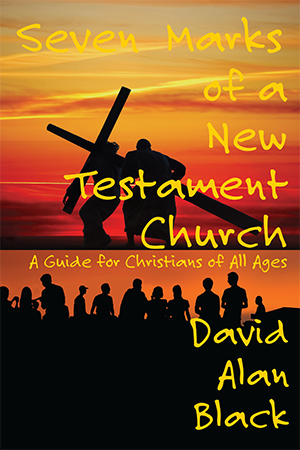
Really, I’m delighted to have released this book, and hope that many will enjoy it. For those of you, I assume most of my readers, who don’t read Mandarin, the same book is available in English, Seven Marks of a New Testament Church by David Alan Black. I’ve been blogging about it, and will resume that series soon.
Tomorrow I head to Atlanta for the annual meeting of the Society of Biblical Literature where my company, Energion Publications, has booth 2110. I don’t know if this means I will blog less or more, but I suspect it means something. If you’re there, be sure to drop by and say hello!
There is no crime so heinous that we should punish someone who didn’t commit it.
I’ve said this frequently about domestic crime. It seems obvious, but it is also something we forget when somebody has committed a crime and somebody has been accused of the crime. People who have no idea what the evidence is are instantly convinced that the somebody accused should be convicted and punished. Evidence doesn’t matter. But if somebody (actual criminal) and somebody (accused) are not the same person, all we’re doing is encouraging the commission of another crime (well, morally if not legally) when we ask that the accused be punished.
I’ve noticed that the more heinous the crime, the less likely people are to give consideration to whether the person actually committed it. I hope that the officials charged with carrying out justice will be duly cautious and follow evidence, but elected officials are especially subject to following the baying of the uninformed crowd. And face it, in most of these criminal cases almost all of us are uninformed. It takes serious effort, effort that few of us are willing to expend, to develop an understanding of a case that merits attention.
I take the same view of terrorism. There is no act so heinous that we ought to punish people other than the offender for committing it. I am fully in favor of vigorously going after those who committed the crime. I celebrate the success of the French police thus far and their recent raid. I’m even in support of going after ISIS bases, provided we can do so effectively and in a well-targeted fashion. I’m not fully convinced of the effectiveness of air raids under these circumstances, and I say that as a life-long advocate of air power and an Air Force veteran, but in principle it’s a good idea.
But when we start to take out our anger at a heinous crime on people who did not commit it, that’s something very different. Times like this, when we feel that we are under attack, demand more, not less, patience and consideration. They demand more wisdom, not less. We should not permit our fear or our anger to make us less that we should be. And I fear we are doing so.
This is not the plea of a pacifist. I deeply respect pacifists. True pacifism requires incredible courage. But I am not a pacifist. I would be quite willing to wield a weapon or aid in military action that was properly directed.
But taking out the hate on Arabs generally, Muslims, or even Muslims in some defined area is not going after those who actually commit these crimes. (And yes, I prefer that we use a crime-fighting rather than a war-fighting metaphor.)
More importantly, however, we should not take out our fear and our anger on those who are refugees from the very criminals we should be hunting. I consider it morally wrong.
It is not our military people or our police that are disturbing me. They have a job to do. But they are directed by our politicians, and what I hear from them is dangerous.
A friend of mine put a great comment on this on Facebook. You can read it here.
I have in my aging mind this idea that a younger me—say early teens—was a reasonably good gardener. Present activities do not support this, unless I have lost all the talent over the years. My garden has been very good as relaxing activity. It has gotten me out of doors more so that I get more exercise. What it has not done is produce much food. I did get some radish greens to add to my salads when I thinned the radishes, but thus far my actual radishes are not looking that good.
Today, however, when I went to water the garden, I was greeted by this:
That’s one of my lemon cucumber plants and it’s the first blossom. I planted these in four groups. Three of them are doing some good, and this is the best one. It looks like I may have a few more blossoms soon. Who knows if there will be cucumbers?
I found that little yellow flower encouraging this morning, way beyond any objective value or importance. I’d like to encourage the encouragers: It doesn’t take major, earth-shattering activities to brighten up someone’s morning. So many of you have just spoken the right word at the right time, and I truly appreciate it.
My post is very late, so I expect I won’t have a live audience tonight at all (they’re always very small), but still I need to provide the link for those who watch later. There will be some interesting connections tonight with my discussion with Steve Kindle (and his book I’m Right and You’re Wrong) on the video below:
Tonight I’ll be spending most of my time in Ezekiel 1 along with dealing with some background. I’ll follow this next week by looking at the glory of the Lord in Ezekiel as a guide to the theme of the book. Finally, I’ll look at the temple vision as part of looking at what is literal and what is symbolic, not to mention whether the very “literal/symbolic” dichotomy is actually valid.
You can grow old, die, and become a legend in the time it takes me to watch a movie following its release. So don’t wait for me! Dave Black has seen the movie Woodlawn and has dutifully commented on his blog, and had his remarks posted on Alvin Reid’s blog. Since Dave was (actually) an (actual) Jesus freak, whereas I can make no such claim, it’s likely that he knows something about the subject.
Tomorrow is the 2nd anniversary of Becky Lynn Black’s homegoing. Dave has been posting some testimonies on his web site. I never met Becky, so I can’t relate personal experiences. But there is a way for me (and others) to learn from her.
I’m going to post my publisher’s foreword to her book My Life Story. I rarely write a foreword to a book as a publisher, but I am always delighted to publish a book that gives someone’s testimony. Theology is interesting. I consider Bible study to be of great importance. But sharing our experiences is, I think, of the greatest value.
A publisher’s foreword is intended to tell you why I published this book and why you should read it. I’m going to skip that. I want to tell you why you should act on it.
Becky Lynn Black was not the sort of person normally recognized in an autobiography. She wasn’t the head of a ministry. She didn’t lead a church order. She wasn’t a celebrity. But by the way God counts importance in His kingdom, she was extraordinary. She found the one thing that counts, her place as a servant. She said “yes” to Jesus Christ, and she knew that “yes” meant more than a ticket to heaven. It meant a life of service in answer to God’s call.
Toward the end of her pilgrimage (and she knew she was a pilgrim!) here on earth, she took the time and energy to tell her story, the story of God working in and through her to change many lives all over the world. She gave her witness to her creator and redeemer. The psalmist challenges us not to hide God’s great deeds from generations to come (Ps. 78:4), and Becky obeyed. I’ve spent a great deal of time reading and thinking about Hebrews 11, the honor roll of faith, as it’s often called. If you read the stories of these people, you’ll find they’re quite a varied lot. But they have one thing in common: When God called, they answered. In the end, it could be said for that one reason that “[t]he world wasn’t worthy of them” (Heb. 11:38).
Of course I want you to read this book. But what’s most important is that you act on it. And when you have acted, bear witness, whether to one or to thousands.
The fourth mark of a New Testament church that Dave Black finds in Acts he calls genuine relationships. The early believers devoted themselves to the fellowship, to their community. There are so many words for it.
In America today we rarely think of the church as a community and even more rarely as our community. Yet much of the New Testament’s teaching on the church centers around things that relate closely to this idea. We go to church for a “service.” We don’t participate in community. We take our children there for some moral education, not so that they can build relationships for their life. Often we barely know one another.
I’m not trying to make us all extroverts. I’m an introvert. I tend to make small numbers of closer friendships. I’m not talking about the number of friendships we each make. I’m talking about how we fit together into this larger community, one that includes various personalities, a wide variety of gifts, people who are like us, and also people who are not-at-all like us.
What we think about our community is going to impact everything else we do. Dave’s first mark is “evangelistic preaching.” That’s proclamation of the good news. But is the “good news” of your church the idea that one can join up, provided they’re not too different and become just like everyone else there? Or is the good news that through God’s Spirit we can all, with our various backgrounds, become one in Christ Jesus, contributing with various gifts, and receiving the salvation and healing that Jesus offers?
I suggest reading 1 Corinthians 12-14. Don’t skip over chapter 13. So frequently people who want to study about spiritual gifts study chapter 12, those who want to look at church order and how to structure your meetings at the church read chapter 14, and those who want to talk about love read chapter 13.
But that is to miss what Paul is doing. In this book Paul is looking at the various reasons why there are factions in the Corinthian church. When he comes to the start of chapter 12 he’s looking at the great gifted ones who lord it over everyone else. Genuine love, as expressed in chapter 13 is the key. How can one identify genuine gifts in action? It’s by the way they operate under the direction of that one Spirit and the way they carry out love in the church.
1 Corinthians 13 is not about marriage but about the church. It gives good advice for a marriage because it tells us how genuine relationships work.
How do followers of Jesus work together when the church meets? Chapter 14 tells us they work for “edification.” That’s building. That building is based on the genuine love that is expressed in chapter 13. So these three chapters work together.
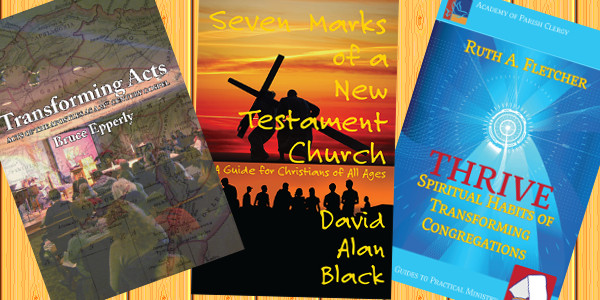
I heartily recommend Dave’s chapter, but I’m going to quote this time from Ruth Fletcher in the book Thrive: Spiritual Habits of Transforming Congregations. Fletcher defines a difference between “friendliness” and “welcome”:
Friendliness assimilates newcomers into what already exists; welcome integrates newcomers by helping them know they belong. Friendliness says, “We’re glad you came to our table. We hope you feel at home here eating what we like to eat and doing things the way we like to do them.” Welcome goes beyond friendliness to say, “We want you to bring your gifts to this community. We know when you offer those gifts that we will be changed by your presence among us.” (p. 78)
Fletcher implicitly provides us with a good description of community. Rather than being a place where the current members give and others receive, it’s a place that welcomes people to become part of the giving, whatever it is that they may have to offer.
Bruce Epperly discusses this in his chapter Faith Without Fences
One of the critical things we need to look at in the church if we are to be such a community is gossip, judgment and criticism. For us to help one another grow, we need to be able to talk about ways to grow. Serious discussion of spiritual growth will not prosper where there is no trust, and gossip destroys trust. Gossip is always followed by judgment and criticism, and it destroys community.
Losing this spirit of judgment does not mean that one loses the ability to discern between different options, nor that one cannot recognize sin or destructive behavior. It does involve a change in the way we think and talk about these things. Our talking will be impacted by our thinking. Don’t imagine that you can pretend not to be judgmental and nonetheless deal with issues as a community.
I’m fairly unreceptive of the complaints of those who think that repenting of gossip, judgment, and criticism (three sins endemic in church life) means that we can no longer reform or call others to repentance. Gossip, judgment, and criticism don’t result from a genuine desire to help others find repentance. They result from our desire to feel that we are better than others and to let others in our inside group know that we are better than others.
A genuine concern for others will result in talking to them and doing it in constructive way. Note that this isn’t a strategy change. It’s repentance from a sinful approach (judgmental) and a turn to a genuinely constructive approach (edifying/building). If we have genuinely repented of the need to feel morally superior to others, I think we will generally know the difference. Most of us have been helped to find a better approach to some issue by a more experienced or knowledgeable friend. It feels different.
One critical point is that it comes from relationship. I have friends who help me with my business decisions who can quite comfortable tell me that some idea would be idiotic. We’ll laugh and go on to a better plan. Why can we do that? Because we have a relationship that comes before the correction. I highly value those friends and that correction. It has saved me from many errors.
“Genuine relationships” open the way to the various elements of community. If you truly want to help those you think are on a wrong path, establish a genuine relationship with them first. As you do so, you may become aware that you also have things in your life that can be improved by what you learn from them.
I think back on growing up in my missionary family’s home. You could not visit my parents’ church without getting invited to lunch. Not invited to join us at a restaurant, but to come join us for the family meal. My mother always made sure she had enough to feed guests. One never knew who would be a guest.
In Mexico, when a mother and son needed refuge from violence, she was invited into our home, even though there was a threat of violence to us involved. She was different from us, of the Chamula people, and only spoke a bit of Spanish, much less any English. But she had a home with us as long as she needed it.
Think about your own church. Would a visitor be welcome? Any visitor? As you bring in new members do you try to remold them after your own image or do they become a genuine part of the church family with their gifts and their warts? Does anyone in your church invite people home to lunch or dinner? Are your homes open? If someone was escaping domestic violence would they get a referral to a nearby shelter or would someone in your church open heart and home to them? If you see young people in your church without parents do you gather in groups to complain about “this generation” or do you decide to welcome the opportunity to get to know them and even mentor them?
I think becoming a community built on genuine relationships will require a great deal of repentance on the part of the American church. But if we want to truly be disciples of Jesus, carrying out the gospel commission, this is one mark we can’t afford to lack!
When the e-mail arrived offering me a copy of this gorgeous Bible edition, I didn’t really read the material thoroughly enough or I might have declined. I’m a content man. I have one complete bookcase and parts of three more dedicated to Bibles. Very few of them are special in terms of their binding. It’s the text that drives me.
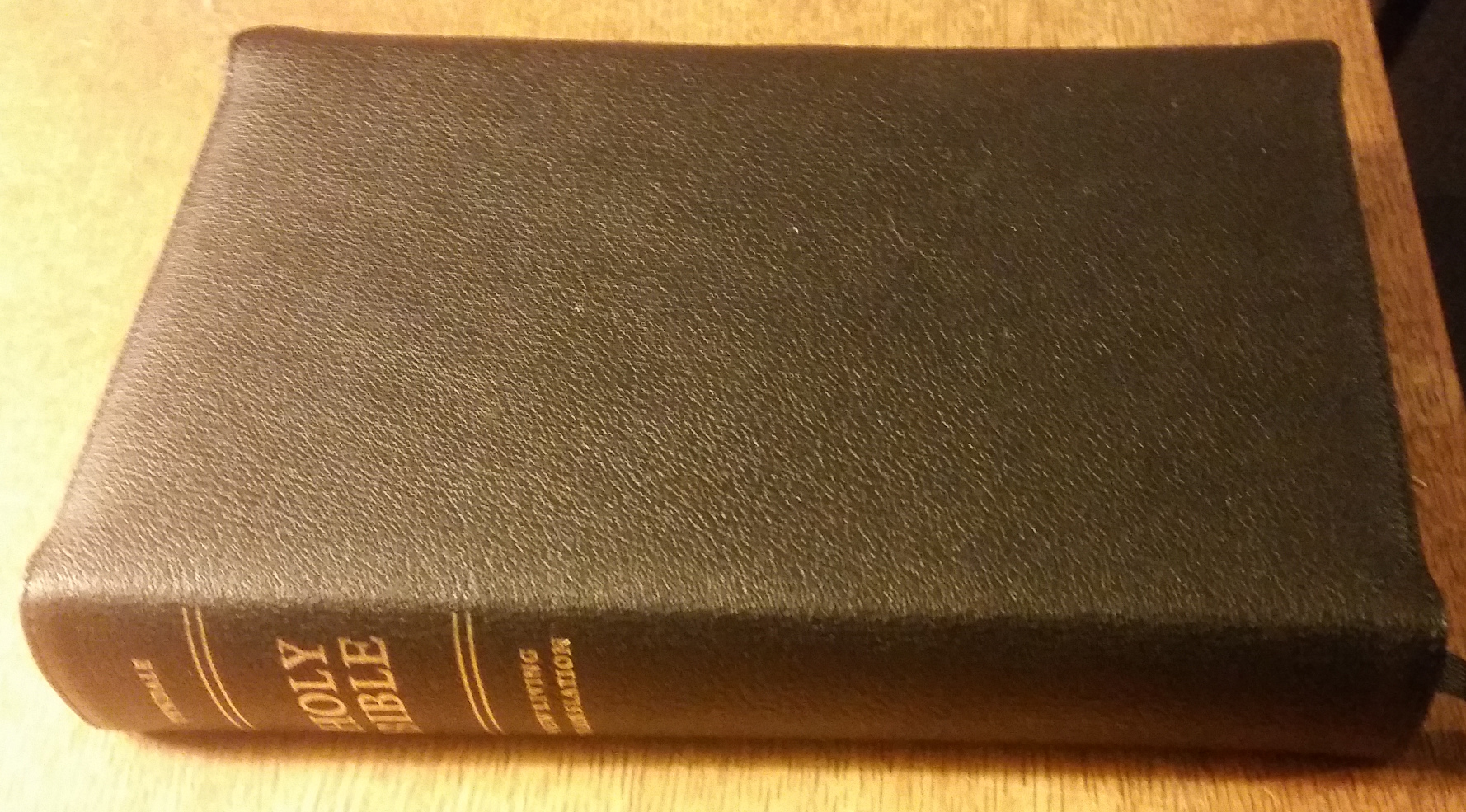
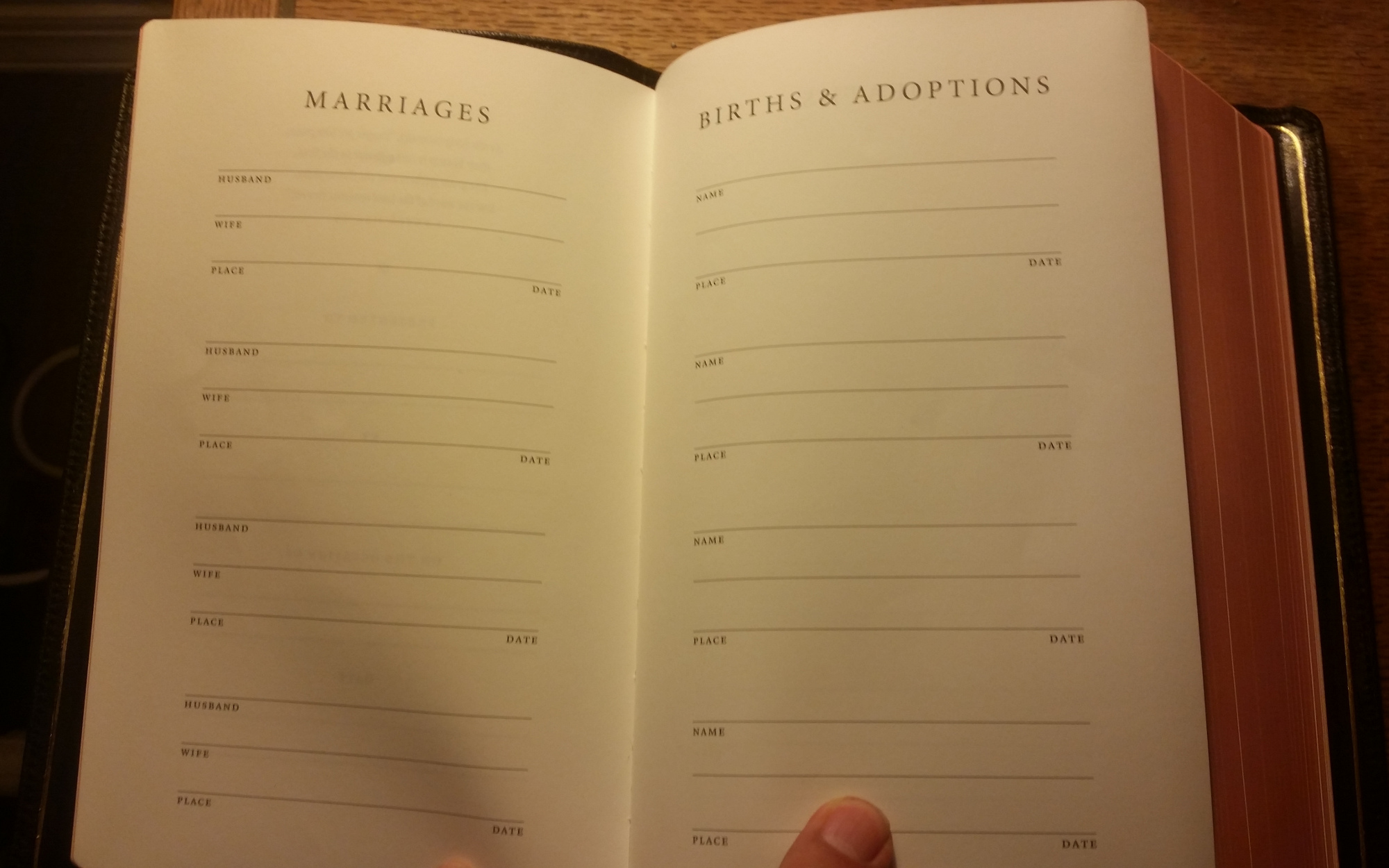
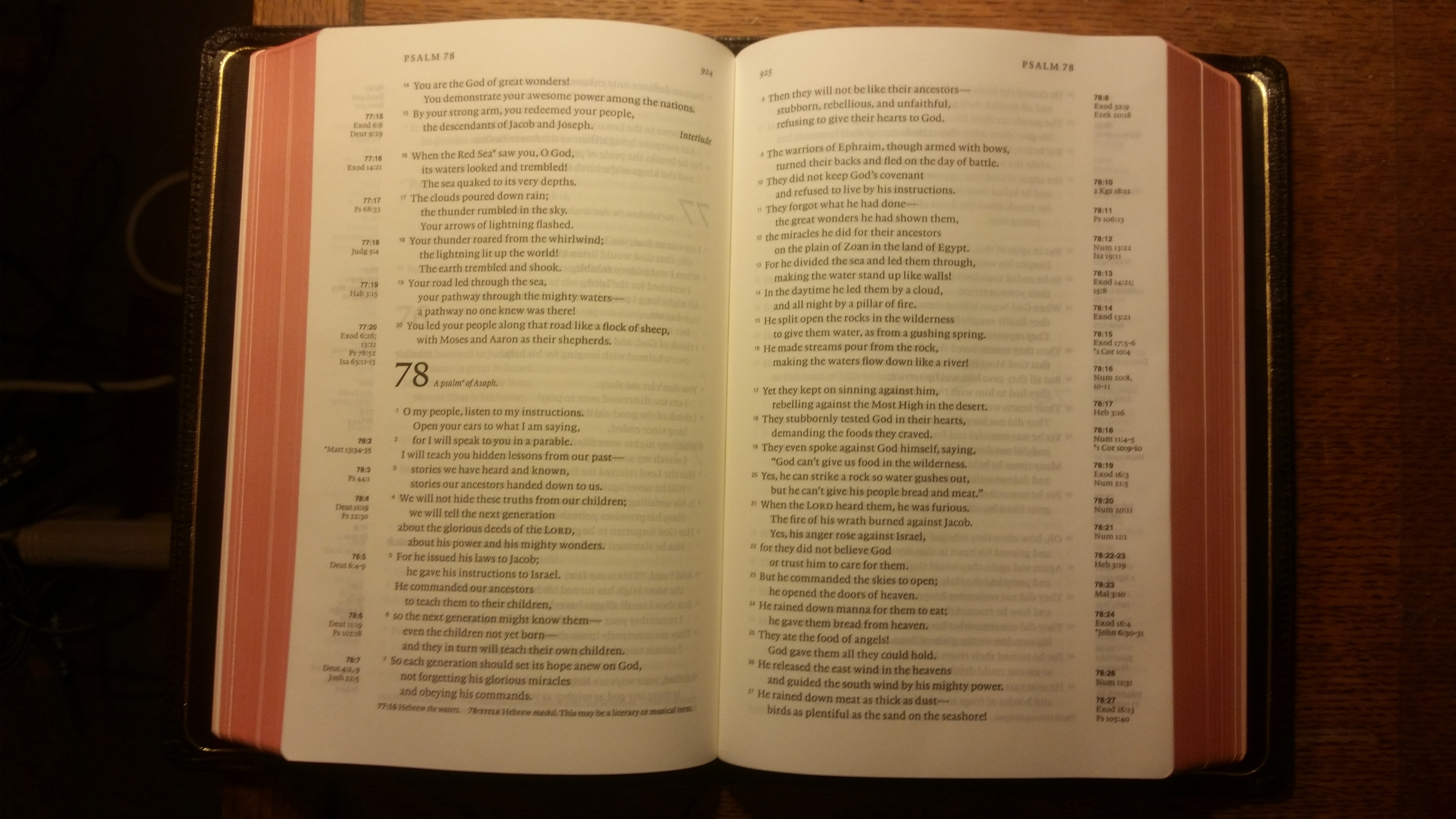
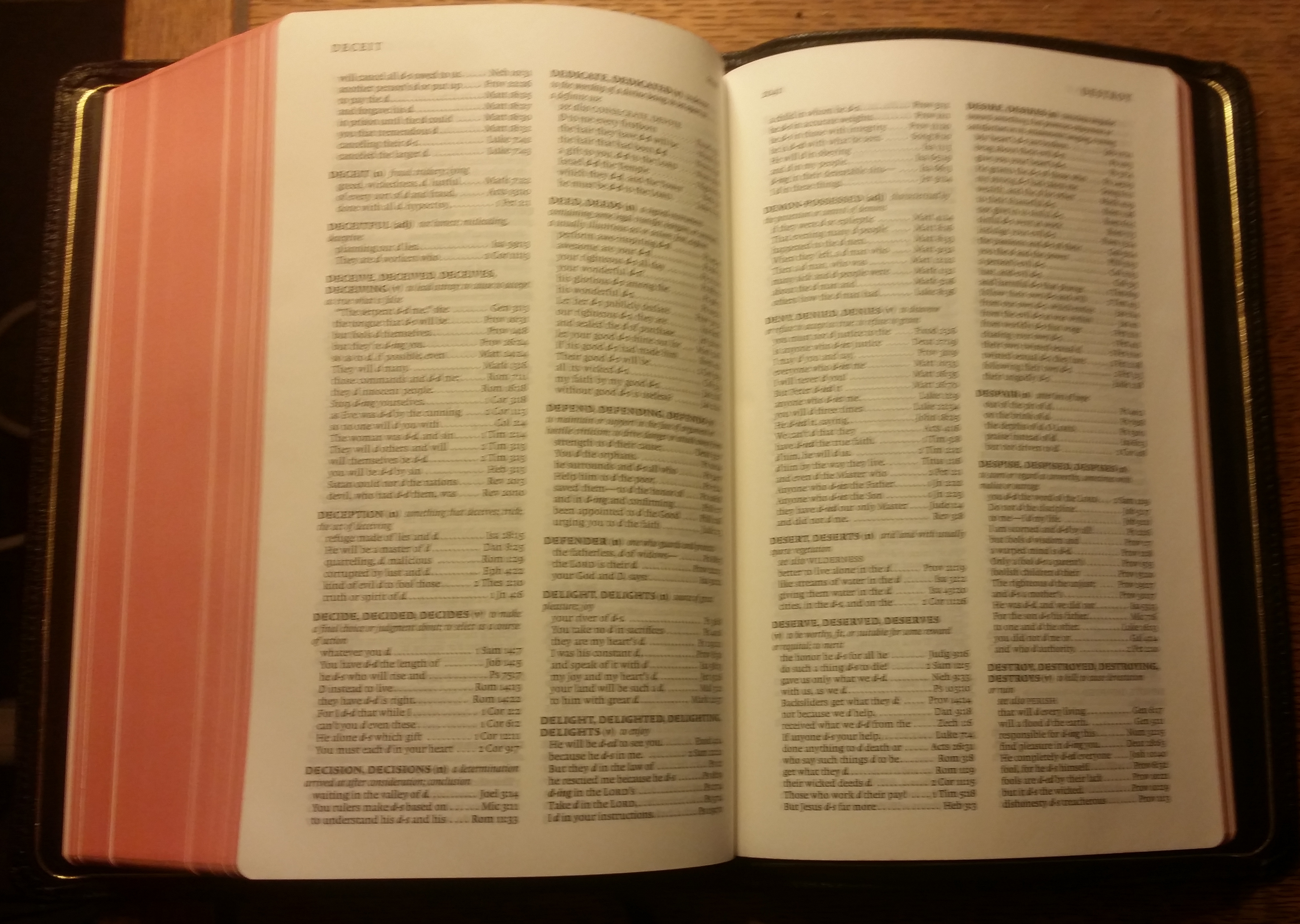
But I saw that this was the New Living Translation, and that it was in a new edition, and so I said I’d review it. I’m actually glad I did. I’ve read a few of the other reviews, and they emphasize some simple facts about this Bible. It’s a work of art. Mine is goat skin for the cover, the paper and font are magnificent. It’s truly an heirloom Bible. You can find out all these details, however, from Amazon or from the publisher. I’m going to include some pictures in my review here on my blog so you can get an idea.
Though it is an heirloom Bible it is not one of those huge books that are destined to stay on whatever table they’re placed on first. It’s easy to carry and to use. You can reference it, which is nice, considering it’s a reference edition. So while you may not feel like doing anything too vigorous around it, lest you damage the work of art, it is nonetheless quite useful as a reading or study Bible.
Those who know me can predict where I’m going next. I’m afraid I have to admit that I start to twitch when I just hold this Bible. I didn’t actually look up the price before I received it, but within moments of actually putting my hands on it, I realized that it was a more costly Bible than I imagined. I’m not going to cite the price in my review, simply because current prices change. I’ll let you follow the link and get that information from the Amazon.com web site. I have never owned, and rarely touched or handled a Bible that costs this much. That leaves me with mixed emotions about it. But a book review should talk about the book from the point of view of what that book was written and/or designed for. I don’t criticize the NLT for not being either The Message or the NRSV. A Bible translation is designed for a purpose, and so is a Bible edition. You can decide what is right for you. If your plan is to buy an heirloom Bible that is to last and be passed on from generation to generation, you should be looking at this one.
Did I meniont that this Bible is designed to last and to be passed down from generation to generation. In pursuit of that goal it has lovely presentation and family record pages as well.
The text is, of course, the NLT. I have a high opinion of this translation for the appropriate audience. In one sense the NLT is descended from the Living Bible. One of the weakness of the Living Bible was that Kenneth Taylor didn’t read Hebrew or Greek. He worked from the English text of the American Standard Version. As a result, while the Living Bible was very readable, it was not always as accurate as it could have been. This problem was corrected for the NLT by a highly qualified evangelical translation committee. They managed to keep the readability, though I think they lost some of the charm and all of the eccentricity. How good that was is open to question. I have linked a couple of references to the NLT to my MyBibleVersion.com web site where you can get some additional information and see how I rate the translation in various categories.
As I say on the cover of my own book What’s in a Version? the best Bible version is one you read. The first question should be whether you’ll be able to use and understand a Bible version. Accuracy in details is of no particular value if you don’t actually read and comprehend the accurate words. Of course, readability should not be an excuse for inaccuracy. Unfortunately, reviewers of Bible versions frequently call disagreements with their preferred translation of some particular verse “inaccurate,” when it is really just “different than I would have done.” The NLT may be different, but it is competently different.
The things that stuck out for me in this edition are first things that are missing. This is not a study Bible in the sense of one with study notes, book introductions and so forth. I am pleased with that. Too many people are treating study notes as the inspired text and ignoring the actual text. You won’t do that here. You’ll need a good Bible handbook or Bible dictionary if you want to get that sort of information.
What you do have is a single column that is a good width for rapid reading. I’ve discussed before many different approaches to reading, and I think one of the most neglected is sustained reading of quantities of the biblical text. This Bible will make that easy. I prefer that greatly to the multiple narrow columns that tend to slow me down. Further, there are quite a number of cross-references. It is possible to become dependent here, just as it is to become dependent on notes, but in this case I think most people can do with the help. The NLT translation notes are included at the bottom of each page.
In the back you have a basic concordance and dictionary. This is not a replacement for your Bible dictionary but it will give you the basics and help you find a variety of references on a topic. This is followed by a selection of maps. Again, no effort is made to compete with your Bible atlas, but for reference on the run or in your study group, the material is better than average.
While the binding, paper, and high quality construction are the distinctive features of this Bible edition, I found that it is fully valuable as a Bible for your actual use. If you do choose to spend the money on an heirloom Bible edition, and hope to pass it on to your children, this will fit the bill. With decent (though not massive) margins, you may also be able to leave your notes and your testimony in it for your children as well.
I remain a content person, but I can respect a true work of publishing art when I see it, and this is one.
For those interested in the text, here’s my video review of the NLT:
(Disclosure: I received a copy of this book free from the publisher for review.)
I realize that some might find this affirmation of God’s realm a bit disconcerting. They might think that I’m recommending some kind of theocracy. In a way, I am, but not in the usual way of thinking. This isn’t a divine government imposed by an earthly realm. This is instead a recognition that our ultimate loyalty belongs to God, and when loyalties conflict, and they will, we must choose the realm of God. The church is called to be an expression of that realm on earth as a reflection of God’s realm in heaven. So, no I’m not advocating making the United States a Christian nation. I’m advocating that we recognize that God’s realm is present on earth as in heaven!

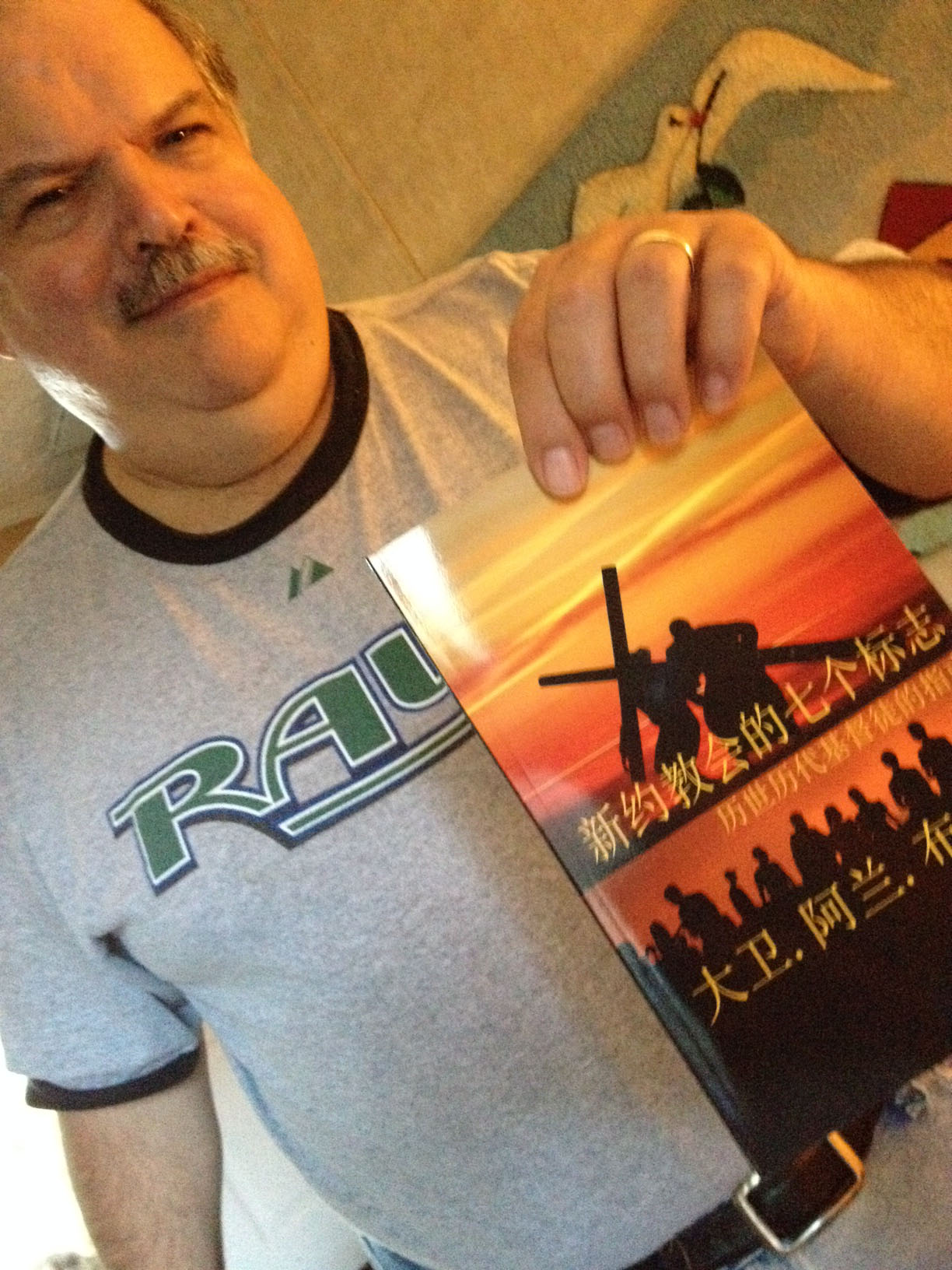 I suppose it had to happen sometime. Well, not really. I could have said no. But I have now taken a step off the edge and published a book I can’t even read. It’s in Simplified Mandarin. I got the translation, did the layout, and then had it checked by the translator. I ran some of it through Google Translate and it came back resembling English.