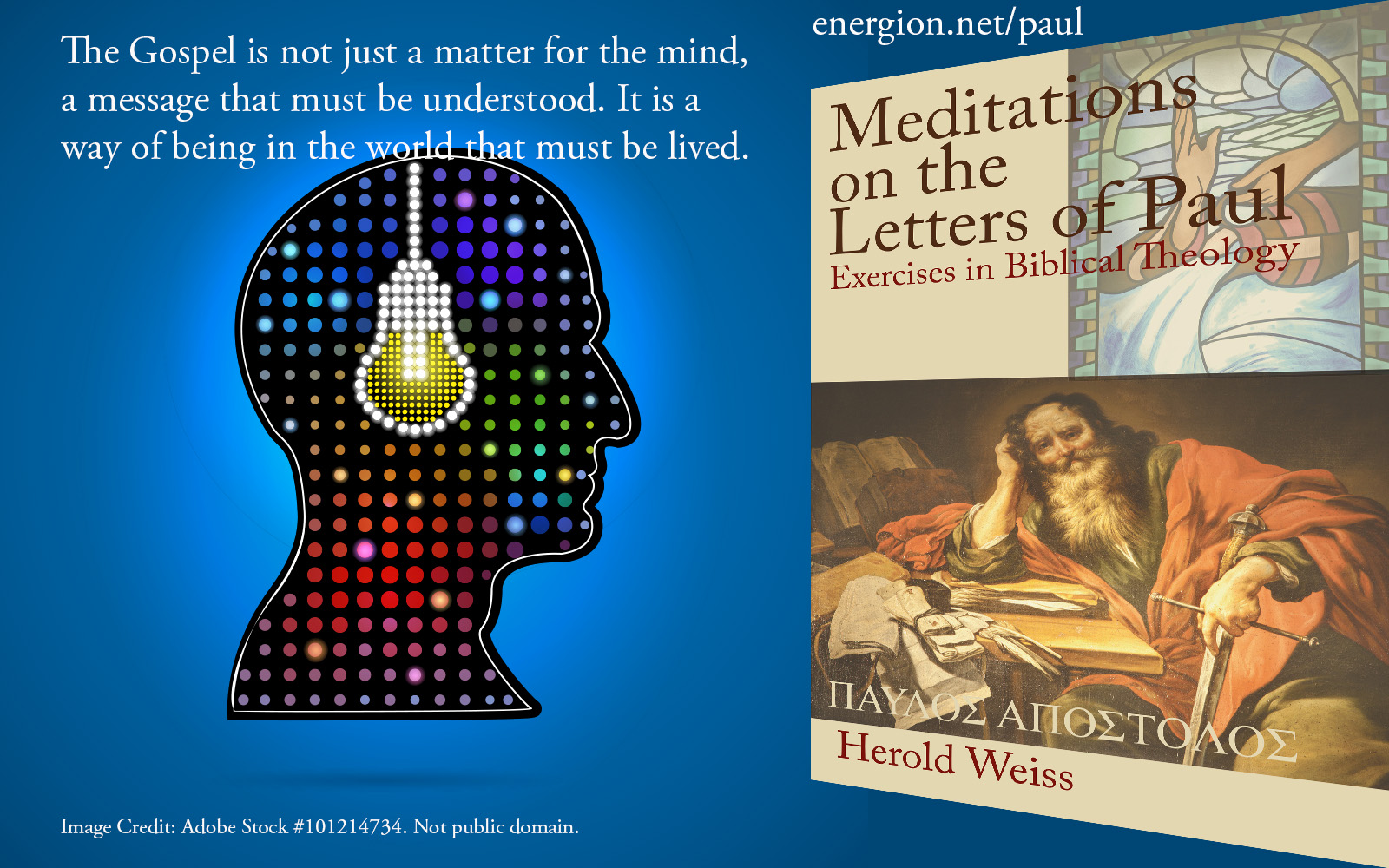
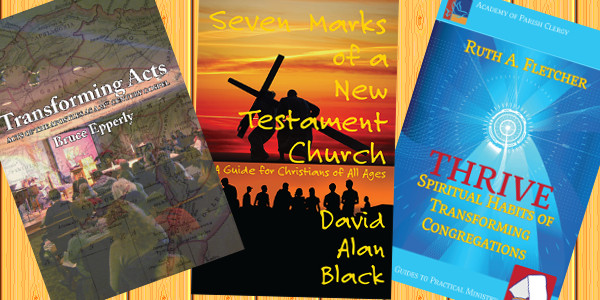
Our study continues tomorrow evening with a look at chapter 4 of Dave Black’s book Seven Marks of a New Testament Church, “Genuine Relationships.” In this chapter, Dave discusses the church as community. I wrote an extended post on it when I was blogging through the book some time ago. I recommend reading that, and paying particular attention to the definitions provided by Ruth Fletcher. I’ve quoted a key line in the featured image, but in that earlier post I quote more and discuss at greater length.
Author: henry
-

Tuesday Night Study: Genuine Relationships
-

Check the Data: Vitamin Supplements
This study highlights a number of things I like to emphasize. One, of course, is something I’ve thought since I managed the Staff O’ Life Nutrition Center in Columbus, Georgia when I was in my late teens. Eating a good diet is a better plan than using cabinet’s full of supplements. Fortunately for me, the store was operated by people who took the same view.
Featured image credit: © Lindamstyle
ID 12998694 | Dreamstime Stock PhotosBut you also need to read each study carefully. News articles—and this is a news story, not the text of the study—tend to put the most exciting material up front. Since people often don’t read to the end of an article, often stopping at the headline, they can get very slanted ideas.
At the end of the article, you get this quote:
A minor limitation in the study could be seen to be its broad focus. John Funder, from Monash University, points out that the study does not suggest vitamin or mineral supplements are useless in clinical cases where a patient actively needs those supplements.
This is why people think studies are inaccurate or that they should ignore science as contradictory. What this study suggests is not that nobody needs vitamin supplements. It is that supplements taken by a broad population without a specific need identified, do not increase longevity. So if your doctor finds you need a supplement, this study should not be used to resist taking that supplement. As an example, my dad (an MD) told me that Vegans can have a B12 deficiency, so if I was to stay away from all dairy products, I should consider taking a supplement. This study isn’t a refutation of his statement. He’d agree with the study in general.
Further, study study notes a potential negative impact of taking Niacin. Again, this is a general finding over a large population, not screened for a need for Niacin. If you are deficient, I suspect your doctor would urge you to take the supplement.
So I see it as a valuable lesson in both eating, maintaining your personal health, and how to read news stories.
Oh, and yes, most important: This isn’t the study. It’s a news story about the study. Note the link to the abstract of the actual study at the end. That link is both valuable in itself and also as an indicator of the diligence of the story writers. Beware unsourced information!
-

Thinking about a Crucified God
My company, Energion Publications, recently released a book What’s God Really Like?. It’s endorsed by Brian Zahnd;
In What’s God Really Like?, S. J. Hill invites us to become fascinated by God and, in that fascination, to move beyond the fear-based themes that have so often distorted our image of God. With a focus on Jesus and Scripture, Hill paints a portrait of a God who is “holy wild” and overflowing with generous love and contagious joy. This book is a welcome and timely remedy to the unworthy portraits of God that have too often haunted our imaginations.
Brian Zahnd
Lead pastor of Word of Life Church in St. Joseph, MO
and author ofAnother Energion author, Allan R. Bevere, posted the following video, a sermon by Brian Zahnd. I think all of these go well together!
-

Can We Have a Commitment to Biblical Truth?
We now come to the third mark of a New Testament church, and that is its commitment to biblical truth. One of the weakest aspects of Western Christianity is our failure to give proper teaching to new converts. As a result, biblical illiteracy plagues the church in America. This is a weakness in some mainline churches, and often in evangelical churches too. (Seven Marks of a New Testament Church, p. 17)
I discussed this to some extent when I worked through this book, but now I want to place the question before my readers for some discussion. With the wide variety of beliefs that we claim are biblical, one wonders just what biblical truth is and how we discern it. Are all those who disagree not listening to the Holy Spirit? Are they ignorant?
Read my previous post, which also quotes from Transforming Acts: Acts of the Apostles as a 21st Century Gospel and Thrive: Spiritual Habits of Transforming Congregations.
-
Video Interview for Quit Christianity
Their title may not tell you precisely what they’re up to, but I’ll let you figure that out by visiting.
I was asked to answer a few questions for a video, with a key text of Romans 4:3. Here’s the video. It’s nice when someone truly skilled puts the final result together!
https://youtu.be/jEsyvEGeCu4
There’s lots of interesting stuff on their channel, which you can find by clicking through on the video link.
-

The Value of Theological Disagreement
Earlier today I posted links to a video by Andy Stanley and a response by Michael Brown. Some people have commented on this issue indicating that it was unfair to “attack” Andy Stanley about his views. (These were not on my blog post or its Facebook link; the controversy is widespread.) I have a few comments on this.
- There are those who claim that one has to listen to the entire series in order to get the context and respond. I would disagree. If you make a short video, be prepared to be challenged based on the content of that video (or audio file or blog post, for that matter). I think there is sufficient material in Stanley’s presentation to which one can respond.
- It’s interesting that one is expected not to respond to Stanley, yet Stanley is critiquing quite a number of other Christians. I do not criticize Stanley for doing this. If you’re going to assert that X is true and Y is not, you’re going to critique someone.
- As in #2, those who critique Stanley are in much the same position. If they are to assert that X is true and Y is not they will obviously be offering a critique of those who hold Y.
- Which leads to my main question: Why is it wrong to question theological statements, especially sweeping ones that are offered as a critique of other Christian positions?
- As for the “Marcionite” argument, we’re in a standard name-calling situation. For some reason, we think that by labeling someone we have responded, and, on the other hand, by defending ourselves from a label, we’re defending our position. Forget the label; ask whether the viewpoint is correct, or whether it can be improved upon.
I believe it is very important to discuss theology, and discussion involves the assertion that some things are less right than others. The idea that we can never point out what we believe is an error in the teaching of another is ludicrous. Now if we arrogate to ourselves the ability to judge someone’s salvation or their standing with God, that’s another matter. But to assert that some things are true is by nature to assert that others may be less accurate or perhaps untrue.
In this issue, I actually go farther than I perceive Michael Brown is going. I don’t believe there is a singular, straightforward distinction between the Hebrew Scriptures and the Christian New Testament. I believe that there are many cases of God changing the way in which he relates, as God carries out God’s plan to save humanity. Thus the Christian Bible, consisting of the Old and New Testaments should be read as a single story. There are points of distinction, but they occur in a variety of ways and are usually envisioned ahead and then their interpretation grows afterwards.
I object to simply dismissing a portion of scripture. You have accomplished nothing of value, I believe, by unhitching the New Testament from the Old, first because they are connected by much more than a hitch. There is an earth-shattering change with the incarnation, the life, the death, and the resurrection of Jesus, but this takes place in the midst of a growing understanding of God and his actions in the Hebrew Scriptures, and we struggle to understand this completely millenia later.
As an example, many—I suspect the vast majority—of those who heard Jesus may have been surprised by his attitude toward the gentiles, and may have similarly been concerned by the church’s mission to the gentiles. Indeed, the gospels and Acts record that many were. But Isaiah (2nd/3rd Isaiah, 40-66) would not have been so shocked. One may point to differences, yet I think Jesus appears no more radical in his look at the law than Isaiah 56. So if the audience was shocked, they were missing some of the lead-up story. I think they may have been less shocked than modern people imagine. There were many viewpoints in Judaism at the time.
And if Isaiah 56 wasn’t radical enough, then perhaps Ruth or Jonah would take the place of radical scripture. Or, if we really wanted to get down to it, we might note Genesis 12:3, Genesis 17:5 (from Abram’s call and covenant).
There are certainly things that are hard to deal with in the Hebrew scriptures/Old Testament. There are also some of those in the New. My problem with a dismissive solution, broadly stated, is that the texts are still there. God has been working with people for a very long time and people have been interpreting God’s actions for a very long time.
So let’s disagree, critique, and grow. A bit of love and generosity would be good as we do so.
(Featured Image Credit: OpenClipart.org.)
-

The Sacred Scriptures of the Early Church
I struggled with the title, as this is almost entirely links, and the issues raised cover so much ground. I’m posting these particularly for my Romans study on Wednesday nights.
In both the current class and my previous series on Hebrews I maintained that the New Testament was not intended to set aside the Old, or the Hebrew scriptures. In fact, I refer to the idea that Hebrews is doing that is an author climbing out on a limb and then cutting it off behind himself.
On the Charisma Magazine web site Dr. Michael Brown responds to a video by Andy Stanley.
I would suggest listening to Andy Stanley and see if you can hear some of the approaches to the Old Testament I mentioned. Michael Brown provides what I consider a good response. I’m glad to note he sent Andy Stanley a copy of his critique (see Brown’s article), but I do not accept that they are not that far apart, as Stanley says. Note that the majority of the issues are in the first five minutes of the video, but I think it then pervades the rest in more subtle ways, then comes out more strongly at the end.
Anyone who has heard me teach will know my view on this.
Here are a couple of related books I publish.
-

Deceiving without Lying
I got this letter in the mail.
If you look at the reply envelope, you’ll see that there is no identification of the company that is sending this e-mail out. Look to the right, where I’ve let a bit of the outer envelope show. It shows a quite correct statement of penalties for obstructing mail delivery. It’s not particularly relevant, but whatever. At the end, in smaller print, we note that this is not from the government..
At the bottom of the pink sheet, we see a note that this is not “affiliated with or endorsed by any government of Medicare program.” Another statement that is likely quite true.
With the “NATIONAL RESPONSE CENTER SENIOR BENEFITS DEPT.” the intention is to keep the recipient from thinking of this as a ad for life insurance, which it is, and to suggest that they are being informed of benefits already earned (Medicare, Social Security), which they are not.
I wouldn’t post this normally, but I did for two reasons:
- This is aimed at the elderly, and there are many actual benefits available. There are many organizations and government agencies that do work to provide information about actual benefits. Because of that, someone else can slip in deceptively and imply that they are such a group, while making sure that they don’t actual tell any lies and have all the disclaimers available.
- Most of my readers will find this particular mailing trivially easy to analyze and dismiss. In the modern world, you are assailed much more commonly by e-mail, something many of you are much less skilled at evaluating. You need to apply the same sort of logic. How does a reputable company go about introducing you to its services? Does the e-mail you’re looking at look like and function like that sort of introduction? If you look carefully at the e-mails you receive that are legitimate, especially those from businesses with which you have a relationship, you will more likely recognize when someone is playing around.
It’s possible for people to spoof the sender of an email. That means they use a name or an e-mail address that is not theirs. It is much more difficult, but nowhere near impossible to place false data in the actual record of how the e-mail was transmitted. I have nonetheless had friends receive e-mails that purported to be from me. I got them to forward the e-mail to me and I was able to check that it was indeed not sent from the appropriate server, and just my name was faked (not even the e-mail address in a couple of recent cases).
Just like someone could type my name on a piece of paper and forge my signature, so they can fake that information on an e-mail. Or they can fake yours. They can do this without hacking your account. Your information is easy to access.
They could, for example, extract my address from the picture above, but that is ubiquitous on the web. I blacked out my zip code, but anyone who wants it already has it. My point here is don’t assume that simply showing the right return information makes it certain the e-mail is correct. If you have any doubt—and please take enough time that you’d notice—then confirm with the sender before following any links or opening any attachments. A huge percentage of the fraud problems on the internet would be abated considerably by this.
-

Grace and the Book of Hebrews
In my experience, Hebrews has provided a wealth of texts for sermons that call for works and human effort. Pride of place, perhaps, should be held by the Wesleyan doctrine of Christian perfection, for which one of the central texts is Hebrews 6:1. No matter how many times Wesley affirmed Christian perfection as a gift of grace, he was unable to prevent this becoming a basis for performance based salvation, judgment, and self-righteousness. (While I believe in sanctification, and will mention it below, I don’t accept the idea of perfection in this life.)
Hebrews 6:4-6 follows, which is often treated as teaching that if we commit some particular sin or other, we will lose our salvation for doing so. I’ve written about this recently, and I disagree, but I’ve heard it preached.
Then there’s Hebrews 10:26-31, starting with the warning against continuing in sin and ending with what a terrifying thing it is to fall into the hands of the living God.
Or Hebrews 11, so often preached as a litany of great accomplishments and presented against the lack of accomplishments in the congregation. We must, of course, become faithful like these heroes of ancient times and hold up our end of the deal. After all, God needs us and demands our service.
Hebrews 12 starts with the clouds of witnesses, which I’ve heard preached as the “encouragement” of having all these wonderful people watching you from heaven, so you had better not mess up. Don’t want all these holy people watching you mess up, do you?
Of course, you aim to accomplish all of this in fear of the God who is a devouring fire (12:29).
James may be seen as an epistle of works (not an accurate portrayal, in my view, but Hebrews may well have been the source of more sermons on performance righteousness.
But is this approach justified by the text of the letter itself? I don’t think so.
Let me make a couple of assertions that I’m not really going to justify. Knowing that I believe these may help you understand the rest of what I’m saying. The first is that there was never a plan for salvation presented in scripture that did not have as its goal the creation of a holy people. From the invitation to the first couple to walk in the garden with God, to the call in Leviticus to be holy as God is holy, to Jesus asking disciples to follow him, to Paul inviting everyone to put their faith in Jesus, the anointed one, all the plans are part of one plan aiming at that point. The second is that grace is one of the, of not the, most difficult things to accept, because if grace is true, we are not in control. We humans like to be in control.
Hebrews is a book about God making a holy people, and it’s a book about how none of us are in control.
Hebrews starts with the description of God’s gracious gift, himself, in the person of Jesus. Hebrews 1:1-4 lays out this presentation. The one who is sent is sufficient to the task. As we move through the book, we see Jesus presented as one of us, tested as we are, and sharing in our experience. I have been asked whether I see Hebrews as teaching substitutionary atonement. If this is a question of whether Jesus died for us and for our sins, then the answer is surely “yes.” But if we mean “penal substitutionary atonement,” as in Jesus taking our punishment in a judical context, I think the answer is “no.”
In Hebrews, Jesus is presented as becoming one of us. The necessary elements of the sacrifice is that it must be perfect, i.e., fully connected to God, and also fully ours. Then the form of “dying for” is incorporation. We are in Christ who is our king, our parent, and our priest, and we are incorporated in his death. He dies and we die “in him.” It is not a judicial substitution, but rather that the one dies for the nation (John 11:50) as one of the nation, indeed, as the king. The key here is that we become incorporated into that kingdom, that community, and are thus buried in his death and raised into his life (Romans 6). I think Hebrews is closely aligned with this Pauline theological presentation. Everything we are called to accomplish in the book is accomplished in Christ. That’s why Christ is presented first in the book and his superiority is established. (Refer again back to my post on Hebrews 6:4-6 for some backup for this idea.)
So when we are called to perfection, we are called to be carried on to perfection. This is not the perfection of a person who lives a perfect life, and certainly not something we accomplish on our own. That’s clear through the arguments on why Jesus is the perfect high priest. In order to make that argument, one must establish that we are not capable of this on our own. The perfection to which we are called and to which we are carried is not ours, but the perfection of Jesus (Hebrews 5:9). He, Christ, is the source of salvation.
Of course it is a terrible thing to fall into the hands of the living God, but we can instead be in the hands of the living God through the high priest who is sympathetic to our weaknesses. Of course, there is no more sacrifice for sin. If Jesus has opened a “new and living way” (Hebrews 10:19-20), then the only options are to go through it or not. If we are offered complete access to God and incorporation into his redemption and sanctification, what other option is needed? What other option could possible work?
Then there’s Hebrews 11, which I think provides the key to the view of the message of Hebrews I’m presenting here. Contrary to those who preach Hebrews 11 as a triumph of the saints, it is, in fact, a triumph of grace in action. We err if we read this without adequate consideration of the stories from the Hebrew scriptures of these great heroes. Moses doesn’t fear the wrath of the king in Hebrews 11, but he flees in terror in Exodus. Sarah is rewarded for faith, but in Genesis she laughs. These people were not those who tried to obtain perfection, but those who were carried on to perfection. In 11:40 we are told that God’s plan was that they should attain perfection “with us.”
That perfection, I believe is found in Jesus, and only in Jesus.
These are the witnesses of Hebrews 12. We are being watched as we are carried on by those who have been carried before us. The question is truly simply whether we will truly be carried on. We can miss this both by thinking that we are going to do it ourselves, or by missing that it needs to be done at all. I’ve used the metaphor of a train for the theme of Hebrews. Get on the right train and stay on it until it reaches its destination. You can equally fail by sitting at the train station by never getting on the train, or if you set out to run alongside the train on your own power. Neither one will work. But if you get on the train you’ll move forward. (As with all metaphors, this one has its weaknesses!)
In this view of grace, it is not put against faith. It is not faith vs. works, as though there were two approaches and one was better. It’s not a balance between faith and works. No amount of running, even combined with train-riding attempts, is adequate. But sitting in the station is also not a real option.
What I think Hebrews makes clear is that the grace is available. Jesus opens the way to God. This is grace in action. But rather than being the enemy of true works, works of faith, grace is what opens the door and makes any works, any holiness, and any approach to God possible. Sanctification occurs only on the train, i.e., only when we are being carried on toward perfection in Jesus, our brother, our sacrifice, our high priest, and our king.
That’s why I see grace as the critical key to the entire book of Hebrews, but I also see the book as providing a critical view of grace, a grace that is active, even more, that is God’s action taken in our lives.
In this post I have not provided nearly enough scripture and logic to back this up fully. This is just an introduction. My recommendation is that you consider these ideas while reading the entire book to see what you find.
(Feature image credit: Openclipart.org.)
-

When Is a Gift Spiritual?
Dave Black writes about spiritual gifts and natural abilities. (Link on jesusparadigm.com, to make a permanent link available.) I like what he said. I want to add a note. You can find more of my comments on 1 Corinthians 12-14 under the 1 Corinthians tag on this site.
The problem that I see commonly with our reading of 1 Corinthians 12 especially is that we assume that Paul is setting out to explain spiritual gifts. I don’t think that’s what he’s up to. Rather, he is using the variety of spiritual gifts as a means to talk about Christian unity, and as a way to teach discernment of all of our activities.
Everything is a gift of God. There are gifts that God places in the body of believers for the purpose of carrying out ministry. Whether these gifts are “spiritual” or not is not a function of whether they are received from God or not. All gifts come from God. The issue is under whose authority we place these gifts. If you take a look especially at 1 Corinthians 12:7-11, and then focus on 11, “All these are the work of one and the same Spirit,” you will start to get the picture, I think. This isn’t a list of “approved” spiritual gifts, and it isn’t a question of what gifts come from God and what gifts occur naturally. Nature itself belongs to God. The natural is divine by gift of its creator.
Acting under one Spirit, however, is an excellent test. The gift, whether designated spiritual or not, that is used to tear down rather than to build up is distinctly unspiritual in this sense.
Another error we often make is to extract 1 Corinthians 13 from the passage of 12-14. (Of course, the structure of the entire book is important as well.) I recently read an article, and I now can’t recall the source, that mentioned this wasn’t a wedding passage, and indeed it isn’t. Nontheless I will say it’s fine at weddings, because scripture uses the marital relationship as a metaphor to tell us about the divine relationship and also about the body of Christ. But here it is Paul’s principles for the use of God’s gifts in a spiritual way. He in turn makes those principles explicit in detailed action in 1 Corinthians 14.
We shouldn’t be complacent in reading 1 Corinthians 14. We sometimes read it as a corrective to raucous or disorganized worship services, but the worst problem we have is that we don’t have the problems that the Corinthian church had in worship. We don’t have everyone showing up with each having “a hymn, or a word of instruction, a revelation, a tongue or an interpretation” (14:26, NIV). We each show up only with a backside to plant in a pew.
We need first to put our gifts into God’s hands for service, and then we can start talking about how to best use them in an edifying, i.e. building, worship service.
These three chapters are powerful, and I think incredibly relevant to the church today. We should have problems like the Corinthian church!