Threads from Henry's Web

Author: henry

  • Thinking – The Only Solution

    Thinking – The Only Solution

    When I talk to computer customers about security I tell them that I can protect them from many things, but in the end, I can’t fully protect them from the user who won’t follow good security practices. I can try to force the user to follow certain procedures, but as the old saying goes, “The reason it’s so hard to make anything foolproof is that fools are so ingenious!”

    Today I had a post from the New York Times in my feed that suggested that users are being drawn into buying more expensive stuff by targeted advertising.

    It’s likely they’re right. Ads, after all, are designed to make people spend money, often for things they cannot afford. It’s how our economy functions.

    But then you get to the question of solutions. Should we restrict advertising because people will be led astray?

    Which leads to the question: Should we regulate the media more so that people are not exposed to misinformation?

    The problem is that even if you could find truly unbiased censors to filter out the crud, you’re unlikely to prevent people from getting bad ideas and “learning” things that just aren’t so.

    Perhaps our world should come with the caveat that I put in my form regarding security service:

    No amount of security can make up for a user who will not follow good procedures.

    Which leads to:

    No amount of adjusting the sources will make up for a reader who will not think.

  • Stephen S.J. Hill on Our Much Loved Identity

    Stephen S.J. Hill on Our Much Loved Identity

    S.J. Hill Interviewed by Barry Adams

    It is very difficult to get me to watch any video. Yes, that’s true, even though I create videos and do online interviews on multiple subjects. It’s not my medium of choice. Getting me to watch an hour extends into the impossible.

    But I watched this one …

    I recommend that everyone, but especially those involved in ministry, whether pastoral, teaching, missions, or any other service activity, listen to this and take it in. I have dealt with this myself.

    When are you good enough?

    Change the question!

    Note: As the owner of Energion Publications, I am the publisher of S.J.’s book What’s God Really Like?. I recommend the book as well!

  • Link: Revelation, We Have a Problem

    Link: Revelation, We Have a Problem

    Scot McKnight discusses the problem with the popular understanding of Revelation.

    I recall guest teaching a Sunday School class on Revelation from the study guide I wrote (currently not available as I revise it). The major question from the class was when I was going to talk about the seven-year tribulation and whether I was pre, mid, or post-trib. When I said, “None of the above,” they still insisted that I teach a session on the tribulation.

    Note that I believe there will be time(s) of trouble, what I do not believe in is the seven year tribulation and rapture separate from the second coming.

    The revisions of my study guide include illustrations and putting a bit more explanation rather than just scripture and study questions, which was my original approach. I prefer studying scripture directly as much as possible. For a marketable study guide, I need a bit more explanation.

    In the meantime, check out Scot McKnight’s notes.

  • By the Wife of Uriah

    By the Wife of Uriah

    Today as I walked I was listening to the Bible and starting the book of Matthew. Now Matthew, to the annoyance of many, starts with a genealogy.

    Are you one of those people who skip genealogies?

    Here’s what hit me today. In Matthew 1:6b I heard this “And David was the father of Solomon by the wife of Uriah.” Now I knew this, but it struck me, and immediately connected to “Salmon the father of Boaz by Rahab” (v 5).

    What’s so important about this?

    Well, this is the genealogy of Jesus, supposed to be the Messiah, the King of Kings. And we are see these items in his ancestry detailed. The Bible writers did not tend to whitewash the difficult parts of the story. Indeed, they emphasize the many questionable moments in the story of redemption.

    It is the story of redemption, after all!

    Image by falco from Pixabay

  • The Wrath of the Lamb

    The Wrath of the Lamb

    Sometimes the process of preparing to teach Sunday School takes interesting turns, at least for me.

    I’m currently teaching from the Sermon on the Mount, and I was thinking about the transition from the beatitudes to the discussion of fulfilling the law. Sometimes we get so used to the way Scripture passages read that we don’t really notice the impact they would have had. “Blessed are those who hunger and thirst after righteousness …” transitions to “unless your righteousness exceeds the righteousness of the scribes and Pharisees.” We’re used to thinking of Pharisees as bad guys, and we can immediately translate that statement mentally into something less than it would have been to those who first heard it.

    It’s easy to suggest that the Sermon on the Mount does not represent some singular sermon, and that perhaps the beatitudes and the teaching on the law contained in Chapter 5 weren’t really run together that way when Jesus taught them. Indeed, the different settings for portions of the sermon in Luke might suggest that we have compilations of sayings rather than complete sermons.

    But, and it’s an important ‘but’, someone thought these two things went together. I love form, source, and redaction criticism and believe they provide important insights, allowing us to learn from the prehistory of the text in front of us, but in a case like this, they just kick the ball down the field a bit. We still should ask just why the passages go together.

    Let me skip my own answer, which I already had in mind, and go with the experience of thinking about the passage. I like to read what I’m going to teach very early, usually the Sunday afternoon after the previous lesson, and then think about it through the week.

    In this case, I had just gotten a new audio Bible (NRSV) for Audible (unfortunately it is no longer available). I wasn’t actually intending to think about the passage, and I just let the audiobook continue from where I had last left it, which happened to be in Revelation 6. I got to 6:16, and heard the words “the wrath of the lamb.” Or “hide us … from the wrath of the lamb.”

    Now here’s another phrase that doesn’t always have full impact. It takes on that “scriptury” sense in which we imbue it with holiness and piously let the jarring nature of the statement slip by.

    So picture a cute, wooly, harmless lamb. Now picture crowds of people calling for mountains or large rocks to fall on them — splat! — to save them from the wrath of, well, that fluffy bundle of cuteness. For Monty Python fans, let me note that it calls to my mind vorpal bunnies.

    So we go back a bit in Scripture to Revelation 5:5-6:

    (5) One of the elders said to me: ‘Do not weep; the Lion from the tribe of Judah, the shoot growing from David’s stock, has won the right to open the scroll and its seven seals.’ (6) Then I saw a Lamb with the marks of sacrifice on him …

    Revelation 5:5-6a

    I could spend all kinds of time on this, but I’m just looking at one thing: The Lion is the Lamb. Of course, if you read the texts I first reference in context, you’d also note that the fear of the wrath of the lamb was combined with fear of the one sitting on the throne.

    In this case, we have a direct literary relationship. In chapter 6, John is doubtlessly connecting referencing this lamb, who is also not just a, but the Lion. Slightly more intimidating than the wooly lamb I evoked earlier.

    So this turned my mind to something I get from orthodox theology, in this case the incarnation. Jesus is presented as totally human and totally divine. Compare Hebrews 2:17-18 to Hebrews 7:26-28 display a combination of incompatible features. One plus one equals one. Not normal logic.

    I like to distinguish belief in three ways. There is believing that. One can believe that something is true without absorbing it or responding to it. I believe that an aircraft is airworthy and safe, but I stay on the ground. Then there is believing in. In this case belief leads to a trust in the thing in which we believe. I believe that the aircraft is airworthy and safe, so assuming the crew is good as well, I get on board and fly. Then there is believing through. That is when I use one belief to impact the way I understand and respond to other things. In the case of the aircraft analogy I now learn to put reasonable trust in things in which it is reasonable to have confidence.

    In Christian terms, I go from believing that Jesus rose from the dead, to putting my trust in “the pioneer and perfecter of our faith,” and from there to living a life defined by not just by the hope of the resurrection but of the character and power combined of one who gave himself to death and arose. There is some room here to live in hope. The hope comes from seeing other things in the light of my belief in the resurrection.

    Now back to the incarnation, and lions, and lambs.

    There are many things that thinking conditioned (transformed?) by the incarnation can be, many of them at the same time. One is that we lose the binary sense. To take us back to Revelation 5, we can see in one person the Lion and the Lamb. We can see gentleness and sacrifice on the one hand and wrath on the other, all in the form of a wooly lamb, one that someone already sacrificed. That’s seeing these things through our belief in an orthodox doctrine. I have heard folks argue forcefully for an orthodox statement of doctrine, but seeing it only as a thing that must be affirmed to be true, and not something that impacts the rest of our lives.

    I maintain rather that if you really believe in something like the incarnation, it will reshape your thinking all over the place. Constantly. Irrevocably.

    I recall hearing Deanna Thompson, author of the Deuteronomy volume in the Belief Commentary series. She is a feminist and a liberationist. She recalled wondering why she should be the one to write a commentary on Deuteronomy. But she said that as she wrote the commentary, she realized that “a God without wrath will never liberate anybody.” A God such as the one presented in Deuteronomy.

    The Lamb is the Lion. They are not incompatible.

    And then another thing came to mind. I recently watched the movie “Aristocats” again. It’s a favorite of mine. It includes a song with the line:

    Everybody! Everybody! Everybody wants to be a cat!

    Aristocats

    At this point I imagine you’re thinking I’m a bit odd in the things I connect. I also assure you that I like cats.

    But if you look around church, everybody wants to be a cat. That is, we want to get to the Lion part of the act, or the rider on the white horse. We long (as the readers of Revelation did) for the avenging God who does nice things for the good guys (surely this includes us!) and gets all the bad guys. If possible, we want to skip over all the lamblike stuff, and definitely that “slain” stuff.

    So I wind back toward my original topic again, as I know you’re wondering what all of this has to do with Matthew 5? And indeed, in listening to Revelation I had every intention of not working on my Sunday School lesson.

    But Matthew 5 challenges us in a similar way. Jesus is here both the lamb who has humbled himself and is living as one of us, the “gentle Jesus, meek and mild,” and also the one who says our righteousness must exceed that of the scribes and Pharisees (remember that the audience would see that as a high standard), that we must be perfect, and that even being angry or insulting a brother can lead to hell.

    The Lamb is the Lion. Love and wrath work together. It’s not either-or, but both and.

    Featured image by Catherine Stockinger from Pixabay

  • So Why Not Change?

    So Why Not Change?

    Sojourners has an article titled SEVEN LIES ABOUT CHRISTIANITY — WHICH CHRISTIANS BELIEVE.

    There’s a great deal here that I resonate with, especially in the seventh point:

    The problem with romanticizing Christianity is that we turn our faith into a product, using various selling points to make it look more attractive.

    Sojo.net

    But what I’m responding to is the part about ministry and evangelism:

    Pastors and missionaries are considered high-risk candidates within the medical community because of their susceptibility to addiction, stress, and abuse. 

    Sojo.net

    I was first made acquainted with this problem when I was studying in seminary and was told that the seminary students had higher rates of various problems, such as divorce. I was tutoring Greek and Hebrew for the seminarians (I was in the School of Graduate Studies, though sharing many classes), and this was brought to my attention because of academic expectations. Many of the seminarians found the academic class schedule very challenging. I could see they were gifted for pastoral ministry, but some of what the academics, such as I hoped to be, expected of them was stressful rather than helpful.

    My question is this: Why don’t we change the way we do things? I have commented before on realistic job descriptions for pastors. Our expectations are extremely high. We expect them to do all the work of the church from visiting the sick and those shut-in to evangelism and ministry. Everyone in our society seems trained to go right to the top, and in the way we portray pastoral ministry, that’s the pastor.

    I consider this a major failing of Christian life and Christian ministry. Every Christian is called to ministry, that is to service of others, according to their gifts. Nobody should be getting burned out by the kinds of expectations we have of our pastors and other church leaders.

    My friend (and Energion author) Dave Black often comments that he’s waiting for the church sign that reads “Whatever Name Church – Head Pastor, Jesus – Ministers, the entire congregation – Servants to the ministers, the church staff.” (For more, see Seven Marks of a New Testament Church.)

    I wrote a fictional short story about this some time ago titled Our Pastor Is Lazy. In this case, while the story is fictional, I think it’s exceptionally true. Over and over again.

    Let’s not just shake our heads about this. Let’s do something.

  • Jumping the Christmas Gap

    Jumping the Christmas Gap

    Most of the time I’m suggesting that people lighten up when they get too deep into theology, so today, when people are lightening up, I want to talk a bit of theology.

    This day represents the core of my Christian faith in so many ways. When I get into discussions about what is essential in Christianity, I always jump straight to the incarnation. There are other ways of thinking about this, but this is the core of my faith, and the launching point for my understanding of ethics.

    All the examples, yelling, legislation, enforcement, and incentives in the world do not do what the incarnation does for me.

    It’s all about jumping gaps.

    You may go on to bridge gaps later, but we start with a jump. And as Christians (of orthodox theology) that’s the incarnation. Infinite God jumps the distance between infinity and the finite. Contemplating the vastness of the universe as we know it can make us feel very small. The distance between infinity and the finite is, by definition, greater than the difference between me and the universe with trillions of galaxies.

    I believe God crossed that gap. I can talk about this in many ways, but that sets the standard.

    I’m teaching through the sermon on the mount with my Sunday School class, and we’re dealing as a whole with passages on the law in Matthew 5:17-48. Verse 48 says to “be perfect as your Father in heaven is perfect.”

    Ouch!

    But it’s a really glorious ouch! This is the example set.

    One of my three favorite books of the Bible, the ones that I find most definitive for my theology, is Hebrews. Hebrews opens with this passage:

    1In old times God spoke to our ancestors through the prophets in many portions and in different ways. 2In these last days, however, he has spoken to us through a Son, one whom he has made heir of everything, and through whom also he created the universe. 3This Son is the brightness of his glory and the exact representation of his real essence. He sustains everything by his powerful word. He performed a cleansing from sins and sat down at the right hand of majesty in the {spiritual/heavenly} heights. 4Thus he became as much greater than the angels as the fame {reputation} he has inherited is of a more outstanding nature than theirs.

    Hebrews 1:1-4 (my translation, emphasis added)

    Across the impossible gap, God communicated with us.

    This differs almost infinitely from anything we would conceive of doing. For us, it would be a military campaign, or a program of political or religious persuasion. To but it bluntly and simply, God instead showed up on our level and said, “Hi! I’m the One.”

    Helpless.

    In a manger.

    Now I find that an amazing concept in itself, but I also see both an invitation and a challenge. The invitation, amongst many other things, says that more things than you can imagine are possible. I’ve set the standard, opened the path, connected with you, and I’m ready to work in you.

    As Paul says in Philippians 2:5-11, Jesus, the anointed one, didn’t consider the heavenly glory and power something to cling to, but rather emptied himself. Then in the next couple of verses he points us to the Way that this works. “Work out your own salvation with fear and trembling.” Sometimes we stop there. That’s because we haven’t gotten the incarnation. We think that the best way to get things done is to hassle and harangue, to push and force.

    The incarnation, on the contrary, says to us, “I value you enough to jump across infinity to reach you.”

    If you get that, you aren’t going to try to fly the gap the other way. You’ll realize that won’t work. That’s why the next verse in Philippians says, “For it is God who works in you, both to will and to do God’s good pleasure.” The book of Hebrews expresses this in 10:20 as “a new and living way, His (Christ’s) flesh.”

    I read and meditate on these verses, and what comes to me is this: How can I find it so difficult to jump the gap between myself and other people

    • Down the pew from me in church
    • Across the aisle
    • Of different denominations
    • Of different religions
    • Of different cultures
    • Of different skin colors
    • Of diffent opinions and lifestyles in so many possible ways

    “But they’re wrong!” someone retorts. Humorously, I’ve heard this more often about the color of the carpet, the placement of the pews, or the style of the music than about the apparently more weighty differences.

    When Jesus reached out to me, I was not right. I needed spiritual change. I needed other changes in my life. If Jesus waited for us all to be right, no salvation would ever happen. It would be like a doctor refusing to treat people who were not already healthy, only worked out on an infinite scale.

    But remember, reaching out is not about you fixing everybody. That’s because you and I are not all right ourselves. We cross the gaps in relationships, bring that connection to the infinite with us. The rest is up to God and the flawed human to whom we’ve crossed the gap. I don’t have the plan. I don’t have the power. I’m just hopefully letting God work through me.

    I’ve commented on this to many classes. People say they are not ready to be witnesses. Why? They have problems. They don’t know enough. They don’t have all the answers. Some suggest I go speak to people for them, using my greater training. Everyone is always a witness. The question is what kind. Is God working in and through you, or are you getting in the way.

    The distance between me and God is not measurably different than the distance between God and the worst sinner out there. With God providing the power, surely I can cross the gap to anyone.

  • Habitually Going to Church?

    Infographic: Old Habits Don't Stick For Churchgoing | Statista You will find more infographics at Statista

    Interesting! It used to be said that if the habit is established while they’re young, they won’t lose it later. I don’t know how true that might have been, but it doesn’t appear to work in this chart.

  • Advent Series at Energion

    Advent Series at Energion

    I’m sure all my readers know I own Energion Publications, and function as the CEO, now that we have a separate editor.

    This Advent I’m putting a quote from a different book each day of Advent. Here is a list with a couple of notes.

    1. As we begin the series, Deborah L. Roeger reminds us that “hope is not an afterthought for one who is devoted to Christ.
    2. First week, 2nd day, Jody Neufeld reminds us to spend time with the Lord who is our hope.
    3. First week, 3rd day, Edward W. H. Vick affirms our resurrection hope.
    4. First week, 4th day, Bruce G. Epperly calls us to hopeful adventure.
    5. First week, 5th day, Ron Higdon reminds us of hope for everyone.
    6. First week, 6th day, Allan Bevere reminds us of the continuity of hope through Scripture and through time.
    7. First week, 7th day, Richard Voelz tells us of hope that comes through loss.
    8. First week, Bonus, Alden Thompson calls our attention to hope in prayer as we see characters in the Bible pray from weakness.
    9. Second Week, 1st day, David Alan Black says all Christians should work for peace.
    10. Second week, 2nd day, Bruce Epperly asks us what it is that we put our hope in.

    There are many more to come, but this will give you an idea. Many of these books are on sale as well, so check out those that interest you.

  • Allan Bevere on the Problem of Evil

    Allan Bevere on the Problem of Evil

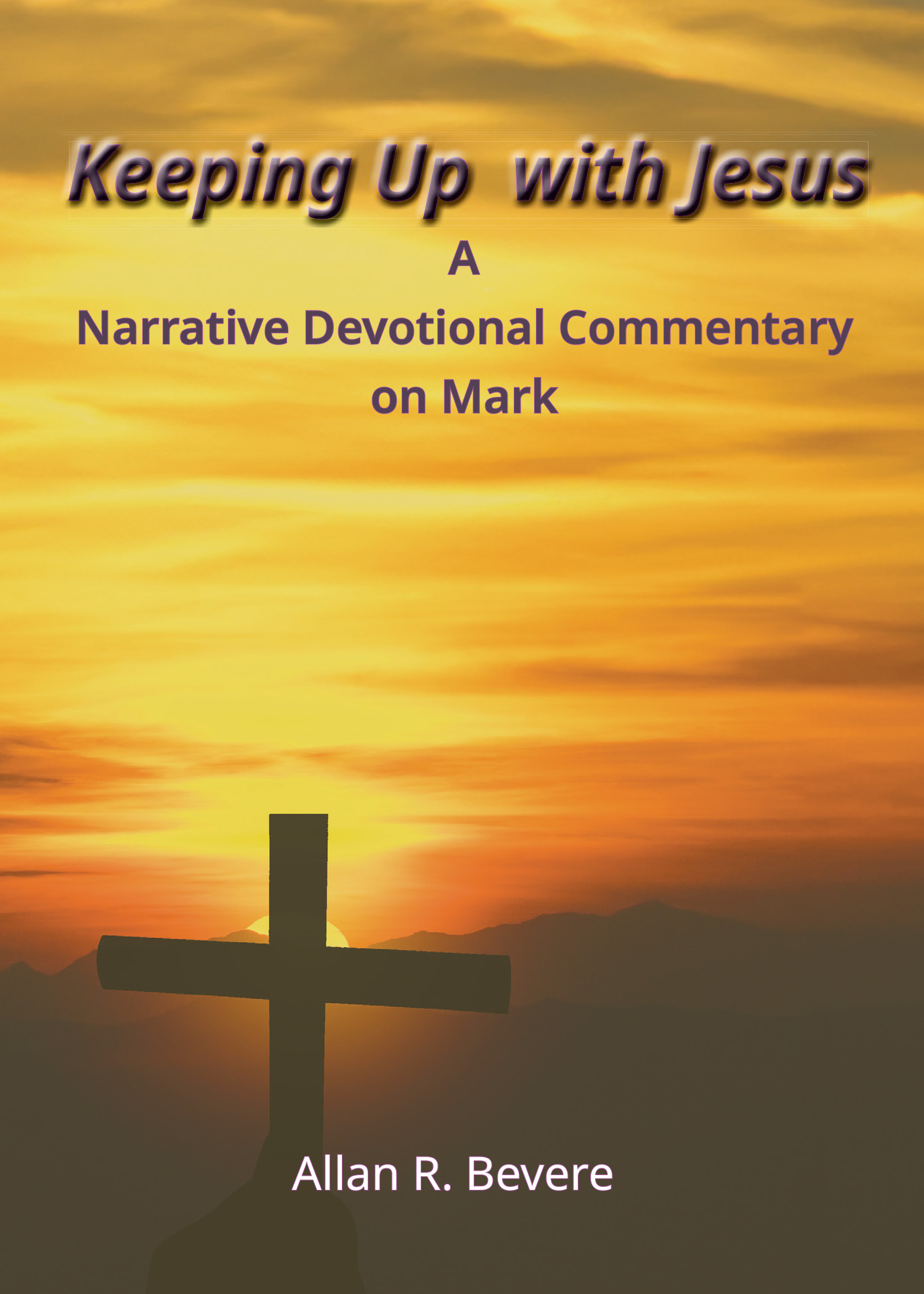
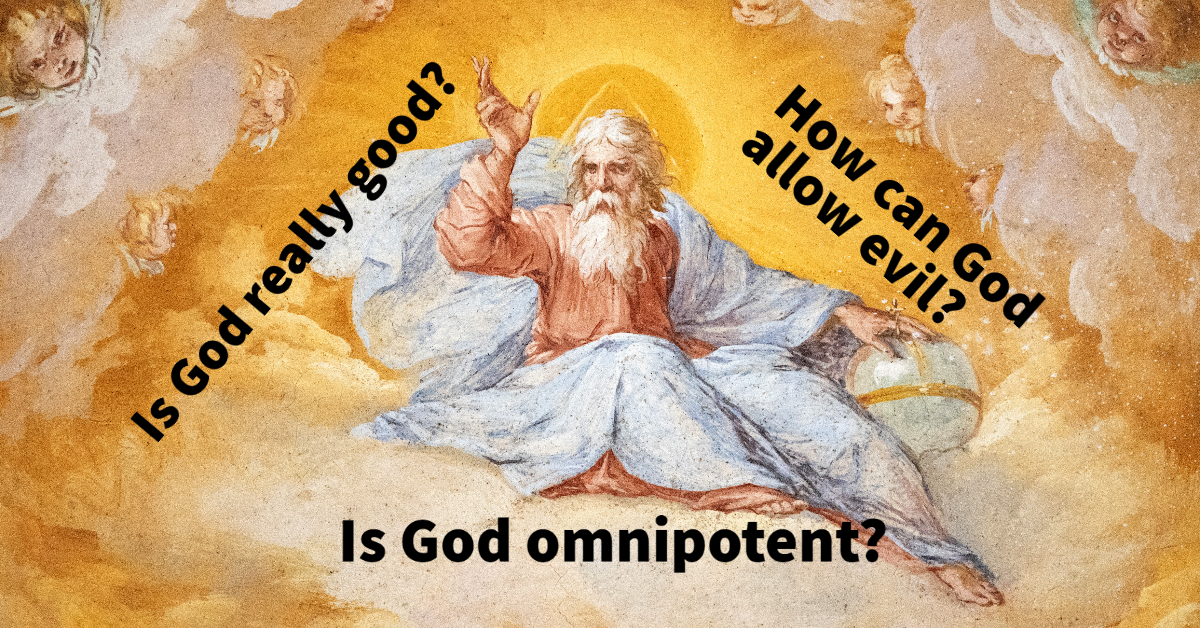
    My latest interview on theodicy, or the problem of evil, is with Dr. Allan R. Bevere. Allan is a retired United Methodist pastor and has a PhD in New Testament from the University of Durham (UK). You can find detailed information on this interview series, along with links to previous interviews here.