Threads from Henry's Web

Author: henry

  • On Listening to One Another

    On Listening to One Another

    On the various Energion Publications web sites, we have been emphasizing listening in commemoration of Pentecost. This Sunday is Pentecost Sunday, but we’re going to continue the topic for a few weeks into what’s called “ordinary time” in the church calendar. It’s precisely in ordinary time that you need to remember the lessons of receiving and listening to the Spirit.

    We need to continue listening even when we can’t see the flames of fire or hear God’s voice, or detect other signs of God speaking. God speaks in many ways, sometimes yes with thunder and lightning, but at other times God speaks through those who are around us.

    Hearing God in Others

    One element of listening that we often neglect is listening as the Spirit speaks to us through other people.

    This was a lesson I started to learn in Guyana, South America, where I lived as a teenager. My parents went there as missionaries with my father assigned as Medical Director of Davis Memorial Hospital in Georgetown. Thus I spent a good portion of my teen years among people of a different culture.

    I would often get rides to various places with the hospital’s driver, Brother Carr. (Note that when I was growing up as a Seventh-day Adventist, I was taught to address my elders as “brother.” That was so ingrained that I can’t actually remember his first name.) There was another gentleman who worked security and also some other functions around the hospital, and was occasionally a backup driver.

    I recall discussing world events with these two men. Different country, different race, different culture, different perspective on just about everything. Those conversations have stuck with me. One day one of these men took me to the seawall which keeps the Atlantic Ocean from flooding Georgetown. After explaining the history, starting with settlement by the Dutch, we turned to current events, which at the time involved Mainland China replacing Taiwan in holding China’s permanent seat on the security council of the United Nations. Elements of that conversation have stuck with me.

    Why do I bring up all of this now?

    Very simply, there are good reasons to not only read books, watch videos, and listen to sermons/lectures on a variety of subjects. It’s important to learn about these things from more than one perspective. This can involve expanding your circle of friends. Intentionally expanding your circle so that you meet more people who are not exactly like you.

    Difference can include:

    1. Differences of faith, including those with a secular or humanist view as well as those of other religious groups
    2. Differences of race, even beyond those we talk about most
    3. Differences of nationality, to include people from countries that are less like our own
    4. Differences of theology within our own faith tradition, such as Reformed, Wesleyan, or Open/relational or progressive, moderate, and conservative
    5. Differences in levels of wealth and privilege (While some object to the term “privilege,” I openly confess to being privileged. It was a foregone conclusion I would go to college and if I wanted, to graduate school. I have never feared starvation. My life is filled with reasons for thanksgiving!)
    6. Differences in geography, such as living in an urban, suburban, or rural area

    There are certainly many more, but these are some of the many things that I think many of us don’t interact with enough. For example, I sometimes give money to someone who is homeless, but it’s much harder to get me to say hello. (I publish two books, The Vicar of Tent Town and The Fringe, both of which challenge stereotypes of what it means to be homeless.)

    Some Books

    And now for a short commercial … well, not really. Some thoughts!

    I was thinking about four books that I publish, all by African-American authors. I’m writing about them here, rather than on my company blog because these thoughts are my own, apart from any marketing plan. (No, I don’t deny wanting to sell the books, but if I was writing marketing text, I’d do it in “company” space!)

    I want to recommend these four books for specific things in which they can give you a different perspective. In the case of three of the books, the reason I’m listing them here is not the central reason the author wrote the book, nor the reason I published it.

    Let’s start first with Dr. Terrell Carter’s book I Have to Live with Them?: Understanding How Black and Brown Christians Navigate Their Relationships with White Christians in the American Church. This is the one book of the four that is precisely intended to help readers understand the dynamic of race relations in the church. It’s written by an African-American pastor who pastors a predominantly white congregation. This one is in the Energion Publications Topical Line Drives series, which means it’s short and to the point. It’s not meant to break major new ground. It’s meant to get you to the starting gate. Dr. Carter has two other titles with Energion as well, which you can find on his author page.


    The second book in this list is not written to address any of the issues I’m discussing here, but it does. It’s The Seven: Taking a Closer Look at What It Means to Be a Deacon by Dr. Lonnie Davis Wesley, III. This is, unsurprisingly, a book about the ministry of deacons in the church, and it’s written by someone who pastors a large Baptist church in Pensacola, Florida, Greater Little Rock Baptist Church. As an aside, if you live in the Pensacola area, visit this church. I strongly commend it.

    The reaons I’m talking about the book here, however, is because of the background it gives you about the black church in America. It will teach you things about deacons in the church. It will develop your understanding of the early church and what led to their being deacons. If you’re dealing with problems of church polity, you will find scriptural ideas in here that just might help. But it will also help you look at all these things with new vision.


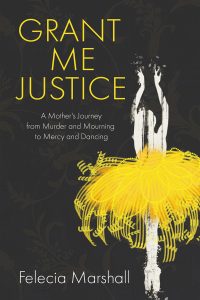
    The third is Grant Me Justice: A Mother’s Journey from Murder and Mourning to Mercy and Dancing. This book deals with grief, anger, and the search for justice, but it also tells an important story, the story of a mother and what gave her perspective on what was happening. It’s a story also of grace. And it’s a story that will help many see things from a very different perspective.

    An important lesson to learn in reading this book is that hearing the stories of others can provide so much help to each of us in understanding our own journey of faith. God’s grace is high and wide, and its sufficient. God doesn’t have a perspective problem. Stepping into the shoes of a grieving parent as you peruse the pages of this book can change you in many wonderful ways.


    Last, but not least (these books are in no order of precedence), I have a children’s book. The book is What Color Am I? It’s the 8th book in the Kamden Faith Journey series. This entire series is about a grandmother helping her grandson in his faith journey. It provides an opportunity for parents to read with the children and discuss important topics with them. In this book Kamden sees a Black Lives Matter protest and asks his Nana for an explanation. What are they doing? Why are they angry?

    The response is gentle, faithful, and powerful. I wonder if you, reader, have looked at these various issues from the perspective in this book. It brought tears to my eyes as I created the book layout.


    Conclusion

    Whether it’s with these books or others and whatever the subject or your situation, try to find an opportunity to listen to someone whose perspective differs greatly from your own. It may benefit them, but it will definitely benefit you.

    Note: Featured image for this post was generated using Jetpack AI as a test.

  • The Passion Translation: Content Review

    The Passion Translation: Content Review

    The Passion Translation has received considerable negative publicity while being supported in an equally passionate way, especially in the charismatic movement. You can find my overview on MyBibleVersion.com, and I presented an overview of criticism and of my review methods in a previous post.

    How I Rate Translations

    Follow the links above to see my rating of The Passion Translation, which also provides an example of how I do such a rating. I do not designate Bible translations as “good,” “bad,” “ordinary,” or some other generic designation without regard to context. I prefer to rate a translation for strengths and weakness in different areas.

    The chart provided shows numeric ratings. Many of these are themselves subjective. I use word counts to determine how formal or functional a translation is. By functional, I don’t mean that the translation works, but rather that it translates in order to provide equivalent impact on the target audience to the original. A formal translation attempts to match specific words or phrases to source words in the Greek, Hebrew, or Aramaic text.

    But having done a word count in a specific passage (I start from Hebrews 1:1-4, which tends to force some rewording), I also look at other passages to see if that number works. Thus the numbers provided should be considered a personal opinion on each item.

    Specific Notes on TPT Ratings

    In the case of The Passion Translation, my own key takeaway was that the overall impact of a translation may be badly skewed by either its critics or its proponents. In the majority of cases, I found that passages were precisely what I would expect of a missionary translator. This doesn’t mean that the translator’s theology has no impact. Everyone’s translator’s theology has an impact. One cannot translate without interpreting, and one’s interpretation and theology will be tied together. What surprised me, after first having heard the hype, was how expected the renderings were.

    Of course, ratings such as whether a translation is by a committee or an individual were fairly clear–this is an individual translation. In addition, it’s clear that the translator is in the charismatic movement, and specific related to the New Apostolic Reformation. Nonetheless, as I’ve stated before, when you have the translated work in front of you, the proper approach is to examine that work.

    In terms of formal vs functional, I found that TPT was closer to formal and less free in rewording than I would have expected from the criticisms. It definitely reflects a willingness to reword and rework passages for the target language and audience. Yet I found it less likely to do so than The Message.

    My initial word counts from Hebrews 1:1-4 actually indicated considerably less rewording than I expected, and after reading a number of other passages, I edged the ratings a point higher on the “functional” scale and a point lower on “formal.” One might describe this as a dynamic or functional translation with some significant deviations.

    Specific Renderings

    Ephesians 5:22

    In my previous post regarding the hype about this translation I included a video. In that video, the translator claims to have received a new translation from God (discussion starts about minute 20:00). I won’t go into this in detail, but on linguistic grounds, I would have to reject his suggested translation.

    Why? First, I would not accept his claim that Jesus and the apostles worked entirely in Aramaic, and certainly not that the book of Ephesians was written in Aramaic. There is no evidence to support the latter at all, and I find any evidence regarding the gospels to be quite weak. Second, the Peshitta, which is the closest thing we have to an Aramaic version, reads very much as the Greek does.

    Note that I would not list this as an error. It’s a strong difference of opinion. I wouldn’t mind if the text read the way TPT reads. I’d be very comfortable with that. But I can’t support that linguistically.

    Because of the intensity of criticism, however, I need to note here that I disagree with most Bible translations at some point. Practically anyone who reads the Bible in the original languages will disagree with any translation at some point or another. Disagreement is different than rejection.

    (For those interested, my friends Elgin and Hanna Hushbeck have written a book in the Topical Line Drives series from Energion Publications, To Love and Cherish, which goes into this passage in depth, based on the Greek text.)

    Psalm 110:1

    Yahweh said to my Lord, the Messiah:
    “Sit with me as enthroned ruler
    while I subdue your every enemy.
    They will bow low before you
    as I make them a footstool for your feet.”

    Psalm 110:1 (TPT)

    There are a few interesting points here compared to the Hebrew, and they’re worth noting in understanding the nature of the functional approach to translation, along with some “transculturation.”

    The use of “Yahweh” has not been traditional in English translations, but here it literally reflects the source text. The traditional approach has been to use LORD for “YHWH” and “Lord” for the Hebrew word “adonay” while using lord for the same word with reference to a human ruler. (Note: I use loose transliteration of the Hebrew to make it easier for readers who don’t know Hebrew. In this case, however, it’s worth noting that “adonay” is “my Lord” with a plural of majesty, while “adon” is just “lord” and “adoniy” is a singular “my lord.”)

    Thus in traditional translations the first line of this verse comes to something like “The LORD said to my L/lord,” with the capitalization of the second “lord” depending on how the translators interpret the verse. Read Messianically, it would generally be capitalized. Read as a blessing on an earlier Israelite king, it would not. I can testify from teaching experience that the LORD/Lord/lord difference can cause some confusion.

    Thus in the first line, TPT makes an interpretation quite clear. The translator is conveying a Messianic interpretation, and clarifying the difference in the terms for English readers. In case the capitalization is insufficient on “Lord,” he adds “the Messiah.”

    One might complain that a reading that is non-Messianic would now not be possible, yet at the same time, the clarification of the fact that the two instances of “lord” (however capitalized) represent different words makes another aspect of the verse much clearer. Translators regularly make this kind of choice for readers. There’s no avoiding it. You can’t convey all the potential meanings.

    So in the second line with have “Sit with me as an enthroned ruler.” This is a more equivocal kind of clarification, a case in which the translation is clearer than the source. Formally, the first part of the Hebrew reads “Sit at my right hand.” This would indicate a position of trust and authority. Some might regard “as enthroned ruler” as an overstatement. James and John as to be seated at Jesus’ right and left hand. This would have meant that they were the first and second rank below Jesus in His kingdom.

    In either a messianic or a royal enthronement context, however, “enthroned” doesn’t miss the point.

    The remainder of the verse is quite valuable in indicating the nature of this translation. Formally, I would translate the Hebrew text as:

    Until I place your enemies as a footstool for your feet.

    Psalm 110:1b, formally translated

    And the TPT:

    … while I subdue your every enemy.
    They will bow low before you
    as I make them a footstool for your feet.

    Psalm 110:1b (TPT)

    So what’s going on here with all the extra words?

    The translator is trying to present you with imagery that will help you understand the meaning of making enemies a footstool. The imagery would likely have been well-understood by ancient Hebrew readers, but words like “subdue” and “bow low” help create a picture.

    You can argue that this is “technically” not correct, though I would ask simply what it is that should be translated when there is poetry that contains rather vivid imagery. What does a translator convey, and how? Both The Message and The Passion Translation often choose to substitute imagery or expand on the original imagery in order to evoke a relevant picture for the readers.

    If you find this disturbing, there are a multitude of much more formal translations with which you would be more comfortable.

    Galatians

    To get a broad feel for this translation I listed to Galatians via Audible. I did this while walking and all in one session. There were only two issues that I noticed.

    The first is quite minor. I would definitely nuance Paul’s use of the term “law” in Galatians differently. This is definitely not an error, but rather a difference in presentation. I think it’s important to be clear that while the specific example of law that is the primary issue in the churches of Galatia is the Jewish law, Torah, Paul is making general points about the function of law. I found this eclipsed to some extent.

    The second is one that I have noted about many paraphrases. Challenging, in-your-face statements are sometimes weakened. One such statement is Galatians 5:12:

    12 I wish that the ones who are disturbing you would also castrate themselves[c]!

    Galatians 5:12 (LEB)

    Now try The Living Bible:

    12 I only wish these teachers who want you to cut yourselves by being circumcised would cut themselves off from you and leave you alone![a]

    Galatians 5:12 (TLB)

    Slightly less in-your-face, isn’t it? Note here that The Message keeps the cutting-edge on this, so to speak!

    Now try The Passion Translation:

    I wish they would go even further and cut off their legalistic influence from your lives.

    Galatians 5:12 (TPT)

    It is important to note, however, that TPT has a footnote indicating the alternate translation. I’ve made comments on this elsewhere. A footnote is a good option when there are viable alternatives or when it’s impossible or just clumsy to get all the meaning packed into one translation.

    Conclusions

    I could go over many other passages, but not that much would be gained for purposes of a review.

    My negatives regarding this Bible translation are that it is done by an individual, that it is very definitely fixed in the charismatic tradition stream, and that some of the hype tends to be distracting. While this doesn’t mean that the translation isn’t valuable, it does mean that it is not well-suited to discussions between traditions.

    The hype, unfortunately, tends to center on God’s call to the translator to produce the translation. (I ignore here the standard complaints that amount to “the translator didn’t translate my favorite verses the way I prefer.”) I personally think that this translator, as well as many others, have been called by God. That call is not the guarantee of their translation work. Solid linguistic work makes a translation good.

    Contrary to my expectations based on what I had heard and read, however, I do not have major problems with the translation itself. One should always take into account the biases of the translator(s). These biases are made clear. That’s all one should expect. There are no sneaky surprises.

    If you are studying, I would recommend comparing more than one English version. For example, using The Passion Translation alongside a Bible with interfaith participation in the committee, such as the Revised English Bible, and perhaps a more evangelical formal translation, such as the ESV, would help you be sure you’re hearing God’s Word in the text.

  • Review of The Passion Translation Part I – The Hype

    Review of The Passion Translation Part I – The Hype

    I’m dividing my review of this translation into two parts because my actual review of the translation text and the weighted chart I produced as a result is actually somewhat anticlimactic. The controversy about the translation is quite heated, and claims for the translation are quite strong.

    Evaluating a Bible Translation

    There are differing ways of evaluating a translation. One common way is to critique a set of passages that are of importance to the person doing the review. This is of value provided one considers both the theology of the translator(s) and the reviewer, as it can give you an idea of the theological views of the translators.

    Lists of Passages and Terms

    There’s a subset of this approach which is very concerned with which English terms are used. For example, does the translation in question use propitiation in certain passages.

    Consider, for example, Romans 3:25, in which the ESV uses propitiation:

    … whom God put forward as a propitiation by his blood …

    Romans 3:25, ESV, partial

    For the same phrase, the NRSV reads:

    whom God put forward as a sacrifice of atonement by his blood

    Romans 3:25, NRSV, partial, emphasis mine

    (It is worth noting at this point that references on this blog are linked to the passage on BibleGateway.com. Bible Gateway has chosen not to include The Passion Translation in their selection. Passages from that translation will be marked TPT and accessed from YouVersion.com. Read the Christianity Today story on this removal, dated February 9, 2022.)

    If your teaching of the atonement involves substantial use of the word “propitiation,” it’s likely you’ll prefer to have that word in this particular passage. When I was a first-year Greek student, I encountered this word (loosely transliterated hilasterion) in an exercise and translated it “propitiation.” My instructor informed me that I was not learning Greek so as to translate it into Latin, and that I should choose a word that would be understood well in modern English. (“Propitiation” in English is derived from Latin.)

    The controversy arises when you look at how well each term translates the original. “Sacrifice of atonement” falls within the semantic range of the Greek term, but some might argue.

    Let’s look at the NLT:

    For God presented Jesus as the sacrifice for sin.

    Romans 3;25

    I think you can recognize the connection. If you were wanting to discuss the nature of the sacrifice for sin, that is not specified. “Propitiation” indicates a particular function of the sacrifice.

    We take a further step with The Message:

    God sacrificed Jesus on the altar of the world to clear that world of sin.

    Romans 3:25, The Message, partial

    This is “more different” from the ESV than the others, and certain theological uses of the passage would be more difficult with this rendering.

    Now compare this to The Passion Translation:

    Jesus’ God-given destiny was to be the sacrifice to take away sins, and now he is our mercy seat because of his death on the cross.

    Romans 3:25, TPT, partial

    Just like The Message, The Passion Translation here can annoy many of the theologically inclined. Just what are we teaching with “clear the world of sin” (MSG) or “take away sins”/”now he is our mercy seat” in TPT?

    Thus we have numerous reviews that simply list issues such as this. There is a value in looking at the text in this way, though I would suggest that our doctrinal positions should be better rooted than to be ripped out by the translation of a single verse.

    There are numerous reviews of The Passion Translation that take this approach. Just do a Google search on it, and you’ll find lots. Be sure, however, that you actually check the passages that are critiqued alongside other English translations or the source texts if you can do so.

    A translation can be good as a translation while disagreeing with some of your favorite renderings. That’s one of the reasons preachers often choose a different translation for some passages they preach from: They’re using the one that has wording that best supports their point!

    Arguing against the Translators

    Another approach critiques translators.

    There is a value in looking at the qualifications of Bible translators. How much do they know of the languages? What is their orientation toward the text? Do they see themselves as translating sacred texts or simply common documents in an ancient language?

    For example, in evaluating translations for my site MyBibleVersion.com, I distinguish translations according to those by individuals and those by committee, and the committee translations by their general theological orientation, as well as whether they are interdenominational and even interfaith. My purpose in doing so is that I suggest you compare translations from different perspectives.

    Choosing only translations that reflect your own theological predilections can result in a skewed view of the source texts.

    There is a less valid version of discussing the translators, and that is one’s moral view of them or their lifestyle. A couple of decades ago there was considerable controversy over the NIV because someone on the committee later came out as gay. I see no value in this, and a great deal negative. Evaluate the text. Don’t set yourself up as a moral judge of the committee.

    My Approach Summarized

    What’s in a Version? (ePub) is available for $2.99 from Energion Direct.

    You can find a great deal regarding my approach to Bible translations in my book What’s in a Version?. That book is still available, though now a bit dated, but I still hold the same views about Bible translation I expressed in it. (Reviews of more recent translations are missing from the book, but can be found on my site MyBibleVersion.com.)

    I like to start evaluating a translation as I would any book, by reading the introductory material, which should give me an idea of what the translators intend to accomplish and what they claim to have accomplished. I then try to evaluate the translation in terms of whether it accomplishes those goals.

    I comment on, and readers will need to determine for themselves, just how well the goals of the translator relate to the needs of the reader. With the rich variety of English translations, we might well be looking for a Bible for easy devotional reading, one for serious exegetical study, one for preaching, and another to pass to friends for whom English is a second language.

    One of the characteristics to check is whether a translation intends to present the text in a formal sense, i.e., each Greek form producing a consistent single English form or phrase, or in a functional sense. Recently, as in over the last couple of decades, translators have tended to use “functional” rather than “dynamic,” a term applied by Eugene Nida. I still like dynamic, in that it includes in its semantic range the idea of non-static. As our language changes, so would our translation.

    The term “paraphrase” is generally applied to something that is considered too loose to be properly regarded as a translation. It gives a good general idea, though it isn’t precisely accurate in what it suggests.

    What translation strategy you prefer will be impacted by a number of factors and convictions and goes beyond this.

    A Note on Translation Accuracy

    I have been asked many times which translation is most accurate. I find that a question that can’t be answered in a truly meaningful way. I can critique certain translation for missing the meaning of certain passages.

    Unfortunately, “literal” or “formal” has become for some people a synonym for “accurate.” This is not correct.

    Each approach to translation conveys something from the source text while obscuring other things. If you want to avoid this, learn to read the original languages. Or, alternatively, read a variety of translations.

    Let me give one brief example. In Ezekiel 40-48 Ezekiel describes a vision of a rebuilt temple. He presents measurements in cubits which are round numbers. These numbers allow you to see the proportions somewhat better and might provide some key to the way certain measurements are presented in Revelation.

    A formal translation, such as the NRSV, presents these measurements in cubits. How many people know what cubits actually are? Can you picture the distances based on this? The NLT thinks perhaps not, and presents the distances in modern measures with the distance in cubits in footnotes. Different information is conveyed in different ways.

    Ideally, I think, someone would get both, either by having the distance in cubits in the text with footnotes giving the modern measures, or with modern measures in the text and conversions in the footnotes (as does the NLT). But that’s my prejudice. The information communicated is different with the two approaches.

    Long Live Hype!

    As a publisher, I’m well acquainted with hype as it relates to translations. Translators don’t decide to do new translations of the Bible because all the others are just fine and they felt like producing yet another one. They believe they have something to contribute to Bible knowledge by producing a translation that is better in some way.

    This is why I like to ask what the aim of a translation was and then comment on the success it has in accomplishing that aim. It is up to my readers, or any readers of that translation, to determine whether the goal of the translation fits their needs.

    If you’re looking for a translation that will let you easily relate the English content to Greek or Hebrew words using a concordance that is keyed to the languages, then you need something more literal. You don’t want to pick up The Message. You likely also won’t want The Passion Translation, because that is not the translation approach used.

    Hype on The Passion Translation

    The hype regarding The Passion Translation differs in one important way from that on most other translations. The translator makes strong claims regarding the divine origin of his call to this work of translation and also to specific translations.

    I think a good way to get the flavor of the hype is to listen to the translator himself.

    Interview with Brian Williamson by Sid Roth. (The video does not provide an option to embed.)

    Let me start by listing things that I don’t object to.

    1. I do not object to the translator claiming a call from God to do the work. In fact, I would suggest that any Christian could and perhaps should make such a claim when embarking on a project. I pray over and consider God’s call with every book I publish. That doesn’t mean I am without error in my choices.
    2. I do not mind claims of miracles. I haven’t investigated these but I do not reject such things unless I have investigated and found a false claim.
    3. I definitely don’t mind getting translation ideas from the Holy Spirit. I’ve gotten great ideas, or at least ideas I think were great, while sleeping. These, of course, must then be validated where such validation is possible. In the case of translation ideas, they should be validated through actual manuscript and linguistic data.

    I would note that I do not agree with the particular translation in Ephesians 5 that is offered in the video, nor with the reasoning behind it. I’ll comment a bit further in my next post completing my review of the translation.

    A Concern

    I have a concern, however, which is strengthened and perhaps made more urgent by my experience growing up as a Seventh-day Adventist. One of the concerns evangelicals have had with reference to the SDA church is whether they are adding to the Bible through the writings of Ellen G. White.

    Ellen White saw herself as a messenger of God, but her writings often have exaggerated respect among members of the church. By “exaggerated respect” I do not mean that people believe Ellen White heard from God. I regard that as quite possible. I do not mean that people find her writings enlightening. I have my library of Ellen White books in my office and find a number of them helpful, despite some theological disagreements with the author.

    No, by exaggerated respect I mean those who would regard Ellen White as definitive regarding interpretation of the Bible. I recall a discussion I had that involved a theology professor with a PhD in ancient near eastern literature. He expressed a particular interpretation of a Bible passage. I disagreed, and gave some reasons why I believed it didn’t fit. He, in turn, told me that “Ellen White gives this interpretation.” I told him I did not make my decisions on that basis. He expressed shock that I would not accept Ellen White as the final authority on the interpretation of a passage where she had rendered an opinion.

    I was shocked myself. I had not expected someone of his skill to simply accept the word of a claimed messenger of God as definitive with regards to what a Bible passage means.

    The Bible is the common source of doctrines of the Christian faith. I’m not talking here about inerrancy or infallibility, but rather of simple appeal. We go back to this source in common. (Note that I believe the formation of doctrine is much more complex. See my most recent note on the Wesleyan Quadrilateral.)

    When we have either a denominationally specific or a tradition stream-specific authoritative source that tells us what the Bible means, that historical connection breaks. This is a key reason why I prefer committee translations and specifically committees that include members from various tradition streams.

    If one is asked to accept a particular translation based on a message one has received from God, I suggest sticking with the source.

    Now just as I can now read Ellen White as inspirational and very helpful because I don’t read her as a final authority, so I can read a variety of translations without feeling obligated to agree with any of the renderings if I find the evidence suggests otherwise.

    Summary

    Other than the greater involvement of references to the Holy Spirit and to miraculous activity, I don’t find either the hype or the criticism of that hype extraordinary. It is normal for strong claims to be made for a translation and for reviewers to challenge those claims.

    In my next post, I’ll review the data and discuss how I view the translation as a whole. I’ll give you a spoiler: I found that the translation was much less out of the mainstream than most claims about it, and I also found that I was somewhat less excited about the way it is phrased. It falls into the tradition I would call hyper-dynamic, also known as paraphrases, and should be evaluated as such.

    Here’s a link to the second part.

  • A Problem in Translation: Isaiah 3:12

    A Problem in Translation: Isaiah 3:12

    In a post on Facebook by Bob Edwards, I encountered an interesting case that illustrates some of the issues Bible translators face in choosing what precisely out of the meaning of a passage to translate and how to accomplish that. My point here is not to critique the critique of the ESV, but rather to look at this particular passage and how it highlights issues faced by translators.

    Biases Up Front

    First, my own biases, especially as they relate to this passage:

    1. I’m egalitarian in that I believe all people, irrespective of gender, should not just be allowed, but should be encouraged to serve in whatever capacity they are gifted for. In case anyone is in doubt, I do mean leadership roles, including pastor, bishop, or whatever title a position is given.
    2. I believe that the Bible conveys to us a message that is inspired by God.
    3. I believe the message is related through the experience and in the cultural matrix of those who receive the message. Thus to get God’s will for my own life, I need to hear God’s message in my cultural matrix. This message may call, and indeed I think it does call for a disruption of the prevailing culture.

    The Passage

    I’m going to ignore further heremeneutical points in how I develop #3 in order to address the issues of this particular passage.

    As for my people, children are their oppressors, and women rule over them.

    Isaiah 3:12a (KJV, emphasis mine)

    The key word is “women,” which is translated in this way by a large number of Bible versions. The NRSVue changed the word to “creditors,” but prior editions also read women. Versions that do not read women include the NET and the CEB.

    So what is going on here? What leads to a particular translation of this word?

    The Text

    Well, the technical issues are rather straightforward, but one’s views on textual criticism of the Hebrew Bible will have some impact. The dominant position among translators has been to give priority to the Masoretic text (MT). There are some who argue for a higher priority on the LXX (Septuagint) and versions translated from it, such as the Syriac.

    In this case, the MT clearly reads “women.” The Jewish Publication Society Tanakh Translation (which I read from their excellent Jewish Study Bible edition), reads women in the text, with a footnote indicating that an emendation would produce “boys.” An emendation is a correction of the text based on internal factors, i.e., without full support of any manuscript. It’s a sort of proofreading of the text looking for things that a clearly copyist’s errors. In this case, the JPS translators did not think the emendation was well supported enough to be in the text, but thought it was worthwhile to let the reader know that there were alternatives.

    The variant translations in other English translations, however, are based on the LXX, which results in “oppressors” and “creditors,” with “creditors” replacing “women.”

    Those are some nice options. I like them. I much prefer them to “women” in the text.

    But what I like doesn’t settle a textual issue. Most of the translators are giving priority to the MT, and likely doing so because they consider that the most probable original reading. One can debate whether they are right, but what one believes about the rights and value of women should not be a basis for deciding on the text.

    I am absolutely not accusing those who have chosen a different reading to translate of allowing their biases to determine the translation. The LXX can reflect an earlier Hebrew reading, lost in the Hebrew manuscript tradition. It would take too long to go into details here. I’m looking at the choices translators made.

    First the Text, then the Translation Thereof!

    The first choice, then, is the text to translate. In this case, you have at least two options, along with some possible emendation of the text. (Note that one possible justification for a conjectural emendation is that there are multiple readings and these multiple readings may have grown from a difficult original which has been lost.)

    For those translators who chose to use the LXX text, conveying the meaning of the chosen text is fairly straightforward. There may be multiple views on what having creditors rule over you means, but it’s fairly easy to translate.

    But what if you believe the text says that “women rule over you” as part of a litany of the problems of God’s people?

    Clearly, most translators have chosen to just go with the word and perhaps provide a footnote. I’m not going to review interpretive notes in various editions, but they doubtless have some explanations for what they believe the passage means.

    Let me give just two options to illustrate the issue:

    1. A literal translation that may be misunderstood in a 21st century context
    2. A figurative translation that obscures the culture of the time in which the passage was first spoken/written

    If we go with #1, we convey accurately (assuming we made the right textual choice) the words that were spoken, but what happens in interpretation? It looks clear to me that this passage is not addressing women in leadership positions directly. Rather, it assumes that the audience will find being led by women to be objectionable, and thus uses this to convey the sad state of the country.

    My problem with this would be that we convey the source culture into the modern context without giving the reader adequate help in understanding the metaphor.

    If we go with #2, we then convey the way in which we understand the passage, but we obscure the original cultural context, and deny readers the opportunity to hear the Spirit speaking through the text in its original context.

    Adding a footnote is good and constructive with either option, indicating what one has done. Unfortunately, footnotes are much more often ignored than read.

    Conclusion

    Either option has the potential to lose some of the meaning. Depending on your primary concerns with the text, you will likely prefer one or the other, possibly vehemently. The difference, however, is in what the translator is most anxious to convey in translation.

    Here’s The Message for reference: “Skinny kids terrorize my people. Silly girls bully them around. My dear people! Your leaders are taking you down a blind alley. They’re sending you off on a wild-goose chase.”

    Ummm.

    Something is always lost in translation. The question is, what?

  • The Importance of Teaching Sanctification

    The Importance of Teaching Sanctification

    Teachers and pastors frequently avoid talking about sanctification. Some of the reasons include:

    1. The very word “sanctification” sounds difficult and over-theological
    2. There is a fear of perfectionism
    3. There is a fear of the judgmental spirit that goes with perfectionism
    4. Sanctification doesn’t really sound all that graceful
    5. We might have people believing that their works earn salvation

    A Detour on Christian Perfection

    When I first joined a United Methodist congregation, I had the idea that Methodists would know a great deal about John Wesley. One Sunday night I discovered how wrong I was.

    I had been invited to teach on the doctrine of Christian perfection as taught by John Wesley. In preparation, I researched the forms of this doctrine expressed in Methodist doctrinal statements. I found that in the United Methodist Discipline there were actually two statements, one derived from the Methodist Episcopal Church and the other from the United Church of the Brethren. With a typical Methodist willingness to leave wiggle room in doctrinal beliefs, both were included.

    As I began to teach that Sunday night, I started with this question: “Did you know that we have not one, but two doctrines of Christian perfection in the Discipline?”

    I was greeted by complete silence. Finally, someone raised their hand and asked, “We have a doctrine of Christian perfection?”

    This surprised me, as it was a doctrine with which I did not agree, at least in some forms, yet I had thought it would be thoroughly know in Methodism.

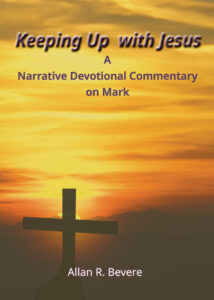
    In his book A Plain Account of Christian Perfection (also available online as a PDF) John Wesley collects his various statements on the topic. It’s worth reading. He notes the point on which I disagree most completely, the idea of knowing one has attained this state and testifying to it. I might also mention a nice, short introduction from Energion Publications, Holiness of Heart and Life by Allan R. Bevere. It will give you a good introduction.

    When the word “perfection” is added to “sanctification,” people are sure to get nervous. I bring it up here because since John Wesley, it will inevitably come up. For the record, while I agree that God can create in the believer whatever holiness God desires, I believe such holiness is impossible to measure or to know.

    Back to Sanctification

    Shouldn’t we avoid talking too much about sanctification in order to steer clear of perfection and perfectionism?

    I believe that the effect in the church is quite the opposite. By avoiding talking about sanctification, and how it occurs, we open the door to all varieties of perfectionism and performance-driven living. These are destructive of people’s lives, both through the pride and spiritual superiority generated by a feeling of good performance and Divine favor and from the discouragement and apathy that results from a failure to attain whatever level one expects.

    A Note from Paul

    I recall my class in Exegesis of Ephesians in graduate school. We made it to the end of Ephesians 3. We missed this: “I implore you then–I, a prisoner for the Lord’s sake: as God has called you, live up to your calling” (Ephesians 4:1 [REB]).

    Thunder from the Pulpit

    Like Paul, pastors are going to preach to their congregations about doing things. They will talk about stewardship, informing congregations that their money should be surrendered to God. They’ll talk about the work that needs to be done around the church. They’ll admonish parishioners to do things in their community and perhaps the world.

    Much of this will be good. Many (not all) of these things need to be done. My resources do belong to God and I should use them as God calls me to.

    So when people enter the church, they are often presented with a litany of stuff they are supposed to do.

    The result? People who tend to do things charge off to do things. People who tend to sit in pews, sit in pews. Both sets of people very often feel some sense of guilt for the things not done, and superiority or inferiority to the others.

    Yes, the feeling of superiority works on both sides. I’m a doer, and I have heard pointed remarks about my doing from those who think I should be less of a doer. I have heard similar remarks regarding others. There are those who can condemn you for doing too much while asking you to do more. The doers, like me, have a strong tendency to consider ourselves superior to the pew sitters.

    The Answer in Sanctifying Grace

    As Paul goes on in Ephesians, he talks about many things we need to do. Note the number of times the word “gift” appears in the text. Finally, in chapter 6, we get to the word finally: “Finally, find your strength in the Lord, in his mighty power” (Ephesians 6:10 [REB]).

    Paul can do it this way because he has made sure to emphasize God’s prevenient and justifying grace, the gift of being part of the family apart from anything you do. Elsewhere, he expresses this in a more compact fashion: “… work out your own salvation with fear and trembling. For it is God who works in you both to will and to do God’s good pleasure” (Philippians 2:12-13).

    Sanctification, like everything else, is a gift. It is not a possession or a call to personal pride. It is not something we have to or are able to measure. We need to talk about this gift. God is working in each and every person. There is no comparing the journey of one person to that of another. There is no more pride, boasting, or shame in sanctification than there is in justification.

    I’ve been studying 1 Corinthians 12-15 with my Sunday School class. We just finished that section. Now the whole of 1 Corinthians can be considered Paul addressing this very issue. He sees spiritual pride causing division. The “I am better” factions start with boasting about the person who preached to them or who baptized them. There are some super-pride people who boast that they are connected only to Christ. They are the real Christians unlike all those other people, who look to some pastor or evangelist.

    This sense of spiritual superiority led off in many directions, as it always does. There is nothing so dangerous as a person with a sense of their own spiritual superiority. We like that feeling of being better than. Some of the Corinthians thought they were better because of their spiritual gifts. Paul stomped all over that in 1 Corinthians 12-14.

    Paul is teaching practical sanctification in the entire book of 1 Corinthians. He’s also talking about how it can be derailed.

    One way it can be derailed is by ignoring it. If we don’t teach people to do anything, well, they won’t be proud of their doing. It doesn’t work that way. Without an understanding of the gift and gratitude for that gift, we head down performance-drive, or performance diminished paths.

    Conclusion

    Only if we teach that sanctification is a work of God, graciously given by God, measured by God, and judged by God can we talk about things to do and have any hope of not generating spiritual pride, criticism, judgment, and finally factions and schism.

    Featured photo credit 117597185 © Antonio Guillem | Dreamstime.com

  • I Am Not Ashamed

    I Am Not Ashamed

    There might be many reasons why someone would be ashamed of the good news about God that is represented in what we call the “gospel.”

    Not Ashamed of the Gospel: Confessions of a Liberal Charismatic
    This post is the first chapter of my 2005 book Not Ashamed of the Gospel.

    Historically, the shame was in worshipping a convicted and executed criminal, calling him God and following his teachings. Very few people doubt that Jesus died, and that he was executed by the barbaric method of crucifixion. Raised from the dead, alive today— that’s another matter entirely. But the death is the best established thing about Jesus.

    I’ve entered into debates about whether such a person as Jesus existed historically. All of these debates start— must start—with a list of things that I will demonstrate, limiting myself strictly to the tools of a historian, to the extent that past events can be demonstrated. These are the things that Jesus did or that happened to him. Many scholars have created such lists. Invariably, “crucified by the Romans” is on them. Jesus’ death by crucifixion is as established as a historical fact gets.

    It seems remote and distant to us. If we have shame in anything about Jesus or Christianity, it is something different than it was for Paul and other early disciples. For us, the cross is the symbol of a religion, a person, or a faith system. We see it on churches every day. We have pictures of crosses, sometimes with a figure of Jesus hanging on them. Sometimes the figure will be portrayed with a halo. We make earrings and necklaces with crosses. We know the crucifixion is a horrible thing, but the symbols involved in it have become commonplace and familiar, and they are objects involved in the rituals of the church, not in execution.

    We may be ashamed of some of the people who carry crosses, or of some of the groups that worship in buildings with crosses on them. We may object to where crosses are placed, such as on the lawns of public buildings. But none of this is quite what the “shame of the cross” would have been for the early followers of Jesus. Put yourself back in Paul’s time. Jesus was recently executed. The one political power in the world was the authority by which that execution was carried out. That particular form of execution was one reserved for the worst, and especially for rebels and political offenders. There was a shame in worshipping someone who had been crucified. It had the aura and the stigma of worshipping a mass murderer, perhaps a bit like modern Americans would feel about a cult worshipping Charles Manson.

    But in addition, it was something dangerous. The followers of Jesus were proclaiming as divine someone executed by the Roman authorities. Divinity was being carried by someone who was a rebel and a dangerous character. Proclaiming the kingdom of a rebel was an act of rebellion in and of itself. And here we have Paul proclaiming that he is not ashamed of this good news. He glories in the cross, glories in an instrument of shame. In disaster, he finds good news.

    One of the key elements of that good news lies in the fact that you see a cross with much different emotions than did the people of Paul’s day. That element is transformation. The symbol of the cross has been transformed from one of disaster, death, agony, shame, and despair into one of hope for many people. Not all people, and we’ll discuss that as well.

    That transformation comes from the way in which God used the experience of the cross. God came to the earth in the human form of Jesus. God experienced life with us. He took action as we might need to take action under the circumstances of our lives. He found himself in an occupied country, living under cruel foreign domination. He didn’t just come and appear on a mountaintop. He got involved in human experiences, human emotions, human weaknesses, and yes, human strengths as well. When it came down to it, he died a death in just the way that a human would have to do it in that time and place.

    The first part, then, of the transformation was involvement. The cross would never have been transformed as a symbol without the involvement. God, the infinite gap-crosser, crossed the gap and stayed on our side long enough to experience the worst of the worst.

    But not only did he get involved, he stayed involved. The second part of that transformation was endurance. God didn’t quit. He carried through. If he had not, we could think of the wonderful time when God was with people, lived with us, talked with us, worked with us, but we would always have a distance from him, because he would never have experienced the one thing that seems to terrify most of us—death. “Through death, he destroyed the one who had the power of death” (Hebrews 2:14). “He endured the cross; he treated the shame with contempt” (Hebrews 12:2).

    Jesus knew when to ignore what others thought was shame. The shame was intended to fall on the one who was punished. But Jesus had no reason to be ashamed and he knew it. Knowing what one should ignore is an important part of living in this imperfect world. Many people, Christians and others, have endured torture and death with dignity and even peace because they knew this lesson. What was intended to bring shame on them instead became a source of glory.

    The transformation that Jesus accomplished on the cross, symbolized by the transformation of the cross itself, is something that we all can grasp. Circumstances and our environment are not fixed things that we have to take as they are. They can be transformed by our attitude and by the way that we deal with them. Every cross in your life, everything that you would prefer not to have done or not to have encountered can be transformed. When we give testimonies of things that have happened to us, this is what we are doing.

    Some think that testimony meetings are about telling how dark our lives were before God intervened. And sometimes they are. But if you are focusing on the darkness, and the negative things that have happened, perhaps you haven’t let those things be transformed yet. Did you become involved, stay involved, and endure? Did you have contempt for the supposed shame? The real point of a testimony, a witness, is to present how things have changed, not how much they are the same.

    But there’s one more part of this process. Some of you may be wondering whether I’m going to ignore it. Jesus triumphed over the adversity. He rose again from the dead. His movement should have died. It came back to life. Without this, the transformation could not have taken place. In this sense, only one who was God, or totally in tune with God’s spirit, could have triumphed. We daily deal with circumstances and troubles. Jesus was dealing with the nastiest circumstance of all—death. He was there to deny and destroy the one who had the power over death.

    I’m not going to argue here about the physical resurrection of Jesus. It’s very hard, if not impossible to prove a miracle. But I do think the greatest evidence that something different happened that day in Palestine is that the movement surrounding Jesus didn’t go away. Having seen Jesus crucified, his movement should have failed, but it didn’t.

    But the critical element in transforming the symbol of the cross from one of shame to one of hope and glory was simply that the followers of Jesus believed that he had conquered death. You may debate me about the idea that without something special happening on the morning of the resurrection, the followers of Jesus would simply have scattered. You may have another explanation you think works as well. But I think there can be no doubt that unless the followers of Jesus believed that something had happened, there would have been no transformation, no Jesus movement, no Christianity, and the cross would forever have remained a symbol of shame, or passed into history as an example of the barbarism of ancient cultures.

    But the fact is that those followers did believe, they didn’t scatter, but continued to proclaim the victory of the person the Romans had crucified. And it was in that proclamation that the cross was transformed. Jesus could have died with dignity, endured the shame, and risen from the dead, but if nobody had arisen to proclaim those facts, no transformation would have taken place. It took human beings getting involved, carrying the message, and acting on the good news. I’m sometimes accused of being very human oriented in my religious beliefs. But I believe that this orientation toward what people do and how they respond is thoroughly Biblical. Not only did God accomplish reconciliation through Christ, but he gave us the same ministry. In other words, God knows and intends the human element to be critical in carrying out his mission on earth.

    And that leads to the other side of the issue of shame. We need to be prepared to deny the shame just as Jesus did on the cross. But we also need to be able to see shame when it’s appropriate. A great deal of who we are and how we live will be determined by our response to shame.

    In Ezekiel 9 we have a part of a vision of Ezekiel. The prophet has been shown abominations that the Israelites are committing right in the temple precincts. Then a man is sent out in the city to make a mark on certain people. The ones who are marked are those who “sign and cry” about the abominations committed in the land (Ezekiel 9:4). (I like the good old KJV “sigh and cry” because the Hebrew words involved here are alliterative). Then others are told to follow and slaughter everyone who is not marked. Notice that it is not the ones who themselves are not committing abominations, but those who are deeply bothered by the evil things that are going on.

    I have seen this passage turned outward many times, as though it is a call to Christians to sigh and cry about the abominations committed by everyone else. But we should remember that this passage was written by an Israelite prophet to Israelites. If we are going to transfer it to Christians we need to transfer it all the way. It isn’t speaking to Christians about their attitude toward the actions of non- Christians, but rather about their reaction to their own abominations.

    I said that the cross was a symbol of hope for some. But it’s a symbol of death and destruction for others. It becomes a symbol of shame again when those who proclaim it use it in shameful ways. The crusades, the inquisition, the holocaust—all were justified at some point by reference to Christianity and to the cross. All too often, others did not stand against those who abused the cross, and did not proclaim its true meaning. We can choose either to restore the cross again as a symbol of hope, or we can use it as a symbol of hostility, destruction, and death. In order to restore the cross to the glory of Christ’s transformation, we need to get to the point where we sigh and cry for the abominations committed by Christians.

    I was involved in a program a few years back in which we had an opportunity to write statements about ourselves on sticky notes, stick them to our shirts, and then engage others in the group in conversation based on what was written on their notes. I included “Christian,” “individual liberty,” and “no coercion” amongst the items on my list. Several people thought this was a surprising combination. To them, Christianity stood for compulsion, force, and tyranny. How could I be both a Christian and an advocate of liberty? I wish I could blame the problem on their prejudice, on their misconception of what Christians are. But too often Christians behave in a way that is completely the opposite of the principles Jesus taught, and totally incompatible with the way he behaved. At the same time, other Christians are silent. We need to be ashamed of what is truly shameful, and proud of what is worthy of pride.

    The answer lies in the symbolism of the cross. In the cross, God displayed his willingness to cross the gap and communicate with us where we are. He endured the force. He was subject to the compulsion. He was executed by the existing tyrants. In so doing he gave an example of liberation.

    But many of his followers have missed the message. They have decided that Jesus was so right that anyone who disagreed with him had to be forced into right thinking. They inverted the message, making Jesus into the tyrant and the torturer. If you really think about what happened on the cross, I think it will become terribly clear what a horrible reversal this is. Too often Christians have sided with the soldiers driving in the nails.

    So how do I respond to these things done in the name of Jesus?

    I’m quick to say that this is not what Jesus taught. But I reject the notion of telling other people that those who did this were not “real” Christians. I may even believe that in my heart, but if I defend myself by that means, I force others into deciding who is and who is not a real Christian. It’s likely that they won’t take on the task.

    What I have to do is acknowledge the wrongs that have been done, and testify to the transformation that Jesus intended. I need to sigh and cry—I need to specifically, openly, and sincerely denounce the shameful actions of my fellow Christians, and do so without distancing myself, without setting myself up as the one true Christian and good guy. I only compound the problem when I try to make others sort one Christian out from another. That is not their task. This is the time to acknowledge the problem.

    Please notice carefully that I say we need to denounce the actions. We deal with the fruit, not the people. Let God deal with the people. Gossiping is not sighing and crying, even if you do it with a whiny voice! Make sure that what you are sighing and crying about is an abomination. I have heard sighing and crying in the church about everything from minor discomforts and annoyances to personal preferences. In fact, we are much more likely to sigh and cry about our comfort than about real abominations.

    Christian readers may protest that they, as Christians, did not do any of these things. That is very likely true. But they were done in the name of Jesus, they were done in the name of the same faith, and they were often done without protest, or without adequate protest from other Christians. As we continue in the same tradition, we need to deal with the things that have happened in what is now, for good or bad, our history.

    Why should Christians take on such a burden? Because we are the ones who know the power of transformation. We are the ones who worship the crucified one. We are the ones who can make a difference if we will truly follow the one who transformed the cross from despair into hope.

    And we need not be ashamed of that!

  • Ben Witherington III on the Rapture

    Ben Witherington III on the Rapture

    Comments on some of the texts used to support the idea of the rapture. Ben Witherington is the author of what I consider to be the best commentary on Revelation suitable for use in preparing lessons/sermons (see below).

  • Look to Jesus (Hebrews 12:2)

    Look to Jesus (Hebrews 12:2)

    The other day I was just waking up and realizing that I faced a challenging day. I decided to do a little scripture reading before even getting up. I chose to read a language I read only very slowly and with difficulty (Syriac), because that usually gives me more time to meditate. I have a tendency to rush.

    I started in Hebrews 12, and got to verse two, which begins: “Look to Jesus.”

    This seemed to me to be good advice. I stopped there for a bit and marked those two words. (Yes, two words in Syriac.)

    If I had chosen to read it in Greek, the impact would have been a bit different, as the word order goes approximately thus: “Looking to the author and finisher (perfecter) of our faith Jesus.” Not a difference in meaning overall, but it was those first two words that stopped me for a moment, and that was helpful that morning. Good advice, as I said.

    Then I went on to “the head (or beginning) and finisher (perfecter) of our faith.”

    Now that’s a profound statement. This passage (Hebrews 12:1-3) is frequently used a works and behavior modification passage. “You have all these great, holy, and faithful witnesses watching you, so get on with the work of being a Christian. Jesus has saved you, and he expects you to act like it.”

    But that’s not what the passage says. Yes, there is a call to follow, but that call is put in its context right here. It’s Jesus all the way. He begins, he finishes.

    What about all those faithful witnesses?

    Here’s where I get into Bible contradictions. People ask me whether there are contradictions in the Bible and I say, “Yes! They are the best part!”

    Hebrews 11:27 tells us that Moses left Egypt by faith, “not fearing the wrath of the king.” Exodus 2:14 tells us that Moses was afraid and fled. If that isn’t enough, we’re told that Israel passed through the red sea “by faith.” Have you read the story? Not all that much faith was on display!

    Day after day there is not that much faith on display in my life. I worry about everything. I shouldn’t do that, but I do.

    But Jesus is the author and the perfecter of my faith.

    Jesus rewrites the stories of those witnesses’ lives from a grace view. He is doing the same thing for you. It may be very slow, but it’s happening.

    That crowd of witnesses? They’re not people who lived perfect lives and are looking down on you to criticize your every mistake. They know you’re going to make mistakes. They did. They know your faith can be pretty weak at the most difficult moments. Theirs was.

    They’re there to remind you that God saw them through and God will see you through. The grace filtered view of your life is going to make your story heroic.

    Look to Jesus, beginning to end.

  • Why I Still Like the Wesleyan Quadrilateral

    Why I Still Like the Wesleyan Quadrilateral

    Yes, I’ve heard the complaints, and those who say it isn’t actually Wesleyan or has deteriorated through the years, but I met it in the United Methodist Discipline before I first joined a Methodist church (though without the name) and I still like it.

    For those who may not be aware of the quadrilateral, it states simply that doctrine is formed not from scripture alone, but from scripture, tradition, experience, and reason. (I discussed the importance of experience in a 2015 blog post.)

    On this blog, I have discussed this several times before. Today I want to add a metaphor and expand a bit on the hermeneutic that I use as a result. As I have noted before, many intractable arguments result from discussing conclusions from scripture without discussing hermeneutics, the way in which we come to those conclusions. The other person may seem obtuse to you, but if you understood how they are coming to their interpretation, you might understand their point of view. You also might still abhor it, but you’d understand it!

    The metaphor I want to introduce here is the confluence of four streams. This metaphor uses “confluence” to suggest the way sources interact to help form doctrine.

    To help clarify this and its purpose, let’s start with its opposite. For many, scripture is a fixed source of data. You go to it, mine the data, and then directly apply it to your life or the life of your community here and now. We should have learned from the experience of the Christian community that it doesn’t work that way. Thousands of denominations and various church splits, carried out by people who thought they were (and generally think they are) faithfully following the Bible should have given us a clue.

    The nature of scripture itself should give us a clue. It is not organized as a compendium of knowledge. It is not organized like an encyclopedia, or like the Boy Scouts Handbook (a metaphor I’ve heard frequently), nor like the more modern FAQ page. It’s a collection of a variety of material produced in a variety of ways, organized and presented differently, and then collected and placed in one volume. Out around the edges, various of those denominations disagree on the details of what should be considered part of the Bible.

    I have this feeling that God accomplishes what God sets out to do, thus when I see a Bible that looks almost entirely unlike what so many people want it to be, I come to suspect that God didn’t want what they want. If God had wanted that, it would be what we have. We don’t, so God didn’t.

    I recognized the problem back in 1993 when I was considering a return to church after about a dozen years, but I didn’t have the vocabulary to express it. For a number of reasons that seem to me providential, I visited what was then Pine Forest United Methodist Church (now Wilde Lake Church), and generally liked what I heard, but I’m an idea-driven person and I wanted to know what these Methodists believed. On being asked, the pastor thought and finally handed me a copy of the United Methodist Discipline.

    As I read that document (the first 100 pages or so, not the organizational stuff in the back!) I encountered the description of what is often called the Wesleyan Quadrilateral. I loved it. Not because I thought it was a good prescription for how to do Bible study, but because I thought it described how people study the Bible.

    We bring to our study what is in ourselves, such as our observation of the world, our thinking about various things, our experiences with others, our knowledge of past events, things we know work for us, things we know do not work, and our relationships or community, in whatever shape that community bears.

    The simple explanation for why our interpretations differ is that we differ. Those differences are not just in us, but in the way in which we are connected to others both in space and in time. These are not things we can escape; they are part of us.

    The Bible looks a great deal like it was produced by people much like us.

    Do I mean by this that there is nothing special about the Bible or that there is no divine inspiration involved? Not even a little bit! What I mean is that I see Divine action in a community of people that stretches not only through space around the world but also that stretches through time. It is a diverse book delivered through diverse people who lived in diverse communities to a wide diversity of other people and communities across the span of time.

    Does this mean that I can learn nothing from the Bible? Not at all! What it does mean is that I can’t reach into the Bible and grab a rock to throw at you or at anyone else, and truthfully call the rock “divine.” And I think that’s a good thing. Possibly even a Divine thing.

    As I was thinking about all of this, I was also looking at some pictures of river confluences (if anyone cares, along the Essequibo River in Guyana and its tributaries), and I thought, “A confluence of four streams comes closer than anything else I’ve thought of to the way the quadrilateral actually works!”

    Of course, there’s nothing quadrilateral about this metaphor. Well, except the “4” part.

    Let me note what I see as the problems of the previous metaphors, especially my own. The whole “quadrilateral” metaphor tended to make four elements equally authoritative in forming authoritative doctrine. In many ways, we’re still looking for that rock to throw, but we want its authority to be derived in a different way.

    My own response with the four-layer filter, in which I suggested that a doctrine should be tested by all four elements, suffers a similar problem. I don’t find it entirely unuseful, but as with many metaphors, it needs a “don’t stretch” warning label. My metaphor of the four-lane highway, a critique metaphor, similarly starts with our hoped-for conclusion and then tests it against the four, in this case looking for a lane that will work.

    The four streams metaphor suggests several things, including that the streams keep flowing. They are not actually static. The water in the stream that results is a mixture of all four, which may vary by season, situation, and geography.

    Is any of this safe? No, but nothing is safe. Doctrine is not a static object that exists outside our community. It is formed in community, practiced and taught in community, and it belongs to the universal church, not to you or me personally.

    This does not make me take the Bible lightly. In fact, it suggests to me that I need to immerse myself in scripture and also in my community of faith in order to be guided by the God who guided the community over time and continues to guide it and me. No superficial glance intended to prove myself right and someone else wrong will do for this.

    We embrace a diversity of interpretations that fit within the streams that meet at the confluence to produce doctrine. It is a continuing journey, along with that “great cloud of witnesses” led by Jesus, the “author and finisher.” (See Hebrews 12:1-3 with reference to Hebrews 11.)

  • Christmas Is 12 Days

    Christmas Is 12 Days

    I should have posted something earlier, but stuff happens.

    Let me recommend some books for continued meditations, these from Energion Publications (and several other publishers!) Bruce Epperly. Links are to Amazon.com.

    I recommend Bruce as an author and teacher because he challenges me with unexpected views on so many subjects, always presented in a positive fashion. He teaches theology and living as an adventure.

    You can find some of his books from my company here.