
I want to follow up a bit on the study last night. I’ll embed the YouTube below for those who want to view this study after the fact. A few things occurred to me since the study.
 I’m really spending a great deal of time on the use of stories and of metaphors in discussing theology. I’m convinced that we don’t recognize the metaphors we’re using often enough. For example, it’s worthwhile to note that most discussion of substitution occurs inside the metaphor of the courtroom. It’s then important to recognize when a discussion, whether current or in scripture, occurs within another metaphor. John 3:16 occurs in a different metaphor, or perhaps more than one, and it comes after John has evoked the story of the serpent in the wilderness (Numbers 21:4-9). In that story, the key line is “look and live.”
- It’s very important to distinguish “light” as John uses it from our 20th/21st century use of that metaphor. Yes, that word is another metaphor. Jesus did not claim that he as going to provide physical light to the whole world. The modern tendency is to think of light as information and enlightenment as the reception of information. For John, and for Jesus as represented in this gospel, light is more closely connected to life. To mix the metaphors, you look up at the light as he is lifted up and you live. The healing of the blind man in John 9 links closely to this metaphor. There is light and the ability to see light.
- Metaphors allow us to talk about the same general subject from different perspectives. Thus one can talk about atonement using the metaphor of the battlefield, the courtroom, and the family/community without being contradictory. I would suggest that one shouldn’t mix these metaphors, at least without being very aware of what one is doing and doing so carefully.
- I had an excellent audience question, and this time one that wasn’t in my notes as something I might discuss. Just what was John doing? Jesus speaks so differently from the way he does in the synoptic gospels. Why? It’s a good question, and I went the right direction as I started to answer it. Overnight it occurred to me, however, that the synoptic gospels also had in mind building community. They were just more tied to an existing sayings tradition in doing so. The change, in my view, is one of emphasis. The particular kind of community building involved is one of defining oneself. What is it that we believe as a group that makes us a spiritual/religious community? There is a danger here in following the example of the community reflected in According to John. They are distinguishing themselves from the Jewish community, of which they had previously been members. Who are we apart from being Jews who believe in Jesus? We have to avoid following this line of reasoning to anti-semitism, as Dr. Weiss points out. In addition, however, we need to avoid community building that is done over-against others. There is a certain amount of “and you’re not” when one defines a community. But we need to avoid defining ourselves in a way that reflects negatively on others. The community in John had good reason—they were a persecuted minority. We have less reason.
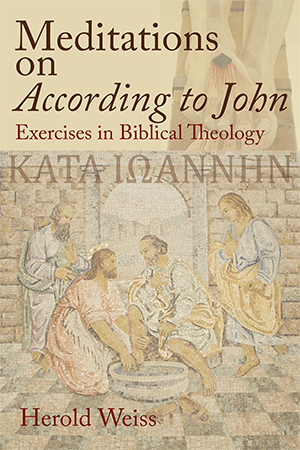
- I’m very glad for Dr. Herold Weiss as a guide in this study. I’m assuming those who are joining me are reading his essays. He’s much more to the point. I’m adding a good deal of discussion of the nuts and bolts to help people think about their own theology, or at least I hope it helps. This can get boring, but sometimes wading through the nuts and bolts (intentional mixed metaphor!) is precisely what we need to do.
And here is the YouTube embed for those who may have missed it:


Leave a Reply