Threads from Henry's Web

Tag: Psalms

  • Psalm 119:15: Looking at God’s Ways

    Psalm 119:15: Looking at God’s Ways

    On your precepts will I meditate;
    I will look at your ways.

    There’s a big difference between meditation and biblical exegesis. I tend to use exegesis to refer to extracting the meaning from a text in the narrow sense of what a particular author meant by a particular statement or passage. Hermeneutics generally refers to the broader process of interpreting and applying scripture. This usage is not universal; frequently you will hear hermeneutics and exegesis used interchangeably.

    But meditation lacks these narrow boundaries. As I read these verses, one per day, while I do some of the work of exegesis, such as looking at the words in a good lexicon and checking other uses and reading the context of that particular verse, I really am letting my mind roam through scripture and experience and also asking what the passage suggests to me. I think poetry is particularly well attuned to this kind of thinking, and Psalm 119 even more than most. The author draws in words for God’s instruction that direct us to think of the law/instruction in the broadest possible sense. It is the entire Word that God has for us that is brought into view through the vocabulary.

    The root word for “precepts” used here goes back to a root word that is often translated “visit.” A visit can be many things. It can be a time of inspection, a time of reward, a time of fellowship and relationship, or a time of judgment. Now it’s not a good idea to determine the meaning of a word by its etymology, i.e., the forms from which it is derived. I’ve already commented on how the use of the various “law” words in Psalm 119 tend to direct us away from being too specific on a single concept. (Bob MacDonald’s post on this Psalm features consistent translations of the terms so that you can see them scattered through the Psalm.)

    But in this case, whether it’s a good idea or not, the etymology of the word for “precepts” led me to think of visiting and relationship (good and bad!), and God in action, rather than as a static lawgiver. After all, the God who said, “I am YHWH your God who brought you up out of the land of Egypt …” (Exodus 20:2) is a God of relationships and actions, with creative and saving/restoring acts featured.

    As we go through the time of advent, symbolizing in our worship the wait for God to be with us as Immanuel, we can certainly relate to this thought. The God who becomes incarnate in a manger is a God of action, of relationship.

    I tend to fellow loosely joined trails in my thinking, and I followed this by focusing on the second half of the verse, looking at God’s ways/actions/behavior. There are many ways to do this. We often approach scripture to discover correct doctrine. There’s nothing wrong with that, but that’s not the whole story. I like to look at scripture for the stories of God’s interaction with people into which we fit these various theological propositions.

    For example, another part of my reading today was from 1 Corinthians, in which we have Paul making a huge number of statements that are turned into theological propositions, sometimes in contradiction to the story that surrounds them. Speaking of the stories of scripture after evoking incidents from the Exodus, Paul says, “These things were written to admonish us” (1 Corinthians 10:11). He has just referenced a number of stories.

    Thus, I’d add to trying to understand to propositions of scripture a need to understand the stories. I think as we understand those stories, we will often find that we’ve been looking at propositions from entirely the wrong perspective. (A favorite example of this comes from 1 Corinthians 14, and worship that is “decent and in order.” I’ve heard this quoted to criticize a pastor for deviating from the bulletin!)

    But there’s another layer or more to go. How about the way in which scripture was composed. There are hints all through scripture of various sources that have been brought together, including the frequently referenced “chronicles of the kings of Israel and Judah” cited as sources in 1 & 2 Kings. Interesting that God provides inspired scripture through someone compiling material from official court chronicles and providing commentary.

    Then there’s the natural world. Some make great efforts to assure us that special revelation, written scripture, is the more reliable source. Nature, they say, is too easily misinterpreted. Sometimes they even attempt to force the natural world to match their interpretation of scripture.

    But the natural world is a direct product of God’s word just as is the written word. I don’t want to detract from the written word, but I think we need to elevate what can be learned from God’s creative activity. The physicist studies some of the most direct products of the mind of God. Or so I suspect!

    I’ve wandered far away from what is explicitly stated in the text of the verse. But in the spirit of this Psalm, I think the author might have understood my thinking, should he have had an opportunity, or at least the spirit behind it.

    Where does thinking about God’s ways lead you?

  • Psalm 119:14 – I Have to Be Joyful Too?

    Psalm 119:14 – I Have to Be Joyful Too?

    In the way of your testimonies I rejoice
    As over great wealth.

    Teachers and preachers often say that Jesus, in the Sermon on the Mount, was moving the law inside and making it of the heart. And that is certainly a theme of that sermon.

    But the fact is that the heart was always the object of the law. We are the ones who tend to look at the statutes, the regulations in modern terms, as the point of the law. It’s a simple path. We look at the law, and we do what we can to do what it says to do. So the point becomes the list of regulations for our lives. Aren’t these regulations wonderful? Shouldn’t we be happy about them?

    Isn’t that what this Psalm is about?

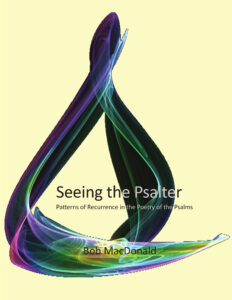
    Let me quote my friend and Energion author Bob MacDonald in the series he has just started on Psalm 119:

    Overall, Psalm 119 is a restful adoration of God and God’s promises.

    Have you thought of it like that?

    I commend his series to you, especially if you are musical. He does studies of the music of the Bible. There is great value in looking at these passages from different perspectives. I try to read a number of these as I meditate on the passage.

    “Restful” and “joy” both represent something internal, a response to the law (remember Torah/instruction), and not an external assent.

    And the Psalmist rejoices.

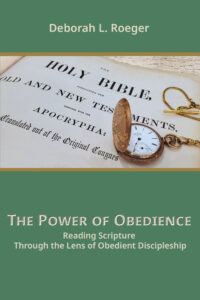
    I want to quote another one of my Energion authors, Deborah Roeger, author of The Power of Obedience:

    Before we conclude this lesson, we have some personal work to do. We have established that as God’s covenant people we are tailor-made by Him to live by His wisdom not our own! If we would lay down our right to live life on our terms – if we would turn to Him in submission, letting Him rule and reign as the perfect Creator and Lord of life in every aspect of our life – we would then joyfully know by experience what it means to know Him. If there is any area of your life that you have been holding back from Him, would you be willing right now to drop to your knees, bow your heart and your head before Him in complete surrender? Life will never be the same! And praise God for that!

    Deborah L. Roeger, The Power of Obedience, 43.

    This is a conclusion to an extensive lesson, but just on that one paragraph, do you think the Psalmist might well agree?

    (Featured image generated by Jetpack AI.)

  • Psalm 119:13 – Speaking It

    Psalm 119:13 – Speaking It

    With my lips I have recounted
    All the judgments from your mouth.

    We tend to talk, and also write a great deal about speaking. On social media, people take note of the things you don’t speak out about, and consider you apathetic for your apparent silence. On the other hand, there are those who are just waiting for one wrong word so that they can condemn you.

    I has been said that when all is said and done, a great deal more is said than done. This often comes from the one sanctimoniously declaring superiority and completely ignoring the fact that he (or she) is speaking and not doing.

    My first thought about this passage was to emphasize the importance of saying well-selected things, of being willing to be known for what you believe. That would have turned into a tangled post as I would also want to discuss all the good reasons for choosing what you would spend time talking about.

    But for me the more important lesson of this passage was simply how do I source the things I say. Where do these come from? How careful am I in hearing, studying, and applying the things I believe God said?

    This could come down to deciding when to speak and when not to, considering “a time for silence and a time for speech” (Ecclesiastes 3:7). The psalmist intends to declare the judgments that God has spoken. God’s judgments are spoken not only with accuracy but with perfect timing.

    When do you and I speak? Do we consider the “truth” of the time, the timeliness, as well as the factual truth of what we say?

    Let’s conclude with the words of another writer of Hebrew scripture:

    The Lord YHWH has given me the tongue of the learned,
    To speak timely encouragement to one who is weary.

    Isaiah 50:4 (REB)

    Are our words both timely and truthful?

    (Featured image generated by Jetpack AI.)

  • Psalm 119:12 – Teach Me

    Psalm 119:12 – Teach Me

    Blessed are you LORD.
    Teach me your statutes.

    Mark Twain said, “Good decisions come from experience. Experience comes from making bad decisions.” Or something like that. I’ve found a number of variations, all attributed to Twain.

    The prayer, “Teach me!” is one that is pretty much guaranteed an answer, positive at least in the sense that learning will take place. The psalmist asks the Lord to teach him.

    It’s a bit of a dangerous request, looked at from one direction, but then from another, you might as well pray this pray, because God’s gonna get you in any case! The universe can be an unforgiving place, and most of us have some pretty clear places where experience came from bad decisions.

    This is where I like to note that the entire created world informs us of its creator. The person who studies quantum physics studies God no less than the person who meditates on theology. Perhaps even more.

    One big reason to be thankful for Torah in the broad sense–God’s instruction–is that it is evidence of God’s care, a gift that teaches.

    And boy do we ever need that!

    (Featured image generated by Jetpack AI.)

  • Psalm 119:10 – Seeking and Finding

    Psalm 119:10 – Seeking and Finding

    With my whole heart I have sought you.
    Don’t let me wander from your commands.

    The word here translated commands is mitsvot, which is often thought of as good deeds, but Jewish commentators use this primarily of the 613 commands in Torah. In this way, the mitsvot can be considered another way to refer to the entire Torah.

    When I read Leviticus alongside the three volume Anchor Bible commentary on Leviticus by Jacob Milgrom I was struck by his comment that the commands of Torah, and in this case specifically commands regarding the temple ritual were clearly intended as a training ground for Israel.

    And history shows us that in at least one way, this training worked. Israel built up an identity that was difficult to destroy. We can still identify Israelites today, unlike the vast majority of the cultures that existed at that time and for centuries before and after.

    There were two aspects to this identity. One is simply those aspects of behavior and lifestyle that identified one as first Israelite, and in later times as a Jew. This identity kept Jews distinct from the surrounding culture. But there is another identity inherent in Torah, which we can infer from many specific statements, such as the opening for the ten commandments. “I am YHWH your God who brought you up out of the land of Egypt, from the house of slavery” (Exodus 20:2). God claimed the Israelites as his own before giving any law.

    In this verse, we have the two sides of this equation, but not necessarily in historical or logical order. The psalmist has sought God with his whole heart, doing everything he can. But he recognizes the part of that identity that can be summarized as “God’s own person/people.”

    If we belong to God, a claim also made by Christians, we need to be identifiable as people who belong to God.

    Set the boundaries, God!

    (Featured image generated by Jetpack AI.)

  • Psalm 119:9 – Talking about Purity

    Psalm 119:9 – Talking about Purity

    How shall a young man keep to a pure way of life?
    By keeping it in the bounds of your word!

    I have a feeling that some would question the way I translated that verse. It’s OK. Poetry is challenging. In this case I was aiming more for meaning that being faithful to the poetic form. For those who read some Hebrew, let me recommend Psalm 119 as a good way to become more comfortable with these poetic forms.

    There are all kinds of things that we could take from this verse, but through the day today my mind was repeatedly brought back to this: We need to teach sanctification, holiness, integrity in living, truthfulness, and the breadth and comprehensive nature of God’s Word.

    Sanctification is by grace (there’s a big subject), or better, in the words of the Psalm, it’s a path of blessing. I think it’s no accident that Psalm 119 starts with “blessed.” We need to realize that this is God’s work. It’s worked in us, but it is about God both in goal and in method.

    If we don’t talk about living a pure life in the church, people are likely to drift into perfectionism, legalism, arrogance, spiritual pride, and condescension. Those who avoid those issues usually wind up in cynicism and discouragement.

    The one way to go, and I think it is the way of this Psalm, is to recognize that it’s all about God, the creator of all. God sustains us (see Psalm 104, for example) on a constant basis. The way to holiness without arrogance is a profound thankfulness and recognition of blessings received. The best antidote to spiritual pride is to keep our eyes on God’s law.

    That will lead to being blessed and being kept in the pure path.

    For more thoughts about God’s word, see Seven Barriers to Hearing the Word.

    (Featured image generated by Jetpack AI.)

  • Psalm 119:1-8 – Wrapup

    Psalm 119:1-8 – Wrapup

    As I’ve meditated on these first eight verses of Psalm 119, I’ve opened up a number of topics. Let’s put them together, sort of!

    1. Being blessed is a fairly broad and comprehensive thing. It doesn’t necessarily mean that we have everything we want, or accomplish everything we want. It’s being under God’s watchful eye, and that’s positive (God has a purpose/God believes in us), and also negative (if we go off track, there is God). Perhaps we need to redefine “negative.”
    2. God’s law is a great deal more than a list of rules. God’s law is God’s self-revelation. We see this in Judaism in the centrality of the Torah, one of two broad words used in Psalm 119. (The other is Word/words.) When the Psalmist celebrates the law, as many English translations render it, he is celebrating being chosen as one of God’s people and God’s immanence in the self-revelation of the law. This carries over into Christianity (John 1:1-18, Hebrews 1:1-4) with Jesus as the Word, God’s message in human flesh.
    3. There is a joy that shines through the text. This is not poetry written by someone who felt he was obliged to praise God for the Torah. He loves it. He’s thankful for it. He finds joy in it.
    4. We start with blessing, and that’s important. Our temptation is to do things to seek blessing. The reality is that the ability to do and the motivation to do is itself a blessing, from which acts follow. Lead with the blessing!
    5. Sometimes it’s OK to shout “Help!”

    I hope you’re enjoying this journey as I am. Tomorrow morning, I’ll be posting the first verse in the second section.

    (Featured image generated by Jetpack AI.)

  • Psalm 119:8 – I’m Going to Do It; Help!

    Psalm 119:8 – I’m Going to Do It; Help!

    I will observe your statues.
    Don’t completely forsake me!

    Sometime we’re so busy looking for the really holy things and the absolutely correct commands in scripture that we fail to see the human element. But to miss that human element really misses much of the message of scripture. Scripture speaks in the way it developed and was preserved, as well as through the nature of its human authors, as much or even more than it does in propositions.

    This verse is very human. It’s the cry of most religious or spiritual people, or rather those who aspire to be such. I’m going to do this. Here’s my plan. Here are the spiritual practices I’m going to carry out. These practices will help me be truly spiritual, holy, and generally a better person.

    At the same time, there are those moments when we realize we need all the help we can get. Consider my idea of taking Psalm 119 a verse at a time, meditating on it for a day, and then writing a post that evening to be published the next morning. Yes, I’m blogging, but this blogging is based on me carrying out a spiritual practice, simple in structure, and personal.

    Then there was the day when I realized in the middle of the afternoon that I couldn’t even remember the words of the verse I was supposed to be meditating on. Things had gone multiple directions and I don’t handle that well. I had to pull out the text and remind myself.

    Or I could talk about right now. It’s later than I planned to write this. Suddenly I thought, Oh no! I have to write something about that verse. It was another of those scattered days.

    So I’m coming to my computer sort of like the Psalmist to his writing. Lord, I have a plan. Don’t give up on me completely.

    It may not be the best theology in the world, but it’s very human.

    (Featured image generated by Jetpack AI.)

  • Psalm 119:7 – Praise with Integrity

    Psalm 119:7 – Praise with Integrity

    I will praise you with an upright heart
    When I learn your righteous judgments.

    What does learning about God’s righteous (right) judgments have to do with praise?

    If we think of this Psalm as expressing joy over a list of rules, this might be a good question. If you haven’t yet, please read my earlier post on what “law” means in Psalm 119. To summarize, in Psalm 119 we heard one of God’s people praising God for God’s revelation in Torah. The various words for law direct us to the varied things that are present in this revelation of God.

    This is important in terms of praise. Genuine praise results from looking at God’s self-revelation. We look at what God has done and the response is in praise. This is genuine praise.

    There is also praise that is manipulative. “Lord, I praise you, and I want …” There is false praise. “Lord, I’m praising you because otherwise you might wipe me out. I hope you don’t notice that I don’t really mean it.”

    This doesn’t mean that praise somehow results from knowing everything there is to know about God. We’re never going to do that this side of eternity. What it does mean is that genuine praise from us results from our observation of God’s revelation.

    The more we observe, the more we praise. Not because God needs it, but because it flows from that knowledge.

    (Featured image generated by Jetpack AI.)

  • Psalm 119:5 – Let’s Get Real

    Psalm 119:5 – Let’s Get Real

    Oh that my ways were steady,
    Keeping your statutes.

    Any time we’re looking at a set of standards, it’s well to be realistic, especially with ourselves. As we go through this Psalm, we’ll be celebrating God’s law in many ways and places, but there are a number of instances where the author admits his limitations and calls for help from the lawgiver.

    It would all be very good if …

    I sure wish I could, says the Psalmist. He knows it’s good. He’s glad to know it. But can he?

    I feel this. There are things in my daily life I wish I could do better. Some days are better than others.

    There’s a balance here, and we can see that balance in the rhythms of the Psalm.

    The praise is a prayer. I’m going for it! Please help me!