Threads from Henry's Web

Tag: Psalms

  • Psalm 119:24

    Psalm 119:24

    Your testimonies are also my delight,
    My counselors [the men of my counsel].

    I like to say that we tend to go to the Bible for information, while God is there for conversation. I don’t mean that there is no information there. We tend to think in binary terms: Either the Bible is a source of data, or it tells stories. So many sorts of both information and conversation fall through the cracks when we think of it this way.

    I recall one gentleman at a church I attended who told us we should think of the Bible as something like the Boy Scouts Manual. I told him I thought that anyone who considered those two books to be similar must not have actually read either.

    There are certainly rules and procedures in the Bible. But the stories that surround those are even more important. For example, as Christians we don’t carry out the rituals of the tabernacle and temple service as outlined in Torah. But those rituals still have things to teach us, as do the stories in which they are embedded.

    As I was thinking about writing this meditation, I was reading some notes about a library and how one can be drawn into stories and worlds that are new, distant or even imaginary, and how those experiences found in the pages of books can enrich our lives.

    I long to help people find in the Bible a library of places distant and even just imagined, with that hope that imagined worlds may be more real than the ones that boring people assure us are “reality.” I would like to see us find that “reality” is more flexible and adjustable than even we can imagine if we just join the conversation that God has for us instead of just looking for answers for our rather ignorant and limited questions.

    I’d like to see people (including myself!) more and more find in scripture the real questions, the important questions, the ones that engage our minds more fully.

    The psalmist delights in the testimonies, but instead of calling them a rule book from which he learns a list of commands, he calls them counselors. To him they are alive and active (Hebrews 4:12). They are powerful.

    And this is not limited to the words contained in the book we call the Bible or scripture. God’s mind is displayed in the entire universe, and we can discover not final answers, but questions beyond any imagining.

    We might consider that our problem with God’s law isn’t, or isn’t just, an inability to do everything we are told to do absolutely correctly. It might be more that we can’t even grasp what it is.

    I think we’re invited on an infinite journey of learning and discovery. It’s not God who puts the limits on it. It’s our lack of imagination, especially of the ability to imagine a landscape completely outside of our current scope.

    Do you hear God calling you to glory?

    (Featured image generated by Jetpack AI.)

  • Psalm 119:23 – What Others Think

    Psalm 119:23 – What Others Think

    Prince sit around and plot against me,
    Your servant meditates on your statutes.

    To be honest, my first reaction to this verse was a laugh. Yeah, right, I thought. He really can sit meditating on God’s statutes while he knows people are plotting against him.

    That thought isn’t entirely wrong. This really is a high-minded, and potentially dangerous, approach. If this Psalm goes back to King David, it would be extremely dangerous, and the story of David’s life would tend to contradict the claim.

    On second thought, this isn’t a bad idea at all. Not that we’re likely to get it perfect. But it’s a good goal, and it can prevent a great deal of heartache along the way.

    There was a time in my adolescence when I was very concerned that people might be talking about me. I’m not sure why I got to thinking that way, but I really didn’t want people talking about be and not knowing what they were saying. I don’t recall any particular event that got me past this stage, but I do remember that very suddenly I realized that it was quite rare for people to be talking about me. Then I realized further that only a tiny portion of the times people were talking about me actually did me any harm at all.

    This was followed by a decision on my part that I didn’t really care to hear gossip. The inverse of my realizations about myself was that it was almost never of any value for me to learn things about others or talk about others, unless it was a specific, legitimate discussion.

    I don’t know that the Psalmist was thinking this way, or perhaps simply stating that his knowledge of God and God’s will was vastly more important than human plots and conspiracies. But I think this verse has insight beyond its simple words. Think about important things. Think about higher things. Think about useful things. And yes, think about fun things. Plotting princes don’t count.

    What should you be thinking about today?

  • Psalm 119:22 – Reproach and Contempt

    Psalm 119:22 – Reproach and Contempt

    Remove from me reproach and contempt
    for I have guarded your testimonies.

    Meditating on a single verse each day means I often get somewhat out of context. But while context is important, literature can easily suggest other lines of thinking. Folks in various classes I’ve taught have called me the king of the rabbit trail because I’m so quick to jump on ideas that are suggested by the text and not necessarily taught.”Meditating on a single verse each day means I often get somewhat out of context. But while context is important, literature can easily suggest other lines of thinking. Folks in various classes I’ve taught have called me the king of the rabbit trail because I’m so quick to jump on ideas that are suggested by the text and not necessarily taught.

    Psalm 119 certainly presents God’s commands as instructive, and keeping them as a good idea. So the connection of keeping and some sort of blessing is appropriate.

    But this passage reminded me of a frequent form of prayer, one that combines a reminder to God of all the good things we have done, and based on those things there’s a risk. “Because I’m good, bless me!” It’s a bargain with God.

    The problem, of course, is that it’s very difficult, indeed impossible, to make God owe us something. Why? Because as our creator, and the creator of all that is around us, we both exist, and live inside, gifts of God.

    I’m amused by suggestions that God is or has been inactive for various periods of time. If God was actually inactive, existence would end.

    Still, I think this is a natural, and even honest sort of prayer. It’s where we’d like to be. We want to approach someone for help who has some reason to help us. And I think that God honors such prayers, while hoping will come to understand God’s love and grace better.

    Spoiler alert: The Psalmist gets this completely, as indicated in the final verse. He asks that God seek him, even though he’s gone astray. He doesn’t really have a claim, except to ask God for what God does. God seeks.

    Of course, he still reminds God that he hasn’t forgotten, but in many ways I think that’s the thought of a lost sheep who wants to let God know he hasn’t forgotten the home pastures, the sheepfold, and the Shepherd.

    Do you remember your spiritual home?

    (Featured image generated by Jetpack AI.)

  • Psalm 119:21 – Pride and Staggering

    Psalm 119:21 – Pride and Staggering

    You rebuke the proud, accursed ones,
    Who stagger away from your commands.

    As with each verses, there are lots of directions my mind goes with this, for example, what it means to be “accursed” and what, in particular, one might be proud of.

    But the direction my mind went was simply this: Pride goes before destruction (Proverbs 16:18). How is that?

    Now first let me distinguish pride from pride. That is, there is a good feeling at doing something right, or even more at seeing someone else do something well. I’m frequently proud when I hear or read about what my grandchildren have done.

    The difference between one kind or another is not one of degree, but one of truth. A pride in knowledge that is simply accurate acknowledgment of one’s accomplishments can be a positive part of living and growth. But there is a different quality of inaccurate pride, which can also be called arrogance–the assumption that one knows things and has skills when one does not, in fact have that knowledge or capability.

    I’ve certainly experience the latter form of pride when I assumed I had something covered, and then encountered a test that proved I had no such knowledge. As I read 1 Corinthians, I see a whole book directed at forms of spiritual pride. It’s not doing good things, or even knowing you’ve done good things that’s condemned, but rather the thought that you are better than other people when you do those things.

    It’s not wrong to believe you have gifts from God. It’s wrong to believe your gifts make you better than other people.

    Pride often results from not looking at the standard. If I take my eyes off of God’s standards (his law or instruction) as is noted in this Psalm, then I can decide that I have attained when I have not.

    An overestimate of my own accomplishments or capabilities can also make me attempt things for which I am not actually qualified. My wife and I have had a number of discussions over the years about continuing to drive after a certain point as we get older. We know many stories of people who thought, “I can still do this. I’m good!” It turned out, they were not so good. Pride in skill as a driver when one’s eyesight or attention has deteriorated has frequently resulted in injury or death, and not just of the proud one.

    To again distinguish pride, let me say I’m proud of my parents (first sense), who each made a decision not to continue driving after a certain point. They decided they were no longer capable of handling their vehicle safely on the road. They sold it, and used other means of transportation.

    Psalm 119 points us repeatedly to God’s standards as something to study, even as a mirror to look at. If we imagine ourselves better than we are, we’ve fallen into pride and arrogance and we’re going to stagger off the way.

    But as we look at that law, we know we serve one to whom we can also say, “Don’t let me wander!” (Psalm 119:8).

    Are you assessing yourself by looking at the right standard?

  • Psalm 119:20 – Languishing

    Psalm 119:20 – Languishing

    I [my soul] languish for longing
    for your judgments.

    What do you really want? What is your deepest desire? What is missing that makes you weary?

    As I write this, I’m very tired. I’ve been busy with many things and am only writing because I committed myself to write as a spiritual discipline. This is the 20th of 176 days. That’s early to be tired.

    And then I think, This is the verse. I’m languishing. But am I languishing for God’s Word?

    I’m reminded of Isaiah 55:

    Come for water, all who are thirsty;
    though you have no money,
    come, buy grain and eat;
    come, buy wine and milk,
    not for money, not for a price.
    Why spend your money for what is not food,
    your earnings on what fails to satisfy?
    Listen to me, and you will fare well,
    you will enjoy the fat of the land.
    Come to me and listen to my words,
    hear me and you will have life.

    Isaiah 55:1-3a (REB)

    We pursue so many things in this life, and more often than not we find dissatisfaction. We work and are weary, and live lives of hidden despair.

    Perhaps it’s time to think about what will really satisfy.

    Will you? Will I?

    (Featured image generated by Jetpack AI.)

  • Psalm 119:19 – An Alien

    Psalm 119:19 – An Alien

    An alien am I on the earth.
    Don’t hide your commands from me.

    I frequently teach that there are two elements to the Christian life: Identity and Mission. It’s easy to go off the rails on the side of identity, trying to separate ourselves from the crowd. On the other hand, we can become so much a part of the world around us that nobody knows the difference.

    You can’t influence the culture if you are the culture.

    The Bible story is filled with the stories of those who are aliens in the world in which they live. It’s a critical metaphor of scripture. Much of the laws in the Pentateuch (Torah) are designed to help provide an identify for Israel, something that would show other nations what it meant to be the LORD’s people.

    This alien-ness was to be embraced. Assimilation was not the goal. As the song says, “This world is not my home, I’m just a-passing through.” One of the intentions of laws concerning good treatment of aliens among the Israelites was to reinforce this sense of being alien.

    But the aliens are here for a reason. They are here to serve others and to reflect the One they ultimately serve. Thus we have the second half of the verse.

    I might put it this way. “Lord, I’m yours, and that makes me an alien wherever I am. That’s my identity. I also have a mission. Don’t hide your commands from me. Let me follow the call of that identity.”

    Are you too assimilated to the culture to remember your identity? Are you too alien to be able to perform your mission? Pray that the Lord makes your way clear.

    (Featured image generated by Jetpack AI. It represents the draw of, and also the alienation from, various cultural forces.)

  • Psalm 119:18

    Psalm 119:18

    Open my eyes and I will see
    Wonderful things from your Torah.

    In my infographic on Seven Barriers to Hearing the Word the third barrier is making your Bible study a scholarly, rather than a spiritual pursuit.

    Now let me be clear that I’m not against scholarship. Reading biblical languages and understanding various scholarly areas of study that relate to Bible study are quite valuable. But as a believer, I take a further step. I am looking for God. Not just theology, but relationship. Not just knowledge but understanding and even friendship.

    The Psalmist knows that there is more to be learned in God’s law (here he uses the word Torah), than just knowing the definitions of words, lists of commands, and proper rituals. There is a deeper meaning to be found, and when you’ve found that, there is one even deeper.

    Keep at it, and you’ll realize you’ll never be finished. There’s always something more. Spirituality is not a matter of attainment, but of continued pilgrimage.

    How will you make yourself available to see new, wonderful things?

  • Psalm 119:17 – Order of Operations

    Psalm 119:17 – Order of Operations

    Deal fully with your servant,
    So I may live and keep your word.

    There are numerous translation questions, including differences of opinion about precisely what the word I translate “deal fully with” actually means in this context.

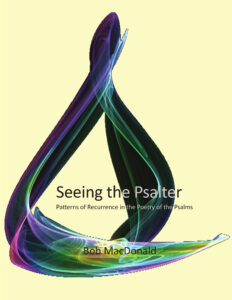
    Another good option is what Bob MacDonald does in Seeing the Psalter:

    Grow your servant
    I will live and keep your word.

    Bob MacDonald, Seeing the Psalter, p. 381

    Again, let me remind you that I’m writing meditations, not expositions on these passages. There are many things one could get from a verse like this, especially considering the larger work that contains it.

    There’s an order of events in scripture that’s important to keep in mind, and it’s reflected in this verse. God grows, completes, matures, blesses, and the result is both life in the physical sense, and a good life, both produced by this initial action of God.

    It is often thought that Hebrew scriptures focus on human action, in which people keep rules, and God’s blessing follows. And there is a natural order that says that living in certain ways results in blessing. The world in which we live works that way. But Hebrew scriptures emphasize the power and action of God, prior to human action.

    “In the beginning God …” and then when there is a world and a garden, people are invited to live within certain parameters. I would suggest that the tree of the knowledge of good and evil represents the ever available option of take the suboptimal path. The fruit metaphorically represents that option. But God’s gift of the whole creation, of the garden, and of life precedes the limitation.

    At Sinai, God comes on the scene as the deliverer from bondage before becoming also the lawgiver.

    Gift comes before requirement; grace before law.

    Are you remembering that gift?

    (Featured image generated by Jetpack AI.)

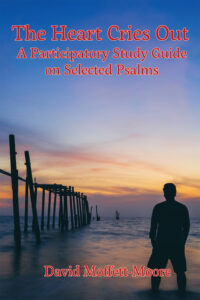
  • Book Extract: The Heart Cries Out on Psalm 119

    Book Extract: The Heart Cries Out on Psalm 119

    Book Extract: The Heart Cries Out on Psalm 119

    Psalm 119 is easily the longest psalm in the Bible, at 176 verses. It is composed as an acrostic, with a stanza of eight verses for each of the twenty-two letters of the Hebrew alphabet. It is a meditation and a teaching on the Law of God as the way of life.

    We tend to think of laws as lists of “thou shalt nots,” defining and confining our liberties. Here are things we are not supposed to do, and if we do them, there will be consequences we don’t like. We get speeding tickets and arrest warrants. A list of 176 things we are not to do seems extreme!

    Augustine said “Love God and do as you will.” The oath of Hippocrates was “Do no harm.” Jesus summarized the law and the prophets with two rules: love God and love your neighbor. These seem simpler and more positive. But it is not the purpose of Psalm 119 to beat us up with rules and regulations. Instead, it is a devotional reflection praising God for the life-giving gift of the divine law. It is even affectionate in its approach. It extols God for the gift of the law and encourages us to live by this law. Several different words are used to describe the law, signifying the intimate and dynamic relationship the author has with it. The law of God is the yearning, longing, desiring of God for us; it is how God expresses God’s love and desire for us. This may be summarized by the words of verse 105, often set to music, “Thy word is a lamp unto my feet and a light upon my path.”

    David Moffett-Moore, The Heart Cries Out, 47

    (Featured image generated by Jetpack AI.)

  • Psalm 119:16 – Ways to Forget

    Psalm 119:16 – Ways to Forget

    In your statutes I delight.
    I will not forget your word.

    If this were not poetry, I might be tempted to talk about the rather optimistic promise of not forgetting God’s word. But then I remember how many times I have said, “I’m not going to forget that” in reference to some planned task or another. Most of the time I forget, but if I never make a conscious effort to remember, forgetting becomes 100%.

    So I got to thinking about different ways to forget God’s word.

    Having memorized large portions of it (not voluntarily) when I was younger, I could say that forgetting God’s word was like forgetting the words I had memorized. That would be literally forgetting, and I have certainly done plenty of that.

    But let’s consider some other ways of forgetting:

    • We can forget the creator when we look at creation.
    • We can forget to consult God’s word when it is applicable to our decision making
    • We can forget that God’s word comes in many ways, and that God’s truth is always applicable, however delivered!
    • We can forget God’s promises
    • We can forget what God has done in our lives in the past
    • We can forget the history of God’s actions in our families.

    How do you forget? Is it time to revive a memory?