Threads from Henry's Web

Tag: bible

  • Resources for Progressive Preaching: Pastor2Pew

    Resources for Progressive Preaching: Pastor2Pew

    One of the least accurate characterizations I hear about progressive Christians is that they don’t care about the Bible. Now it’s hard to get a single image of the average or perfect progressive Christian, so generalizations are hard to make, but let me note that the generalization that progressive Christians in general disrespect the Bible, is not accurate.

    One conservative response to this is a list of biblical positions on doctrine, as held by the same conservatives, which progressives do not espouse. If progressives fail to see these very clear teachings of Scripture, how can they possibly be regarded as anything but disrespectful? On the other hand, progressives sometimes point out conservative doctrines on things like money and the treatment of others that they feel—equally strongly—are violations of scriptural teaching. Rev. Steve Kindle even wrote a book about all this, titled I’m Right and You’re Wrong: Why we disagree about the Bible and what to do about it. Clearly it’s a book containing the answers to all of life’s questions, including the meaning of life. (No, not really, but it will help you understand why you don’t have those answers.)

    Now Steve has set out on another project, designed to help progressive pastors find commentary on the Lectionary passages. He acknowledges the difficulty that not all pastors, progressive or otherwise, follow the Lectionary, but you have to start somewhere. In searching for resources Steve found that the material one could use in speaking to one’s congregation in a relevant way was embedded in a mass of material that used approaches that were not nearly so helpful. So he started Pastor2Pew.org. On Tuesday night, I interviewed him for our Energion Tuesday Night Hangout. Here’s the video:

    My title, “A Progressive Christian Preaching Scripture” may sound snarky. In fact, it may be snarky. But ask yourself this: Who am I being snarky about? What I’m really trying to do is emphasize my own point here: There are many progressive Christians who study Scripture, write about it, preach from it, and believing, as strongly as any fundamentalist, that they are living it. They are just finding different things there.

    I don’t know precisely what to say about the people Steve is interviewing, except that I didn’t find anyone there so far that I don’t want to hear. I mention Walter Brueggemann above. Steve also interviews Energion author Bruce Epperly. Bruce spends a great deal of time studying Scripture and doing the homework that means he deserves to be heard, not only by other progressives, but those in other streams.

    I strongly recommend Pastor2Pew as a resource both for progressives, and for others who would like to get some challenging and different approaches to the text. Even if, in the end, you reject them, I think you’ll find that your understanding deepened as you did so.

    PS: Check out our Energion “Church Health” category, including Steve’s book Stewardship: God’s Way of Recreating the World.

  • Thoughts on Releasing a New Book about Jonah

    Thoughts on Releasing a New Book about Jonah

    esther and jonahI believe that it’s easy to let our theology keep us from reading the Bible, especially the narrative parts. The Bible is filled with stories. One example is the story of the flood. When Genesis 6 says (using the KJV), “It repenteth me that I have made man,” the first reaction is to try to explain how God didn’t really repent, thus preserving doctrines of omniscience expressed particularly in foreknowledge. A vigorous desire to preserve one’s theology can prevent one from hearing the story as it is actually told.

    Jonah is just such a story. It’s very easy to make this a story about obeying God. The story was explained to me when I was a child as an illustration of the bad things that could happen to you if you went against God’s will. Another lesson, often taught at the same time, is that God can and does work miracles. Many people have seen belief in the whale (really more like “great fish”) as a test of one’s belief in the truth of scripture.

    But to spend our time on the reality of the great fish, whether to disparage the idea or uphold it, is to stray from the story.

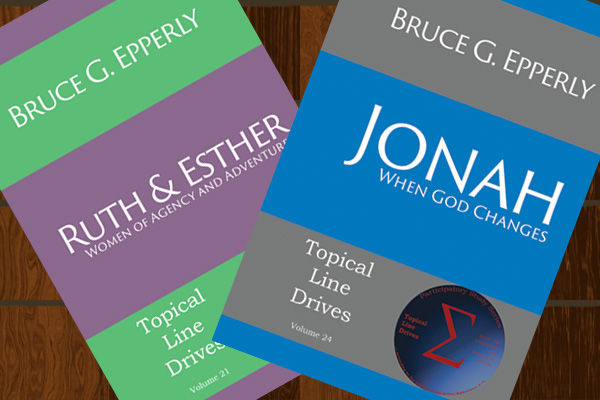
    I’ve been delighted to publish a couple of books by Bruce Epperly that deal with Bible stories from a less theologically defensive position. Bruce tends to let the stories speak and as such he gets lessons from them that we might otherwise miss. A few months ago we released Ruth and Esther: Women of Agency and Adventure. I commend that study to you.

    This week we released another book about stories, Jonah: When God Changes. Just the subtitle is likely to unsettle a few people. I think it’s good to be unsettled. I think that Jonah was unsettling when it was first written and it was intended to be.

    We often have to work hard to love and care for people who are actually very similar to us. We tend to discount the command of Jesus to love our enemies. But in Jonah we have a call to love people we now hate—and with good reason!—and to take God’s message to them. While Jonah’s message sounds like a “fire and brimstone” sermon, it becomes a call to salvation, just as Jonah feared it would (read the last chapter)!

    Bruce really works this little book and calls to our attention things we might normally miss in pursuit of theological comfort. I suggest that you give up that comfort and read the book!


    We’ll have it for $4.19 pre-order pricing (even though it’s already printing) on Energion Direct. We’ll keep that up through Labor Day. Find a couple of other books to go with it so your order is at least $9.99 and you’ll get free shipping.

  • From Inspiration to Understanding eBook Editions

    From Inspiration to Understanding eBook Editions

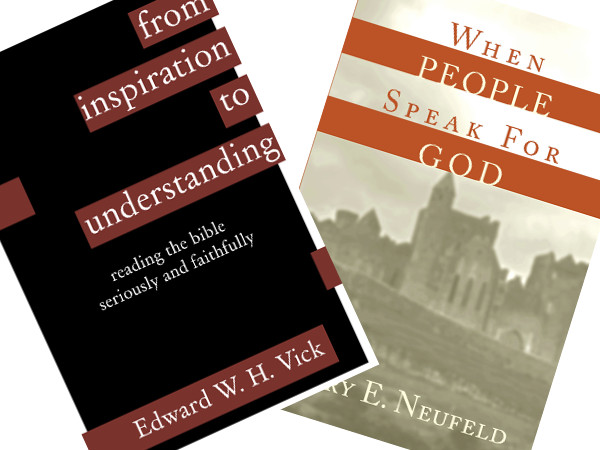
    from inspiration when peopleOne of the joys of being a publisher, as I’m sure I’ve mentioned a couple (hundred) times before, is the authors I get to work with. I have long considered our understanding of biblical inspiration and authority to be critical to discussions of Christian theology, polity, and ultimately our day to day life. Often we can at least get our bearings in serious debates by at least identifying the differences in how we are using the sources.

    Because of my interest in this I wrote the book When People Speak for God, which is generally at a popular level. After I wrote that book, I encountered Dr. Vick through one of my other authors and received his manuscript for From Inspiration to Understanding. If his book had been written before, rather than after mine, it would have contained numerous footnotes referencing Dr. Vick’s work.

    When we laid out From Inspiration to Understanding at Energion, we were using Scribus, which is actually an excellent page layout product, but is not quite the thing for an extended, thoroughly referenced book. The footnotes had to be laid out by hand, and were done as chapter end notes. This doesn’t convert well to electronic format, so there has been a considerable delay in getting the ebook editions out. But now they are complete.

    You can get more complete information on the Energion.com News blog. This is a book I strongly recommend, and the pricing of ebook editions makes it much more accessible.

  • The Bible Was Not Written to You

    [ncs_ad pid=’1893729389′ adtype=’aer.io’]

    I’ve discussed this before, and discussed it both in my books When People Speak for God and Not Ashamed of the Gospel: Confessions of a Liberal Charismatic. I was asked after my Sunday School lesson last Sunday whether Zephaniah’s prophecy in 3:1-8 applied to America.

    Let me annoy everyone: No and Yes.

    There is pretty much nothing in the Bible that’s addressed to you. One could argue such passages as John 3:16, which are talk about the world in a way that probably encompasses all time. But in general, the words of the Bible are addressed to specific people at specific times. They are also spoken by specific people, but that’s a bit beyond this post.

    I start this with the Ten Commandments. They were not written to you. We often treat them as the most universally applicable part of scripture there is, though we don’t actually keep them as Christians. As someone who grew up Seventh-day Adventist, I’m unusually aware of the Sabbath command. We Christians don’t even start to keep it, yet we pretend the Ten Commandments are central.

    And we’re right not to keep them literally and specifically because we can read right at the start that they were addressed to a particular group of people at a particular time, and that group was not us, nor was that time now.

    Nonetheless, if we consider the Bible in some sense inspired, we will see divine principles going into action in the life of the people of Israel. Those divine principles will be relevant, and will likely make those Ten Commandments applicable again—in principle. It’s interesting that while we claim to keep the Ten Commandments, and fail to do so literally, we also seem to miss out on the principles, such as not portraying God with any images. There’s an important principle behind that command, yet we create both mental and physical images of God that are both limiting and indestructible. God, for us, is in a box.

    [ncs_ad pid=’1893729370′ adtype=’aer.io’]

    And that fourth commandment isn’t irrelevant. Time belongs to God because he’s the creator. In my view, God doesn’t claim less time, but rather more. How do we honor God with our time and recognize him as creator with each minute?

    But further, the Bible was not written to people with our philosophical and scientific views. Our options for how to think about things have changed. So if we’re going to find the principles, we’re going to have to see through the cosmology and the metaphors and translate them to our time and place.

    Why couldn’t God speak directly to us and make it clearer in our terms? I would suggest several things: 1) God does speak to us today if we’ll listen, 2) It’s important to realize that God has spoken at many times and in many ways (Heb. 1:1), 3) It’s important to become part of the faith community over time as well as across space and culture, 4) The search for God may well be more valuable than finding God.

    I think that if we truly treated the Bible as the treasure it is, as the combined experience of a community of faith over time, it would help us understand how to be God’s community today. Understanding metaphors that are foreign to each of us personally can help us bridge the gaps that must be bridged every day in order to live as God’s people doing God’s work in God’s world.

    God has spoken. God is speaking. God will speak some more.

    Are we truly listening?


    Note also: I’m Right and You’re Wrong: Why we disagree about the Bible and what to do about it by Steve Kindle.

  • Is There Such a Thing as a New Testament Church?

    Is There Such a Thing as a New Testament Church?

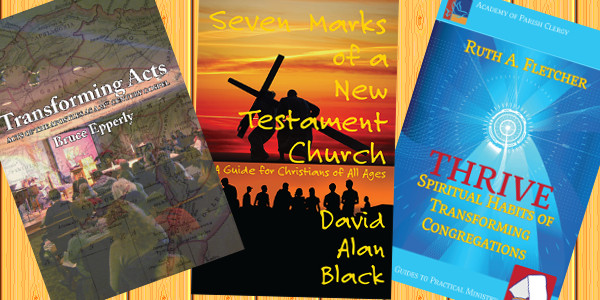
    nt church booksI’m planning to finish resume and complete my blog series on Seven Marks of a New Testament Church with added commentary from the books Thrive: Spiritual Habits of Transforming Congregations, and Transforming Acts: Acts of the Apostles as a 21st Century Gospel. This process was interrupted by SBL, by some bug I picked up in Atlanta that slowed me down for several days and by the time taken to catch up afterward.

    In the meantime, I encountered the following:

    There is no blueprint for churches in the New Testament, and to try to form New Testament churches is only to create another system which may be as legal, sectarian, and dead as others. Churches, like the Church, are organisms which spring out of life, which life itself springs out of the Cross of Christ wrought into the very being of believers. Unless believers are crucified people, there can be no true expression of the Church.”—T. Austin Sparks, Words of Wisdom and Revelation, p. 62, (quoted in Frank Viola, Finding Organic Church, p. 19).

    There’s a great deal of truth in that statement, but there is also a great deal of danger. Let me quote a couple of paragraphs from Frank Viola from just before he uses this quote to illustrate:

    Consequently, the “biblical blueprint” model is rooted in the notion that the New Testament is the new Leviticus. Advocates approach the Bible like an engineer approaches an engineering textbook. Study the structural principles and then apply them.

    But church planting is not a form of engineering. And the New Testament isn’t a rule book. It’s a record of the DNA of the church at work. … (Finding Organic Church, p. 19)

    I would love to spend some time discussing this view of Leviticus, which is, in many ways a record of the DNA of Israel as God’s people at work, but I’ll skip over my perennial annoyance with the way Christians handle the Hebrew Scriptures. And Leviticus is definitely closer to a  rule book than is anything we have in the New Testament, however inadequate the term may be in describing the book.

    Again, I would certainly agree that the New Testament doesn’t provide a “rule book” for your church, though we need to consider our understanding of the term “rule book” as well. Even rule books differ in approach! I would also agree with, and even applaud, the characterization of the New Testament as “the DNA of the church at work.” But there’s a certain negative view of engineering involved here, which is just one of the things I think is potentially dangerous.

    There’s an interesting form of binary thinking that seems to go on with the question of whether and how we apply the Bible to anything. Someone asks whether the Bible teaches a certain thing that we believe, and the pious thing to say is that it does. So we say it. Then we’re left trying to find just where it does say it. Take the doctrine of the trinity, for example. Does the Bible teach it or not? Can I discover anything about the Trinity from the Bible? Well, if you want a doctrinal statement of “trinity,” such as you’ll find in any of the Christian creeds (yes, they differ, but take any one), then you’ll have to admit the Bible doesn’t say that. Yet the pieces, or at least the questions, start from scripture. I think you can say something similar about almost any of our doctrines. They are rooted in scripture to various degrees, but we wouldn’t have so many confessional statements if the Bible clearly said what we wanted it to.

    Having grown up as a Seventh-day Adventist, I confronted this problem early. We were a church that believed in the Bible and the Bible only. Anyone could study the Bible for themselves, and the Bible was sufficient. Well, except that people kept getting the wrong things from the Bible. So we had a doctrinal statement and  baptismal covenant. When I was baptized I publicly affirmed a substantial list of doctrines, all of which the church regarded as biblical. But it was not regarded as sufficient that I affirm the Bible; I had to affirm the list.

    I think humans tend to be somewhat binary in our thinking. On discovering that the Bible doesn’t actually have a full list of the “true” doctrines or the “ideal” rules for governing your church congregation, we decide that there’s nothing at all. Let’s get away from talking about characteristics, habits, marks, or even transforming moments. The true church is the one that is produced by people transformed by the gospel.

    And yes, it is. Transformation by the power of the gospel is where it starts and it is the key. But we still read scripture. We still have to decide to meet somewhere. We still are going to do some things during our church service and not others. We’re still going to choose some activities in carrying out the church’s mission and not others.

    The danger, I believe, is that we do this sort of thing without thinking and consideration. Transformed people will be motivated to carry out the gospel commission, but will they know what to do next? Generally there is someone who leads. I have been in churches that claimed that their worship services were run by the guidance of the Spirit and were very free. No rules.

    Well, on paper. In their rule book it was true. But in practice, there was a definitely hierarchy. Who was a prophet who would speak? Who would give the message, which was as long as, if not as organized as, the sermon in any mainline or evangelical church. The “free Spirit” definitely flowed in the way human beings directed.

    In fact, despite my apparently sarcastic description, it is quite possible that the Spirit was flowing precisely as the Spirit wanted to, having chosen to work through those people. But if so, there was more structure than people were willing to admit. There were leaders in the congregation. They were just not acknowledged as formally as they were elsewhere.

    And it’s in this informality that there is a certain danger. If we do not acknowledge and plan our leadership and our actions, then some form of leadership happens. It may be good or it may not. But very frequently in places where structures are not defined, people with forceful personalities, or even people with negative agendas can take over the process. These persons are very hard to move aside to allow the Spirit to actually move, because they will often deny what they are doing.

    So how do you avoid this? More importantly, how do you avoid this without turning the church into a bureaucracy and the Bible into a procedures manual?

    Well, I think you go back to the source. Not just the New Testament, though that should be our starting place as Christians. And not just the Bible, but rather the Bible combined with our discernment and what we can hear from the Holy Spirit as we listen to the Holy Spirit and discern what we need to do as a community of believers in Jesus. I think this will be a constant process as we look at what is around us, at who we are, at our Lord, and how we can be the body of the Anointed One in the world.

    We can even learn a little bit from engineers in this process. Yes, engineers can be very picky people. I’m reminded of something Jody said as she was about to enter the doctor’s office. She was taking a particular action which she wanted the doctor to note because, she said, “Doctors are very much cause and effect kinds of people.” Engineers likewise. Every time I get into my car and every time I get on an airplane, I am very happy that engineers are cause and effect kinds of people. That’s because I really like the causes to get together and produce the effect of my car staying on the road and the airplane staying in the sky as needed. I flew nearly 7,000 hours in the Air Force relying on that sort of thing.

    One thing an engineer can do is study one thing, see how it works, and duplicate the effect by creating a similar machine. Such principles applied to scripture might include looking at the church in the New Testament and asking what caused the church to grow. Can we duplicate that? Of course times and circumstances have changed. In fact, they changed from one moment to another in New Testament times. Engineers can also take a device and adapt it to different circumstances.

    I have a smartphone, for example, that is water resistant. If I drop it in a puddle, I should be able to pull it back out, dry it off, and go on. I haven’t tried this. The prior model of the same phone didn’t have this capability. Some engineers got together and added new capabilities to the ones the previous model had. I used that previous model, and I like the new one better. There are principles that apply to both.

    And that’s important. It’s nice to say that if our church comes forth from people who have met Jesus and been to the foot of the cross (or one of those other common phrases). That must be the foundation, because church will doubtless not work with people who have not been transformed (or better, are being transformed; we are none of us there yes). But this is a principle I get from reading the New Testament. And it’s not the only principle I get.

    The good engineer knows how to look at principles and apply them to a new environment. The good Bible student knows how to look at the church in action in the New Testament and find out how to apply not every action they took, but the fundamental principles by which they tried to live, to our modern times.

    So Seven Marks of a New Testament Church doesn’t provide you with a rule book. It doesn’t replace the New Testament. It certainly doesn’t replace the gospel. But it shows you what one worker in the vineyard has discerned as principles that can be applied. The other two books, Thrive, and Transforming Acts, are doing the same thing.

    The problem isn’t really thinking like engineers. The problem is bad engineering, engineering that applies rules without understanding. Not inflexible engineering that ignores the complexity of human communities. Engineering that ignores reality is just bad engineering. I, for one, think the church could use some genuine, good engineering.


  • What Creationists Could Learn from Herold Weiss

    What Creationists Could Learn from Herold Weiss

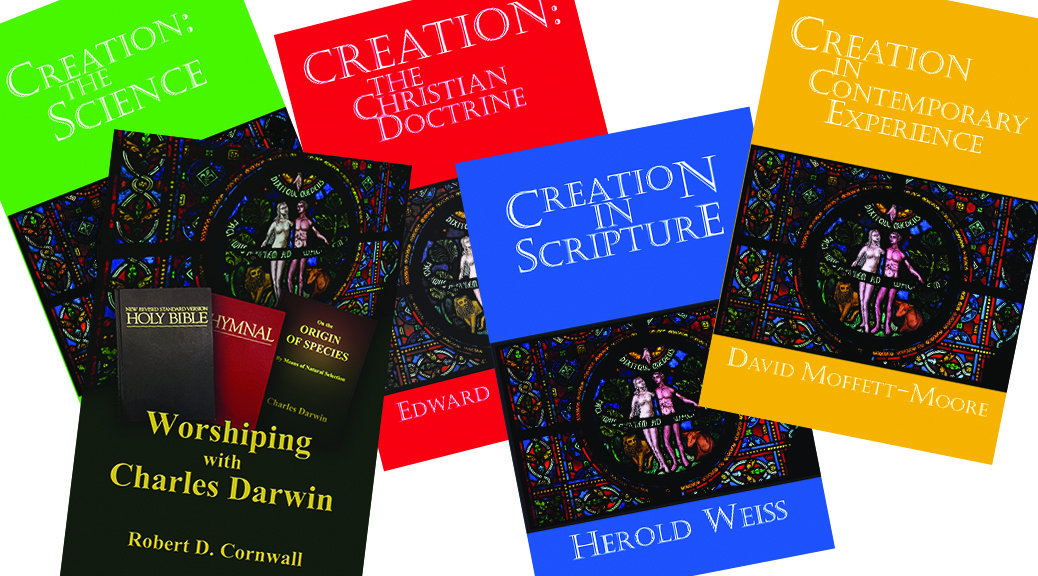
    creation-5We’re starting a new series of posts on the Energion Discussion Network and the current author is my friend and Energion author Dr. Herold Weiss. He’s the author of the book Creation in Scripture, the first in a series discussing creation from the point of view of those who accept the theory of evolution. That note should tell you that Dr. Weiss’s work can be controversial, as are all discussions of this topic.

    I don’t happen to like the terms generally used, but it is generally somewhere between frustrating and futile to try to change language. “Creationist” has become the label of those who believe in a recent (read 6 to 10 thousand years) creation in a literal week, while “theistic evolutionist” labels those who believe God is creator but that the process of evolution is how he has chosen to diversify life here on this planet.

    Dr. Weiss does something in his first post in this series that tends to annoy creationists (using the definition above). He calls their view unscriptural. The typical view of a creationist is that their view is scriptural while the theistic evolutionist has chosen to ignore the Bible in favor of evolutionary theory. No matter how strong the evidence for evolution (and they will, with few exceptions, maintain that it is weak), they would not see how it could override the Word of God. So the argument, at least as they generally present it to me, should be couched in terms of their strong convictions about scripture and the weak convictions of the theistic evolutionists, which are to be defended.

    But neither I nor Dr. Weiss thinks our position is biblically weak. In fact, I did not change my view from a young earth creationist, which I was until some time during my third year in college, because I had studied evolutionary science. My science requirement was fulfilled in a chemistry class, taught, by the way, by a young earth creationist. It was in doing research for a paper that I found that I could not reconcile the biblical texts on the basis required for young earth creationism. The starting point was chronology, and it wasn’t even comparisons with archeology. It was simply looking at what must have happened between two points in the biblical story, and determining that it was beyond extremely improbable; it was impossible. And further, there was no report of some sort of miracle to connect the dots.

    From there the question changed for me. Why is God presenting the story in this manner? (I’m ignoring here all the things I have come to believe about biblical inspiration over the years and discussing my thinking at age 20.) From there I started to ask just what it means to me that God is the creator and how that doctrine reverberates through scripture.

    And this is what I think creationists can learn from Dr. Weiss. No, I’m not suggesting they will all read his book and decide to become theistic evolutionists. He isn’t even trying to make that case in the book, and I know my own views would be unlikely to change in reading one book. What he does that is important is look at how creation, and its implications, is presented in various parts of the Bible. Creationists seem to me to be hung up in Genesis 1-3, important chapters to be sure, but not the only thing in scripture on the topic. And yes, I do think these chapters are important, even foundational, even though I read them differently. And no, I’m not claiming that creationists are ignorant of all other passages. What I’m suggesting is that they are not brought into the discussion enough.

    Too much of the debate about creation and evolution is concentrated on when and how and too little is focused on so what now?.

    I think it would be great if we spent more time on the third question. Yes, we’d still disagree on when and how, and we’d still argue that both of those questions impact the answer to the third, but we might have a chance to shed a bit more light. I think Dr. Weiss has facilitated that.

  • According to John: Final Interview with Herold Weiss

    books1Well, I hope it’s not my final interview ever, and since we’re going to announce his next book, already under contract (and I have a preliminary manuscript in hand!), it likely won’t be. But it’s a wind-up interview for my study of According to John using Dr. Weiss’s book Meditations on According to John. You can find out more about the interview on the Google+ Event Page, or simply come back to this post and use the viewer embedded here.

    Be sure to post any questions in the comments here and I’ll ask Dr. Weiss during his interview.

  • Review of Creation in Scripture by Herold Weiss

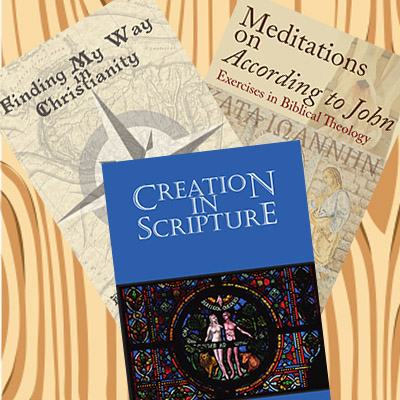
    Creation in Scripture by Dr. Herold WeissHanz Gutierrez has reviewed Creation in Scripture by Herold Weiss on the Spectrum Magazine web site. Spectrum is published by the Association of Adventist Forums. Many may not realize that Dr. Weiss is Seventh-day Adventist, though he clearly differs with the officially proclaimed church view on creation. He describes his journey in another book, Finding My Way in Christianity.

    I commend Creation in Scripture (note that I’m the publisher, so that’s likely!) because it looks at multiple views of creation in scripture. Each of these viewpoints can help us understand something about God the creator.

    Here’s a YouTube of Dr. Weiss talking about God the creator and creationism:

  • Thomas Hudgins Looks at Literal in Translation

    The term “literal,” when used regarding translation, can drive translators quite mad, I think. But it is a commonly used word in the pews and the hallways of churches. “We don’t take things that literally around here,” is something I hear regularly in United Methodist churches. Which leaves the question of just how do we take it, if we bother to take it at all, quite unanswered.

    Thomas Hudgins, in his post Thinking about What’s Literal says, “This whole concept of ‘literal’ is really misleading.”

    Go read his post and discover what concept of “literal” he’s talking about and why he thinks it’s misleading.

  • Words from the Mouth of God?

    In comments to an earlier post one reader notes that there are those who call the Bible “words from the mouth of God.” I respond that I do not think the Bible is words from the mouth of God, but rather the testimony of people’s experience of God. There are those who think I diminish the authority and power of the Bible in this way. I disagree. I think that the testimony that results from the experience of God is much more valuable, and I believe it also more accurately reflects the nature of the biblical text itself.

    I believe that it’s valuable to be able to distinguish the nature and function of various portions of scripture. While all scripture is inspired, not all scripture is produce in the same way and it does not necessarily function in the same way. There are some obvious examples, such as the speeches of Job’s friends in the book of Job. That is surely quite a substantial amount of writing that is not words from the mouth of God. One may say that it is inspired and that it is profitable, yes, but in words that the book of Job actually attributes to God, we are told that it is not God’s message in those passages. They contribute to a message provided by the book, but the words are not God’s words.

    Now most people who talk about verbal inspiration are not surprised by this sort of statement. There are also those who point out to me that it’s God’s Word, but not necessarily God’s words in all cases. It seems to me, however, that we might as well just come out and say it. Often our affirmations about scripture get in the way of what scripture actually is and how it functions.

    I prefer to say that scripture is the testimony of those who have experienced God, brought forth in various ways using various forms. It is providentially preserved by God as the message that we need. It begins with an act of God (which may be an act of communication, but it might even be a permissive act, or lack of action, such as permitting the Assyrians to come against Israel (2 Kings 17). It might be reported as the words of God, as much material in the prophets is reported. It might be reported in the form of a story, or history researched and reported, as in Samuel-Kings. It might be a letter written to a church as in many of the epistles of the New Testament. In the end, it must be recognized by the community and then interpreted, in all cases providentially guarded by God. (Of course, we realize that in the interpretation, at least, God’s providence does not prevent our error or even our stupidity!)

    Much of our discussion of inspiration centers around how the original text came into being. This is, indeed an interesting topic, but the majority of our differences come not from potential differences in the source texts but rather from our ways of interpreting them (see my post yesterday, Book: I’m Right and You’re Wrong). Further, I think our affirmations about inspiration often fly in the face of what we actually observe in scripture. This can result in us trying to make scripture fit our conception of what it ought to be.

    If nothing else, the incarnation, in which God acts very much contrary to what everyone expects, should suggest to us the dangers of trying to force God’s actions into our molds. But it seems to me that we do this with scripture.

    Consider Isaiah 7:1-17. This contains the famous “virgin” passage, but that’s not what I want to discuss. Read the passage carefully and look who’s talking at various points. I identify a narrator who gives the historical situation and then reports that Isaiah got a word from the Lord with instructions for action and a message to give to Ahaz. We also have a report on Isaiah’s action, and then some words that Isaiah said, some of which appear to be the words of the Lord, but some appear to be Isaiah simply expounding on what God is going to do. This entire passage is part of an overall Bible book which includes more than one type of literature, and even includes an historical interlude, but only a fraction of the whole claims to actually be God’s words.

    There are those who think I make these comments because I don’t believe the Bible is very historical. I would note that I am not very disturbed by those who are skeptical of the historicity of many Bible passages. But I really find relatively little in the parts of scripture that actually claim to be history that I cannot accept as at least generally historical. What I mean here by “generally” is that I treat an account that says it’s taken from the “chronicles of the kings of Judah” (1 Kings 14:29 and many other references) as precisely that: it’s taken from the chronicles and it has precisely the historical veracity of those chronicles, always adjusted for second hand reporting. I don’t see it as necessary or valuable for God to “fact check” the sources. The message (word) of God is conveyed by the testimony (words) of a human writer depending on the words of other human writers.

    Considering that those words will in turn be interpreted by very limited human beings such as me, I’m pretty happy with that situation.