Threads from Henry's Web

Category: Religion

All posts relating to religion, including those on the relationship of religion to other fields, such as science and politics

  • Eschatology: Daniel 8 with Intro to Daniel 9

    Update: I want to provide two reference links. These are not specifically recommended as better than others, but rather as somewhat representative of their category. The first, giving Daniel 9 (the 70 weeks prophecy) in an historicist context, is The Seventy Week Prophecy of Daniel (Bible Light). The second, showing a futurist interpretation, is Daniel 9:27 Commentary on the site Precept Austin. These two are largely recommended by being at the top of the Google results. In print I use the SDA Bible Commentary for historicist material (and related Seventh-day Adventist literature) and a variety of critical commentaries on Daniel for a 2nd century BCE termination for Daniel 9:27. There are a number of other positions as well.

    I’ll spend a little bit more time on Daniel 8 and its interpretation and then look at Daniel’s prayer and some introductory issues on Daniel 9. Next week, April 14, I will be joined by Elgin Hushbeck, Jr. to discuss the time prophecy portion of chapter 9.

    Google+ Event Page

    YouTube

  • Eschatology: Daniel 8

    Eschatology: Daniel 8

    Some Eschatology SourcesTonight I’ll continue my study of eschatology by looking at Daniel 8. This is a fairly straightfoward chapter to interpret with a great deal of the interpretation provided right in the text. The most interesting element, I believe, is to look at its place in the structure of Daniel and how it impacts our understanding of other visions.

    In addition, as a former Seventh-day Adventist I will look at the Adventist (not just SDA, but advent movement) interpretation of Daniel 8:14. The SDA view of this verse sheds light on a number of significant elements of hermeneutics. In fact, the doctrine of the investigative judgment, which eventually grew up out of the early interpretation of the verse is one of my key doctrinal disagreements with my former denomination.

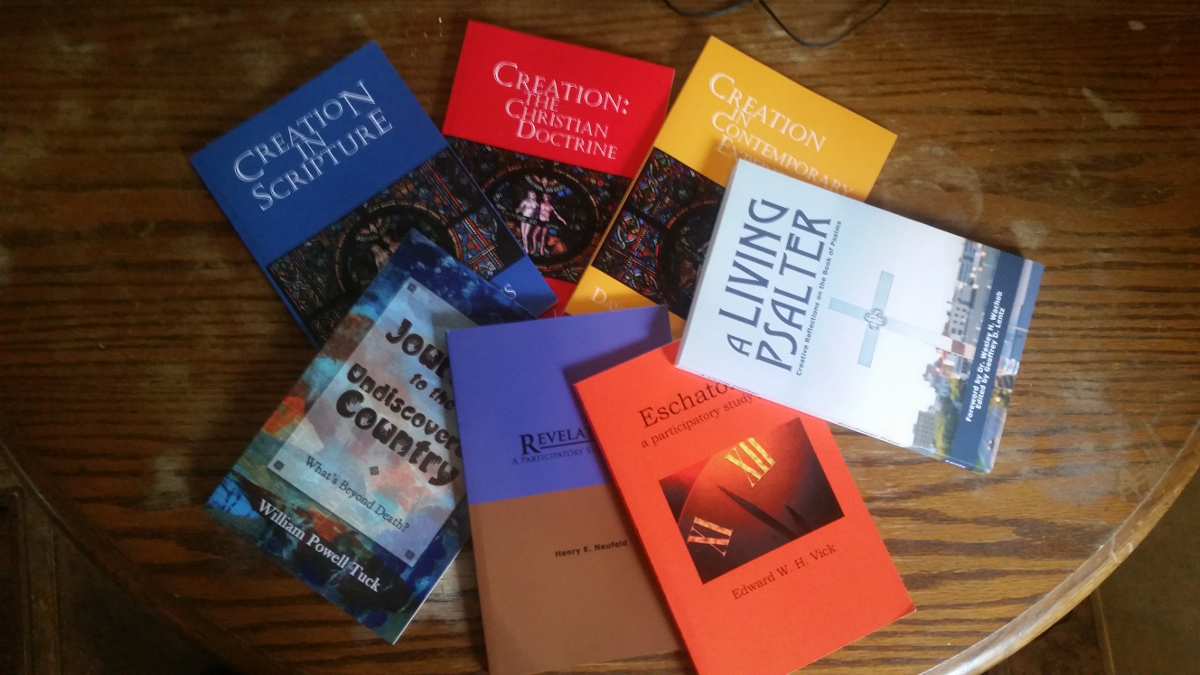
    As background for this discussion, let me recommend the following two essays by Dr. Edward W. H. Vick, who is also the author the the book Eschatology: A Participatory Study Guide, with which I began this series.

    1. 1844 – 1: Between the Disappointments
    2. 1844 – 2: After the Disappointments

    Here are the links for tonight’s discussion:

    Google+ Event Page

    YouTube:

  • Seven Marks: Fervent Prayer

    Seven Marks: Fervent Prayer

    nt church booksThe sixth mark Dave discusses in Seven Marks of a New Testament Church is fervent prayer (pp. 39-42).

    There are a variety of views of what it means to be “the church” or what it means to be Christian. For some, it’s a matter of holding the correct set of beliefs. One knows that certain things are true and one gathers with other people who know the same things are true, and this is church. Evangelism, in that case, is convincing other people that the things one believes are true and thus they should join this group.

    I exaggerate a little bit here to make a point. I think prayer brings out a problem with this view, and it’s one that has been building through Dave’s book. Notice that all these marks of the church are activities. Dave quotes Acts 2:37-47 on pp. v-vi of his introduction. You might want to read that now. Notice that the description of the church is active. God is acting in the church and so are the people.

    Now I don’t want to suggest replacing believing or knowing with doing. Doing must result from knowing in some sense or from instinct and habit. Even the idea that doing is important involves thought and belief. Often, however, we can tell more about what we actually believe by what we do than by what we claim.

    I recall going to teach about prayer at one church. The prayer coordinator was dismayed at the low attendance of the conference. She told us that the church had determined that prayer was their second priority. In that case how could so few people attend a conference on prayer scheduled by their prayer ministry?

    The answer, I suggested, was to observe what people did, and particularly how money was spent. In particular, look at your property. How is it arranged? What have you spent money on? How much of your money has gone to sports facilities? How much to education? How much to outreach?

    Now I absolutely don’t want you to read that as a negative view of sports facilities. Used well, sports facilities can be a critical element of outreach, and in turn a focus of prayer. The question is what you are actually doing.

    In fact, the measurement of the commitment to prayer should not have been attendance at a prayer conference, but rather time spent in prayer, a prayerful attitude, and ultimately establishing lives of prayer. A conference might help that. Since I have offered a few, I’d like to think so! But one can spend amazing amounts of time in a conference on prayer without actually praying. One can have a nice looking prayer ministry, while neglecting prayer.

    Do we really believe in prayer? I’m not asking what miraculous things prayer can bring, but rather whether we believe prayer can provide communion with God. That, in turn, leads to asking whether we believe God is active in our lives, our churches, and our communities.

    The evidence of prayer in the American church suggests that we don’t. We may believe in prayer as an occasional spiritual discipline on the one hand, or as a means of pushing God into doing things that we want on the other, but as a means of communing with God, either we’re not sure it will work, or not sure we want it.

    Dave talks about an “attitude of prayerfulness” (p. 40). Such attitude is a reflection of belief and practice.

    I want to illustrate this by quoting from one of the other books I’m following through this series:

    Some congregations make a decision by voting; but many churches learn to choose through the process of discernment. Discernment, as it is used in everyday language, has to do with sifting through the information we’ve been given in order to decide a course of action. In the church, discernment describes the prayerful process of making a choice in light of the inspiration, leading, and guidance of the Spirit.

    Discernment can be practiced by individuals or by groups. When transforming congregations make use of discernment as a decision-making tool, they place their choices in the context of God’s transforming activity, assuming that they are called to something larger than self-interest and partisanship. Through discernment, they imagine not just what they want to do, but how they might share in God’s New Creation through the choices they make. (Thrive, pp. 126-127)

    This is a test for belief and practice. Can and will the Spirit guide our discernment? Will prayer help us in discerning what the Spirit is doing and where we can become part of that activity?

    There is a huge difference between having a short prayer at the beginning of a meeting in which you then carry out the normal business of debating (or arguing) and then voting and one in which one seeks to hear the Spirit and come to a consensus. The latter requires a certain amount of trust!

    In discussing the early church’s beginnings and prayer, Bruce Epperly (Transforming Acts, p. 26), under the heading “Don’t Do Something, Wait Prayerfully” says,

    In the wake of the ascension, the apostles return to their meeting place and, for the next several days, constantly devote themselves to prayer. We don’t know the nature of their individual prayer practices. They may have been a blend of quiet contemplation, praise, intercession, celebration of Jesus’ last supper, and thanksgiving. But prayer was their priority as  a community before they undertook any action. They knew that God’s power was coming, and also knew that power without prayer is destructive to us and others.

    “Power without prayer is destructive.” I fervently agree. Fervent prayer is a critical mark because it sets us up for everything else, just as it did the early church.

  • Translating Poetry

    On March 24, 2016, blog entry marked 11:40 AM, Dave Black talks about translating poetry and links to his essay on the topic from a Festschrift, available via Google Docs.

    Reading Dave’s comments about translating poetry reminded me of one of my favorite translations of poetry from any language to any other, Max Knight’s translations of Christian Morgenstern’s German poetry. You can find samples here. I particularly like Der Lattenzaun/The Picket Fence, but Die Trichter/The Funnels, which Knight translates twice, provides another good example.

    Translation is a creative activity. When the material is very technical, the room available for creative activity, or better the necessity for it, may be lower, but it’s still there. Communication is not easy, no matter what one is trying to communicate, and when one is trying to communicate many things (and often a good writer is doing just that), the translation becomes more difficult.

    In the case of Bible translation, we multiply these problems because we are trying to translate a variety of literary genres across a gap of history and culture, which, in addition, either have or have acquired theological meanings that may relate to times before or after their composition. There’s a great deal of freight in the text and hanging onto it for dear life lest it be lost along the way.

    Into this perilous swamp comes the translator, trying to jump from one foothold to another, always hoping the foothold is not the back of a sunbathing alligator. (Try translating that murky metaphor for comprehension by a desert-dwelling tribe. I dare you!)

    But I don’t see the difficulty of translation as a major problem for Christianity. The major problem I see is that we are afraid of the creativity of translation. We should, embrace it, enjoy it, learn from it, and live it.

    Now that I think about it, we’re afraid of the creativity of communicating, discussing, and embodying the message in our own language.

    As I read a passage like the first chapter of Ezekiel I see a prophet’s creativity challenged. Ezekiel struggles for words. (I wrote a bit about this earlier on the Energion Discussion Network.) One commentator “cleaned up” Ezekiel’s prose and made it rational and orderly, discarding a large portion of the chapter in the process.

    But Ezekiel the prophet is trying to be a translator for us, translating his experience of, his vision of God into terms that can communicate with us. It isn’t easy for Ezekiel. It isn’t easy for me. I don’t think it’s easy for any translator.

    I want the translator to be a good linguist, but I also want him to be able to feel and experience along with Ezekiel and then creatively transfer this vision of God to me as an English reader. Will I get precisely what Ezekiel got? No. Not a chance. But I can get a glimpse of God’s glory as Ezekiel did, as I hope the translator did, and as I hope is conveyed through a good, creative translation.

    Poetry especially deserves this sort of creativity. And we shouldn’t fear it. People often act as if any sort of creativity in Bible translation means the message is being lost. But that is our modern desire for a compendium of facts about God.

    I came out of my MA program in seminary with a compendium of facts and I promptly left the church. I came back struggling with texts I found hard to comprehend, hard to translate, and even harder to live.

    The struggle is greater than the catalog. Every. Single. Time.

    But the facts conveyed by a vision like Ezekiel 1 or a powerful, intricately structured poem such as Psalm 104 are actually relatively few. The glory conveyed is beyond comprehension. I’ll go for not one creative translation (even my own), but for many. I want to try to comprehend the “the love of Christ that surpasses knowledge” and there’s no way I’ll do that with just the facts.

    God could have provided us with a systematic theology, carefully tagged with paragraph and subparagraph numbers, footnoted with additional explanations, structured so as to miss nothing. God didn’t do that. I think God did it intentionally.

    That’s why I’m less critical than others of Bible translators, less willing to say they got it wrong. It’s not that I think they are without error. It’s just that I have such great respect for their willingness to get in there and try.

    I think it would be wonderful if we all encouraged them and gave them the freedom to creatively pass to us the message they experience.

    And all of us, with unveiled faces, seeing the glory of the Lord as though reflected in a mirror, are being transformed into the same image from one degree of glory to another; for this comes from the Lord, the Spirit. (2 Cor. 3:18, NRSV)

    Or perhaps:

    … And when God is personally present, a living Spirit, that old, constricting legislation is recognized as obsolete. We’re free of it! All of us! Nothing between us and God, our faces shining with the brightness of his face. And so we are transfigured much like the Messiah, our lives gradually becoming brighter and more beautiful as God enters our lives and we become like him. (2 Cor. 3:16-18, The Message)

    Or perhaps …

    It’s not by our efforts to get it all right that we remove the veil and see clearly. It’s by turning to the Lord. The Lord is the one who can make us see clearly in spiritual things, because the Lord is Spirit. So when we look in this way, we can contemplate the Lord’s glory and that is what will transform us from glory to glory. (1 Cor 3:16-18, my paraphrase, applying it now, good until the next time I read it)

  • My Church Preferences

    My Church Preferences

    johnny-automatic-church-300px
    From Openclipart.org, johnny_automatic.

    A few months ago a friend, commenting on my approach to publishing, and really to many other things, said, “It’s hard to be both a prophet and a facilitator.” Now he wasn’t talking about the way a prophet might get his or her words from God, but rather that prophets advocate ideas. Facilitators encourage others to do so and to enter into dialogue.

    He’s absolutely right, and this is demonstrated by my post today on the Energion Discussion Network, Toward a Biblical Church. In it you might say I’m advocating for diversity, or perhaps trying to facilitate discussion of our diverse views of church that we have in the Church. I think Paul does a rather good job of this in 1 Corinthians 12. We often read just the sections that talk about us being one. But Paul is talking about how we can be one body while coming from diverse places and backgrounds, and he doesn’t say all those differences are eliminated, but rather that they cease to be central when we’re in this one body.

    We would do well to study 1 Corinthians, and particular chapters 12-14, regularly in the church. Paul is looking at precisely the sorts of problems we have in many of four churches today, and his prescription in chapter 13, applied in chapter 14, is also still quite applicable. I do note that we can only wish that we had some of the Corinthian problems, such as too many people coming to church filled with excitement and a desire to express what they’ve heard from the Lord. But we do have ample portions of the problems of factionalism and self-centeredness.

    Is there a way to advocate changes in our church organizations, whether at the denominational or congregational level, without also implying that everyone else better do it the same way? That’s what I’d like to do. If you’ve read any of the books I linked in my EDN post, or some of my posts on Seven Marks of a New Testament Church, you’ll know where I got these.

    1. I’d like to see a church where Jesus is acknowledged as the senior pastor. I’m not as concerned about what we write on signs or church bulletins, though I’d be pleased to see Jesus listed there. My problem is that I think we might list Jesus on the sign and then keep on living just the way we did before. “What would Jesus do?” has become a slogan, often used just to claim that Jesus would support what we wanted to do in any case, but it’s also a very good question—if we let Jesus answer it.
    2. I’d like to see a reduction of church facilities. In fact, I like the idea of house churches, and one of the major reasons is that we cease to spend so much money on the physical structure. Some churches rent space temporarily, and for them it’s a stepping stone for the time when they can have a real church in a real church building. Perhaps living without a building should become a way of life.
    3. I like a church with accountability outside of itself. This is why I’m not really a congregationalist. But I could be. It’s quite possible for a church to make itself accountable to others, and to live in an accountable way by being open and honest, especially in finances.
    4. I’d like to see a church that empowers youth. “Empower” is often seen as a buzz word, but it’s a good one if it’s actually put into practice. The church can be a safe place for those who are young or inexperienced to learn. This would involve sharing in all aspects of church life, with appropriate levels of support and supervision. That young person in your church who feels called to a preaching or teaching ministry should have the opportunity to practice.
    5. I’d like to see a church where many people share. Many churches center around the pastor and his or her preaching. That’s what brings people in. How about testimonies, short messages from various congregants, presentations by experienced people other than the pastor, and hearing from those who are learning to share? In a seminar on faith sharing I sponsored, I recall that only a small portion of the people who came to the class felt comfortable talking about their faith. Where better to get comfortable than in church?
    6. I’d like to see a church where members could safely explore ideas. Our focus is often on making sure we have good doctrinal statements. What I’ve found, however, is that few people actually know what those statements say. I honestly don’t think that this problem will be corrected by more talking from the front about the doctrinal statement. People’s minds and will must be involved, and that means allowing exploration.

    None of these things require a particular variety of church organization, though in many cases, existing church and denominational structures will work against them. I’d like to emphasize that even though I have a hankering after house churches, I am a member of a regular United Methodist congregation. I’m not trying to beat up on people in regular churches.

    But the Holy Spirit may be. That’s another story!

  • Good Friday

    It’s the evening of Good Friday and I find myself a bit too tired to blog coherently or to come up with some uplifting words. I generally try not to write when I feel this way. No use spreading the weariness around.

    But of course Good Friday was a day that made something like my weariness of the moment trivial and insignificant.

    On the other hand, perhaps, as God participated through the incarnation in our human activities, it has all been elevated to a new importance. It’s a matter of perspective.

    I did find some good reading today. Dave Black talks about looking for what’s real. In Good Friday and Easter God’s integrity and completeness in giving to us calls for such integrity also from us. I was reminded by Dave’s post of a question I was asked shortly after returning to the church. I’d been away for 12 years following graduate school and most people were inclined to think this was because I had found out something about the Bible I just couldn’t live with. So I was asked what was the most important apologetics tool one could have. I said, “A church that is truly following Jesus.” Not the intellectual key to certainty the questioner wanted, but I stick with the answer.

    Then Steve Kindle, editor of our Energion Discussion Network, posted On Warming Ourselves by the Fire. You owe it to yourself to read that and then prayerfully think about what God’s call might be for your life.

    I suspect a bit of weariness truly is a small matter.


  • Caring about Credibility

    Caring about Credibility

    9781631992230mI’m sometimes disappointed with posts that don’t attract comments compared to those that do. I’m not talking about my site, where comments are few and far between. Right now I’m looking at a post on the Energion Discussion Network, titled Credible Christians for a Credible Gospel. It was written by Allan Bevere, and makes an important point.

    The gospel is credible in and of itself, but it only gains credibility as it is demonstrated by individual saints and the church collectively in the good works that bear witness to God’s kingdom.

    We talk about grace, and that’s good, but grace accomplishes something in us. Do our beliefs make a difference? Can people see that?

    I invite your comments over on EDN.

  • Eschatology: Daniel Verse-by-Verse III

    I am a bit rushed, so here are the links without much comment.

    Google+ Event Page

    YouTube:

  • Eschatology: Daniel Verse-by-Verse II

    I’m continuing with the dream of Daniel 2 and hopefully connecting it to the golden image of Daniel 3. I’m grotesquely short of time, so will spend it both reading and doing what has to be done!

    Google+ Event Page

    YouTube:

  • Seven Marks: Christ Centered Gatherings

    Seven Marks: Christ Centered Gatherings

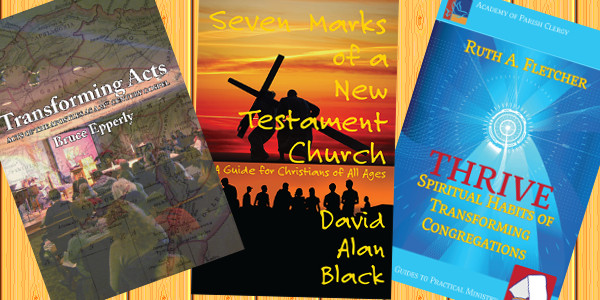
    nt church booksIt has been some time since I posted my last installment of my discussion of the book Seven Marks of a New Testament Church by David Alan Black, along with some commentary from the books Transforming Acts: Acts of the Apostles as a 21st Century Gospel, by Bruce Epperly and Thrive: Spiritual Habits of Transforming Congregations by Ruth Fletcher. My most recent installment was actually an excursus, Is There Such a Thing as a New Testament Church?. (You can find most entries in the series by searching for the words “seven marks.”)
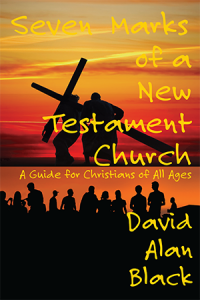
    9781631990465mI find this topic as a whole, and this chapter in particular, are examples of a topic where we should read material from people outside our own tradition. We need to strip away some of the “stuff” that has gathered in our denominations and churches that keeps us from being Christ-centered. It’s easier to be building-centered, tradition-centered, or us-centered. All three of my authors suggest things that would take us away from those three centers and ask us to seek what is Christ-centered.

    Dave Black cites “They devoted themselves to … the breaking of bread.” in the heading to this chapter and indicates he sees this as a reference to celebration of the Lord’s Supper (also called Communion or the Eucharist). I was interested in how many references I had to choose from in all three books. One of the key points Dave makes is this:

    And how often was the Supper observed? If we compare Acts 20:7 (“On the first day of the week, when we came together to break bread….”) with Rev. 1:10 (“On the Lord’s Day….”), it seems that it was observed every Lord’s Day, that is, every Sunday. (p. 33)

    Of course, the frequency is not the most important point. I would suggest that the most important point is that this is something instituted by Jesus which calls us to remember his incarnation and sacrifice for us. It centers the act of worship around the person of Jesus who is, or should be, the center of our faith and worship. Thus, “Christ-centered gatherings.” Now there is more than performing a certain ritual to a Christ-centered gathering. In fact, if your communion service is just an act of ritual, you may well have a problem in your church. Let me bring in Ruth Fletcher on this point:
    ThriveBecause individuals who participate in the worship life of transforming congregations will have an active daily prayer life, images and words they encounter in the corporate worship will connect them with experiences of the Spirit they have had during the week. A phrase in a song, in a reading, or in the proclamation may well remind them of a time in which they experienced a call upon their lives, a clarity of purpose, or an impetus to take compassionate action on behalf of someone else. Those moments of resonance will be what infuse the worship service with a sense of integrity and power.

    Worship in transforming congregations will offer reminders of what the congregation is trying to become. (p. 134, emphasis mine)

    I would note that Dr. Fletcher is part of a denomination that practices communion on a weekly basis at every worship service. The question here is the next step. Why is it that we want to have Christ-centered gatherings? I think it is because of the last line, which I have highlighted above. We come together to center ourselves on Christ, and thus to prepare to be the body of Christ in the world when we leave in whatever way the opportunity presents itself.

    This is critical: If your worship service is not leading you to service, to acting as the hands and feet of Jesus, to being a witness, and to proclaiming the good news, it can hardly be Christ-centered. Certainly we focus on Jesus, but if we do so simply to get a dose of “specialness” for ourselves, to satisfy our own emotional, spiritual, and social needs we will fall short. By this I don’t mean that our spiritual needs are unimportant. They are, in fact, critically important. But they will never be satisfied unless we carry what we experience in worship out to wherever it is we go during the week.

    Now think of your last worship service. How much of the “worship service” led to actual service out in the world? I suspect that it cannot be real worship in the sanctuary of a church unless it leads to the presence of Christ, through you, outside. We tread the room in which we meet as a sanctuary. It even has some architectural similarities to a temple. But it is each one of us as a group, no, better, as a community, who is filled with the Holy Spirit and called the temple of the Holy Spirit.

    I would say that communion then is:

    • Christ-commanded
    • Christ-centered
    • Christ-commissioned

    And we are the body of Christ, commissioned to be his body in the world. What better way can we have to remind us of this than to participate in communion?

    I would like to suggest further that communion, and likely church fellowship in New Testament times was not a large amount of liturgy with a moment when a small piece of bread is provided and dipped into wine or juice, for that one moment of “communion.” Rather, when the saints gathered, they shared a meal. Many of our churches are too large to share a meal on this basis, and that in itself may be a problem. Large churches, of course, can have small groups that gather and have this type of communion. If we are to spur one another on to good works (see Hebrews 10:24), we need to see one another, hear one another, and know one another. In such a circle we can draw our community together and prepare to extend our circle.
    9781938434648sBruce Epperly notes:

    The story of Philip and the Ethiopian eunuch reminds me of the origins of the American denomination, the Christian Church (Disciples of Christ). From the very beginning, Disciples of Christ have practiced open communion and have been a model for the ecumenical movement’s communion hospitality. In the early nineteenth century, Thomas Campbell, a newcomer to the United States from Ireland, was appalled by sectarianism among religious groups in the new nation. Even Presbyterians from different sects would not take communion with one another. Inspired by his vision of the New Testament church, Campbell welcomed everyone to the Communion Table. “Don’t fence the table,” he proclaimed. “Anyone who seeks to follow Jesus as the Christ is welcome, regardless of denominational background.” As early Disciples of Christ proclaimed: “We have no creed but Christ.” Our unity in Christ and our allegiance to Christ compels us to expand the circle of his love to include everyone. (p. 78)

    I think that there should be nothing that does not lead us forward into a new sense of mission. But what happens in our churches? Do we feel a welcome such that we are nearly compelled to share this with others? Some may object that the call is not to the church, but if the church (building) is where the church (the body of Christ) meets, then should it not be inviting people to it as Jesus did? When Jesus Christ was here in the body, people flocked to him. He didn’t have to hunt for them because there was something there that they wanted.

    We need that attractiveness and welcome in the church. Not the excitement of new glitzy programs, entertainment, and excitement, but the welcome that says that here is a place where the longing of my soul can be satisfied. Here there is not just a building but a community of people whose unity and love for one another is so special that I want to be a part of it, and that they welcome me to be a part of them.

    I’ve met people who want to be prophets. Some have asked me to pray that God would call them as such. I always ask them if they are aware of the kind of life led by prophets in scripture. Is this what you really want? Similarly we need to ask ourselves about being the body of Christ. If our gatherings are Christ-centered, they will not be “me-centered.” If we are to be the body of Christ we must remember what happened to the body of Jesus, the Christ. Then, as we look to close our doors to those in need, even to our enemies, to those who hate and would kill us, we need to remember who it was that He gave his life for.

    Christ-centered? We need it. We claim to want it. Do we want it enough?