I believe that it’s easy to let our theology keep us from reading the Bible, especially the narrative parts. The Bible is filled with stories. One example is the story of the flood. When Genesis 6 says (using the KJV), “It repenteth me that I have made man,” the first reaction is to try to explain how God didn’t really repent, thus preserving doctrines of omniscience expressed particularly in foreknowledge. A vigorous desire to preserve one’s theology can prevent one from hearing the story as it is actually told.
Jonah is just such a story. It’s very easy to make this a story about obeying God. The story was explained to me when I was a child as an illustration of the bad things that could happen to you if you went against God’s will. Another lesson, often taught at the same time, is that God can and does work miracles. Many people have seen belief in the whale (really more like “great fish”) as a test of one’s belief in the truth of scripture.
But to spend our time on the reality of the great fish, whether to disparage the idea or uphold it, is to stray from the story.
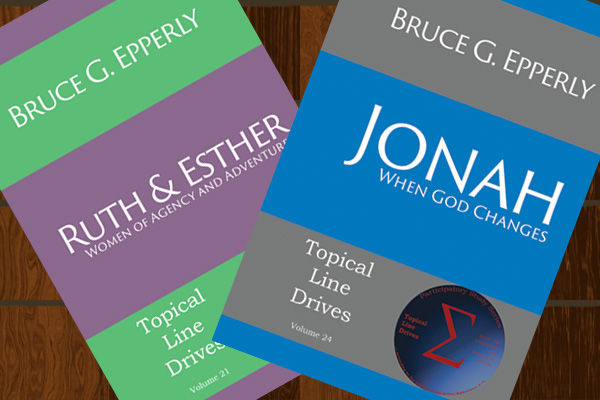
I’ve been delighted to publish a couple of books by Bruce Epperly that deal with Bible stories from a less theologically defensive position. Bruce tends to let the stories speak and as such he gets lessons from them that we might otherwise miss. A few months ago we released Ruth and Esther: Women of Agency and Adventure. I commend that study to you.
This week we released another book about stories, Jonah: When God Changes. Just the subtitle is likely to unsettle a few people. I think it’s good to be unsettled. I think that Jonah was unsettling when it was first written and it was intended to be.
We often have to work hard to love and care for people who are actually very similar to us. We tend to discount the command of Jesus to love our enemies. But in Jonah we have a call to love people we now hate—and with good reason!—and to take God’s message to them. While Jonah’s message sounds like a “fire and brimstone” sermon, it becomes a call to salvation, just as Jonah feared it would (read the last chapter)!
Bruce really works this little book and calls to our attention things we might normally miss in pursuit of theological comfort. I suggest that you give up that comfort and read the book!
#contextchangeseverything – yes, it does. But how?
With the vast array of Bible study materials that are available in the English language comes a problem. How does one choose what materials are worth my time, shelf space (or HD space!), or money? If you search my blog for posts about study Bibles, you’ll find that I have a love-hate relationship with them, and it tends to be mostly hate. Nonetheless, I own—and use—a variety of study Bibles, and you’ll even see some positive reviews.
The reason for the hate side of the equation is that far too many people purchase a study Bible that’s recommended by someone they trust, or even written by someone they trust, not to mention randomly selected from a bookstore shelf and then accept what the notes say because they are written by biblical scholars after all. I recall being accosted by a church member some years ago who asked me about the notes on a particular text. I can’t even recall which text it was. Her problem was that she couldn’t figure out how the meaning presented in the note could be extracted from the text itself. I strongly recommend asking just such a question! I asked her if she’d considered the possibility that the note could be wrong. That was a revelation for her.
What I recommend is that a reader make sure to get study Bibles that are written from different perspectives and use them as an aid, not as a source of the answers. To some extent one should study the Bible text first, and then the notes, but sometimes one can read background material first. A study Bible that provides notes that tell you directly what the passage means can be quite convenient, but also quite misleading.
But one of the key problems for Bible students in the 21st century western world is the extent to which our culture is different from that of the world of the Bible. Very frequently what seems quite plain to us is not at all what the Bible writer is trying to say because we simply don’t share enough of those norms. I have come to believe that I have benefitted more by coming to understand human culture and language over the last 30 or so years than I have by learning the biblical languages. I do not mean to underestimate the value of learning Greek and Hebrew, but if my language learning had not been enhanced by the study of linguistics, history, sociology, and anthropology, it would have been of little value.
Pastors frequently proclaim that “the Greek word ____ means” or “the Hebrew word ____ means” and then build their exegesis on what is essentially simply another gloss. This makes people believe they have been enlightened by the ancient languages, when they have actually simply transferred their 21st century attitudes and presuppositions to a set of sounds they are told is Greek or Hebrew. Understanding a language means to some extent understanding a culture. Similarly understanding a text means understanding something about the person or persons who wrote it and the audience for which it was intended.
This is the key element that I believe a study Bible can provide. Certainly cross-references and historical connections are important, but letting the reader know how people in that time and place lived and thought is much more important.
NIV Cultural Backgrounds Study Bible
NIV Cultural Backgrounds Study Bible on my Android Tablet
(Note: I am basing my notes on the Olive Tree Bible software edition provided to me free of charge as I did not receive my print edition. I will not make comments on the layout or usability of the print edition.)
Thus I come to the NIV Cultural Backgrounds Study Bible. They use the provocative (and obviously true) URL contextchangeseverything.com. I should note here that there are many types of context. There is a literary context, historical context, linguistic context, and (among others) cultural context. We usually think of context in a fairly narrow linguistic sense. A word study might be done by finding a variety of sentences that use a particular word. We know that when Jesus says, “Go and do likewise” we need to look at the context of what has been commanded. We can’t grab some other activity and make that the command of Jesus instead.
Study Bibles generally examine a range of these ideas as well as proposing interpretations for difficult passages, often without providing enough information so that the reader can follow the logic. The final reader is left with the simple logic that the skilled scholar who wrote the study notes concluded X, so X must be correct, an assumption that will be severely shaken in many cases if one compares other Bibles written by skilled scholars.
The Cultural Backgrounds Study Bible aims to help you understand the Bible writers, their audience, and their times. In the notes you will find direct connections between ancient culture(s) and the text itself. Rather than just being told that a certain phrase means a certain thing, you will be given the reason why one might come to that conclusion. This is no guarantee that every interpretation is correct; that would be expecting the impossible. (Which perfect one of us would make the determination in any case?) What it does mean is that for most explanations in the notes in this Bible you can follow the logic path. If you want to, you can do deeper research, and the notes are specific enough that you’ll be able to do your search, Bible dictionary reference, or deeper study in a commentary or at a good library.
Since I’m not reviewing the Bible overall, but rather looking in particular at one book, I won’t spend more time on an overview. Let me simply say that I’m delighted with the intent, and quite impressed with the implementation. There are obviously limitations. This is a study Bible, not a multi-volume commentary or an encyclopedia. It would be easy to complain about what’s not there. In my review of the book of Hebrews, I believe that the editorial choices made were quite good. I would doubtless have chosen differently in some cases, as would just about anyone, but that’s only to be expected.
On to Hebrews
To study Hebrews most effectively using this Bible, start first with the introduction to the Old Testament. Why? Because Hebrews displays an interesting interplay between the text of Hebrew Scripture, seen generally through the LXX translation, and then interpreted in a particularly New Testament light. The details of how these elements interact require some discussion, and that’s why you study and compare, but you need to understand the sources. The introduction discusses 12 issues in which we will see the world differently, and I think all of these issues will impact your reading of Hebrews.
While reading the text of Hebrews you can use the links (if you’re using Bible software) or follow the references to Old Testament passages. You cannot impose your own exegesis of passages of Hebrew Scripture on Hebrews, but it is important to know not just the text that is quoted, but also its literary context that might be brought to the audience’s mind by the reference, and also by ways in which that text might have been understood. It is not sufficient to treat the Old Testament quotations in Hebrews as words used in the context of Hebrews. Of course, the context of their use in Hebrews is the most definitive when we determine how the author of Hebrews intended them, but we need to do everything possible to get into his (or her) world in order to understand that context.
This is the value of a volume like this. I’m currently reading a commentary on Hebrews that is more than 600 pages. I have another on the shelf in front of me that is of similar length. It’s hard to back off and get an overview of the forest using those commentaries, though both are extremely valuable. What I enjoyed with the Cultural Backgrounds Study Bible, even as someone who has read the book of Hebrews many times, and studied the works of many commentators on it, was this broader view. Having dealt busily with the trees, putting each leaf under a microscope, it was nice to get so much material easily available. (This is a general advantage with study Bibles over detailed commentaries, at least the better ones, but the Cultural Backgrounds Study Bible excels).
Content Comparison
I’m going to compare the content of several study Bibles I have on my shelf. Where I give word counts, they are loose estimates based on line counts and my eyeball count of average words per line. The Bibles I’m using to compare are: The New Oxford Annotated Bible (NRSV), The Orthodox Study Bible, The New Interpreter’s Study Bible, The NLT Study Bible, and of course the NIV Cultural Backgrounds Study Bible.
First, let’s compare sheer quantity of text. First, the introduction. (I’ll add a note on approach.)
NOAB: About 450 words, no outline, though an outline can be extracted easily from the notes. The approach of the notes is often technical. Users complain that they don’t get enough theological help.
OSB: About 220 words, short outline provided, stronger suggestion of possible Pauline authorship than others. Theology is consistent with that of the Eastern Orthodox tradition.
NISB: A bit more than 1000 words and a mid-length outline. The NISB is kind of the pastor’s answer to the NOAB for mainline teachers/preachers. It provides more theological reflection, a fact I receive with definitely mixed emotions, though the material is generally helpful in its place. Theology is mainline with a bit of a liberal lean.
NLT Study Bible: About 1500 words and a brief outline. Theology is strongly evangelical
NIV Cultural Backgrounds Study Bible: About 800 words, no outline, features “Quick Glance” section. Theology is evangelical.
Now let’s consider a specific passage, in this case Hebrews 4:12-13, and look at the quantity of notes, along with a count of insets or excurses in the whole text of Hebrews:
NOAB: 21 words. No excurses.
OSB: 54 words. One excursus.
NISB: 75 words. No excurses.
NLT Study Bible: 74 words. 9 excurses.
NIV Cultural Background Study Bible: 136 words. Two excurses.
The critical value of these notes is that they are aimed at the background and at helping you draw a line from the background to the meaning. I would say that the NOAB is great at pointing to technical details, but not so much at theology, while the NISB spends less time on technical details while using much of its space to reflect on theology. The NIV Cultural Backgrounds Study Bible uses its space in drawing a picture and pointing that to possible theological conclusions without trying to be a theology text.
Conclusion
Over the next few days I will post something on a couple of my favorite passages and the specific comments provided by this study Bible. I would consider this an excellent Bible to have at hand for a study of any biblical book. In my To the Hebrews: A Participatory Study Guide (currently under revision), I recommend that a study group have more than one study Bible available. I think it would be good for a group studying Hebrews to have this one at hand. One of the reasons my own guide is being revised is that it is largely a collection of thought questions. I’m going to provide more of a basis for those questions in the second edition. But the book will still be intended for use by a study group that has available multiple resources to compare. This will be one of the few that I recommend.
Note: All of these introductions to the book of Hebrews tend to dismiss Pauline authorship, with the Orthodox Study Bible being the most favorable. My own position is that it is not possible to determine the author. I used to exclude Paul as a possibility, but have been persuaded by the writing of David Alan Black that Paul should be kept as a possibility. I publish his little book The Authorship of Hebrews: The Case for Paul.
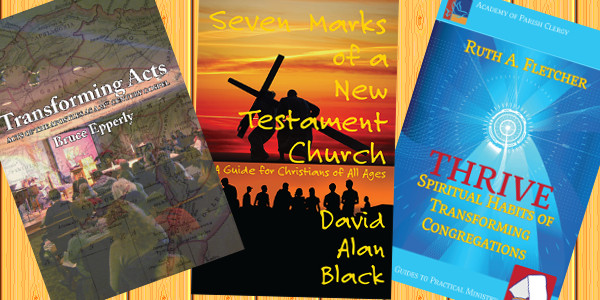
Here’s a video about a house church under the UMC banner. You won’t see anything “non-Wesleyan” here, or violations of the Book of Discipline, but you will see a creative and dynamic living out of the Christian faith. This is certainly a thriving congregation, carrying out transforming acts, and showing marks of a New Testament church!
Frequently when there is a crisis or any form of trouble, Christians call for prayer. These calls can take many forms. In addition, a common comment from Christians is that we will pray about a situation.
Now it’s quite possible that someone who says they will pray will limit their activities to just praying. It’s even possible that they won’t even bother with that. We are all human, and we often make insincere statements.
I think, however, that the majority both pray and also do other, concrete things. For those who have prayer as an important part of their spiritual life, it can be a critical part of action.
I discussed this with Dr. David Moffett-Moore, author of Pathways to Prayer, Life as Pilgrimage, and some other books, and I think he made these points extremely well.
It’s unfortunate that the common perception of prayer, a perception that is far too common in the church, is that prayer is primarily about getting God to do things our way, so that the test of the success of prayer is whether we get something or whether God’s (perceived) action changes. One of the primary ways in which prayer “functions” (a questionable word, but one that will have to do), is by changing us and driving our decisions and actions.
In preparing for my Sunday School lesson tomorrow I read some very high sounding words about settling for less: pleasure rather than joy, vengeance rather than justice, sentiment rather than beauty, and so forth. The source was N. T. Wright, quoted in the introduction to the Cokesbury Adult Bible Studies Uniform Series for the Summer of 2016.
The idea is not bad. But it is an idea that is easily corruptible. A pursuit of right-doing is a good thing until it becomes perfectionism, judgmentalism, self-righteousness, disdain, or any of a number of other ways in which doing good can become obnoxious and destructive. A love of learning is wonderful as long as it drives one to learn more and make use of that learning. When it leads to a superior attitude or an inability to hear the wisdom that may come from one less learned, it’s not so great. Beauty may be in the eye of the beholder, but so is ugliness, at least when “ugly” is defined as “not living up to my personal standards of beauty.”
We often express shock at the disciples, who constantly asked who was greatest in the kingdom. Why didn’t they get it? But we do very much the same thing. Constantly. A pursuit of excellence can become a pursuit of “more-excellent-than-ness” and can also result in a narrowing of vision.
I was talking to my mother at the end of May, just after she turned 98. She mentioned to me the “sacred four” professions. We had a song in Sabbath School (this was the Seventh-day Adventist Church), and it went, using my name, “Henry can be a missionary doctor, a missionary doctor, a missionary doctor….” Or it could be teacher, nurse (for the girls, of course), and minister (meaning pastor/evangelist, for the boys). Those were the “great” vocations to pursue.
My mother said she added farmer, janitor, housewife, and so forth. I remember her doing that. She’ bring in tools for each trade, and we’d have a hoe or rake for the missionary farmer, broom for janitor, etc. These were considered ordinary professions, but could be vocations as well. Why talk to your child about being a farmer or a building custodian, or perhaps a garbage collector? Because each of those things is an important vocation, as are many, many more. The real question is whether the person doing them will do them to the best of their ability and be a witness while doing so.
And that is the question for the “important” professions as well. A seminary professor can be a missionary, but so can every other person out there.
But we want a comparison scale.
Now don’t get me wrong. I’m not against pursuing excellence. That’s a good thing. What I’m against is creating these hierarchies as to who and what is the more important thing. Does your pursuit of your concept of beauty mean that you can’t appreciate something simple? Does your pursuit of better theology mean you can’t listen with appreciation to a Sunday School class taught by someone who worked in the fields all week? Does your desire to hear the perfectly-formed, homiletically brilliant sermon mean that you can’t listen to a speaker who wasn’t trained in those things but has a real-life walk with God to testify to?
I would suggest that a healthy pursuit of excellence leaves one appreciating excellence wherever it is found, not just in one’s little corner. A pursuit of beauty leaves one appreciating beauty in a wide range of places, seeing more beauty than others because one has beauty in one’s eye.
I like the sentiments from N. T. Wright I noted at the beginning. We do lose when we accept vengeance in place of justice. We need to pursue justice. We need to pursue those great things. But we also need to recognize greatness everywhere. The clerk who rings up your groceries and does it well is absolutely a great person.
This past Sunday the lesson was from Luke 18:15-17, Jesus blessing the children. Saturday evening, as I was thinking about this, a local church was promoting their variety of children’s programs and how that showed their care for the children. I know it’s probably unkind of me, but I was not impressed.
Yes, having children’s programs is better than ignoring the children. Having something for the children to do while their parents carry out the activities of the older folks is better than doing nothing. When we were overseas, my mother was often asked to donate to church building projects. She would always ask to see the plans. Frequently those plans would involve a church sanctuary and no educational rooms at all. She’d ask where was the space for the children’s programs, and was told they could meet under the trees until the church had the money to build their facilities. She’d suggest instead that the adults meet under the trees and that the space be given to the children.
Yes, it’s good to provide for the children. But the interesting thing that Jesus did is this: He let the children interrupt the activities of the adults. He didn’t appoint a “children’s apostle” or create a children’s “blessing room” where appropriately gifted leaders could work with the children. No! He invited them to where he was, right to the center.
I think we are too concerned with having our busy routine interrupted. Perhaps if we let the children get involved some of the super-sacred elements of the order of service might be skipped. Perhaps some of the adults would have to listen to something simple and repetitive.
Those with special gifts for teaching and for connecting with children and young people are to be treasured and their talents used in ministry. But children need to spend time with the adults as they learn, and not always be separated out into age segregated groups where six-year-olds learn from six-year-olds and teens learn from teens. Church should be a place where they can practice and learn. I’m in favor of having children and teens give testimonies, speak, and even present the message. Where better to learn than in their own community? Of course, all these activities should be done with the help of people of experience who can mentor and guide without controlling and suffocating.
I was visiting a small house church overseas and was asked to present a children’s story and also the message for the adults. I hadn’t tried a children’s story in many years. But I gave it a try. For the adults message I had carefully taken a passage and prepared an expository message. It was really pretty good since I say so myself! [Yeah, right.] I was uncomfortable with the children’s story. After I had presented both, and was chatting with my translator immediately after our time together, I noticed the head elder copying my illustration from the blackboard (yes, the old-fashioned slate kind). Then he asked me a few questions through the translator, all about the children’s message.
The children’s story had caught his attention and had met a need in the church. It was clear from our conversation that he was fine with my expository preaching. It just hadn’t connected. The children’s message had.
Is it possible there isn’t such a difference between our needs as older members and those of the children and young people in our churches?
Church politics is necessary. Even those who most avoid it live with it. What we must work toward is a way of making decisions in the church that isn’t just a pale reflection of the way things are done in the world.
One of the ways we create a pale reflection is by doing what the world does, only doing it less effectively. Growing up, I was informed regularly that the church functioned democratically. I could see, however, that it was much more of an oligarchy. Why? Because while the church wanted to carry out activities by vote, they didn’t want the discussion and potential acrimony that went with it. For a church such as the Seventh-day Adventist Church, which I grew up in, or the United Methodist Church, of which I am a part now, this “peaceful” approach, in which members vote for what the leaders have decided, generally breaks down as you move up the chain. In that breakdown, local church members see a great divide between what they would have wanted and what their church is doing.
The form of democracy, without a lively dialogue and exchange of ideas on issues, doesn’t really function much like democracy. There are doubtless many reasons why we might not want actual democracy in the church, though the priesthood of all believers does tend to imply that more people have influence.
Thom Rainer, in a post titled FIVE QUESTIONS PROSPECTIVE PASTORS RARELY ASK SEARCH COMMITTEES (BUT SHOULD), perhaps unintentionally highlights this problem with a pastor search. A pastor search is like a job search, only with spiritual veneer. So we sometimes avoid talking about the things that we really should be interested in and pretend the situation is other than it really is. (I should note that businesses are also very much subject to doing the job badly, though usually for different reasons than the church.)
In her book Thrive: Spiritual Habits of Transforming Congregations, Ruth Fletcher discusses discernment frequently. She says,
In transforming congregations, leadership teams meet frequently to talk about what the Spirit seems to be doing in the congregation and to notice where the Spirit seems to be guiding the church to go. They keep their own sand moist by engaging daily in the spiritual habit of prayer, and practice the spiritual habit of discernment in their personal lives. They discipline themselves to open their minds to new understandings, to open their hearts to the plight of their neighbors, and to open their wills by setting aside their own agenda in order to seek God’s new creation. (p. 119)
Provided the church congregation believes it should have a paid pastor at all, this would seem like a good approach. Talk about what the Spirit is doing. Engage in the “spiritual habit of prayer” and the “spiritual habit of discernment.” Set aside “their own agenda.”
What would it look like in a church if the process of filling roles or offices in the church was a process jointly of congregational leaders and candidates setting aside their own agenda and discerning what the Spirit is saying to their church?
From openclipart.orgToday Pat Badstibner of World Prayr published a post on the World Prayr Devotional blog picturesquely titled The Law Is Not Soggy Cornflakes. In it, Pat finds a number of purposes for the law, even, and perhaps especially, for those living under grace.
If we look to the law as the means of making ourselves perfect (or even better), or perhaps as a guide to what we must be in order to win God’s favor, it’s going to be bad news. The rules don’t make one good. Making rules doesn’t cause people to live by them.
The law doesn’t change when it is seen as a mirror. It is our perspective that changes. For one living under grace, the law can be very good news indeed.
I used this in a sermon two weeks ago at my home church (Chumuckla Community Church), when I preached from Hebrews 12:1-3. I have frequently heard this passage presenting in sermons or Sunday School lessons as a sort of big stick to persuade us to work harder. In my sermon I called this the “Santa Claus gospel.” By this I don’t mean a Jesus who comes down chimneys and leaves gifts, but rather the picture of Santa who is “gonna find out who’s naughty or nice,” who “sees you when you’re sleeping, and knows when you’re awake,” “knows if you’ve been bad or good, so be good for goodness’ sake!” (Pardon me for ripping the song up a bit!
This view suggests that all the saints of the past are watching, and Jesus did a good job, so we should get with the program and do a good job as well. They’ll see us if we don’t! (My wife summarized some of the message in a blog post if you want more. I titled the message “How Chumuckla Community Church Can Be Perfect.”)
The very same day my Sunday School lesson was from Luke 17. When I read Pat’s post, I was struck by the viewpoint issue. I think a number of these parables are commonly read and taught in a “law as bad news” mode.
Luke 17 starts (vv. 1-3a) with talking about anyone tripping up any of these little ones. Bad news in action. But it’s followed (3b-4) with the injunction to forgive.
Next we have the request for more faith (5-6). How many times have I heard from this verse that because I cannot tell a Mulberry tree to be planted in the sea, I must have a truly minute amount of faith? You’ve heard it. Don’t worry. The preacher can’t do it either.
Then we have the “we’re worthless slaves” passage (7-9). After a whole day of working, we should call ourselves worthless. We’ve only done what we were asked to do.
Now in the Sunday School curriculum, that was the last passage for the week, but I think it’s important to note that the very next passage is the healing of the ten lepers. Luke claims to present things in some sort of order, and I think this positioning is important.
So we could summarize one set of messages as:
Watch out! If you trip somebody up, God’s going to get you.
You better forgive your brother or sister.
Your faith is miserably small.
No matter what you do, you’re just a worthless slave.
But let’s try changing our viewpoint here. Go to the cleansing of the 10 lepers and work backwards, then forwards again.
What precisely did the lepers do to receive healing/cleansing? All they did was ask. Let’s put aside what happened to the one leper for a few moments. All the lepers are cleansed.
So no matter what you do, you can’t earn God’s favor, because doing good things is just that. You’re doing what you were supposed to do. I’m surprised that we often think we should somehow earn God’s favor. If God doesn’t want to do something God doesn’t have to. In what way would it be unjust, for example, for God to create creatures whose life is limited to the frame of their mortal existence? We don’t like it, but what is inherently wrong with it?
Yet, without doing anything, the lepers were cleansed.
We have so little faith. Yet without demonstrated any more faith than was needed simply to ask, the lepers were cleansed. Perhaps Jesus was telling the disciples that the quantity of their faith wasn’t the key. (And yes, I’m aware of the cases where Jesus commends faith and of the one leper.)
We should forgive, yes, but is it not possible that our heavenly Father is capable of forgiving much more than we are able to forgive one another? God’s grace is greater than ours.
And perhaps the biggest scandal, as we’re back at the beginning of the chapter, is to push someone away from God by telling them they need more faith, greater ability to forgive, or more diligent effort in order to come to God.
All ten lepers were cleansed, even the ungrateful ones. Yet one came back to Jesus and he gained something more. Seen from within God’s grace, faith, action, gratitude, and yes, the law, can be good news. But the grace came first.

 I believe that it’s easy to let our theology keep us from reading the Bible, especially the narrative parts. The Bible is filled with stories. One example is the story of the flood. When Genesis 6 says (using the KJV), “It repenteth me that I have made man,” the first reaction is to try to explain how God didn’t really repent, thus preserving doctrines of omniscience expressed particularly in foreknowledge. A vigorous desire to preserve one’s theology can prevent one from hearing the story as it is actually told.
 I’m going to compare the content of several study Bibles I have on my shelf. Where I give word counts, they are loose estimates based on line counts and my eyeball count of average words per line. The Bibles I’m using to compare are: The New Oxford Annotated Bible (NRSV), The Orthodox Study Bible, The New Interpreter’s Study Bible, The NLT Study Bible, and of course the NIV Cultural Backgrounds Study Bible.