Threads from Henry's Web

Category: Religion

All posts relating to religion, including those on the relationship of religion to other fields, such as science and politics

  • Why I Publish Books by and for Seventh-day Adventists

    Why I Publish Books by and for Seventh-day Adventists

    This may seem like a simple question. A better one might be, “Why not?”

    Some Prefatory Remarks
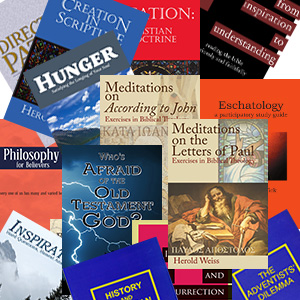
    sda booksSeventh-day Adventists (SDAs) are often misunderstood, which complicates the issue. If I had transferred my membership from a Presbyterian church, for example, to a United Methodist congregation, it’s unlikely anyone would ask me why I maintain relationships with Presbyterians. As an ex-SDA, however, I’m often asked questions like the one I’m trying to answer right now. SDAs ask me how I could possibly leave the church. At an SDA church where one of my authors was speaking, a young man exclaimed to me, “How could you possibly have difficulties with SDA doctrine?” If you want to understand why I left the SDA church or how I feel about it, you might try reading The Joys and Sorrows of Being ex-SDA.

    Here’s my key point: While I disagree with the Seventh-day Adventist Church on a number of doctrinal points, especially on issues of prophecy and some applications of the (otherwise valuable) term “remnant people,” I still regard them as brothers and sisters in Christ, in the same way and on the same basis that I regard fellow Methodists, or members of Presbyterian, Baptist, Assemblies, United Church of Christ, independent, or any other Christian congregation. I have disagreements on doctrine with pretty much everyone I know (often including yesterday’s version of myself), and that doesn’t make me deny Christian fellowship.

    But there are always those other questions about SDAs. They’re different, yes, but they’re more different in weirder ways than others. Which reminds me of the church Staff-Parish Relations committee that decided that an SDA speaker, who had also spoken at continuing education events for pastors at the conference level, could not be allowed to speak at their church. Having read something about Latter Day Saints, they were certain they didn’t want an SDA to speak. Surely we should stick to Methodist speakers.

    There are two forms of ignorance here. 1) There’s ignorance of precisely who SDAs are and what they believe, and 2) There’s the ignorance of just how much weirdness we have in mainline denominations. If I need to find a crazy speaker, but am limited to those who are United Methodists, I will have no difficulty at all!

    What I Publish

    So what does this have to do with publishing?

    Very little, actually. It’s just that people expect it to.

    I frequently have to remind people that I am a Christian publisher, publishing books selected for a Christian audience. That doesn’t mean that all our readers are Christians. What’s more, it doesn’t mean that all our authors are Christians. In a blog post titled Why Did You Publish THAT Manuscript? (on the Energion blog), I noted that “We judge manuscripts and not authors here at Energion Publications.”

    To me that is a rather obvious point, but it has raised questions. In order to guarantee the publishing of Christian authors only I would have to first define the boundaries of Christianity, and then make myself the judge of whether someone had met those criteria or managed to fall within those boundaries. I can do that for myself with regard to organizations and systems. It’s a simple matter of definitions and categorization. To do it with persons would be problematic. In fact, I personally simply accept anyone’s self-confession of what their religious view is.

    Further, as publishers have discovered before, it’s much more difficult to determine whether a person is a good person than it is to determine whether a manuscript is a good manuscript. I choose to deal with manuscripts.

    Seventh-day Adventists

    I think my earlier remarks largely answer the question. When a manuscript by an SDA author seems to me to be of interest to my audience, an audience which definitely does include SDAs, I’ll publish it, always provided it meets other necessary criteria. I avoid publishing books that are of interest to only one denomination, for example.

    Here are some specific points:

    • Am I on a mission to convert SDAs and get them out of the SDA church? No. I have no intention of persuading anyone to leave their denomination. In fact, I will state that if you’re leaving any church, including the SDA church, because of anger at the organization, you’re going to find plenty of imperfections wherever you go. If you leave a church congregation or a denomination, do so for positive reasons. I may disagree with some doctrines of the SDA church, and so I moved to an organization that is more doctrinally compatible with my views, but I applaud and highly value the SDA educational and health systems. I also value much of the theological work done by SDAs over the years. I can both disagree with, and value, ideas.
    • What about the seventh day Sabbath? I consider the Sabbath a part of one’s approach to worship and a spiritual practice. Where I have seen it carried out as a spiritual practice, I find the seventh day Sabbath valuable. As with any other activity, it can be converted into a legalistic “work,” but the key here is “any other activity.” Because keeping the seventh day as the Sabbath stands out as unusual, people take it as extraordinary evidence of legalism. But it’s simply one more practice that can be positive or negative. I have said before that I miss the Sabbath as practiced in SDA circles. I have other means of seeing sacred time, but there’s nothing that quite matches taking sacred time together with a community.
    • Don’t SDAs think they’re the only true Christians? Some of them do. So do one or two Methodists. I think this is a problem for the SDA church partly because of teaching about God’s remnant people. But I have no problem with SDAs as a group over it. Most SDAs that I encounter treat me as a fellow-Christian even though I have left the church. There are occasional folks who treat me as an apostate. I believe that could be solved if there were no people in the SDA church. As things are, we’re stuck with it.
    • But SDAs don’t believe we go to heaven when we die! Indeed they don’t. Neither do I. I think the Bible is actually quite unclear about what happens after death, but the balance, I believe, favors soul sleep and a resurrection. I just don’t happen to think it matters. Arguing about this is very time-bound thinking. If I die and go to heaven immediately, there will be one breath here and next (breath? who knows?) on the other side. If I die and sleep with God until the resurrection, there will be one breath here, and the next (whatever!) on the other side. I won’t know the difference. (I publish several books related to this: Eschatology: A Participatory Study Guide, From Here to Eternity, Journey to the Undiscovered Country, and the forthcoming Death, Immortality, and Resurrection. The first and last are by Edward W. H. Vick, an SDA author.)
    • SDAs believe in Ellen G. White, a false prophetess. Got you now! Ellen White did indeed have a great deal to do with the founding of the SDA church, though I find her own view of herself and her mission refreshingly humble. I also find a number of her writings to be excellent devotional works (Steps to Christ, Desire of Ages, etc.). We have a voluminous collection of her writings, including letters that she wrote over a long life. The SDA church has had some struggles over how to view her and her relationship to the Bible. Bluntly, however, I’ve found traditions in local congregations of the United Methodist Church that have more sacred standing, in practice, than her writings do in the SDA church. I would say, rather, that the church as a whole, and the modern Charismatic and Pentecostal movements in particular, would do well to learn from the SDA experience. Speaking of which, I’m in the process of releasing Inspiration: Hard Questions, Honest Answers by Alden Thompson. He deals with issues of Ellen White in connection with discussing biblical inspiration in a work that I think the wider church would do well to study.
    • How do I deal with SDA authors in my catalog and marketing? Like any other author. I’ll advertise their books for their own denomination, but also present them to others for their wider value. And just like any other author, SDAs may write something that’s addressed more to their own church than to others. In that case, they will be more likely to publish within the denomination, again just like any other author might. I neither emphasize nor do I conceal the denominational connections of my authors.
    • Do my SDA authors quote Ellen White in their works? Yes, and no. I tell them to quote Ellen White as they normally would and if it’s necessary, we will add an explanatory note to the book so that others can understand and still benefit. This is a function of the level of controversy surrounding her work, rather than any judgment of it that I might make. Because there is controversy, explanation is helpful. On the other hand, when addressing the larger Christian community, SDA authors often feel it’s best to make their points without reference to an SDA specific source.
    • Are you trying to provoke dissent in the SDA church? No more so than in any other church. I do have some books in my catalog that have gone out of print from SDA publishing houses. The level of controversy in the SDA church has nothing to do with my decision. I still judge the book, not the author, and certainly not any former publisher. But beware! I’m not the arbiter of truth, and certainly not the arbiter of SDA doctrine. If you don’t want your beliefs challenged, then it’s my hope that my books are not for you!

    Conclusion

    I publish SDAs in the same way and on the same basis as I publish anyone else. It’s that simple (he says 1600 words later)!

  • Perspectives on Paul: Date and Authorship of the Epistles

    I will review how date and authorship is determined (or not) and how that relates to the way we will answer the question of Paul’s gospel.

  • Dating Biblical Books

    I will be dealing frequently with issues of date and authorship while discussing Paul. The reason for this is that there is a considerable variation in what books scholars believe that Paul wrote, so while giving perspectives, I need to deal with the differences in the books attributed to Paul and what picture emerges of the apostle.

    As some background, let me embed two videos I’ve done on dating and authorship. One major problem with this discussion is that for most laypeople the discussion is quite opaque. They don’t really understand how scholars determine date and authorship, so they’re stuck with either a consensus, or with what is presented in their study materials.

    The first video is on dating the book of Daniel. In this, I’m not trying to give you the answer, but rather to give you a look at the various considerations:

    The video above is from my own YouTube channel. The next one is from the Energion Publications YouTube channel. It’s a dialogue with Elgin Hushbeck, Jr. on this topic. Elgin takes a somewhat more conservative approach than I do, but his approach is also conversation friendly, i.e., you are asked to look at and evaluate evidence.

    Elgin is the author of Evidence for the Bible, among other books, and I’m author of When People Speak for God and Learning and Living Scripture, among other books.

    Though it is in serious need of revision to add some disciplines/tools in biblical criticism, the pamphlet What Is Biblical Criticism? can be helpful.


  • Paul’s Gospel vs. Another Gospel III

    Paul’s Gospel vs. Another Gospel III

    Apocalyptic background - flash and lightning in dramatic dark sky

    This is the unintentional third part of my discussion of this topic. Last week I talked a bit more about the initial statement of the gospel in Galatians and then began looking at how Paul talked about the gospel elsewhere, first in 2 Corinthians 5 and the ministry of reconciliation. I’ll be moving from there to Romans 1 (and a few other references in that book). I’m including those books whose authorship is controversial, though I’ll note each one as I make use of it.

    Here’s the embedded viewer for tonight:

    Remember my resource page on Paul. I will continue to expand on those references with some comments.

  • Sunday School: Thinking about Sacrifices

    Sunday School: Thinking about Sacrifices

    Sacrifice
    Credit: Adobe Stock 46272514

    I’m preparing to teach tomorrow, and the main text is Hebrews 4:14-5:10. The quarterly is kind enough to stop just before the author tells his readers/hearers that the topic is difficult and they’re not very bright!

    Nonetheless, the idea of priesthood brings up the idea of “sacrifice” and “sacrifices,” and these are two concepts that I don’t believe modern audiences are prepared for. We tend to get locked into one of two unhelpful modes.

    On the one hand, we may believe sacrifice is critical, and its primary, or even only purpose is to atone for sin. This feeds into the penal substitutionary atonement theory (or I prefer metaphor), in which the sacrifice of Jesus is specifically as a substitutionary death taking the punishment for our sins. The reason I prefer metaphor to theory here is that a theory should be an explanation that deals with the relationship between various facts. A good theory is a singular thing because it is the best explanation of the data. A metaphor, on the other hand, is one of many ways of looking at a set of events. In this sense I reject a substitutionary atonement as a theory, but accept it as a valid metaphor.

    On the other hand, because the whole idea of substitutionary atonement, sometimes even referred to as “cosmic child abuse,” is so foreign to our way of thinking about things, that we reject everything that relates to it. But there is a least one really good thing about substitutionary atonement (and I believe there are others): A person convinced that Jesus died as a substitutionary sacrifices for his or her sins will be convinced that wrath and punishment have been averted.

    This is not the place to cover this in detail, but I am doing so in my video series on perspectives on Paul. I started in Paul’s Gospel vs. Another Gospel, then went on to part 2, and this coming Thursday night I will be doing part 3. I’m thinking there may be yet more parts, because I’m looking verse by verse at some defining statements about the gospel in various Pauline and disputed epistles.

    I think there’s a better background against which to think about sacrifice, and that is communication within a relationship. The priesthood and sacrifices were part of the way in which ancient people carried on communion within an ongoing relationship with their god(s). The Israelites had specific ways of offering various sacrifices, ways of representing their God, and expectations.

    I like to think of gifts that I give my wife. One of the traditional gifts for someone with whom we are romantically involved is roses, often a dozen, maybe two dozen. I have only done that once in our relationship. I mean the dozen. There have been a scattered number of times on which a gift has included roses, but that is much less frequent than in other relationships.

    So am I neglecting my wife and being unromantic by not giving her the traditional gift? I don’t think so, and she’ll surely read this post and let you know if I’m wrong. We’ve established a different tradition that fits her personality and mine. That tradition has to do with surprise and variety. I look at various places where I can buy flowers. The grocery store even works out frequently. I look for flowers of a different color or a different type than she has had recently. I often buy enough for a couple of arrangements in vases. More importantly, I try to bring the flowers into the house when she is not expecting them.

    It is true that flowers are frequently a way of expressing regret for a wrong action, but that wouldn’t work all that well in our relationship. In fact, the only thing that does work is sincere regret, directly expressed (no weasely political apologies), and a discussion of how we can improve as we move forward. Flowers as a sacrifice for sin are not functional in our relationship, yet they are given.

    I’d like to suggest thinking of the reason why you might do something for another person, or have something done for you and the various reasons you might give or receive a gift. Then start looking at the sacrificial system again. There are still many things that will not connect. For example, in those cultures that practiced human sacrifice, the killing of the human victim—the ideal one being a firstborn son—was seen as giving that child to God. So also with the animal sacrifices.

    If you think of the sacrifices in this way I think it will be easier to follow how sacrifice was replaced by the “mitzvah” (good deed) in Judaism, and by a combination of giving and symbolic acts in Christianity. You might even start to think about the Sunday liturgy at your church and what it says about what God would like to see happening in your relationship to him. Is it possible God might prefer a “mitzvah” of some sort?

    I’m going to build on this, but I think this is a good foundational metaphor to use in looking at sacrifice. Then we can adjust for the people involved and how they viewed what was good and bad in a relationship.

  • Paul’s Gospel or Another Gospel, Part 2

    Paul’s Gospel or Another Gospel, Part 2

    Apocalyptic background - flash and lightning in dramatic dark sky

    This is the unintended second part of last week’s discussion, since I didn’t even come close to completing the material. We’ll be launching from Galatians 5:6-9, but I had already discussed the content of those verses. Now we’ll be looking through Paul’s letters, including those attributed to him, but disputed by scholars, looking for the nature of the gospel according to Paul, and what might “another gospel” be.

    Reminder: Resource Page.

    Here’s the viewer:

  • Faith Made Active through Love

    Faith Made Active through Love

    despicableWhat groups of people do you think it’s alright to look down on?

    Because in Christ neither circumcision or uncircumcision matters any more, but instead faith made active through love. – Galatians 5:6

    Which, in turn, reminds me of:

    Thus faith, if it has no works, is dead by itself. – James 2:17

    It is possible that the conflict between James and Paul has been overstated.

    But my key reason for pulling this text out of my morning reading, as I prepare for my online study tonight which I’ll post about later, is that it represents a broader principle. Sometimes we’re afraid to read between the lines, or better, to discover principles which apply in other circumstances.

    These days, circumcision or not is a medical discussion for most people. Yes, it is still a mark of Judaism, but many are circumcised who are not Jews. So what is Paul talking about here? I believe he’s referring to the distinction in God’s favor between Jews and Gentiles. That was the church conflict of his time. Did one have to become a Jew first in order to be a follower of Jesus? Was entry to the family through circumcision?

    In the prior four chapters of Galatians Paul has argued that this is not the case. Grace is open to all and is the way one becomes part of the family. Christians have read these four chapters and then either failed to continue reading, or treated chapter five as though it was some sort of advice tacked on to an otherwise theological letter.

    That is not the case. The final chapters are a clear continuation of the intent of the earlier ones. My seminary class in Galatians only made it to chapter 4. We were supposed to read the rest, but we never discussed the latter part of the book in class. I don’t know if it was just time or if the professor intended it that way. But Paul wrote it as one document. For him, there was more than becoming part of the family, though that was important, demonstrated by four very heated chapters dedicated to talking about it.

    Paul’s concern continued with living as part of God’s family. How do we live now that we’re “in”? That’s where we get to this verse.

    Historical understanding is important. Historically this verse was about the distinction between Gentiles and Jews before God, i.e., as part of the family. (Don’t come to conclusions about other aspects of the relationship without reading Romans 1-3 & 9-11.) But it also expresses a principle.

    We humans are good at creating distinctions and barriers. In fact, such distinctions are necessary to life. I hate “labeling” yet I must do it in order to talk. This post is filled with labels. If I label someone as “poor” so that I can despise that person and distinguish him from his betters, I’m creating a barrier. I might use the same label, however, to set that person aside as the one who should receive my help. The distinction between Jew and Gentile does still exist, as Paul would acknowledge. It just doesn’t mean that God loves Jews (circumcised) and hates or ignores Gentiles (uncircumcised). The distinction was necessary (and is necessary) for certain purposes (“God’s messages were entrusted to them” [Romans 3:2]), but is not to be used to distinguish those God loves and those God does not love.

    Now what distinctions might you and I be using to divide people into acceptable and unacceptable groups? People loved by God and those who can be despised?

    Here’s how Eugene Petersen renders Galatians 5:6 in The Message:

    For in Christ, neither our most conscientious religion nor disregard of religion amounts to anything. What matters is something far more interior: faith expressed in love.*

    Can I hear “ouch” instead of “amen”?


    *Peterson, E. H. (2005). The Message: the Bible in contemporary language (Ga 5:6). Colorado Springs, CO: NavPress.

    Elements of the illustration I used were taken from OpenClipart.org.

  • Underlying Principles for Christian Education and Discipleship

    Underlying Principles for Christian Education and Discipleship

    Chalk rubbed out on blackboard

    … and with that pretentious title.

    Actually, last night I talked on the Energion Tuesday Night Hangout (I’ll embed the video at the end as well) about Christian education and how one might go about choosing curriculum.

    My sister, Betty Rae, asked me a question via e-mail this morning, and I thought it was so on point that I would post her comments and my response here. What am I actually up to at Energion Publications? For those who wonder, yes, my sister and I communicate like this quite a bit.

    From her comments:

    I have been trying to understand what is the purpose or goal you have in what you are doing.  I think I may have glimpsed something tonight.  Please tell me if I am right.

    The early NT church consisted of home gatherings.  They had no center of worship, like the Jerusalem Temple.  So All that was Christian centered in these small groups.  Luther calls them “small companies;”  Ellen White, “little companies.”  So if there is a difficulty with the church at large, the church may be preserved in the “small study groups,” as you are calling them.  I saw in your presentation that you are encouraging the preservation of the individuality of individuals and groups.  Your presentation tonight holds great significance as I see it.  By leaving the groups free, even to making them free not to use your materials, room is left for the working of the Holy Spirit.  Hopefully, the small groups will follow that example, and also leave the individuals in their groups free.

    The time will come, however, if there is religious oppression, that small groups will be suppressed; as an example, “The Conventicle Act” in England, for disobeying of which John Bunyan spent 12 years in prison.  During times of religious revival and opposition, believers were forced to meet in small groups, even outdoors in forests and mountains, for which they were severely punished if they were caught. John Wesley was forced, even to preach out of doors, when denied access to the churches.  The Advent Movement believers met in small groups after they were thrown out of the churches, coming together in camp meetings.

    On an individual basis, churches in this country have already persecuted and tried to suppress small groups, calling them “cults.” (The devil will always mix his counterfeit in with the true.  Fear of being called a “cult” has discouraged the “small group.”)  One thing that drew disapproval was the groups’ using of materials “unauthorized” by the denomination, which you addressed tonight in your presentation.  Your work may be small, but who hath despised the day of small things!

    Here’s my response:

    One of my fundamental beliefs is that spiritual choices made through duress, emotional manipulation, or spinning data are of no positive benefit and are indeed destructive. Thomas Aquinas and I are not even playing on the same ball field on this one!

    I carry this so far as to say that if I were helping to bring a Jew into Christian fellowship (no human “converts” anyone), I would want to make sure that person understood Judaism as well as Christianity to be sure he or she is making a choice that is as informed and as free as possible. Similarly, if a person is kept in the church because he or she was prevented from getting outside information, that brings no glory to God. While it may build up the church organization, the Kingdom of God is not built.

    I could summarize this by saying that God’s kingdom cannot be built by deception, and trying to deny people information from another perspective is deception. That’s the reason leaders do it. The leadership is afraid that if we, the followers, have information other than what they approve, we might decide differently than we have.

    This is often done for the best of motives. In the church, the idea is to prevent people who are less informed from being led astray. So information is restricted in pursuit of truth. But just because an approach is intended to accomplish something does not mean it will accomplish that. We often give credit to people for being well-intentioned, but the universe does not. The laws of physics don’t care about your intention. You may intend to fly when you jump off the cliff, but gravity (and the rocks below) does not say, “I’ll give him/her credit for having good intentions.” It’s just plain splat!

    Similarly in politics we have a desire to limit information to what is accurate and unbiased. I agree that the internet provides a huge reservoir of material that ranges from misleading in presentation to flat out wrong. But those who would like to clean that up somehow, other than by countering false with true, are playing with fire. Whether it’s by controlling political spending or trying to narrowly define a “real” journalist, it’s going to head toward control, and control will lead to mass falsehood and delusion. The universe will not regard the supposedly truth-loving intentions of the censors.

    So I do advocate freedom in ideas, and I follow that belief in the small (very small) world of my publishing business. I restrict what I publish not because I think the other stuff is bad, but simply to define a reasonable audience for me to try to address.

    At the same time I personally advocate a program of education in churches, however carried out, that makes sure people are aware of the full range of ideas that are out there. Carrying this out will involve reading books that are written by people who disagree with and disapprove the church’s views as well as hopefully hearing directly from them. There’s nothing like hearing an idea from an advocate. I may be ever so careful to present my adversaries position, but hearing me is not as good as hearing them.

    Those are the beliefs that underlie what I said about curriculum last night.

    And for those who might need context, the actual presentation:

  • We Need to Quit Blaming the Media, Politicians, or the Infernal Them

    I call this group of (people | entities | circumstances) the infernal “they” or “them.” They are the people who cause all the problems. They have no moral compass. They are disruptive. They lie. They are apostates, perverts, stupid, deplorable, weak, losers, socialists, libertines (sometimes intended to include libertarians!). Disgusting, all of them. They are doing it to us.

    This is one of the unfortunate results of individualism. There are many fortunate results as well. I am not one who wishes we’d get back to some sort of day when the individual didn’t really matter, and everything was about the collective. Like most “old days,” the reality of the old days is somewhat less [whatever we wanted it to be] than our imagination makes it. There has always been a balance between a view that values the society above all and one that values the individual. The emphasis varies; the elements are still there.

    One problem with western individualism, however, is that we can so easily use it to find ways to blame someone else while separating ourselves. I am not responsible for anything but the things that I, personally, have done. I take no responsibility for what my ancestors did (though I’ll cheerfully benefit from their actions). I take no responsibility for the wrong actions of my church, my party, my social club, or my industry. I, personally, am blameless. In this, I am wrong.

    In politics right now it’s popular to blame the media. Despite the fact that media outlets come from many perspectives, and you can find one as liberal or conservative, libertarian or authoritarian as you might desire (ain’t the internet wonderful), somehow, the collective media is responsible for whatever it is that I think is bad. They have lied and propped up one candidate, they have lied and trashed another. Within the same day I can read about how they have both completely destroyed and totally built up the same candidate.

    This they, a “they” of which the speaker is not a part and does not carefully define, is the infernal they. It is the “they” that commits all evil acts. Besides being infernal it is also highly mobile. It is very hard to find this “they” and cause them to change or take responsibility for “their” actions.

    I’m aware that neither you nor I are responsible for everything. But here’s a suggestion: Drop out of the game of assigning blame for the stuff you didn’t do and take responsibility for what you have done and can do something about. In addition, if you are—and remain—a member of a group, take responsibility for that group. Yes, you can distinguish what you support and don’t, but you are a part of what the group does. This means Republicans, Democrats, Libertarians, United Methodists, Baptists (of whatever variety), and so forth.

    I would like to demote the word “they” in my vocabulary and promote the word “we.” The media is producing material that people watch and that produces sales for their sponsors. Yes, there are some things that the people in media want themselves. But there is little that motivates so effectively in our culture as money. For the media, readers, viewers, and listeners mean money. That’s the “we” I’m talking about.

    We need to be more discerning in our viewing and listening. We need to be active in letting the media know what we do and do not want to see and hear.  But, you say, you can’t really change that whole mass of “them” out there. Don’t worry about it. Change you. Turn your TV off. Visit a different site. Read a good book instead (says the publisher!)

    Try to find the “we” before you utter that critical word. What I can say for myself is that I am often much too fascinated by the seamier side of the world. It is too easy to persuade me to give views to a web site that is saying things that I really shouldn’t support. I can make the excuse that I am “checking out the other side” or “keeping informed,” but it really is just the receiving side of gossip, and the one who listens to gossip is just as responsible, I believe, as the one who speaks it. After all, if every time the gossiper said, “Do you know what widow Jones did?” the response was “No, and I don’t want to know,” gossip would die.

    Wrong needs to be challenged, but let’s start with the wrongs we can challenge using the word “we.” Let’s take our example from the biblical Daniel. I’m reminded of his prayer in chapter 9. By all biblical accounts Daniel was a righteous man. No act worthy of blame is recorded of him. Yet as he begins praying (Daniel 9:5-6a), there is a powerful litany:

    We have sinned, we have done wrong, we have acted wickedly, and we have rebelled, turning aside from your commands and your judgments. We have not obeyed your servants the prophets …

    Yet Daniel had done none of those things. It was not a matter of feeling or being guilty; you can drown in the guilt of others. What he did was he spoke for his people as one of them.

    I think our prayers would be more powerful and our actions more effective if we learned his approach.