Threads from Henry's Web

Category: Religion

All posts relating to religion, including those on the relationship of religion to other fields, such as science and politics

  • According to John – Excursus 1 – Interview with Dr. Bruce Epperly

    9781938434136sThursday night will represent an excursus in my study through the gospel of John, as I interview Dr. Bruce Epperly, author of the books Healing Marks and Process Theology: Embracing Adventure with God, about the healing stories of Jesus. We’ll be discussing what it means to say that Jesus was a healer and we’ll likely have time to talk about words like “panentheism” that have come up in the study thus far. You can use the link above for more details. I’m embedding the YouTube player for this event at the end of this post.

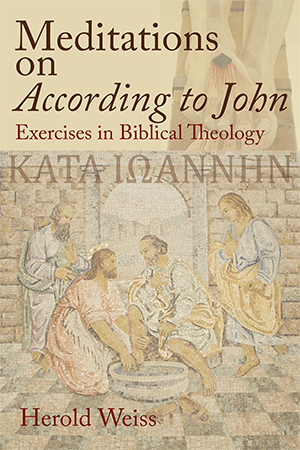
    There’s also something to look forward to further down the road. Dr. Herold Weiss, author of our text Meditations on According to John, will join us on March 12 to discuss his approach to the gospel. We’ll touch on date and authorship, but most importantly on the theology of the book.

  • Tuesday Night Energion Hangout

    Using Google Hangouts on Air, I will moderate a discussion on Tuesday night titled Biblical Essentials. What are the essentials of the Christian faith, and why are they essential. If you’d like me to ask our panel a question, put it in a comment, or log in to Google+ during the hangout and use the Q&A app. Guests will be Dr. Alden Thompson, professor emeritus of Biblical Studies at Walla Walla University, Dr. Allan R. Bevere, United Methodist pastor and Adjunct Professor at Ashland Theological Seminary, and Elgin Hushbeck, Jr., Christian apologist and writer.

    Oh, I almost forgot. Pete Enns posted a great cartoon and some interesting comments, obviously just for my convenience and enjoyment.

    You can watch on YouTube via the viewer embedded below. Time is 7:00 pm central / 8:00 pm eastern, Tuesday, February 24, 2015.

    And remember that on Thursday night, February 26, also at 7:00 pm central time, I will be interviewing Dr. Bruce Epperly as part of my continuing series on the gospel of John.

  • Did Jesus Give the Great Commission?

    Thomas Hudgins, writing on the Across the Atlantic blog he shares with Antonio Piñero, asks whether the gospel commission is original with Jesus, i.e., did Jesus say these words. I’ve been thinking of writing a post about historicity in general, though I’ve been focused on the Gospel of John, which I’m working through in a series of Google Hangouts on Air.

    (I’ll be announcing details of the next hangout tomorrow, but I’ll let you know ahead that Dr. Bruce Epperly, author of Energion titles Process Theology: Embracing Adventure with God and Healing Marks, will be joining me this Thursday night at 7:00 pm central time. You can find this via my YouTube channel.)

    Yesterday I posted on the issue of copying and translation, and there I deal only with the reliability of the transmission process. The original doctrine could be fiction or a forgery for that matter, and it wouldn’t impact my points in that earlier post. Discussing the reliability of scripture involves a number of different topics.

    It’s unlikely to surprise any of my regular readers that I think this isn’t as simple a question as it might first seem, i.e., there are more than two (yes/no) answers available to the question of whether Jesus spoke these words.

    Here are some possibilities as I see them:

    1) This could be essentially a word for word record of words spoken by Jesus. The word for word accuracy could result from someone with an excellent memory, from someone who took notes (unlikely but not impossible), or due to the inspiration of the Holy Spirit. (While I don’t see any evidence that the Bible’s words were dictated by God, I don’t doubt God could if God so desired.)

    2) This could be a speech created to fill out a more general memory. In other words, the writer of the gospel might be recording a memory or tradition of a meeting with Jesus in which he gave such instructions to the disciples, but the words themselves could be a literary construction.

    3) This could be an event that ratified the early church’s perception of a call to reach the whole world, with this call derived from various things Jesus said to them, and the guidance of the Holy Spirit in their lives (perceived or actual).

    4) It could be a complete construction without any basis other than the goals of the early church.

    The reason I think it’s important to break these differences out is that the binary response might result in an inaccurate perception. I, for example, believe that Jesus did meet with the disciples following the resurrection. Various stories of these meetings imply different things about spiritual vs. physical appearances, and I”m not concerned with that issue. For a church that believes in resurrection, things said by Jesus in either form of appearance should be regarded as things said by Jesus, just as Paul’s call, a visionary experience, is considered valid.

    Nonetheless I am not convinced that we have an extremely close, word for word record of the activities of Jesus. I believe we have a record taken from memories and orally transmitted. Even if the gospels were written by eyewitnesses, they were written some time after the events were recorded, and recalling every detail of the speech is unlikely.

    Again, I fully believe that the Holy Spirit could recall such things precisely, but I don’t see evidence that he did. In fact, to the extent that I see eyewitness testimony in the gospels, I see very human eyewitness testimony, with differences in perspective, in details, in focus, and so forth.

    So if you asked me the original question in binary form, I’d feel obligated to say no, but that would tend to make hearers/readers believe that I don’t accept that the gospel commission originated with Jesus.

    Quite the contrary, I believe it did, though I believe the church took some time to grow into it. So answering for myself, I would say something like my #2 above. I take this position because I believe that a robust set of appearances of the risen Christ would be necessary to launch the Christian movement.

    On the other hand, while I consider #2 most likely, I have no problem with those who would choose #3. I believe that God led not only with the physical presence of Jesus, but with the presence of Jesus with the church through the Holy Spirit. Thus I am not disturbed by the suggestion that this is largely a construction.

    Many of my more conservative friends are disturbed by what doesn’t disturb me. (One should note the tag line of this blog, “passionate moderate, liberal charismatic Christian.” There are reasons why I have been called liberal!) But the fact is that while I tend to be slightly conservative in my own assessment of historical issues, I find the reason for my faith more in an experience of the living God.

    When asked why I believe, I quote the song: “You ask me how I know he lives, he lives within my heart.” When I returned to the church after a 12 year “wilderness wandering” following completing graduate school, it was not because I was suddenly convinced that the historical problems of the Bible had been solved. There was no change in my intellectual assessment of historical data. What actually happened was that no matter how hard I tried to avoid it, I truly did believe in God.

    Fortunately I had already encountered ways of approaching scripture from various teachers that allowed me to re-encounter God in scripture. (Without intending to blame any of them for my own theological positions, I would mention Lucille Knapp, Dr, Alden Thompson, Dr. Larry Geraty, Dr. Sakae Kubo, and Dr. Leona Running, all of whom, and many more, helped shape the concepts that go into my understanding of scripture. Since my return to faith, I have added many more to that list.)

    Because it was not a conviction about the historicity of scripture that brought my faith back into activity, debates about the historicity of scripture do not have the power to shake my faith. In fact, I welcome and embrace them.

    I am truly delighted that there are people who see and preach the grace and love of God who differ in their understanding of historical (and even theological) issues. I welcome things that clear the way for us to look up (John 3:14-15).

    I am confident in Jesus. I am not confident in any particular historical or theological construction. I can discover that I am wrong, and hopefully correct myself. He is always there and never mistaken.


  • According to John: To Bear Witness to the Truth

    According to John: To Bear Witness to the Truth

    20150214_172739My Google Hangout on Air on the gospel of John tonight will be based on chapter 6 of Herold Weiss’s book Meditations on According to John, “To Bear Witness to the Truth.” I will focus on the meaning of “true” or “genuine” in the gospel.

    I’m embedding the YouTube player below. Note that you have to sign in with Google+ to use the Q&A App.

  • According to John: From His Fullness We Have All Received

    According to John: From His Fullness We Have All Received

    john bannerI’m a little late posting the event for this, but my study of John will continue. I expect to post a couple more notes on the last hangout in this series as well as a follow-up to my conversation with Elgin Hushbeck, Jr. on the Energion Publications weekly hangout. For more information, see the link above. I will embed the viewer below if you want to go via YouTube.

    My major purpose in doing this study was to engage in the discipline of following through the book(s), both According to John and Dr. Herold Weiss’s Meditations on According to John thoroughly, discussing the material, and taking questions and comments. This is a difficult process for me because both my training and my inclination is in the historical exegesis of the text, using the word “exegesis” as narrowly as possible to refer to extracting the historical meaning to the first audience. So thinking about the theology is hard work for me, and some of the rough edges definitely show. At the same time, I think this is a worthwhile exercise. Fortunately for me, some people who have a great deal of skill have challenged me on some points and that has helped me dig even deeper.

    This week’s topic introduces an interesting aspect of biblical theology: comparing and contrasting the theology of two different passages. Colossians and John share some points of theology here according to Dr. Weiss, and we’re going to look at how one can examine this sort of claim and what the results are.

    I do plan some conversations with experts for this series. Dr. Weiss himself has agreed to join me for a discussion. I suspect that one will emphasize christology and the statements he’s made relating the christology of John to various stages of the early church. That will in turn doubtless tie into some discussion of the trinity. Dr. Drew Smith, author of Energion Publications title Reframing a Relevant Faith will be joining me to discuss biblical theology and how it differs from systematic theology among other topics. Dr. Smith has his PhD from the University of Edinburgh in New Testament where his dissertation dealt with the theology of Mark. We’ll try to make him talk about John nonetheless! I will announce dates for these conversations soon.

    So join the fun tonight at 7:00 pm central, 8:00 pm eastern, or watch the video later and respond through comments of blog posts.

  • Tonight’s Energion Hangout

    dating and authorship bannerUsing Google Hangouts on Air, we will again broadcast a hangout with some of our authors. For further information, check the Google Plus event. I will embed the YouTube viewer below. Note that once the hangout is complete, the recording will be available through the same viewer.

    Due to unforeseen circumstances, the event tonight has been changed. Elgin Hushbeck and I had been planning to discuss the dating and authorship of Bible books in April, but we’re going to be doing that tonight. This is a conversation, though Elgin is the moderator/interviewer. This reverses the usual procedure, in which I interview one or more of my authors. Fun!

  • Follow-Up to According to John: No One Has Ascended into Heaven

    I want to follow up a bit on the study last night. I’ll embed the YouTube below for those who want to view this study after the fact. A few things occurred to me since the study.

    1. Meditations on According to JohnI’m really spending a great deal of time on the use of stories and of metaphors in discussing theology. I’m convinced that we don’t recognize the metaphors we’re using often enough. For example, it’s worthwhile to note that most discussion of substitution occurs inside the metaphor of the courtroom. It’s then important to recognize when a discussion, whether current or in scripture, occurs within another metaphor. John 3:16 occurs in a different metaphor, or perhaps more than one, and it comes after John has evoked the story of the serpent in the wilderness (Numbers 21:4-9). In that story, the key line is “look and live.”
    2. It’s very important to distinguish “light” as John uses it from our 20th/21st century use of that metaphor. Yes, that word is another metaphor. Jesus did not claim that he as going to provide physical light to the whole world. The modern tendency is to think of light as information and enlightenment as the reception of information. For John, and for Jesus as represented in this gospel, light is more closely connected to life. To mix the metaphors, you look up at the light as he is lifted up and you live. The healing of the blind man in John 9 links closely to this metaphor. There is light and the ability to see light.
    3. Metaphors allow us to talk about the same general subject from different perspectives. Thus one can talk about atonement using the metaphor of the battlefield, the courtroom, and the family/community without being contradictory. I would suggest that one shouldn’t mix these metaphors, at least without being very aware of what one is doing and doing so carefully.
    4. I had an excellent audience question, and this time one that wasn’t in my notes as something I might discuss. Just what was John doing? Jesus speaks so differently from the way he does in the synoptic gospels. Why? It’s a good question, and I went the right direction as I started to answer it. Overnight it occurred to me, however, that the synoptic gospels also had in mind building community. They were just more tied to an existing sayings tradition in doing so. The change, in my view, is one of emphasis. The particular kind of community building involved is one of defining oneself. What is it that we believe as a group that makes us a spiritual/religious community? There is a danger here in following the example of the community reflected in According to John. They are distinguishing themselves from the Jewish community, of which they had previously been members. Who are we apart from being Jews who believe in Jesus? We have to avoid following this line of reasoning to anti-semitism, as Dr. Weiss points out. In addition, however, we need to avoid community building that is done over-against others. There is a certain amount of “and you’re not” when one defines a community. But we need to avoid defining ourselves in a way that reflects negatively on others. The community in John had good reason—they were a persecuted minority. We have less reason.
    5. I’m very glad for Dr. Herold Weiss as a guide in this study. I’m assuming those who are joining me are reading his essays. He’s much more to the point. I’m adding a good deal of discussion of the nuts and bolts to help people think about their own theology, or at least I hope it helps. This can get boring, but sometimes wading through the nuts and bolts (intentional mixed metaphor!) is precisely what we need to do.

    And here is the YouTube embed for those who may have missed it:

  • Link: Is the Trinity Biblical?

    In my study of John last night I referred people to a post by Michael F. Bird, author of the book Evangelical Theology: A Biblical and Systematic Introduction. I have been using his book as one of my theological references for the study. He responded to a review in which he discussed some of the same issues I’ve discussed. I promised a link last night, and here it is.
    For what it’s worth, I believe that the trinity expresses a combination of various biblical materials and the experience of the early church in language that is demonstrably not in the Bible. I don’t see this as a problem. In general, when we write doctrinal statements of any sort, they reflect a combination of the way we read scripture, our traditions, our personal and collective experience, and of course the function of our reason. I perceive myself as seeing the connection as looser than Bird asserts, so I’m certainly willing to defend him from critics who say he hasn’t claimed enough. On the other hand, he may have claimed too much, and in this case, perhaps more than needs to be claimed.

    Nonetheless his book is fun. Note also that the subtitle illustrates the point I was making. I tend to think that the more systematic our theology gets, the less biblical it is. Being both systematic and biblical seems to me almost a contradiction in terms. The Bible is not systematic. But that’s part of the fun of my current study!

  • According to John: No One Has Ascended into Heaven

    I should have posted this earlier. I’ll use as an excuse that our son is visiting us from Arizona. He’s probably not really to blame, but we are very delighted to have him here. Some distractions are a definite gift from God!

    You can find out more information from my Google+ Event, or watch the study via the YouTube embed below.


  • Alternative Lectionary Discussion Tonight

    Alternative Lectionary Discussion Tonight

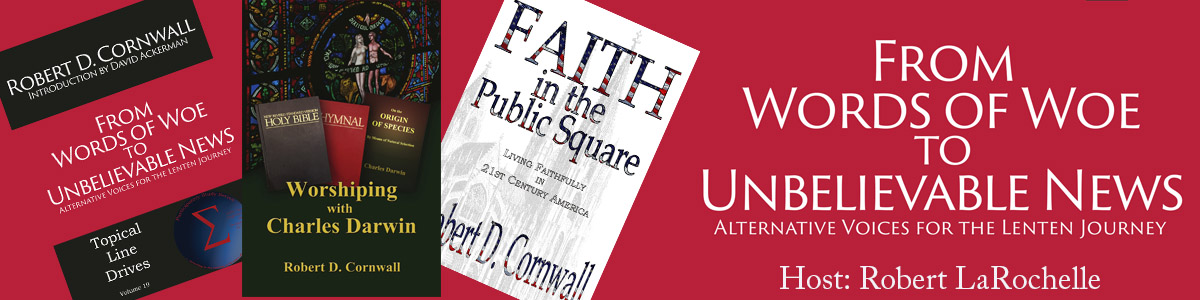
    words of woe bannerTonight on the Energion Publications Hangout on Air (via Google Hangouts on Air) I’ll just be the technical guy. The actual event will be Dr. Bob LaRochelle, author of Crossing the Street interviewing Dr. Bob Cornwall regarding his forthcoming book From Words of Woe to Unbelievable News, which provide sermons/meditations on alternative lectionary texts.

    When I say “forthcoming,” regarding Words of Woe, I mean coming right away. It will be to the printer no later than Thursday morning. Between now and next Tuesday you can get these on pre-order for just $3.49 each. Shipping is $2.00, or if you order three of them, shipping will be free as it is for all orders of $9.99 or more.