… so it is not left to this sort of discussion. I did some study of and discussion of the so-called Bible codes some years back, and I’m not spending more time. The problem is that using the methodology in question (and its variants) one can come up with so many things and such vague things that it becomes self-defeating to try to respond.
In my view, by doing this sort of thing (trying to know things that are not present in the text), we go well beyond what the Bible was intended to do. The Bible is there to help you come into communication with God. That it conveys some information is not the main issue. We get stuck arguing about informational details while ignoring the broad sweep of the text.
When we turn to the Bible codes, we begin not just concentrating on informational details, we’re creating new content. It may be nice to feel that we know these things, but in fact we do not. Nobody knows. That’s the way God intended it.
One of the interesting questions that the New Testament raises is the relationship between personal eschatology and universal. When the Bible talks about the end being “soon,” which has resulted in numerous disappointments for Christians, is there an element of the personal in the statement. After all, the end has been “soon” for a few billion of us over the years. I think that idea tends to raise more questions than it answers, but it raises worthwhile questsions.
If you’re wondering what about that statement I reject, I could point to plenty of items, but the short answer would be Article XII, which Tim Bulkeley quotes, especially this: “We further deny that scientific hypotheses about earth history may properly be used to overturn the teaching of Scripture on creation and the flood.”
I’ve written on all this before. For now I just want to provide the link and open the discussion.
Since I’ve been talking about churches and leadership, I thought it would be useful to point to this article on UMC.org: Local church pastors on the rise. As usual, I think we’re behind. My personal belief is that the whole system of education we’re using, including degrees is well past its prime. If we made use of all the resources available, there would be no reason we couldn’t make better opportunities available for local church pastors to improve their skills.
But my experience with local church pastors suggests two things: 1) For every local church pastor who has a weakness, there’s very likely an elder who also has a problem, and 2) Local church pastors also have skills in ministry that many of your full elders do not.
I’m just not that enamored of the wonders of seminary education. But it’s not the education we need to get rid of. What we need to do is restructure the means and time when education is delivered, received and applied.
(This continues a series that started here, and continues with part 2, part 3, and part 4.)
The second mark of a New Testament church according to Dr. David Alan Black is Christian baptism. He explains why he explicitly uses the term “Christian” with baptism. There’s a distinction there that’s important and Dave discusses it. Here’s the video. The discussion of Christian baptism begins at about 08:45.
There are several things that Dave says about baptism that I fully agree with. He believes in baptism by immersion of believers, i.e., people who make the choice to be baptized. He also believes baptism should immediately (or very closely) follow the decision. I also, however, believe that this is an area on which there should be a great deal of tolerance for differences.
For example, I attend a United Methodist congregation. The norm is to baptize infants and then confirm them as youth. I grew up in a church (Seventh-day Adventist) where one dedicated children as infants and then baptized them when they made their own decision. I made my decision to be baptized at age 9.
While I strongly prefer one option, and many of my reasons are the same as Dave’s, I am quite able to be a member of a church where the practice is different. I would note that the United Methodist Discipline does allow for baptism by immersion, so a United Methodist pastor can practice believer’s baptism by immersion. He or she could not, however, refuse to perform infant baptisms, at least as I understand it. I know that some Methodist pastors are quite dogmatic on the point. My preference would be to see a quite open choice. For example, if a family prefers some kind of baby dedication, where is the problem? Again, I also know a number of Methodist pastors who would go along with that.
I’m going to refrain from arguing the biblical material on this. I think Dave has gone over that quite well, and in this case I am substantially in agreement.
Let me bring in short quotes from our other two authors.
Ruth Fletcher brings in a completely different issue that may cause some concern to United Methodist readers, or those from any other church that has a fairly high view of sacraments. I’m quoting from Thrive, page 141:
As the church finds its way into the future, the role of clergy will shift even more than it already has. Although some ministers will preach and lead worship, many will give their time to training lay people as worship leaders and small group facilitators. Although some will offer pastoral care, that care will extend beyond the members of the church into the neighborhood. Although some will teach, that teaching will focus on equipping individuals to serve in various roles both inside and outside the church. The sacramental tasks of baptizing, leading in communion, presiding at weddings and funerals increasingly will be shared with people beyond those who are ordained.
Here I would have to say two things. First, I personally don’t see that baptism should require an ordained person. Second, as a member of a community that requires that an ordained person carry out any baptism, I will not put my first belief into practice. That is a matter of submission to the community. While I would forcefully argue for and even insist on using the community’s permission with regards to the method and time of baptism, I would also argue that where my community has a firm position, I should, as a member, live in accordance with that rule. Nevertheless I do believe that every member should be in ministry, and that ordination should not be reserved for one gift or set of gifts but should be for all. We should lay hands on and commission every member to minister using their gifts.
Let me continue with a slightly longer quote from Bruce Epperly in Transforming Acts (p. 85):
Such dramatic experiences – whether evangelical or mystical in nature – are not normative for all Christians. Some of us are born Christian. As cradle Christians, we are dedicated or baptized as infants, and then grow in grace not by drama but through a gentle, day to day walk with God. Nevertheless, most of us eventually face moments in which we have to say “no” to one way of life – or certain behaviors or lifestyles – to say “yes” to another.
Providence is both gentle and dramatic. We can experience God, while we are playing with our children and looking across the table at a beloved spouse or friend; we may also discover God in the storms of life, helpless yet saved by a power beyond ourselves.
Third, Paul’s Damascus road experience invites us to connect our spiritual experiences, whether at worship, at camp, or on the road, with discovering our vocation and mission in life. Paul is clear that his mystical experience was not an end in itself, but an invitation to a new self-understanding and vocation as God’s messenger to the Gentile world.
Bruce is talking about the dramatic conversion experience of Paul, which relates in some ways to baptism. Numerous times I’ve encountered people who do not remember a time when they did not know Jesus. They don’t recall a particular decision moment, because they were believers from as early as they can remember. In some ways, my own view of baptism as a thing to be chosen by believers relates to my own experience. I grew up in a Christian home, but I distinctly remember the time when that belief became mine rather than someone else’s. It was no longer my parents’ faith. It was mine. That was at my baptism.
Jeremy Myers at Redeeming God has an interesting post on textual criticism (HT: Thomas Hudgins). Myers is comparing the textual commentaries written by Bruce Metzger (with input of the UBS committee) and Philip W. Comfort. It’s fun to watch the critical scholars disagree!
If anyone believes I consider that a negative comment on critical scholars, let me disabuse you of that notion. It is, instead, a comment on the texts and sources we have to work with. The reason we have disagreements is not that scholars are somehow stupid or unnecessary, but rather that the evidence is, in fact, complex and requires serious study. Often there isn’t enough evidence to come up with any real conclusion. Where I would criticize critics, and in fact any biblical scholar, is in making conclusions that imply evidence that is better than they have or are likely to acquire.
When attempting to make the evidence solidly in favor of one conclusion, Christian apologists like to spend their time talking about the New Testament. Why? Because the New Testament evidence is much clearer. Not necessarily clear, but clearly than that for the Hebrew scriptures (or Old Testament). You have an abundance of New Testament manuscripts that tends to put most issues into pretty strong consensus territory. Such is not the case for the Old. We have, in many cases, just enough evidence to suggest that there is a great deal we’d like to know but lack the evidence to study. Looking at the differences between the Septuagint and the Massoretic Text, for example, suggests many possibilities, but leaves us without a detailed trail of evidence to study.
There are a number of responses to this complexity. We can give up on knowing what scripture teaches. We can decide that the inspiration of scripture operates in very different ways. Or perhaps we can think that the Holy Spirit guides people in the church (and out of the church, for that matter) as they study, and that God doesn’t mind that we come to different conclusions.
I choose the latter, and apply this to various higher critical methodologies as well as textual criticism. The details are fun to study, but we don’t have to settle all the details in order to be followers of Jesus. We don’t have to settle all the doctrinal issues in order to be followers of Jesus. Yes, it’s fun, and I think even useful to study all those things, but settling them is not necessary. God can guide you when you study your English (or other native language) Bible as well as he can study me when I read Hebrew, Aramaic, or Greek. Maybe even better, for all I know.
Because I believe that inspiration resides in God’s actions in history and that one of those actions was the production of scripture (yes, scripture in its various debated forms), I think it’s still useful to study everything about the text, from its prehistory to it’s canonical state, to it’s dissemination and variety of translation. I don’t believe God resides at just one point. I may hear from God as I apply source criticism to Genesis, for example, seeing two different creation stories and looking at them independently. I can also hear from God when I see those as combined into the larger volume of the book of Genesis and the Pentateuch as a whole. I can still see God when I look back at that creation story from the perspective of the New Creation which is in Christ Jesus.
When I read scripture in this fashion, debates about inerrancy and historicity tend to fade into the background as I hope to listen to every echo of God’s voice in the texts I have using whatever means I have to dig out that echo.
I’m an Amateur Radio operator (KT4B for those who care). I remember when I was in my teens how I would try to contact different parts of the world. It was nice to do so using a reasonably high powered (200 watt at the time) transceiver and a directional antenna on a tower 50 ft high. I could hold conversations with people on the other side of the world if I did the work right. Sometimes, however, things didn’t work so well. Careful listening and careful sorting through the interference could still get a message through.
I remember once operating from Georgetown, Guyana (WB4BUQ/8R1 at the time) and trying to contact a station in Iceland that was using just 200 mW of power. To qualify for the award he was seeking we had to be able to exchange a certain amount of information and then verify the contact via mail. In normal conversation it would take less than 30 seconds. Using Morse Code and his low power station it took close to a half an hour.
The information was of no value to me or to him, other than to confirm the effort and its success. But there was great growth in my skills (I don’t know about his) to be gained simply from the effort.
That is my view of digging into the shadowy, difficult details of scripture. It’s a learning process. It doesn’t really matter whether I come to the same conclusion as you do. I’ve spent time searching for and looking at the echoes of God’s work, and that is enough to justify the effort.
(This continues a series that started here, and continues with part 2 and part 3.)
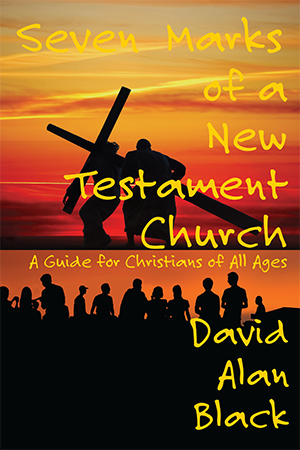
Dave’s first mark of a New Testament church is evangelistic preaching. (Book: Seven Marks of a New Testament Church.) I’m a member of a church that’s part of a mainline denomination. I’m a mainliner. In general, we don’t like the word “evangelism” or related terms like “evangelistic.” You can watch Dave’s remarks starting about about 4:45 in the video and runs for about 4 minutes.
In the book Dave calls this sign “evangelistic preaching.” The word “evangelism” here is used to emphasize that this is not the kind of preaching we normally think of when we hear the word “preach” in modern English. The preacher preaches and sermon and the congregation says “Preach it, brother!” This, on the other hand, is not speaking to the congregation in order to teach them about the faith of which they are already a part. Rather, this is proclamation of the message to those who haven’t heard it before.
The word “evangelism,” and of course the related word “evangelistic” has a bad reputation in mainline circles. (Remember that I’m thinking about this in the context of being a member of and working in a United Methodist congregation.) I don’t particularly mind if people want to avoid the word, just so long as we don’t avoid the activity. Mainliners have an excellent way of avoiding ineffective or offensive methods of evangelism: We just do no evangelism at all. By offensive I don’t mean offense at the gospel itself. There are those who are offended, for example, if I say that Jesus loves even terrorists. That’s fine. I’m still going to say it. Jesus does love them. On the other hand if I say, “You bigoted moron, Jesus loves terrorists as much as he loves you,” it’s quite possible the hearer will be offended (quite justifiably) at being called a bigoted moron and may never even hear the second part.
It’s especially important to realize that people can disagree with you without being bigots or morons. It’s even more important to remember that Jesus loves everybody, and that includes bigots as well. In fact, it would be really great if we quit thinking of people in those categories. Challenge their ideas or their actions as dangerous, but value everyone as a person, especially those you find hard to value.
Dave used one way to say “evangelize” in the video when he said “share the love of Jesus with them.” How do I do that? Well, it starts with learning to love them myself. It’s much easier to act from love if you do actually love. Then fit your proclamation, whether in actions, words, or any combination of them, to the particular situation.
We’re going to share the love of Jesus much more effectively when we do it because we are loving like Jesus, rather than doing it in order to build church membership, build up our personal count of people saved, or justify ourselves and our way of life. If we thought of evangelism as “sharing the love of Jesus” I think we would find that easier to remember.
Dave starts with this point because that’s where the passage he’s using, Acts 2:37-47, starts. The passage starts there because this is the historic moment. We won’t always find ourselves with an audience that needs to hear words.
The description of Paul’s message at the Areopagus rings a familiar bell for twenty-first century North Americans. Paul is sauntering through the marketplace of spiritualities – it could be Cambridge, Ann Arbor, Berkeley, Madison, or Washington DC where I live. He is gazing at the seat of intellectual, political, and spiritual power and prestige. Statues are everywhere, not unlike Washington DC, London, Paris, or Beijing – to gods and heroes, sacred and secular, known and unknown – each portraying a certain vision of human life and ultimate reality. Paul is both amazed and scandalized at the panorama of diverse and conflicting spiritualities.
Jewish by upbringing and theology, Paul is overwhelmed by the thought of people worshiping objects that are less alive than themselves. Perhaps, he is amazed that people still worship gods such as Zeus who are not only promiscuous in their dalliances with human beings but also vindictive, angry, and punitive. Why would anyone worship raw power when you can experience God’s love? Why would anyone follow a religion of fear when he or she could experience God’s loving acceptance, grace, and companionship? Why would anyone exalt the gods of violence when the prince of peace welcomed them with open arms?
He engages in conversation with some of the local spiritual leaders and philosophers of the city. They don’t know quite what to make of his vision of a universal God, whose life cannot be contained by statues or institutions, and whose love was manifest in a suffering savior. “Tell us more,” they ask, because like our culture, they lived with gods aplenty – there as many religious options as there are cable or dish television stations.
Paul enters into dialogue, honoring their religiosity, affirming their quest, but suggesting another better alternative, the path of salvation and wholeness pioneered by Jesus of Nazareth who was unjustly crucified, but miraculously resurrected to bring healing and wholeness, transformation, and love to all creation. There is an “unknown God,” whose wisdom is luring us forward even when we are unaware of it, and this is the God Paul has experienced through his encounters with Jesus Christ.
Here we tie a different portion of our modern experience to a different portion of the book of Acts. Does the book of Acts seem more relevant to you with either of these approaches?
Now let’s get a taste of how Ruth Fletcher talks about this. Remember that she starts from looking at thriving churches and asking: “How did it happen?” The following is from pages 53-54 of Thrive: Spiritual Habits of Transforming Congregations, which talks about Spiritual Habit 5 – Engaging:
Every once in a while, those foreign missionaries would visit the congregation, telling tales of difficult living conditions and cultural challenges they had encountered while trying to share the good news of Jesus Christ in some exotic location. Some were doctors who brought healing to those who were sick. Some were teachers who helped young people learn and grow. Some were engineers who helped villages dig wells and install sewer systems. Some were evangelists who established new churches.
I remember listening to their presentations, being impressed by their stories, and feeling just a little bit glad that they would be returning to the dangers of the mission field while I would go back to putting my change in the offering box in the safety of my own home. Of course, I was not the only one who took comfort in being able to leave the mission work to the professionals; in those days, most members of historic Protestant churches were content to offer their monetary support and prayers for others who would travel to the mission field, out there, over there, while they stayed within the familiar circle of congregational life.
Yet transforming congregations do not just play a supportive role in the mission of the church; they actively participate in that mission. They see that the mission field of the 21 st Century begins at the church’s doorstep and stretches out into the neighborhood and into an interconnected, interdependent world. They understand themselves to be the missionaries who are called and sent, ready or not, to engage in making real God’s New Creation. [emphasis mine]
Now Dr. Fletcher is going to get involved in scripture in the next few paragraphs, but again, look at the starting point.
Also, while the position is different, some focus on mission, evangelism, proclamation, or perhaps we should just say “sharing the love of Jesus” is part of this basic approach for all three authors.
Now you’ll find differences in many areas. That’s part of what I want to celebrate. I believe that as I move to a new congregation (no, I’m not a church professional, just a member), and try to work with my fellow-members of the body of Christ, the ideas of gotten from learning from these three different authors are going to help. What is it that God is calling me to do to share his love in and with this new church community? I’m sure I’ll be finding out soon!
I’m embedding below my interview with Dr. Ruth Fletcher. I don’t have a full interview with Bruce Epperly on this topic, though we’ve discussed a number of his other books in various interviews. Just press “Play” to get rid of my picture and see and listen to Dr. Fletcher!
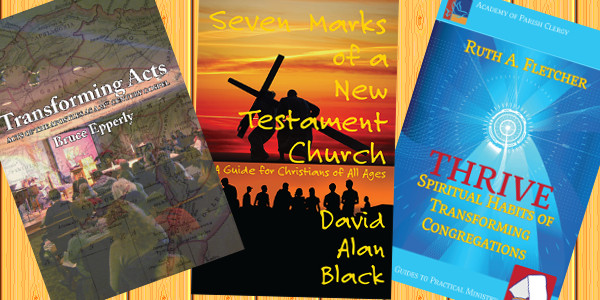
These two additional books show significant similarities in what they recommend for 21st century churches.
These two additional books show significant differences in their recommendations.
These two books show significant differences in the approach to finding the answers.
I want all of these differences and similarities to help stimulate people to their own study. I want to emphasize that though I’m friends with Dave Black and appreciate his work tremendously, I’m not trying to speak for him, nor am I simply trying to reiterate what he has to say in his book. What I’m doing is approaching his book as a member of a mainline congregation (I’m United Methodist), and asking what I should apply to my local congregation and how I should go about doing so. In fact, I hope that as I do this I’ll see more avenues for building up the spiritual life and discipleship of the church community I’m part of.
I’m not seeking uniformity, and I don’t think Dave is either. Two days after we taped that interview, he was preaching at the United Methodist church I now attend. He never asked any of us to become Baptists. But I’m not going to try to speak for him on any details. Uniformity is, I believe, one of the problems we have in the church. One of the mechanisms of uniformity is the church program. Repeatedly I have seen church members go out and learn about some program and then bring it back to their church. When they get back they are filled with the recommendations of the speaker, which often include the warning that if they don’t follow the program precisely things will go off the rails. So if a church already has an effective ministry to needy people, for example, there’s no option for combining the new things learned at the conference with what is already happening. We have to carry out the program.
I recall the introduction of a small group related program to a church that already had two different types of small groups. Over a period of years there was constant complaining that the church couldn’t get enough people involved in this new program to make it work. Nobody was willing to consider combining the new program with what was already going on. So people who were leading in small groups felt overwhelmed by the requirement to attend classes, carry out specific activities that didn’t mesh with what they were already doing, fill out reports, and attend administrative meetings. That’s one form of the effort to enforce uniformity. Uniformity can be of practice, of doctrine, of polity, and so forth.
I’ll outline the differences in recommendations as I go through my series, though I certainly won’t be able to cover all three books. I’ll recommend reading all three, then, as I think all three authors would recommend, prayerfully studying and discerning for yourself and for your community what God’s leading is in your particular case. Then don’t feel the need of reinventing the wheel because you have suddenly become one of the enlightened ones.
I do want to point out differences in approach. None of this is intended as a critique of any of the authors. These are, in fact, the strengths of each that led me to want to write a blog series based on these books.
Dr. Black is a biblical scholar, and he is not a pastor, nor does he plan to be. He will tell you that he’s a full time missionary. In churchese, one could say full-time minister of the gospel. In his book you’ll find primarily a study of the text on which the book is based, Acts 2:37-47. For those of us whose thinking is seasoned by the Wesleyan Quadrilateral, he’s on the scripture line and it’s foundational. It’s seasoned by experience, tradition is acknowledged, it’s tied together with reasoning, but it is always scripturally rooted.
Dr. Epperly is a former seminary professor and a church pastor. He works from the biblical text but spends more time both on theology and sociology. His book is liberally sprinkled with his personal experiences which he ties to the experiences he’s using from the book of Acts. You’ll read lots of texts in his book, but you’ll be asked to think about those text in a much broader context.
Dr. Fletcher started from the other direction. She looked at churches that were successfully ministering to their communities, churches that were thriving, and asked what were the things they had in common. Her spiritual practices are derived from that. But don’t imagine that there is no theological reflection or scripture involved in the final result.
I found great joy in publishing all three books and I invite you to reflect on these issues for a few posts. I hope this explains what I’m trying to accomplish.
I will be putting more material from Bruce Epperly in as I post more on the church, but here’s an exercise he suggests in his book Transforming Acts, pp. 19-20.
Acts of the Apostles is clear that doctrines are symbiotically related to behavior. Our doctrines emerge from spirit-centered experiences. Our experiences are clarified by our beliefs and take shape in practical application. Accordingly, what behaviors might your beliefs inspire in the areas of:
»» Personal stewardship
»» Care of family and children
»» Marriage and other significant relationships
»» Community involvement
»» Political involvement
»» Care of the Earth
»» Response to diverse opinions
»» Ways we respond to personal or global conflict (violence, reconciliation, consensus, peace-seeking balanced by appropriate protection).
»» Involvement in justice issues – first-hand support of vulnerable people and/or political involvement to achieve a social order more reflective of Jesus’ values.
One of the great strengths of Bruce’s book is that he challenges us at the end of each chapter to thoughtfully and prayerfully move to action.
I’m starting a series of posts inspired by my recent interview with Dr. David Alan Black regarding his book Seven Marks of a New Testament Church. He bases this book and the seven marks on Acts 2:37-47. You can see a video of that interview below.
I had the privilege of interviewing Dave while he was visiting Pensacola the weekend of September 6. The interview was recorded by Kyle Hall in the library at First United Methodist Church here in Pensacola. I want to thank Dave for visiting and Kyle for recording the video.
But what does all this have to do with my belief that church pews are unbiblical?
The starting point for Dave’s book is that you can look at the book of Acts, and the activities of the early Christian church, and find things that are normative, or at least very valuable, to modern Christians. Dave isn’t alone in this conviction, but I want to start with the question of how we move from what we find in Acts to what we should do in modern churches. This topic is discussed in the first 4.5 minutes of the video.
We don’t find sound systems or their use in the New Testament. Neither do we find hymnals, organs, pianos, praise bands, orders of service, parking lots, or many other things that are automatically part of our modern life, and often of our church activities. Is it wrong to have something in church that isn’t actually mentioned in the New Testament? There are those who would think so.
On the other hand there are those who would say that church has changed so much that we need to come up with our own unique ways of doing things, that looking back to the early church isn’t going to be enough to deal with our complex world of the 21st century.
I think there is some truth in both points. There are, in fact, critical principles in the New Testament that need to be part of any church that wants to label itself Christian, or more important wants to consider itself a community of disciples of Jesus. (I’d prefer the latter personally.) On the other hand we have situations in the modern world that weren’t a part of the world of the New Testament.
The question is whether the way we choose to meet the challenges of the 21st century is worthy of the good news about Jesus. Do our solutions to modern problems, even when those problems are not directly reflected in some New Testament story or statement, fulfill the principles that Jesus taught? When we make a change does it help us love God and one another? Does it help us to make disciples wherever we go?
So I come to church pews. They aren’t mentioned in the New Testament. They wouldn’t have been needed, though doubtless the various Christian homes that hosted meetings had chairs of some sort. I have a problem with church pews.
Now my problem is that we can’t develop new tools and new practices to meet 21st century demands. The problem is that I don’t think church pews help us love God or one another more and I think they tend to prevent us from fulfilling the gospel commission.
Bicycles are also not mentioned in the New Testament. They’re really good and very helpful in many places. Neither are motorcycles mentioned, but what a blessing they are. I can’t count the number of times I’d head out as a teenager, living with my parents in Guyana, South America, riding on the back of a motorcycle behind an evangelist, holding my trumpet case in one hand. It was the 20th century, true, but it was a very non-1st-century scene. Well, in one way, not 1st century. But in another, the young person heading out to help the evangelist do his work is a very 1st century scene. The tools changed, but the mission didn’t.
But what about those pews? Yes, back to pews. What do pews do for the work of ministry. The very arrangement of our sanctuaries with pews lined up facing a platform where the more important people sit and from which they tell the less knowledgeable what to think tends toward hierarchy. If we’re going to fulfill the hope of Jeremiah 31:34, we need to get more people involved. Our problem is not that our churches don’t have enough order it’s that we don’t have the problems of 1 Corinthians 14. Too many people wanting to speak? On the contrary, just try to get them to do so.
The pews enable this bad behavior and congregational laziness. The people in the pews are there to listen, to receive, not to share and participate.
And then there’s the matter of stewardship. A church “sanctuary” (and what happened to worshiping in spirit and in truth?) is by nature going to be wasted space. There are so many things you can’t do there, because there are very few meetings, other than a totally platform-centered church “service” (who is getting served?), that can take place there.
The same space, made level and filled with movable chairs would be of value for many other purposes. Children could play games. Groups could meet and discuss, putting the chairs in a circle. One might even celebrate communion as a full meal. Yes, I know, we probably have a fellowship hall for that. But why do we do that? Probably because sitting down together and eating isn’t sacred enough to happen in the holy space filled with holy pews.
After we take the pews out, I wouldn’t mind having musical instruments, video, and plenty of parking for those who meet there, none of which are mentioned in the New Testament.
It’s not what’s mentioned and what’s not, but the type of people we are to be and the way we are to behave as disciples of Jesus.
Oh, we could also offer meals to those in need using that space. If it didn’t have pews, that is.