
From Brian McLaren: “We are suffering the consequences of our idolatry. Our motto ‘In God We Trust’ is printed right on the front of the God in which we trust.”
Category: Politics
-
Motorists Detained for Paying Toll with Large Bills
… like $20, according to this story.
Now the story brings up interesting issues of profiling, and whether toll station workers were legally permitted to detain anyone. I think those are good questions. The Florida DOT’s coverup should also be investigated.
But here’s something that got me:
Although FDOT refused to comment because the Department expects to be sued, internal e-mail justify the program because of counterfeit bills. However, in a 2 and a half year period the DOT got $16,000 in counterfeit bills, while at the same time it collected close to $2 billion in tolls ($1,523,825,404).
The Department also spent $32,000 on forms used to catch the $16,000 in funny money. The department also says in e-mails, the program will help law enforcement catch counterfeiters.
Irrespective of all the very valid legal issues, as a businessman, I would say this should raise red flags. A program that spends $32,000 to prevent $16,000 in losses is not very profitable. Of course, it will be less profitable if FDOT loses the lawsuit.
Related articles
- Millions Of Florida Drivers Illegally Detained By Turnpike Authority For Paying Tolls With Large Bills (thedaleygator.wordpress.com)
- Motorists Illegally Detained at Florida Tolls – For Using Large Bills! (censorshipinamerica.com)
- Florida DOT accused of illegal detainment, racial profiling (weinterrupt.com)
- Toll Booths in Florida Accused of Racial Profiling. (ridelust.com)

-
When Will Teachers Sacrifice like Wall Street Execs?
A very funny clip from The Daily Show:
I would normally have a serious problem with comparing the two situations, with Wall Street execs paid by private organizations while teachers are paid by the state, but the waters are muddied by the bailout. Under normal circumstances, I’d support people getting whatever pay is determined by the market.
But what the market determined was that some major financial firms ought to fail. There’s a caveat in that one as well. What role did ineffective or even harmful regulation have on that situation.
But all these caveats ruin the humor.
-
Voter Ignorance

Image via Wikipedia A Kaiser poll (pdf) finds that 22% of respondents believe the health care reform bill has been repealed, and another 26% don’t know. (HT: Dispatches and The Daily Dish)
Now I realize that the majority in the poll do realize, correctly, that the health care bill is still law. But consider that even the 22% is more than the gap between those who support and those who oppose the law. The question this raises for me is just how meaningful the rest of the poll responses can be, when answered by people who aren’t at all acquainted with it.
Elgin Hushbeck, Jr. in his book Preserving Democracy (published by my company Energion Publications) notes another poll:
A key reason is that while most people know who the President is*, a significant number of voters have no clue about Congress. In a Zogby poll of those who voted for Obama conducted shortly after the election, less than half, 42.6 percent, even knew that Congress was controlled by the Democrats and 36.5 percent actually believed that the Republicans were in control.224 In a USA Today/Gallup Poll conducted just after the election, 28 percent of those asked said they had never heard of Harry Reid, the Senate Majority Leader, while Nancy Pelosi, the Speaker of the House was better known, as only eight percent226 had never heard of her (pp. 208-209).
These are not matters subject to opinion. I often hear people called ignorant because they don’t agree with certain conclusions. Such accusations only reflect badly on the accuser. But whether a law has been passed or which party is in control of congress are not matters of opinion.
No wonder polls tend to vary wildly and people’s votes often seem to contradict their values.
Related articles
- Poll: Barely Half Of Americans Know Health Care Law Hasn’t Been Repealed (alternet.org)
- Voters credit Obama for economy upswing (alternet.org)
- Rove: Voters Do Care About the Deficit and Oppose Obamacare (online.wsj.com)
- 22% live in a fantasy world. No wonder our system is broken. (amanwithaphd.wordpress.com)

-
Proper and Rightful Role for Iowa Caucuses?

Image via Wikipedia According to CNN, Iowa Republican Chairman Matt Strawn commented on those states that are trying to move their primaries earlier in the process:
“I don’t think its any secret that Iowa, New Hampshire, South Carolina have historically worked together, and we are in communication, and we will do what is necessary to maintain our proper and rightful role in the process,” he said.
I have no idea what makes it either proper or rightful for the Iowa caucuses to be first in the nation, or the New Hampshire primary to be the first primary. In fact, I think the idea is ridiculous, and the parties should give up on this.
Since party conventions have become a waste of time, except as a PR event, the timing of primaries has become ridiculous. There’s no reason these particular states should have the first say in choosing party candidates.
But what annoys me even more is the extent to which state legislatures are involved in setting up party events. I see this whole fight (and the one we had in 2008, as even more reason to de-institutionalize the two major parties. Let the parties pay for and organize whatever events they want in order to select the props for their media events, mislabeled conventions.
Related articles
- Terry Branstad: Iowa Caucuses Will Remain First Of 2012 Campaign (huffingtonpost.com)
- Rogue States Threaten To Destroy Delicate Balance Of 2012 Primary Calendar (huffingtonpost.com) [Rogue states? It is to laugh. -HN]
- Branstad Vows Iowa Will be First (politicalwire.com)
- Florida Threatens a 2012 Primary Stampede (foxnews.com) [Good for us! But it would be better to move all primaries later. – HN]

-
Cameras in Public Places
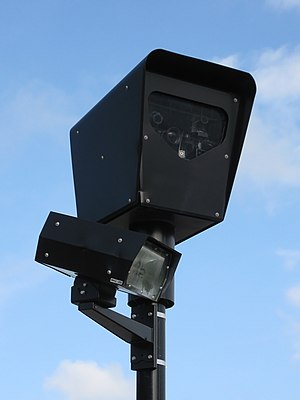
Image via Wikipedia There are three issues I’ve been wanting to comment on, but because I see all three as related, I’ve been looking for the right moment. I think this story, about cops caught on speed and red light cameras, gives me the right opportunity.
The three issues are:
- Videotaping (or otherwise recording) police performing their duties
- Security cameras in public places
- Red light and speeding cameras
Nobody likes to get caught by the cameras, no matter what. Civil libertarians, with whom I am usually in agreement, object to many instances of cameras as excessively invasive. Many of the same people strongly support the right of the public to record police officers carrying out their duties as well.
I take the view that when a camera is recording me in a public place, I don’t have an expectation of privacy. If you stick your camera in the window of my house, that’s something different. But if I’m walking down the street, or driving my car, and a camera catches me, I see that as no different from having an eyewitness do so. Except, of course, that the camera is likely to be more accurate. Indeed, if I was accused of a crime, and was nowhere near where it took place, I’d love to find a camera that had a clear picture of me not being where the crime took place!
Similarly, I think the more law enforcement actions are on film, the better. That way we can verify true accusations and refute false allegations more effectively. There is a complaint of poor quality video taken by citizens. Newer devices will change that somewhat, though they won’t change point of view, or get citizens to hold the device more steadily. The best response here, I think, is the one many police departments are taking–record everything.
So even though I’d rather not get caught rolling through that red light just after the yellow, I prefer the accurate record of the device, which I would trust over a human’s observation, and I also prefer the consistency.
As for the original story–officers caught by the cameras–I would suggest that if there are valid exceptions, the department needs to deal with it. The Baltimore rules sound pretty restrictive to me, but then I’m no expert. I’d like to think the officer responding to a bank robbery without his lights on (for good reason, I assume) would not be fined for speeding. If he’s in his own car on private business, or if he’s going from one place to another on routine business, then he needs to obey the law, as do I.
And whatever we’re doing in a public place, we might be seen, whether by camera or by human observer, and we should simply expect it.
(HT: Dispatches)
Related articles
- More Fights Over Red Light Cameras (reason.com)
- Cops Don’t Like Red Light Cameras Either (pixiq.com)

-
Need a License to be Smart?
Apparently Kevin Lacy, chief traffic engineer for the North Carolina DOT thinks you do. When a citizens group challenged his decision on a couple of traffic lights, and provided substantiating data they collected and compiled themselves, he said it was “engineering-level work” and reported it to the state licensing board.
This one speaks for itself, I think. Incredible!
HT: Dispatches.
Related articles
- N.C. Official Sics License Police On Computer Scientist For Too Good a Complaint (yro.slashdot.org)
- MORE ON THAT “UNLICENSED ENGINEER” SCANDAL AT THE NORTH CAROLINA DOT: North Carolina Transporation … (pajamasmedia.com)
- “In North Carolina sits a clown named Kevin Lacy,” and related posts (elmtreeforge.blogspot.com)

-
On Cutting Spending and Investment

Image via Wikipedia Mark at Pseudo-Polymath links to this post on Rand Paul’s ideas for cutting the budget, using the line: “Someone is forgetting that the left prefers social entitlements to science programs.” I think Mark has a good point, but not the best point.
This illustrates one of the reasons I oppose across-the-board spending cuts. Some argue–and I understand their point–that since we can’t seem to cut spending point by point, the only way to proceed is with a general spending freeze. I would suggest, rather, that a general spending freeze won’t solve the problem; it just lets us pretend, because after the freeze, we still won’t have the courage to go after the real spending problem, which needs to be done program by program. I don’t see the courage on either side of the aisle to accomplish that mission.
There are things the government does well, and there are things better done privately. Of the things the government ought to be doing, there are better and worse ways to accomplish those goals. This includes military, security, and law enforcement spending, which Republicans often hold sacred. It includes choosing which moral issues deserve to be enshrined in law and just how much we want to spend enforcing those positions.
On the other hand, it includes looking at social programs to determine which ones are actually accomplishing their stated goals, not to mention asking whether the stated goals are likely to be accomplished at all.
Science spending, in the right areas, is particularly important for our future, as is education spending. We could save huge amounts in social spending if we had a better educational system. How much of reforming our educational system involves spending more money, versus changing the structure or spending our money more intelligently, is another issue.
Right now I’d merely like to suggest that if we want to both shrink the deficit and grow the economy we will need to look carefully at spending point by point. A freeze, unless it is immediately followed by such a reevaluation won’t do the job. And people on all sides of the aisle will need to be prepared to sacrifice things they love, especially if careful evaluation shows their favorite programs aren’t doing what they’re supposed to be doing.
I like to suggest specifics, which the politicians rarely do. I’d also like to congratulate Rand Paul on giving specifics, even though I disagree with some of them, for the same reason. Amongst the things we need to ditch I would include almost all of public campaign financing. I don’t think it has made politics any cleaner. It certainly hasn’t made it more civil. It has only made it more costly. Add that to the suggestions I made earlier. There are more!
Related articles
- Rand Paul: End ‘welfare’ to Israel (politico.com)
- Rand Paul, the “Great No-Compromiser”? (reason.com)
- The incredible shrinking spending cuts (washingtonmonthly.com)
- Obama Spending-Freeze Pledge Criticized as ‘Deficit Preservation’ – Fox News (news.google.com)

-
Sabre-Tooth Campaign Finance Laws
I think this is an excellent example of laws addressing problems that are out of date in ways that make little sense. (With due apologies to the book The Saber-Tooth Curriculum,
which is old, but an excellent read.)


